
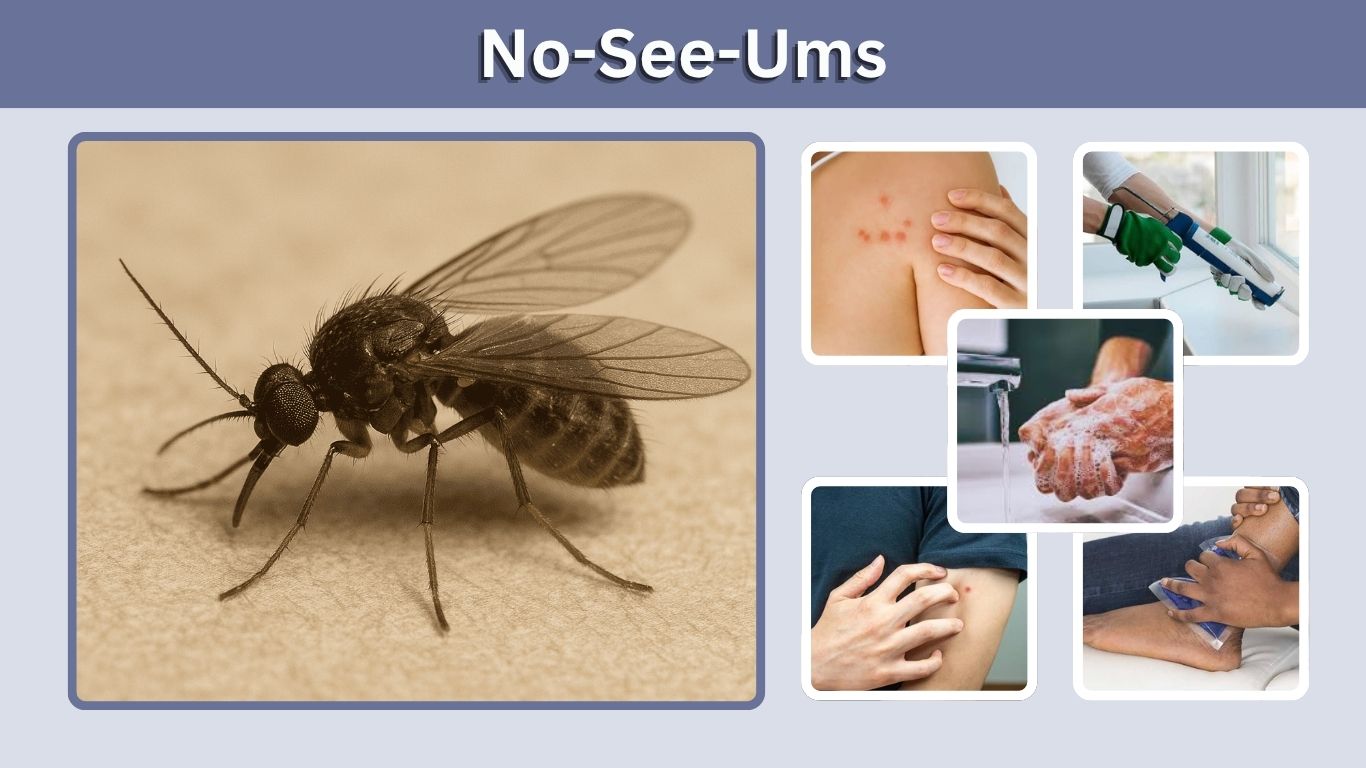
No-see-ums are tiny biting flies that can leave surprisingly painful, itchy welts. They are especially troublesome around marshes, beaches, mangroves, wet grasslands, ponds, and other damp habitats. Because they are small enough to pass through ordinary window screens, people may receive several bites without seeing the insect responsible. This guide explains how to identify no-see-ums, treat their bites, choose an effective repellent, and prevent them from entering your home.
What Are No-See-Ums?
“No-see-um” is a common name for several tiny biting midges, particularly species in the genus Culicoides. They are true flies belonging to the family Ceratopogonidae. Adult biting midges are generally only 1–2 millimetres long, making them much smaller than mosquitoes. Many species have narrow legs and pale-and-dark patterns on their wings.
Only females bite because they need blood to support egg production. Their mouthparts contain small cutting and piercing structures that break the skin and allow them to feed. Male no-see-ums cannot pierce human skin and generally feed on plant sugars.
Where Do No-See-Ums Live?
No-see-um larvae require considerable moisture to survive. Depending on the species, they may develop in:
- Marshes and mangroves
- Swamps and wet grasslands
- Pond and stream margins
- Water-filled tree holes
- Damp soil and muddy coastal areas
This explains why no-see-ums can become particularly abundant in humid coastal regions such as Florida. Different species may be active during daylight, evening, dusk, or nighttime hours.
No-See-Ums vs Gnats
“Gnat” is an informal name applied to several groups of small flies. Fungus gnats, for example, are commonly found around damp houseplant soil and do not harm or bite people. No-see-ums are biting midges distinguished by their painful bites and association with moist outdoor habitats.
What Do No-See-Um Bites Look Like?
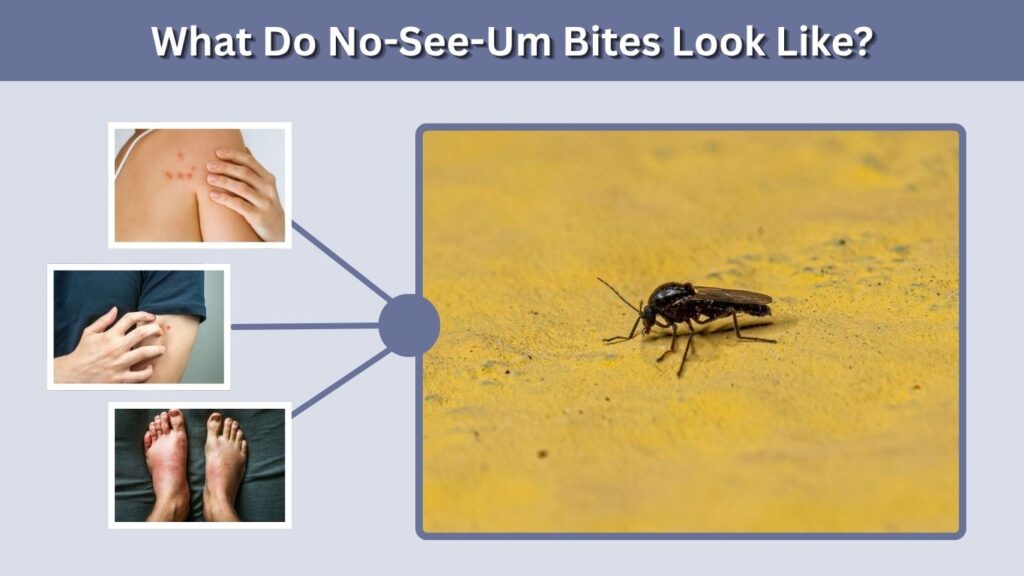
A no-see-um bite may initially feel like a sharp prick, sting, or burning sensation. Small, well-defined red areas or raised itchy bumps can then appear. Several bites may develop close together on exposed areas such as the ankles, legs, arms, neck, and face.
People who are sensitive to the insects’ saliva may experience larger welts, stronger swelling, or itching that continues for two or three days. Redness and itching can also become more noticeable sometime after the original bite.
However, bite appearance alone cannot confirm the insect responsible. Mosquito bites, bed bug bites, fleas, allergic rashes, and other skin conditions can look similar.
| Feature | No-see-um bites | Mosquito bites | Bed bug bites |
| Common exposure | Outdoors near damp habitats | Indoors or outdoors | Usually around an infested sleeping area |
| Typical pattern | Several small, painful or itchy bumps | Puffy, itchy individual bumps | Bumps in clusters or irregular lines |
| Insect visibility | Extremely difficult to see | Usually visible | Bugs may hide in mattress seams |
| Bed infestation | Does not normally live in beds | Does not live in beds | Lives and reproduces near beds |
Finding bites after sleeping does not necessarily mean no-see-ums are living in the bed. Their immature stages require moist environmental habitats, so bedroom bites usually occur when flying adults enter through doors or unsuitable screens. Dark spots, rusty stains, shed skins, eggs, or insects around mattress seams are more reliable indicators of bed bugs.
How to Treat No-See-Um Bites
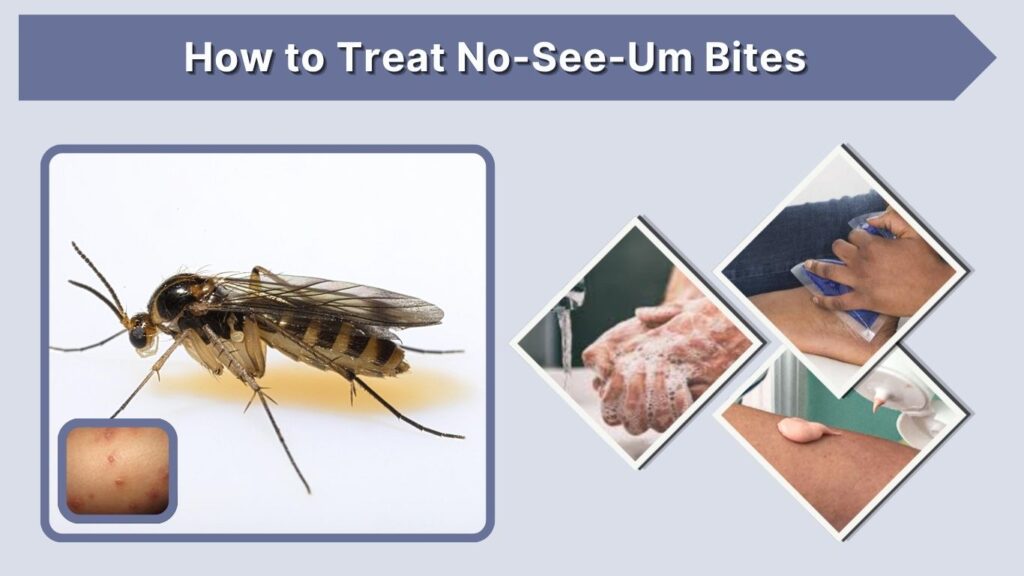
Most uncomplicated insect bites improve within several hours or days. Treatment is mainly intended to reduce itching, swelling, discomfort, and skin damage caused by scratching.
Fastest Way to Relieve No-See-Um Bites
- Wash the affected skin gently with soap and water.
- Apply a wrapped cold pack for at least 10 minutes.
- Avoid scratching or breaking the skin.
- Ask a pharmacist about a suitable antihistamine or anti-itch cream.
- Take an appropriate over-the-counter pain reliever when necessary.
Cold treatment can reduce swelling and discomfort, while avoiding scratching lowers the risk of a secondary skin infection.
Does Calamine Lotion Help?
Calamine lotion may temporarily soothe minor itching caused by no-see-um bites, although it will not instantly heal the skin or remove the insect’s saliva. Apply it according to the label and avoid using it on severely broken or infected skin.
A pharmacist may also recommend hydrocortisone cream or an oral antihistamine for troublesome inflammation and itching. The appropriate treatment can depend on the person’s age, health conditions, and other medicines.
How Long Do No-See-Um Bites Last?
Mild stinging may disappear within hours. Redness and itching in sensitive people commonly continue for two or three days, although scratched, infected, or strongly allergic bites can last longer.
Contact a healthcare professional when symptoms worsen, fail to improve after several days, or develop increasing warmth, pain, pus, or spreading redness.
When Is a Reaction Serious?
Seek emergency medical care for:
- Wheezing or difficulty breathing
- Swelling of the face, mouth, or throat
- Difficulty swallowing
- Dizziness, faintness, or loss of consciousness
- A rapid heartbeat with widespread symptoms
Medical advice is also appropriate for bites inside the mouth, close to the eyes, or surrounded by a large expanding swollen area. Fever, swollen glands, pus, and flu-like symptoms may indicate infection or another illness.
Best Repellent for No-See-Ums
Choose an EPA-registered insect repellent whose label specifically mentions flies, biting flies, Culicoides, biting midges, or no-see-ums. Common active ingredients in registered skin-applied repellents include:
- DEET
- Picaridin
- IR3535
- Oil of lemon eucalyptus or PMD
- 2-undecanone
The active ingredient alone is not enough; check whether the product label covers the insect and intended activity.
Apply repellent only to exposed skin or clothing as directed. Do not spray it directly onto the face, place it under clothing, or apply it over cuts and irritated skin. Reapply only as frequently as the label permits. When treating a child, an adult should apply the product to their own hands first and avoid the child’s hands, eyes, and mouth.
Homemade essential-oil sprays may provide inconsistent or short-lived protection. A product being described as “natural” does not automatically mean it is safer or more effective than a tested, registered repellent.
How to Get Rid of No-See-Ums
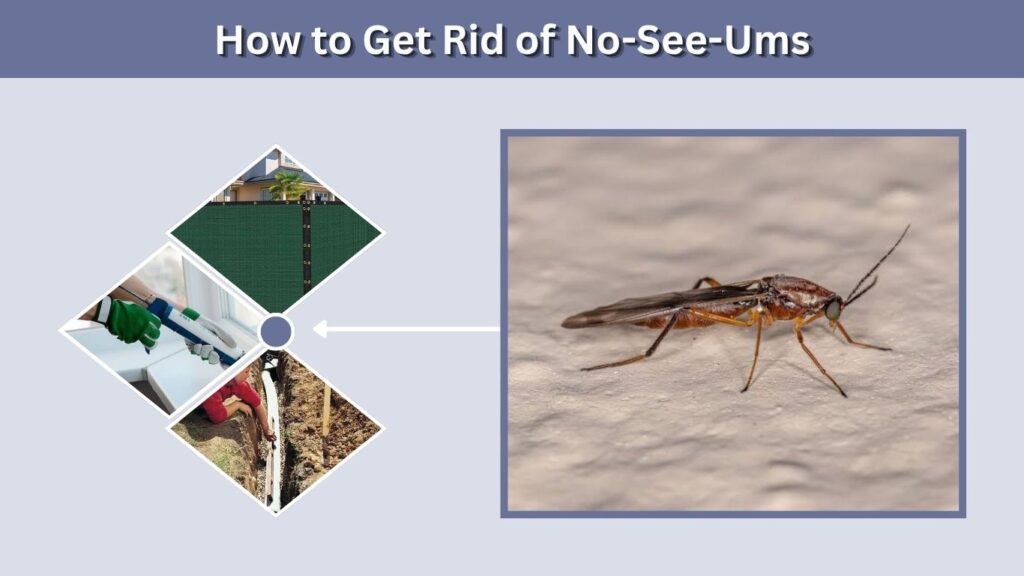
Completely eliminating no-see-ums can be difficult when adults are emerging from nearby wetlands, marshes, or other large breeding habitats. Combining exclusion, moisture reduction, personal protection, and targeted professional treatment usually provides better results.
Install No-See-Um Screening
Ordinary mosquito screens often have openings large enough for biting midges to pass through. The CDC recommends 20-by-20 mesh screening to reduce their entry into homes. Repair gaps around windows and doors and keep unscreened entrances closed, particularly when midges are active.
Fine screening can restrict airflow more than standard mesh, so select material suitable for the window, porch, tent, or enclosure.
Reduce Damp Breeding Areas
Improve drainage in persistently wet parts of the property, repair leaking outdoor taps, clean blocked gutters, and avoid overwatering lawns and gardens. Removing unnecessary wet organic debris may also make small areas less suitable for larvae.
However, habitat modification does not always reduce adult populations because the insects may travel from breeding areas beyond the property. Never drain, fill, spray, or otherwise disturb protected wetlands.
Use Fans, Traps, and Sprays Carefully
A strong fan directed across a porch or outdoor seating area may make it harder for these tiny flies to land. Carbon dioxide or lure-based suction traps can capture biting midges, but one trap should not be expected to eliminate a widespread population.
For severe infestations, contact a licensed pest-control professional. Outdoor barrier or space treatments may provide temporary relief, but pesticides must be approved for the treatment location and used exactly according to their labels. Never apply agricultural or livestock insecticides to people, bedding, pets, or indoor living spaces.
FAQs
Do no-see-ums bite?
Yes. Female no-see-ums bite humans and animals to obtain blood needed for egg development. Males do not have mouthparts adapted for piercing skin. Their extremely small size makes them difficult to notice, even when they are actively biting.
Are no-see-um bites dangerous?
Most bites cause localized itching, redness, and swelling rather than serious illness. However, certain biting midge species can transmit pathogens, including Oropouche virus, in parts of South America and the Caribbean. Travelers should follow current destination-specific health advice.
Can no-see-ums live in your bed?
No-see-ums do not normally establish bed-based infestations because their larvae need wet environmental habitats. Flying adults can enter a bedroom and bite, but repeated nighttime bites should also prompt an inspection for bed bugs, fleas, or other possible causes.
What screen keeps no-see-ums out?
Use screening specifically designed for biting midges. The CDC recommends mesh measuring 20 by 20 because ordinary window and mosquito screens may not have openings small enough to exclude no-see-ums.
What attracts no-see-ums?
Female no-see-ums search for animals or people from which they can obtain blood, while moisture determines where their offspring can develop. Problems are therefore especially common around people spending time near marshes, mangroves, wet soil, pond margins, and similar damp environments.