
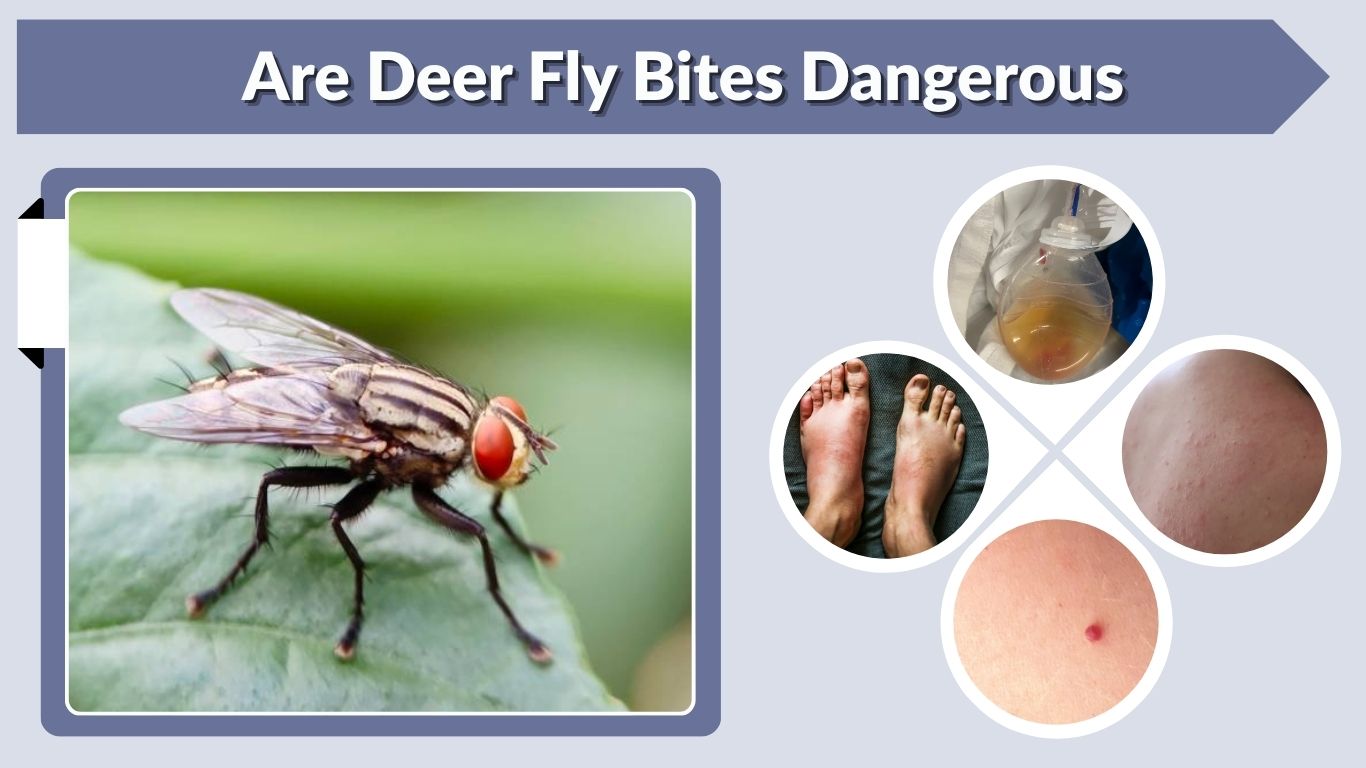
Deer fly bites are painful, but most are not dangerous to healthy people. They typically cause a small bleeding wound followed by redness, itching, tenderness, and swelling. However, a bite can occasionally lead to a large allergic reaction, a secondary skin infection, or a disease called tularemia. Understanding which symptoms are normal—and which require medical attention—can help prevent complications and ensure that serious reactions are treated promptly.
Why Are Deer Fly Bites So Painful?
Female deer flies need blood to produce eggs. Unlike mosquitoes, which pierce the skin, deer flies have cutting mouthparts that open the skin and create a small pool of blood. This feeding method can cause immediate sharp pain and visible bleeding.
After feeding begins, saliva enters the wound. The body’s response to the bite and saliva may produce itching, inflammation, warmth, and swelling.
Deer fly bites commonly occur on exposed areas such as the:
- Head and neck
- Arms and shoulders
- Hands
- Legs
- Upper back
Are Deer Fly Bites Dangerous to Humans?
For most people, a single deer fly bite is a painful but temporary skin injury. The discomfort generally improves with cleaning, cold treatment, and protection from scratching.
However, deer fly bites can become dangerous in several situations:
| Potential problem | Common warning signs | Level of concern |
| Normal local reaction | Pain, redness, itching and mild swelling | Usually manageable at home |
| Large local reaction | Extensive swelling, intense itching or blistering | Medical advice may be needed |
| Skin infection | Increasing pain, warmth, pus or spreading redness | Requires medical evaluation |
| Severe allergy | Hives, facial swelling, wheezing or dizziness | Emergency |
| Tularemia | Fever, skin ulcer and swollen lymph nodes | Requires medical treatment |
Normal Deer Fly Bite Symptoms
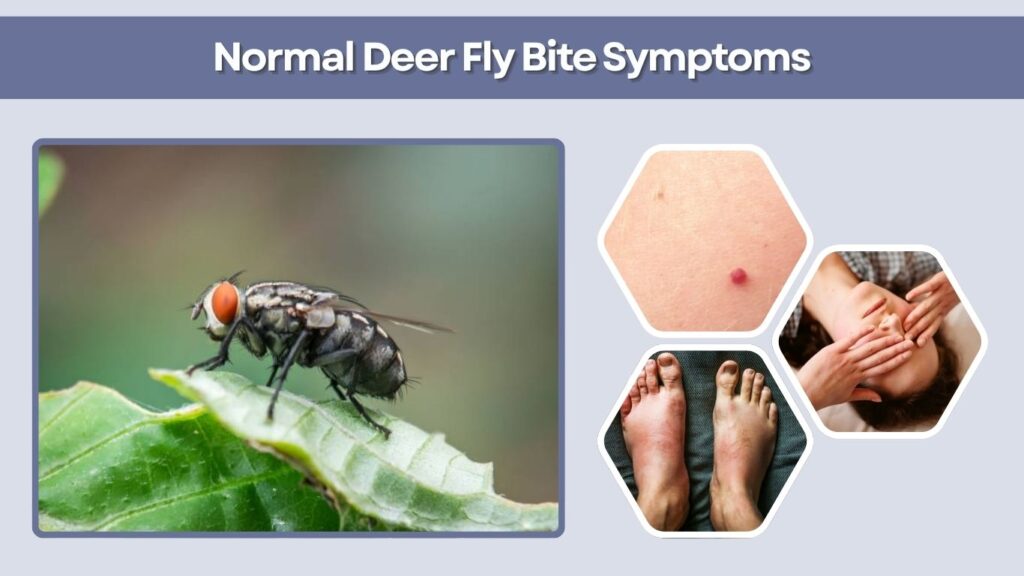
A typical bite may produce immediate pain because the fly physically cuts the skin. Mild bleeding may also occur.
Common Local Reactions
Normal symptoms include:
- A red or discolored bump
- Mild swelling
- Itching or burning
- Tenderness
- A small amount of bleeding
- Warmth around the wound
The mark may appear darker, raised or swollen on darker skin tones rather than bright red.
Most mild reactions remain limited to the bite area. Cleaning the wound and avoiding scratching usually allows it to heal without complications.
How Long Do Symptoms Last?
Pain may improve within several hours, while itching, tenderness and swelling can last for a few days. A larger local reaction may continue increasing during the first day or two before gradually improving.
Seek medical advice if the swelling continues to expand, becomes extremely painful or interferes with movement.
Allergic Reactions to Deer Fly Bites
Some people react more strongly to insect saliva. A large local reaction can cause extensive swelling around the bite without affecting the rest of the body.
Possible symptoms include:
- Swelling several inches beyond the bite
- Severe itching
- A large, firm welt
- Blistering
- Significant warmth or tenderness
- Swelling lasting several days
A generalized allergic reaction is more concerning. Symptoms can include widespread hives, swollen lips or eyelids, nausea, dizziness, coughing or wheezing.
Signs of Anaphylaxis
Anaphylaxis is a life-threatening allergic reaction. Call your local emergency number immediately if a bite is followed by:
- Difficulty breathing
- Wheezing or chest tightness
- Swelling of the tongue, mouth or throat
- Difficulty swallowing
- Widespread hives
- Fainting or severe dizziness
- Confusion
- Repeated vomiting
- A weak or rapid pulse
Use a prescribed epinephrine auto-injector immediately when available, and still obtain emergency care. Antihistamines may reduce itching or hives, but they do not replace epinephrine during anaphylaxis.
Can a Deer Fly Bite Become Infected?
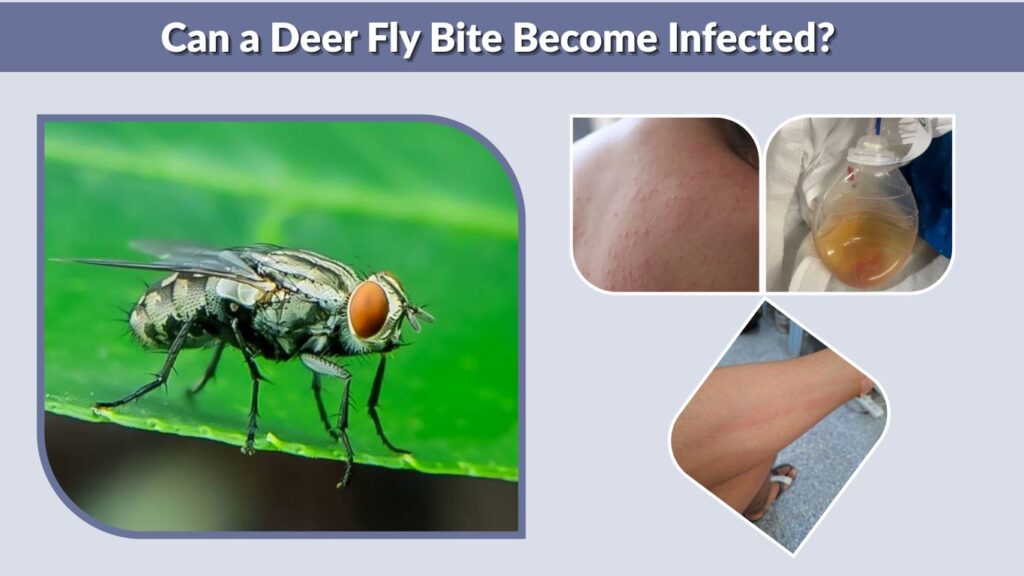
A deer fly creates an open wound, so bacteria can potentially enter the damaged skin. Scratching increases this risk by breaking the skin further and transferring bacteria from the fingers or fingernails.
Signs of a Skin Infection
Contact a healthcare professional if you notice:
- Redness that continues spreading
- Increasing pain instead of improvement
- Pus or cloudy drainage
- Significant warmth
- Red streaks extending from the wound
- Fever
- Swollen lymph nodes
A wound can remain red and itchy without being infected. Infection is more likely when pain, heat and redness steadily worsen or when pus and fever develop.
Can Deer Flies Transmit Disease?
Deer flies can transmit tularemia, a potentially serious bacterial illness caused by Francisella tularensis. The CDC identifies infected deer fly bites as one possible route of human infection. In the United States, deer-fly transmission has been demonstrated particularly in western regions. Nevertheless, the overall risk from natural exposure is low.
Tularemia Symptoms
The form associated with deer fly bites may cause:
- Sudden fever
- Chills
- Headache
- Fatigue
- A skin ulcer at the bite site
- Painful, swollen lymph nodes
- General body aches
The ulcer may develop where the bacteria entered, while lymph nodes in the armpit, neck or groin may become enlarged. Tularemia requires diagnosis and antibiotic treatment from a healthcare professional.
Contact a doctor when fever, an unusual ulcer or swollen glands appear after a deer fly bite, especially following outdoor exposure in an area where tularemia occurs.
How to Treat a Deer Fly Bite
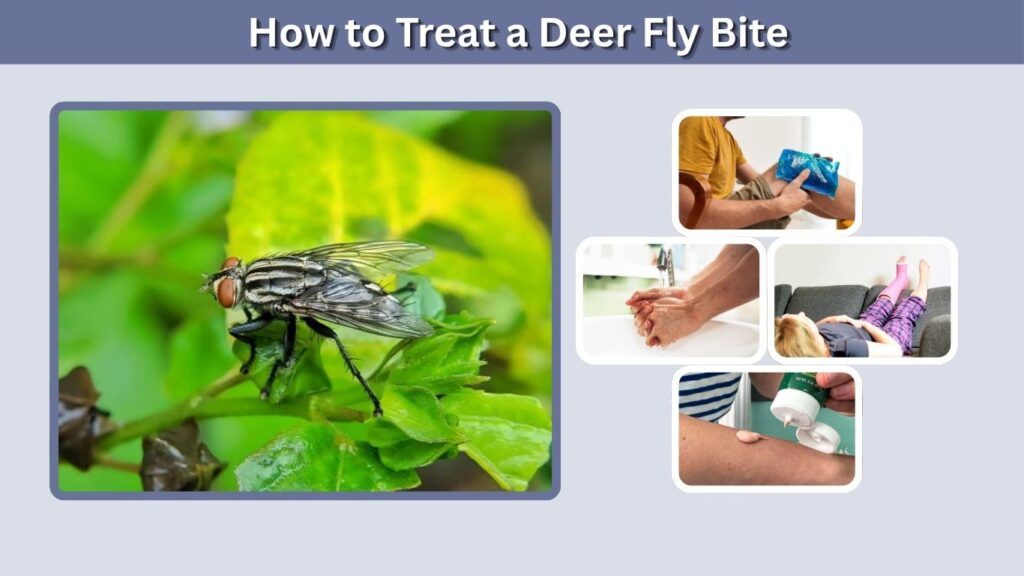
Most uncomplicated bites can be treated at home.
Immediate First Aid
- Move away from the area to prevent additional bites.
- Wash the wound gently with soap and water.
- Apply a clean cold compress for 10–20 minutes.
- Elevate the affected arm or leg when possible.
- Apply calamine lotion or an appropriate hydrocortisone cream for itching.
- Avoid scratching, squeezing or cutting the bite.
- Cover the wound lightly if clothing repeatedly rubs against it.
These measures can reduce pain, itching and swelling.
An oral antihistamine may help an itchy or swollen reaction. Ask a pharmacist or healthcare professional which option is appropriate, particularly for children, pregnant people, older adults or anyone taking other medications.
When to Seek Medical Care
Arrange prompt medical evaluation when:
- Swelling is large or continues worsening
- The bite is near an eye, mouth or throat
- Pain becomes severe
- Symptoms do not begin improving
- Pus, fever or spreading redness develops
- A skin ulcer or swollen lymph nodes appear
- You have previously experienced severe insect-bite allergies
- Numerous bites occurred at the same time
Breathing difficulty, throat swelling, faintness or widespread hives require emergency care.
How to Prevent Deer Fly Bites
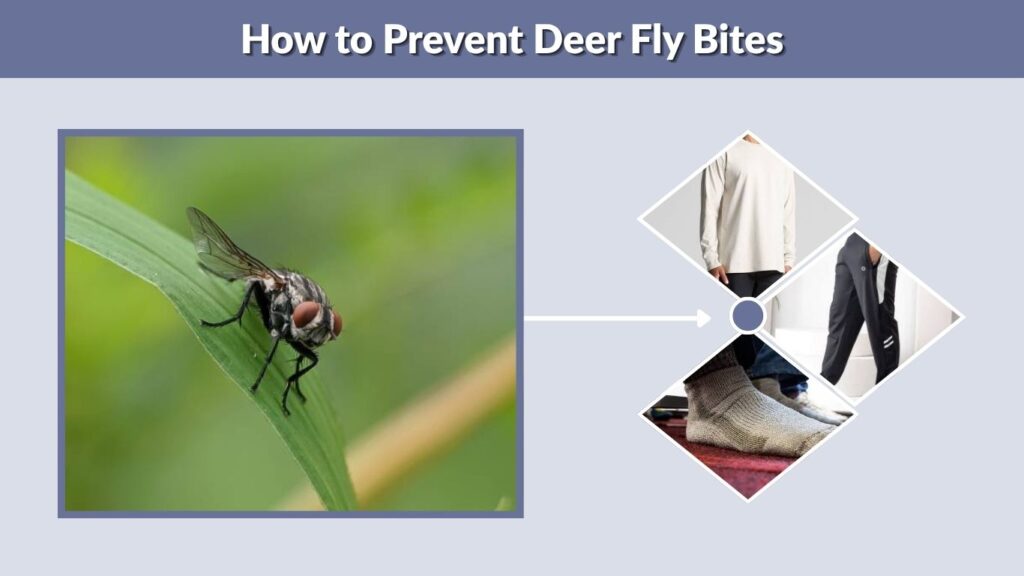
Deer flies are active during the day and often occur near ponds, wetlands, wooded trails and other moist habitats. Personal protection is usually more practical than trying to eliminate them from a large outdoor area.
Wear long sleeves, long trousers, socks and closed shoes in areas with heavy fly activity. Apply an insect repellent according to its label, and avoid allowing it to contact the eyes, mouth or damaged skin.
Light-colored clothing may be helpful because deer flies are often attracted to large, moving, dark objects. Leave the area when flies repeatedly circle or pursue you.
FAQs
Can a deer fly bite kill you?
A normal deer fly bite is not fatal. The principal life-threatening risk is anaphylaxis, which can cause breathing difficulty and dangerously low blood pressure. Tularemia can also become serious without medical treatment, although transmission through deer fly bites is uncommon.
Do deer flies inject venom?
Deer flies are biting flies rather than stinging insects. They cut the skin and feed on blood. The pain comes primarily from this skin injury, while saliva entering the wound may contribute to itching, swelling and inflammation.
Why is my deer fly bite so swollen?
Swelling is part of the body’s inflammatory response. Some people develop a large local reaction that extends well beyond the bite. Obtain medical advice if swelling keeps expanding, affects the face or throat, or occurs with hives, dizziness or breathing problems.
How long does a deer fly bite take to heal?
A mild bite may improve within several days, although itching or a small lump can last longer. Healing may take additional time if the reaction is extensive or the wound has been scratched. Worsening pain, pus or fever suggests that medical assessment is needed.
Should I see a doctor after every deer fly bite?
Routine medical care is usually unnecessary for a small, improving reaction. Consult a doctor for severe swelling, infection symptoms, fever, an ulcer or swollen lymph nodes. Call emergency services for trouble breathing, throat swelling, fainting or other signs of anaphylaxis.