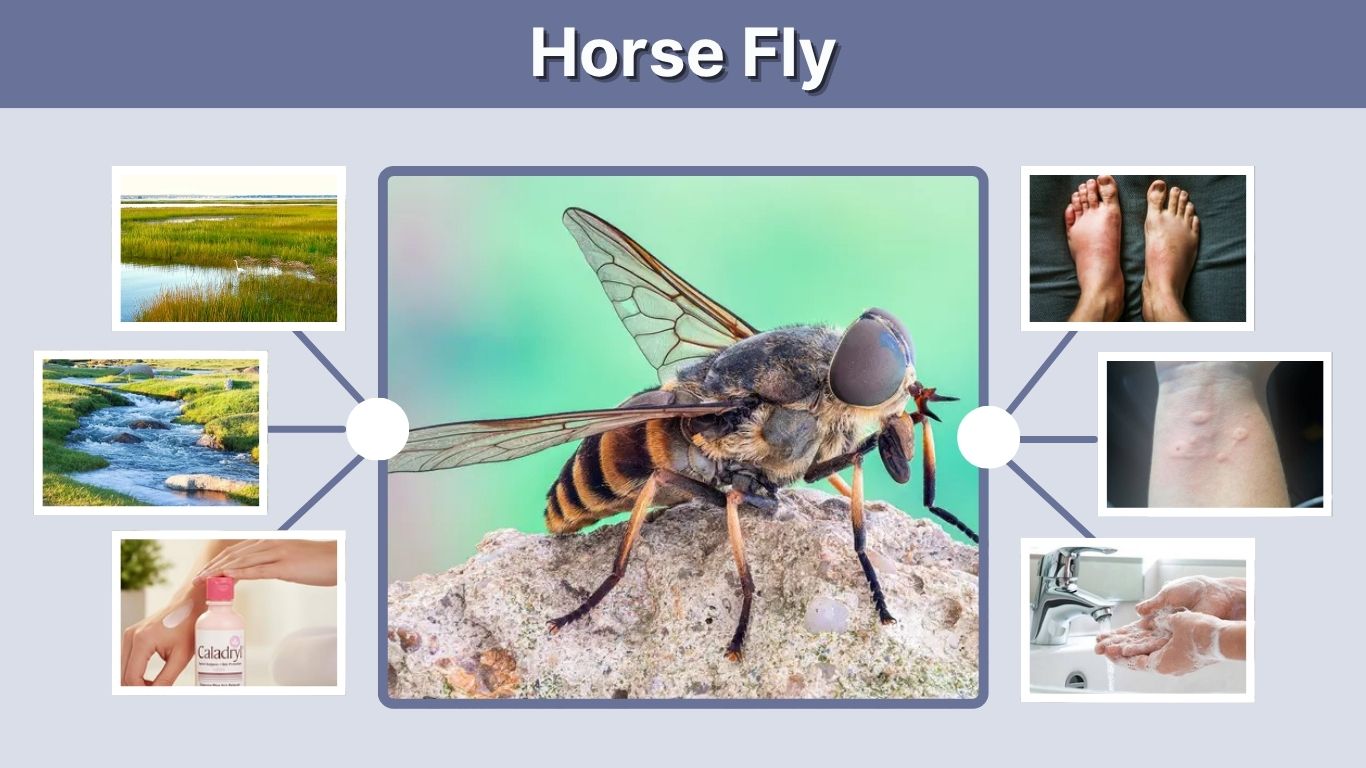
Horse flies are large, fast-flying insects best known for the painful bites delivered by females. They belong to the family Tabanidae and are commonly found around livestock, wetlands, ponds, wooded areas, and warm outdoor environments. Their large eyes, powerful wings, and robust bodies make them relatively easy to recognize. Besides bothering horses and cattle, horse flies can also bite people and pets. Understanding their appearance, behavior, life cycle, bite symptoms, and control methods can make encounters with these insects much easier to manage.
What Is a Horse Fly?
A horse fly is a member of the insect family Tabanidae, a large group of blood-feeding flies found in many parts of the world. Adults are powerful daytime fliers. Female horse flies require blood meals to obtain nutrients needed for producing eggs, while males primarily feed on plant nectar and other sugary liquids.
Horse flies are particularly common during warm weather. They frequently occur near wetlands, streams, ponds, marshes, pastures, and wooded areas where suitable breeding habitat is available.
Horse Fly Identification
Typical horse fly characteristics include:
- Large, sturdy fly-like body
- Broad head
- Very large compound eyes
- Clear, gray, or patterned wings
- Short antennae
- Strong legs
- Gray, brown, black, or yellowish coloration
- Adults commonly much larger than ordinary house flies
Some species have striking green, bronze, purple, or multicolored eyes. Black horse flies can appear almost completely dark, while other species have noticeable stripes or patches.
Horse Fly Size
Horse flies vary considerably in size depending on the species. Many adults measure approximately 10–25 mm long, although some large species can exceed this range.
Their thick bodies often make them appear even larger, especially when compared with common house flies.
Black and Giant Horse Flies
Large black horse flies are particularly noticeable because of their dark bodies and strong flight. Species commonly described as giant horse flies may look intimidating, but their general behavior is similar to other members of the Tabanidae family.
Large size does not necessarily mean that a species is more dangerous, although bites from bigger females can feel particularly painful.
Do Horse Flies Bite Humans?
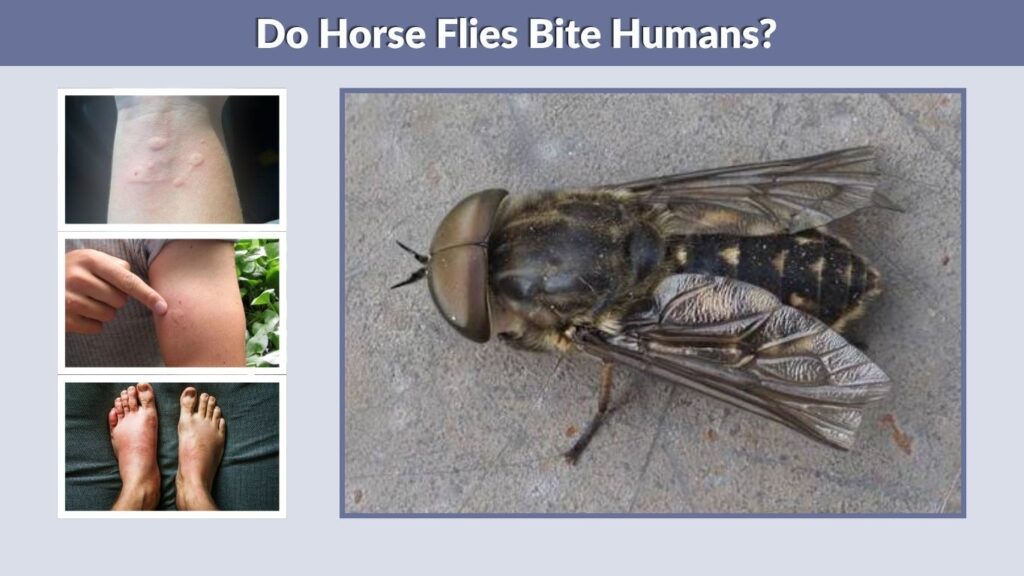
Yes. Female horse flies readily bite humans as well as horses, cattle, dogs, deer, and other mammals. Unlike mosquitoes, horse flies do not insert a delicate needle-like mouthpart into the skin.
Instead, females use cutting mouthparts to create a small wound and then consume the blood that pools at the surface.
What Does a Horse Fly Bite Feel Like?
A horse fly bite usually causes an immediate, sharp pain. Many people notice the insect biting them rather than discovering the bite afterward.
Common symptoms include:
- Sudden sharp or burning pain
- Redness
- Swelling
- Itching
- Tenderness
- A raised bump
- A small visible wound
The affected area can remain uncomfortable for several days.
What Does a Horse Fly Bite Look Like?
A typical horse fly bite may appear as a red, swollen bump with a small central mark. Because the insect physically cuts the skin, the bite may occasionally bleed immediately after the fly leaves.
Swelling can vary considerably between individuals. Some people develop only a small red bump, while others experience a larger area of inflammation.
Horse Fly Bite Stages
Immediately after the bite, the area may become painful and red. Within several hours, swelling and itching can become more noticeable.
During the following days, inflammation normally decreases gradually. Scratching can damage the skin and increase the possibility of a secondary bacterial infection.
How to Treat a Horse Fly Bite
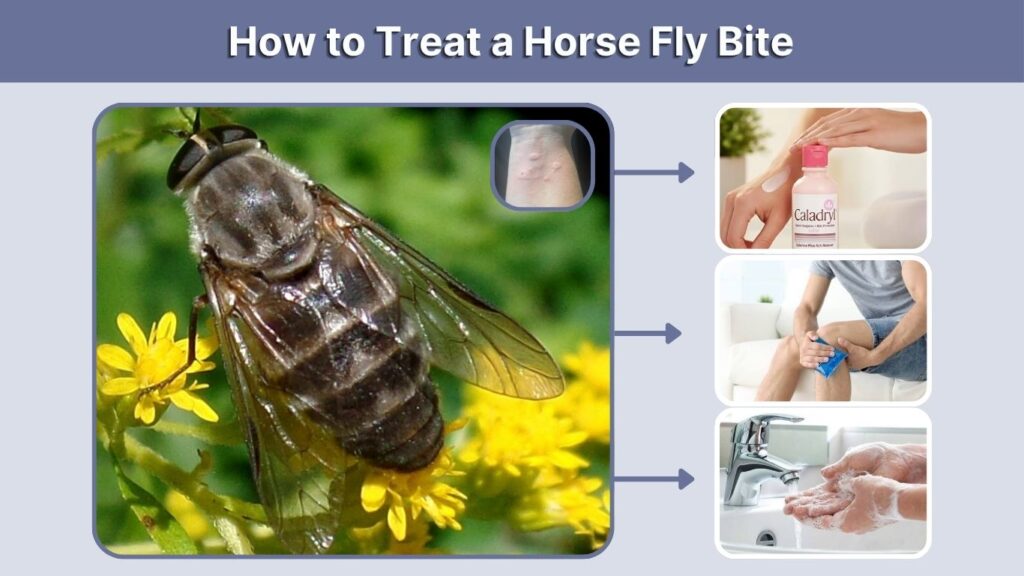
Most uncomplicated horse fly bites can be managed with basic first aid. Keeping the wound clean is especially important because the skin has been physically damaged.
Immediate Treatment
Wash the affected area gently with soap and clean water. A cold compress wrapped in cloth can then be placed over the bite for approximately 10–15 minutes to reduce discomfort and swelling.
Avoid repeatedly scratching or squeezing the area.
Managing Swelling and Itching
An over-the-counter anti-itch treatment or oral antihistamine may sometimes help with itching and minor allergic reactions when used according to the product directions.
Continue monitoring the bite while it heals.
When to Seek Medical Care
Get medical attention if symptoms become severe or unusual, particularly if you experience difficulty breathing, swelling of the face or throat, dizziness, or widespread hives.
Medical advice may also be necessary when redness continues spreading, pain becomes worse, pus develops, or other signs of infection appear.
Horse Fly Life Cycle
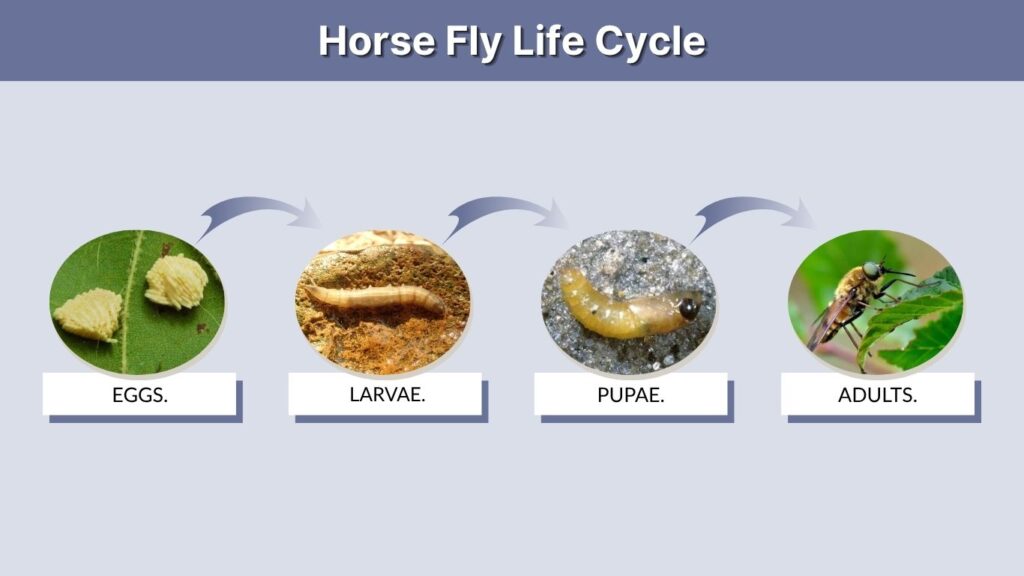
Horse flies undergo complete metamorphosis, progressing through egg, larval, pupal, and adult stages. Much of their development happens away from the animals and humans that adult females eventually bite.
Eggs
Female horse flies usually deposit clusters of eggs on vegetation near water or moist soil. Locations around ponds, marshes, streams, and wetlands provide suitable conditions for developing larvae.
After hatching, young larvae generally move into nearby moist environments.
Horse Fly Larvae
Horse fly larvae are elongated and worm-like. Many develop in mud, wet soil, decaying organic material, or shallow aquatic habitats.
Depending on the species, larvae may prey on smaller organisms or consume organic material. The larval stage can last considerably longer than the adult stage.
Pupae and Adults
When development is complete, larvae move into relatively drier soil and form pupae. Adults later emerge and begin searching for food and mates.
Adult horse flies are generally most noticeable during warmer months when they are actively flying.
Horse Fly vs Deer Fly
Horse flies and deer flies belong to the same family, so they share several characteristics. Both have females capable of delivering painful blood-feeding bites.
However, their appearance can often help distinguish them.
Horse Fly Appearance
Horse flies generally have:
- Larger, heavier bodies
- Broad heads
- Powerful flight
- Clear or relatively lightly patterned wings
- Gray, brown, or black coloration
Deer Fly Appearance
Deer flies are usually somewhat smaller. Many have yellowish or dark bodies and noticeable patterns on their wings.
Both can aggressively circle people or animals before landing.
Horse Fly vs House Fly
House flies are considerably smaller and do not bite people. Their mouthparts are adapted for consuming liquid or softened food.
Horse flies are larger, stronger fliers and have females equipped with mouthparts specifically designed to cut skin and consume blood.
Where Do Horse Flies Live?
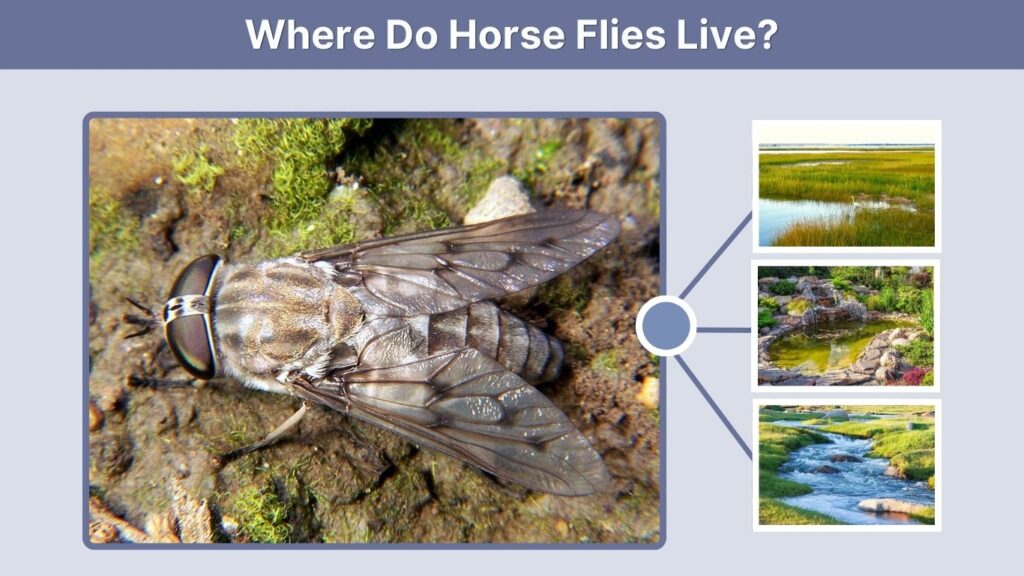
Horse flies occur in many environments but are strongly associated with areas containing moisture. Their larvae require suitable aquatic or semi-aquatic habitats for development.
Adults may travel considerable distances from breeding locations while searching for animals.
Common Horse Fly Habitats
Horse flies frequently occur around:
- Marshes
- Ponds
- Lakes
- Streams
- Wet fields
- Woodlands
- Pastures
- Farms
- Horse stables
- Cattle areas
Warm, humid weather generally increases adult activity.
How to Get Rid of Horse Flies
Completely eliminating horse flies from a large outdoor property can be difficult because adults are strong fliers and may travel from surrounding areas. A combination of trapping, environmental management, repellents, and physical protection usually provides better results than relying on one method.
Use Horse Fly Traps
Several traps are designed specifically for large biting flies. Many rely on dark moving objects or other visual cues that resemble potential animal hosts.
Position traps in sunny areas where horse fly activity is consistently high, while keeping them somewhat away from frequently occupied spaces.
Reduce Breeding Opportunities
Removing standing water where practical can help reduce habitats available to many unwanted insects.
However, horse fly larvae may develop in natural wetlands and muddy areas that cannot realistically be removed. Maintaining drainage around barns, paddocks, and animal areas can still reduce suitable habitat immediately around a property.
Use Horse Fly Repellent
Repellents can provide temporary protection for people when spending time outdoors. Products intended for horses can also help protect livestock when applied according to label instructions.
Because protection varies by product and environmental conditions, reapplication may be necessary.
Protect Horses
Fly masks and fly sheets create physical barriers that prevent insects from easily reaching sensitive areas.
Horse owners commonly combine protective clothing with approved fly sprays, traps, stable sanitation, and manure management.
Horse Fly Mouthparts: Do They Have Teeth?
Horse flies do not have teeth like mammals. However, female horse flies possess specialized blade-like mouthparts capable of cutting the skin.
These cutting structures create a shallow wound. Blood then pools at the surface where the fly can consume it.
This feeding method explains why a horse fly bite often feels much more painful immediately than a mosquito bite.
FAQs
1. Are horse flies dangerous?
Horse flies are mainly troublesome because their bites are painful and can produce significant swelling. Serious reactions are uncommon, but severe allergic symptoms require prompt medical attention.
2. Why do horse flies bite?
Female horse flies consume blood because nutrients from the meal help support egg development. Male horse flies normally feed on nectar and other plant-based sugars.
3. How long do horse fly bites last?
Minor bites often improve over several days, although itching, redness, or swelling may persist longer depending on an individual’s reaction.
4. Can horse flies bite dogs?
Yes. Horse flies can bite dogs and other mammals. Bites are often found on exposed areas where fur provides less protection.
5. What attracts horse flies?
Horse flies locate hosts using several cues, including movement, body heat, carbon dioxide, and visual contrast. Livestock and other large mammals can therefore attract considerable horse fly activity.