
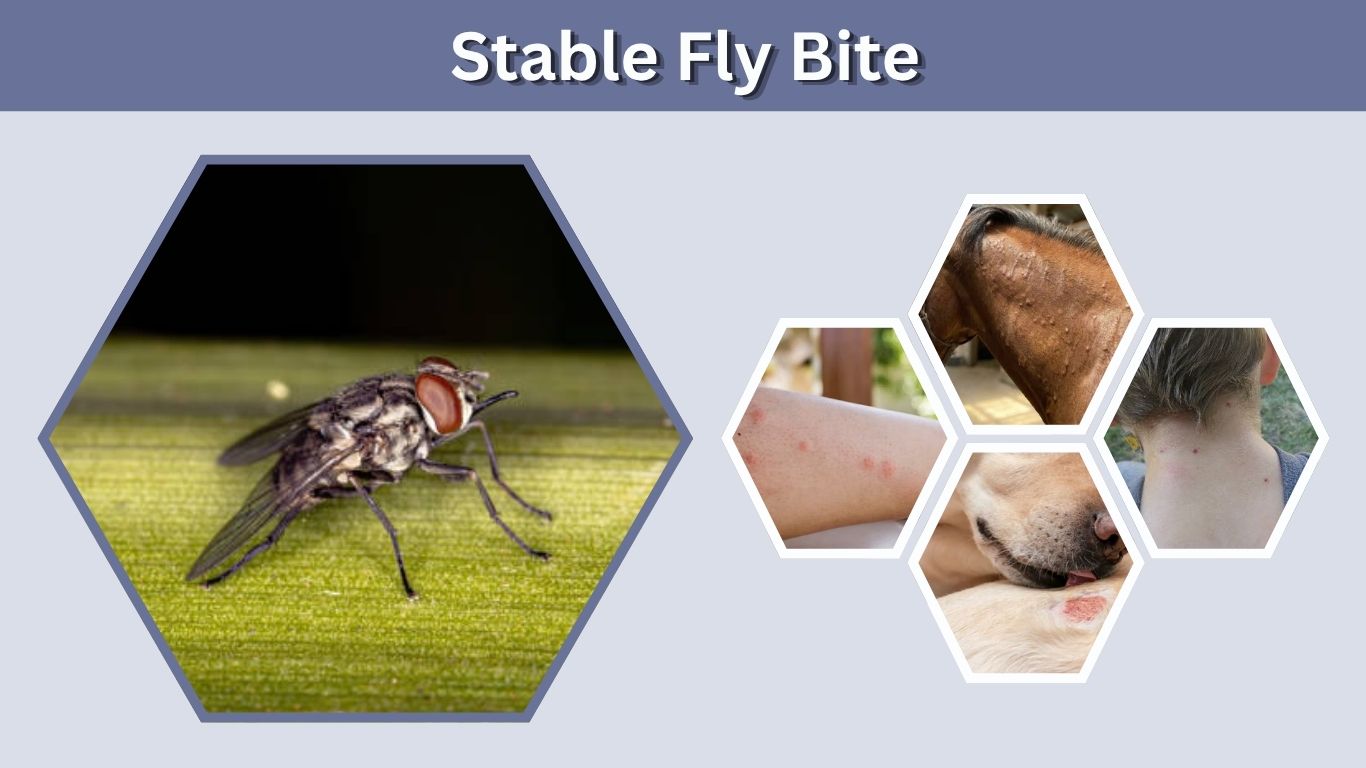
A stable fly bite can be surprisingly painful for such a small insect. Stable flies closely resemble house flies, but they have piercing mouthparts and feed on blood. They commonly attack the ankles and lower legs of humans, horses, dogs, and other animals. A bite usually causes immediate pain followed by redness, itching, or mild swelling. Most stable fly bites improve with simple home care, but occasionally stronger reactions or infection can develop. Knowing the symptoms and proper treatment can make bites easier to manage.
What Does a Stable Fly Bite Look Like?
Stable flies (Stomoxys calcitrans) are small gray flies that can easily be mistaken for house flies. Unlike house flies, however, stable flies bite and may even bite through some clothing. They show a particular tendency to attack people’s ankles and lower legs.
Stable Fly Bite Identification
- Small red or pink bump
- Tiny central puncture point
- Mild swelling around the bite
- Redness surrounding the affected area
- Burning or stinging sensation
- Itching that may develop later
- One bite or several bites close together
- Most commonly found on ankles and lower legs
A stable fly bite picture may resemble bites from other blood-feeding insects, so appearance alone does not always identify the cause. Seeing small house-fly-like insects repeatedly landing and biting the legs provides an important additional clue.
Why Do Stable Flies Bite?
Stable flies are blood-feeding insects rather than flies that simply land on food or garbage. Their feeding behavior explains why people notice an immediate sharp sensation when one lands and begins feeding.
Both livestock areas and outdoor recreational locations can experience stable fly problems when populations become abundant.
How Do Stable Flies Bite?
Stable flies use specialized piercing mouthparts to penetrate the skin and obtain blood. Unlike mosquitoes, which can sometimes begin feeding without immediately being noticed, stable fly bites are often felt almost at once.
Their persistent feeding behavior means a disturbed fly may repeatedly attempt to land again.
Stable flies can travel substantial distances looking for blood meals, so bites do not necessarily mean the insects are breeding directly beside you.
Why Do Stable Flies Bite Ankles?
Stable flies have a strong tendency to attack the lower portions of humans and animals. On people, this commonly means the ankles and lower legs. University of Minnesota Extension specifically notes that stable flies particularly attack ankles.
Why Lower Legs Are Common Targets
The exact landing location can depend on accessibility and movement, but several practical factors make lower legs frequent targets:
- Ankles are commonly exposed in warm weather
- Stable flies naturally concentrate on animals’ legs
- Socks and pant openings can leave accessible skin
- Flies often approach relatively close to ground level
- Repeated landing attempts may concentrate several bites in one area
Wearing long pants, socks, and closed shoes can therefore provide a useful physical barrier in areas with high stable fly activity.
Stable Fly Bite Symptoms
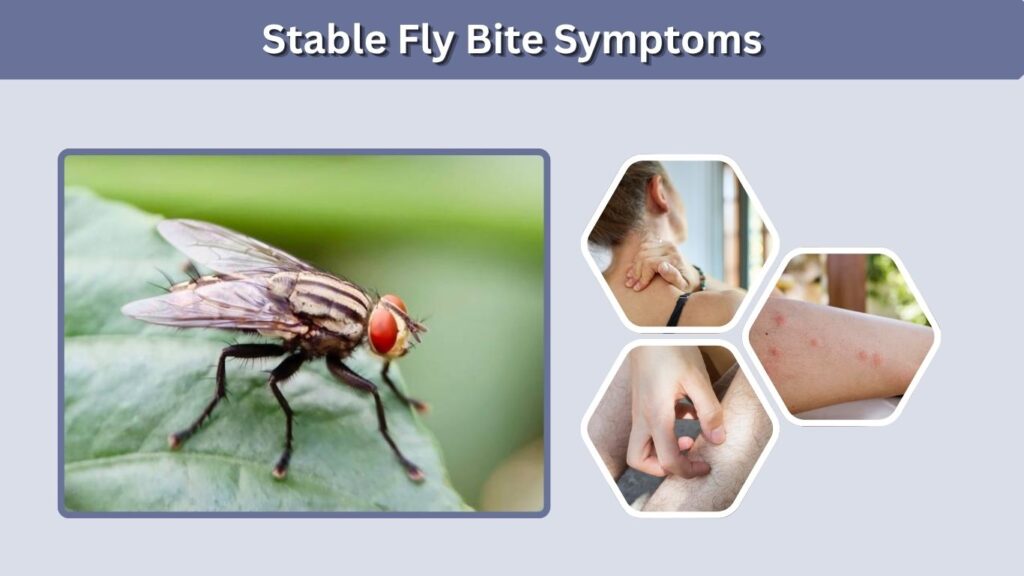
Most reactions are localized around the site where the fly pierced the skin. The first sensation is often more painful than itchy, with itching and inflammation developing afterward. The intensity varies according to the person and the number of bites.
Common Symptoms
- Immediate sharp or burning pain
- Small raised red bump
- Localized redness
- Mild to moderate itching
- Tenderness around the puncture
- Warmth at the bite site
- Minor swelling
- Several irritated spots after repeated bites
Most ordinary insect-bite reactions are mild and involve redness, itching, or swelling around the affected skin.
Do Stable Fly Bites Itch?
Yes, a stable fly bite can itch. The initial bite may feel sharp or painful, but the surrounding skin can become increasingly itchy afterward.
How strongly someone reacts varies. One person may develop only a small red mark, while another may experience a larger swollen area.
How Long Do Stable Fly Bites Last?
There is no single exact duration for every bite. Minor insect-bite reactions commonly settle over several days, although larger local reactions may take longer to disappear.
Repeated scratching can prolong irritation and increase the chance of damaging the skin. If redness and pain are becoming worse rather than gradually improving, infection or a stronger inflammatory reaction should be considered.
How to Treat Stable Fly Bites
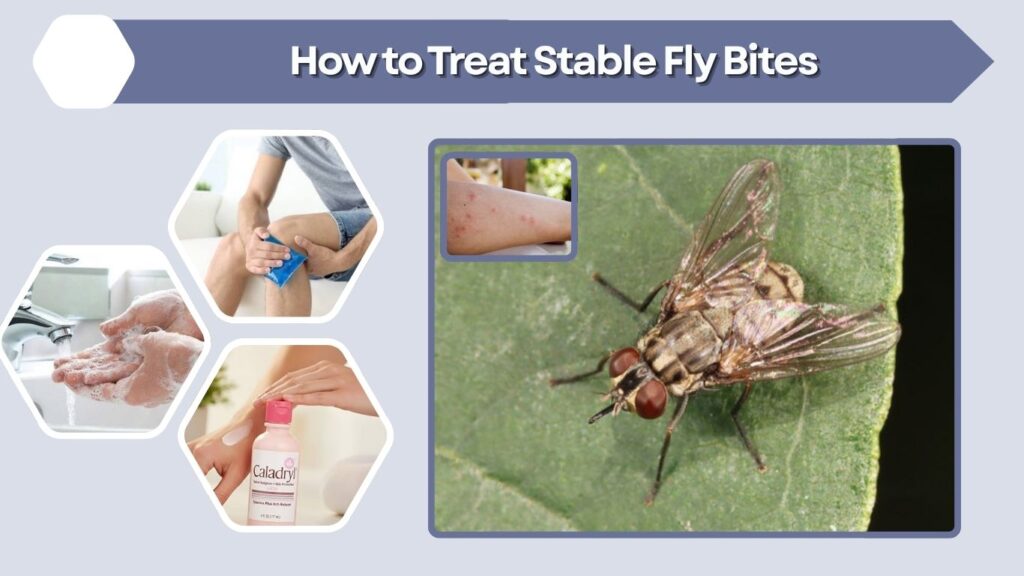
Most uncomplicated stable fly bites can be managed similarly to other minor insect bites. The priorities are cleaning the skin, controlling swelling and discomfort, and avoiding scratching.
Mayo Clinic recommends washing minor insect bites with soap and water and using a cold compress for approximately 10–20 minutes to reduce pain and swelling.
Stable Fly Bite Treatment
- Move away from the area to prevent additional bites.
- Wash the affected skin gently with soap and water.
- Apply a cold compress for about 10–20 minutes.
- Elevate the leg if swelling is noticeable.
- Avoid scratching the bite.
- Calamine lotion or low-strength hydrocortisone may help itching.
- Ask a pharmacist or healthcare professional about an antihistamine if itching or swelling is troublesome.
These measures are intended for mild reactions. Treatment needs can differ for children, people taking medications, or anyone with significant allergies.
Stable Fly Bite Swelling and Allergic Reaction
A small amount of swelling around a stable fly bite is not unusual. Occasionally, however, an insect bite can cause a stronger localized reaction in which swelling expands over several hours before gradually improving.
Signs That Need Medical Attention
Seek medical advice if you notice:
- Rapidly increasing redness or swelling
- Severe or worsening pain
- Pus or drainage
- Increasing warmth around the wound
- Fever or feeling generally unwell
- Swelling that becomes unusually extensive
- Symptoms that continue worsening instead of improving
Difficulty breathing, throat or tongue swelling, difficulty swallowing, severe dizziness, or fainting can indicate a severe allergic reaction and require emergency medical attention.
Can a Stable Fly Bite Become Infected?
Any insect bite can potentially become infected when the skin barrier is broken, particularly if the area is scratched repeatedly.
An infected bite tends to become increasingly painful, swollen, warm, or red rather than gradually settling. NHS guidance notes that insect-bite areas can become more swollen and painful when infection develops.
Stable Fly Bite Infection
Avoid squeezing or repeatedly picking at the bite. Keep the area clean and try not to scratch.
If redness begins spreading significantly, pain increases, drainage appears, or you develop systemic symptoms such as fever, have the area assessed by a healthcare professional rather than continuing home treatment alone.
Stable Fly Bites on Dogs and Horses
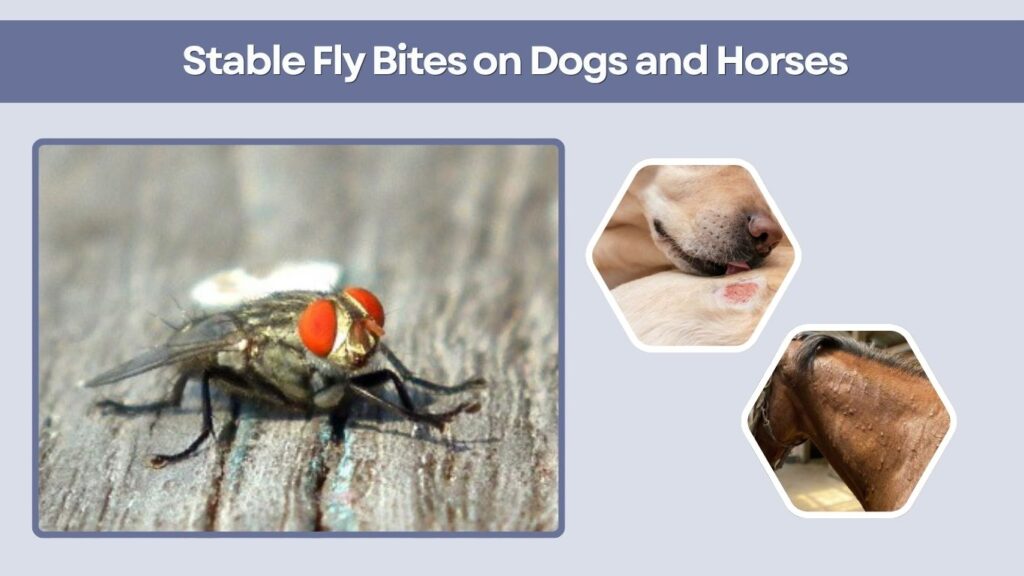
Stable flies do not only bite humans. They are major blood-feeding pests of livestock and frequently attack the legs of cattle and horses. Animals may respond with foot stomping, tail switching, skin twitching, or bunching behavior while attempting to escape the flies.
Stable Fly Bites on Animals
Repeated attacks can cause:
- Visible irritation
- Frequent leg stomping
- Tail swishing
- Restlessness
- Avoidance behavior
- Small irritated or crusted areas
- Stress during heavy fly activity
Persistent sores, excessive swelling, eye involvement, or signs of infection in a pet or livestock animal should be evaluated by a veterinarian.
How to Prevent Stable Fly Bites
Reducing personal exposure helps immediately, but controlling nearby breeding sites is also important. Stable flies reproduce in damp decaying organic material, including soiled animal bedding and rotting grass clippings.
Stable Fly Bite Prevention
- Wear long pants outdoors in infested areas
- Cover ankles with socks and closed shoes
- Use an appropriate insect repellent according to its label
- Remove wet animal bedding
- Dispose of rotting grass and plant material
- Keep manure and organic waste properly managed
- Improve drainage around barns and animal areas
- Use stable-fly-specific traps where appropriate
- Keep animal resting areas clean and dry
Stable fly traps can help reduce adults, but removing breeding material provides better long-term control than relying on traps alone.
Stable Fly Bite vs Other Fly Bites
Stable fly bites can overlap in appearance with horse fly, deer fly, black fly, and other biting insect reactions. Identifying the insect and considering where the bites occur can make differentiation easier.
Stable Fly vs Horse Fly Bite
Stable flies are relatively small and resemble ordinary house flies. Horse flies are much larger and often create more substantial wounds because their mouthparts cut the skin.
Stable flies also characteristically focus on ankles and lower legs, whereas horse flies may attack exposed skin on several parts of the body.
FAQs
Do Stable Flies Bite Humans?
Yes. Stable flies readily take blood meals from humans as well as livestock and other animals. Their bites are often immediately painful, and they commonly target the ankles and lower legs.
Are Stable Fly Bites Dangerous?
Most stable fly bites cause only localized pain, itching, redness, or swelling. Seek medical attention for worsening infection symptoms or a significant allergic reaction.
Do Stable Fly Bites Hurt?
Yes. Stable fly bites are usually painful because the insect pierces the skin to obtain blood. Many people notice a sharp or burning sensation immediately.
How Long Does a Stable Fly Bite Take to Heal?
Minor bites usually improve over several days, although stronger local reactions may last longer. Persistent or worsening symptoms should be assessed rather than assumed to be a normal bite reaction.
What Is the Best Relief for a Stable Fly Bite?
Wash the area with soap and water and apply a cold compress for 10–20 minutes. Calamine or low-strength hydrocortisone may help with itching, while persistent or severe symptoms warrant medical advice.