
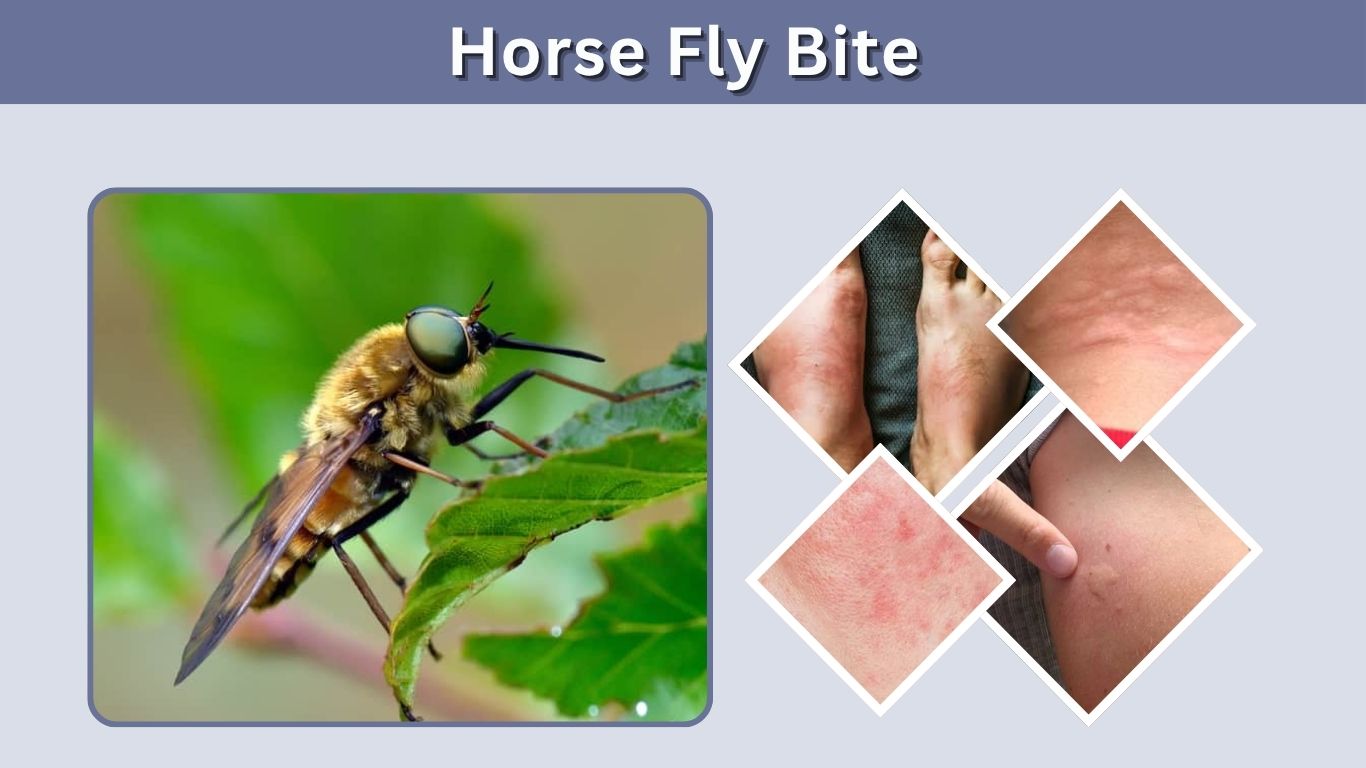
A horse fly bite can be surprisingly painful because the insect cuts the skin rather than simply piercing it like a mosquito. Most bites cause a raised red or discolored bump, swelling, tenderness, itching, and sometimes a small amount of bleeding. Although horse fly bites usually improve within a few days, some people develop significant swelling, an allergic reaction, or a secondary skin infection. Knowing what a horse fly bite looks like, how symptoms normally progress, and how to treat it can help you manage the discomfort safely.
What Does a Horse Fly Bite Look Like?
Horse fly bites are usually easy to notice because they often hurt immediately. The affected skin may develop a raised, red or discolored bump soon after the fly feeds. A small amount of blood may also be visible because female horse flies use cutting mouthparts that physically damage the surface of the skin.
Common Appearance
A typical horse fly bite may have:
- A raised red or discolored bump
- Swelling around the bite
- A small central wound
- Tender or painful skin
- Itching
- Mild bleeding immediately after the bite
- Warmth around the affected area
The appearance varies from person to person. Some develop only a small bump, while others experience a much larger area of swelling.
What Does a Bad Horse Fly Bite Look Like?
A stronger local reaction can produce considerable redness and swelling extending beyond the original bite. The area may become increasingly itchy, tender, or warm.
Large swelling does not automatically mean the bite is infected. Local allergic reactions can also become larger over several hours before gradually improving over several days.
Horse Fly Bite Symptoms and Stages
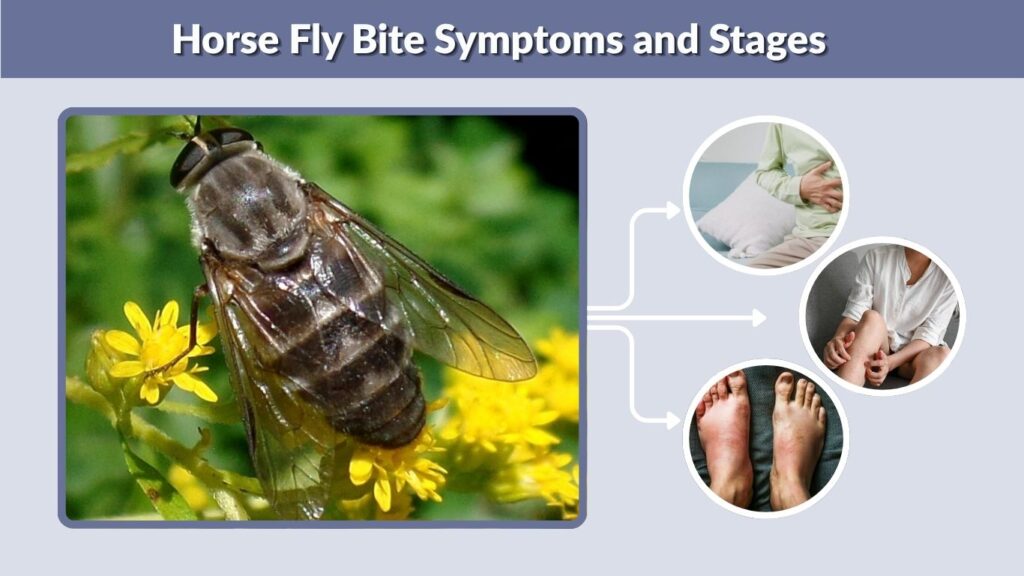
Symptoms usually begin immediately because horse fly bites tend to be painful. Most uncomplicated bites improve within several days, although swelling or itching may occasionally last longer.
Stage 1: Immediate Pain
The first symptom is commonly a sudden sharp or burning sensation. You may actually see the horse fly on your skin when the pain begins.
A small wound or spot of blood can sometimes appear because the fly cuts the skin while feeding.
Stage 2: Redness and Swelling
During the next several hours, a raised bump may develop. The surrounding skin can become red or discolored, swollen, tender, and itchy.
The amount of swelling depends partly on how strongly your immune system reacts to the bite.
Stage 3: Itching and Irritation
Pain may gradually decrease while itching becomes more noticeable. Scratching should be avoided because damaged skin makes it easier for bacteria to enter and cause infection.
Stage 4: Healing
Most uncomplicated horse fly bites gradually become less swollen and painful over the following days.
If the bite instead becomes increasingly painful, hot, swollen, or starts producing pus, an infection may be developing and medical advice may be needed.
How to Treat a Horse Fly Bite
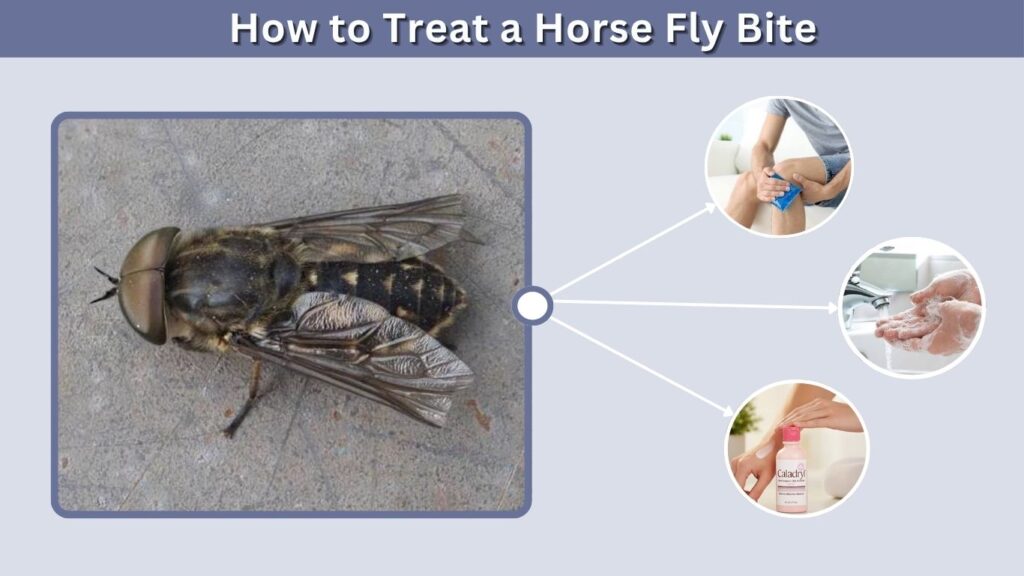
Most horse fly bites can be treated at home using simple first-aid measures. The main goals are to keep the wound clean, reduce swelling and control pain or itching while the skin heals.
Wash the Bite
Wash the area gently with soap and water. Cleaning the wound helps reduce the possibility of bacteria entering the damaged skin.
Avoid aggressively rubbing or squeezing the bite.
Apply a Cold Compress
Place an ice pack wrapped in cloth or a clean cold, damp cloth over the bite for about 20 minutes if the area is swollen.
Cold treatment can help reduce inflammation and discomfort. If the bite is on an arm or leg, keeping the limb elevated may also reduce swelling.
Manage Pain and Itching
Depending on your health and medications, common pain relievers may help with discomfort. Antihistamines can sometimes reduce itching, while hydrocortisone cream may help reduce itching and swelling.
Follow the medicine’s directions and ask a pharmacist or healthcare professional if you are unsure whether a medication is appropriate for you.
Avoid Scratching
Scratching may provide temporary relief but can break the skin and increase the risk of bacterial infection.
Keeping the bite clean and leaving it alone as much as possible generally supports uncomplicated healing.
Horse Fly Bite Swelling and Allergic Reactions
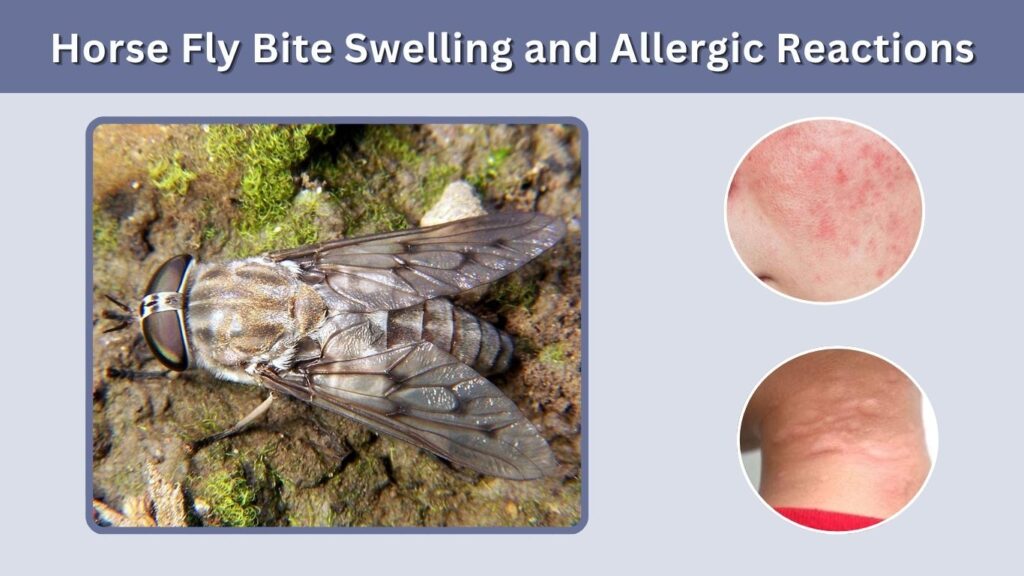
Some people experience a stronger immune response to insect bites. Swelling may become noticeably larger during the hours following a horse fly bite and then gradually decrease.
Normal Local Swelling
A mild-to-moderate amount of swelling, tenderness, redness, and itching can occur around an uncomplicated bite.
Cold compresses, elevation, and appropriate over-the-counter treatments may help control these symptoms.
Horse Fly Bite Hives
Hives, spreading itching, or swelling extending beyond the immediate bite area can indicate an allergic reaction.
Minor reactions may improve without emergency treatment, but symptoms that continue worsening should be assessed by a healthcare professional.
Severe Allergic Reaction
Rarely, an insect bite can trigger a serious allergic reaction known as anaphylaxis.
Emergency symptoms can include:
- Swelling of the lips, tongue, mouth, or throat
- Difficulty breathing or wheezing
- Trouble swallowing
- Severe dizziness
- Fainting
- Rapidly worsening generalized symptoms
These symptoms require immediate emergency medical attention.
Infected Horse Fly Bite
A horse fly bite can become infected, particularly if repeated scratching damages the skin. An infection may develop a few days after the original bite rather than appearing immediately.
Signs of Infection
Watch for:
- Increasing redness
- Increasing pain or swelling
- Skin that feels unusually hot
- Pus or drainage
- Red streaks spreading from the bite
- Swollen lymph nodes
- Fever or chills
These symptoms should be evaluated by a healthcare professional because bacterial skin infections may require treatment.
Horse Fly Bite vs Cellulitis
Cellulitis is a bacterial infection involving deeper layers of the skin. Increasing warmth, redness, swelling, tenderness, and spreading discoloration after an insect bite can be warning signs.
Do not assume every large swollen bite is cellulitis, however. Allergic and inflammatory reactions can also produce substantial swelling. A clinician can determine whether infection is present.
Why Do Horse Flies Bite?
Only female horse flies take blood meals. Their mouthparts are adapted to cut the skin and then collect the blood that pools at the surface.
This feeding method is one reason a horse fly bite tends to be more immediately painful than a mosquito bite.
Do Horse Fly Bites Hurt?
Yes. Pain is commonly the first noticeable symptom.
Because the skin is physically cut during feeding, people frequently notice the bite while the fly is still attached rather than discovering it later.
Giant and Black Horse Fly Bites
Large or black horse flies use the same general blood-feeding method. A larger fly may appear more alarming, but symptoms still depend heavily on the individual’s reaction and the specific bite.
Monitor any bite for unusual swelling, allergic symptoms, or evidence of infection.
Horse Fly Bites on Dogs
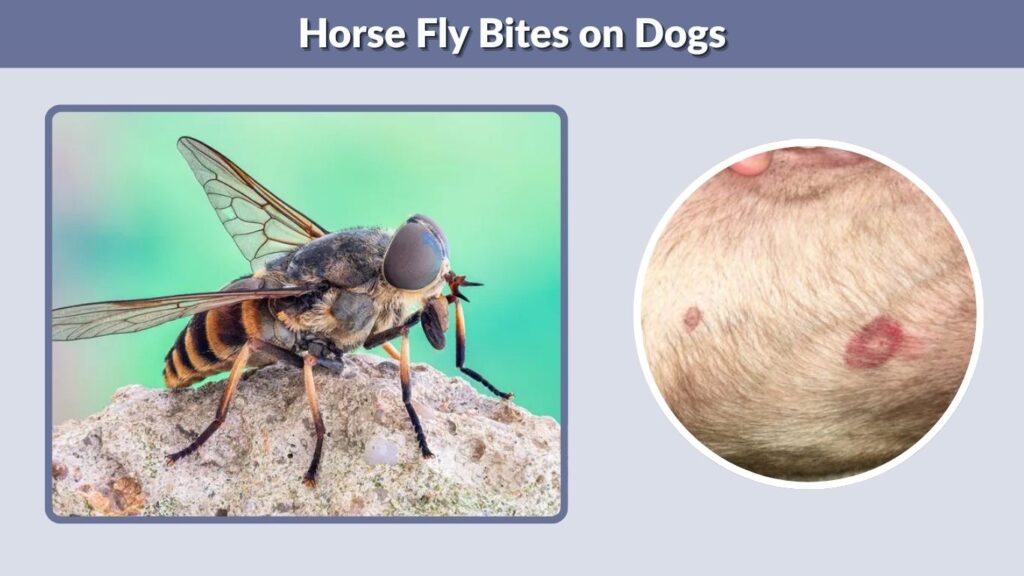
Horse flies can also bite dogs because females feed on the blood of mammals. Exposed areas with thinner hair may be easier for flies to reach.
A dog may lick, scratch, or repeatedly bother the affected area after being bitten.
What to Do for a Dog
If you notice a suspected horse fly bite, keep the area clean and discourage excessive licking or scratching.
Contact a veterinarian if your dog develops pronounced swelling, persistent bleeding, signs of infection, unusual weakness, difficulty breathing, or another concerning reaction.
How to Prevent Horse Fly Bites
Reducing exposure is often easier than trying to stop a horse fly after it has targeted you. Horse flies are particularly associated with warm, wet areas and locations where livestock or other mammals are present.
Wear Protective Clothing
Long pants, long sleeves, and other protective clothing reduce the amount of exposed skin available to biting insects.
Light-colored clothing may also be preferable when horse flies are active.
Use Insect Repellent
Repellents containing ingredients such as DEET or picaridin can provide additional protection when used according to the label directions.
Be Careful Around Horse Fly Habitats
Horse flies are frequently encountered near wetlands, marshes, livestock areas, bodies of water, and open areas beside woodlands.
Reducing time in areas with heavy activity can lower your chance of being bitten.
FAQs
1. How long does a horse fly bite last?
Most uncomplicated horse fly bites improve within a few days. Swelling or itching can sometimes last longer, particularly after a stronger local reaction.
2. Does a horse fly bite or sting?
Horse flies bite rather than sting. Female horse flies use specialized mouthparts to cut the skin and feed on blood.
3. Why is my horse fly bite so swollen?
Swelling develops because your immune system reacts to substances introduced during feeding. Some people experience stronger local reactions than others. Rapidly worsening swelling accompanied by heat, pus, severe pain, or other concerning symptoms should be medically assessed.
4. Should I pop a horse fly bite?
No. Avoid squeezing, scratching, or deliberately opening the bite. Damaging the skin further can increase irritation and the risk of infection.
5. When should I worry about a horse fly bite?
Seek medical advice if symptoms continue worsening, the area becomes increasingly hot or painful, pus develops, or you develop fever or spreading redness. Difficulty breathing, throat or tongue swelling, severe dizziness, or fainting requires immediate emergency care.