
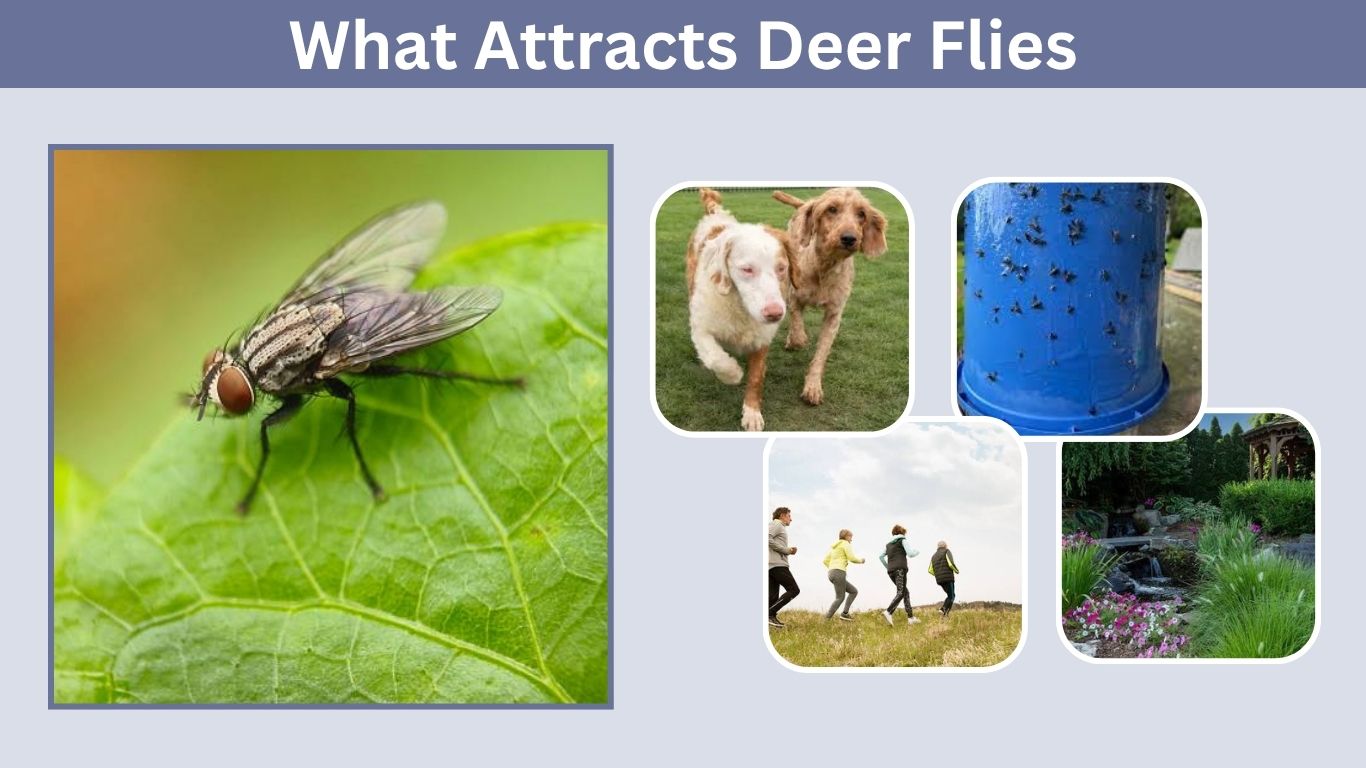
Deer flies are persistent daytime pests that may repeatedly circle your head before delivering a painful bite. They locate people and animals by combining visual signals with odors and gases produced by the body. Movement, carbon dioxide, dark shapes, certain colors, body warmth, and activity near wetlands can all increase encounters. Understanding what attracts deer flies can help you choose better clothing, adjust outdoor activities, improve your yard, and use traps more effectively.
What Are Deer Flies Attracted To?
Deer flies are mainly attracted to signals suggesting that a living host is nearby. Female deer flies need blood to develop their eggs, so they actively search for people, deer, livestock, and other mammals. Their large eyes make them particularly effective at detecting moving objects during daylight.
| Attraction factor | Why it attracts deer flies |
| Movement | Makes a person or animal easier to identify |
| Carbon dioxide | Signals that a breathing host is nearby |
| Dark or contrasting shapes | Resemble the outline of a large animal |
| Blue and black colors | Provide strong visual attraction for many biting flies |
| Body odors and sweat | Contain chemical signals associated with mammals |
| Moist, wooded surroundings | Provide suitable breeding and resting habitat |
| Livestock and pets | Supply blood meals for female flies |
What Attracts Deer Flies to Humans?
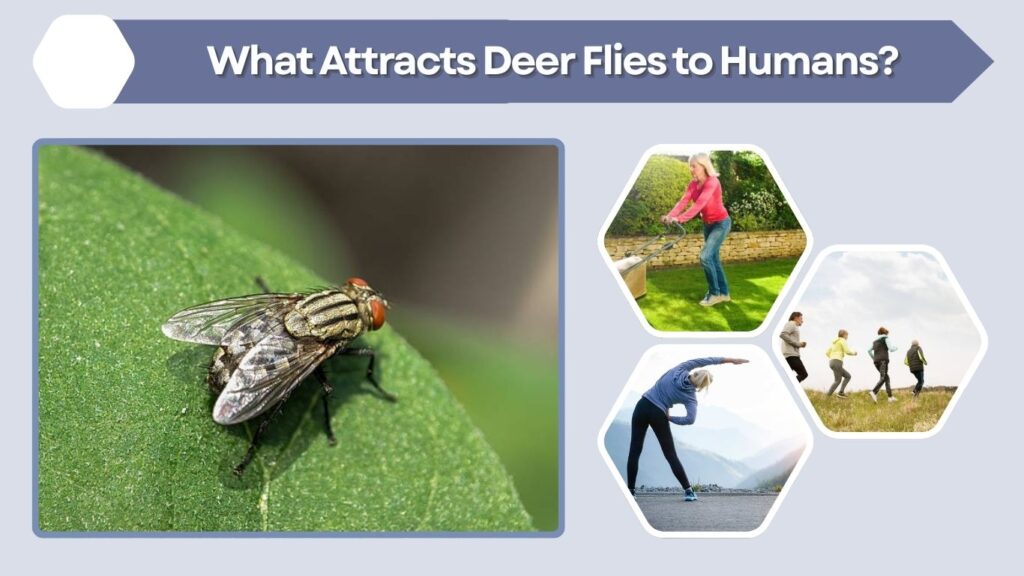
People produce several signals at the same time. A deer fly may first detect movement or a dark silhouette and then use carbon dioxide and body odors to locate the host more precisely.
Carbon Dioxide From Breathing
Every time you breathe, you release carbon dioxide. Female tabanid flies—the insect family containing deer flies and horse flies—use carbon dioxide as an important host-seeking cue.
Carbon dioxide becomes especially noticeable when someone is exercising, mowing grass, hiking, or working outdoors because heavier breathing releases more of it. Deer flies may therefore seem more aggressive when you are physically active.
Movement
Movement is one of the strongest deer fly attractants. Walking, running, cycling, operating lawn equipment, or waving your arms can make you stand out from the surrounding vegetation.
Their attraction to movement explains why deer flies often follow people along trails or circle moving vehicles. It also explains why moving blue sticky traps may catch more flies than traps that remain completely still.
Body Odor and Sweat
Deer flies can detect odors associated with potential hosts. Sweat, skin secretions, and compounds such as ammonia may contribute to their ability to recognize mammals.
Sweating also usually occurs alongside increased breathing and body temperature. These combined signals can make a person doing yardwork more attractive than someone sitting quietly nearby.
Body Heat
Warm skin may provide an additional close-range clue that a living host is available. However, visual movement, contrast, carbon dioxide, and odor appear to be more important for initially bringing deer flies toward a person.
Large, Dark Silhouettes
Deer flies look for shapes resembling animals. A person wearing dark clothing can create a strong silhouette against grass, sky, or pale surroundings.
This may explain why one person in a group receives more attention than others. Clothing color, movement, position, breathing rate, and individual body odor can all affect how noticeable someone becomes.
What Colors Attract Deer Flies?
Blue and dark colors are commonly used in deer fly traps because they provide an attractive visual target. Researchers studying biting flies suggest that blue objects can resemble the visual appearance of animal hosts when viewed through a fly’s sensory system.
Are Deer Flies Attracted to Blue?
Yes, deer flies are often attracted to bright or medium blue objects, especially when those objects move. A common homemade deer fly trap uses an inverted blue cup or nursery pot covered with a sticky insect-trapping compound.
The blue color draws the flies toward the object, while movement makes it appear more like a potential host. University of Florida guidance specifically recommends bright blue for a DIY “trolling” deer fly trap.
Are Deer Flies Attracted to Black?
Black and other dark colors can also attract deer flies because they create strong contrast and may resemble the body of a large mammal. Dark-colored animals can receive more attacks than lighter-colored animals under similar conditions.
Black shirts, hats, backpacks, and dark vehicles may therefore attract more attention, particularly when moving through bright, open surroundings.
Which Colors Should You Wear?
Light-colored clothing may make you less visually noticeable than blue, black, or other dark clothing. Consider wearing white, beige, pale gray, or another light color during deer fly season.
Light clothing cannot make you invisible to deer flies because you will still release carbon dioxide, warmth, and body odors. It simply reduces one of the visual signals they use.
What Attracts Deer Flies to Your Yard?
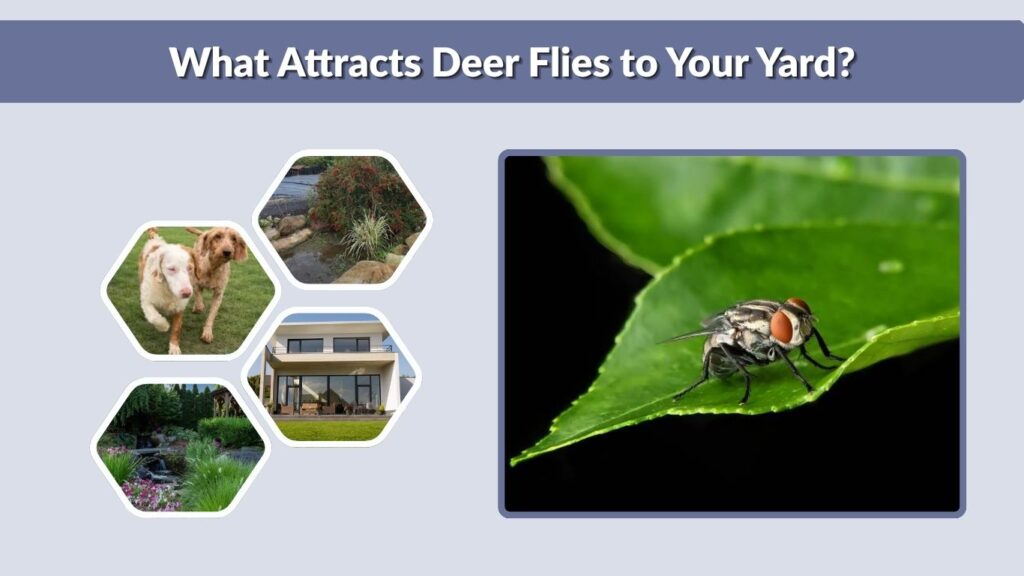
A yard can become attractive to deer flies because of its location, surrounding habitat, animals, or frequent human activity.
Wet or Damp Areas
Deer fly larvae develop in moist environments. Adults are particularly common around marshes, swamps, ponds, stream banks, wet soil, and damp woodland. Properties close to these environments may experience large seasonal populations.
Standing water in a small container is not necessarily the main issue, as it can be with mosquitoes. Deer fly larvae generally need larger areas of moist soil, mud, wet organic matter, or shallow aquatic habitat.
Wooded Edges and Dense Vegetation
Deer flies frequently rest around shrubs, low branches, wooded paths, and vegetation bordering wet areas. A shaded yard next to woodland or a pond may experience more activity than an exposed urban property.
Pets and Livestock
Dogs, horses, cattle, and other mammals provide blood-meal opportunities. Their movement, breathing, odors, and dark body shapes may keep female deer flies active around barns, pastures, kennels, and nearby homes.
Mowing and Yardwork
A moving lawn mower creates vibration, motion, heat, and exhaust, while the operator produces carbon dioxide and sweat. This combination can quickly attract deer flies.
Their attraction to mowers is sometimes used against them by securely attaching a blue sticky trap to the equipment, away from the operator and moving parts.
Are Deer Flies Attracted to Light or Bug Zappers?
Deer flies are daytime hunters that depend heavily on movement, contrast, shape, and host-related odors. They are not primarily nocturnal insects guided by ultraviolet light.
A bug zapper might kill an occasional deer fly that approaches it, but conventional light-based zappers are generally unreliable as the main control method. They may also kill harmless or beneficial insects that are more strongly attracted to light.
Blue-and-black sticky traps are usually more appropriately matched to deer fly behavior than ordinary ultraviolet zappers.
How to Attract and Kill Deer Flies
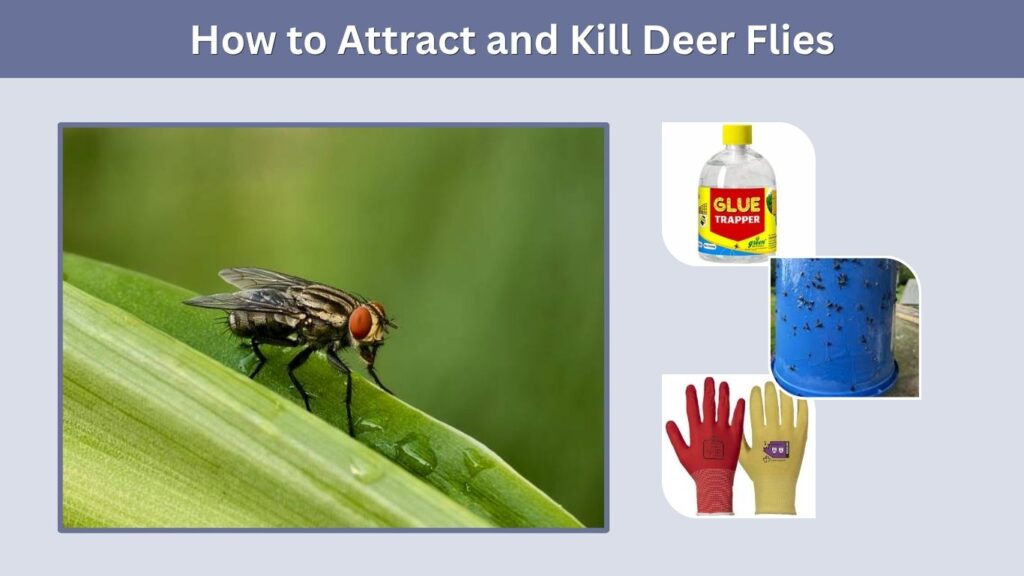
A simple visual sticky trap can reduce the number of deer flies in a localized area.
Homemade Blue Deer Fly Trap
You will need:
- A bright blue plastic cup or small nursery pot
- A non-drying sticky insect-trapping compound
- A secure post or mounting point
- Gloves for handling the adhesive
Turn the container upside down and coat its exterior with the sticky product according to its label. Place it where deer flies are active but where children, pets, birds, and passersby will not touch it.
Movement can improve catches. The trap may be mounted securely on suitable slow-moving equipment, but it must remain away from the operator, hot surfaces, and moving machinery. Never apply sticky trapping material directly to clothing, skin, or hair.
Traps can reduce activity around a small area, but they will not eliminate deer flies coming from surrounding wetlands or woodlands.
How to Make Yourself Less Attractive to Deer Flies
Wear light-colored, loose-fitting shirts, long pants, and a light hat when working outdoors. Avoid dark blue and black clothing during periods of heavy activity.
Limit strenuous outdoor work when deer flies are most active, and take breaks in screened buildings or sheltered areas. On your property, trim unnecessary dense vegetation near frequently used spaces and improve drainage where appropriate. Do not drain or damage natural wetlands, which may be protected and provide valuable wildlife habitat.
FAQs
Why are deer flies attracted to me?
You may be producing a noticeable combination of movement, carbon dioxide, sweat, warmth, and body odor. Dark clothing can make you stand out even more. Individual odor differences and activity levels may explain why deer flies target one person more heavily than another.
What color attracts deer flies the most?
Blue and black are among the most attractive colors used for biting-fly traps. Blue is especially common in homemade deer fly traps. Attraction also depends on contrast, movement, shape, location, and whether the object resembles a potential animal host.
Do deer fly like sweat?
Sweat may contribute odors and chemical cues that help deer flies recognize a host. Sweaty people are also usually warmer, moving more, and breathing harder, which increases carbon dioxide output and creates several attractive signals simultaneously.
Will a bug zapper attract deer flies?
Standard ultraviolet bug zappers are not dependable deer fly attractants. Deer flies are active during daylight and respond strongly to movement, host odors, and visual contrast. A blue sticky trap generally targets their natural behavior more effectively.
What is the best homemade deer fly attractant?
A moving blue object is one of the most practical visual attractants. An inverted blue cup or nursery pot coated with a labeled sticky trapping material can catch deer flies. Place it safely in an active area without allowing people, pets, or wildlife to touch it.