
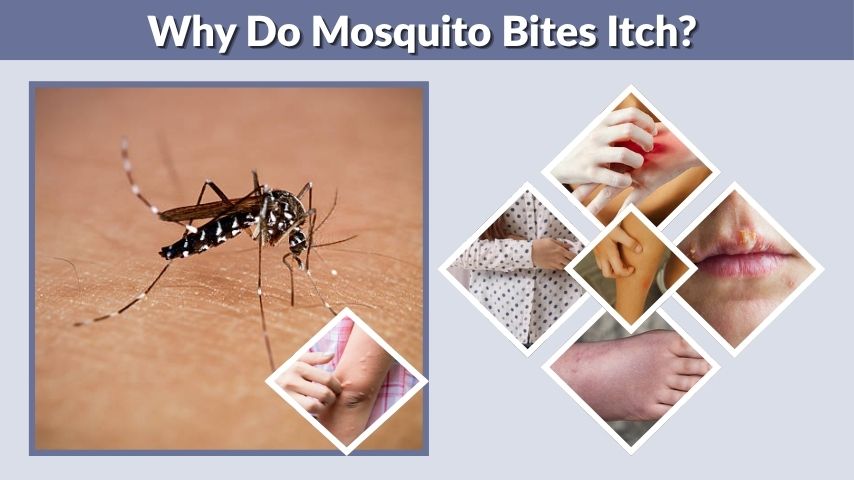
Mosquito bites itch because your body reacts to proteins in mosquito saliva. When a mosquito feeds, it injects saliva into the skin, and your immune system treats that saliva as a foreign substance. This reaction releases histamine, which causes itching, swelling, redness, and irritation. Some people barely notice mosquito bites, while others develop large itchy bumps that last for days. Understanding why bites itch can help you avoid scratching and calm the reaction faster.
Why Do Mosquito Bites Itch?
Mosquitoes itch because of your immune system, not because the mosquito leaves poison behind. A mosquito uses its mouthpart to pierce the skin and draw blood. During feeding, it injects saliva that helps it feed more easily. Your body reacts to that saliva, creating the itchy bump most people recognize. The CDC explains that mosquito saliva triggers the bump and itching response.
The Role of Mosquito Saliva
Mosquito saliva contains proteins that your body does not recognize. Once the saliva enters your skin, your immune system responds as if it has found an allergen. This response is meant to protect you, but it also causes discomfort.
The bite itself is usually small, but the immune reaction around it can become much larger. That is why the itchy bump may look bigger than the actual puncture mark.
Why Histamine Makes Bites Itch
Histamine is one of the main chemicals your immune system releases after a mosquito bite. It increases blood flow and helps immune cells reach the bite area. However, histamine also irritates nearby nerves, causing itching and swelling. Cleveland Clinic notes that histamine is what causes mosquito bites to itch and swell.
Why Do Mosquito Bites Itch So Much?
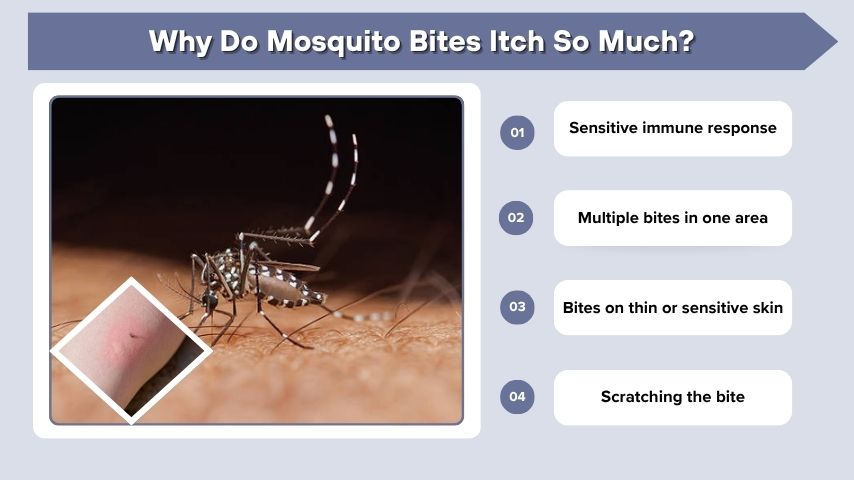
Some mosquito bites itch more than others because every person’s immune system reacts differently. The amount of saliva injected, the mosquito species, bite location, skin sensitivity, and previous exposure can all affect the reaction. For some people, a bite is a tiny bump. For others, it becomes swollen, hot, red, and intensely itchy.
Why Some People React More Strongly
People with stronger local reactions may be more sensitive to mosquito saliva. Children can also react strongly because their immune systems are still learning how to respond. Mayo Clinic notes that some bites can become very swollen, sore, and inflamed, a reaction sometimes called skeeter syndrome.
Common reasons bites may itch badly include:
- Sensitive immune response
- Multiple bites in one area
- Bites on thin or sensitive skin
- Scratching the bite
- Heat, sweat, or friction
- Allergic-type local swelling
- Delayed immune reaction
Why Some Mosquito Bites Do Not Itch
Some people do not itch much because their immune system reacts mildly to mosquito saliva. Others may become less reactive after repeated exposure over time. A bite can also seem not to itch at first, then become itchy later as the immune response develops.
Not itching does not always mean you were not bitten. It may simply mean your body did not create a strong histamine response.
Why Do Mosquito Bites Itch More at Night?
Mosquito bites often feel itchier at night because your body and environment change when you rest. During the day, movement, work, and distractions make the itch easier to ignore. At night, your attention shifts to your skin. Warm bedding, increased awareness, and less distraction can make the same bite feel much worse.
Nighttime Itching Triggers
At night, you may notice itching more because there are fewer competing sensations. The skin may also become warmer under blankets, and warmth can increase irritation. If you scratched earlier in the day, the bite may become inflamed by bedtime.
Nighttime itching may feel worse because of:
- Fewer distractions
- Warm blankets and body heat
- Sweat or skin friction
- Dry skin
- Scratching during sleep
- Clothes or sheets rubbing the bite
- Increased focus on the sensation
Why Bites on Feet and Ankles Itch More
Mosquito bites on feet and ankles can itch more because these areas rub against socks, shoes, bedding, and flooring. Skin on the feet may also be exposed to sweat and pressure. Scratching with toenails or rubbing the bite inside footwear can make inflammation worse.
Ankle bites are common because mosquitoes often fly low near the ground and may be attracted to exposed lower legs.
Why Scratching Makes Mosquito Bites Itch More
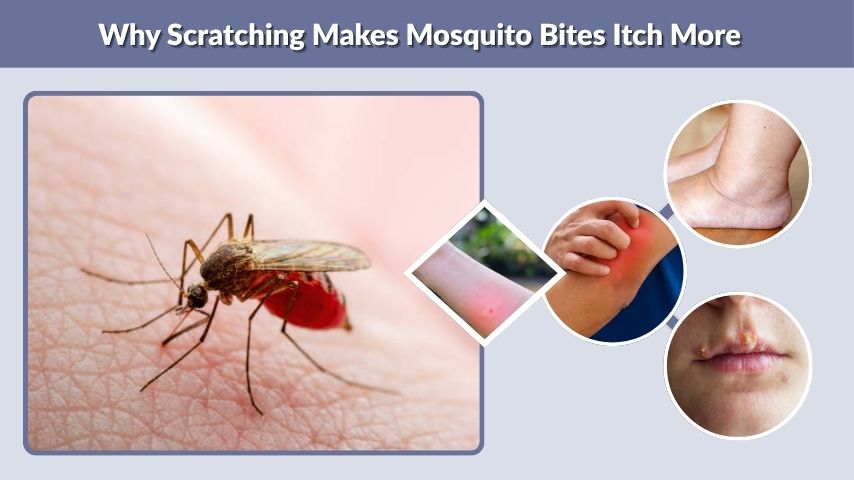
Scratching gives short relief because it creates a stronger sensation that temporarily distracts your nerves from the itch. However, it also irritates the skin and can increase inflammation. That is why mosquito bites often get bigger, redder, or itchier after scratching. The more you scratch, the more the bite area may react.
The Itch-Scratch Cycle
The itch-scratch cycle happens when scratching damages or irritates the skin, causing more inflammation and more itching. This can make you scratch again, continuing the cycle.
Scratching can lead to:
- More redness
- More swelling
- Broken skin
- Scabbing
- Bleeding
- Infection risk
- Longer healing time
Why Bites Get Bigger When You Scratch Them
A bite may grow after scratching because the skin becomes inflamed. Scratching increases blood flow and irritation around the area. It can also spread inflammatory chemicals through the surrounding skin, making the bump look wider or puffier.
If the skin breaks, bacteria can enter. This can turn a simple bite into a painful infected spot, especially if redness spreads or the area becomes warm and tender.
Why Do Mosquito Bites Itch Days Later?
Mosquito bites can itch days later because the immune response may continue after the mosquito is gone. Some reactions are delayed, especially in people with sensitive skin. A bite may also stop itching and start again if it is scratched, rubbed, exposed to heat, or irritated by clothing.
Itching 24 Hours or 2–3 Days Later
It is common for bites to itch more the next day. The immune response may build gradually, creating a delayed bump. Some people notice redness and puffiness soon after the bite, while others develop a stronger itchy bump later.
If the bite is improving overall, mild itching for a few days is usually not unusual. Mayo Clinic says mosquito bite bumps usually go away without treatment in a few days.
Itching for Weeks or Coming Back Randomly
A mosquito bite that itches for weeks may be due to repeated scratching, a strong local reaction, dry healing skin, or irritation from clothing. Sometimes the skin remains sensitive even after the main bump fades.
However, itching for weeks with worsening swelling, warmth, pus, spreading redness, fever, or pain should be checked by a healthcare professional. A large local inflammatory reaction may be skeeter syndrome, which can cause significant redness, warmth, swelling, and itching.
Mosquito Bite Itch, Swelling, and Burning
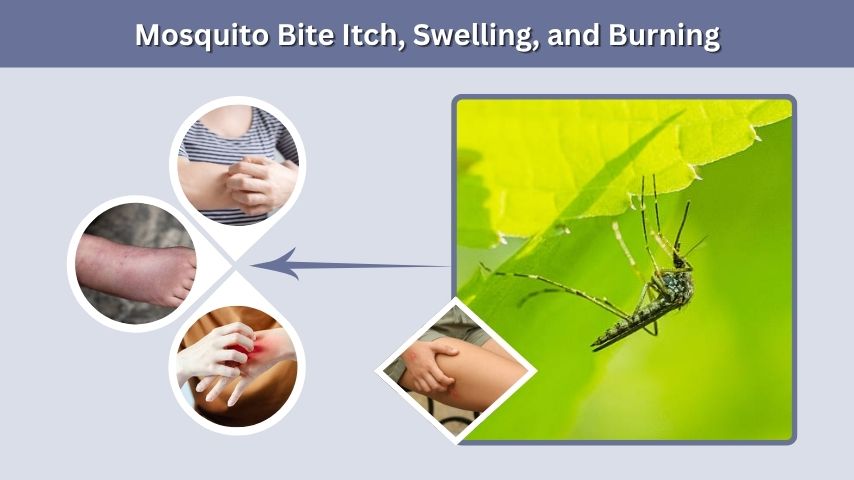
Itching often comes with swelling because histamine makes blood vessels more active around the bite. This brings immune cells to the area but also creates puffiness and redness. Some bites may burn or feel sore, especially if they are scratched, irritated, or part of a stronger local reaction.
Common Mosquito Bite Reactions
| Reaction | Why It Happens | What It May Mean |
| Itching | Histamine irritates nerves | Normal immune response |
| Swelling | Fluid and immune cells collect | Common bite reaction |
| Redness | Increased blood flow | Usually normal |
| Burning | Irritated or inflamed skin | May happen after scratching |
| Itching days later | Delayed or ongoing reaction | Often mild, monitor changes |
| Large swelling | Strong local immune response | Possible skeeter syndrome |
When It May Be More Than a Normal Bite
Most mosquito bites are minor and can be treated at home. However, some reactions need attention. Cleveland Clinic notes that bug bites and stings can sometimes trigger stronger immune reactions, including hives or breathing trouble.
Seek medical advice if the bite has spreading redness, severe pain, pus, fever, red streaks, or swelling that keeps getting worse. Get urgent help for trouble breathing, facial swelling, dizziness, or widespread hives.
How to Stop Mosquito Bites From Itching
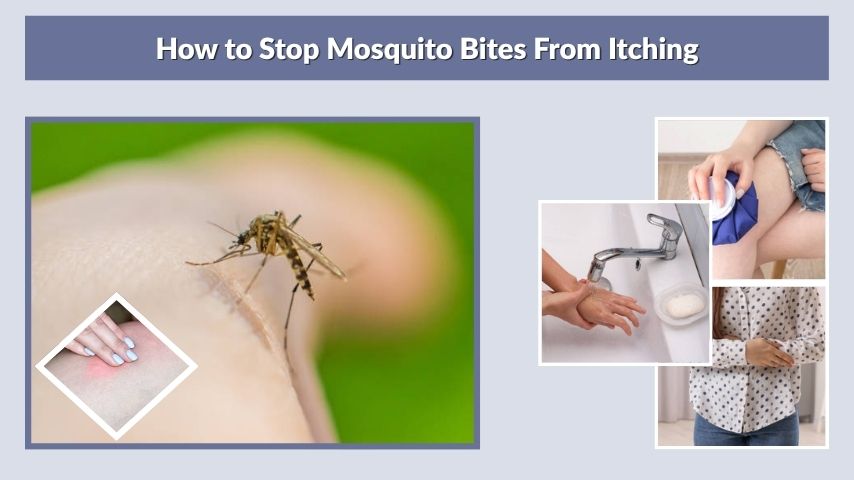
The best way to stop itching is to calm the immune reaction and avoid further skin irritation. Scratching may feel satisfying, but it usually makes the bite last longer. Simple steps like cooling the skin, reducing inflammation, and keeping the area clean can help most mild mosquito bites.
Simple Itch Relief Tips
Try these basic mosquito bite relief steps:
- Wash the bite with soap and water
- Apply a cold compress
- Avoid scratching
- Use an over-the-counter anti-itch cream if appropriate
- Keep fingernails short
- Cover the bite if you scratch while sleeping
- Wear loose clothing over irritated bites
- Ask a pharmacist or clinician about antihistamines if itching is strong
How to Prevent More Itchy Bites
Prevention is the best long-term answer. Use mosquito repellent, wear long sleeves and pants when mosquitoes are active, repair window screens, and remove standing water around the home. Fewer bites mean fewer itchy reactions.
If mosquitoes bite your feet and ankles often, wear socks, closed shoes, and long pants outdoors during peak mosquito times.
FAQs
Why do mosquito bites itch more at night?
Mosquito bites often itch more at night because there are fewer distractions, your skin may be warmer under blankets, and bedding can rub the bite. If you scratched during the day, the bite may also become more inflamed by bedtime, making the itch feel stronger.
Why do mosquito bites itch after scratching?
Scratching irritates the skin and increases inflammation around the bite. It may give short relief, but it can make the area redder, larger, and itchier afterward. Scratching can also break the skin, which raises the risk of infection and longer healing.
Why do mosquito bites itch days later?
Mosquito bites can itch days later because the immune reaction may continue after the bite. Some people also have delayed reactions. Heat, clothing friction, dry skin, or repeated scratching can restart the itch even after it seemed to calm down.
Why do some mosquito bites itch more than others?
Some bites itch more because of bite location, mosquito saliva, skin sensitivity, and immune response. Bites on ankles, feet, or areas rubbed by clothing may feel worse. People with stronger allergic-type reactions may also develop larger, itchier bumps.
When should I worry about an itchy mosquito bite?
You should worry if the bite becomes increasingly painful, hot, swollen, filled with pus, or surrounded by spreading redness. Fever, red streaks, severe swelling, trouble breathing, dizziness, or widespread hives also need medical attention. Most simple mosquito bites improve within a few days.