
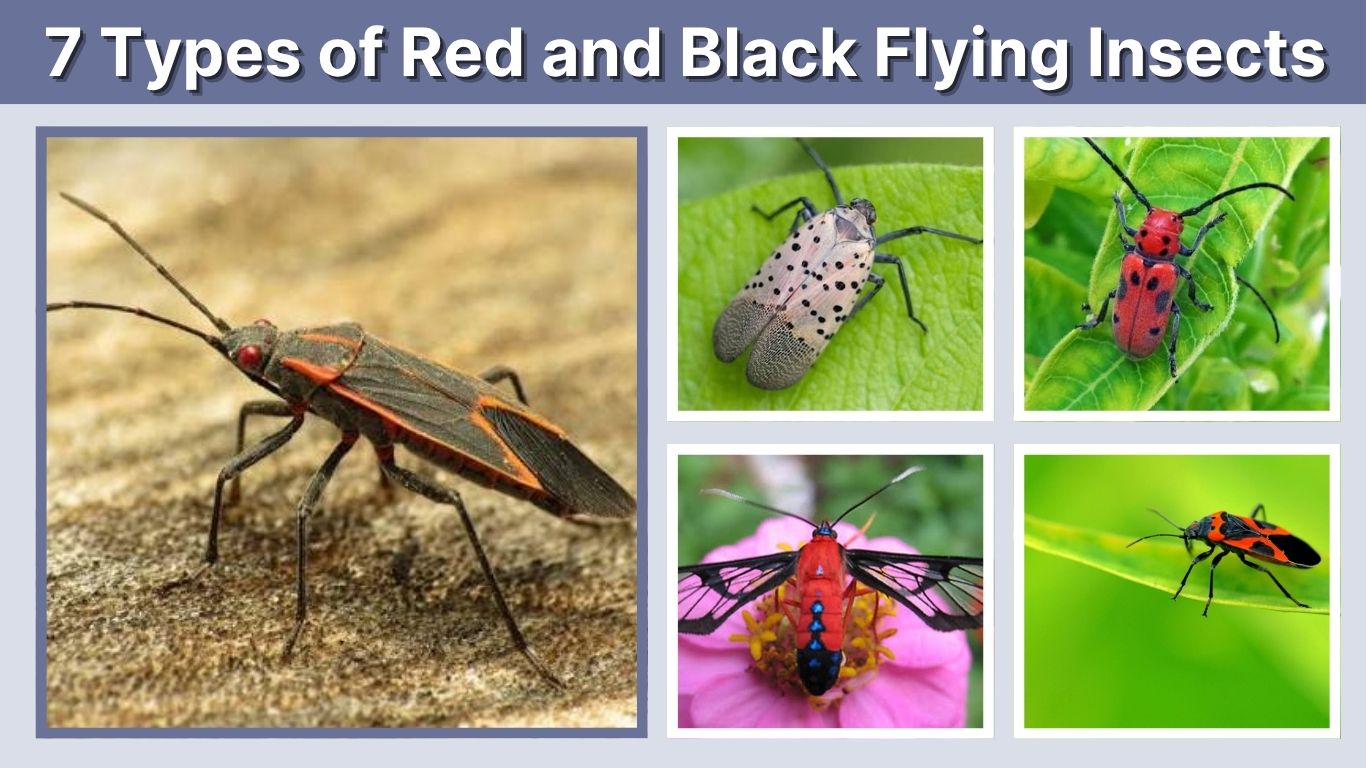
Red and black flying insects are often easy to notice because of their bold colors and unusual wing patterns. Some, such as boxelder bugs and milkweed bugs, are harmless garden visitors, while others, including spotted lanternflies, may damage plants. These insects can appear around homes, trees, gardens, fields, and flowering plants. This guide introduces seven common red and black flying insects and explains their identification, habitat, diet, behavior, and potential risks.
1. Boxelder Bug
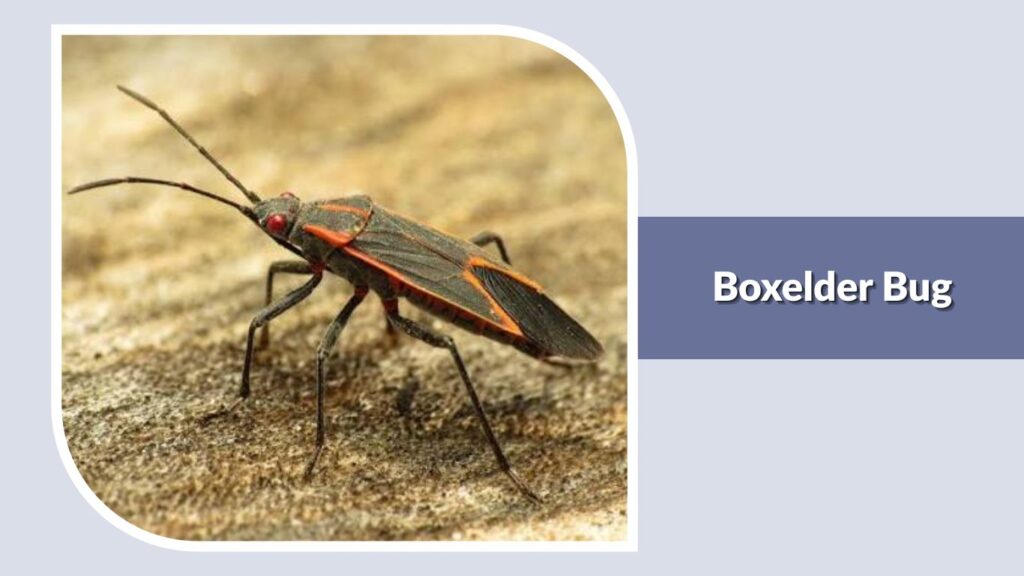
The boxelder bug is one of the most common red and black flying insects found around homes, gardens, and trees. It has a dark body with thin red or orange lines along its wings and thorax. These bugs often gather in large numbers on sunny walls during autumn while searching for warm places to spend the winter.
Identification
- Color: Black with red or orange markings
- Size: About ½ inch long
- Wings: Dark wings outlined with red lines
- Body shape: Flat, elongated, and oval
- Antennae: Long and black
- Nymphs: Bright red with developing black wing pads
A boxelder bug may look like a red and black flying beetle, but it belongs to the true bug group. Its wings form a noticeable red X-shaped pattern when folded over the body.
Habitat
Boxelder bugs are commonly found near boxelder, maple, and ash trees. They may hide under tree bark, fallen leaves, rocks, siding, and window frames. During cold weather, they often enter attics, basements, garages, and wall spaces.
Diet and Behavior
These insects use piercing mouthparts to drink sap from boxelder seeds, leaves, and developing plant tissue. They rarely cause serious damage to healthy trees.
Are Boxelder Bugs Dangerous?
Boxelder bugs do not sting and rarely bite. They are mainly nuisance pests, although they may release an unpleasant odor or leave stains when crushed indoors.
2. Spotted Lanternfly
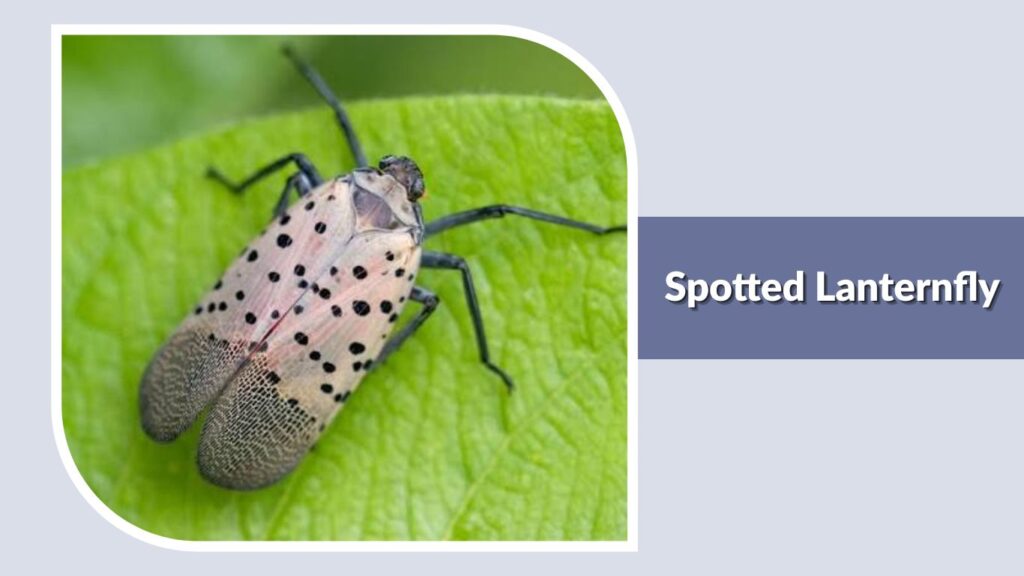
The spotted lanternfly is a colorful red and black flying insect known for its spotted forewings and bright red hindwings. Although its name includes “fly,” it is actually a planthopper. Adults often gather in large numbers on trees, buildings, fences, and outdoor equipment.
Identification
- Color: Gray, black, red, white, and yellow
- Size: About one inch long
- Forewings: Gray with numerous black spots
- Hindwings: Bright red with black and white bands
- Body: Black with a yellow-banded abdomen
- Nymphs: Black with white spots before turning red and black
When resting, the red hindwings remain hidden beneath the spotted gray wings. During flight, the bright red and black pattern becomes clearly visible.
Habitat
Spotted lanternflies are commonly found on tree trunks, vines, garden plants, vehicles, walls, and patio furniture. They strongly prefer the tree of heaven but may feed on grapevines, maples, fruit trees, and other plants.
Diet and Behavior
They use piercing mouthparts to suck sap from plants. Large groups produce sticky honeydew that can coat surfaces and encourage black sooty mold.
Are Spotted Lanternflies Harmful?
They do not bite or sting people. However, they can weaken plants and cause serious problems in vineyards, orchards, and landscaped areas.
3. Large Milkweed Bug
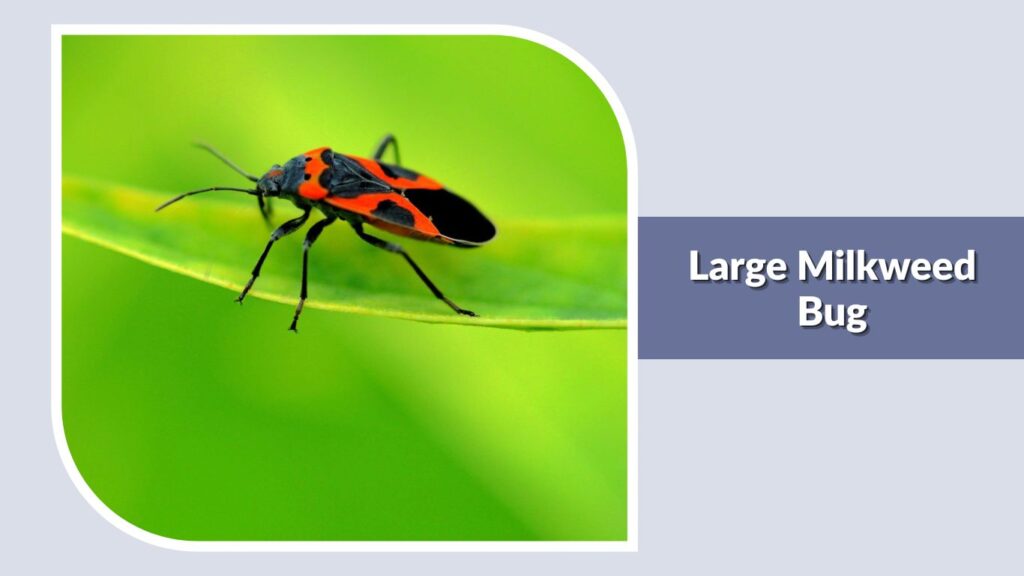
The large milkweed bug is an orange-red and black flying insect commonly found on milkweed plants. Adults and nymphs often gather around milkweed seed pods during summer and early autumn. Their bold markings make them easy to recognize among garden insects.
Identification
- Color: Orange-red and black
- Size: About ½ to ¾ inch long
- Wings: Black with orange-red markings
- Pattern: Broad black band across the middle
- Body: Long, narrow, and slightly flattened
- Antennae: Long and dark
The folded wings form a noticeable black diamond or X-shaped pattern. Younger nymphs are mostly bright orange-red with black legs and developing wing pads.
Habitat
Large milkweed bugs live in gardens, fields, roadsides, meadows, and other places where milkweed plants grow. They are especially common around mature seed pods.
Diet and Behavior
These insects use piercing mouthparts to feed primarily on milkweed seeds. They may also consume nectar or feed on other plant material when milkweed is unavailable.
Are Large Milkweed Bugs Harmful?
Large milkweed bugs do not sting and are not dangerous to people or pets. Although groups may reduce seed production, they rarely cause serious harm to established milkweed plants.
4. Small Milkweed Bug
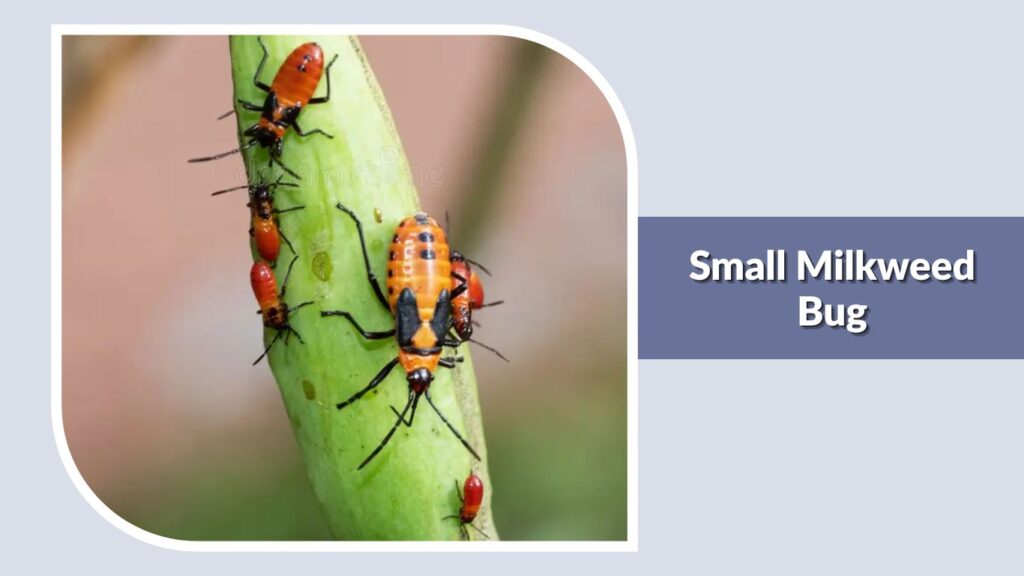
The small milkweed bug is a red, orange, and black flying insect frequently seen on milkweed flowers and seed pods. It resembles the large milkweed bug but is generally smaller and has a different wing pattern. It is found in gardens, open fields, and warm grassy areas.
Identification
- Color: Red-orange and black
- Size: About ⅓ to ½ inch long
- Wings: Black with a red-orange X pattern
- Markings: Usually has a red-orange head
- Body: Slender and oval-shaped
- Antennae: Long, thin, and black
A small milkweed bug can be distinguished by the red X-shaped marking across its folded black wings. It may also have small white spots near the tips of the wings.
Habitat
These insects live around milkweed plants in gardens, fields, meadows, roadsides, and woodland edges. Adults may fly to other plants when milkweed seeds become scarce.
Diet and Behavior
Small milkweed bugs mainly feed on milkweed seeds. However, they may also consume nectar, plant sap, and occasionally dead insects.
Are Small Milkweed Bugs Harmful?
They are harmless to humans and pets and do not normally bite. Their feeding may reduce the number of viable milkweed seeds, but they rarely cause significant damage to healthy plants.
5. Red-Shouldered Bug
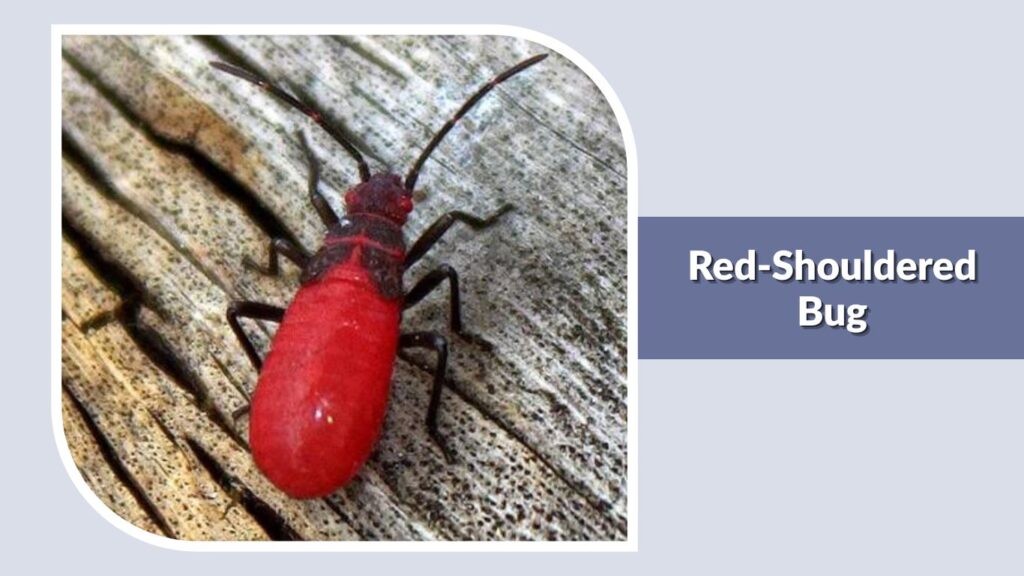
The red-shouldered bug is a small red and black flying insect often found around trees, gardens, and buildings. It closely resembles the boxelder bug, but its red markings are usually brighter and more noticeable along the sides of the body.
Identification
- Color: Black with bright red shoulders and borders
- Size: About ⅜ to ½ inch long
- Wings: Black with red edges
- Body: Elongated, oval, and slightly flattened
- Shoulders: Bright reddish patches behind the head
- Nymphs: Mostly red with dark markings
The red lines around its wings can form an X-shaped pattern when the wings are folded. Unlike boxelder bugs, red-shouldered bugs are often associated with soapberry-family plants.
Habitat
They are commonly found near golden rain trees, soapberry trees, and other seed-producing plants. Large groups may gather on sunny walls, sidewalks, fences, tree trunks, and outdoor furniture.
Diet and Behavior
Red-shouldered bugs use piercing mouthparts to feed on seeds, fallen fruits, and plant juices. They may gather around the base of host trees where seeds accumulate.
Are Red-Shouldered Bugs Dangerous?
They do not sting and rarely bite. They are mainly nuisance insects when they gather around homes or enter buildings. Crushing them may produce stains or an unpleasant smell.
6. Scarlet-Bodied Wasp Moth
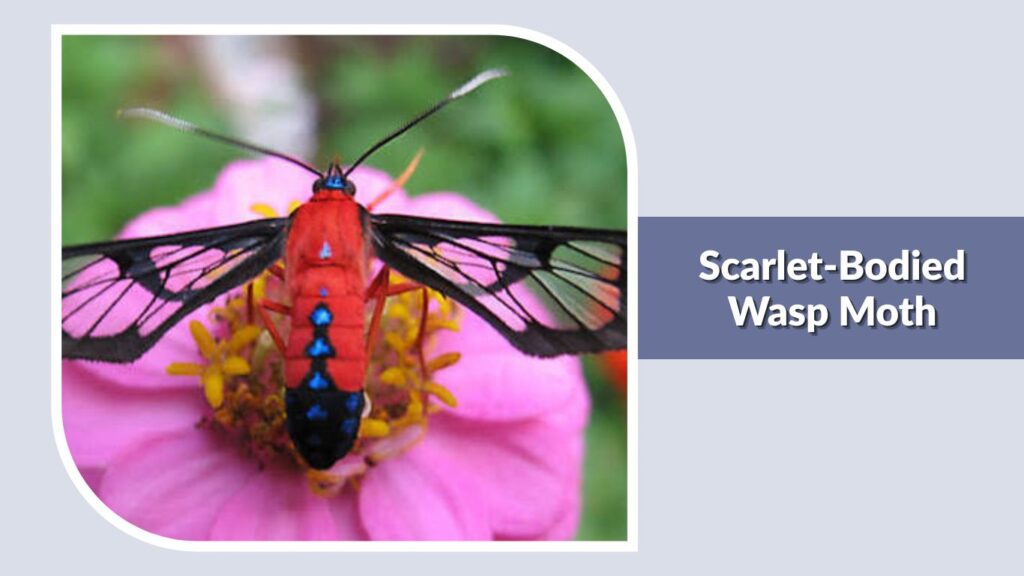
The scarlet-bodied wasp moth is a striking red and black flying insect that resembles a small wasp. Despite its appearance, it is a moth and cannot sting. Its bright coloration helps discourage predators by making it look dangerous.
Identification
- Color: Scarlet red, black, and metallic blue
- Size: About ½ to ¾ inch long
- Wings: Dark, narrow, and partly transparent
- Body: Bright red with dark markings
- Antennae: Long and often slightly thickened
- Appearance: Slender and wasp-like
Its narrow black wings and bright red abdomen make it easy to recognize. Unlike many moths, it is often active during daylight.
Habitat
Scarlet-bodied wasp moths occur in warm gardens, fields, forest edges, parks, and landscaped areas. Adults may visit flowers, while caterpillars are commonly associated with oleander and other related plants.
Diet and Life Cycle
Adult moths feed on flower nectar. Their caterpillars consume leaves and may have hairy bodies with orange, black, or white markings.
Are Scarlet-Bodied Wasp Moths Dangerous?
Adults do not bite or sting and are harmless to humans. However, large numbers of caterpillars may remove leaves from host plants. The caterpillars should be handled carefully because their hairs may irritate sensitive skin.
7. Red Milkweed Beetle
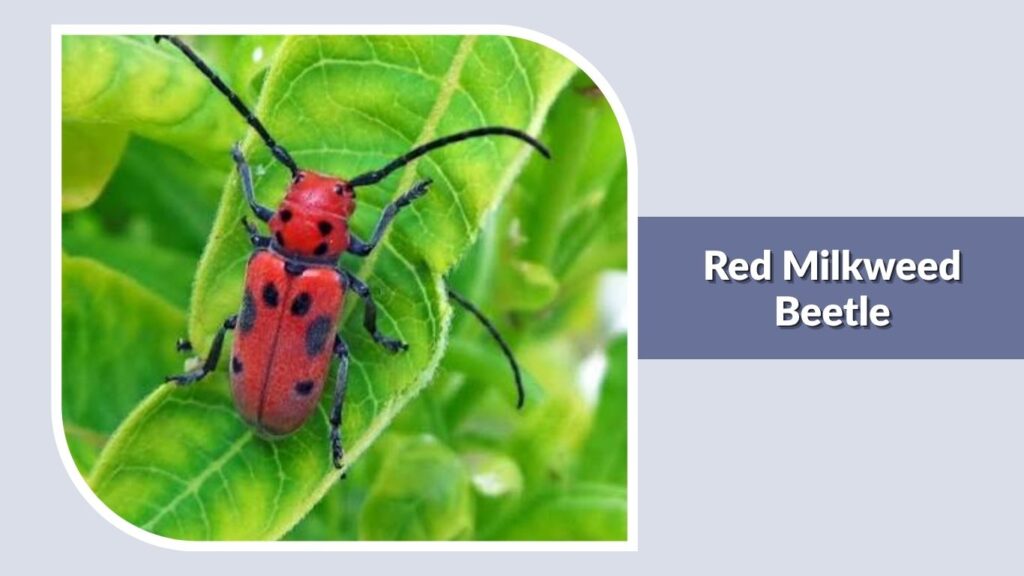
The red milkweed beetle is a bright red and black flying beetle commonly found feeding and resting on milkweed plants. Its vivid color serves as a warning to predators because chemicals obtained from milkweed can make the beetle unpleasant to eat.
Identification
- Color: Bright red or orange-red with black spots
- Size: About ½ inch long
- Wings: Hard red wing covers with black markings
- Antennae: Long and black
- Body: Elongated and cylindrical
- Eyes: Divided by the bases of the antennae
The red milkweed beetle has four noticeable black spots on its wing covers, although the exact markings can vary. Its long antennae identify it as a type of longhorn beetle.
Habitat
These beetles are found in meadows, gardens, roadsides, fields, and woodland edges where common milkweed grows. Adults are most visible during late spring and summer.
Diet and Behavior
Adults chew milkweed leaves, flowers, stems, and buds. Their larvae develop underground and feed on milkweed roots.
Are Red Milkweed Beetles Harmful?
They do not sting and are not considered dangerous to humans or pets. Their feeding may create small holes in leaves, but they rarely cause serious damage to healthy milkweed plants.
FAQs
1. What are common red and black flying insects?
Common red and black flying insects include boxelder bugs, spotted lanternflies, large milkweed bugs, small milkweed bugs, red-shouldered bugs, scarlet-bodied wasp moths, and red milkweed beetles. Their wing patterns, body shapes, host plants, and sizes help distinguish them.
2. Are red and black flying insects dangerous?
Most red and black flying insects are harmless to humans and pets. They generally do not bite or sting. However, spotted lanternflies can damage plants, while large groups of boxelder bugs and red-shouldered bugs may become annoying when they enter buildings.
3. Why do red and black insects gather on milkweed?
Milkweed bugs and red milkweed beetles gather on milkweed because it provides food and breeding sites. They feed on seeds, leaves, flowers, stems, or roots. Chemicals obtained from milkweed can also make these insects unpleasant to predators.
4. How can I identify a boxelder bug?
A boxelder bug has a black, elongated body with thin red or orange lines along the wings and thorax. Adults are about half an inch long. They commonly gather on sunny walls, windows, and buildings during autumn while searching for warm winter shelter.
5. How do I remove red and black flying insects?
Seal cracks, repair screens, remove fallen seeds, vacuum indoor insects, and avoid crushing them because some may stain surfaces. For spotted lanternflies, remove egg masses and follow local control recommendations. Reducing nearby host plants may also help limit repeated infestations.