
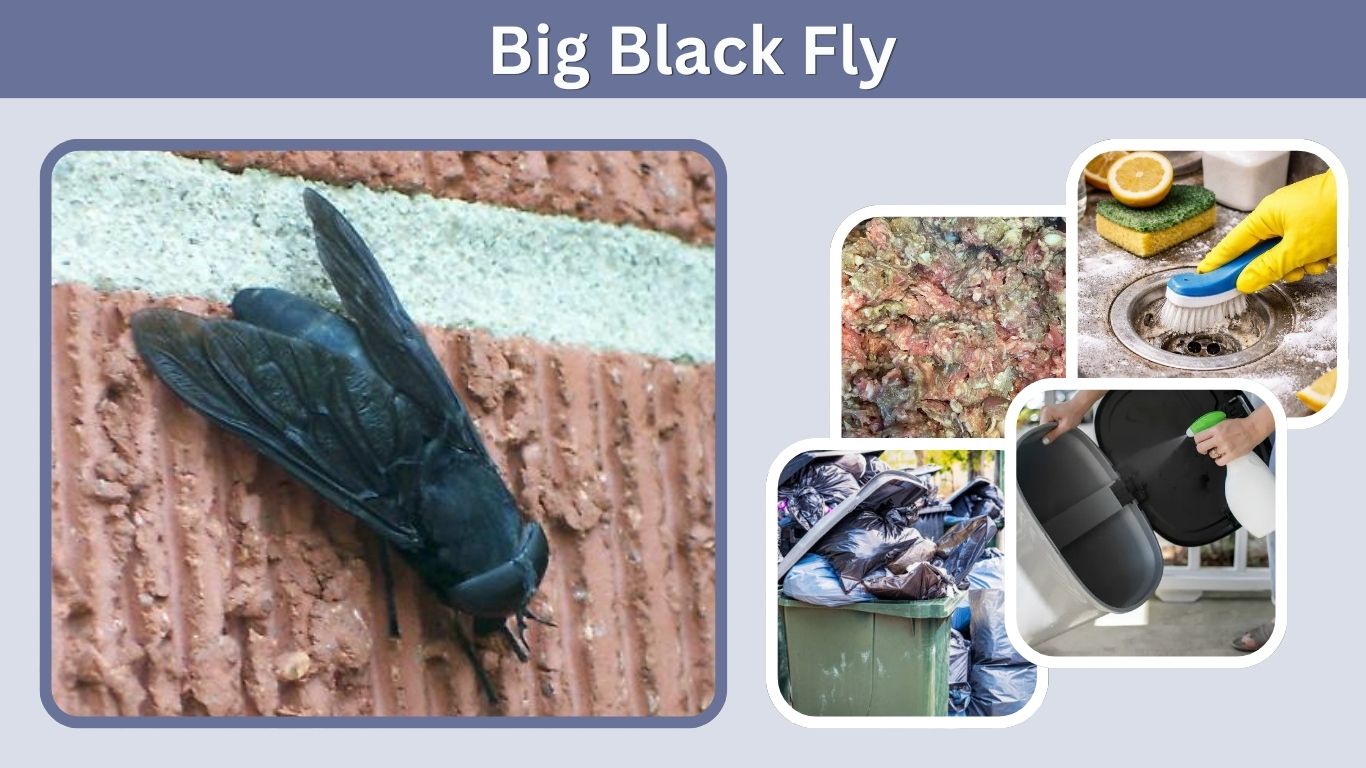
A big black fly may be a harmless visitor, a biting horse fly, or a sign that something is breeding inside or near your home. Cluster flies, blow flies, black soldier flies, and flesh flies are among the most common large flies found indoors. However, carpenter bees, flying beetles, winged ants, and wasps are frequently mistaken for black flies. Examining the insect’s body shape, eyes, wings, behavior, and location can help you identify it correctly.
What Is a Big Black Fly?
“Big black fly” is a general description rather than the name of one particular species. People commonly use it for any large, dark-colored flying insect with a fly-like appearance.
The most likely identification depends on where the insect was found:
| Location or behavior | Likely identification |
| Around sunny windows in winter | Cluster fly |
| Near garbage or dead animals | Blow fly or flesh fly |
| Around compost or decaying plants | Black soldier fly |
| Near livestock, ponds, or woods | Horse fly |
| Hovering around wooden structures | Carpenter bee |
| Emerging from walls or wood | Flying ant or beetle |
| Running before flying indoors | Flying cockroach |
True flies have one functional pair of wings and usually possess large compound eyes. Bees, wasps, ants, and beetles have two pairs of wings, although the second pair may be difficult to see.
Common Types of Big Black Flies
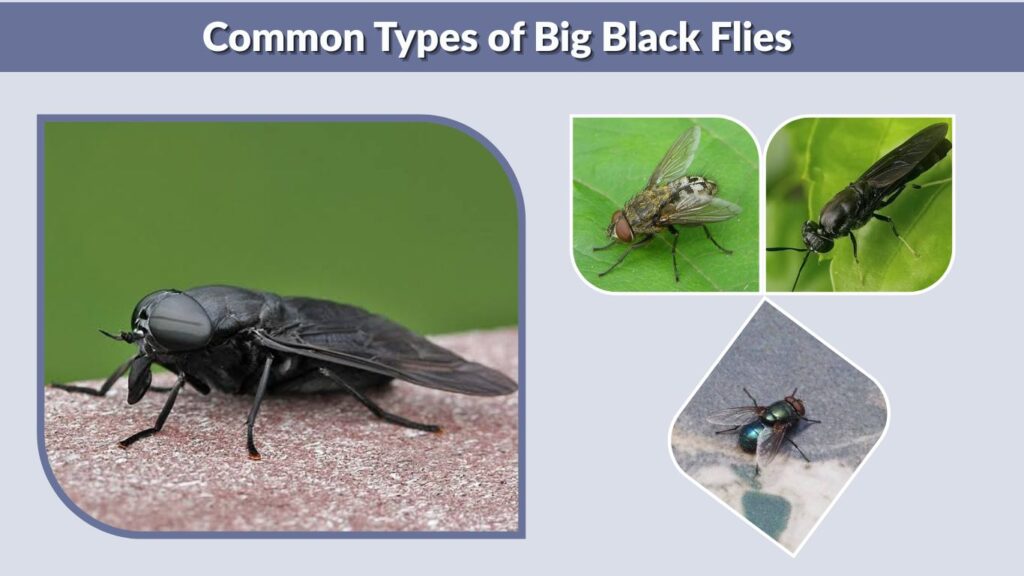
Several fly species can appear large, dark, and intimidating. Their size and coloration may be similar, but their habits are very different.
Cluster Fly
Cluster flies are large, slow-moving flies that often appear inside homes during fall, winter, or early spring. They are dark gray or nearly black and may have small golden hairs on the thorax.
These flies enter wall cavities, attics, and other protected spaces to survive cold weather. Warm indoor temperatures or sunlight may awaken them, causing numerous flies to gather around windows.
Cluster flies do not bite, sting, reproduce in household waste, or damage buildings. Their larvae develop outdoors as parasites of earthworms.
Black Blow Fly
Blow flies are stout insects with shiny black, blue, or green bodies. Some appear entirely black unless viewed under bright light. Their loud buzzing and rapid flight often make them easy to notice indoors.
Female blow flies lay eggs on dead animals, meat scraps, pet waste, and other decaying material. A sudden appearance of several large flies may indicate a dead rodent in a wall, attic, chimney, crawl space, or basement.
Black Soldier Fly
Adult black soldier flies have long, dark bodies and may resemble wasps. They usually have smoky wings, pale areas on the legs, and two transparent spots near the base of the abdomen.
They do not bite or sting. Their larvae feed on compost, manure, decaying vegetation, and food waste. Adults may enter homes accidentally but usually remain close to outdoor breeding material.
Flesh Fly
Flesh flies are large gray or blackish flies with three dark stripes on the thorax and a patterned abdomen. Many have noticeable red eyes.
They breed in animal remains, garbage, feces, and other decomposing organic matter. Finding one fly indoors may not indicate a problem, but repeated sightings should prompt an inspection for a hidden food source.
Big Black Horse Fly
Black horse flies are large, powerful insects commonly found near wetlands, livestock, woodland edges, and open fields. They have wide heads, extremely large eyes, and heavy bodies.
Female horse flies feed on blood and can deliver a painful bite. Males feed mainly on nectar and do not bite. Horse flies usually enter houses accidentally and are unlikely to breed indoors.
Robber Fly
Robber flies are long-bodied predators with strong legs, a bristly face, and a tapered abdomen. Some large species are almost entirely black and may resemble wasps or oversized house flies.
They capture other insects in flight and are beneficial outdoor predators. Robber flies do not seek human blood, but they may bite defensively if handled.
Big Black Flying Insects That Are Not Flies
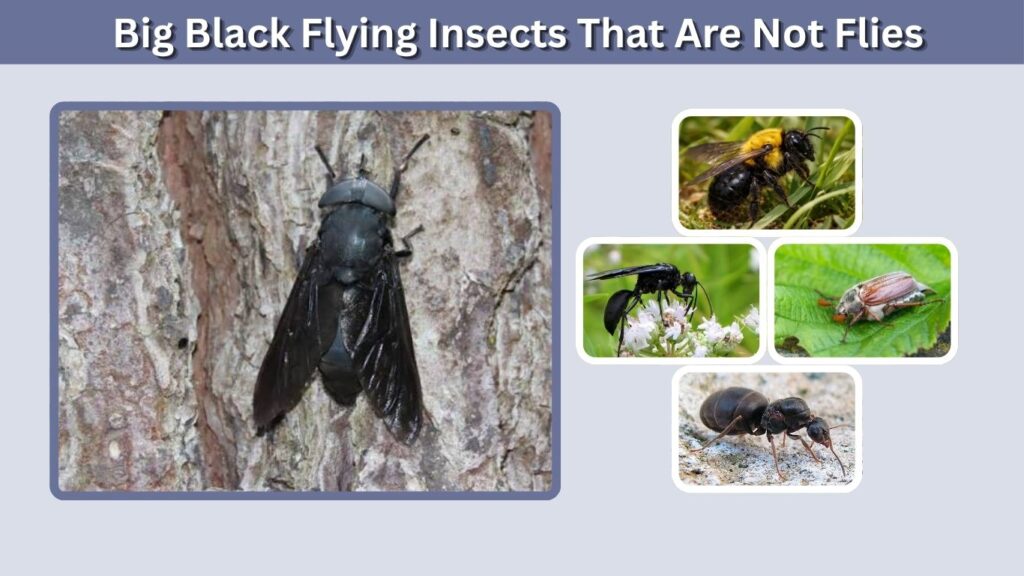
Not every dark flying insect is a true fly. Several common lookalikes require different identification and control methods.
Carpenter Bee
A big black flying bug that looks like a bee may be a carpenter bee. Carpenter bees have thick bodies and shiny, mostly hairless black abdomens. They often hover around decks, fences, rooflines, and wooden buildings.
Female carpenter bees can sting but rarely do so unless handled. Males may fly aggressively toward people but have no stinger.
Flying Beetle
Large ground beetles, longhorn beetles, and scarab beetles sometimes fly toward porch lights or enter homes. Beetles have hard wing covers that meet in a straight line down the back.
Longhorn beetles are especially noticeable because of their extremely long antennae. Most are harmless to people, although some species develop inside weakened or recently cut wood.
Winged Ant
Large black flying ants are reproductive ants leaving a colony to mate. They have bent antennae, narrow waists, and two pairs of wings, with the front wings longer than the rear pair.
A few winged ants indoors may have entered from outside. Large numbers emerging from walls, window frames, or wooden structures may indicate an indoor carpenter-ant colony.
Black Wasp
A black insect with a narrow waist, long antennae, and a visible stinger is probably a wasp rather than a fly. Great black wasps, mud daubers, and spider wasps are common dark-colored species.
Most solitary wasps are not aggressive away from their nesting areas. Avoid handling or trapping them against the skin.
Flying Cockroach
Some large cockroach species can glide or fly, particularly in warm climates. They have flattened bodies, very long antennae, spiny legs, and wings lying flat across the back.
A flying cockroach may enter through doors, vents, drains, or damaged screens. Repeated indoor sightings can indicate moisture, food debris, or a nearby infestation.
Why Are Big Black Flies Suddenly in My House?
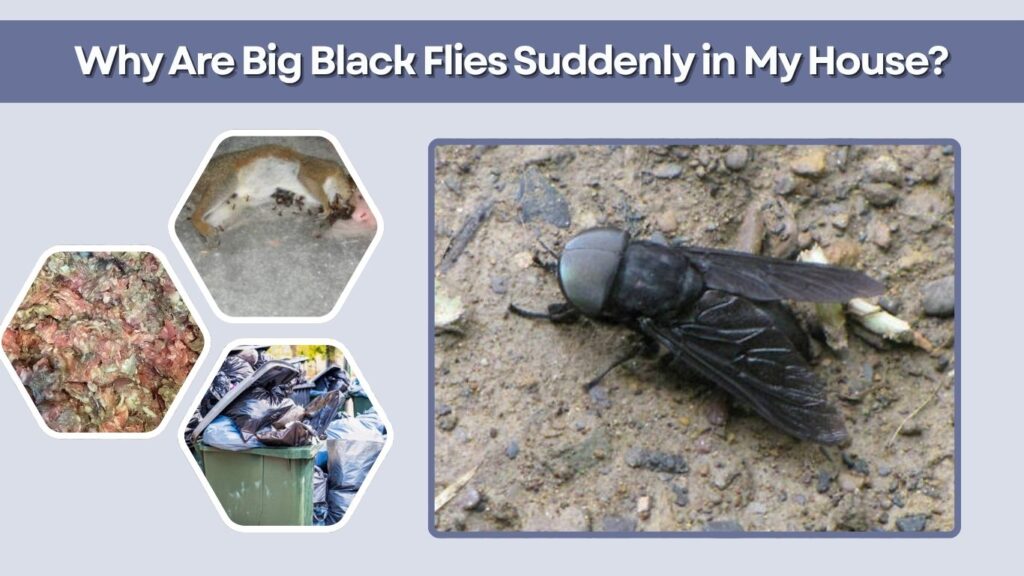
A sudden increase in large flies usually has one of three causes: overwintering insects have become active, adults are emerging from hidden organic material, or flies are entering through structural openings.
Hidden Decaying Material
Blow flies and flesh flies may develop in:
- A dead mouse, bird, or squirrel
- Forgotten meat or spoiled food
- Dirty garbage containers
- Pet waste
- Animal remains in a chimney
- Decomposing material in a crawl space
The flies may continue emerging for several days after the original source is removed.
Seasonal Cluster Fly Activity
Cluster flies often appear “all of a sudden” during warm winter afternoons or early spring. The insects were already hiding inside walls or attics and became active when the building warmed.
Open Entry Points
Damaged screens, door gaps, vents, chimneys, and openings around pipes allow outdoor flies to enter. Bright windows and indoor lights then attract them deeper into the house.
How to Get Rid of Big Black Flies
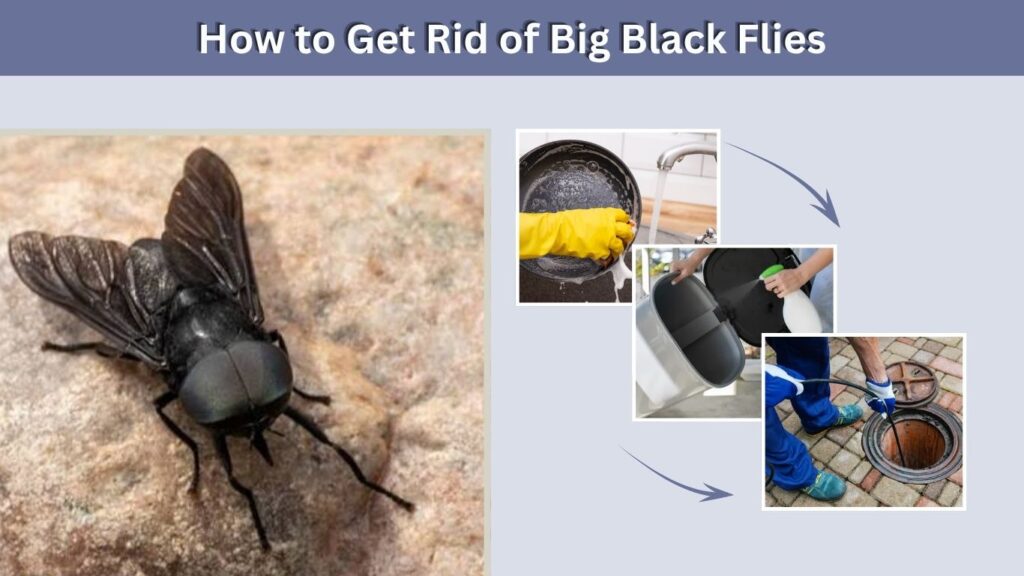
Removing adult flies provides temporary relief, but lasting control requires finding the source.
Remove Breeding Sources
Inspect garbage cans, recycling containers, pet areas, drains, compost, attics, basements, chimneys, and crawl spaces. Remove spoiled organic material and clean the surrounding area thoroughly.
A persistent foul odor combined with large flies may indicate a dead animal. A pest-control or wildlife-removal professional may be needed when the source is inaccessible.
Capture Indoor Flies
Use a vacuum cleaner to remove flies from windows, ceilings, and walls. Sticky traps or enclosed light traps can help monitor continuing activity.
Avoid relying entirely on indoor insecticide sprays. They kill exposed adults but do not remove larvae or hidden breeding material.
Prevent Future Entry
Repair window screens, install door sweeps, seal cracks around siding and rooflines, and cover vents with appropriate screening. Keep outdoor garbage containers clean and tightly closed.
For cluster flies, sealing exterior gaps before fall is more effective than trying to eliminate them after they enter wall spaces.
Are Big Black Flies Dangerous?
Most large black flies found indoors do not sting or attack people. Cluster flies and black soldier flies are harmless, while blow flies and flesh flies are mainly sanitation concerns because they develop in contaminated material.
Horse flies are the primary biting risk. Their bites can cause pain, redness, itching, and swelling. Seek urgent medical assistance if any insect bite or sting causes difficulty breathing, facial swelling, widespread hives, faintness, or another severe reaction.
FAQs
What are the big black flies in my house?
They are commonly cluster flies, blow flies, or flesh flies. Slow flies gathering around sunny windows are probably cluster flies. Large, noisy flies appearing near an odor or after a rodent problem are more likely blow flies or flesh flies.
Why do big black flies appear in winter?
Cluster flies enter wall cavities and attics during fall to overwinter. Heating or direct sunlight may awaken them during winter, causing them to emerge around windows. They are not normally breeding inside the living area.
Do big black flies bite?
Most large household flies do not bite. However, female horse flies, deer flies, and stable flies feed on blood. Horse flies are large, strong outdoor insects with prominent eyes and cutting mouthparts.
What is a big black fly that looks like a bee?
It may be a carpenter bee, black soldier fly, robber fly, or bee-mimicking hoverfly. Carpenter bees have thick bodies and shiny abdomens, while true flies have one pair of wings and large fly-like eyes.
How can I find where big black flies come from?
Observe where the flies gather and check nearby garbage, pet waste, spoiled food, attics, chimneys, basements, and crawl spaces. Repeated emergence from one wall or window area may point to a hidden dead animal or an overwintering cluster.