
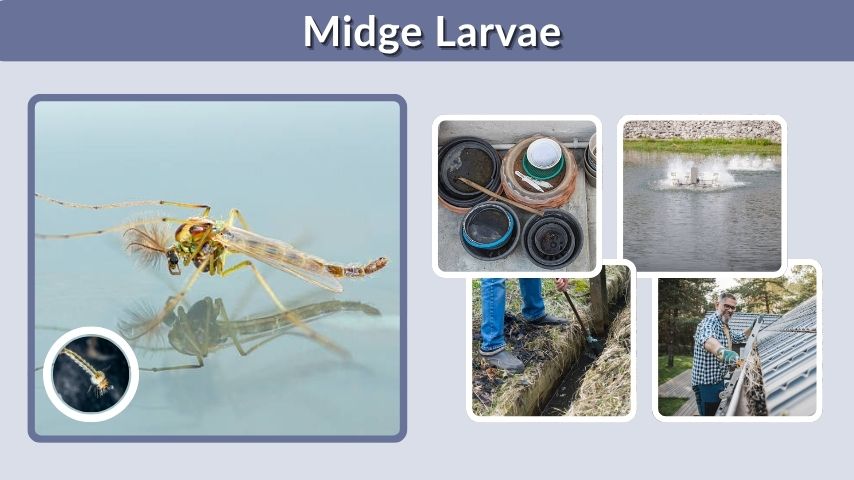
Midge larvae are the immature stage of tiny flies often found around water, damp soil, ponds, drains, and decaying organic matter. Some midges bite as adults, while others are harmless but annoying when they gather in swarms. Understanding what midge larvae look like, where they live, and how they develop can help you control midges flies before they become a bigger problem.
What Are Midge Larvae?
Midge larvae are the young stage of midges, which are small flies that often resemble mosquitoes. However, not all midges bite, and many species play a role in aquatic ecosystems. Their larvae usually live in moist environments where they feed on organic material, algae, fungi, or tiny organisms.
Midges go through complete metamorphosis, which means their life cycle includes egg, larva, pupa, and adult stages. The larval midge stage is often the longest and most important stage for control.
Midges Fly Larvae vs Mosquito Larvae
Midges fly larvae are often mistaken for mosquito larvae because both may live in water. However, mosquito larvae usually hang near the water surface and wiggle when disturbed. Many midge larvae live in mud, plant matter, or sediment at the bottom of ponds and drains.
Unlike mosquitoes, most non biting midges do not feed on blood as adults. Still, they can become a nuisance when adults emerge in large numbers around lights, patios, windows, and buildings.
Why Midge Larvae Matter
Midge larvae are important because controlling them early can reduce adult fly populations. Once adult midges emerge, they can be harder to manage, especially outdoors. Larvae also indicate that there is standing water, damp organic matter, or another breeding source nearby.
What Do Midge Larvae Look Like?
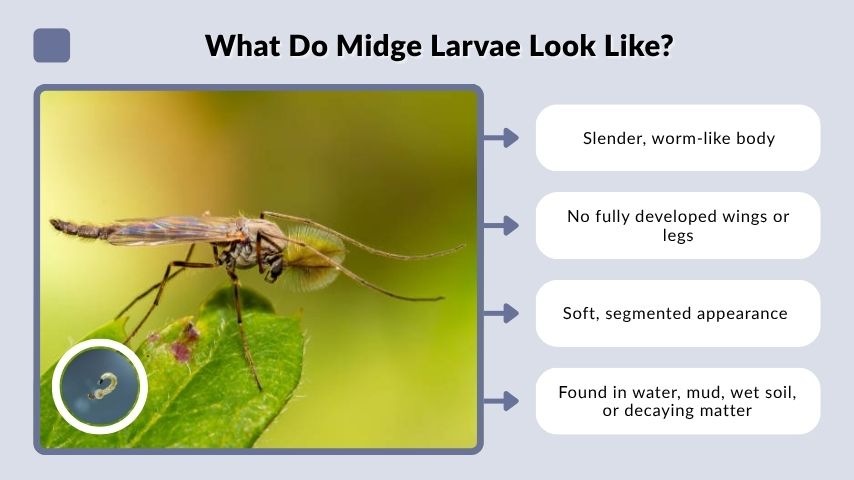
Many people ask, “what do midge larvae look like?” The answer depends on the type of midge, but most larvae are small, worm-like, and soft-bodied. They may be white, clear, yellowish, greenish, brown, or red.
Some larvae are only a few millimeters long, while others are more visible in pond muck, drains, or wet soil. They do not look like adult flies. Instead, they look more like tiny worms or aquatic insect larvae.
Common Appearance Features
Midge larvae can vary by species, but many share a few basic traits:
- Slender, worm-like body
- No fully developed wings or legs
- Soft, segmented appearance
- Found in water, mud, wet soil, or decaying matter
- May move by wriggling or crawling
The color and habitat can help identify the type of larvae. For example, chironomid midges larvae are sometimes red because they contain hemoglobin-like compounds that help them survive in low-oxygen water.
Where You May Find Them
Midge larvae are commonly found in damp places where adults can lay eggs. Around homes and landscapes, they may appear in:
- Ponds and fountains
- Birdbaths and clogged gutters
- Wet soil and mulch
- Drainage ditches
- Septic areas or wastewater zones
- Rotting plant material
- Lake edges and marshy areas
Finding larvae does not always mean there is a serious infestation, but it does mean conditions are favorable for midges.
Main Types of Midge Larvae
Different midge groups have different habits. Some are harmless, some damage plants, and some become biting adults. Knowing the type can help you choose the right control method.
| Type of Midge Larvae | Common Habitat | Main Concern |
|---|---|---|
| Biting midges larvae | Wet soil, mud, marshes, shoreline areas | Adults may bite people or animals |
| Non biting midges larvae | Ponds, lakes, drains, standing water | Adult swarms around lights |
| Gall midge larvae | Plant tissue, buds, leaves, stems | Plant damage and distorted growth |
| Chironomid midges larvae | Mud, sediment, ponds, lakes | Large adult swarms |
| Phantom midges larvae | Ponds and slow-moving water | Aquatic food chain, nuisance adults |
Biting Midges Larvae
Biting midges larvae develop in damp soil, mud, marshes, and organic-rich wet areas. The larvae themselves do not bite, but adult females of some species feed on blood. These insects are sometimes called no-see-ums because the adults are very small and hard to spot.
Biting midges are common near wetlands, coastal areas, livestock areas, and shaded damp landscapes. Controlling them can be difficult because breeding areas are often widespread.
Non Biting Midges Larvae
Non biting midges larvae usually live in ponds, lakes, stormwater systems, and other aquatic habitats. The adults may look like mosquitoes, but they do not bite. Their main issue is nuisance swarming.
Large numbers of adult non biting midges may gather around porch lights, windows, signs, and buildings near water. While they are not dangerous, they can be frustrating and messy when they die in piles near lights or entryways.
Gall Midge Larvae
Gall midge larvae are different from many aquatic midges because they often live inside plant tissue. Some species cause swelling, curling, or abnormal growth on leaves, stems, flowers, or buds. These swollen plant areas are called galls.
Gall midge larvae can damage ornamental plants, vegetables, and crops. The best control method depends on the affected plant and the specific gall midge species.
Chironomid Midges Larvae
Chironomid midges larvae are among the most common aquatic midge larvae. They are often found in mud, pond sediment, lakes, and slow-moving water. Some are known as bloodworms because of their red color.
These larvae feed on organic matter and can help recycle nutrients in aquatic environments. However, when water has too much organic material, chironomid populations may increase and lead to adult swarms.
Phantom Midges Larvae
Phantom midges larvae are usually found in ponds, lakes, and slow-moving water. They are often transparent or nearly clear, which gives them their “phantom” name. These larvae can be predators of tiny aquatic organisms, including mosquito larvae in some cases.
Although phantom midges are not usually a major household pest, they may appear in aquatic habitats where other midge larvae are present.
Midge Larvae Life Cycle
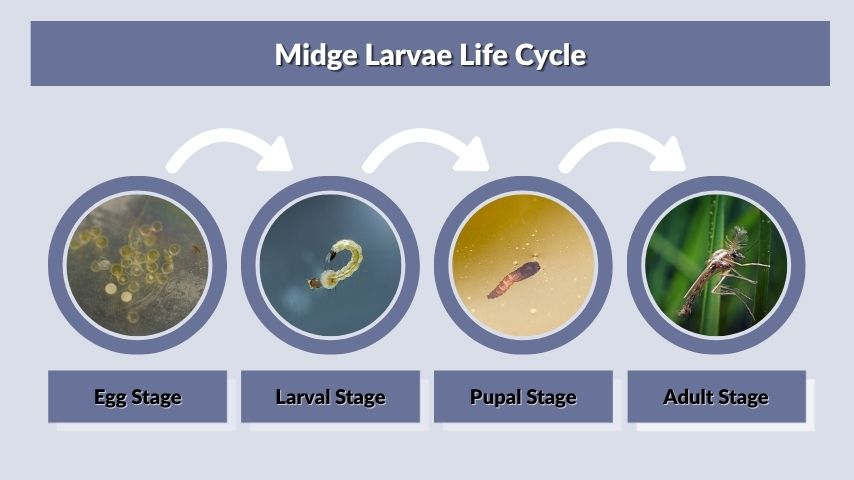
The midge larvae life cycle has four stages: egg, larva, pupa, and adult. The exact timing depends on species, temperature, moisture, and food availability. Warm weather and damp conditions often speed up development.
Egg Stage
Adult female midges lay eggs in or near water, damp soil, plant tissue, or organic matter. Some lay eggs in jelly-like masses on the water surface, while others place them in moist soil or plant material.
Eggs may hatch quickly in warm conditions. If the area stays wet and protected, larvae can begin feeding soon after hatching.
Larval Stage
The larval midge stage is the feeding and growing stage. Larvae consume organic matter, algae, fungi, plant tissue, or small aquatic organisms, depending on the species.
This stage may last days, weeks, or longer. Because larvae stay close to breeding sites, this is often the best stage to target when trying to reduce midge populations.
Pupal Stage
After the larvae finish growing, they enter the pupal stage. Pupae do not feed much. Instead, they transform into adults. Aquatic pupae may rise toward the water surface before adults emerge.
This stage is usually shorter than the larval stage, but it is still important because adult swarms may appear soon afterward.
Adult Stage
Adult midges are small, delicate flies. Some adults live only a short time and focus mainly on mating and laying eggs. Many are attracted to light, which is why they often gather near windows, porch lights, and outdoor fixtures.
Biting species may feed on blood, while non biting species do not. Either way, adults can quickly restart the life cycle if breeding conditions remain favorable.
Signs of a Midge Larvae Problem
Midge larvae are not always easy to notice. Many stay hidden in mud, water, or plant tissue. However, adult activity often points to nearby breeding sites.
Common Signs Around Homes
You may have a midge problem if you notice:
- Small mosquito-like flies gathering around lights
- Swarms near ponds, lakes, or damp areas
- Tiny worm-like larvae in water or muck
- Dead flies collecting near windows or doors
- Increased insect activity after rain
- Plant galls or distorted leaves in gardens
The source may be close to your home or farther away, especially if you live near a pond, stream, lake, wetland, or drainage ditch.
Why Midges Keep Coming Back
Midges keep returning when breeding conditions remain unchanged. Standing water, algae growth, wet mulch, clogged drains, and organic sludge can support larvae. Outdoor lights can also attract adults from nearby water sources.
Controlling adults alone may give short-term relief, but reducing larvae and breeding sites is usually more effective.
How to Get Rid of Midges Flies
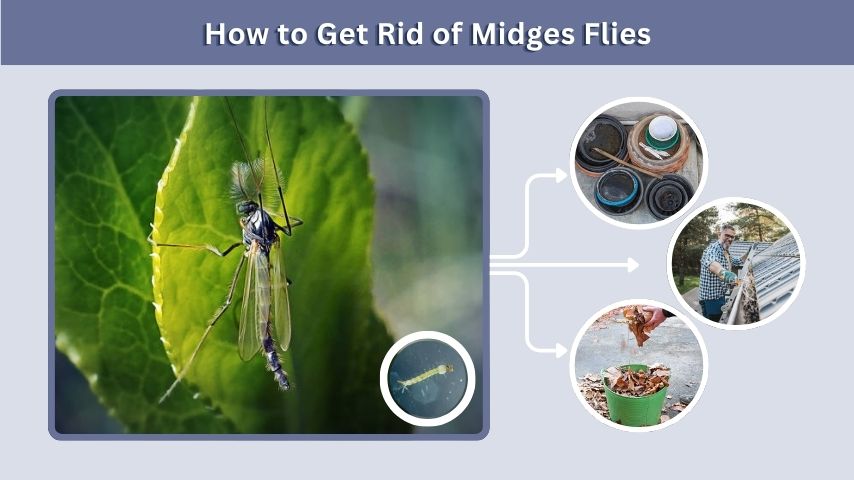
Learning how to get rid of midges flies starts with finding where larvae are developing. Since larvae need moisture or plant tissue, reducing breeding sites is the most practical first step.
Remove Breeding Sources
Start by inspecting your property for standing water and damp organic matter. Small water sources can produce large numbers of midges if left undisturbed.
Helpful steps include:
- Empty birdbaths, buckets, saucers, and containers
- Clean clogged gutters and drains
- Remove decaying leaves from wet areas
- Reduce algae and sludge in ponds
- Improve drainage in soggy soil
- Replace overly wet mulch near the house
If the source is a pond or natural water body, complete removal may not be possible, but maintenance can still reduce larvae.
Manage Outdoor Lighting
Adult midges are strongly attracted to lights. Changing your lighting will not eliminate larvae, but it can reduce how many adults gather near doors and windows.
Use warmer, less attractive bulbs when possible. Move bright lights away from entrances. Keep curtains or blinds closed at night to reduce indoor light attraction.
Use Screens and Barriers
For biting midges, physical barriers are important. These tiny insects can pass through some standard screens, so fine mesh may be needed in problem areas.
Repair gaps around windows, doors, vents, and patio spaces. When outdoors, wear long sleeves and avoid peak activity times if biting midges are common in your area.
Consider Biological or Professional Control
For ponds and larger breeding areas, biological control may help. Some products target aquatic fly larvae without broadly harming the environment, but they should be used according to label directions.
For heavy infestations, especially around businesses, lakeside homes, or livestock areas, professional pest control may be needed. Professionals can identify the type of midge, locate breeding sites, and recommend targeted treatments.
Prevention Tips for Midge Larvae
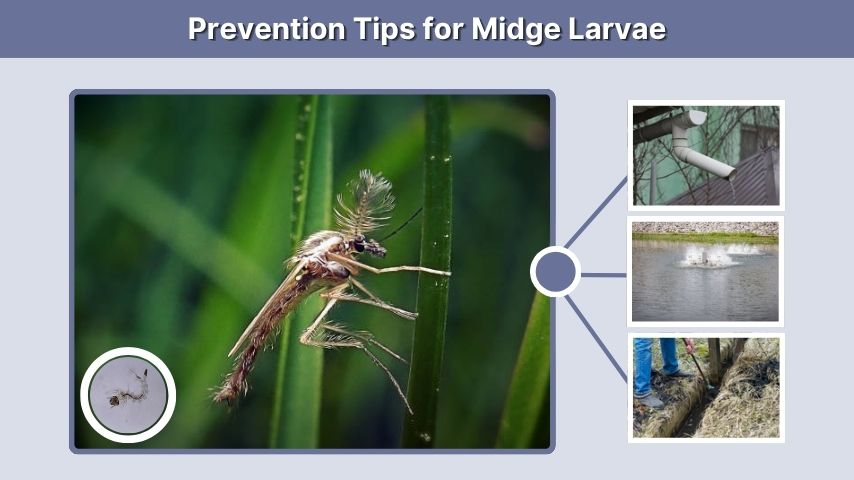
Preventing midge larvae is easier than dealing with large adult swarms. The goal is to make your property less attractive for egg laying and larval development.
Outdoor Prevention
Keep the area dry, clean, and well-maintained. Focus on moisture control and organic debris removal.
Key prevention steps include:
- Keep gutters flowing properly
- Avoid overwatering lawns and gardens
- Aerate ponds when possible
- Remove excess algae and plant debris
- Keep drains and ditches clear
- Maintain septic and wastewater areas
- Trim dense vegetation near wet zones
These steps reduce the damp, organic-rich conditions many larvae need.
Garden and Plant Protection
For gall midge larvae, inspect plants regularly. Remove and destroy heavily infested plant parts when appropriate. Avoid composting infested material if larvae may survive.
Healthy plants are often more resistant to pest damage. Proper watering, spacing, pruning, and soil care can reduce stress and help plants recover from minor gall midge activity.
FAQs
Are midge larvae harmful to humans?
Midge larvae are not usually harmful to humans. They do not bite or sting in the larval stage. The main concern is that some larvae develop into biting adult midges, while others become nuisance swarms around lights, windows, and outdoor living areas.
What do midge larvae look like in water?
Midge larvae in water often look like tiny worms. They may be clear, white, brown, greenish, or red, depending on the species. Chironomid midges larvae are sometimes red and are commonly called bloodworms. Many live in mud or sediment rather than swimming at the surface.
Are non biting midges larvae dangerous?
Non biting midges larvae are not dangerous to people or pets. They are common in ponds, lakes, and wet areas where they feed on organic material. The adult flies do not bite, but they can become annoying when they emerge in large numbers and gather around lights.
How long does the midge larvae life cycle take?
The midge larvae life cycle varies by species and environment. Warm temperatures, moisture, and plenty of food can speed up development. Some midges complete their life cycle quickly, while others remain larvae longer in cooler or less favorable conditions.
How do you stop midge larvae from coming back?
To stop midge larvae from coming back, remove standing water, clean organic debris, improve drainage, and maintain ponds or drains. For recurring problems, reduce outdoor lighting that attracts adults and consider professional inspection to find hidden breeding sites.