
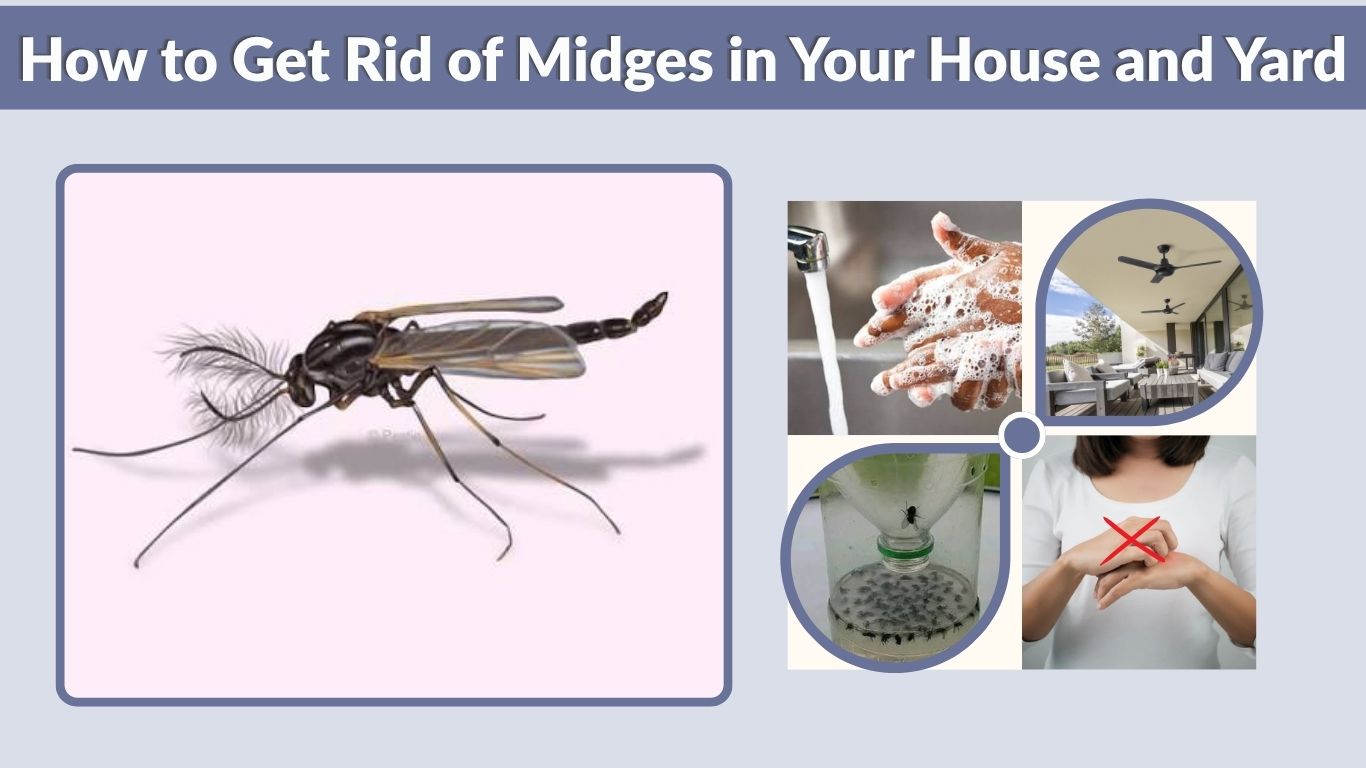
Midges are tiny flying insects that can quickly become annoying around homes, gardens, ponds, and outdoor lights. Some midges bite, while others simply swarm in large numbers. The best way to get rid of midges depends on where they are breeding and whether they are biting or non-biting midges. This guide explains how to get rid of midges indoors, outside, naturally, and how to deal with midge bites.
What Are Midges?
Midges are small flying insects that often look like tiny mosquitoes or gnats. They are commonly found near damp soil, standing water, ponds, lakes, drains, lights, and humid outdoor areas.
Some midges bite humans and animals, while others do not bite at all. Non-biting midges are mostly a nuisance because they gather in swarms near lights, windows, walls, patios, and porches. Biting midges are more irritating because their bites can cause itching, swelling, and red bumps.
| Type of Midge | Main Problem | Common Location |
|---|---|---|
| Biting midges | Painful, itchy bites | Yards, gardens, coastal areas, damp places |
| Non-biting midges | Large swarms | Lights, windows, ponds, lakes |
| Midge flies | Indoor or outdoor nuisance | Drains, wet soil, standing water |
| Buzzer midges | Swarming near lights | Outdoor walls, patios, ponds |
How to Get Rid of Midges in the House
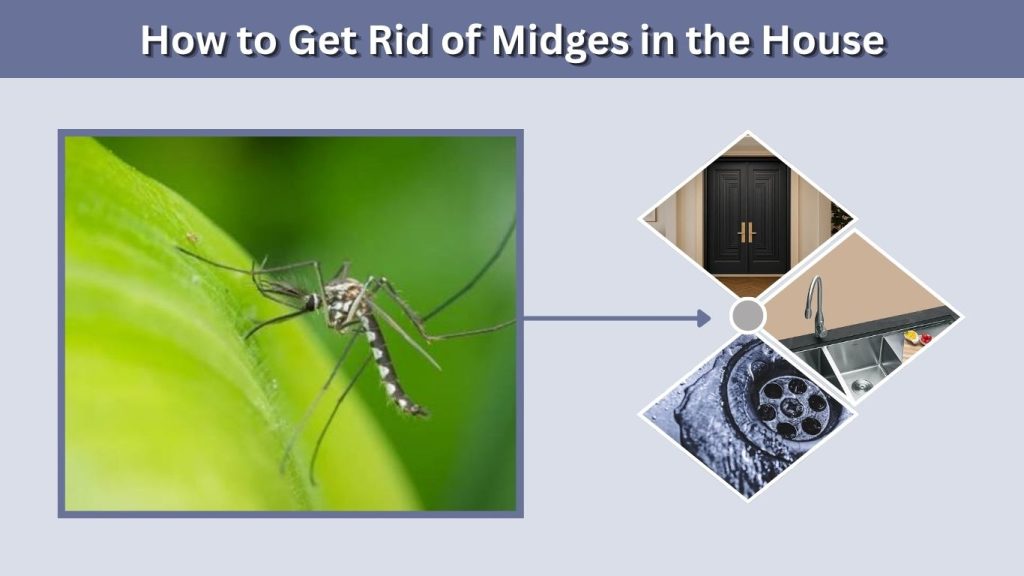
Getting rid of midges in the house starts with removing moisture and stopping them from entering. Indoor midges often come from open windows, damp plants, drains, or nearby outdoor breeding areas.
Find Where Midges Are Coming From
Check windows, doors, sinks, drains, houseplants, bathroom corners, and damp areas. If you see midges near a window at night, they may be attracted by indoor lights. If they appear near sinks or drains, moisture may be the main cause.
Midges do not usually breed in dry, clean indoor spaces. So, if you keep seeing them inside, there is likely a damp source nearby. Look for standing water under plant pots, wet soil, clogged drains, leaking pipes, or open trash.
Reduce Indoor Moisture
Midges love humid conditions. Keep your home dry by fixing leaks, emptying water trays, improving ventilation, and using a dehumidifier in damp rooms. Bathrooms, kitchens, basements, and laundry areas are common spots where indoor midges may gather.
Avoid overwatering indoor plants because wet potting soil can attract small flying insects. Let the top layer of soil dry before watering again. If the infestation is heavy, replace the soil or move plants outside until the problem improves.
Block Their Entry Points
Install fine mesh screens on windows and doors to keep midges out. Standard screens may not stop very tiny biting midges, so a smaller mesh can work better. Seal gaps around doors, windows, vents, and utility openings.
At night, keep windows closed when lights are on. Midges are strongly attracted to light, and they may gather around bright windows or enter through small openings.
How to Get Rid of Midges Outside
Outdoor midge control is usually harder because midges breed in damp areas and can fly in from nearby yards, ponds, lakes, or wetlands. Still, you can reduce their numbers by making your outdoor space less attractive.
Remove Standing Water
The best way to get rid of midges outside is to reduce breeding sites. Empty buckets, plant saucers, birdbaths, clogged gutters, old tires, tarps, and any container holding water. Even small amounts of stagnant water can support flying insect activity.
If you have a pond, pool, or water feature, keep the water moving with a pump or fountain. Moving water is less attractive to many midge species than still, stagnant water.
Change Outdoor Lighting
Midges are often drawn to bright white lights at night. Replace outdoor white bulbs with warm yellow bulbs or insect-reducing lights. Keep lights away from sitting areas, doors, and windows when possible.
You can also turn off unnecessary lights during peak midge activity. If midges gather near patios or porches, place lights farther away from seating areas to draw them away from people.
Keep the Yard Dry and Clean
Trim tall grass, remove wet leaves, clear organic debris, and improve drainage in low areas. Midges often rest in shady, damp vegetation during the day. A cleaner, drier yard gives them fewer places to hide.
If your garden has dense shrubs or wet mulch, thin the area and avoid overwatering. Water plants in the morning so the soil surface can dry before evening, when midges are more active.
How to Get Rid of Midges Naturally
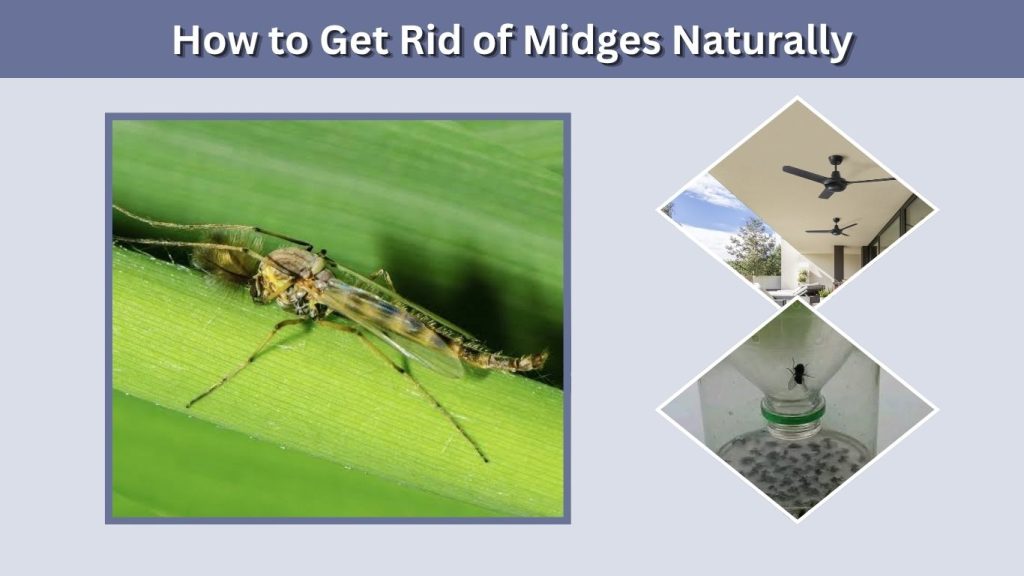
Many people search for how to get rid of midges naturally because they want to avoid harsh chemicals around pets, children, or gardens. Natural methods work best when combined with moisture control and prevention.
Use Fans Outdoors
Fans are one of the simplest natural ways to reduce midges around patios, decks, and porches. Midges are weak flyers, so moving air makes it harder for them to land or swarm around people.
Place a fan near seating areas during the evening. This is especially useful for biting midges because it helps keep them away from exposed skin.
Try Vinegar Traps Indoors
For small indoor midge problems, vinegar traps may help catch some flying insects. Add apple cider vinegar and a few drops of dish soap to a small bowl. The smell attracts tiny flies, and the soap breaks the surface tension so they sink.
Vinegar traps will not solve the root problem if midges are breeding in drains, wet soil, or standing water. Use them as a support method while removing moisture sources.
Encourage Natural Predators
Birds, bats, dragonflies, fish, and other insects may feed on midges. Around ponds or gardens, supporting natural predators can help reduce flying insect numbers over time.
Avoid overusing broad insecticides outdoors because they may kill beneficial insects too. A balanced garden with birds, flowering plants, and healthy pond life can naturally reduce pest pressure.
How to Get Rid of Biting Midges
Biting midges are more frustrating than non-biting midges because they feed on blood and leave itchy marks. They are often most active around dawn, dusk, humid weather, and calm evenings.
Protect Your Skin
Wear long sleeves, long pants, socks, and closed shoes when biting midges are active. Light-colored clothing may help because some biting insects are more attracted to dark colors.
Use insect repellent on exposed skin, especially around ankles, arms, neck, and face. Always follow the label directions, especially when applying repellent to children.
Reduce Activity During Peak Times
Biting midges often become worse in the early morning and evening. If possible, avoid sitting outside during peak biting times. If you need to be outside, use fans, screened areas, protective clothing, and repellents together.
Screened porches can help, but very tiny biting midges may pass through regular mesh. For better protection, use finer mesh screens designed for small insects.
Treat Outdoor Resting Areas
Focus on shaded, damp, and sheltered areas where biting midges rest. Trim vegetation, clear wet leaves, and reduce moisture around patios, fences, and garden edges. Outdoor treatments may help in some cases, but they work best when the breeding and resting sites are also managed.
How to Get Rid of Midge Bites
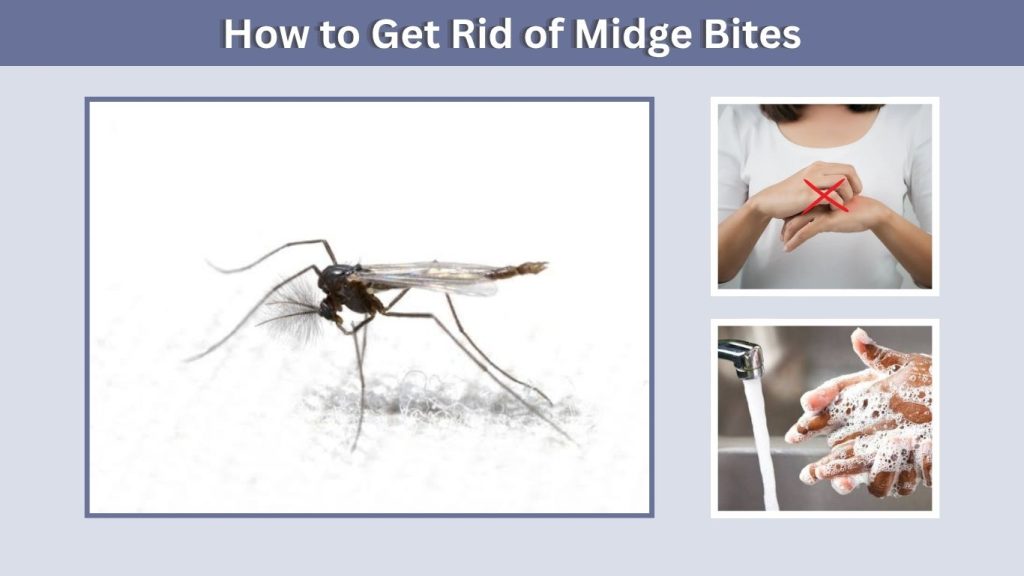
Midge bites can cause itching, swelling, redness, and discomfort. The main goal is to calm the skin and avoid scratching, which can lead to irritation or infection.
Clean the Bite Area
Wash midge bites with mild soap and water. This helps remove irritants and lowers the risk of infection. Pat the skin dry instead of rubbing it.
A cold compress can reduce swelling and itching. Apply it for 10 to 15 minutes at a time. Do not place ice directly on the skin; wrap it in a cloth first.
Reduce Itching
Use an anti-itch cream, calamine lotion, or an oral antihistamine if needed. Avoid scratching because it can break the skin and make the bite worse.
If bites become very swollen, painful, warm, or show signs of infection, it is best to speak with a healthcare professional.
Best Way to Get Rid of Midges
The best way to get rid of midges is to combine several methods. One treatment alone rarely works if moisture, lights, or breeding areas remain.
Start by identifying whether the problem is indoors or outdoors. Then remove standing water, reduce dampness, improve screens, adjust lighting, and use fans or traps where needed. For biting midges, add personal protection such as repellents and long clothing.
| Problem Area | Best Solution |
|---|---|
| Midges in house | Remove moisture, clean drains, use screens |
| Midges outside | Remove standing water and improve drainage |
| Midges at night | Reduce bright lights and use warm bulbs |
| Biting midges | Use repellent, fans, and protective clothing |
| Midge bites | Wash bites, use cold compress, reduce itching |
Common Mistakes When Getting Rid of Midges
One common mistake is treating only the adult insects. Sprays may kill some midges, but they will return if water, damp soil, or organic matter remains.
Another mistake is confusing midges with gnats, mosquitoes, drain flies, or fruit flies. These insects may need different control methods. For example, drain flies often come from dirty drains, while midges are usually connected to outdoor moisture, lights, or standing water.
People also forget about outdoor lighting. If your porch or garden lights stay on all night, they can attract swarms even when your home is clean.
FAQs
How do you get rid of midges fast?
The fastest way to get rid of midges is to remove standing water, turn off unnecessary lights, use fans, and close windows or doors. Indoors, check drains, wet plants, and damp areas. Outdoors, focus on water sources, yard moisture, and lighting.
How do I get rid of midges in my house?
To get rid of midges in the house, remove moisture, clean drains, avoid overwatering plants, seal entry points, and use fine mesh screens. You can also use vinegar traps to catch some flying insects, but you must remove the source to stop them returning.
How do you get rid of midges outside naturally?
You can get rid of midges outside naturally by removing standing water, improving drainage, trimming damp vegetation, using fans, and changing bright white outdoor lights to warmer bulbs. Natural control works best when you reduce the places where midges breed and rest.
How do you get rid of biting midges?
To get rid of biting midges, reduce damp resting areas, use fans around patios, wear protective clothing, apply insect repellent, and avoid outdoor activity at dawn and dusk. Fine mesh screens can also help keep biting midges out of porches and homes.
How do you get rid of midge bites?
Wash midge bites with soap and water, then apply a cold compress to reduce swelling. Use anti-itch cream or calamine lotion if needed. Avoid scratching the bites. If the area becomes painful, hot, infected, or severely swollen, seek medical advice.