
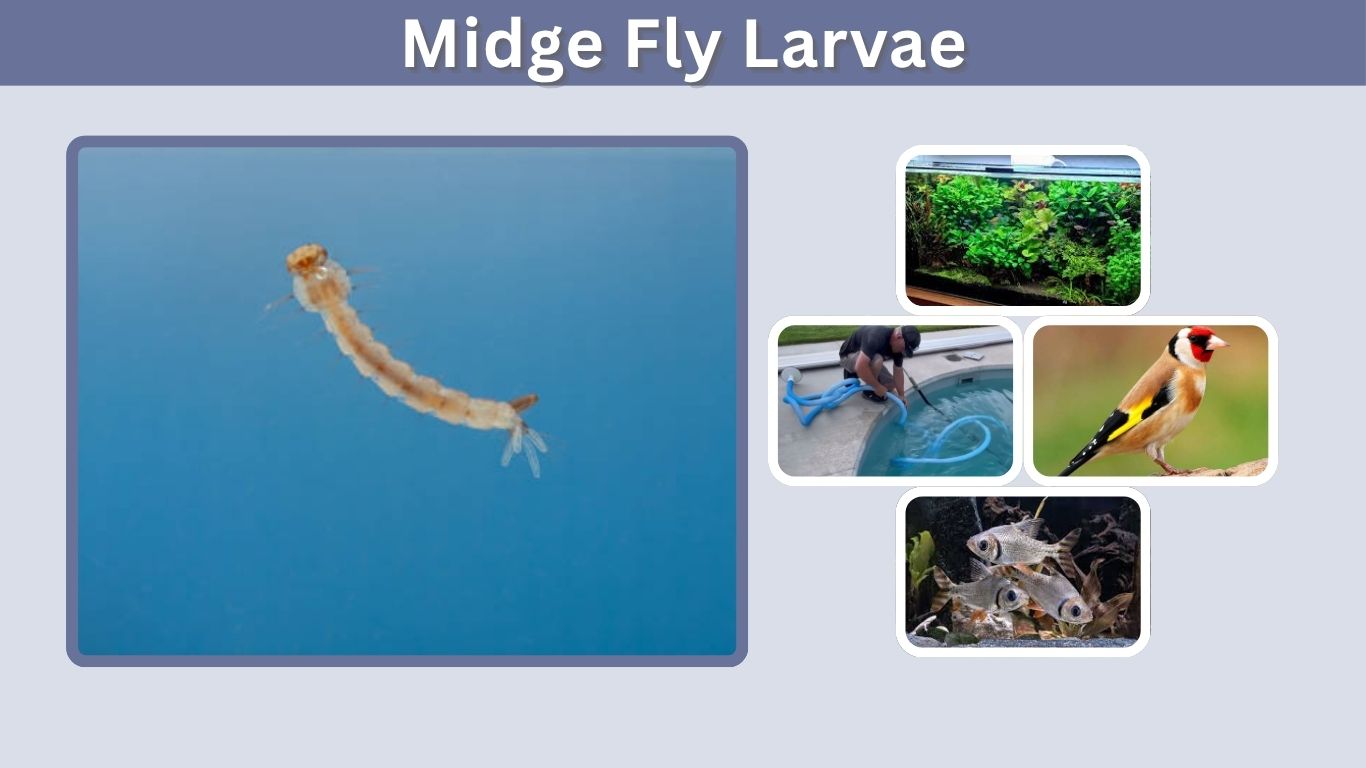
Midge fly larvae are small, worm-like immature insects that often live in water, mud, sediment, drains, aquariums, ponds, pools, and other damp places. Many people first notice them as tiny red worms in water or as small wriggling larvae at the bottom of a container, tank, or pond. Although they can look unpleasant, most midge larvae are not dangerous to people and are a normal part of aquatic ecosystems.
The term “midge fly larvae” usually refers to the larvae of non-biting midges, especially chironomid midges. These insects look mosquito-like as adults, but many of them do not bite. Their larvae can be pale, brown, greenish, or bright red. The red ones are commonly called bloodworms.
What Are Midge Fly Larvae?
Midge fly larvae are the immature stage of midge flies. Like many flies, midges go through complete metamorphosis, which means they develop through egg, larva, pupa, and adult stages. The larval stage is the feeding and growing stage.
Most non-biting midge larvae live in aquatic or very wet habitats. They may be found in the soft mud at the bottom of ponds, lakes, streams, pools, aquariums, wastewater areas, and water-filled containers. Some also develop in saturated organic matter, such as decaying vegetation or damp debris.
Are Midge Larvae the Same as Bloodworms?
Some midge larvae are called bloodworms, but not all midge larvae are red. Bloodworms are usually red midge fly larvae, often from the non-biting midge family Chironomidae. Their red color comes from oxygen-carrying pigments that help them live in low-oxygen water.
This is why bloodworm midge fly larvae are often seen in muddy pond bottoms, filters, aquariums, or stagnant water. They are not true worms. They are insect larvae that later transform into pupae and then adult midge flies.
What Do Midge Fly Larvae Look Like?
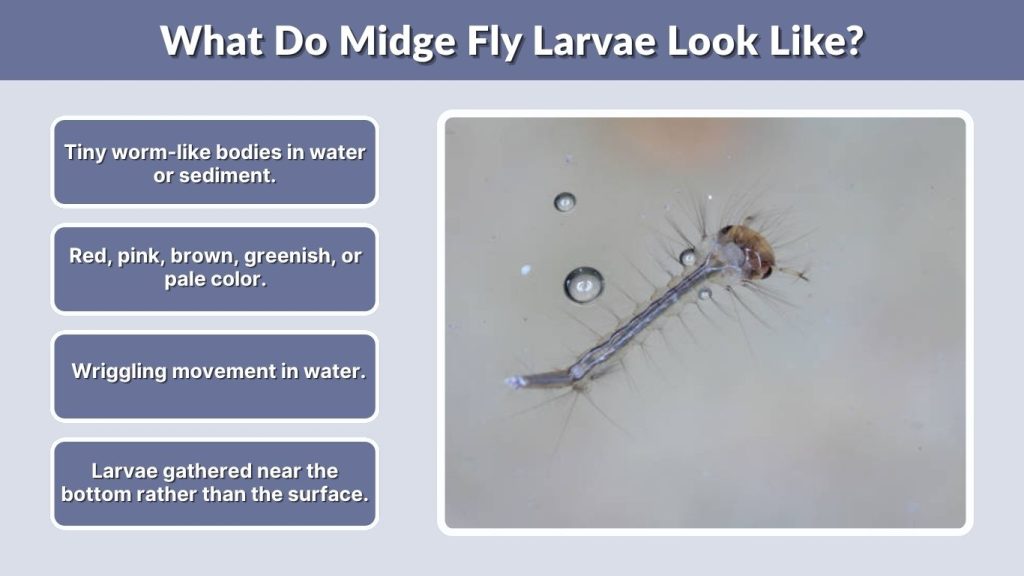
Midge fly larvae usually look like tiny, slender worms. They have soft, segmented bodies and a more defined head area. Depending on the species and environment, they may be red, pink, brown, tan, greenish, or nearly transparent.
Red midge fly larvae are the easiest to recognize because they stand out clearly in water. Pale or brown larvae may be harder to see because they blend into mud, algae, or organic debris.
Common Identification Features
You may be looking at midge fly larvae if you notice:
- Tiny worm-like bodies in water or sediment
- Red, pink, brown, greenish, or pale color
- Wriggling movement in water
- Larvae gathered near the bottom rather than the surface
- Presence in ponds, aquariums, pools, drains, or wet organic material
- Adult mosquito-like flies appearing nearby later
Midge larvae are often confused with mosquito larvae. One simple clue is where they stay. Mosquito larvae often hang near the water surface to breathe, while many midge larvae live lower in the sediment or bottom debris.
Midge Fly Larvae Life Cycle
Midge fly larvae are only one stage in the midge life cycle. Understanding the full cycle helps explain why larvae appear in water and why tiny adult flies may show up later.
Egg Stage
Adult female midges lay eggs in or near moist places. These eggs may be placed on the surface of water, in damp mud, or around saturated organic material. Once the eggs hatch, the tiny larvae begin feeding.
Larval Stage
The larval stage is the longest and most noticeable immature stage. Larvae feed on organic matter, algae, bacteria, microorganisms, and decaying material. In ponds and tanks, they may live in mud, filters, substrate, or debris.
Some larvae build small tubes or cases from mud, silk-like secretions, or organic particles. These tubes help protect them while they feed.
Pupal Stage
After the larvae finish growing, they transform into pupae. The pupal stage is a transition between the worm-like larva and the winged adult. In aquatic species, the pupa often moves toward the water surface before the adult emerges.
Adult Midge Stage
The adult midge fly emerges from the pupa and flies away. Adults may gather in swarms, especially near lights or water. Many adult non-biting midges live only a short time and focus mainly on mating and laying eggs.
Where Do Midge Fly Larvae Live?
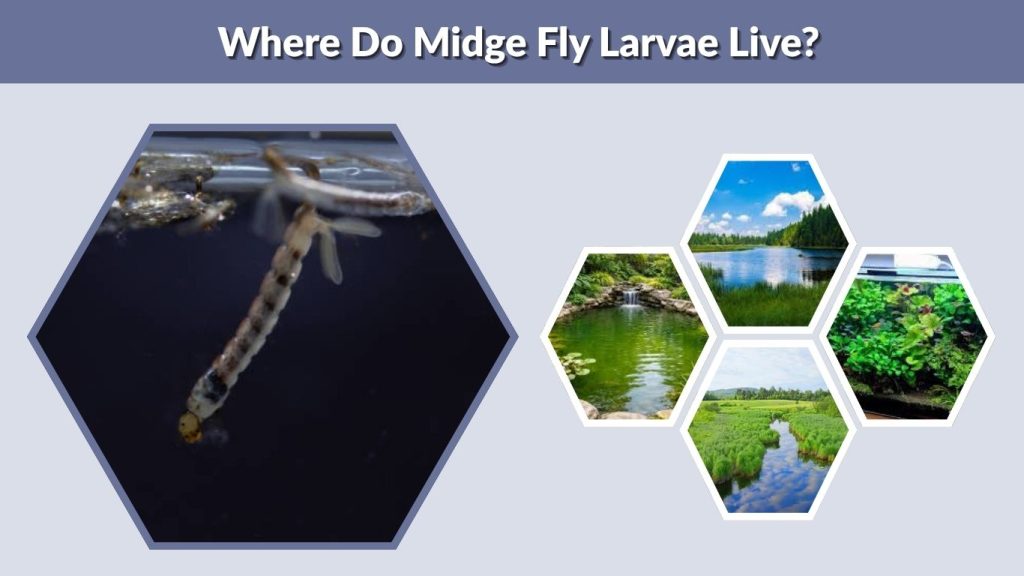
Midge fly larvae need moisture. Most are found in aquatic or semi-aquatic habitats, especially where organic matter is available.
Common places include:
- Ponds
- Lakes
- Slow streams
- Aquariums
- Fish tanks
- Pools
- Birdbaths
- Clogged gutters
- Drains
- Wet soil
- Wastewater areas
- Hydroponic tanks
- Muddy container bottoms
Their presence often means there is enough moisture and organic material to support larvae. In natural ponds, this is normal. In pools, tanks, or indoor water systems, it may signal poor cleaning, excess nutrients, or stagnant water.
Midge Fly Larvae in Water
Finding midge fly larvae in water can be unsettling, especially when they appear as red worms. In outdoor water, they are usually part of the natural food chain. Fish, birds, dragonfly nymphs, aquatic beetles, and other animals may eat them.
In stagnant water, however, large numbers of larvae can be a sign of too much organic material. Leaves, algae, sludge, fish waste, and nutrient buildup can create good conditions for larvae.
Are They a Water Quality Problem?
A few larvae do not always mean the water is unsafe. In ponds and natural water bodies, midge larvae are normal. In aquariums, pools, drinking containers, or hydroponic systems, their presence usually means you should inspect cleanliness, filtration, and organic buildup.
They may not be the cause of poor water quality, but they often benefit from conditions that already exist.
Midge Fly Larvae in Aquariums
Midge fly larvae in an aquarium are often seen as red bloodworms in the substrate, filter, or decorations. Sometimes adult midge flies lay eggs in an open-top tank, or larvae enter through plants, live food, or outdoor materials.
In many cases, fish will eat midge larvae. This is why bloodworms are commonly used as fish food. However, an uncontrolled population in a tank may suggest excess food, debris, or poor maintenance.
Will Midge Fly Larvae Hurt Fish?
Most midge larvae are not directly harmful to fish. Many fish eat them readily. The bigger concern is what allowed the larvae to multiply. Overfeeding, dirty substrate, weak filtration, and stagnant zones can all support larvae.
If your aquarium has many larvae, focus on improving tank care rather than panicking.
Will Midge Fly Larvae Hurt Shrimp?
Midge fly larvae usually do not bother healthy shrimp. Shrimp may even pick at small larvae or organic debris. However, chemical treatments used to kill larvae can harm shrimp much more than the larvae themselves.
For shrimp tanks, avoid harsh pesticides or biocides. Use safer steps such as cleaning debris, improving filtration, reducing overfeeding, and manually removing larvae when possible.
Midge Fly Larvae in Pools
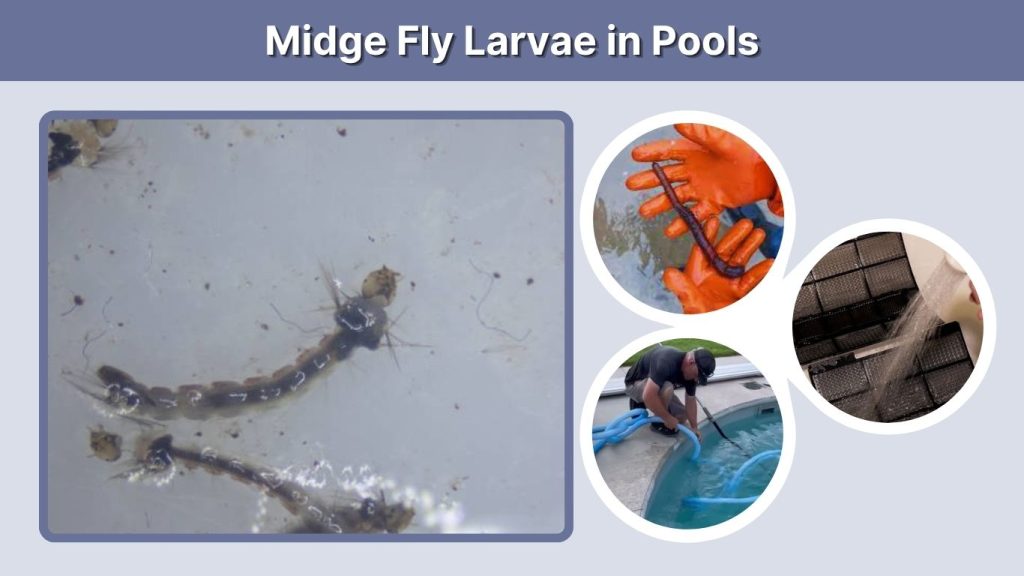
Midge fly larvae in a pool often appear when water is not circulating well or when leaves, algae, and debris collect. Pools that are unused, poorly chlorinated, or covered with organic material can attract egg-laying insects.
If larvae are in a swimming pool, the solution is usually maintenance rather than insecticide. Skim debris, brush surfaces, clean filters, improve circulation, and balance pool chemistry.
How to Remove Larvae From a Pool
To reduce larvae in a pool:
- Skim visible larvae and debris.
- Vacuum the pool bottom.
- Clean the filter.
- Brush walls and corners.
- Maintain proper sanitizer levels.
- Keep water circulating.
- Remove leaves and organic matter quickly.
- Cover the pool properly when not in use.
Adult midges are attracted to lights, so reducing bright lights near the pool may also help.
Are Midge Fly Larvae Harmful to Humans?
Midge fly larvae are generally not harmful to humans through normal contact. Non-biting midge larvae do not bite people. If they are found in water, the bigger concern is whether the water is clean enough for its intended use.
You should not intentionally drink water containing larvae. If larvae are found in drinking water, clean the container, check the water source, and use safe water handling practices. The larvae themselves are usually less concerning than possible contamination, stagnant water, or poor sanitation.
Can Midge Fly Larvae Live in Humans?
Midge fly larvae do not normally live in humans. They are aquatic or moisture-loving larvae that develop in water, mud, sediment, or wet organic material. If someone is worried about symptoms or possible exposure to contaminated water, medical advice is better than guessing.
Are Midge Fly Larvae Harmful to Dogs?
Midge fly larvae are not usually considered dangerous to dogs in normal outdoor exposure. A dog drinking from stagnant water is a bigger concern because stagnant water may contain bacteria, algae, parasites, or other contaminants.
If your dog drinks water with larvae once, it may not cause a problem, but you should discourage the behavior. Provide fresh water and prevent access to dirty buckets, ponds, pool covers, and stagnant containers.
What Do Midge Fly Larvae Eat?
Midge fly larvae feed mostly on small organic particles and microorganisms. Their diet may include algae, bacteria, decaying plants, sludge, detritus, and tiny bits of organic matter in sediment.
This diet is why they often appear in nutrient-rich water. If a pond, aquarium, drain, or container has plenty of decaying material, it can support midge larvae.
What Eats Midge Fly Larvae?
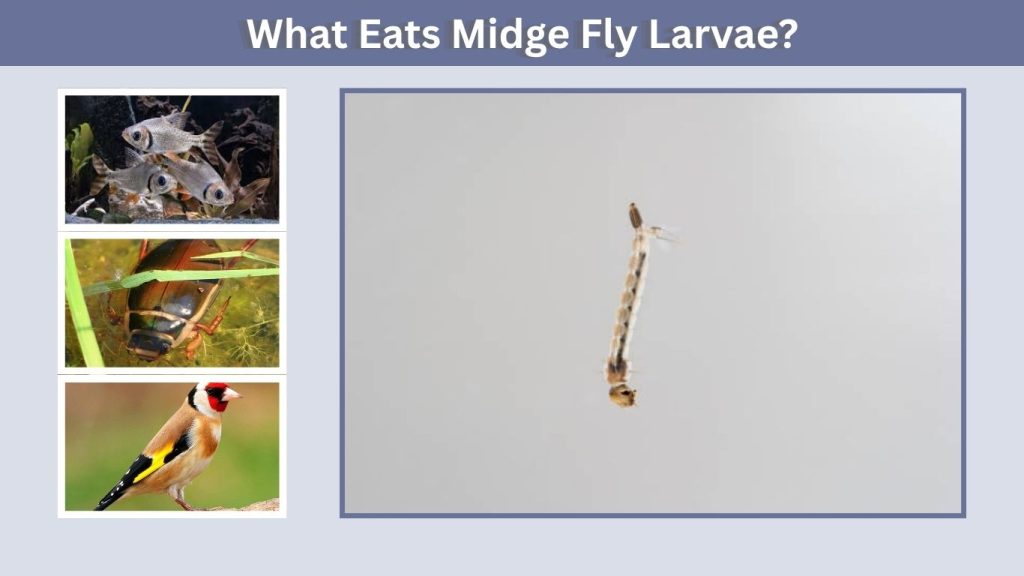
Many animals eat midge fly larvae. They are an important food source in aquatic ecosystems and are also valued by fish keepers and anglers.
Common predators include:
- Fish
- Dragonfly nymphs
- Aquatic beetles
- Backswimmers
- Birds
- Amphibians
- Some shrimp and small aquatic animals
- Other insect larvae
In ponds, adding or supporting natural predators can reduce larvae, but fish should never be added carelessly to natural waterways. In aquariums, suitable fish may eat larvae, but stocking decisions should be based on tank size and compatibility.
How to Get Rid of Midge Fly Larvae
The best way to get rid of midge fly larvae is to remove the conditions they need: stagnant water, organic buildup, sludge, algae, and poor circulation. Killing larvae without fixing the source often gives only temporary results.
Natural and Practical Control Steps
Use these steps first:
- Remove standing water where possible.
- Clean leaves and debris from water.
- Improve water circulation.
- Reduce algae and sludge.
- Clean aquarium filters and substrate.
- Avoid overfeeding fish.
- Empty unused containers.
- Clean gutters and drains.
- Maintain pool chemistry.
- Use screens or covers where practical.
For aquariums and shrimp tanks, avoid strong chemicals. Physical cleaning and better maintenance are safer.
Will Mosquito Dunks Kill Midge Fly Larvae?
Mosquito dunks contain a biological larvicide commonly used for mosquito larvae. They may affect some related fly larvae, but results can vary depending on species and setting. Always read the product label carefully and make sure it is appropriate for the water body, especially around fish, shrimp, pets, wildlife, or edible plants.
Do not use any larvicide in aquariums, hydroponic tanks, or ponds without confirming safety for the specific system.
Midge Fly Larvae in Hydroponic Tanks
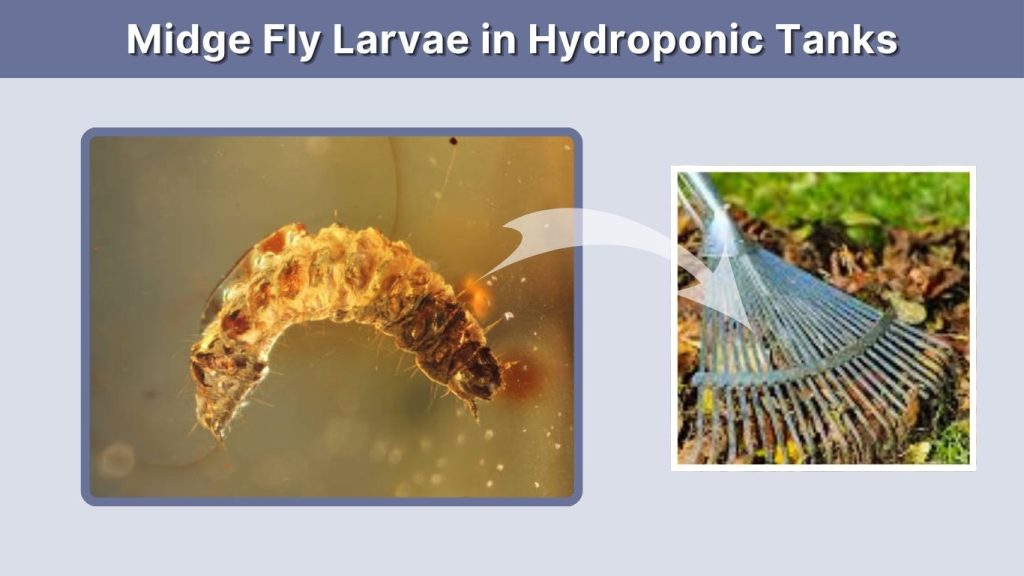
Midge fly larvae in a hydroponic tank usually indicate moisture, nutrients, algae, or organic buildup. Since hydroponic systems are sensitive, avoid random insecticides or biocides.
Focus on system hygiene:
- Remove plant debris.
- Block adult flies from entering.
- Improve circulation.
- Keep reservoirs covered.
- Clean biofilm and algae.
- Inspect roots and growing media.
- Use only hydroponic-safe treatments if needed.
If the tank grows edible plants, be especially careful with chemicals. Product labels and food-safety rules matter.
Midge Larvae and Fly Fishing
In fly fishing, midge larvae are important because trout and other fish eat them throughout the year. Artificial midge larvae fly patterns imitate the small worm-like larval stage drifting or resting in the water.
Popular larval patterns are usually slim and simple. Red patterns may imitate bloodworms, while black, olive, cream, or brown patterns imitate other midge larvae.
Why Midge Larvae Patterns Work
Midge larvae are common in many freshwater systems. Fish see them often, especially in lakes, tailwaters, slow pools, and winter conditions. Because they are small, anglers usually fish midge larvae patterns in tiny sizes and with light tippet.
FAQs
What do midge fly larvae look like?
Midge fly larvae look like tiny segmented worms. They may be red, pink, brown, greenish, tan, or pale. Red larvae are often called bloodworms. Many live in mud, sediment, filters, or bottom debris rather than hanging at the water surface like mosquito larvae.
Are midge fly larvae harmful to humans?
Midge fly larvae are generally not harmful to humans through normal contact, and non-biting midge larvae do not bite. However, larvae in drinking water, pools, or tanks can signal poor sanitation or stagnant conditions. Clean the water source and avoid drinking contaminated water.
Why are there red midge fly larvae in my aquarium?
Red midge fly larvae in an aquarium are often bloodworms. They may appear when adult midges lay eggs or when larvae enter with plants, food, or outdoor materials. They often indicate organic debris, overfeeding, dirty substrate, or low-flow areas that need better maintenance.
How do I get rid of midge fly larvae?
Remove standing water, clean debris, improve circulation, reduce algae, and maintain filters or pool chemistry. In aquariums, vacuum the substrate, avoid overfeeding, and clean the filter. Do not use harsh pesticides in fish or shrimp tanks because treatments may be more harmful than the larvae.
Do fish eat midge fly larvae?
Yes, many fish eat midge fly larvae. Bloodworms are commonly used as fish food because they are rich and attractive to many species. In natural ponds and lakes, midge larvae are an important food source for fish, birds, amphibians, and aquatic insects.