
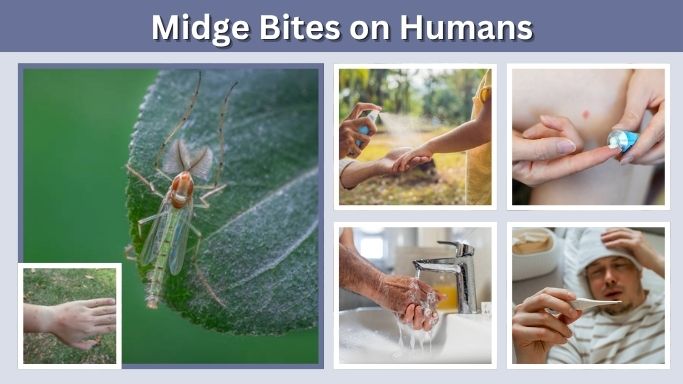
Midge bites on humans can look small at first, but they often become very itchy, red, swollen, and uncomfortable. Biting midges, also called no-see-ums in some areas, are tiny flies that feed on blood and usually bite exposed skin. Most bites are not dangerous, but scratching can lead to irritation or infection. Knowing what midge bites look like, how long they last, and how to treat them can help you recover faster.
What Are Midge Bites on Humans?
Midge bites happen when tiny biting midges pierce the skin and feed on blood. These insects are so small that many people do not notice them while they are biting. The itching and swelling usually appear later, making it hard to identify the exact insect.
Biting midges are minute flies that can be serious biting pests for humans, pets, livestock, and wildlife. Purdue Extension notes that biting midges are extremely annoying, although in the U.S. they are not known to transmit disease agents to humans.
Why Midges Bite People
Only some types of midges bite humans. The biting species need blood to help produce eggs. They are often active in damp, humid, coastal, marshy, or grassy areas.
Midges may bite more often:
- Around sunrise or sunset
- Near lakes, ponds, wetlands, and beaches
- In warm and humid weather
- Around shaded gardens or damp soil
- When people wear short sleeves or shorts outdoors
Because midges are tiny, they can pass through some loose screens and clothing gaps. This is why people may get several bites without seeing the insect.
Common Areas Where Bites Appear
Midge bites usually appear on exposed skin. They can show up in clusters because several midges may bite the same area, or one person may receive many bites while sitting outside.
Common bite areas include:
- Arms
- Legs
- Ankles
- Neck
- Face
- Hands
- Feet
Bites around the ankles and lower legs are especially common when people walk through grass, wet soil, or sandy areas.
Midge Bites vs Mosquito Bites
Midge bites and mosquito bites can look similar, but midge bites are often smaller, more clustered, and intensely itchy. Mosquito bites may appear as larger raised bumps, while midge bites can look like tiny red dots that become swollen later.
| Feature | Midge Bites | Mosquito Bites |
| Bite size | Usually small red bumps | Often larger raised bumps |
| Pattern | Often grouped or clustered | May appear scattered |
| Itching | Can be very intense | Mild to strong itching |
| Insect visibility | Hard to see | Usually visible |
| Common timing | Dawn, dusk, humid areas | Evening, night, near water |
What Do Midge Bites Look Like on Humans?
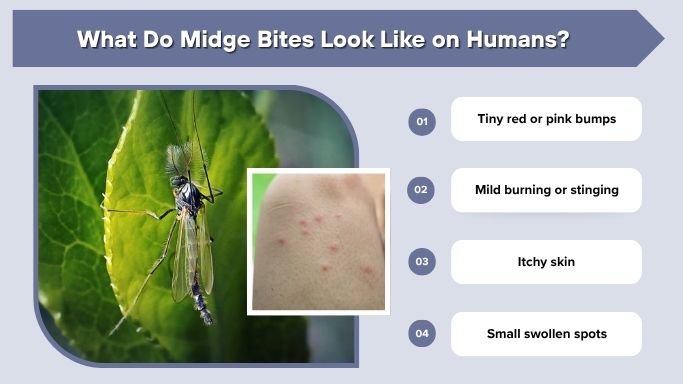
Midge bites on humans often look like tiny red bumps, small welts, or irritated spots on the skin. Some bites may have a visible center mark, while others only look like itchy swelling. On darker skin tones, redness may be less visible, but the raised bump, tenderness, or itchiness can still be felt.
The NHS explains that insect bites commonly cause pain where bitten, a small swollen lump, redness, and itching. It also notes that bites may appear grouped together in a small area.
Early Signs After a Bite
At first, a midge bite may feel like a small sting or pinprick. Some people do not feel the bite at all. Symptoms may start within minutes or appear several hours later.
Early signs include:
- Tiny red or pink bumps
- Mild burning or stinging
- Itchy skin
- Small swollen spots
- Skin warmth around the bite
- Several bites close together
The reaction depends on your skin sensitivity. Some people only get mild marks, while others develop larger itchy welts.
Swelling and Itching
Itching is the most common problem with midge bites. The skin reacts to the insect’s saliva, which can trigger irritation and swelling. The more you scratch, the worse the swelling may become.
Midge bite swelling may be:
- Small and local
- Firm to the touch
- Warm or tender
- More noticeable the next day
- Worse around sensitive skin areas
Scratching can break the skin and create scabs. This may increase the risk of infection, especially if your hands or nails are not clean.
Midge Bites Pictures on Humans: What to Notice
When looking at midge bites pictures on humans, you may notice small red dots, raised bumps, or clusters of itchy marks. However, pictures are not always enough to confirm the insect. Mosquitoes, fleas, bed bugs, sand flies, and other insects can cause similar bite marks.
To identify possible midge bites, look for:
- Several small bites in one area
- Bites after outdoor activity
- Bites near wetlands, beaches, or gardens
- Intense itching despite small bite size
- No visible insect at the time of biting
If bites appear after sleeping indoors, bed bugs or fleas may be more likely than midges.
How Long Do Midge Bites Last on Humans?
Most midge bites last a few days, but some can remain itchy for a week or longer. The healing time depends on your skin reaction, how much you scratch, and whether the bite becomes infected.
NHS Inform states that common bite symptoms such as redness, itching, swelling, and pain usually continue for a few days after the bite or sting.
Normal Healing Time
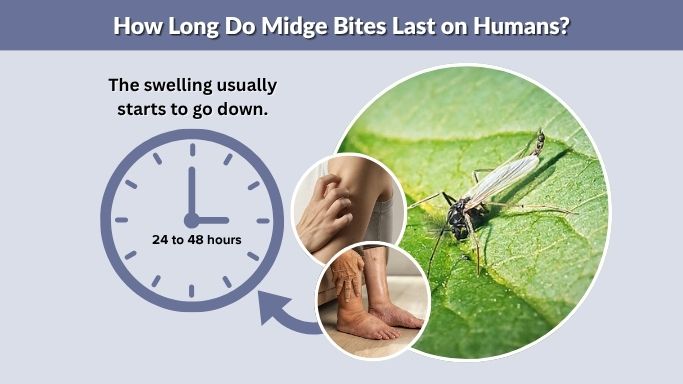
For many people, midge bites improve within 3 to 7 days. The itching may be strongest during the first 24 to 48 hours. After that, swelling usually starts to go down.
A normal healing pattern may look like this:
- Day 1: Itching, redness, and small swelling
- Day 2–3: Strongest irritation or raised bumps
- Day 4–7: Less swelling and fading marks
- After 1 week: Mild marks may remain but should improve
If bites are scratched repeatedly, they may take longer to heal.
Why Some Bites Last Longer
Some midge bites last longer because of stronger allergic-type skin reactions. This does not always mean a dangerous allergy. It may simply mean your skin is more sensitive to the bite.
Bites may last longer if:
- You scratch them often
- You have sensitive skin
- The bite area rubs against clothing
- You get many bites at once
- The skin becomes infected
- You use harsh home remedies
Children may scratch more, so their bites can become more irritated. Keeping nails short and covering the bite area can help reduce damage.
When Bites Are Not Healing
A midge bite should slowly improve. If it becomes more painful, hotter, more swollen, or starts leaking pus, it may be infected. You should also watch for red streaks, fever, or spreading redness.
Seek medical advice if:
- Swelling keeps getting worse
- Pain increases after 2–3 days
- Pus or yellow crust appears
- Redness spreads around the bite
- You feel feverish or unwell
- Bites are near the eyes, mouth, or genitals
- You have trouble breathing or swelling of the lips, face, or throat
Severe allergic reactions are uncommon with insect bites, but breathing difficulty or facial swelling needs urgent help.
How to Treat Midge Bites on Humans
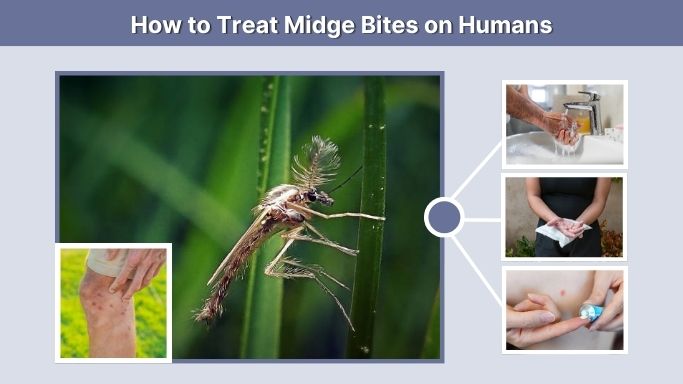
Midge bites can usually be treated at home. The main goals are to clean the skin, reduce itching, calm swelling, and prevent infection. Avoid scratching as much as possible because broken skin can make the bite worse.
The NHS recommends washing the affected area with soap and water and using a cold compress for swelling or pain after an insect bite or sting.
First Aid for Fresh Bites
When you notice midge bites, start with simple care. Fast treatment can reduce itching and swelling.
Steps to treat fresh midge bites:
- Wash the area with soap and clean water.
- Pat the skin dry with a clean towel.
- Apply a cold compress for 10 minutes.
- Avoid scratching the bite.
- Use an anti-itch cream if needed.
- Cover the bite if scratching is hard to stop.
A clean, cool cloth can help calm the skin. Do not apply ice directly to bare skin because it may irritate or damage the area.
What Helps Midge Bites on Humans?
Several simple treatments may help reduce discomfort. Choose mild options and avoid harsh chemicals or strong homemade mixtures.
Helpful options include:
- Cold compress for swelling
- Calamine lotion for itching
- Hydrocortisone cream for inflammation
- Oral antihistamine for strong itching
- Pain reliever if the bite is sore
- Loose clothing to avoid friction
- Moisturizer if skin becomes dry
Always follow product instructions. For children, pregnant people, or people with medical conditions, ask a pharmacist or doctor before using medicated creams or antihistamines.
What Not to Do
Some actions can make midge bites worse. Scratching is the biggest problem because it can break the skin and invite bacteria.
Avoid these mistakes:
- Do not scratch until the skin bleeds.
- Do not squeeze the bite.
- Do not use strong bleach or cleaning chemicals.
- Do not apply unknown herbal mixtures to broken skin.
- Do not cover infected bites with dirty bandages.
- Do not ignore spreading redness or pus.
If itching is severe at night, covering the bites with clean clothing or a light bandage may help stop scratching during sleep.
How to Prevent Midge Bites
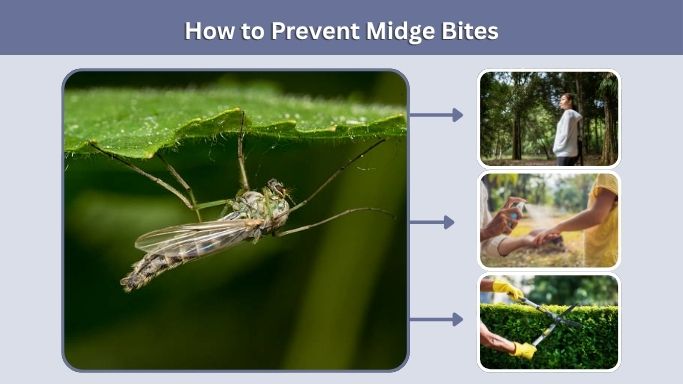
Preventing midge bites is easier than treating many itchy bumps later. Since midges are small and often active in groups, protection works best when you combine clothing, repellents, and environmental control.
NC State Extension explains that biting midges are small, sometimes barely visible, blood-sucking flies also known as biting gnats, punkies, sand flies, or no-see-ums. Their activity can affect outdoor work and recreation, especially in some coastal areas.
Wear Protective Clothing
Clothing is one of the simplest ways to reduce bites. Midges often attack exposed skin, so covering your body can make a big difference.
Good clothing choices include:
- Long sleeves
- Long pants
- Socks and closed shoes
- Light but tightly woven fabrics
- A hat for scalp and face protection
- Clothing that fits at wrists and ankles
Avoid very loose openings around sleeves or pant legs when walking through damp grass or marshy areas.
Use Insect Repellent
Insect repellent can help protect exposed skin. Products containing proven active ingredients are usually more reliable than strong-smelling home remedies.
Use repellent carefully:
- Apply it to exposed skin only.
- Follow the label instructions.
- Reapply after sweating or swimming.
- Avoid eyes, mouth, and broken skin.
- Wash it off after returning indoors.
- Use child-safe products for children.
If you are also using sunscreen, apply sunscreen first and repellent after it dries.
Reduce Midges Around Your Home
Midges like damp places. You may not remove every midge outdoors, but you can reduce conditions that attract them.
Helpful steps include:
- Empty standing water from containers.
- Improve drainage in wet soil.
- Clean gutters.
- Trim thick vegetation.
- Repair window and door screens.
- Use fine mesh screens where needed.
- Keep outdoor lights away from sitting areas.
- Use fans on patios because midges are weak flyers.
Fans can be especially useful in outdoor seating areas. Moving air makes it harder for tiny midges to land and bite.
Are Midge Bites Dangerous?
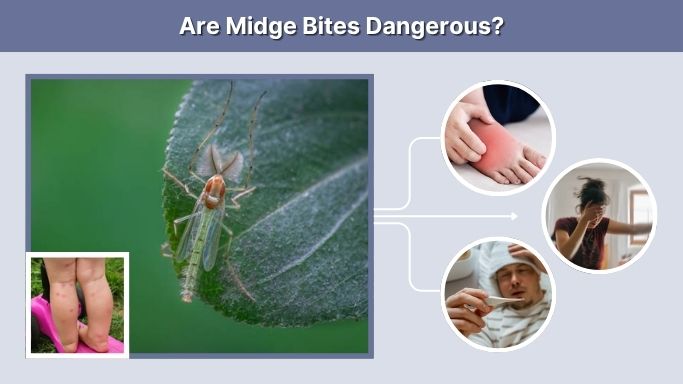
Most midge bites are irritating but not dangerous. The biggest problems are itching, swelling, scratching, and possible skin infection. However, disease risk depends on the region and the type of midge.
CDC states that Oropouche virus is spread to people primarily by infected biting midges, and it has been reported in parts of South America, Central America, and the Caribbean. Common symptoms include fever, severe headache, chills, muscle aches, and joint pains.
Usual Skin Reaction
For most people, midge bites cause a local skin reaction. This means the symptoms stay near the bite area.
Common reactions include:
- Itching
- Redness
- Small bumps
- Mild swelling
- Tenderness
- Warm skin
These symptoms usually improve with home care. The bite should not keep spreading or becoming more painful day after day.
Allergic Reaction Signs
Some people develop stronger reactions to insect bites. A large local reaction may cause bigger swelling, but it is not always an emergency. However, symptoms affecting breathing or the face need urgent attention.
Get urgent help if you notice:
- Trouble breathing
- Wheezing
- Dizziness or fainting
- Swelling of lips, tongue, face, or throat
- Chest tightness
- Confusion
- Widespread hives
These can be signs of a serious allergic reaction.
Infection Warning Signs
Infection can happen when bites are scratched open. Bacteria may enter the skin and cause worsening symptoms.
Possible infection signs include:
- Increasing pain
- Spreading redness
- Pus
- Yellow crust
- Skin feeling hot
- Fever
- Red streaks from the bite
If these signs appear, contact a healthcare provider. You may need medical treatment.
FAQs
What do midge bites look like on humans?
Midge bites usually look like small red bumps, tiny welts, or itchy spots on exposed skin. They often appear in clusters, especially on legs, arms, ankles, neck, or hands. On darker skin, redness may be harder to see, but swelling and itching can still be felt.
How long do midge bites last on humans?
Most midge bites last around 3 to 7 days. Itching is often strongest during the first two days and then slowly improves. If you scratch the bites, they may take longer to heal and can become infected, causing more pain, swelling, or pus.
How do you treat midge bites on humans?
Wash the bite area with soap and water, then apply a cold compress to reduce swelling. Anti-itch cream, calamine lotion, or an oral antihistamine may help with itching. Avoid scratching, keep the skin clean, and seek medical help if redness spreads or pus appears.
Why do midge bites itch so much?
Midge bites itch because the skin reacts to substances in the insect’s saliva. This reaction can cause swelling, redness, and intense irritation. Scratching makes the itch worse because it damages the skin and increases inflammation around the bite.
Can midge bites make you sick?
Most midge bites only cause skin irritation. In some regions, certain biting midges can spread diseases, but this depends on location and species. If you develop fever, severe headache, body aches, spreading redness, or unusual symptoms after bites, contact a healthcare professional.