
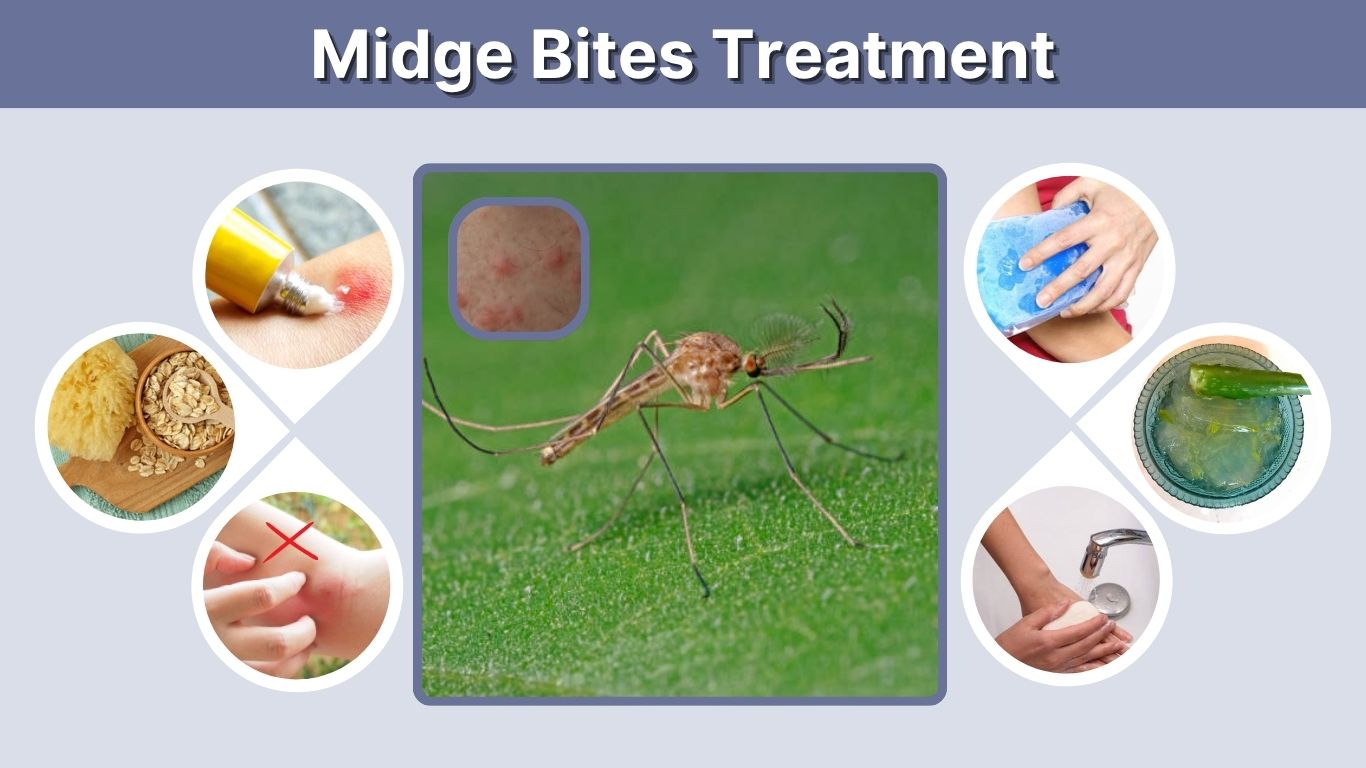
Midge bites treatment usually focuses on reducing itching, swelling, redness, and skin irritation. Biting midges are tiny flies that can leave clusters of itchy bumps on exposed skin, especially around the arms, legs, ankles, neck, and scalp. Most bites heal at home within a few days, but severe swelling, blisters, allergic reactions, or infected midge bites may need medical advice. Here is a complete guide to safe treatment and prevention.
What Is the Best Treatment for Midge Bites?
The best treatment for midge bites is simple first aid: clean the skin, cool the bite, reduce itching, and avoid scratching. Most midge bites are not dangerous, but they can become very uncomfortable because the itch is often stronger than the size of the bite suggests.
Health services commonly recommend washing insect bites with soap and water, using a cold compress for swelling, and getting urgent help for severe allergic symptoms such as breathing problems or swelling of the face, lips, tongue, or throat.
Clean the Bite Area First
Start by washing the bite area with mild soap and clean water. This removes sweat, dirt, and bacteria from the skin. It also lowers the chance of infection if you accidentally scratch the bite later.
After washing, pat the area dry with a clean towel. Do not rub hard because rubbing can make redness and itching worse. If the bite is already broken or bleeding from scratching, clean it gently and keep it covered with a clean dressing.
Use a Cold Compress
A cold compress is one of the easiest home treatments for midge bites. It can reduce swelling, calm itching, and make the skin feel less hot or irritated. Wrap ice or a cold pack in a cloth and place it on the bite for about 10 minutes.
Do not put ice directly on bare skin. Direct ice can damage the skin or make irritation worse. You can repeat cold compresses several times a day, especially when itching becomes strong.
Avoid Scratching
Scratching gives short-term relief, but it usually makes midge bites worse. It can break the skin, increase swelling, and allow bacteria to enter. This is one of the main reasons a simple bite becomes infected.
To stop scratching:
- Keep fingernails short.
- Cover bites with loose clothing.
- Use a cold compress when itching starts.
- Apply an anti-itch cream.
- Use a clean dressing if the skin is broken.
- Avoid hot showers, which may increase itching.
If children have midge bites, covering the bites at night can help prevent scratching during sleep.
Midge Bites Treatment at Home
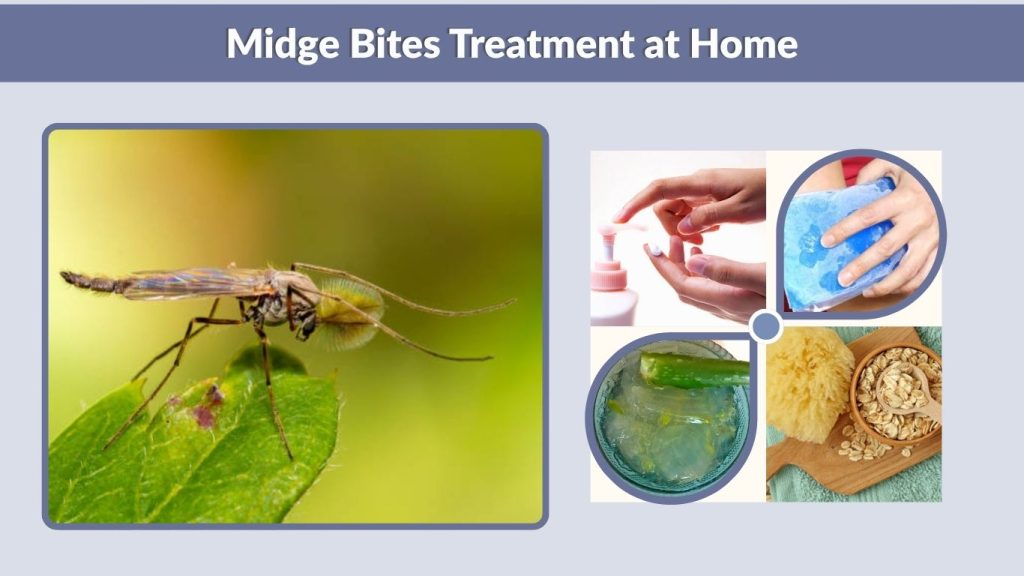
Most midge bites can be treated at home. The goal is to calm the skin while the body’s reaction settles. Home treatment works best when started early, before the bites become scratched or inflamed.
Midge bites may cause pain, a small swollen lump, redness, and itching, and these symptoms commonly last for a few days after the bite.
Home Remedies That May Help
Some gentle home remedies can reduce discomfort. These are best for mild bites where the skin is not badly swollen, blistered, or infected.
Helpful home treatments include:
- Cold compress for itching and swelling
- Calamine lotion for irritated skin
- Aloe vera gel for cooling relief
- Oatmeal bath for many itchy bites
- Mild moisturizer for dry or irritated skin
- Clean dressing for scratched bites
- Loose clothing to reduce rubbing
Use home remedies carefully. Do not apply strong chemicals, bleach, toothpaste, alcohol, or harsh essential oils to the bite. These can irritate the skin and make the reaction worse.
Over-the-Counter Treatments
Over-the-counter products can help when itching is strong. A pharmacist may suggest antihistamines, steroid creams, or other bite treatments depending on your symptoms. Some NHS guidance says a pharmacist can recommend treatments such as antihistamines and steroid creams and may advise further medical help if needed.
Common options include:
- Antihistamine tablets for itching
- Hydrocortisone cream for inflammation
- Calamine lotion for mild itch
- Pain relief medicine if the bite is sore
- Antiseptic cream if the skin is scratched
Always follow the product label. For young children, pregnant people, people with long-term health conditions, or anyone taking other medicines, ask a pharmacist or doctor before using medicated products.
Home Treatment vs Medical Treatment
| Situation | Home Treatment May Be Enough | Medical Advice Is Better |
| Mild itching | Yes | Not usually needed |
| Small red bumps | Yes | Not usually needed |
| Clustered bites | Yes, if improving | Needed if swelling spreads |
| Blisters | Sometimes | Needed if large, painful, or infected |
| Pus or yellow crust | No | Yes |
| Fever or feeling unwell | No | Yes |
| Breathing trouble | No | Emergency help |
Treatment for Itchy Midge Bites
Itching is the most common reason people search for midge bite treatment. The itch happens because your skin reacts to the insect’s saliva. Some people develop only mild bumps, while others get intense itching, swelling, and larger welts.
The key is to reduce inflammation and stop the scratch-itch cycle. The more you scratch, the more irritated the skin becomes.
Anti-Itch Creams
Anti-itch creams can help calm the skin. Calamine lotion is useful for mild irritation. Hydrocortisone cream may help reduce inflammation, but it should be used according to the label and not on broken or infected skin unless a healthcare professional advises it.
Apply a thin layer only to the affected area. Do not cover steroid cream tightly with bandages unless a doctor tells you to. If the bite becomes painful, hot, or starts leaking fluid, stop self-treatment and ask for medical advice.
Antihistamines
Antihistamines may help if the itching is strong or keeps you awake. Some antihistamines can cause drowsiness, so read the label carefully. A pharmacist can help you choose the right type.
Antihistamines may be useful when:
- You have many bites.
- Itching is disturbing sleep.
- Bites are swollen.
- You react strongly to insect bites.
- Cream alone is not enough.
Do not combine different antihistamines unless a healthcare professional says it is safe.
Cooling Methods
Cooling the skin is simple but effective. A cold compress can calm itching quickly. Cool showers may also help, but avoid very hot water because heat can increase itching.
Useful cooling methods include:
- Cold wet cloth
- Wrapped ice pack
- Cool bath
- Oatmeal bath
- Aloe vera gel kept in the fridge
Cooling does not cure the bite, but it can make symptoms easier to manage while the skin heals.
Midge Bite Blister Treatment
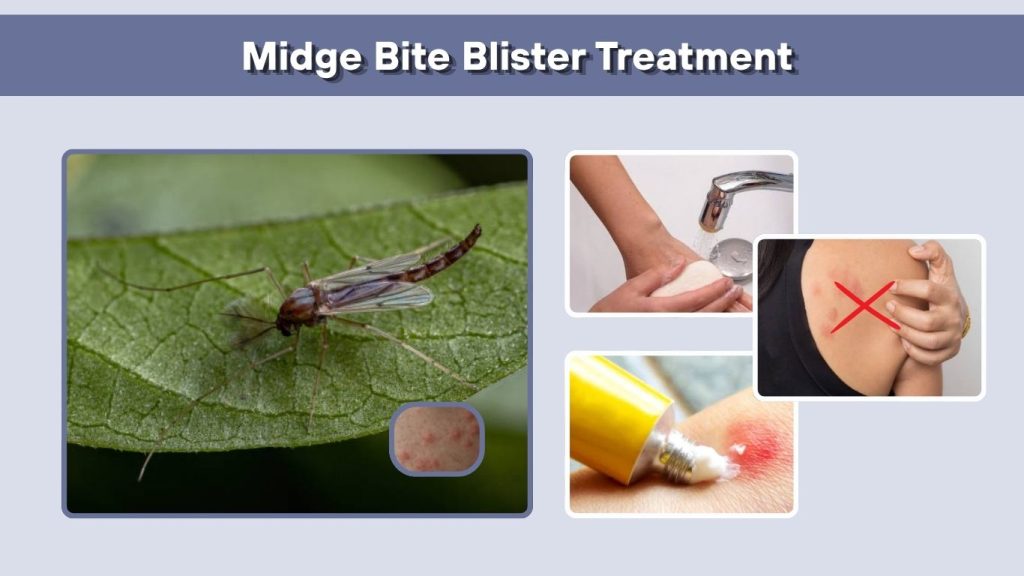
Some midge bites can form small blisters. This may happen when the skin reaction is stronger than usual or when the bite is scratched repeatedly. A blister does not always mean infection, but it should be handled carefully.
Blistered bites need gentle care because broken blisters can become infected.
Do Not Pop the Blister
Do not pop a midge bite blister. The blister skin acts as a natural cover while the skin underneath heals. Popping it can let bacteria enter and increase the risk of infection.
If the blister breaks by itself, wash the area with clean water and mild soap. Pat it dry and cover it with a clean dressing. Change the dressing daily or whenever it becomes dirty or wet.
Protect the Skin
Blisters on ankles, feet, or waist areas can rub against clothing and shoes. This can make them painful or cause them to burst.
To protect blistered bites:
- Wear loose clothing.
- Avoid tight socks over the blister.
- Cover with a clean, non-stick dressing.
- Keep the area dry and clean.
- Avoid scratching around the blister.
- Do not apply harsh home remedies.
If the blister is large, very painful, spreading, or filled with pus, get medical advice.
Watch for Infection
A blistered midge bite can become infected if bacteria enter the skin. Infection is more likely if the blister is scratched open or not kept clean.
Warning signs include:
- Increasing pain
- Spreading redness
- Skin feeling hot
- Pus or cloudy fluid
- Yellow crust
- Swelling that gets worse
- Fever or feeling unwell
If these symptoms appear, the bite may need medical treatment.
Midge Bites Allergic Reaction Treatment
Some people have stronger reactions to midge bites. This may include large swelling, intense itching, warmth, redness, or raised welts. A large local reaction can be uncomfortable, but it is different from a severe whole-body allergic reaction.
Severe allergic reactions are uncommon, but they can happen after insect bites or stings. NHS guidance says signs such as difficulty breathing, dizziness, fast heartbeat, confusion, or swelling of the mouth, face, lips, tongue, or throat need emergency medical help.
Mild Allergic-Type Reaction
A mild allergic-type reaction may look like a large swollen area around the bite. It may itch strongly and feel warm. For this type of reaction, cold compresses, antihistamines, and anti-inflammatory creams may help.
You should monitor the bite closely. If swelling keeps spreading, pain increases, or the area becomes hot and infected-looking, contact a healthcare professional.
Severe Allergic Reaction
A severe allergic reaction is an emergency. Do not try to treat it only with home remedies.
Get urgent medical help if you notice:
- Trouble breathing
- Wheezing
- Swelling of the tongue, throat, lips, or face
- Dizziness or fainting
- Confusion
- Fast heartbeat
- Widespread hives
- Tight chest
These symptoms can be signs of anaphylaxis and need immediate treatment.
When to See a Doctor
You should seek medical advice if midge bites are unusually severe or not improving. This is especially important for children, older adults, pregnant people, and people with weak immune systems.
See a doctor or pharmacist if:
- The bite becomes more painful.
- Redness spreads.
- The swelling is large or worsening.
- You see pus or yellow crust.
- You develop fever.
- The bite is near the eye.
- Home treatment does not help.
- You keep getting repeated bite reactions.
Infected Midge Bites Treatment
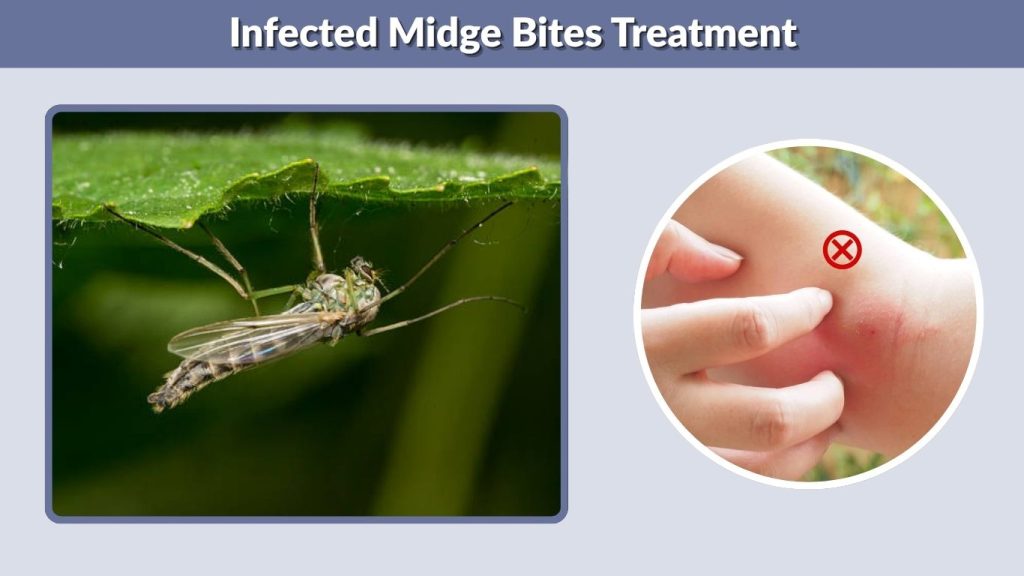
Infected midge bites need more care than normal itchy bites. Infection usually happens after scratching breaks the skin. Once bacteria enter, the bite may become painful, hot, swollen, and filled with pus.
An infected bite may require antibiotics or professional care. Do not ignore signs of infection.
Signs of an Infected Bite
A normal midge bite should slowly improve. An infected bite often gets worse after the first day or two.
Common infection signs include:
- Increasing pain
- Spreading redness
- Warm or hot skin
- Pus
- Yellow crust
- Swollen glands
- Red streaks
- Fever
- Feeling unwell
If the bite is infected, a pharmacist or doctor can advise the right treatment. Some NHS services note that pharmacists may recommend bite treatments and direct patients to medical help when needed.
Keep the Area Clean
While waiting for medical advice, keep the area clean. Wash gently with soap and water. Avoid scratching. Cover broken skin with a clean dressing.
Do not use strong antiseptics too often because they can irritate the skin. Do not squeeze pus from the bite. Squeezing may push infection deeper into the skin.
Do You Need Antibiotics?
Not every midge bite needs antibiotics. Mild redness and itching are normal. Antibiotics are only needed if there is a bacterial infection. A healthcare professional can decide based on symptoms.
You may need medical treatment if:
- Pus is present.
- Redness is spreading.
- Pain is increasing.
- You have fever.
- The bite is on the face.
- You have diabetes or immune problems.
- The bite is not improving.
Midge Fly Bite Treatment by Area
Midge bites can happen in many places, but treatment is usually similar. People often search for “midge bites UK treatment,” “Scottish midge bite treatment,” “Highland midge bite treatment,” “midge bites QLD treatment,” or “treatment for midge bites Australia.” The location may change the midge species and season, but basic bite care stays the same.
In Scotland, NHS Inform describes bites and stings as common and usually minor, with symptoms such as pain, swelling, redness, and itching lasting a few days.
UK and Scotland Treatment
In the UK and Scotland, midges are common in damp, grassy, woodland, and Highland areas. Bites can be very itchy, especially after outdoor activities in summer.
Treatment steps are:
- Wash the bite area.
- Apply a cold compress.
- Use anti-itch cream or calamine lotion.
- Ask a pharmacist about antihistamines.
- Avoid scratching.
- Watch for infection.
For severe swelling, infected bites, or allergic symptoms, contact NHS 111, a pharmacist, GP, or emergency services depending on severity.
Australia and QLD Treatment
In Australia, biting midges are often called sandflies in some regions. They can be common around coastal, humid, and mangrove areas, including parts of Queensland. Treatment is still based on cleaning, cooling, itch relief, and infection prevention.
Because Australia can have different biting insects in similar habitats, it is important not to assume every itchy bite is from midges. If bites are severe, blistering, infected, or linked with fever, medical advice is safer.
Midge and Gnat Bites Treatment
People often use “midge bites” and “gnat bites” together. Some gnats bite and some do not. For small fly bites that cause itchy red bumps, the same first-aid steps usually help.
Use this basic routine:
- Clean the skin.
- Cool the area.
- Apply anti-itch treatment.
- Avoid scratching.
- Cover broken skin.
- Seek help for infection or allergy signs.
How to Prevent More Midge Bites
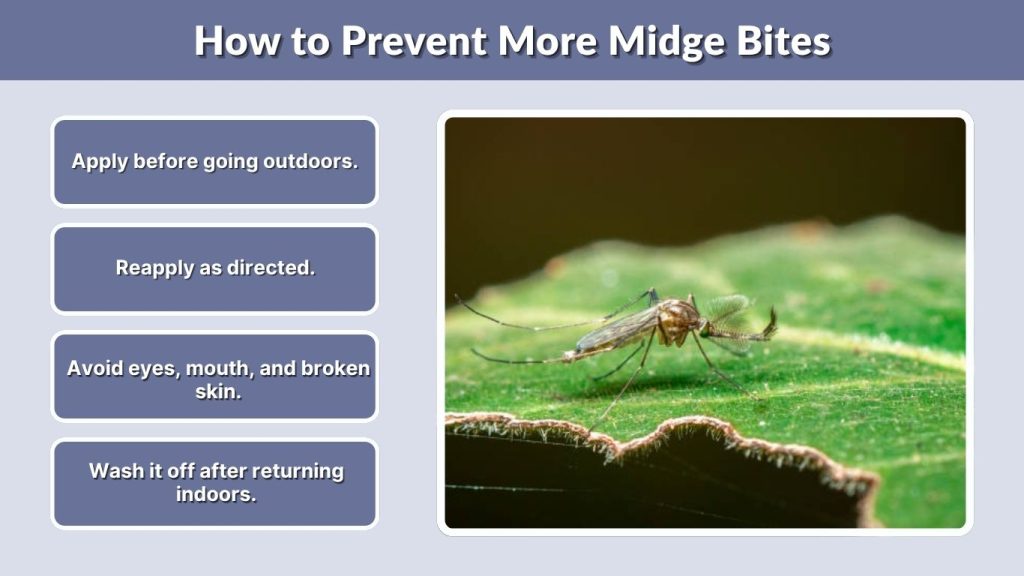
Treatment helps after bites happen, but prevention is the best way to avoid repeated itching. Biting midges are tiny and can be difficult to see, so protection should start before you enter high-risk areas.
CDC prevention advice for biting midges includes using EPA-registered insect repellents labeled for flies, biting flies, or Culicoides, which includes biting midges and no-see-ums.
Use Repellent Correctly
Insect repellent can reduce bites when used correctly. Choose a product suitable for biting flies or midges. Apply it to exposed skin and follow the label.
Repellent tips:
- Apply before going outdoors.
- Reapply as directed.
- Avoid eyes, mouth, and broken skin.
- Wash it off after returning indoors.
- Use child-safe products for children.
- Apply sunscreen first, then repellent.
Do not rely only on perfume, smoke, or strong-smelling oils. These may not protect well.
Wear Protective Clothing
Clothing creates a physical barrier. This is especially useful in Scotland, the UK, Australia, and coastal or wetland areas where midges may swarm.
Wear:
- Long sleeves
- Long trousers
- Socks
- Closed shoes
- Light but tightly woven fabric
- Hat or head net in heavy midge areas
Midges can bite exposed ankles, wrists, neck, and scalp. Covering these areas can reduce bites.
Reduce Midges Around the Home
Midges breed or rest around damp places. You may not remove them completely, but you can reduce conditions that attract them.
Helpful prevention steps include:
- Remove standing water.
- Fix drainage problems.
- Clean gutters.
- Trim dense vegetation.
- Use fine mesh screens.
- Keep outdoor lights away from seating areas.
- Use fans on patios.
- Avoid sitting outside at dawn and dusk.
Fans are useful because midges are weak flyers. Moving air can make it harder for them to land and bite.
FAQs
What is the best treatment for midge bites?
The best treatment is to wash the bite with soap and water, apply a cold compress, and use anti-itch treatment if needed. Calamine lotion, antihistamines, or hydrocortisone cream may help. Avoid scratching because broken skin can lead to infection and slower healing.
How do you treat midge bites at home?
You can treat midge bites at home with cold compresses, calamine lotion, aloe vera gel, oatmeal baths, and loose clothing. Keep the skin clean and avoid scratching. If the bite becomes hot, painful, swollen, or filled with pus, get medical advice.
What helps itchy midge bites fast?
A cold compress often gives fast relief from itchy midge bites. Anti-itch creams, calamine lotion, and antihistamines may also help. Avoid hot showers and scratching because heat and skin damage can make itching worse. If itching is severe, ask a pharmacist for advice.
How do you treat infected midge bites?
Infected midge bites should be cleaned gently and covered with a clean dressing. Do not squeeze or scratch the bite. If there is pus, spreading redness, increasing pain, fever, or red streaks, contact a healthcare professional because antibiotics may be needed.
When should I worry about midge bites?
You should worry if the bite becomes infected, swelling spreads, pain increases, or you develop fever. Get emergency help if you have trouble breathing, dizziness, confusion, or swelling of the face, lips, tongue, or throat. These may be signs of a serious allergic reaction.