
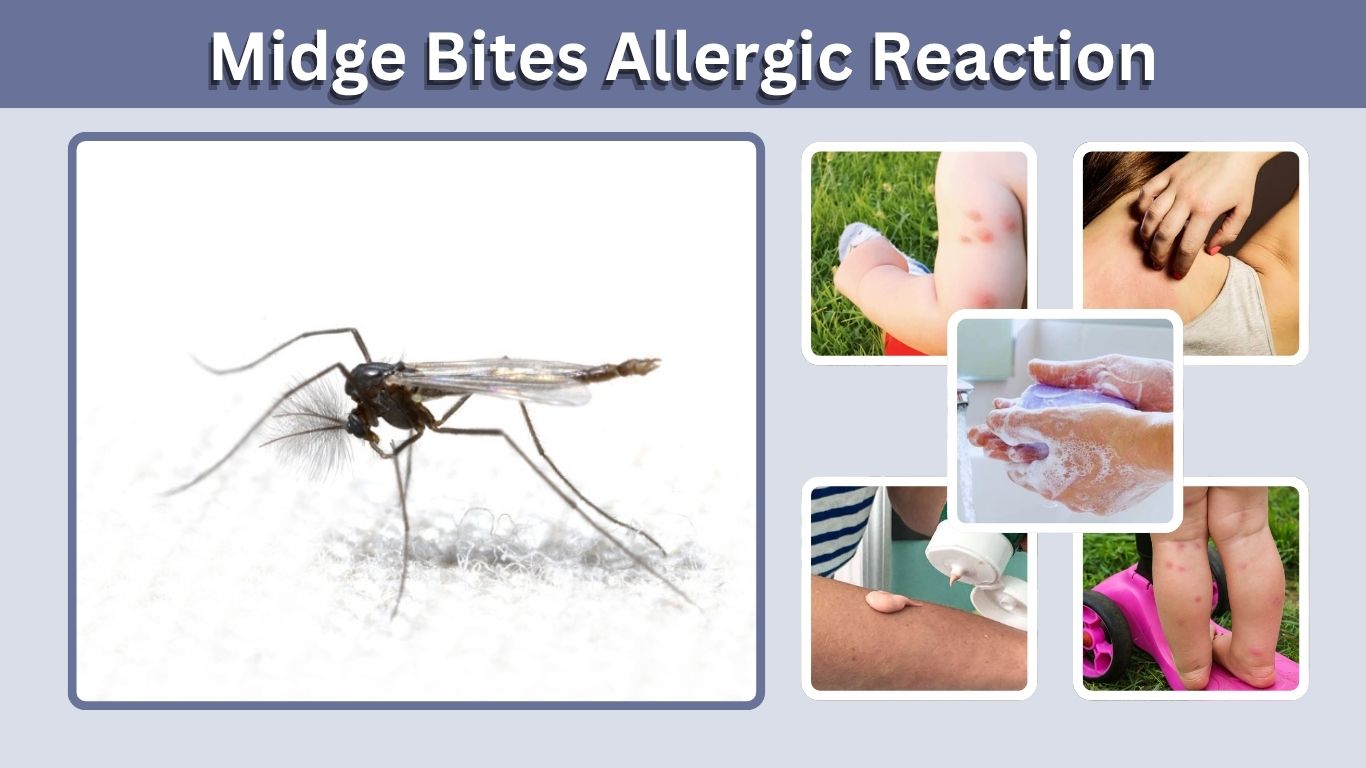
Midge bites are usually small, itchy, and irritating, but some people can develop a stronger allergic reaction. The skin may become swollen, red, warm, painful, or covered with raised bumps. Most reactions improve with simple home care, but severe swelling, breathing difficulty, dizziness, or infection signs need medical attention. Knowing the difference helps you treat midge bites safely.
What Is a Midge Bite Allergic Reaction?
A midge bite allergic reaction happens when your immune system overreacts to proteins or substances left in the skin during the bite. Biting midges are tiny flies, often called no-see-ums in some places. Their bites can be very itchy because the skin reacts to the saliva injected during feeding.
A normal bite may cause a small red bump. An allergic reaction may look larger, itch more, last longer, or spread around the bite area.
Common Signs of a Reaction
Midge bite reactions can vary from mild to severe. Many people only get small itchy marks, while sensitive people may have stronger skin symptoms.
Common signs include:
- Red bumps on the skin
- Strong itching
- Swelling around the bite
- Warm skin near the bite
- Small blisters
- Raised welts
- Burning feeling
- Tenderness or mild pain
- Skin irritation that lasts several days
Why Some People React More
Some people are naturally more sensitive to insect bites. Their immune system responds more strongly, even if the bite is not dangerous. Children, people with sensitive skin, and people who are bitten many times at once may notice bigger reactions.
Repeated scratching can also make the reaction worse. Scratching breaks the skin and increases the chance of infection.
Midge Bites vs Mosquito Bites
Midge bites and mosquito bites can look similar. Both may cause itching, redness, and swelling. However, biting midges are usually smaller than mosquitoes and may bite in clusters.
| Feature | Midge Bites | Mosquito Bites |
| Bite pattern | Often in groups or clusters | Single or scattered bumps |
| Size of insect | Very tiny | Larger and easier to see |
| Itching | Often intense | Mild to strong |
| Common areas | Ankles, arms, neck, face | Exposed skin |
| Reaction time | May appear quickly | Often appears soon after bite |
Mild Midge Bite Reaction
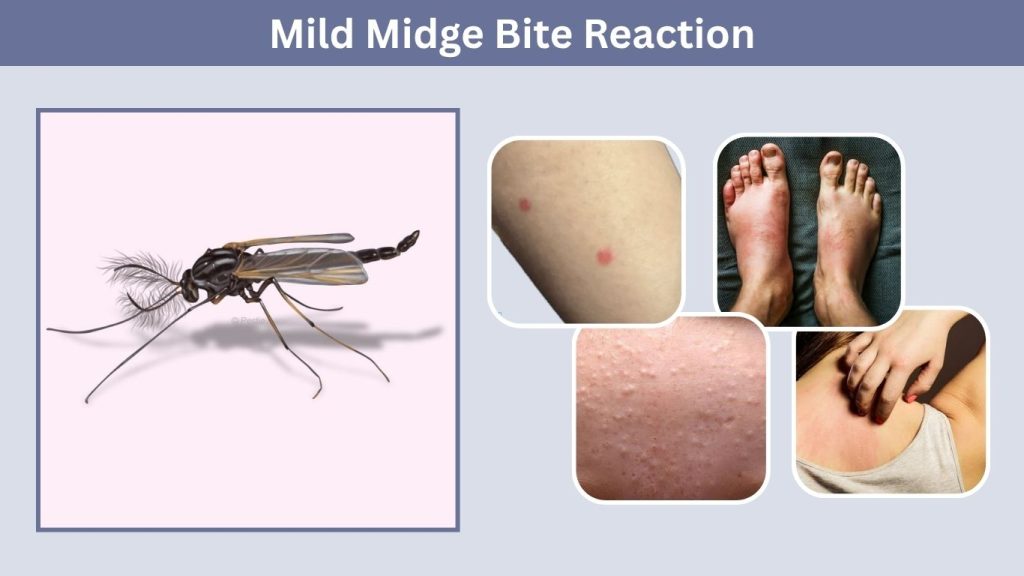
A mild reaction is the most common type. It usually causes itching, redness, and small raised bumps. These symptoms can be uncomfortable, but they often improve within a few days.
Mild reactions can usually be treated at home. The main goal is to reduce itching, calm swelling, and prevent scratching.
What Mild Symptoms Look Like
Mild midge bite symptoms usually stay close to the bite area. The skin may feel itchy or slightly warm, but the swelling does not spread widely.
Typical mild symptoms include:
- Small red spots
- Tiny bumps
- Mild swelling
- Itchy skin
- Slight tenderness
- Skin irritation after scratching
Home Treatment for Mild Bites
Start by washing the bite area with soap and water. This helps remove dirt and lowers the chance of infection. Then apply a cold compress for 10 to 15 minutes to reduce swelling and itching.
You may also use an anti-itch cream, calamine lotion, or hydrocortisone cream if suitable for your skin. An oral antihistamine may help if itching is disturbing sleep or spreading across several bite areas.
What Not to Do
Avoid scratching, even if the bite is very itchy. Scratching can damage the skin and create an entry point for bacteria. This may lead to infection.
Do not apply harsh chemicals, strong essential oils, or unknown home remedies to broken skin. These may irritate the bite and make the reaction worse.
Severe Allergic Reaction to Midge Bites
A severe allergic reaction is less common, but it can happen. It may affect more than the bite area and can involve the whole body. This type of reaction needs quick attention.
Severe reactions may appear soon after the bites or develop over several hours. Watch carefully if the swelling grows quickly or if symptoms move beyond the skin.
Warning Signs
Get urgent medical help if a midge bite reaction includes serious symptoms. These may show that the body is having a stronger allergic response.
Warning signs include:
- Trouble breathing
- Wheezing
- Tightness in the chest
- Swelling of lips, tongue, throat, or face
- Dizziness or fainting
- Fast heartbeat
- Confusion
- Widespread hives
- Nausea or vomiting with other allergy symptoms
- Sudden weakness
Large Local Reaction
A large local reaction means swelling becomes bigger than a normal bite reaction but stays near the bitten area. For example, the hand, ankle, or arm may swell noticeably after several bites.
This can be painful and alarming, but it is not always an emergency. However, medical advice is important if the swelling is severe, near the eyes or mouth, or keeps getting worse.
When It May Be Anaphylaxis
Anaphylaxis is a life-threatening allergic reaction. It can affect breathing, blood pressure, heart rate, skin, and digestion. It needs emergency treatment immediately.
If someone has breathing trouble, throat swelling, faintness, or widespread hives after insect bites, treat it as urgent. If they have an epinephrine auto-injector prescribed, it should be used as directed while emergency help is called.
Midge Bite Allergic Reaction Treatment
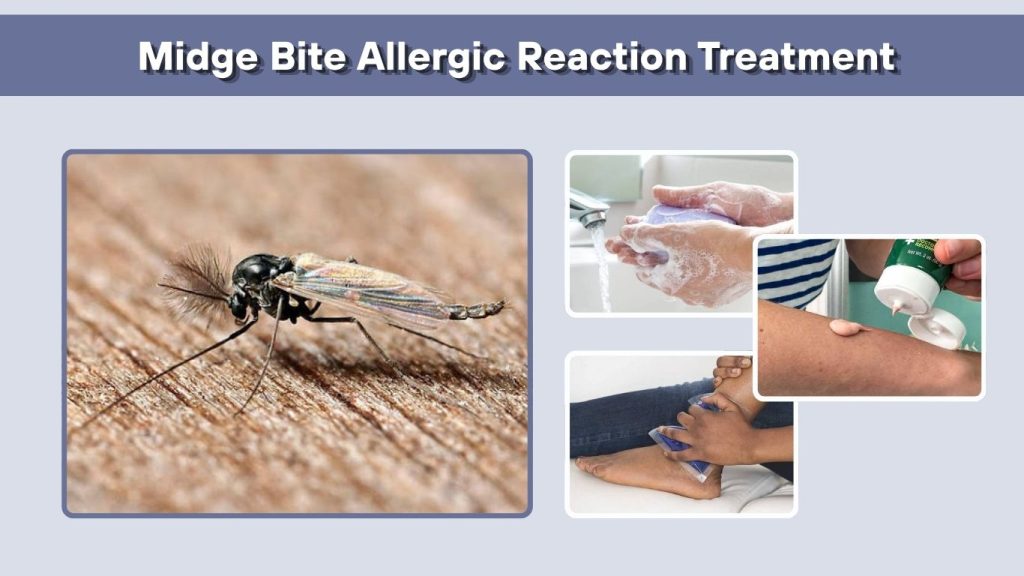
Treatment depends on how serious the reaction is. Mild reactions can often be managed at home. Strong reactions may need medical treatment, especially if swelling spreads or symptoms affect breathing.
Do not ignore symptoms that are unusual, fast-moving, or severe. A bite that looks infected also needs proper care.
First Aid Steps
For most midge bites, basic first aid can reduce discomfort and prevent complications.
Follow these steps:
- Wash the area with soap and clean water.
- Apply a cold compress for swelling.
- Avoid scratching the bite.
- Use anti-itch cream if suitable.
- Take an antihistamine if needed.
- Keep fingernails short.
- Cover broken skin with a clean dressing.
- Watch for infection signs.
- Seek medical help if symptoms worsen.
Medicines That May Help
Antihistamines may help reduce itching and swelling caused by an allergic reaction. Hydrocortisone cream may calm local inflammation. Calamine lotion can also soothe itchy skin.
Pain relievers may help if the bite area is sore. Always follow the product label and avoid using multiple medicines without proper guidance. Children, pregnant people, and people with medical conditions should be more careful and ask a pharmacist or doctor.
When to See a Doctor
See a doctor if the reaction is severe, spreading, or not improving. Medical help is also important if the bite is near the eye, mouth, or throat.
You should also get advice if you have repeated strong reactions after midge bites. A doctor may suggest a prevention plan or allergy management steps.
Infection After Midge Bites
Not every swollen bite is an allergy. Sometimes a bite becomes infected, especially after scratching. Infection can look similar to an allergic reaction, so it is important to notice the difference.
An allergic reaction often appears quickly and causes itching. Infection may develop later and may cause increasing pain, heat, pus, or spreading redness.
Signs of Infection
Infected bites need medical attention because they may get worse without treatment.
Possible infection signs include:
- Increasing redness
- Skin that feels hot
- Growing pain
- Pus or fluid
- Red streaks from the bite
- Fever
- Swollen glands
- Worsening symptoms after a few days
- Skin crusting or open sores
Allergy or Infection?
Allergic swelling is often itchy and may appear soon after the bite. Infection is more likely when the area becomes increasingly painful, hot, or filled with pus.
If you are unsure, it is safer to ask a healthcare professional. This is especially important for children, older adults, or people with diabetes, immune problems, or poor wound healing.
How to Prevent Infection
The best way to prevent infection is to stop scratching. Keep the skin clean and use cold compresses to reduce itch. If the bite opens, cover it with a clean dressing.
Avoid picking scabs or squeezing bumps. These actions can push bacteria deeper into the skin and make healing slower.
Midge Bites in Children
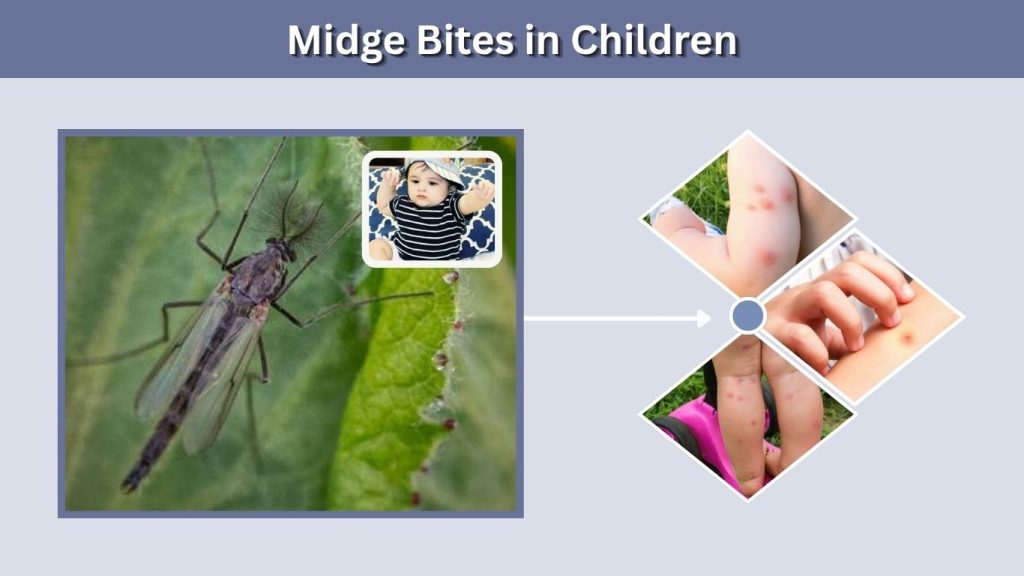
Children may react strongly to midge bites because their skin is sensitive and they often scratch more. A child may develop large itchy bumps or swelling after being bitten outdoors.
Most cases are mild, but parents should watch for spreading redness, fever, facial swelling, or breathing problems.
Child-Friendly Care
Wash the bite gently and apply a cold cloth. Keep the child’s nails short to reduce skin damage from scratching. Loose clothing can help prevent friction over the bite area.
Ask a pharmacist or doctor before using medicated creams or antihistamines for young children. Some products are not suitable for all ages.
When Parents Should Worry
Get medical help if a child has swelling around the eyes, lips, tongue, or throat. Also seek help if the child has breathing trouble, dizziness, fever, extreme sleepiness, or a bite that looks infected.
If the child scratches until the skin breaks, keep the area clean and watch it closely.
Preventing Bites in Children
Protective clothing is one of the easiest ways to reduce bites. Long sleeves, long pants, socks, and closed shoes can help, especially during dawn and dusk.
Use child-safe insect repellent according to the label. Keep children away from marshy, damp, or shaded areas where biting midges are active.
How to Prevent Allergic Reactions from Midge Bites
The best way to prevent allergic reactions is to avoid bites. This is especially important if you already know your skin reacts strongly to midges.
Biting midges are most active in damp, humid, and low-wind conditions. They are often worse near lakes, ponds, marshes, gardens, and shaded outdoor areas.
Personal Protection
Personal protection helps reduce the number of bites during outdoor activity.
Helpful prevention tips include:
- Wear long sleeves and long pants.
- Use insect repellent properly.
- Avoid dawn and dusk exposure.
- Wear socks and closed shoes.
- Use fine mesh screens.
- Keep doors and windows closed.
- Use fans on patios.
- Avoid sitting near standing water.
- Shower after heavy outdoor exposure.
Yard and Home Prevention
Reduce damp resting areas near your home. Trim tall grass, remove wet leaves, and improve airflow around plants. Biting midges are weak fliers, so fans can help make outdoor sitting areas less attractive.
Repair screens and seal gaps around doors and windows. Very small midges may pass through regular screens, so fine mesh screens may be needed in heavy problem areas.
Outdoor Light Control
Some midges are attracted to lights. Turn off unnecessary outdoor lights at night. Use warmer yellow lights instead of bright white lights near doors and patios.
Move lights away from sitting areas when possible. This can reduce the number of midges gathering close to people.
FAQs
Can midge bites cause an allergic reaction?
Yes, midge bites can cause an allergic reaction in some people. The reaction may include redness, swelling, itching, welts, or blisters. Most reactions are mild, but severe symptoms like breathing difficulty, facial swelling, or dizziness need urgent medical attention.
How long does a midge bite allergic reaction last?
A mild reaction may improve within a few days. Stronger swelling or itching can last longer, especially if the area is scratched. If symptoms keep getting worse, become painful, or show signs of infection, it is best to seek medical advice.
What is the best treatment for midge bite swelling?
Wash the area, apply a cold compress, and avoid scratching. Anti-itch cream, calamine lotion, hydrocortisone cream, or antihistamines may help some people. If swelling is severe, near the face, or spreading quickly, medical help is needed.
When should I worry about midge bites?
You should worry if there is trouble breathing, swelling of the lips or throat, dizziness, widespread hives, fever, pus, red streaks, or rapidly spreading redness. These signs may suggest a severe allergic reaction or infection and should not be ignored.
Are midge bites more dangerous than mosquito bites?
Most midge bites are not more dangerous than mosquito bites, but they can be very itchy and may appear in clusters. Some people react strongly to them. The main risks are allergic swelling, skin irritation, and infection from scratching.