
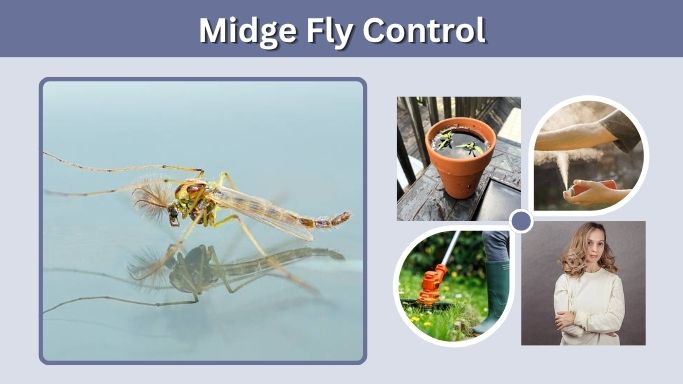
Midge flies can become a serious nuisance around homes, gardens, lakes, pools, and outdoor lights. Some midges bite, while others simply gather in huge numbers and create mess around walls, windows, patios, and water sources. Proper midge fly control starts with knowing the type of midge, where it breeds, and which control method works best for that situation.
What Are Midge Flies?
Midge flies are small, delicate flies that often look like tiny mosquitoes. Many people notice them near lights, ponds, drains, wet soil, lakes, or damp garden areas. Some midges are harmless non-biting insects, while others bite humans and animals.
Midges are common in warm, humid, and wet environments. They can reproduce quickly when standing water, organic matter, or moist soil is available.
Common Types of Midges
Different midges need different control methods. The most common types include:
- Non-biting midges: Often gather near lights and water.
- Biting midges: Also called no-see-ums; they bite people and pets.
- Aquatic midges: Develop in ponds, lakes, ditches, and wastewater areas.
- Gall midges: Damage plants by forming swellings or galls.
- Garden midges: Live around wet soil, mulch, and dense plants.
Why Midges Become a Problem
Midges become a problem when their breeding areas are close to homes or outdoor spaces. Lakes, ponds, clogged gutters, wet lawns, and stagnant pools can support large numbers of larvae. Once adults emerge, they may swarm around windows, doors, porch lights, and patios.
Non-biting midges do not usually harm people, but their large swarms can be annoying. Biting midges are more serious because they can cause itchy bites and outdoor discomfort.
Midge vs Mosquito
Midges and mosquitoes look similar, but they are not the same. Mosquitoes usually have longer mouthparts and are stronger fliers. Many non-biting midges have fuzzy antennae and do not bite. Biting midges are much smaller than mosquitoes and can pass through regular window screens.
| Feature | Midge Flies | Mosquitoes |
| Size | Very small to small | Small to medium |
| Bite | Some species bite | Females usually bite |
| Breeding area | Water, wet soil, organic matter | Standing water |
| Common problem | Swarms near lights and water | Bites and disease risk |
| Control focus | Breeding sites, lights, barriers | Water removal, repellents |
How to Control Midges Outside
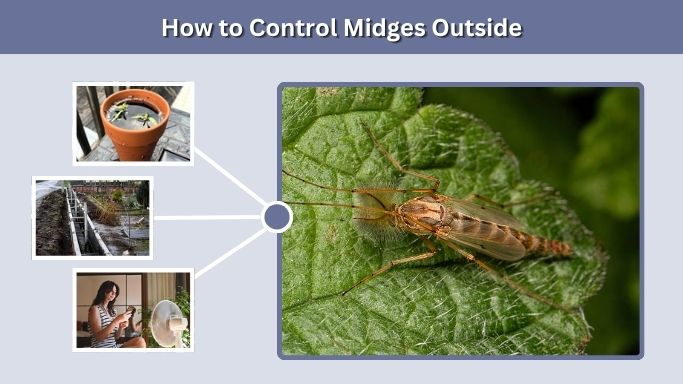
Outdoor midge control is the most important step because most infestations start outside. Adult sprays may reduce numbers for a short time, but long-term control depends on reducing breeding sites and changing the environment.
Focus on wet places first. Midges need moisture for their larvae, so areas with stagnant water, algae, decaying leaves, or organic buildup often become breeding zones.
Remove Standing Water
Standing water is one of the biggest reasons midges multiply around homes. Even small water sources can support larvae if they remain wet for many days.
Check these areas regularly:
- Birdbaths
- Plant saucers
- Clogged gutters
- Old buckets
- Pool covers
- Garden pots
- Drainage ditches
- Low spots in the lawn
- Outdoor pet bowls
- Unused containers
Empty or refresh water often. If water must remain, keep it clean and moving whenever possible.
Improve Yard Drainage
Poor drainage creates perfect conditions for midges. Wet soil, soggy grass, and shaded damp corners can attract both biting and non-biting midges.
To improve drainage, remove thick layers of wet leaves, level low spots, and avoid overwatering your lawn. Keep grass trimmed because tall grass holds moisture and gives adult midges a resting place during the day.
Reduce Outdoor Lighting
Non-biting midges are strongly attracted to lights. Porch lights, security lights, dock lights, and bright windows can pull swarms close to your home at night.
Use yellow bug lights or warm-colored LED lights instead of bright white lights. Keep unnecessary outdoor lights off during peak midge activity. Move lights away from doors and seating areas when possible.
Use Fans in Sitting Areas
Midges are weak fliers. A simple outdoor fan can make patios, porches, decks, and seating areas less comfortable for them.
Place fans near:
- Outdoor dining tables
- Porch chairs
- Patio doors
- Pool seating areas
- Dock seating areas
Air movement does not kill midges, but it helps keep them away from people.
How to Control Midges Indoors
Indoor midge problems usually happen when adults enter from outside or when damp indoor areas support small fly activity. Finding the source is more effective than only spraying visible flies.
Midges may enter through open doors, torn screens, vents, or gaps around windows. They may also gather around bright indoor lights at night.
Seal Entry Points
Small midges can enter through tiny openings. Biting midges are especially small and may pass through standard screens.
Check and repair:
- Window screens
- Door sweeps
- Gaps around frames
- Vent openings
- Cracks near windows
- Holes around pipes
- Loose weather stripping
Use fine mesh screens if biting midges are a major problem in your area.
Clean Damp Indoor Areas
Moisture inside the home can support many small fly problems. While true aquatic midges usually breed outside, damp drains, wet plant soil, and organic buildup can attract similar nuisance flies.
Clean sink drains, remove standing water, and avoid overwatering indoor plants. Let the top layer of potting soil dry before watering again. Keep bathrooms, laundry rooms, and basements well ventilated.
Use Light Traps
Light traps can help reduce adult midges indoors. They work best when the source is already controlled. Place traps away from doors and windows so they do not attract more insects from outside.
Light traps are useful in:
- Kitchens
- Basements
- Garages
- Sunrooms
- Enclosed patios
- Near problem windows
Avoid relying on traps alone. They catch adults but do not stop larvae from developing.
Biting Midge Control
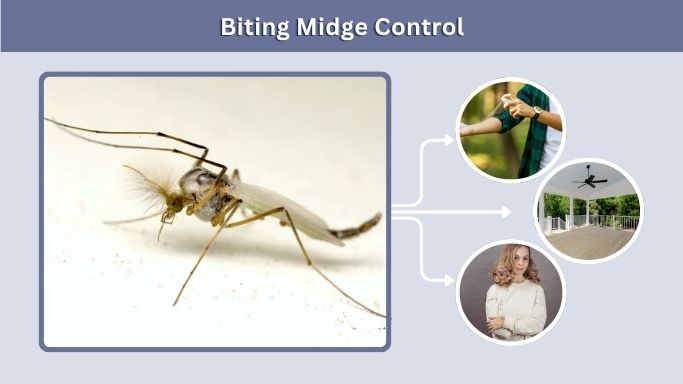
Biting midges, also called no-see-ums, are tiny flies that can leave itchy red bites. They are most active in warm, humid weather and often attack around dawn, dusk, or shaded outdoor areas.
Because biting midges are very small, control can be more difficult than controlling larger flies. A combined approach works best.
Protect Yourself from Bites
Personal protection is important when biting midges are active. Wear long sleeves, long pants, and socks when spending time outside during peak activity.
Helpful steps include:
- Use insect repellent labeled for biting flies.
- Wear light-colored clothing.
- Avoid outdoor activity at dawn and dusk.
- Use fans on patios or decks.
- Install fine mesh screens.
- Keep doors closed during peak activity.
- Avoid sitting near marshy or wet areas.
Reduce Resting Places
Adult biting midges rest in damp, shaded areas during the day. Dense plants, tall grass, wet mulch, and low shrubs can protect them from sun and wind.
Trim vegetation around patios, doors, windows, animal areas, and walkways. Replace wet mulch if it stays soggy for long periods. Increase sunlight and airflow where possible.
Treat Problem Areas Carefully
Insecticide sprays may reduce adult biting midges for a short time, but they should be used carefully and according to the product label. Focus on resting areas such as shrubs, shaded walls, and vegetation near activity zones.
Sprays are not always a complete solution because new adults can continue emerging from nearby wetlands, ponds, or neighboring properties.
Aquatic Midge Control
Aquatic midges often develop in ponds, lakes, drainage canals, stormwater systems, and wastewater treatment areas. The larvae live in muddy or organic-rich water before emerging as flying adults.
These midges are usually non-biting, but they can appear in huge numbers. They may cover walls, windows, boats, docks, and outdoor lights.
Manage Ponds and Lakes
Healthy water management is the best long-term solution for aquatic midges. Excess nutrients, algae, and organic sludge can support large larval populations.
Good pond management includes:
- Removing excess organic debris
- Reducing fertilizer runoff
- Improving water circulation
- Adding aeration where suitable
- Managing algae growth
- Keeping shorelines clean
- Avoiding grass clippings in water
For large lakes or public water areas, professional help may be needed.
Use Larval Control When Suitable
Larval control targets midges before they become adults. Some biological products are designed for aquatic insect larvae, but they must be selected carefully based on the water type, local rules, and label instructions.
This method is often more effective than spraying adult swarms because it reduces the next generation.
Control Midges Near Wastewater Areas
Midge fly control in wastewater treatment plants needs special planning. Organic-rich water, tanks, filters, and wet surfaces can support heavy midge activity.
Control may include cleaning buildup, improving flow, reducing algae, managing sludge, and using approved larval treatments. Since wastewater systems are sensitive, treatment should be handled by trained professionals.
Midge Control in Gardens
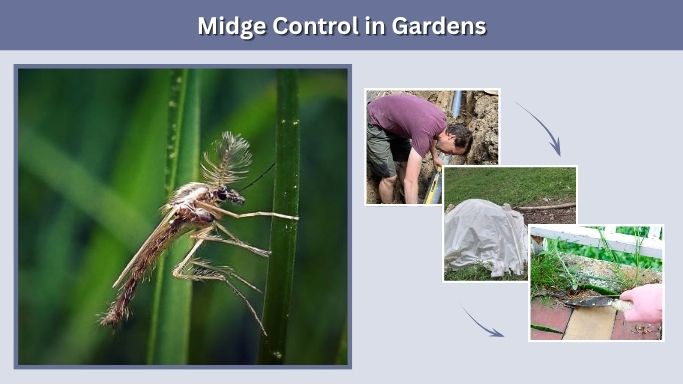
Garden midges may appear around wet soil, mulch, compost, and dense plants. Some gall midges also attack specific plants such as roses, daylilies, hibiscus, soybean, mango, rice, or spruce.
Garden control depends on whether the problem is nuisance midges or plant-damaging gall midges.
Control Midges in Wet Garden Soil
Wet soil attracts many small flies. Overwatering is one of the most common causes.
To reduce garden midges:
- Water plants only when needed.
- Improve soil drainage.
- Remove decaying leaves.
- Avoid thick wet mulch.
- Space plants for airflow.
- Keep compost covered.
- Remove weeds around plant bases.
- Let the soil surface dry between watering.
These steps reduce moisture and organic matter where larvae may develop.
Gall Midge Control
Gall midges are different from nuisance midges because their larvae feed on plant tissue. They may cause swollen buds, curled leaves, deformed flowers, or galls on stems and leaves.
Remove and destroy infected plant parts before larvae drop into the soil. Avoid composting heavily infested material. For valuable crops or ornamental plants, use local extension advice because treatment timing depends on the plant and midge species.
Rose and Daylily Midge Control
Rose midge and daylily gall midge can damage flower buds. Early detection is important because larvae often hide inside buds.
Remove distorted buds as soon as you see them. Clean fallen plant material from the soil surface. In severe cases, targeted treatment may be needed during the adult egg-laying period.
Best Midge Control Methods
The best midge control plan uses several methods together. One method alone rarely solves the problem, especially outdoors.
Start with breeding sites, then reduce adult activity around people and buildings. This approach works better than spraying only after swarms appear.
Natural Control Methods
Natural control focuses on prevention and habitat changes. These methods are safer for regular home and garden use.
Useful natural methods include:
- Remove standing water.
- Improve drainage.
- Use outdoor fans.
- Reduce bright white lights.
- Keep grass short.
- Clean pond edges.
- Remove decaying organic matter.
- Improve airflow around plants.
- Use fine mesh screens.
- Keep doors and windows closed at dusk.
Natural methods may take time, but they help reduce future midge problems.
Chemical Control Methods
Chemical control can help when midge numbers are high, but it should not be the first or only step. Adult sprays often provide temporary relief. Larval control is usually more useful when the breeding site can be identified.
Always read and follow the product label. Avoid spraying near water unless the product is specifically approved for that use. For ponds, lakes, docks, farms, or large infestations, professional pest control may be safer and more effective.
Professional Pest Control
Professional pest control may be needed when midges are severe, recurring, or linked to large water sources. Experts can identify the species, locate breeding areas, and recommend targeted treatments.
Professional help is useful for:
- Biting midge infestations
- Lake or pond midge problems
- Dock and waterfront areas
- Wastewater treatment plants
- Large garden infestations
- Agricultural gall midge problems
- Severe outdoor swarms near homes
How to Prevent Midges from Coming Back
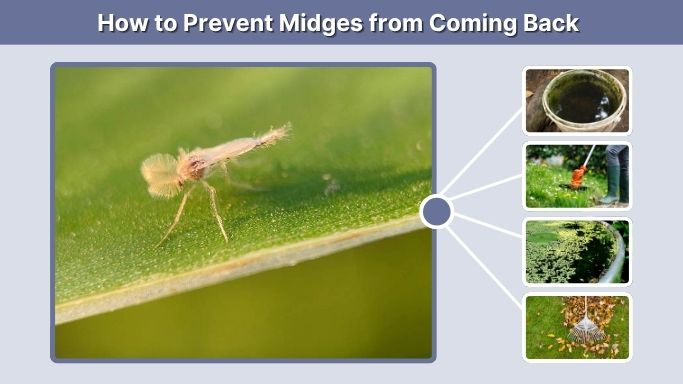
Prevention is easier than dealing with a full infestation. Midges reproduce quickly, so regular maintenance is important during warm and humid seasons.
A weekly inspection of water sources, lights, garden beds, and screens can stop small problems from becoming larger.
Weekly Prevention Checklist
Use this simple checklist to reduce midge activity:
- Empty containers with water.
- Clean gutters and drains.
- Trim grass and weeds.
- Remove wet leaves.
- Check window screens.
- Clean pond edges.
- Turn off unused outdoor lights.
- Refresh birdbath water.
- Avoid overwatering plants.
- Use fans in outdoor sitting areas.
Seasonal Midge Control
Midge problems often increase during warm months after rain or near water. In spring and summer, check damp areas more often. After heavy rain, inspect the yard for standing water.
Near lakes or wetlands, some midge activity may be unavoidable. In those areas, barriers, fans, light changes, and personal protection become more important.
Mistakes to Avoid
Many people try to control midges only after adults appear. This gives short-term relief but does not stop the next generation.
Avoid these mistakes:
- Spraying without finding the source
- Leaving clogged gutters untreated
- Overwatering lawns and plants
- Using bright lights near doors
- Ignoring torn screens
- Allowing pond debris to build up
- Treating all midges like mosquitoes
- Using chemicals near water without checking the label
FAQs
What is the best way to control midge flies?
The best way to control midge flies is to remove breeding sites first. Empty standing water, improve drainage, clean wet organic debris, reduce bright outdoor lights, and use fans in sitting areas. For large pond, lake, or biting midge problems, professional treatment may be needed.
How do you control midges outside?
To control midges outside, remove stagnant water, clean gutters, trim grass, reduce wet mulch, and keep outdoor lights off when possible. Use yellow bug lights and outdoor fans near patios. If midges come from a pond or lake, focus on water management and larval control.
Do midges bite humans?
Some midges bite humans, but many do not. Biting midges, also called no-see-ums, can cause itchy red bites. Non-biting midges are mostly a nuisance because they swarm around lights, walls, windows, and water areas but do not bite people.
What attracts midge flies?
Midge flies are attracted to moisture, standing water, decaying organic matter, wet soil, algae, and bright lights. Outdoor lights near doors, ponds, docks, and patios can attract large numbers of adult midges, especially at night during warm and humid weather.
Can pest control get rid of midges?
Pest control can reduce midge problems, especially when the source is identified. Professionals may use habitat management, larval treatments, adult sprays, or exclusion methods. However, if midges come from nearby lakes, wetlands, or public water areas, complete elimination may not be possible.