
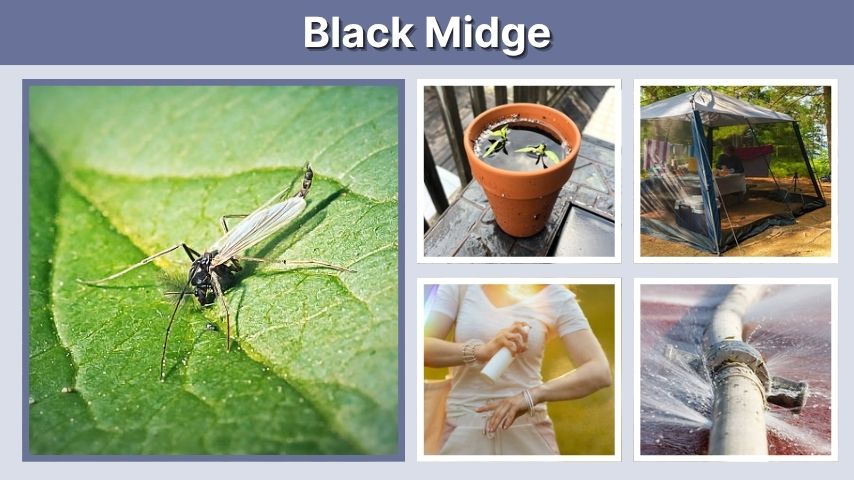
Black midges are tiny flying insects often mistaken for gnats, mosquitoes, or black flies. Some species are harmless nuisance insects, while others can bite and cause itchy red marks. They may appear around damp soil, outdoor lights, ponds, drains, or even inside homes. Understanding what black midges are, how they differ from black flies, and how to manage them can help you prevent bites and reduce infestations.
What Is a Black Midge?
A black midge is a small, dark-colored fly-like insect that belongs to a broad group of tiny flies. The term “midge” can describe several kinds of small insects, including biting midges and non-biting midges. Because many of them look similar, people often confuse them with black flies, mosquitoes, fungus gnats, or drain flies.
Most black midges are very small, usually only a few millimeters long. They often gather in swarms, especially near water, damp soil, or outdoor lights. Some species are harmless and do not bite, while others feed on blood and may leave irritating bites.
Common Features of Black Midges
Black midges can vary by species, but they often share several features:
- Tiny black or dark gray body
- Delicate wings
- Long, thin legs
- Swarming behavior
- Attraction to moisture and light
- Active around dusk, dawn, or humid conditions
Their small size makes identification difficult without close inspection. In many homes, people only notice them after seeing tiny black flying bugs near windows, sinks, houseplants, or lights.
Black Midges vs Black Flies: Are They the Same?
Black midges and black flies are not the same thing, although they are often confused. Both are small, dark flying insects, and some species of both can bite. However, they belong to different insect groups and usually have different body shapes, habitats, and biting behavior.
| Feature | Black Midges | Black Flies |
|---|---|---|
| Size | Very tiny, often mosquito-like | Small but usually chunkier |
| Body Shape | Slender and delicate | Hump-backed appearance |
| Habitat | Damp soil, ponds, drains, lights | Flowing water, rivers, streams |
| Biting | Some species bite | Many female black flies bite |
| Indoor Presence | Can appear indoors | Less common indoors |
How to Tell Them Apart
Black flies usually have a stockier, hump-backed body, while midges tend to look more delicate and mosquito-like. Black flies are commonly linked to rivers and streams because their larvae develop in moving water. Midges are more varied and may breed in standing water, moist soil, organic debris, or drains.
If you see tiny black midges in the house, they are more likely connected to moisture, indoor plants, drains, or nearby outdoor breeding areas. If you are being bitten outdoors near rivers or wooded areas, black flies may be the cause.
Do Black Midges Bite?
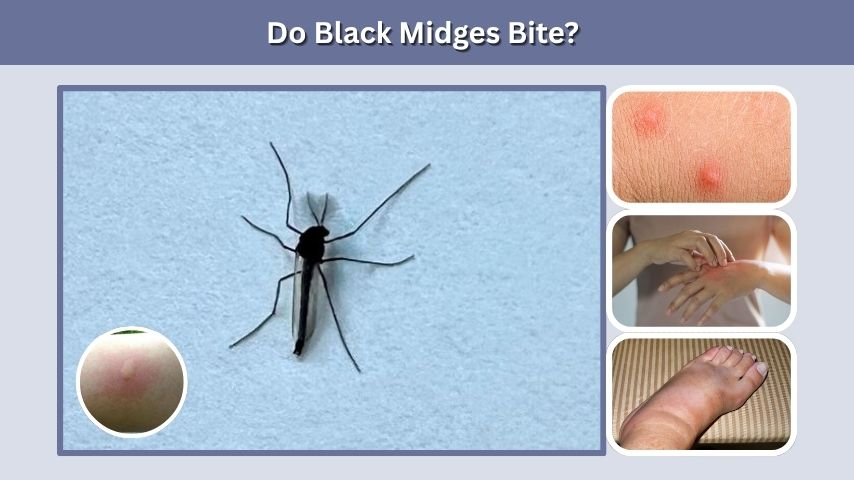
Some black midges bite, but not all of them do. Non-biting midges are mostly a nuisance because they gather in large numbers around lights, windows, walls, or outdoor seating areas. Biting midges, sometimes called no-see-ums, can pierce the skin and feed on blood.
Black Midge Bite Symptoms
Bites from black biting midges may cause:
- Small red bumps
- Itching or burning
- Mild swelling
- Skin irritation
- Clusters of bites on exposed skin
Bites are usually not dangerous for most people, but scratching can lead to skin irritation or infection. People with sensitive skin may react more strongly.
Where Bites Usually Happen
Black midge bites often occur on exposed areas of the body, especially:
- Arms
- Legs
- Neck
- Ankles
- Face
- Hands
Biting midges are most active in calm, humid weather. They are also common near marshes, ponds, lakes, and damp grassy areas.
Black Midge Larvae: Where They Come From
Black midge larvae are the immature stage of midges. They usually develop in wet or moist environments. Depending on the species, larvae may live in mud, standing water, decaying organic matter, damp soil, or drains.
Common Breeding Sites
Black midge larvae may be found in:
- Ponds and lakes
- Birdbaths
- Clogged gutters
- Damp soil
- Overwatered houseplants
- Wet mulch
- Drains and sink areas
- Compost piles
- Standing water containers
Because larvae depend on moisture, reducing wet areas is one of the best ways to prevent adult midges from becoming a problem.
Black Midge Larvae in the House
If you notice little black midges indoors, the source may be close by. Overwatered plants, dirty drains, damp mop buckets, pet water bowls, or hidden moisture can support larvae or attract adult insects.
Houseplant soil is a common source when small black flying insects hover around pots. In that case, the insects may be fungus gnats rather than true midges, but the control methods are similar: reduce moisture, remove organic debris, and let the soil dry between watering.
Why Are There Tiny Black Midges in My House?
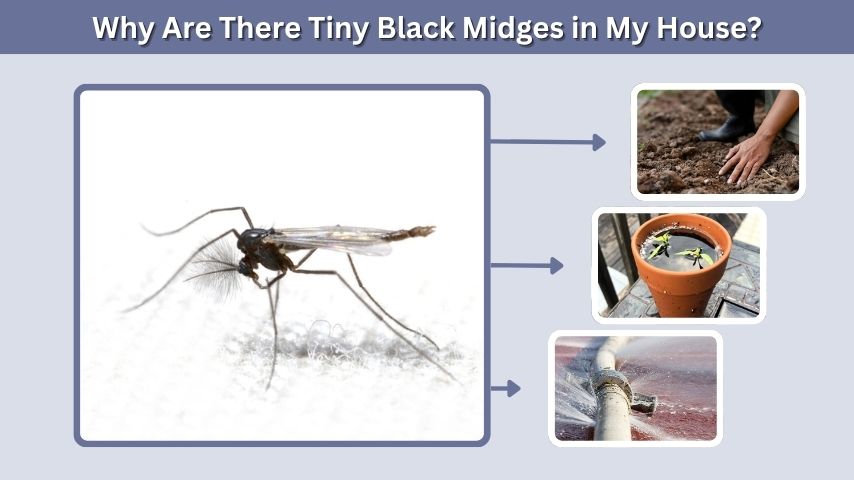
Tiny black midges in the house usually indicate moisture or an entry point. They may come from outdoor swarms, indoor breeding sites, or damp areas that attract small flies.
Common Indoor Causes
Several conditions can lead to black midges indoors:
- Open windows or doors without tight screens
- Bright indoor lights attracting insects at night
- Damp houseplant soil
- Slow or dirty drains
- Standing water
- Leaky pipes
- Wet basement areas
- Organic debris in trash bins
If the insects gather near windows, they may be entering from outside. If they appear near sinks, drains, or plants, the source may be indoors.
Why They Gather Near Lights
Many small flying insects, including black midges, are attracted to light. Outdoor porch lights, window lights, and bright indoor lamps can pull them toward buildings. Once they gather outside, they may slip through torn screens, gaps, vents, or open doors.
Using warmer, less attractive outdoor lighting and sealing entry points can help reduce this problem.
How to Get Rid of Black Midges
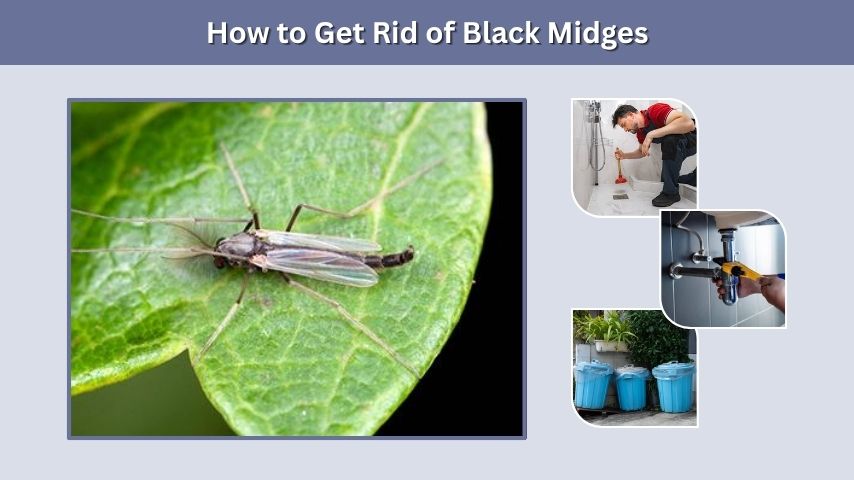
Getting rid of black midges requires finding the source. Sprays may kill visible adults, but they will not solve the problem if larvae continue developing in moisture.
Step-by-Step Control Tips
Use these methods to reduce black midges indoors and outdoors:
- Remove standing water from buckets, trays, pots, and containers.
- Clean gutters so water does not collect.
- Let houseplant soil dry before watering again.
- Clean sink, shower, and floor drains.
- Repair leaks and dry damp areas.
- Replace or repair damaged window screens.
- Use fans on patios because midges are weak fliers.
- Reduce outdoor lighting near doors and windows.
- Keep trash bins clean and tightly covered.
For indoor problems, start by checking plants and drains. For outdoor problems, inspect water sources, wet soil, shaded damp areas, and lights that attract swarms.
Natural Prevention Methods
You can also reduce black midges without heavy chemical use:
- Use fine mesh screens on windows and doors.
- Add air movement with fans in outdoor seating areas.
- Avoid overwatering lawns and plants.
- Keep vegetation trimmed around the home.
- Remove wet leaves and organic debris.
- Use yellow or warm outdoor bulbs instead of bright white lights.
These methods work best when combined. A single step may help, but long-term prevention depends on moisture control.
How to Prevent Black Midge Bites
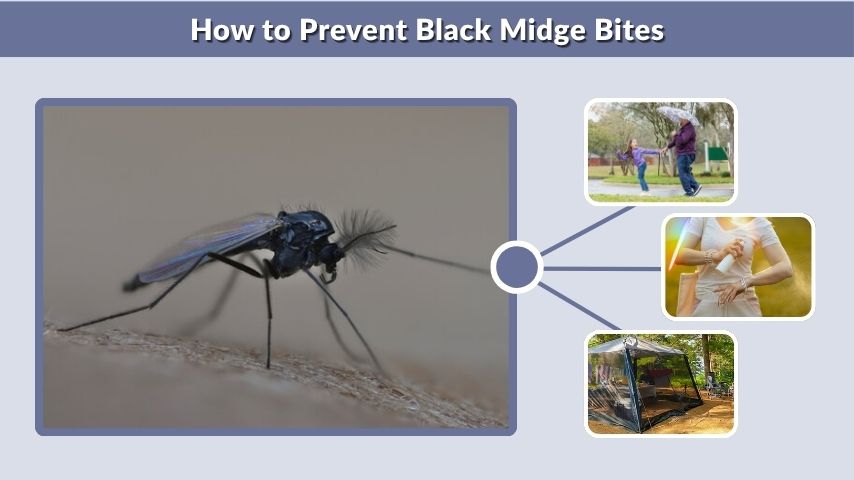
If you are dealing with biting midges outdoors, personal protection is important. Biting midges are tiny and can sometimes pass through loose screens or gaps in clothing.
Bite Prevention Tips
To reduce bites:
- Wear long sleeves and long pants outdoors.
- Use insect repellent on exposed skin.
- Avoid damp, marshy areas at dawn and dusk.
- Sit near a fan when outdoors.
- Use fine mesh netting when camping.
- Keep doors and windows closed during peak activity.
- Choose light-colored clothing so insects are easier to spot.
Biting midges are often worse in humid, calm conditions. Windy weather makes it harder for them to fly, which is why fans are useful on porches and patios.
Black Midge Fly Patterns in Fly Fishing
The phrase “black midge” is also common in fly fishing. A black midge fly pattern is designed to imitate small aquatic insects, especially midge larvae, pupae, or adults. These patterns are popular for trout fishing because midges are an important food source in many rivers, lakes, and tailwaters.
Popular Black Midge Patterns
Common patterns include:
- Black Beauty midge
- Black Zebra midge
- Black midge pupa
- Black midge dry fly
- Black and red midge
- Black and silver midge
- Black tungsten beadhead zebra midge
The Black Beauty midge and Black Zebra midge are especially popular because they are simple, effective, and imitate small dark midge larvae or pupae.
When to Use Black Midge Flies
Black midge flies are often useful in cold water, clear water, and slow-moving conditions. Anglers commonly use them in small sizes, especially when trout are feeding on tiny insects below the surface.
A black midge pupa can work well during hatches, while a dry fly pattern may be useful when fish are feeding on adult midges at the surface.
FAQs
Are midges and black flies the same thing?
No, midges and black flies are different insects. They can look similar because both are small and dark, but black flies usually have a stockier, hump-backed body. Midges are often more delicate and mosquito-like. Some species of both insects can bite.
Do black midges bite humans?
Some black midges bite humans, but many do not. Non-biting midges are mainly nuisance insects that swarm around lights and moisture. Biting midges can cause itchy red bumps, mild swelling, and irritation, especially on exposed skin.
Why do I have black midges in my house?
Black midges may enter through windows, doors, vents, or damaged screens. They may also be linked to indoor moisture sources such as overwatered plants, dirty drains, leaks, or standing water. Finding and removing the moisture source is the key to control.
How do I get rid of little black midges?
Remove standing water, clean drains, dry damp soil, repair leaks, and seal entry points. If they are near houseplants, let the soil dry and remove decaying plant material. Fans, fine screens, and reduced outdoor lighting can also help prevent them.
What is a Black Beauty midge?
A Black Beauty midge is a fly fishing pattern that imitates small dark midge larvae or pupae. It is commonly used for trout fishing, especially in clear or cold water where fish feed on tiny aquatic insects.