
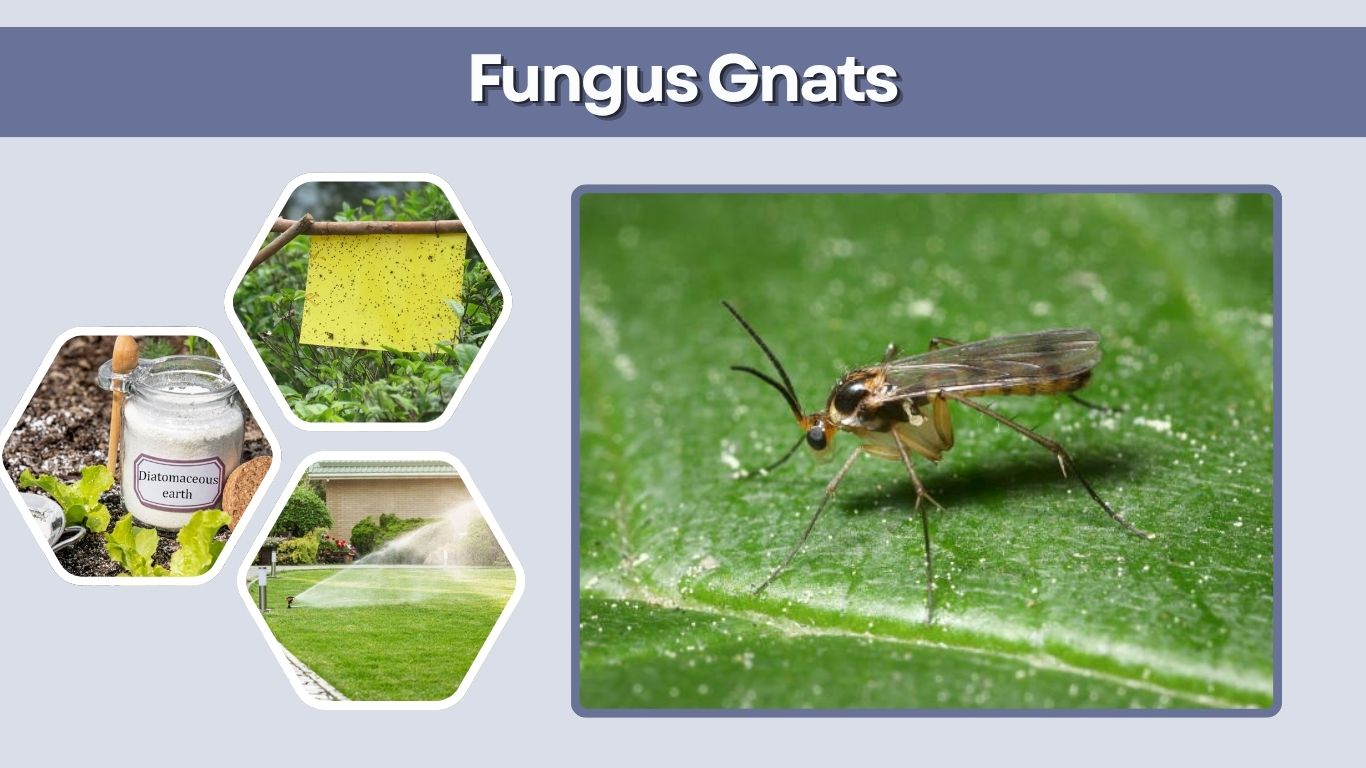
Fungus gnats are tiny flies that commonly breed in damp houseplant soil. To get rid of them, reduce excess moisture, catch adults with yellow sticky traps, and treat persistent larvae with a suitable biological control. Swatting the flying insects alone leaves the developing population in the pot untouched. Although adults are mostly a nuisance, heavy larval infestations can damage young roots. This guide explains how to identify fungus gnats, find their breeding sites, choose treatments, and prevent another outbreak without unnecessarily stressing your plants.
What Are Fungus Gnats?
The fungus gnats commonly associated with houseplants are small flies in the family Sciaridae, including the Bradysia species. Adults often remain near pots, although you may notice them around windows or lights. Their immature stages develop in moist growing media. Correct identification matters because fruit flies and drain flies require attention to different breeding sources.
Identification: Adults, Larvae, and Eggs
Look for these features:
- Adults: Usually about 1/16–1/8 inch long, with slender, dark bodies, long legs, and noticeable antennae.
- Wings: Often grayish or translucent; common houseplant species have a distinctive Y-shaped vein.
- Larvae: Slender, whitish or translucent, legless bodies with shiny black heads.
- Eggs: Extremely small and deposited in moist growing media, making them difficult to spot.
A magnifying glass helps distinguish adults and larvae. Flying insects alone do not reveal how many immature gnats remain in the soil.
Fungus Gnats vs. Fruit Flies and Drain Flies
| Insect | Typical appearance | Likely breeding source |
| Fungus gnat | Slender, dark, resembling a tiny mosquito | Damp potting mix and decomposing organic matter |
| Fruit fly | More compact; often tan with red or brown eyes | Fermenting produce and drink residue |
| Drain fly | Fuzzy body and broad, mothlike wings | Organic buildup in drains or other wet locations |
Location provides a clue, not a definitive identification. A fungus gnat in the bathroom may have wandered from a nearby plant.
Where Do Fungus Gnats Come From?
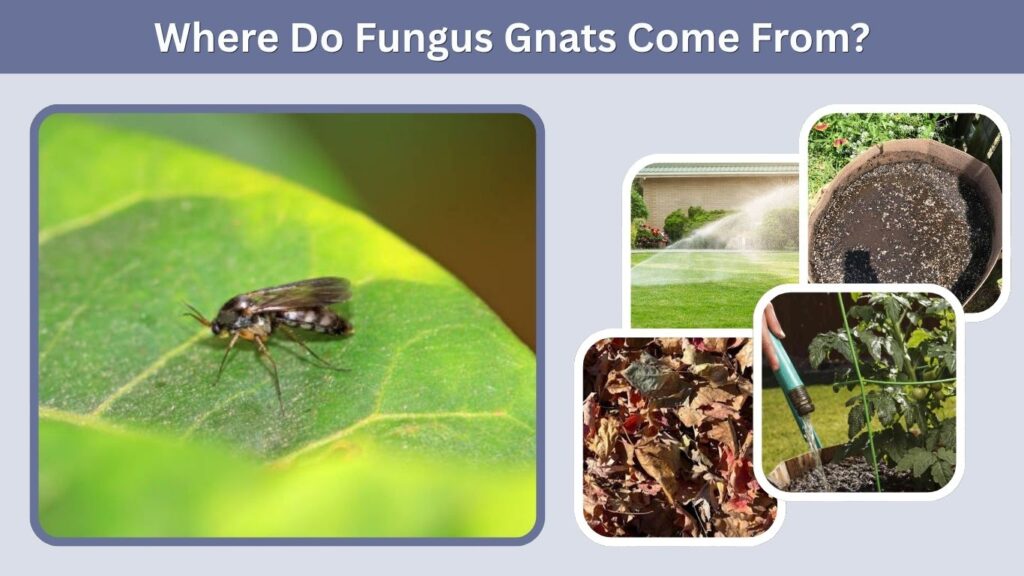
Fungus gnats can arrive with infested plants or potting materials, and adults may enter through openings. They become persistent when conditions support reproduction. A clean room can still contain an ideal breeding site inside a consistently wet pot. Focus on moisture and growing media rather than assuming the problem comes from general household dirt.
Conditions That Encourage Infestations
Common contributors include:
- Frequent watering that keeps the soil surface wet.
- Poor drainage or water collecting in decorative outer pots.
- Decaying leaves and other organic debris.
- Newly purchased plants carrying immature gnats.
- Old potting mix that retains excessive moisture.
Inspect neighboring pots too. Treating one plant may leave another breeding population undisturbed.
Fungus Gnat Life Cycle
Fungus gnats pass through egg, larva, pupa, and adult stages. Development often takes around three to four weeks indoors, although temperature and species affect timing.
Generations overlap, so eggs, larvae, pupae, and adults can coexist in one pot. This explains why flies may continue emerging after treatment begins: controlling one stage does not necessarily eliminate the others.
How to Get Rid of Fungus Gnats
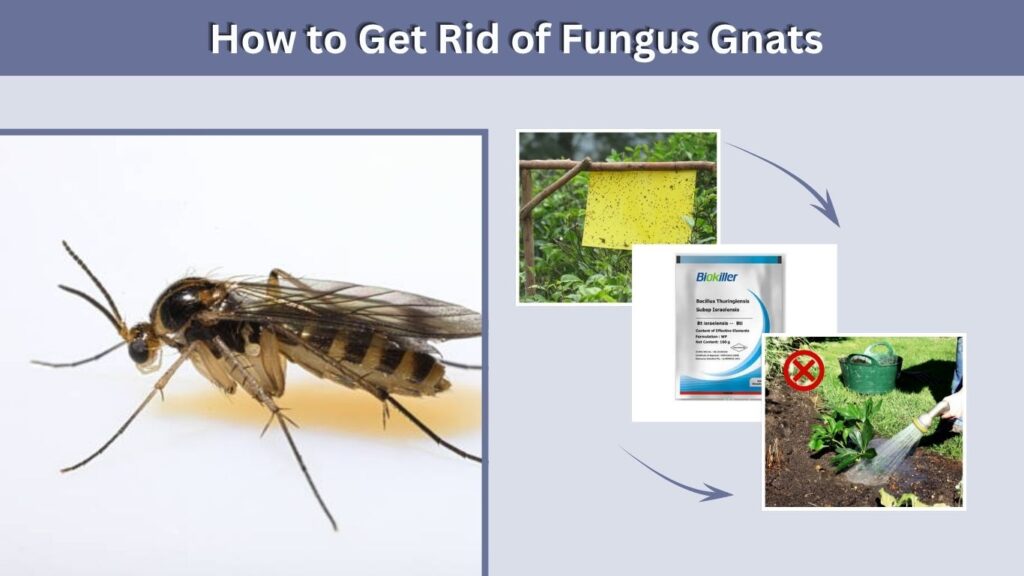
Effective control addresses both the growing conditions and the insects. Begin with watering adjustments and adult monitoring. If gnats persist, use a treatment that reaches larvae in the soil. Avoid applying multiple remedies at once: doing so makes it harder to judge results and may expose plants to unnecessary treatments.
1. Adjust Watering Without Damaging the Plant
Allow approximately the top inch of potting mix to dry before watering again, where the plant’s needs permit. Empty saucers and ensure drainage holes remain open.
Do not force moisture-loving plants or seedlings into severe drought. Bottom watering may help keep the surface drier, but it will not solve the problem if the entire pot remains saturated.
2. Use Yellow Sticky Traps
Place small yellow sticky cards near the soil surface, clear of leaves and out of reach of children and pets.
They capture adults and help show which pots are producing flies. Replace covered or dirty cards and compare catches over time. Traps support control, but they do not kill larvae already feeding below the surface.
3. Treat Larvae With Bti
Bacillus thuringiensis subspecies israelensis, or Bti, targets susceptible fly larvae. Choose a product labeled for fungus gnats and your intended growing situation.
For example, the manufacturer’s Mosquito Bits specimen label describes this preparation:
- Add four tablespoons of granules to one US gallon of water.
- Leave them soaking for 30 minutes, then remove the granules.
- Stir the liquid and apply it to the growing medium.
- Make applications weekly over three weeks.
Your package label takes precedence, including permitted uses and precautions. Do not transfer this recipe to Mosquito Dunks or another formulation. Avoid breathing product dust and follow handling instructions.
4. Consider Beneficial Nematodes
The beneficial nematode Steinernema feltiae attacks fungus gnat larvae and can help with persistent infestations.
These are living organisms. Follow the supplier’s storage, temperature, application, and soil-moisture requirements. Do not combine a nematode treatment with aggressive drying that prevents the organisms from surviving.
5. Repot When the Growing Medium Needs Replacing
Repotting can help if the mix has deteriorated or drains poorly. Use a clean container and fresh, suitable potting mix, and remove decaying material.
It is not always necessary to replace all the soil. Correct watering and targeted control may resolve the problem with less root disturbance.
Do Common Fungus Gnat Remedies Work?
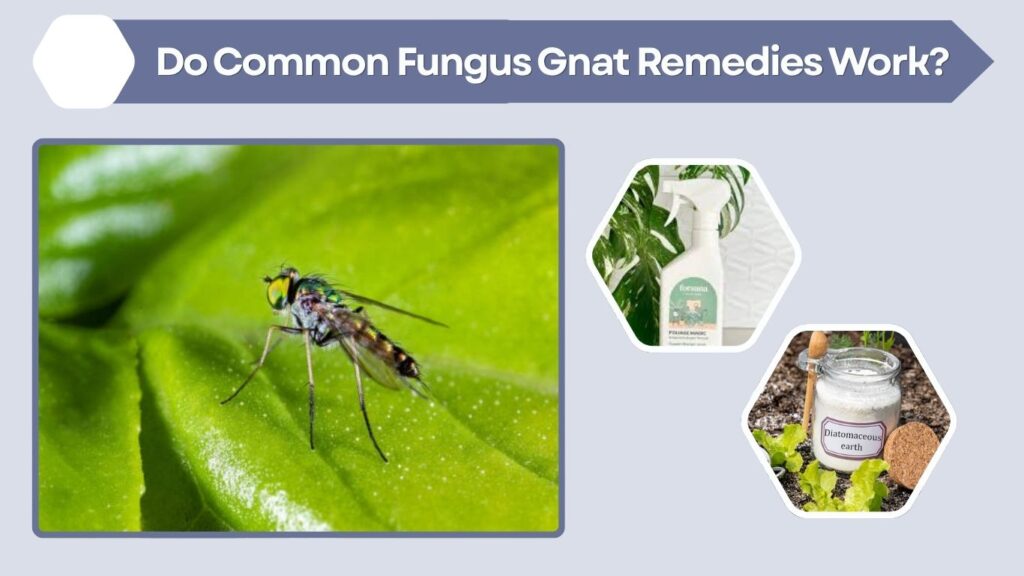
Popular remedies differ in how they act and how reliably they reach larvae. A household ingredient is not automatically an effective plant treatment. Before using anything, check whether it addresses the stage causing the problem and whether the application is appropriate for your plant. Avoid assuming that a stronger mixture produces better control.
Hydrogen Peroxide and Neem Oil
Some extension guidance recommends diluted hydrogen peroxide for larvae, but this is not a reason to pour undiluted 3% peroxide into every pot. A labeled fungus-gnat treatment provides clearer application instructions.
Some neem products can control larvae when labeled for soil drenches. Products and formulations differ, so do not assume a neem leaf spray is suitable for watering into soil.
Diatomaceous Earth and Soil Coverings
Diatomaceous earth depends on remaining dry and undisturbed, which limits its usefulness on regularly watered soil. It should not replace moisture management or larval control.
A coarse sand or gravel covering may discourage egg laying, but it does not guarantee elimination. Continue checking moisture beneath the surface.
How to Prevent Fungus Gnats From Returning
Prevention means maintaining conditions that suit the plant without continuously supporting gnats. Check plants regularly, especially after buying new ones or moving outdoor pots indoors. Water according to the plant’s actual needs rather than a fixed schedule, and keep monitoring after adult numbers decline.
Simple Prevention Habits
- Inspect new plants before placing them among established plants.
- Store unused potting mix in closed containers.
- Remove fallen leaves and decaying plant material.
- Keep saucers clean and repair nearby leaks.
- Maintain drainage and avoid unnecessary watering.
These measures reduce suitable breeding sites and opportunities for reinfestation.
FAQs
Do Fungus Gnats Bite?
No. Adult houseplant fungus gnats do not bite people. Unexplained bites should prompt identification of another insect or assessment of another cause.
Can Fungus Gnats Kill Plants?
Heavy larval populations can damage roots, particularly in seedlings and young plants. Established plants often tolerate small populations. Wilting can also result from overwatering, root disease, or poor drainage.
How Long Do Adult Fungus Gnats Live?
Adults commonly live about seven to ten days. Their short lifespan does not end an infestation because new adults continue emerging from the soil.
Do Apple Cider Vinegar Traps Work for Fungus Gnats?
They are not a reliable substitute for yellow sticky cards. Vinegar traps are associated with fruit-fly control and do not address fungus gnat larvae.
How Long Does Fungus Gnat Treatment Take?
Expect control to take several weeks rather than overnight. Falling trap counts indicate progress. If numbers remain high, recheck identification, untreated pots, moisture conditions, and treatment instructions.