
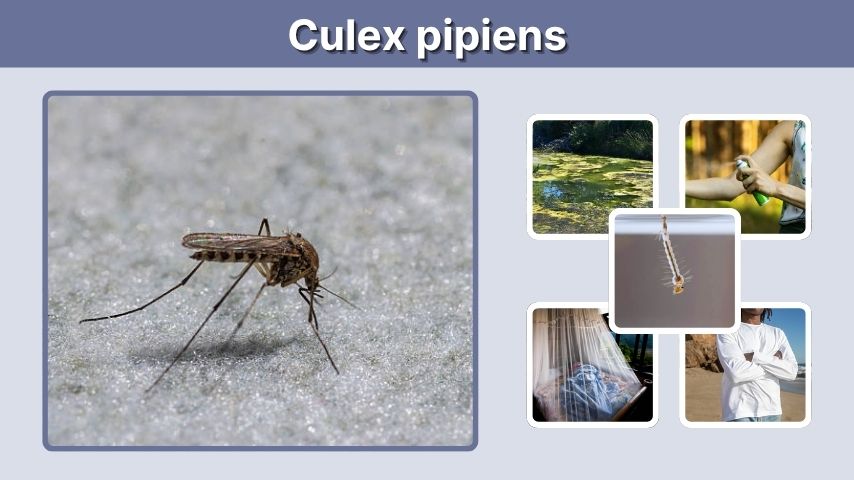
Culex pipiens, commonly known as the Northern House Mosquito, is one of the most widespread mosquito species in the world. Found across Europe, North America, Asia, and parts of Africa, it plays an important role in public health because of its ability to transmit diseases such as West Nile virus. This mosquito thrives in urban and rural environments and adapts well to human settlements. Understanding its identification, life cycle, habitat, and disease transmission is essential for effective mosquito management and reducing the risk of mosquito-borne illnesses.
What Are Culex pipiens?
Culex pipiens belongs to the mosquito family Culicidae and is often referred to as the common house mosquito. The species was first described by Carl Linnaeus in 1758 and remains one of the most extensively studied mosquitoes because of its broad distribution and medical importance. It is particularly known for feeding on birds, although some populations readily bite humans and other mammals.
Scientific Classification
The scientific classification of Culex pipiens helps distinguish it from other mosquito species:
- Kingdom: Animalia
- Phylum: Arthropoda
- Class: Insecta
- Order: Diptera
- Family: Culicidae
- Genus: Culex
- Species: Culex pipiens
Common Names
Depending on the region, Culex pipiens is known by several common names:
- Northern House Mosquito
- Common House Mosquito
- House Mosquito
- Common Culex Mosquito
Characteristics and Identification
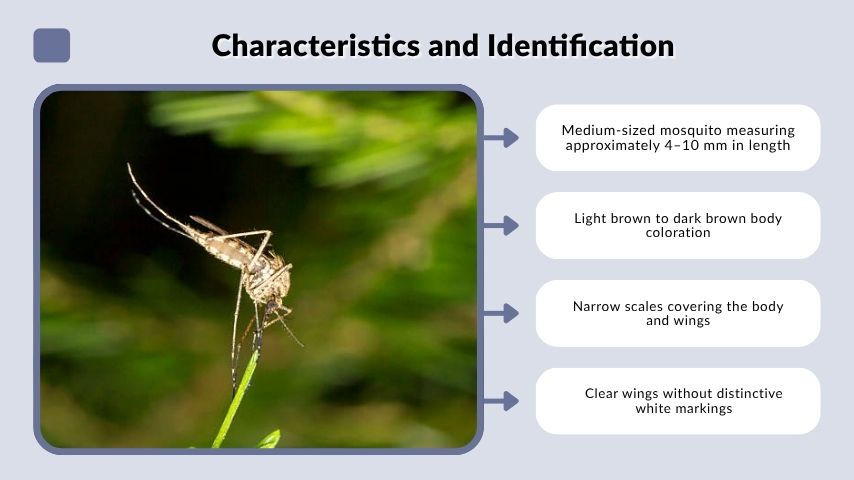
Culex pipiens can be difficult to identify because it closely resembles several other mosquito species within the Culex pipiens complex. However, entomologists use specific physical and behavioral characteristics to distinguish it from related mosquitoes. Proper identification is important for disease surveillance, mosquito control programs, and public health research. While laboratory analysis may be required for definitive identification, several key features can help recognize this common house mosquito.
Physical Characteristics
- Medium-sized mosquito measuring approximately 4–10 mm in length
- Light brown to dark brown body coloration
- Narrow scales covering the body and wings
- Clear wings without distinctive white markings
- Slender body with long legs and a prominent proboscis
Identification Features
- Lacks the black-and-white striped pattern found in Aedes mosquitoes
- Typically rests with its body parallel to the surface
- Females are active primarily during dusk and nighttime hours
- Frequently found near stagnant water and urban environments
- Commonly enters homes, garages, and other sheltered structures
Male vs Female Identification
- Male mosquitoes have feathery (plumose) antennae used for detecting females
- Female mosquitoes have less bushy antennae
- Only females take blood meals and bite humans or animals
- Males feed exclusively on nectar and plant sugars
- Females possess specialized mouthparts adapted for piercing skin
Culex pipiens Habitat and Distribution
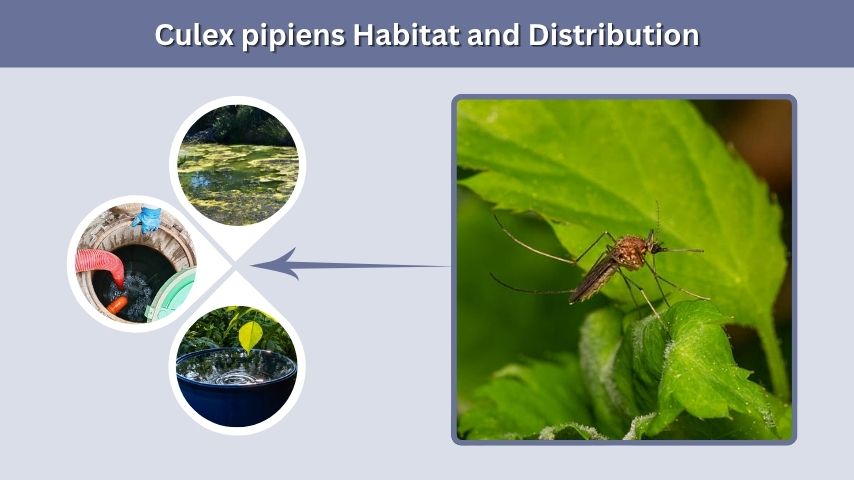
Culex pipiens has successfully adapted to a wide variety of habitats. Its ability to exploit artificial water containers and urban environments contributes significantly to its widespread distribution.
Preferred Habitat
The species commonly breeds in stagnant or slow-moving water rich in organic matter. Suitable breeding sites include polluted ponds, drainage systems, water storage containers, bird baths, and clogged gutters. Urban environments often provide ideal conditions because they offer numerous breeding opportunities throughout the year.
In many regions, Culex pipiens can also be found resting inside houses, garages, sheds, and other sheltered structures during the daytime.
Geographic Distribution
The distribution of Culex pipiens spans multiple continents and climatic zones. It is particularly abundant in temperate regions where seasonal temperature changes influence its population dynamics.
The mosquito is widely distributed throughout Europe, including the United Kingdom and Ireland. In North America, it occurs across much of the United States and southern Canada. Related members of the Culex pipiens complex extend its range even further into subtropical and tropical regions.
Life Cycle of Culex pipiens
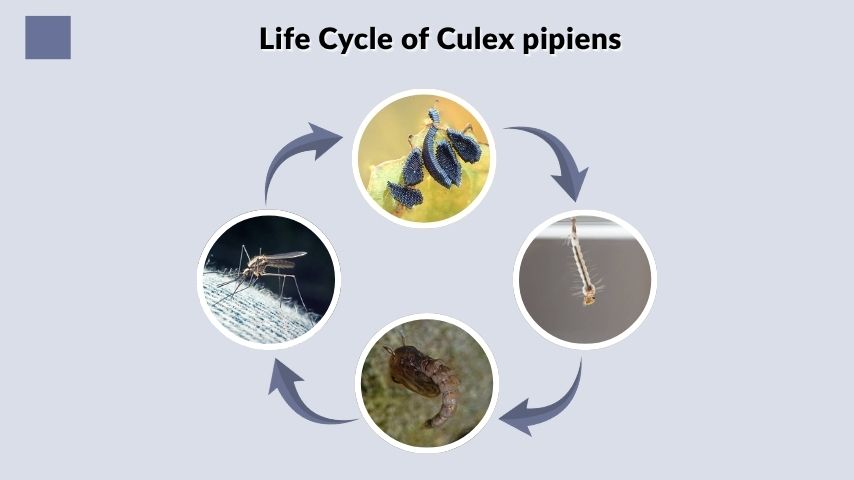
The life cycle of Culex pipiens consists of four distinct stages: egg, larva, pupa, and adult. Environmental conditions such as temperature, humidity, and food availability influence the duration of each stage.
Egg Stage
Female mosquitoes lay eggs directly on the surface of standing water. The eggs are attached together to form floating rafts that may contain hundreds of eggs. Under favorable conditions, eggs hatch within a few days.
Larval Stage
After hatching, larvae live entirely in water and feed on microorganisms, algae, and organic debris. They pass through four developmental stages known as instars before transforming into pupae.
Key characteristics of larvae include:
- Aquatic lifestyle
- Surface breathing through siphons
- Continuous feeding behavior
- Rapid growth in warm temperatures
Pupal Stage
The pupal stage is a transitional period during which the mosquito develops into an adult. Pupae remain active in water but do not feed. This stage typically lasts several days depending on environmental conditions.
Adult Stage
Adult mosquitoes emerge from the pupal case and rest on the water surface until their wings fully expand and harden. After emergence, males generally mate shortly afterward, while females seek nectar and eventually blood meals necessary for egg production.
Diseases Transmitted by Culex pipiens
As a vector mosquito, Culex pipiens plays a significant role in the transmission of several pathogens that affect humans, birds, and animals. While it is not considered the primary vector for all mosquito-borne diseases, its widespread distribution makes it an important public health concern.
West Nile Virus
West Nile virus is the disease most commonly associated with Culex pipiens. The mosquito typically acquires the virus when feeding on infected birds and may subsequently transmit it to humans and other mammals.
Symptoms of West Nile virus infection can range from mild flu-like illness to severe neurological complications in rare cases. Because Culex pipiens frequently feeds on birds and occasionally on humans, it serves as an effective bridge vector.
Other Diseases
In certain regions, members of the Culex pipiens complex have been linked to additional diseases and pathogens.
These include:
- St. Louis encephalitis
- Rift Valley fever virus
- Avian malaria
- Lymphatic filariasis (in some related species)
- Various arboviruses affecting wildlife
Current evidence suggests that Culex pipiens is not considered a major vector of malaria and has limited involvement in Zika virus transmission.
The Culex pipiens Complex
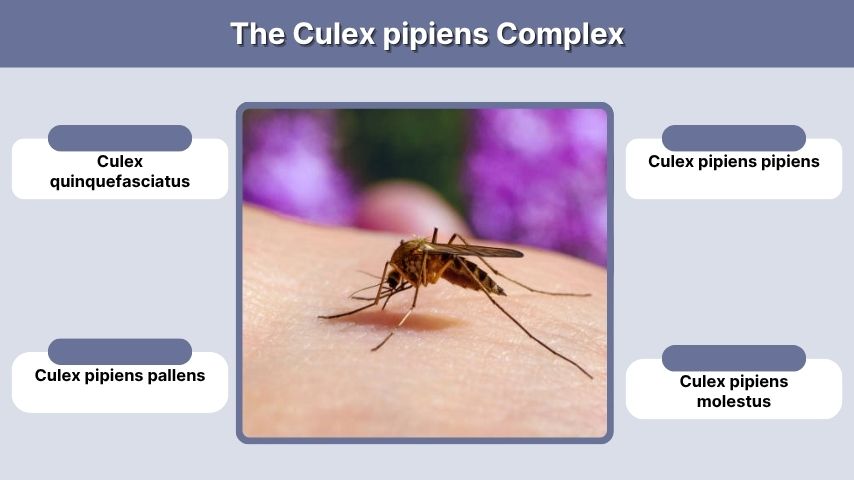
The term “Culex pipiens complex” refers to a group of closely related mosquito species and forms that are difficult to distinguish based solely on appearance. These mosquitoes share many biological characteristics but differ in behavior, habitat preference, and host selection.
Major Members of the Complex
Scientists recognize several important members within the complex:
- Culex pipiens pipiens
- Culex pipiens molestus
- Culex quinquefasciatus
- Culex pipiens pallens
- Hybrid populations between these forms
Why the Complex Matters
The existence of multiple forms and hybrids can significantly influence disease transmission patterns. Some populations prefer feeding on birds, while others readily bite humans. Understanding these differences helps researchers predict disease outbreaks and develop more targeted mosquito control strategies.
Culex pipiens molestus
One of the most fascinating forms within the complex is Culex pipiens forma molestus. This mosquito exhibits several behavioral traits that distinguish it from the typical Culex pipiens pipiens form.
Unique Characteristics
Unlike surface-dwelling populations, Culex pipiens molestus often inhabits underground environments such as subway tunnels, basements, and sewer systems. It can reproduce in confined spaces and frequently feeds on humans.
Several notable traits include:
- Ability to mate in enclosed spaces
- Strong preference for human hosts
- Year-round activity in warm underground habitats
- Reduced or absent winter dormancy
- Adaptation to urban environments
Distribution
Although originally associated with underground habitats in Europe, Culex pipiens molestus has now been identified in many regions worldwide. Genetic studies continue to examine its relationship with other members of the Culex pipiens complex.
Culex pipiens vs Culex quinquefasciatus
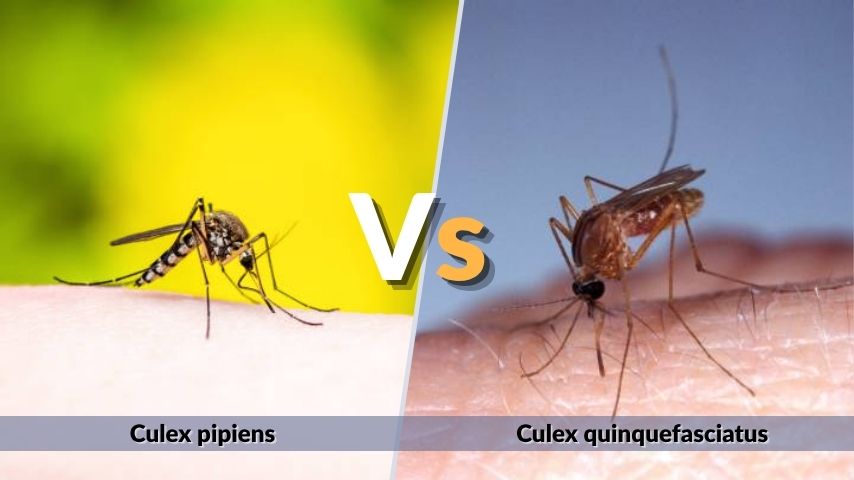
Culex quinquefasciatus is one of the closest relatives of Culex pipiens. The two species are morphologically similar and can interbreed in regions where their geographic ranges overlap.
Key Differences
Despite their similarities, several distinctions exist between the species.
Culex pipiens is generally associated with temperate climates, whereas Culex quinquefasciatus is more common in tropical and subtropical regions. Differences in host preference, breeding habitats, and disease transmission efficiency may also occur.
Hybridization
In transitional geographic zones, the two species may hybridize freely. These hybrid populations can display unique behaviors that influence disease ecology and vector competence. As a result, researchers often study hybrid zones to better understand mosquito evolution and public health risks.
Control and Management
Effective management of Culex pipiens populations requires an integrated approach that combines environmental management, surveillance, and targeted interventions.
Source Reduction
Eliminating breeding sites remains one of the most effective control measures. Because larvae develop in standing water, reducing water accumulation can significantly decrease mosquito populations.
Common source reduction practices include:
- Emptying water containers
- Cleaning gutters regularly
- Maintaining swimming pools
- Improving drainage systems
- Covering water storage tanks
Larval Control
Larval control targets mosquitoes before they emerge as adults. Biological and chemical larvicides are commonly used in mosquito management programs.
Popular methods include bacterial larvicides containing Bacillus thuringiensis israelensis (Bti) and insect growth regulators that disrupt mosquito development.
Adult Mosquito Control
When mosquito populations reach high levels, adult control measures may be necessary. These interventions often include residual insecticide treatments and ultra-low-volume spraying conducted by local mosquito control agencies.
Preventing Culex pipiens Bites
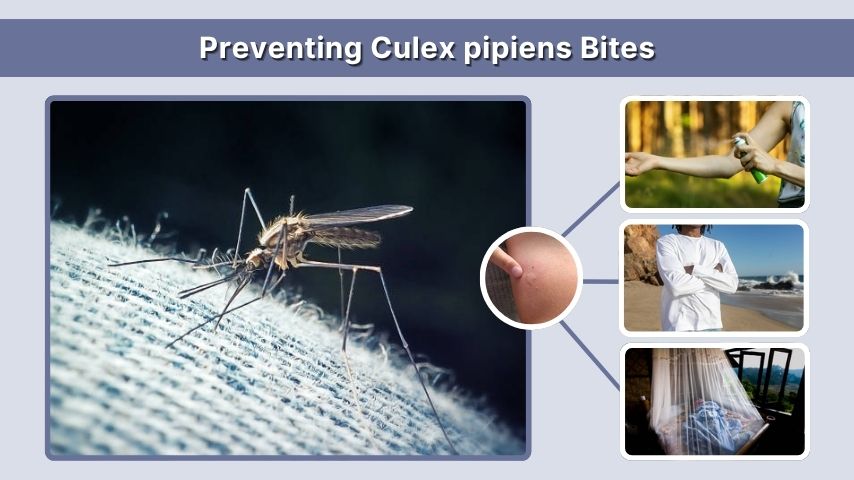
Personal protection remains an essential component of mosquito-borne disease prevention.
Protective Measures
Individuals can reduce their risk of mosquito bites by following practical prevention strategies.
Recommended measures include:
- Applying EPA-approved insect repellents
- Wearing long-sleeved clothing
- Using window and door screens
- Sleeping under mosquito nets when necessary
- Avoiding outdoor exposure during peak mosquito activity
Community-Based Prevention
Community participation is equally important. Neighborhood clean-up efforts, public education campaigns, and mosquito surveillance programs can greatly reduce local mosquito populations and disease risks.
FAQs
What is the common name of Culex pipiens?
Culex pipiens is commonly known as the Northern House Mosquito or Common House Mosquito. It is one of the most widespread mosquito species in temperate regions and is frequently found near human habitation.
Does Culex pipiens bite humans?
Yes, female Culex pipiens mosquitoes can bite humans. While many populations prefer feeding on birds, some forms, particularly Culex pipiens molestus, readily feed on humans and other mammals. Male mosquitoes do not bite because they feed exclusively on plant nectar.
Can Culex pipiens transmit West Nile virus?
Yes, Culex pipiens is one of the primary vectors of West Nile virus in many parts of Europe and North America. The mosquito becomes infected after feeding on infected birds and can subsequently transmit the virus to humans and other animals.
What is the difference between Culex pipiens and Culex quinquefasciatus?
Although closely related, Culex pipiens is generally found in temperate climates, while Culex quinquefasciatus is more common in tropical and subtropical regions. The two species can interbreed in overlapping areas, producing hybrid populations with varying behaviors and disease transmission capabilities.
How can I control Culex pipiens mosquitoes around my home?
The most effective way to control Culex pipiens is to eliminate standing water where larvae develop. Regularly clean gutters, empty containers, cover water storage tanks, and maintain proper drainage. Using insect repellents, window screens, and mosquito nets can also help reduce mosquito bites and exposure to mosquito-borne diseases.