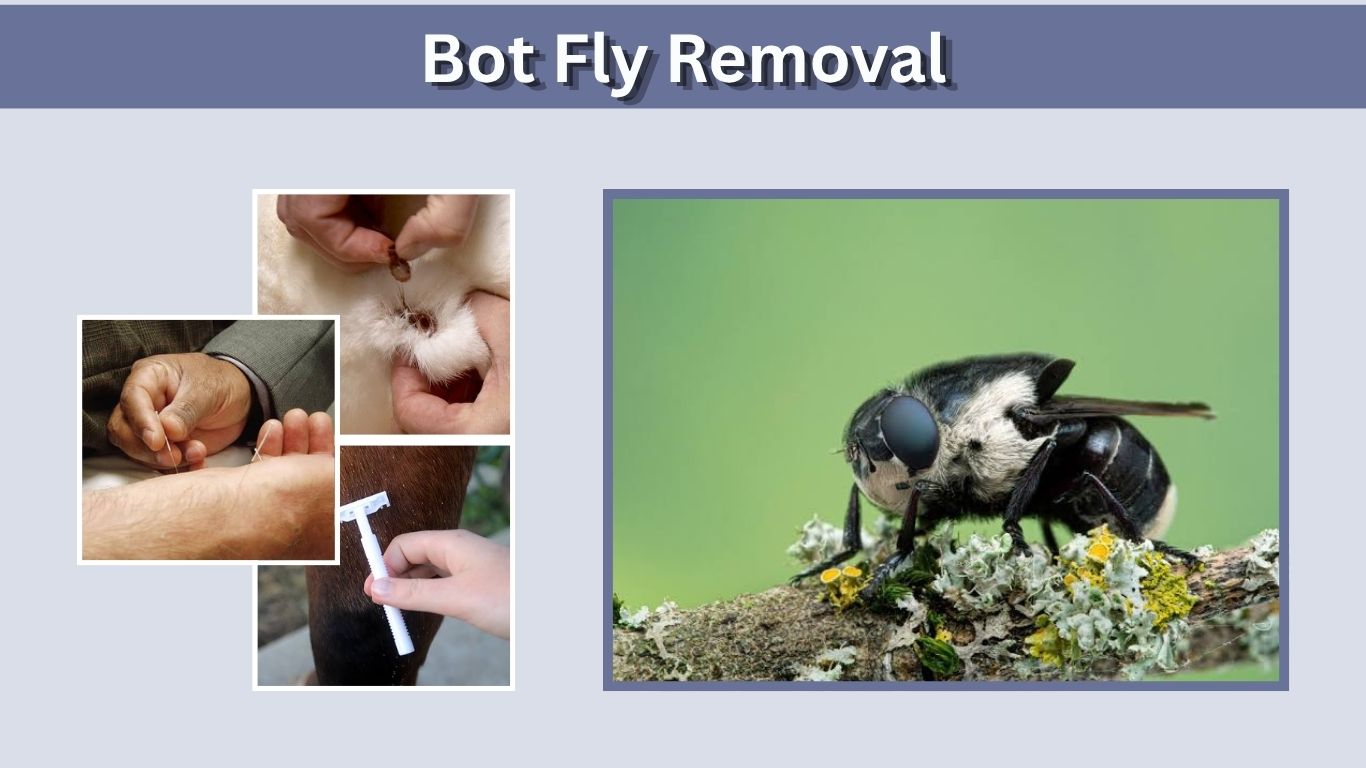
Bot fly removal involves safely extracting a parasitic fly larva from the skin or removing bot fly eggs before they develop further. Bot fly larvae can affect humans and many animals, including dogs, cats, squirrels, rabbits, cattle, and horses. A typical skin infestation causes a swollen lump with a small breathing hole in the center. Although watching bot fly removal videos may make extraction look simple, improper removal can rupture the larva, damage tissue, or cause infection. Human cases are best treated by a healthcare professional, while affected pets should usually be examined by a veterinarian.
What Is a Bot Fly?
Bot flies are parasitic flies whose larvae develop in or on mammals. Different species specialize in different hosts.
The human bot fly, Dermatobia hominis, can develop beneath human skin. Cuterebra species normally parasitize rabbits and rodents but sometimes infest dogs and cats. Horse bot flies belong mainly to the genus Gasterophilus and have a different life cycle.
Signs of a Bot Fly Larva
A skin infestation may produce:
- Round or raised lump
- Small central opening
- Redness and swelling
- Clear or bloody discharge
- Pain or tenderness
- Itching
- Sensation of movement
- Visible larva at the opening
The central hole allows many skin-dwelling larvae to breathe while developing beneath the surface.
How Is a Bot Fly Removed?
The exact removal method depends on the bot fly species, host, and location of the larva.
For a larva under the skin, the main goal is to remove it completely and intact. Because many bot fly larvae have backward-pointing spines that anchor them inside the wound, simply squeezing the lump may not work and can cause complications.
Professional removal may involve carefully widening the opening if necessary and extracting the larva with appropriate instruments.
The wound is then cleaned and monitored for infection.
Bot Fly Removal From Humans
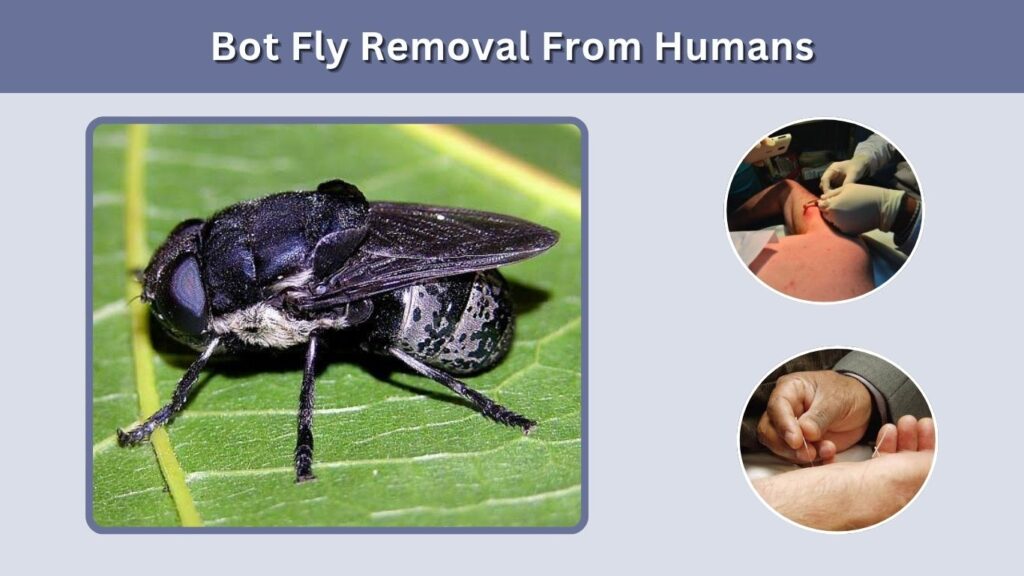
Human bot fly infestations most commonly produce furuncular myiasis—a boil-like skin lesion containing one larva.
Cases are particularly associated with travel to tropical parts of Central and South America.
Human Bot Fly Removal
A healthcare professional may:
- Examine the lesion and confirm suspected myiasis.
- Determine the larva’s location.
- Remove the larva intact.
- Clean the remaining cavity.
- Check for retained larval material.
- Treat secondary infection if present.
Some medical techniques may temporarily block the larva’s breathing opening to encourage it closer to the surface, but this should not be interpreted as a reason to experiment with household materials on an undiagnosed skin lesion.
What Not to Do
Avoid:
- Cutting your own skin
- Digging with tweezers or needles
- Forcefully squeezing the lump
- Burning the opening
- Using gasoline or other chemicals
- Pouring rubbing alcohol into a deep wound
- Crushing a partially exposed larva
Improper extraction can leave pieces inside the skin and increase inflammation or infection.
Bot Fly Removal From the Lip, Face, Ear, or Head
A suspected bot fly larva in the face, lip, nose, ear, eyelid, or head should receive medical attention rather than home removal.
These areas contain delicate structures, nerves, blood vessels, and—in the case of the eye and ear—organs that may be damaged by inexperienced extraction.
Seek prompt medical evaluation if there is severe pain, vision problems, facial swelling, fever, increasing redness, or discharge.
Bot Fly Removal From Dogs
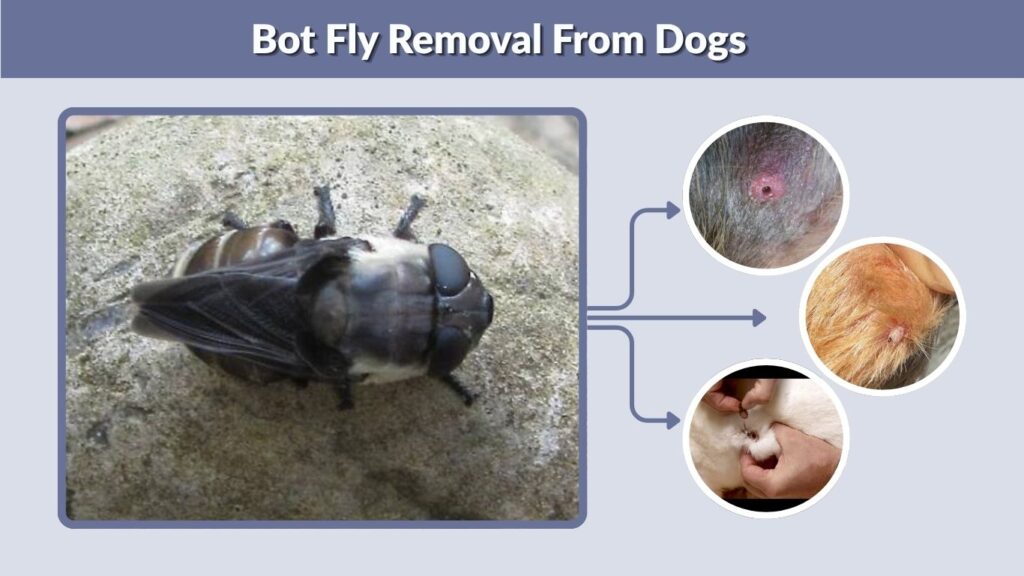
Dogs can develop Cuterebra infestations after investigating areas frequented by rabbits or rodents.
A larva beneath the skin typically creates a swelling called a warble.
Signs in Dogs
Possible symptoms include:
- Lump under the skin
- Hole in the center
- Drainage
- Repeated licking
- Pain when touched
- Swelling
- Visible movement inside the opening
A veterinarian should generally perform bot fly removal from a dog.
The larva needs to be extracted intact because rupturing it can create severe inflammation and may trigger a serious reaction.
After removal, the veterinarian may flush the wound and decide whether additional medication is necessary.
Can You Remove a Bot Fly From a Dog at Home?
Home extraction is not recommended.
Even when part of the larva is visible, pulling without understanding how deeply it is attached can cause it to tear apart.
A lump that appears to contain a bot fly could also be an abscess, cyst, tumor, infected bite, or another condition requiring different treatment.
Veterinary examination is therefore safer than relying on appearance alone.
Bot Fly Removal From Cats
Cats can develop the same type of accidental Cuterebra infestation as dogs.
Outdoor cats that hunt rodents or investigate burrows may have greater exposure.
Common Signs in Cats
- Skin swelling
- Small breathing opening
- Matted fur
- Discharge
- Constant grooming
- Pain
- Visible larva
Veterinary removal involves carefully extracting the complete larva and cleaning the cavity.
Do not squeeze a warble on a cat.
Rarely, larvae can migrate to unusual areas such as the nose, eye, or nervous system. Cats displaying difficulty breathing, seizures, unusual behavior, balance problems, or eye symptoms require urgent veterinary assessment.
Squirrel Bot Fly Removal
Squirrels commonly host bot fly larvae, often called warbles.
Large bumps on wild squirrels can look alarming, but bot fly infestations are part of the natural life cycle of certain wildlife bot flies.
Healthy wild squirrels often recover after mature larvae naturally leave their skin.
Should You Remove a Bot Fly From a Wild Squirrel?
Usually, no.
Attempting to capture and remove larvae from a wild squirrel can cause severe stress and may injure both the squirrel and the person handling it.
If a squirrel appears extremely weak, badly injured, or severely infested, contact a licensed wildlife rehabilitator rather than attempting treatment yourself.
The same advice applies to wild rabbits and other wildlife.
Bot Fly Removal From Horses
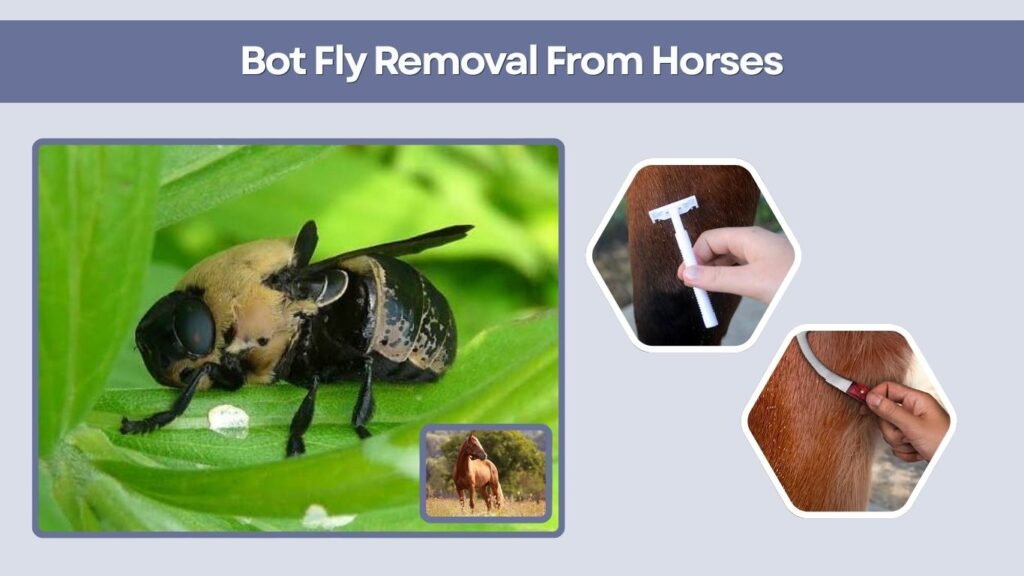
Bot fly problems in horses differ considerably from skin warbles.
Adult horse bot flies attach eggs to the horse’s coat, commonly on the legs and other areas the horse can reach while grooming.
When the horse licks the eggs, larvae can enter the mouth and eventually reach the gastrointestinal tract.
How to Remove Bot Fly Eggs From Horses
Visible eggs attached to the coat may be physically removed using tools designed for the purpose, such as:
- Bot knives
- Grooming blocks
- Specialized bot egg removal tools
Care should be taken not to encourage eggs to hatch around the horse’s mouth during removal.
Regular grooming during bot fly season can reduce the number of eggs swallowed.
Removing Internal Horse Bot Larvae
Internal larvae are not manually pulled from the horse.
Instead, horse owners should follow a veterinarian-recommended parasite-control program using appropriate deworming medications at suitable times of year.
Do not administer antiparasitic drugs without considering the horse’s overall parasite-control plan.
Bot Fly Removal From Cattle
Cattle can be affected by cattle grubs or heel flies, whose larvae migrate through the animal before forming warbles along the back.
Modern control usually relies on veterinary-approved antiparasitic treatments rather than manually squeezing each larva from the skin.
Timing is important because killing migrating larvae at certain locations inside the animal can cause complications.
Farmers should therefore follow veterinary or regional livestock parasite-control recommendations.
Bot Fly Removal From Rabbits
Rabbits can develop Cuterebra warbles, especially when kept outdoors.
The swelling may appear on the neck, body, or other exposed areas.
Removing the larva incorrectly can cause it to rupture.
Pet rabbits should be treated by a veterinarian experienced with rabbits or exotic pets. Wild rabbits should generally be referred to wildlife professionals.
What Happens After Bot Fly Removal?
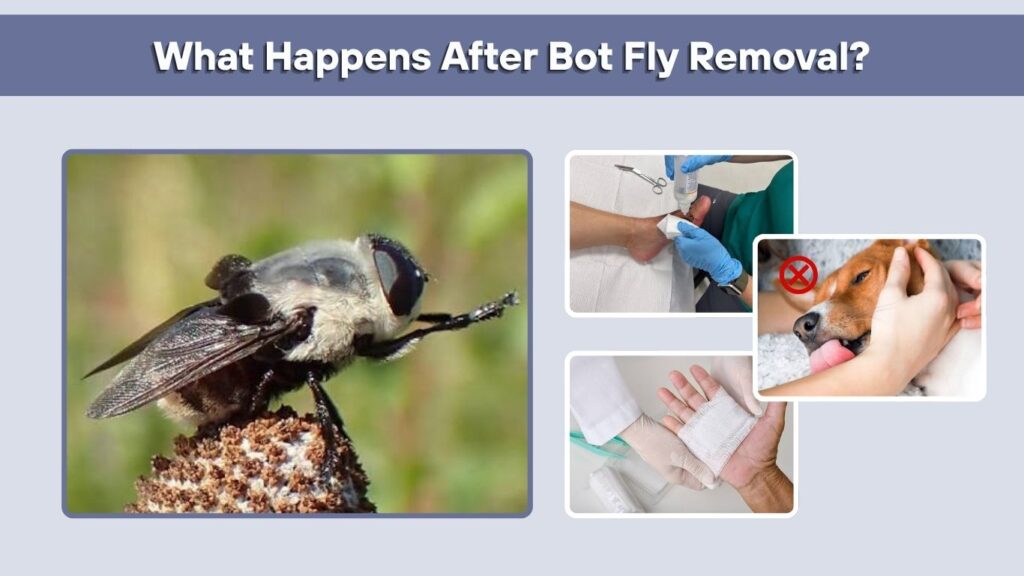
After a skin larva is extracted, a noticeable cavity may remain.
This can look surprisingly large because the larva occupied space beneath the skin.
Aftercare May Include
- Cleaning the wound
- Keeping the area dry and protected
- Monitoring drainage
- Watching for redness or swelling
- Preventing pets from licking the wound
- Veterinary or medical rechecks when needed
The opening normally heals once the larva is gone and complications are controlled.
Signs of infection such as worsening pain, pus, fever, spreading redness, or persistent swelling should be evaluated.
Does Bot Fly Removal Hurt?
Removal can cause discomfort because the larva is attached within inflamed tissue.
Pain varies depending on:
- Size of the larva
- Location
- Depth
- Amount of inflammation
- Number of larvae
- Removal technique
Medical professionals and veterinarians can use appropriate pain-control methods when necessary.
How Much Does Bot Fly Removal Cost?
Bot fly removal costs vary widely.
For humans, cost depends on the country, healthcare system, location of the lesion, and whether additional procedures or medication are required.
Veterinary costs depend on the animal, number of larvae, examination fees, sedation requirements, wound treatment, and complications.
A straightforward superficial case generally requires less treatment than larvae involving the eye, respiratory tract, or nervous system.
How to Prevent Bot Flies
Prevention depends on the type of bot fly.
People visiting areas where human bot flies occur should reduce mosquito and biting-insect exposure by using suitable repellents, wearing protective clothing, and using screens or nets where appropriate.
Dogs and cats can be protected partly by preventing them from exploring rabbit or rodent nests.
Horse owners can regularly inspect coats for bot eggs and follow an appropriate parasite-control program.
FAQs
Can You Squeeze a Bot Fly Out?
You should not forcefully squeeze a suspected bot fly larva. The larva may rupture beneath the skin, resulting in inflammation and other complications.
What Is the Safest Way to Remove a Human Bot Fly?
The safest approach is evaluation and complete extraction by a healthcare professional, especially when the lesion is on the face, head, eye area, ear, or another sensitive location.
Can I Remove a Bot Fly From My Dog?
Veterinary removal is recommended. Pulling or squeezing the larva yourself can cause it to rupture and may worsen the wound.
Do Bot Fly Holes Heal After Removal?
Yes. In uncomplicated cases, the cavity usually closes and heals after the larva is completely removed and the wound is kept clean.
Should Bot Flies Be Removed From Wild Squirrels?
Usually not by members of the public. Healthy squirrels often survive warbles naturally. A sick or severely affected wild animal should be evaluated by a licensed wildlife rehabilitator.