
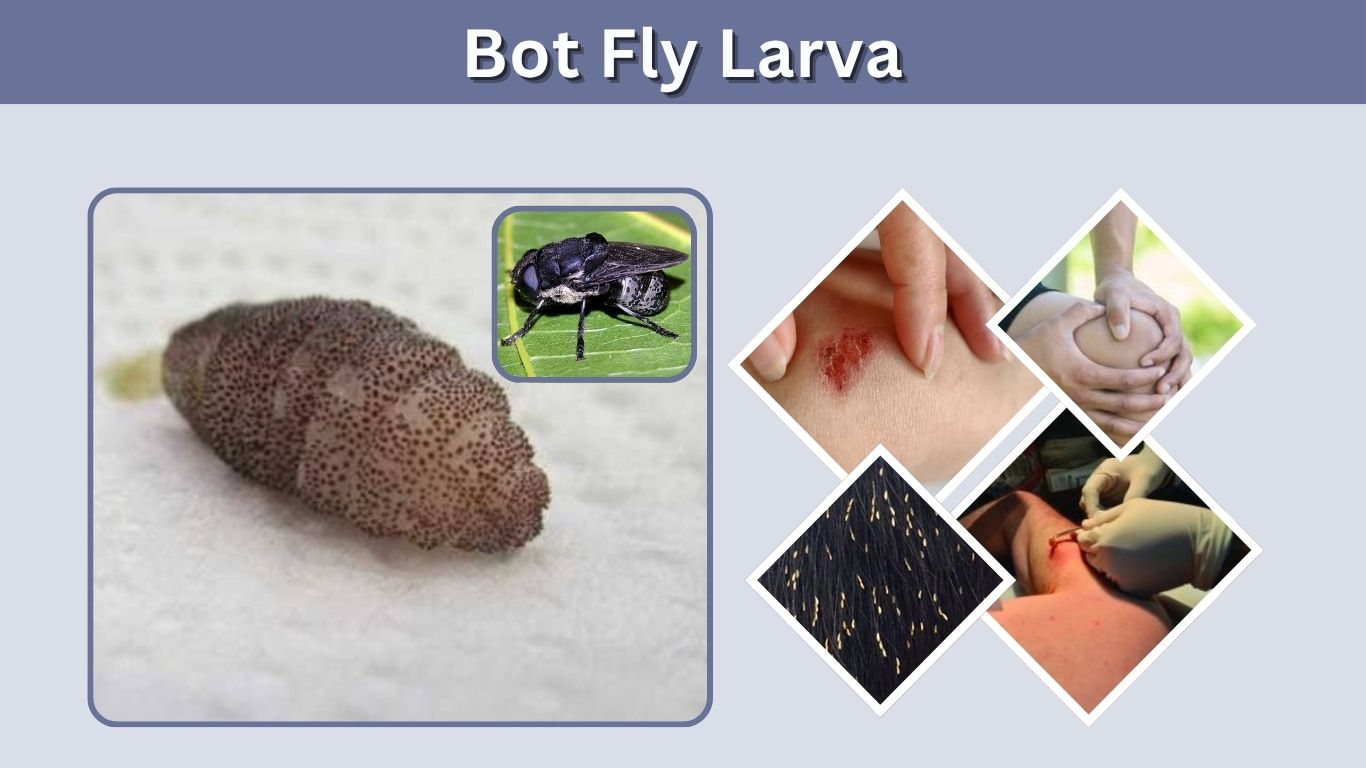
A bot fly larva is the immature, parasitic stage of a bot fly. Unlike ordinary fly larvae that usually develop in decaying material, bot fly larvae develop inside or on living animals. Depending on the species, they may live beneath the skin, in the nose or mouth, or within the digestive tract. Humans, cats, dogs, horses, rabbits, squirrels, deer, and other mammals can be affected by different bot fly species. In humans, infestation by fly larvae is called myiasis. Most cases are treatable, but safe removal is important because damaging a larva can increase inflammation or infection risk.
What Is a Bot Fly Larva?
Bot flies belong to several groups of specialized parasitic flies. Their larvae depend on a living host during development.
The best-known species affecting people is the human bot fly, Dermatobia hominis, which occurs naturally from Mexico through Central and South America. Other bot flies primarily parasitize rodents, rabbits, horses, deer, and livestock but may occasionally affect unusual hosts.
Bot fly larvae are technically maggots, because “maggot” is the general term for a fly larva. However, bot fly larvae are specialized parasites rather than the typical larvae found in decomposing food.
What Does a Bot Fly Larva Look Like?
Appearance changes as the larva matures.
Bot Fly Larva Identification
Common characteristics include:
- Cream, white, gray, brown, or dark coloration
- Thick, segmented body
- Short, stout or barrel-like appearance
- Small backward-pointing spines on many species
- Dark mouth hooks
- No true legs
- Increasing size as it develops
Mature Cuterebra larvae in pets are thick, dark, and heavily spined, while younger larvae may be only several millimeters long and much paler.
Because many fly larvae look similar, identification from appearance alone can be difficult.
Bot Fly Larva Life Cycle
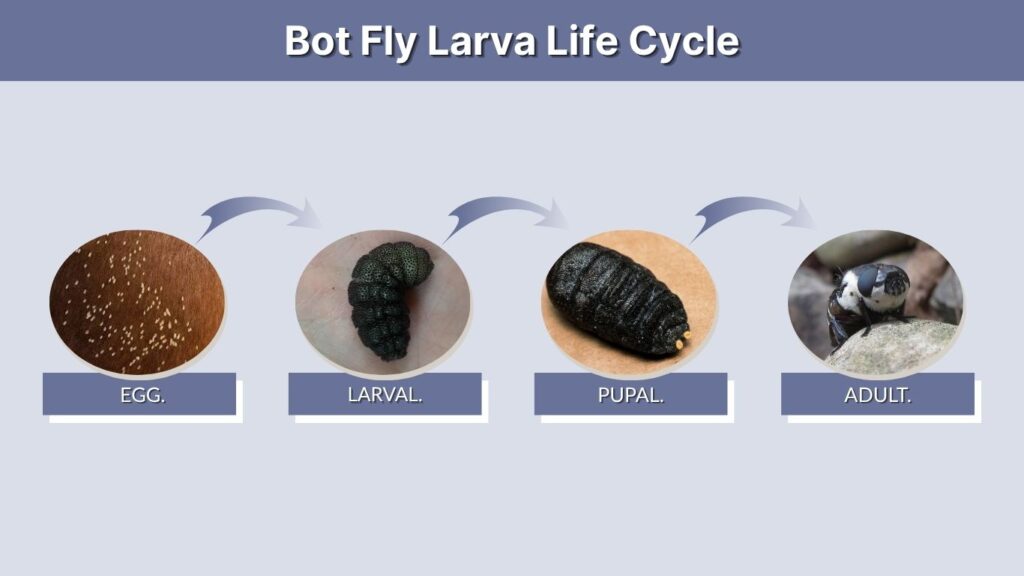
The exact life cycle differs among species, but most pass through four major stages:
- Egg
- Larva
- Pupa
- Adult fly
The human bot fly has an unusual method of reaching its host. An adult female attaches her eggs to blood-feeding insects such as mosquitoes. When the carrier lands on a person or another mammal, warmth triggers the larvae to emerge and penetrate the skin.
The larva then develops beneath the skin while breathing through a small opening. Dermatobia hominis larvae usually remain in their host for approximately 5–10 weeks before emerging, dropping to the ground, and pupating.
Bot Fly Larva in Human Skin
A human bot fly larva usually causes furuncular myiasis, which resembles a boil or infected bump.
Unlike some invasive fly larvae, the human bot fly usually remains inside a localized cavity beneath the skin.
Symptoms in Humans
Possible signs include:
- Raised red bump
- Small central hole
- Pain or tenderness
- Itching
- Sensation of movement
- Clear or bloody drainage
- Swelling
- Occasional visible movement at the opening
The small opening is especially characteristic because the larva uses it for breathing.
CDC notes that people with myiasis typically develop a lump as the larva grows. The larva generally remains under the skin rather than traveling throughout the body.
How Do Humans Get Bot Fly Larvae?
Human bot fly infestation is most closely associated with tropical areas of the Americas.
People may become infected while traveling through places where Dermatobia hominis occurs. The person does not normally need to be bitten directly by an adult bot fly.
Instead, mosquitoes or other blood-feeding insects carrying bot fly eggs can deliver the larvae to the skin.
Myiasis is not normally spread directly from one person to another.
Bot Fly Larva Removal in Humans
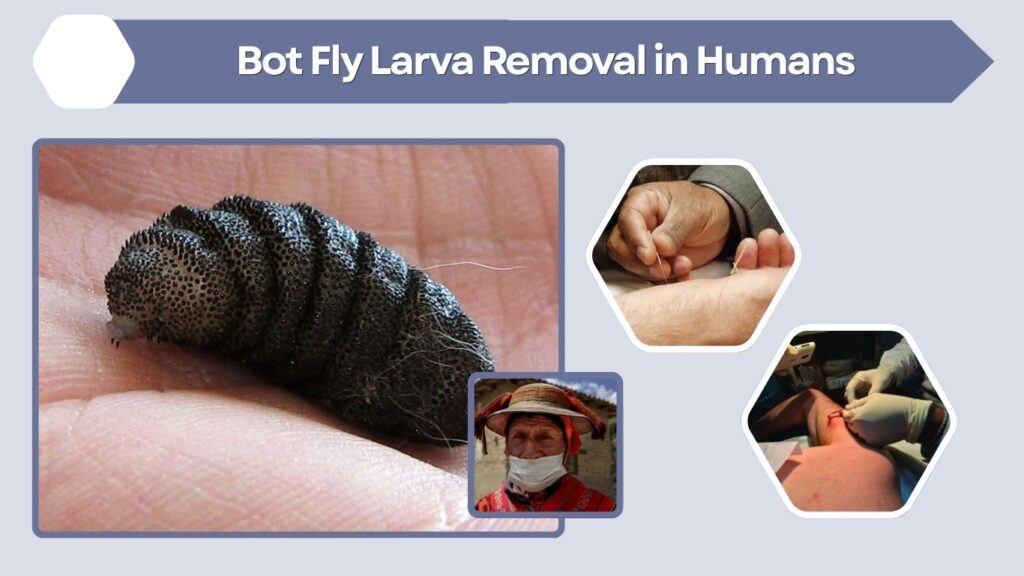
A suspected bot fly larva should ideally be evaluated by a healthcare professional.
The goal is to remove the entire larva without breaking it and then appropriately clean and monitor the wound.
Avoid Trying to:
- Squeeze the larva out forcefully
- Dig into the skin with needles
- Cut the lesion yourself
- Burn the opening
- Pour irritating chemicals into the wound
Improper removal can damage tissue, leave larval material behind, or contribute to infection.
If a painful lump develops after travel to Central or South America, especially one with a persistent central breathing hole, tell your healthcare provider about your travel history.
Bot Fly Larva in Cats
Cats can develop bot fly infestations known as cuterebriasis, usually from Cuterebra species whose normal hosts are rabbits or rodents.
Cats may encounter eggs while exploring rodent burrows or outdoor vegetation.
A typical lesion appears as a swollen lump with a small central breathing opening.
Symptoms in Cats
Signs may include:
- Skin lump or swelling
- Small hole in the center
- Matted hair
- Discharge
- Pain
- Excessive licking
- Visible larva
Most lesions occur around the head, neck, or trunk. Rarely, migrating larvae can affect the nose, eyes, respiratory tract, or nervous system.
Bot Fly Larva Removal From a Cat
Do not squeeze a suspected bot fly swelling.
Veterinarians generally remove the larva intact and clean the resulting wound. Crushing or rupturing a Cuterebra larva can cause severe inflammation, secondary infection, and rarely a serious allergic reaction.
Kittens and cats showing neurological problems, breathing difficulties, or eye involvement need prompt veterinary attention.
Bot Fly Larva in Dogs
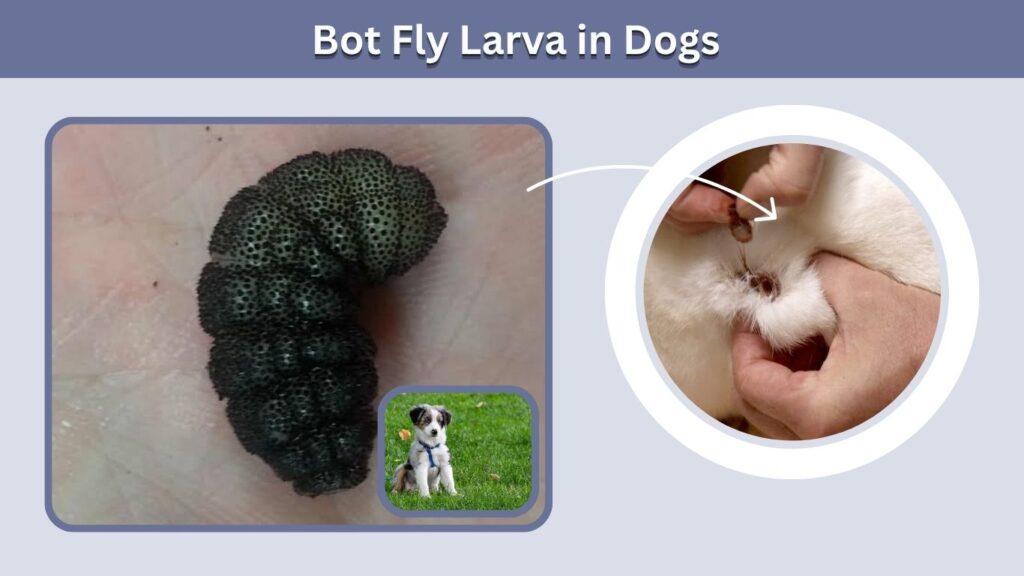
Dogs can also accidentally become hosts for Cuterebra larvae.
Dogs that investigate rabbit nests, rodent burrows, or vegetation where bot fly eggs are present may be exposed.
Dog Symptoms
Watch for:
- Firm skin bump
- Central breathing hole
- Swelling
- Pus or drainage
- Pain
- Repeated licking
- Irritated skin
The head, neck, and body are common locations. Merck Veterinary Manual advises that suspicious boils should be evaluated by a veterinarian rather than squeezed.
Bot Fly Larva in Horses
Horse bot flies are different from the bot flies that commonly produce skin warbles in cats or rabbits.
Species of Gasterophilus lay eggs on a horse’s hair. After the eggs hatch, the larvae reach the mouth as the horse licks or grooms itself.
They can spend time in the mouth before eventually attaching to the stomach lining.
Horse Bot Fly Signs
Heavy infestations may cause:
- Mouth irritation
- Difficulty chewing
- Excessive salivation
- Stomach inflammation
- Gastric irritation or ulcers
Many infected horses show few obvious symptoms.
Veterinarians commonly incorporate appropriate antiparasitic treatment into horse parasite-control programs.
Bot Fly Larvae in Rabbits and Squirrels
Rabbits, squirrels, mice, chipmunks, and other small mammals are natural hosts for several Cuterebra species.
The large skin swellings containing larvae are commonly called warbles.
A warble usually has a visible opening through which the larva breathes.
Wild animals can sometimes survive these infestations, but weak, injured, or heavily infested animals may experience greater complications.
Bot Fly Larvae in Deer
Deer can host specialized bot flies, including nasal bot species.
Instead of developing beneath external skin, some larvae live in the nasal passages, throat, or related cavities.
People occasionally encounter these larvae when processing a harvested deer. Their appearance can be alarming, but deer bot flies are adapted primarily to their natural animal hosts.
Is a Bot Fly Larva Dangerous?
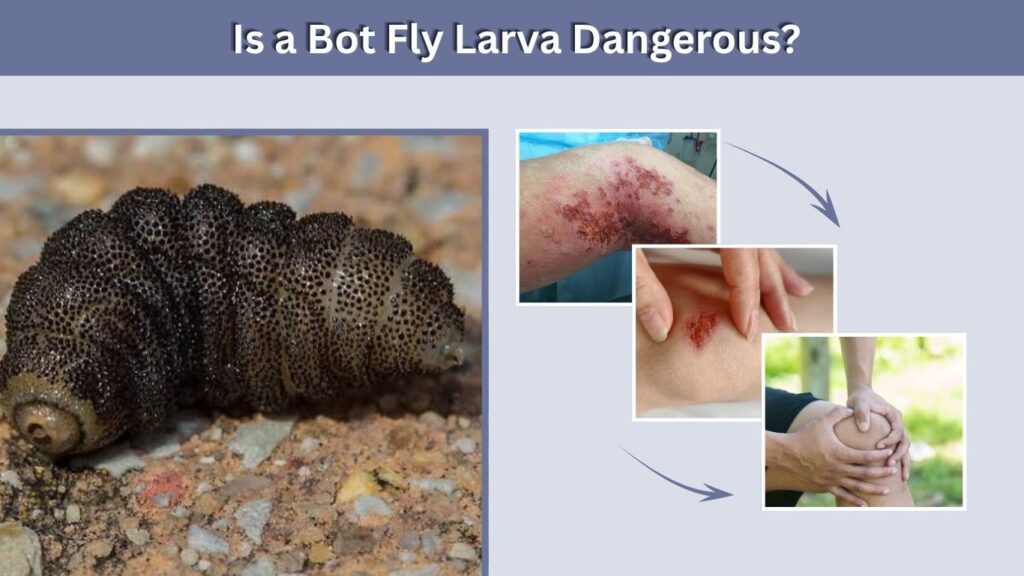
A single uncomplicated skin bot fly larva is usually treatable, but complications are possible.
Potential problems include:
- Pain and inflammation
- Secondary bacterial infection
- Persistent wounds
- Tissue damage
- Allergic reactions
- Rare migration to sensitive tissues
Location matters. Larvae near the eye, mouth, nose, head, or nervous system require particular attention.
How to Prevent Bot Fly Infestation
Prevention depends on the host and bot fly species.
For people traveling in tropical bot fly regions, insect-bite prevention can reduce exposure because mosquitoes may carry human bot fly eggs.
Useful measures include protective clothing, appropriate insect repellent, window screens, and mosquito nets when needed.
For pets, limiting unsupervised access to rabbit and rodent burrows can reduce exposure to Cuterebra.
Horse owners should follow a veterinarian-designed parasite-control program and remove visible bot fly eggs from the coat when appropriate.
FAQs
Are Bot Fly Larvae Maggots?
Yes. A bot fly larva is technically a maggot because all fly larvae can be described as maggots. Bot fly larvae differ because they are specialized parasites of living hosts.
Can a Bot Fly Larva Live in Human Skin?
Yes. The human bot fly can develop beneath human skin and create a boil-like lesion with a breathing opening.
Can Bot Fly Larvae Affect Cats and Dogs?
Yes. Cats and dogs can accidentally become hosts for Cuterebra larvae, usually after exposure to environments used by rabbits or rodents.
Should You Squeeze Out a Bot Fly Larva?
No. Forcefully squeezing a skin lesion can rupture the larva and cause complications. Human cases should be assessed by a healthcare professional, while pets should be treated by a veterinarian.
How Long Does a Human Bot Fly Larva Stay Under the Skin?
The larval stage of the human bot fly generally develops beneath the skin for approximately 5–10 weeks before the mature larva naturally leaves the host and pupates in the environment.