
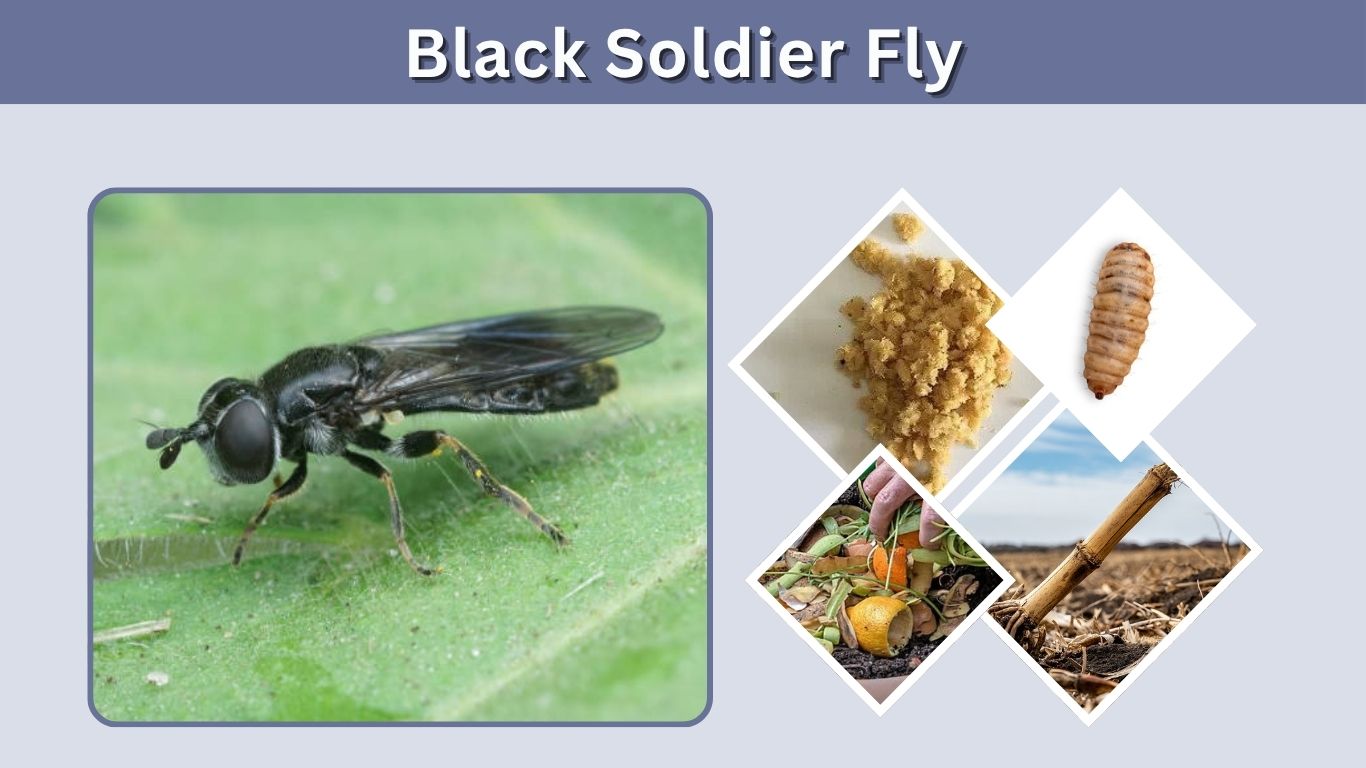
The black soldier fly (Hermetia illucens) is a beneficial insect best known for its larvae, which consume decomposing organic material and convert it into protein-rich biomass. Farmers use black soldier fly larvae for composting, waste management, and animal feed. Despite their dark, wasp-like appearance, adult black soldier flies do not bite or sting and rarely become household pests. Their ability to process food scraps quickly has also made them popular in small composting systems and commercial insect farms.
Black Soldier Fly Overview
Black soldier flies belong to the soldier fly family, Stratiomyidae. The species originated in the Americas but is now found across many tropical, subtropical, and warm temperate regions.
| Feature | Details |
| Scientific name | Hermetia illucens |
| Order | Diptera |
| Family | Stratiomyidae |
| Adult size | Approximately 0.6–0.8 inches |
| Adult color | Black or dark blue-black |
| Diet | Larvae eat decomposing organic matter |
| Life-cycle stages | Egg, larva, prepupa, pupa, and adult |
| Main uses | Composting, animal feed, and waste conversion |
| Bite or sting | No |
| Typical habitat | Compost, manure, and decomposing plant material |
Only the larval stage consumes substantial amounts of solid food. Adults primarily depend on nutrients stored during larval development, although they may drink water or other liquids. Their short adult stage is mainly devoted to mating and egg laying.
What Does a Black Soldier Fly Look Like?
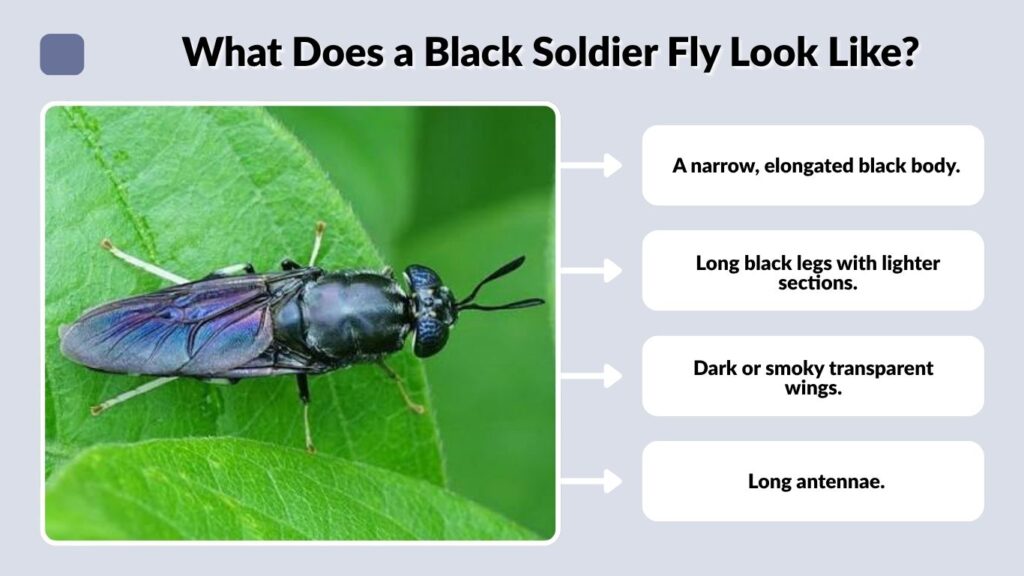
Adult black soldier flies are slender insects with dark bodies, long legs, smoky wings, and two pale, translucent areas near the base of the abdomen. They may resemble small black wasps but have only one functional pair of wings because they are true flies.
Identification
Important identification features include:
- A narrow, elongated black body
- Long black legs with lighter sections
- Dark or smoky transparent wings
- Long antennae
- Two pale abdominal patches
- A wasp-like appearance
- A body measuring roughly three-quarters of an inch
Adults usually move calmly and are less likely than houseflies to land on people or food. Their wasp-like appearance may discourage predators, but they cannot sting.
Black Soldier Fly Larvae
The larvae are thick, segmented grubs with flattened bodies. Young larvae are cream or light tan, while mature larvae become grayish-brown. As they prepare to pupate, they darken considerably and may appear almost black.
Black soldier fly larvae are sometimes called grubs or maggots. Although “maggot” is technically correct for fly larvae, they differ from the smooth, pale larvae commonly associated with houseflies. Black soldier fly larvae have tougher, strongly segmented bodies.
Black Soldier Fly Life Cycle
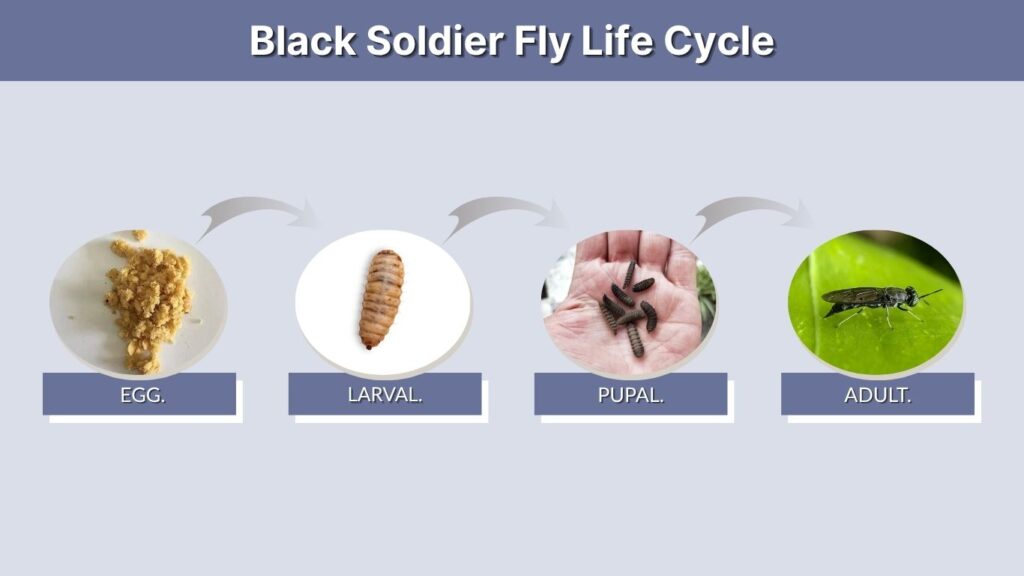
The black soldier fly undergoes complete metamorphosis. Development speed varies with temperature, humidity, food quality, population density, and other environmental conditions.
Egg Stage
After mating, the female places several hundred tiny eggs inside dry cracks close to moist, decomposing material. She normally avoids placing them directly in wet waste because excessive moisture can reduce survival.
The eggs generally hatch within several days under warm conditions. Newly emerged larvae then crawl toward the nearby food source.
Larval Stage
The larval stage is the main feeding and growth period. Larvae consume food waste, decaying vegetables, agricultural by-products, manure, and other decomposing organic material.
Under favorable farming conditions, larvae may feed actively for approximately two to three weeks. Their bodies increase dramatically in weight as they store protein and fat for later development. The exact growth rate depends heavily on the material they consume.
Prepupal and Pupal Stages
When feeding is complete, the larvae enter the prepupal stage. Their bodies become darker, and they leave the moist food in search of a dry, protected place.
In self-harvesting compost bins, ramps take advantage of this natural crawling behavior. Prepupae climb the ramp and fall into a collection container.
The prepupa eventually becomes a pupa. It remains inside its hardened outer skin while transforming into an adult fly.
Adult Stage
Adult black soldier flies emerge from the pupal cases, mate, and lay eggs. They live for only a limited period and rely largely on the energy accumulated during larval growth.
Bright natural or artificial light encourages mating. Commercial farms therefore manage lighting, humidity, temperature, adult density, and egg-laying surfaces carefully to maintain reproduction.
What Do Black Soldier Fly Larvae Eat?
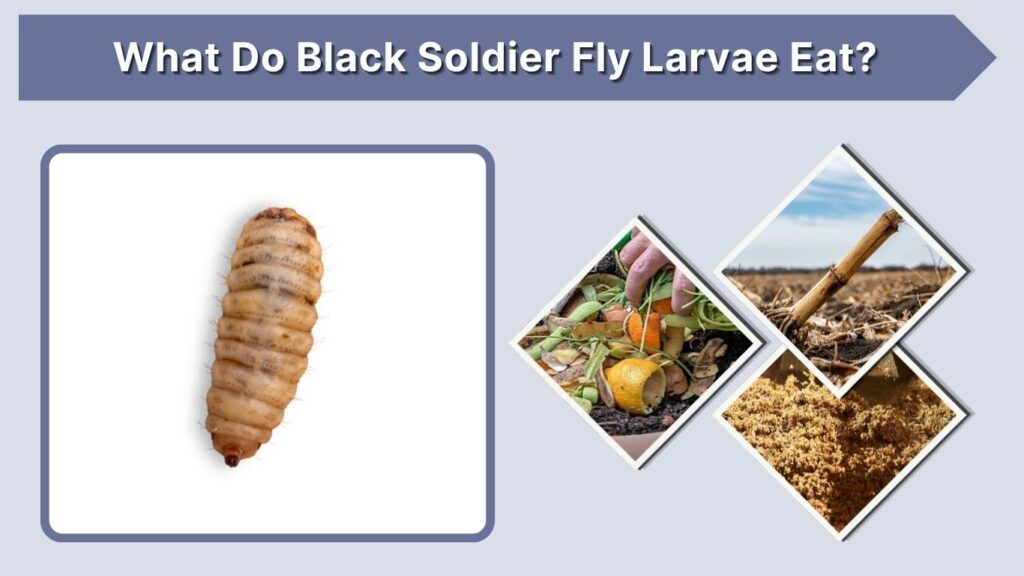
Black soldier fly larvae can process a broad range of organic materials, including:
- Fruit and vegetable scraps
- Leftover grains
- Coffee grounds
- Agricultural residues
- Restaurant food waste
- Animal manure
- Brewery by-products
- Spoiled animal feed
- Some meat and fish scraps
A balanced mixture usually performs better than a single watery or low-nutrient food. Extremely wet material can become anaerobic, while dry waste may prevent larvae from feeding efficiently.
Avoid placing plastic, metal, glass, chemicals, pesticides, heavily salted foods, or other noncompostable materials in a larval bin. Commercial growers must also follow applicable feed-safety rules because the rearing material can affect the nutritional and sanitary quality of harvested larvae. Research shows that larval protein and fat levels vary significantly according to diet and harvesting age.
Black Soldier Fly Larvae for Composting
Black soldier fly larvae break down soft organic waste much faster than a traditional compost pile alone. They consume the material and convert part of it into larval body mass, leaving behind residue commonly called frass.
Benefits of Larval Composting
A managed colony can:
- Reduce the volume of food scraps
- Process waste quickly in warm weather
- Produce larvae for animal feed
- Create a nutrient-containing residue
- Reduce some unpleasant waste odors
- Divert organic material from landfills
Black soldier fly composting is not identical to conventional composting. The leftover material may require additional curing or composting before it is applied heavily around plants. Its characteristics depend on the original waste and how completely the larvae processed it.
Basic Black Soldier Fly Bin
A simple bin needs a covered container, drainage, airflow, feeding space, and a way for mature larvae to crawl out.
Keep the contents moist but not flooded. Protect the bin from heavy rain and direct afternoon sun. Add food gradually rather than filling the container with more waste than the colony can process.
A self-harvesting design includes an inclined ramp leading to a collection bucket. Dark prepupae naturally leave the food and climb upward when they are ready to pupate.
Black Soldier Fly Larvae as Animal Feed
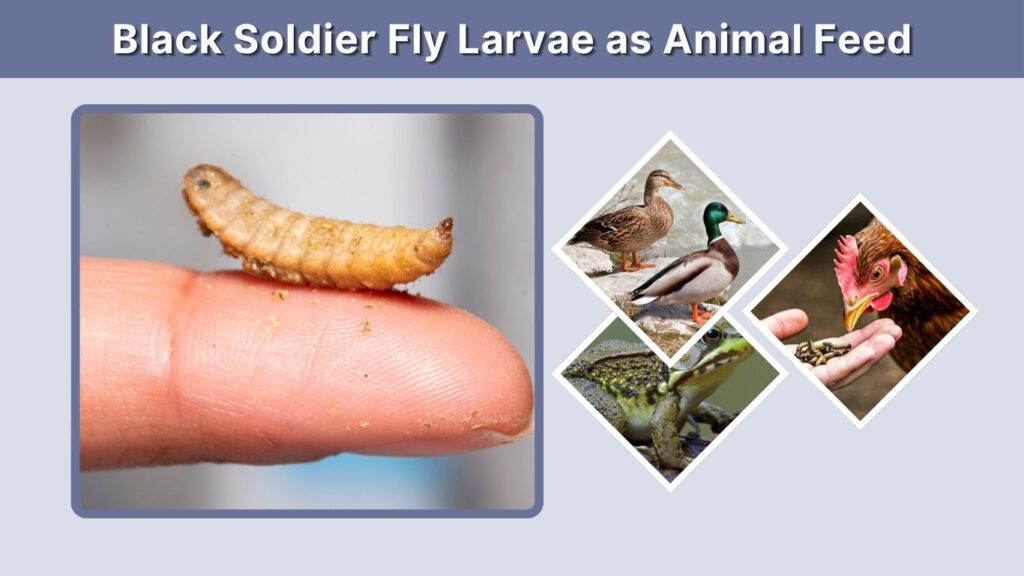
Black soldier fly larvae contain protein, fat, minerals, and amino acids. They are sold live, dried, frozen, ground into meal, or processed into oil.
They are used in feeds for chickens, ducks, fish, reptiles, amphibians, pigs, and some companion animals. However, their exact nutrient composition changes according to their diet, age, harvesting stage, and processing method.
Larvae for Chickens and Ducks
Chickens and ducks readily eat live or dried larvae. Live larvae also encourage natural scratching, pecking, and foraging behavior.
They should normally be treated as a supplement unless a poultry diet has been professionally formulated to include insect meal. Feeding excessive quantities of high-fat dried larvae can unbalance an otherwise complete diet. Studies indicate that properly processed black soldier fly meal can replace part of conventional poultry-feed ingredients without necessarily reducing growth performance.
Larvae for Reptiles
Live larvae are commonly offered to bearded dragons, leopard geckos, frogs, and other insect-eating pets. Their calcium content makes them useful feeder insects, but no single feeder should make up every animal’s entire diet.
Choose appropriately sized larvae and remove uneaten feeders when necessary. Animals with special nutritional or medical requirements should be fed according to guidance from an experienced exotic-animal veterinarian.
Live vs. Dried Larvae
| Live larvae | Dried larvae |
| Encourage hunting and foraging | Convenient to store |
| Contain more moisture | More concentrated by weight |
| Require suitable storage | Have a longer shelf life |
| Can crawl away | Easy to mix into feed |
| Useful for reptiles and poultry | Popular for birds and chickens |
Are Black Soldier Flies Harmful?
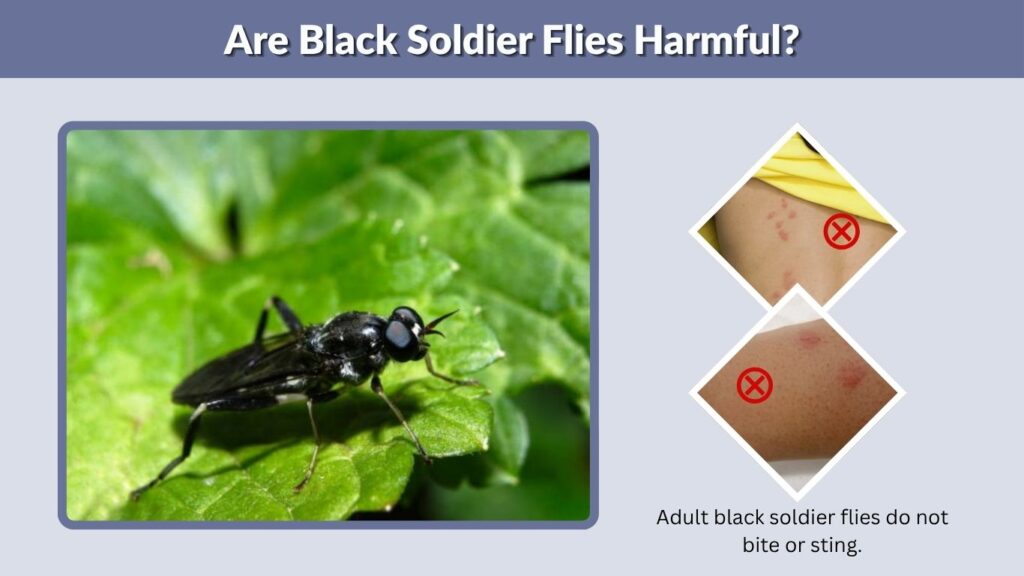
Adult black soldier flies do not bite or sting. They have not developed the biting mouthparts of mosquitoes, horseflies, or other blood-feeding insects. They also do not behave like houseflies that repeatedly land on human food.
Their larvae can still indicate that wet, decomposing organic material is present. Finding one or two wandering larvae indoors may mean they traveled from a compost container, garbage area, plumbing problem, or another moist food source.
Remove the breeding material, clean the affected area, improve drainage, and reduce excessive moisture. Pesticides are usually unnecessary when the organic source can be located and corrected.
Black Soldier Fly Disadvantages
Black soldier fly systems also have limitations. Colonies become less active in cool temperatures, bins may smell when overfed, excess moisture can cause poor conditions, and escaping prepupae may appear indoors.
Commercial farming requires controlled breeding conditions, dependable waste supplies, processing equipment, sanitation procedures, and a reliable market. Feed producers must also monitor contaminants and follow the regulations governing insect-based animal feed.
FAQs
Do black soldier flies bite humans?
No. Adult black soldier flies do not have biting or stinging mouthparts. They are generally harmless to people and rarely show interest in entering homes unless suitable breeding material is nearby.
Are black soldier fly larvae good for chickens?
Yes. Chickens readily consume live and dried larvae, which provide protein, fat, and minerals. They are best used as part of a balanced feeding program rather than as the chicken’s only food.
Why are black soldier fly larvae in my compost?
Adult females are attracted to decomposing organic material and lay eggs in nearby dry cracks. The larvae enter the compost after hatching and feed on the waste. Their presence is usually beneficial in a warm outdoor compost system.
Can black soldier fly larvae replace mealworms?
They can replace mealworms in some feeding situations, but the two insects have different nutritional profiles. Black soldier fly larvae are commonly valued for their calcium content, while mealworms are often higher in phosphorus relative to calcium.
How do you get rid of black soldier fly larvae indoors?
Locate and remove the moist organic material supporting them. Clean garbage containers, inspect compost bins, improve drainage, and check for plumbing or septic problems. Wandering larvae disappear once their food and breeding source has been corrected.