
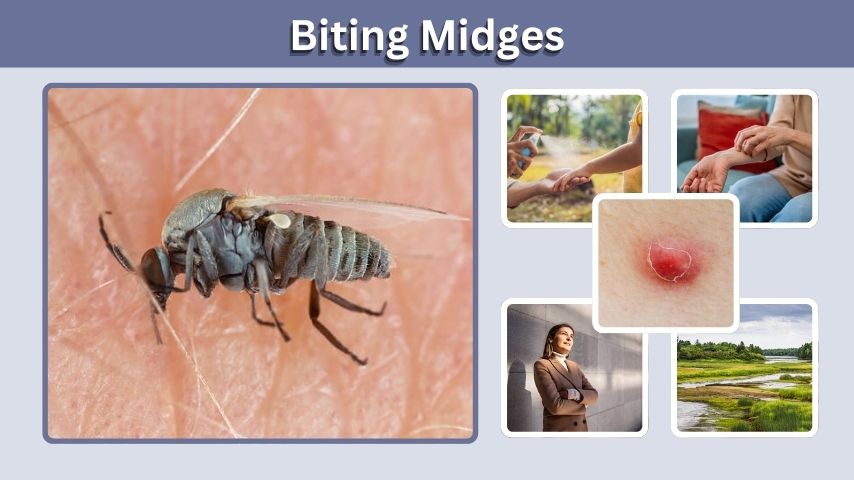
Biting midges are tiny flying insects that can cause painful, itchy bites despite their almost invisible size. Often called no-see-ums, sand flies, or punkies, these insects are common near wetlands, coastal areas, lakes, and damp soil. While they are not always dangerous, their bites can be irritating and persistent. Understanding their habits helps you prevent bites and reduce their numbers around your property.
What Are Biting Midges?
Biting midges are small flies from the family Ceratopogonidae. They are much smaller than mosquitoes, usually measuring only 1 to 3 millimeters long. Because of their tiny size, people often feel the bite before they ever see the insect.
Only female biting midges feed on blood. They need blood meals to produce eggs. Male midges feed on nectar and do not bite people or animals. These insects are most active in warm, humid conditions and often appear in large numbers near water or damp organic matter.
Common Names
Biting midges are known by different names depending on the region. Some people call them no-see-ums because they are so small and hard to spot. In other areas, they may be called sand flies, punkies, or gnats.
The name can be confusing because “gnat” is used for many tiny flies. However, true biting midges are a specific group of insects, and their bites are usually more noticeable than their size suggests.
What Do They Look Like?
Biting midges have slender bodies, narrow wings, and long antennae. Under magnification, many species have patterned wings and delicate legs. To the naked eye, they often look like tiny dark specks flying around your skin, porch lights, or window screens.
Their small size allows them to pass through ordinary window screens. This is why people may still get bitten indoors even when doors and windows seem protected.
Quick Facts About Biting Midges
Biting midges are small, but their impact can be frustrating. The table below summarizes the most important facts for homeowners, travelers, and outdoor workers.
| Feature | Details |
|---|---|
| Insect Family | Ceratopogonidae |
| Common Names | No-see-ums, punkies, sand flies, biting gnats |
| Size | About 1 to 3 mm long |
| Biting Sex | Females only |
| Active Time | Dawn, dusk, cloudy days, humid evenings |
| Common Habitat | Wetlands, marshes, beaches, lakes, muddy soil |
| Main Problem | Painful, itchy bites |
| Indoor Entry | Can pass through standard screens |
| Best Prevention | Fine mesh screens, repellents, habitat reduction |
| Lifespan | Varies by species and environment |
Where Biting Midges Live
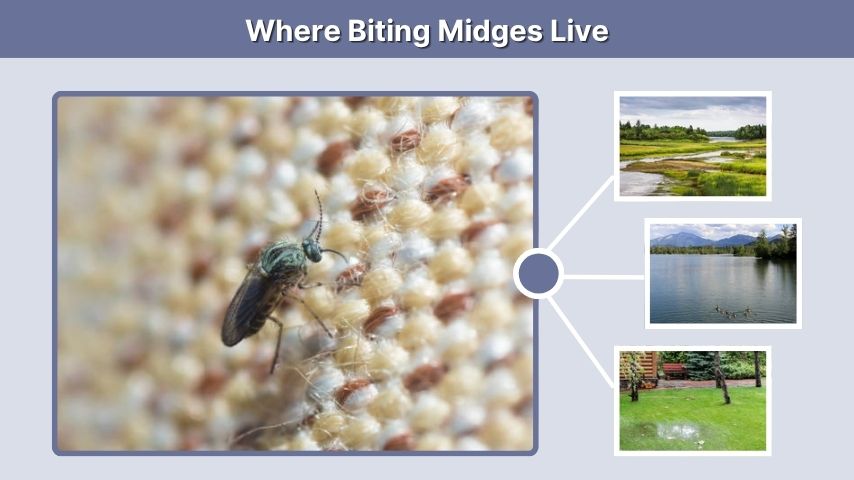
Biting midges are strongly linked to moisture. Their larvae develop in wet or damp places where organic matter is available. This makes them common around marshes, ponds, mud, wet soil, rotting vegetation, and coastal areas.
Outdoor Habitats
Different species prefer different breeding sites, but most need moisture to complete their life cycle. They may breed in salt marshes, freshwater edges, wet leaf litter, tree holes, or muddy areas near livestock.
Common breeding areas include:
- Marshes and wetlands
- Pond and lake edges
- Damp garden beds
- Wet compost piles
- Muddy livestock areas
- Mangroves and coastal flats
- Poorly drained lawns
Because many breeding sites are natural and widespread, complete elimination is difficult. Control usually focuses on reducing local breeding spots and preventing bites.
Regional Presence
Biting midges are found in many parts of the world, including the United States, the United Kingdom, New Zealand, South Africa, and other warm or humid regions. In places like Florida, coastal communities often deal with large populations because marshes, beaches, and mangroves provide ideal habitat.
In cooler regions, biting midges may be seasonal. They often become more active during spring, summer, and early fall, especially after rainfall or during humid weather.
Biting Midge Life Cycle
Biting midges go through four life stages: egg, larva, pupa, and adult. Their development depends on moisture, temperature, and food availability.
Eggs and Larvae
Female midges lay eggs in moist areas. These may include mud, damp soil, wet vegetation, or water edges. After hatching, the larvae live in these damp habitats and feed on small organisms or decaying organic material.
The larval stage is important because this is where population growth begins. If a property has persistent wet areas, it may support repeated midge development.
Pupae and Adults
After the larval stage, midges become pupae. The adult insects then emerge and begin searching for food and mates. Males feed on nectar, while females seek blood meals from people, pets, birds, livestock, or wildlife.
Adults are weak fliers compared with some larger insects, but wind can move them over longer distances. This is why biting midges may appear even when there is no obvious breeding site directly in your yard.
What Do Biting Midge Bites Look Like?
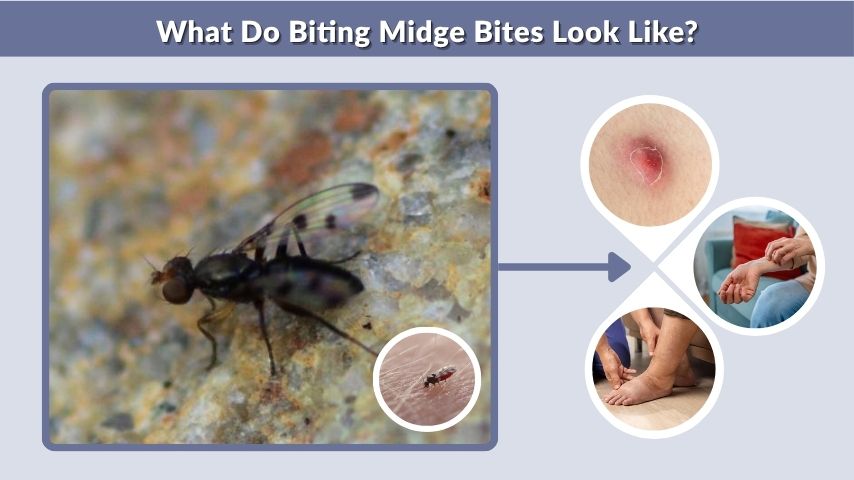
Biting midge bites can be surprisingly painful. Their mouthparts cut the skin, and their saliva can trigger an immune reaction. Many people develop itchy red bumps that may last for several days.
Common Bite Symptoms
Reactions vary from person to person. Some people barely notice the bites, while others develop intense itching and swelling.
Common symptoms include:
- Red bumps or welts
- Sharp or burning bite sensation
- Itching that lasts several days
- Swelling around the bite area
- Small clusters of bites
- Irritated skin after scratching
Bites often appear on exposed areas such as ankles, legs, arms, neck, face, and hands. Because midges are so small, they can bite under loose clothing or around cuffs and collars.
Are Biting Midge Bites Dangerous?
For most people, biting midge bites are irritating but not serious. The main risk is scratching, which can break the skin and lead to infection. People with sensitive skin may have stronger allergic reactions.
In some regions, certain biting midges can transmit animal diseases, especially to livestock. However, human disease transmission depends on location and species. If swelling, pain, fever, pus, or worsening redness develops, it is best to seek medical advice.
When Are Biting Midges Most Active?
Biting midges are usually most active during calm, humid conditions. They often bite around dawn and dusk, but they may also be active during cloudy days or shaded afternoons.
Weather Conditions
Midges prefer warm, moist air. Windy conditions reduce their activity because they are tiny and weak fliers. After rain, populations may increase because moisture supports breeding.
They are often worse when:
- The air is humid
- There is little wind
- Temperatures are warm
- The area is shaded
- Rain has recently fallen
- People are near water or marshland
Outdoor events near wetlands or beaches can become uncomfortable if midges are active. Planning around peak biting times can help reduce exposure.
How to Prevent Biting Midge Bites
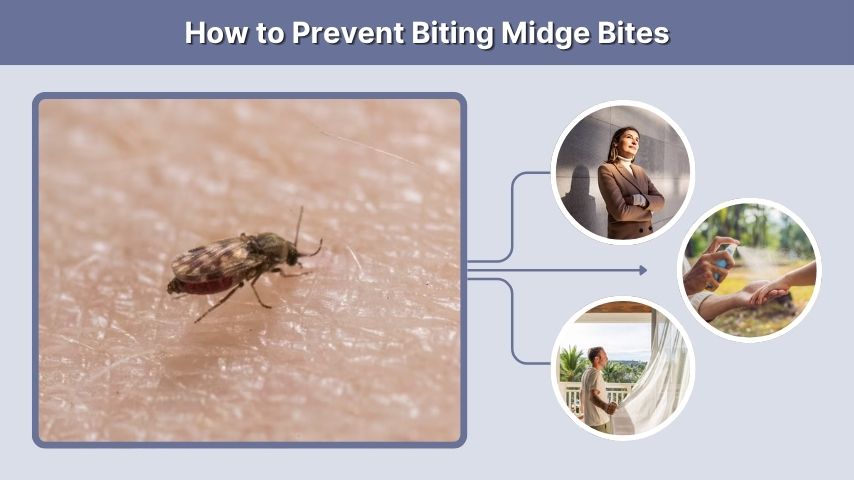
Preventing bites is often easier than eliminating the insects completely. Since midges are tiny, standard mosquito prevention methods may not always be enough.
Personal Protection
When spending time outdoors in midge-prone areas, cover exposed skin as much as possible. Long sleeves, long pants, socks, and closed shoes can reduce bites.
Useful prevention steps include:
- Wear light-colored, tightly woven clothing
- Use insect repellent on exposed skin
- Avoid outdoor activity at dawn and dusk
- Use fans on patios and porches
- Choose breezy areas when possible
- Keep doors and windows closed during peak activity
- Use fine mesh screens instead of standard screens
Repellents containing ingredients such as DEET, picaridin, or oil of lemon eucalyptus may help. Always follow label directions, especially when applying products to children.
Indoor Protection
Because biting midges can pass through regular screens, homes in problem areas may need finer mesh. Air conditioning also helps because it allows windows to stay closed.
Porch fans can be very effective. Midges are weak fliers, so steady airflow can keep them away from sitting areas.
How to Control Biting Midges Around the Home
Biting midge control can be challenging because many species breed in natural wet areas that cannot be removed. Still, property maintenance can reduce local activity.
Reduce Moisture and Organic Matter
Start by identifying damp areas around the home. Poor drainage, clogged gutters, wet mulch, and overwatered landscaping can create conditions that support small flies.
Helpful control steps include:
- Improve yard drainage
- Empty standing water where possible
- Clean clogged gutters
- Avoid overwatering lawns
- Turn or manage compost properly
- Remove piles of wet leaves
- Keep livestock areas cleaner and drier
- Trim dense vegetation around sitting areas
Unlike mosquitoes, some biting midges do not need open standing water. Damp soil and organic matter may be enough for certain species, so moisture management is important.
Outdoor Treatments
Insecticide sprays may temporarily reduce adult midges around patios, shrubs, and resting sites, but they rarely solve the problem long term. New adults can emerge or blow in from nearby areas.
For severe infestations, professional pest control may help identify breeding sources and apply targeted treatments. However, in coastal or wetland areas, ongoing management is usually needed.
Biting Midges vs Mosquitoes
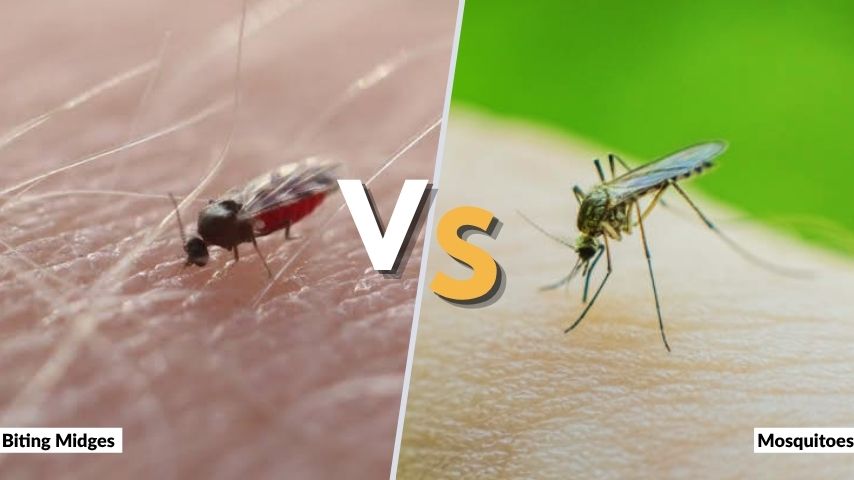
Biting midges and mosquitoes are both biting flies, but they are not the same. Mosquitoes are larger, easier to see, and often breed in standing water. Biting midges are much smaller and can breed in a wider range of moist habitats.
Midge bites may feel sharper at first, while mosquito bites often become itchy after the insect leaves. Midges also tend to bite in clusters, especially around exposed skin near clothing edges.
Because midges are so tiny, mosquito screens and some mosquito control methods may not fully protect against them.
FAQs
What attracts biting midges?
Biting midges are attracted to carbon dioxide, body heat, moisture, and exposed skin. They are also common near wet habitats where their larvae develop. Humid weather, shade, and calm air can make them more active around people and animals.
How long do biting midge bites last?
Most biting midge bites last a few days, but itching can continue longer for sensitive people. Scratching may make the irritation worse and increase the risk of infection. Keeping the area clean and avoiding scratching can help bites heal faster.
Can biting midges come indoors?
Yes, biting midges can enter homes because they are small enough to pass through many standard window screens. Fine mesh screens, closed windows, air conditioning, and indoor fans can help reduce indoor biting problems.
Are no-see-ums the same as biting midges?
Yes, no-see-ums are a common name for biting midges. The nickname comes from their tiny size, which makes them hard to see. People often notice the painful bite before they notice the insect itself.
What is the best way to get rid of biting midges?
The best approach is prevention and habitat management. Reduce damp organic areas, improve drainage, use fine mesh screens, run fans in outdoor sitting areas, and wear repellent when needed. Complete elimination is difficult, especially near marshes, beaches, or wetlands.