
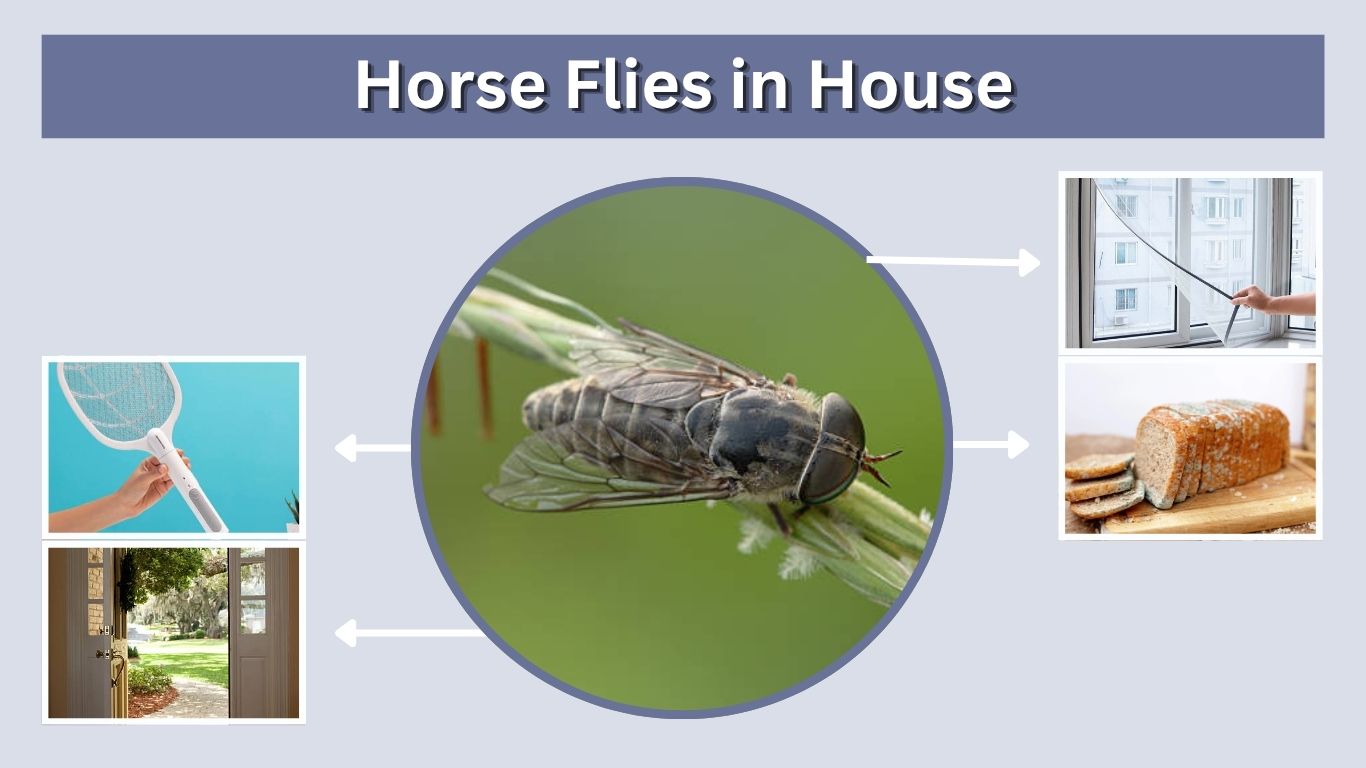
Finding horse flies in the house can be surprising because these large, fast-moving flies are mainly outdoor insects. They may enter through open doors, damaged screens, or other gaps while searching for light, warmth, or a way out. However, repeated appearances of large flies indoors can also mean they have been mistaken for blow flies or flesh flies. Knowing what attracts horse flies, where they come from, and how they differ from house flies can help you remove them and prevent future problems.
Why Are Horse Flies in My House?
Horse flies normally spend their lives outdoors, especially near livestock, wetlands, ponds, streams, and other moist environments. They do not usually establish indoor breeding colonies. When one or two appear inside, they have probably entered accidentally. If large numbers suddenly appear, careful identification becomes important because other large fly species commonly reproduce indoors around decaying organic material.
Common Reasons Horse Flies Get Inside
Possible entry points and causes include:
- Open doors and windows
- Torn window or door screens
- Gaps around window frames
- Cracks around exterior doors
- Open garage doors
- Gaps around vents
- Attraction to movement outside the home
- Nearby livestock or wildlife
- Wet areas close to the property
- Bright windows that trap flies after entry
Horse flies are strong fliers, so they can easily follow people or animals through an open doorway.
What Attracts Horse Flies to a House?
Female horse flies searching for blood meals respond strongly to movement, body heat, carbon dioxide, and visual contrast. A home itself is generally not their preferred habitat.
People, pets, horses, cattle, and other warm-blooded animals around a property can make the surrounding area more attractive.
Outdoor moisture is another important factor because horse fly larvae commonly develop in damp soil, marshy areas, pond edges, and similar wet environments.
Horse Flies in House All of a Sudden
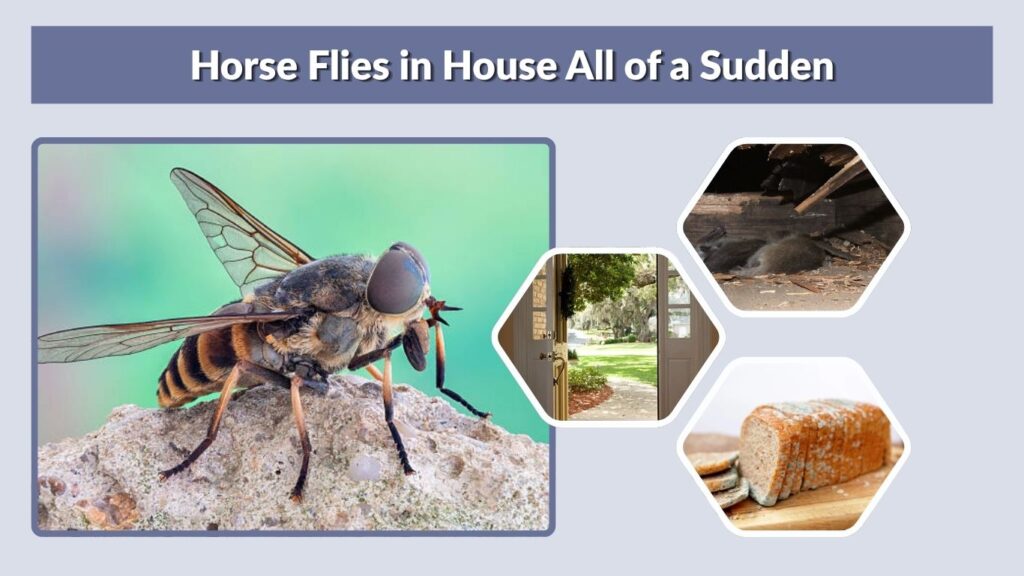
A sudden appearance of one or two large flies may simply occur because several insects entered through an open door or window. Large numbers emerging repeatedly inside a closed home require a closer look. True horse flies are unlikely to complete their life cycle inside an ordinary house, so another fly species may be responsible.
Why Are There So Many Large Flies?
If many large flies suddenly appear, check for:
- An open or damaged window screen
- Frequently opened exterior doors
- Dead animals in walls, attics, chimneys, or crawl spaces
- Rotting garbage
- Spoiled food
- Animal waste
- Compost near entrances
- Accessible pet waste outdoors
- Other decaying organic materials
A dead rodent can produce a sudden increase in blow flies or flesh flies, which are sometimes mistaken for horse flies.
Therefore, finding numerous large flies indoors does not automatically mean you have a horse fly infestation.
Horse Flies Appearing at Night
Horse flies are mainly active during daylight. If large flies repeatedly appear indoors at night, indoor lighting may simply make insects already inside more noticeable.
They may fly toward windows or lamps while trying to escape.
However, repeated nighttime appearances are another reason to confirm the species rather than assuming every large fly is a horse fly.
Horse Flies in the House During Winter
Finding an actual horse fly inside during winter is less common, particularly in colder climates.
A large fly discovered near a sunny window during winter may belong to another species that has overwintered inside the building.
Cluster flies are a common example of flies that gather inside structures during cooler months. Correct identification helps determine whether treatment is necessary.
Horse Flies vs House Flies
Horse flies and house flies are completely different types of flies. Horse flies belong to the family Tabanidae, while the common house fly is Musca domestica. Horse flies are generally larger, more robust, and more powerful fliers. Female horse flies can bite because they require blood for egg development, whereas ordinary house flies cannot bite people.
Main Differences
| Feature | Horse Fly | House Fly |
| Size | Usually large and robust | Smaller |
| Bite humans | Females can bite | No |
| Mouthparts | Cutting and sponging | Sponging |
| Common indoors | Uncommon | Very common |
| Typical habitat | Outdoor wet areas | Around homes and waste |
| Breeding indoors | Unusual | Can breed near waste |
| Flight | Fast and powerful | Quick but less powerful |
Horse flies often have noticeably large eyes, powerful bodies, and broad wings.
Are Horse Flies Just Big House Flies?
No. Horse flies are not oversized house flies.
They belong to different biological families and have different diets, breeding habits, and mouthparts. House flies feed on liquid or liquefied organic material, while female horse flies are capable of slicing skin to obtain blood.
That difference is particularly important if you are trying to identify a biting fly inside your home.
How to Get Rid of Horse Flies in the House
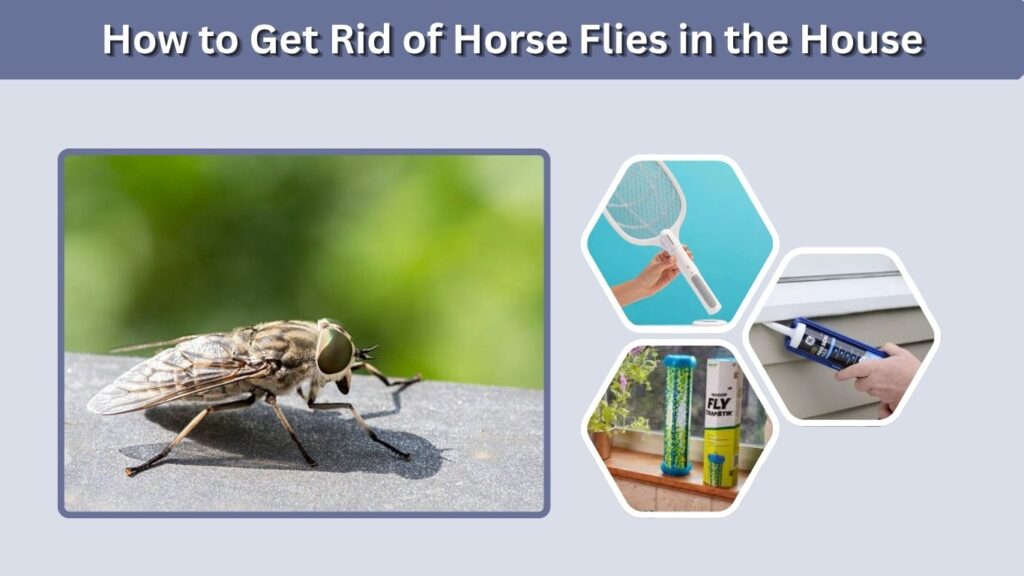
Removing horse flies indoors is usually straightforward when only a few insects are present. Because they normally do not breed inside homes, eliminating the adults and blocking entry points may solve the problem. Repeated appearances require investigating where the flies are entering and whether the insects have been correctly identified.
Ways to Remove Horse Flies Indoors
Try these methods:
- Open an exterior door or window to let isolated flies escape
- Use a fly swatter for individual insects
- Vacuum flies resting on windows
- Place sticky fly traps near problem windows
- Repair damaged screens
- Keep exterior doors closed when possible
- Seal cracks around doors and windows
- Check attic and crawl-space openings
- Remove indoor garbage promptly
- Clean food and animal waste quickly
If using a vacuum, empty the contents afterward so captured insects cannot escape.
Where to Look for Entry Points
Pay particular attention to windows because flies naturally move toward daylight after becoming trapped indoors.
Check around:
- Window screens
- Sliding doors
- Door sweeps
- Attic vents
- Exhaust vents
- Garage doors
- Utility openings
- Cracks around siding
- Chimneys
Even small structural gaps can allow flying insects to enter.
How to Keep Horse Flies Away From Your House
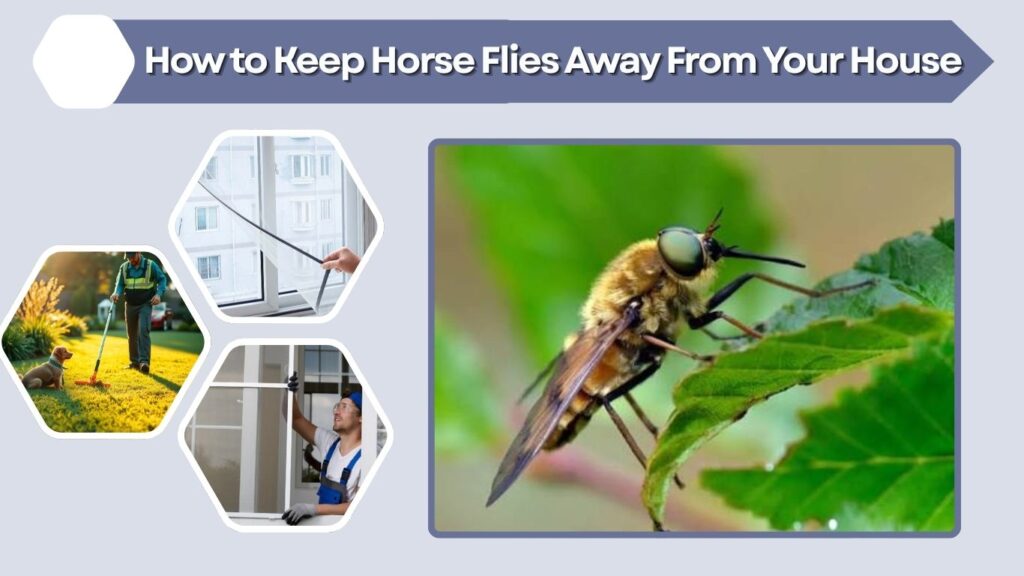
Prevention works best by reducing access to the home and making the surrounding property less attractive. Completely eliminating horse flies outdoors may be impossible in areas near livestock or wetlands, but practical changes can greatly reduce the number entering living spaces.
Horse Fly Prevention Tips
Consider these measures:
- Install tight-fitting window screens
- Repair screen holes promptly
- Add weather stripping around doors
- Keep doors closed during peak fly activity
- Use screen doors
- Clean pet waste regularly
- Keep garbage containers tightly covered
- Remove unnecessary standing water
- Maintain drainage around the property
- Keep outdoor animal areas clean
- Position compost away from doors and windows
- Use fans around patios and seating areas
Strong airflow from outdoor fans can make it more difficult for large flies to land on people.
Managing Horse Flies Around Animals
Properties containing horses, cattle, or other livestock may experience more horse fly activity.
Keep manure management consistent and reduce unnecessary wet areas around barns and paddocks. Protective fly sheets, approved animal repellents, fans, and appropriately positioned traps may help reduce biting pressure.
No single method normally eliminates every horse fly, so combining several approaches tends to work better.
Do Horse Flies Infest Houses?
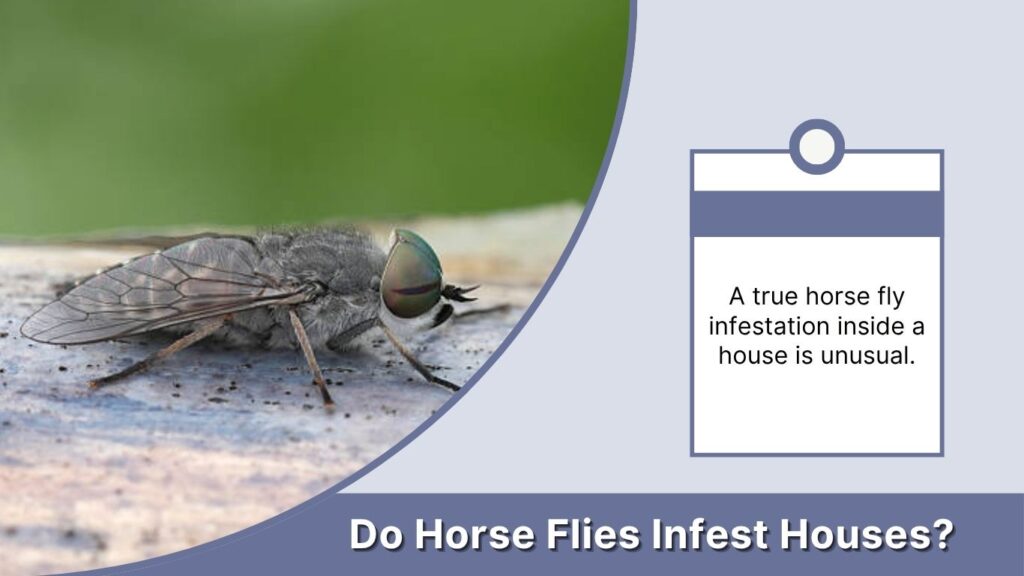
A true horse fly infestation inside a house is unusual. Adult females generally lay eggs near aquatic or moist environments, and the larvae develop in wet soil, marshes, pond margins, or similar habitats. Ordinary indoor conditions therefore do not provide the normal breeding environment needed for their development.
Where Horse Flies Actually Come From
Their life cycle typically involves outdoor habitats.
Females lay egg masses on vegetation or surfaces near water or damp soil. After hatching, larvae move into moist environments where they prey on small organisms or consume organic material depending on the species.
Eventually, they pupate and emerge as winged adults.
This is why eliminating a supposed indoor horse fly breeding site is rarely necessary. The bigger priority is confirming identification and finding entry points.
How Long Do Horse Flies Live in a House?
An adult horse fly trapped indoors does not suddenly become an indoor pest. Without suitable food, moisture, and access to its normal environment, it will eventually die or remain near windows attempting to leave.
The exact survival period varies according to species, temperature, access to sugar sources, and environmental conditions.
Why Horse Flies Keep Appearing
If you remove flies but another appears every day, consider two possibilities.
First, multiple flies may be entering through the same unnoticed opening.
Second, they may not actually be horse flies. Blow flies, flesh flies, cluster flies, and other large species can appear repeatedly indoors for very different reasons.
If dozens continue emerging despite closed windows and doors, investigate possible animal carcasses, garbage, or other sources and consider professional identification.
FAQs
Why do I suddenly have horse flies in my house?
One or more may have entered through open doors, windows, damaged screens, or vents. If many large flies suddenly appear indoors, confirm their identity because blow flies or flesh flies may be developing around decaying material.
What attracts horse flies to your house?
Horse flies are mainly attracted to warm-blooded animals, movement, heat, carbon dioxide, and outdoor habitats with moisture. They are generally not attracted to houses specifically.
Do horse flies breed inside houses?
Usually not. Their immature stages are associated primarily with moist soil, wetlands, pond margins, and similar outdoor environments.
Can horse flies bite you inside your house?
Yes. Female horse flies can bite people or animals if one becomes trapped indoors. Their bites can be painful because their mouthparts cut the skin rather than piercing it like a mosquito.
Why do horse flies keep appearing in my house?
Repeated appearances may indicate an entry point such as a torn screen or door gap. If many large flies continue appearing even when the house is sealed, they may be another fly species reproducing around a hidden source such as a dead animal or decaying organic matter.