
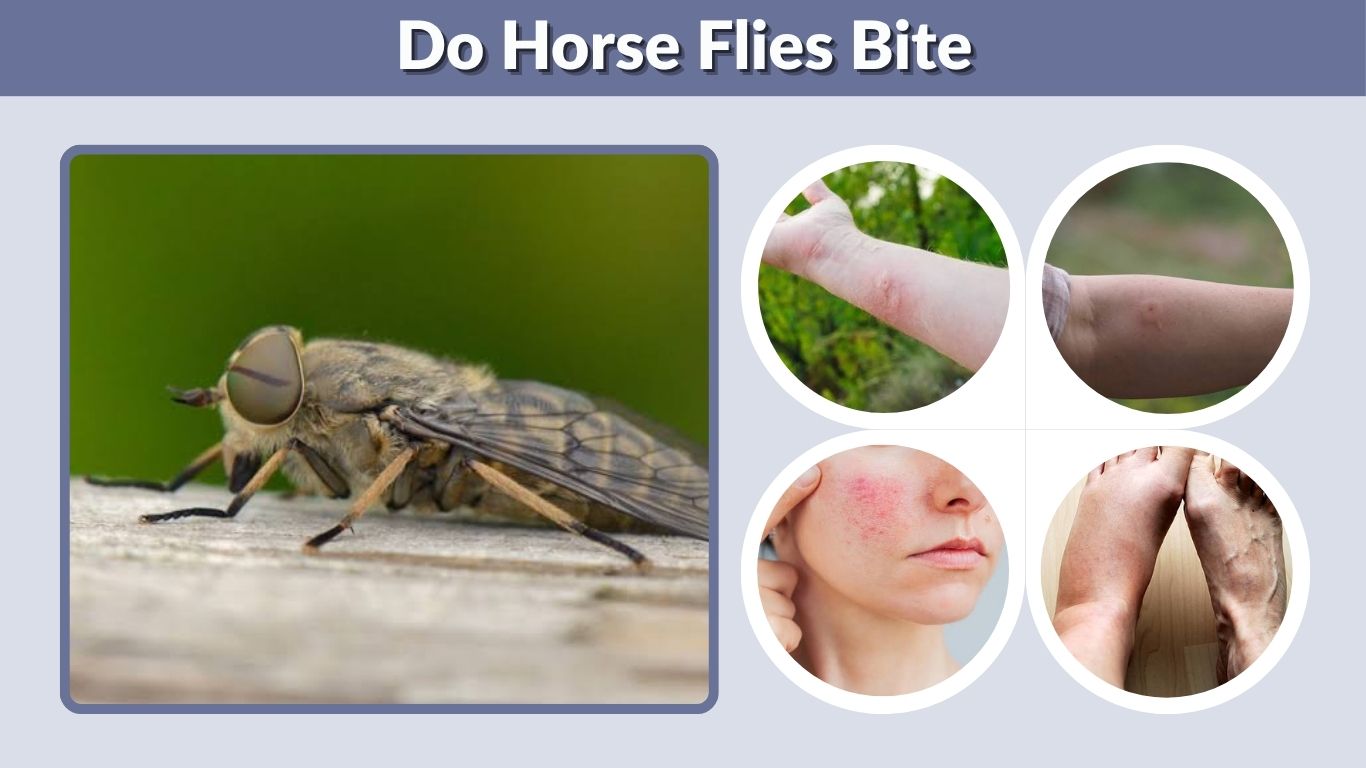
Yes, horse flies bite humans and animals, and their bites can be surprisingly painful. Unlike mosquitoes, horse flies do not gently pierce the skin. Female horse flies use sharp, blade-like mouthparts to cut the skin and then drink the blood that pools at the wound. Their bites can cause redness, swelling, itching, and soreness. Although most bites are minor, understanding why horse flies bite, what attracts them, and how to treat a bite can help you avoid unnecessary discomfort.
Do Horse Flies Bite Humans?
Yes. Female horse flies readily bite humans when they need a blood meal. They are especially active outdoors during warm weather and often occur near water, livestock, wooded areas, fields, and wetlands.
Horse flies can be persistent once they select a target, sometimes circling repeatedly before attempting to land.
Why Do Horse Flies Bite Humans?
Female horse flies need nutrients from blood to support egg development. Humans are simply one of many warm-blooded hosts they may use.
They are attracted by several signals, including:
- Body heat
- Movement
- Carbon dioxide from breathing
- Dark clothing
- Large moving objects
- Moisture and perspiration
Horse flies do not bite people because they are angry or intentionally aggressive. Feeding is part of the female’s reproductive cycle.
Do Male Horse Flies Bite?
No. Male horse flies do not bite humans or animals for blood.
Males mainly feed on:
- Flower nectar
- Plant sugars
- Other carbohydrate-rich fluids
Females also consume nectar, but they require blood before producing eggs.
How Do Horse Flies Bite?
Horse flies have mouthparts very different from those of mosquitoes. Instead of inserting a thin needle-like structure into a blood vessel, the female uses cutting mouthparts to create a small wound.
This feeding method explains why horse fly bites often hurt immediately.
What Happens During a Bite?
The process generally occurs like this:
- The horse fly lands on exposed skin.
- Its sharp mouthparts cut into the skin.
- Small blood vessels are damaged.
- Blood begins pooling around the wound.
- The fly drinks the blood using sponge-like mouthparts.
Its saliva contains substances that help keep the blood flowing long enough for the insect to feed.
Do Horse Flies Bite or Sting?
Horse flies bite; they do not sting.
They do not possess a bee- or wasp-like stinger. The pain comes from their cutting mouthparts.
This distinction is important because people sometimes describe the sudden painful sensation as a sting.
Why Do Horse Fly Bites Hurt So Much?
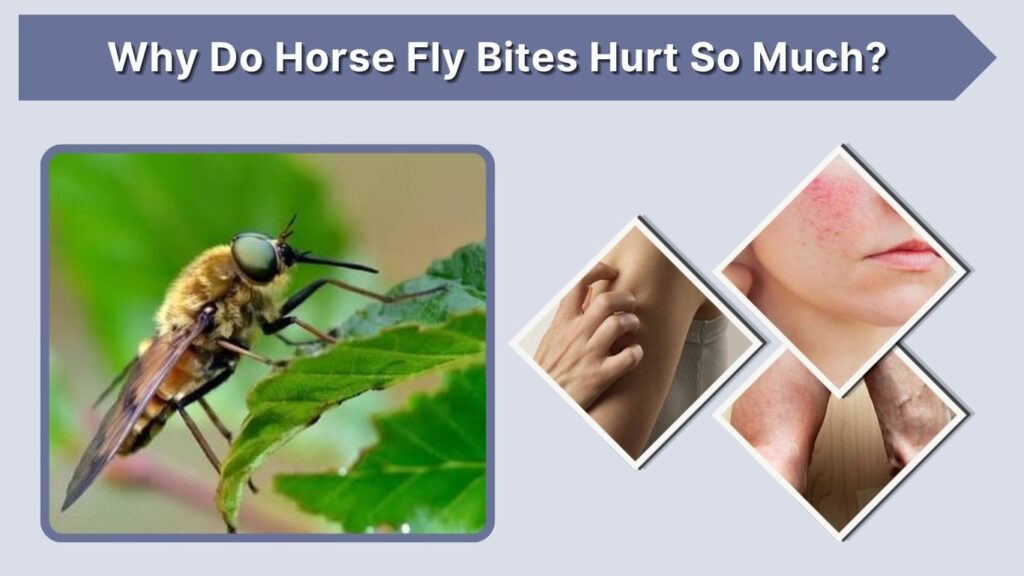
Horse fly bites hurt because the insect physically cuts the skin rather than simply puncturing it.
The wound can be larger than a mosquito bite, and the body’s immune response can add additional inflammation.
Common Symptoms
A horse fly bite may cause:
- Immediate sharp pain
- Redness
- Swelling
- Itching
- Tenderness
- A raised bump
- Minor bleeding
- Warmth around the bite
Some people develop larger localized swelling than others.
The discomfort may remain for several hours or days depending on the person’s reaction.
What Does a Horse Fly Bite Look Like?
Horse fly bites often appear as a red, swollen bump with a painful center.
Because the fly cuts the skin, you may sometimes see a tiny spot of blood shortly after being bitten.
Typical Appearance
A bite may have:
- A reddish circular area
- A raised swollen center
- A small puncture or wound
- Surrounding inflammation
- Itchy or tender skin
The appearance can vary significantly from one person to another, so a bite cannot always be identified from appearance alone.
Can Horse Flies Bite Through Clothing?
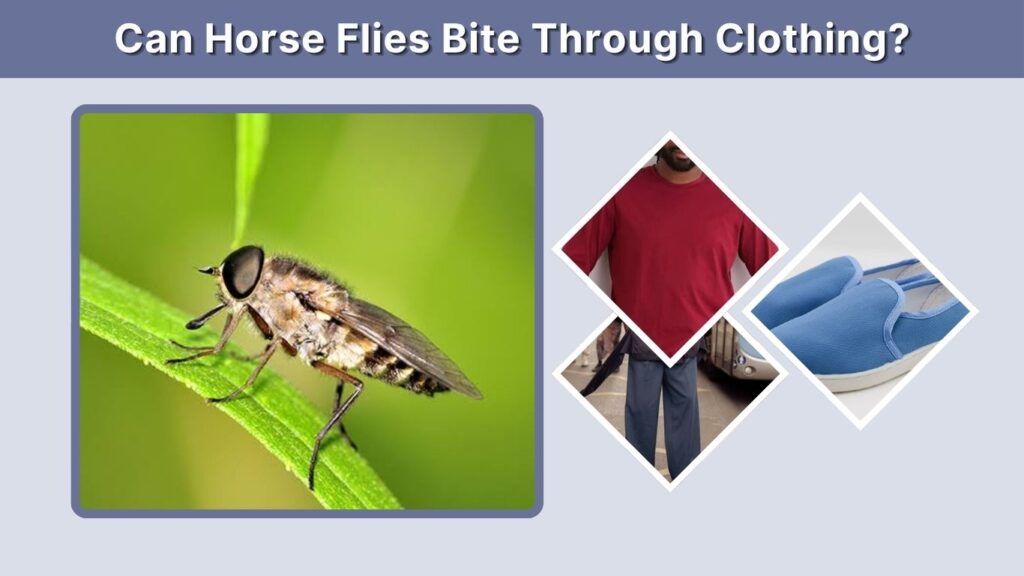
Horse flies usually prefer exposed skin, but thin or loosely woven clothing may not always provide complete protection.
Thicker clothing offers much better protection.
Clothing That Can Help
When horse flies are active, consider wearing:
- Long pants
- Long-sleeved shirts
- Thick socks
- Closed shoes
- Tightly woven fabrics
Light-colored clothing may also help because many horse flies are attracted to large dark objects.
Heavy denim or similarly thick fabric is generally harder for horse flies to bite through than thin summer clothing.
Why Do Horse Flies Bite Some People More Than Others?
Some people appear to attract more horse flies because flies respond to a combination of visual, chemical, and environmental signals.
There is no single characteristic that guarantees someone will be bitten more frequently.
Factors That May Increase Attraction
Horse flies can respond to:
- Greater body movement
- Body heat
- Carbon dioxide
- Sweat
- Dark clothing
- Large body silhouettes
- Outdoor activity near breeding habitat
This may explain why one person in a group seems to receive more attention than others.
Why Do Horse Flies Bite When You’re Wet?
People often notice horse flies around swimming pools, lakes, and beaches.
Wet skin can make a person more noticeable because of reflected light, movement, warmth, and moisture. More importantly, many horse fly species naturally occur around wetlands and water, so people swimming in those areas are already spending time near suitable horse fly habitat.
Do Horse Flies Bite Horses and Other Animals?
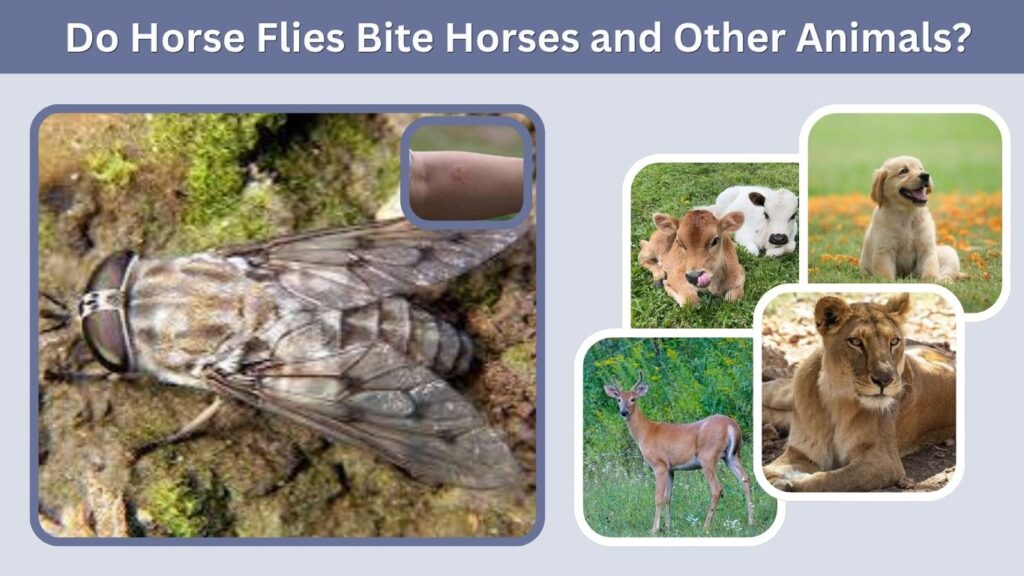
Yes. Horses and cattle are important hosts for many horse fly species.
Female horse flies may also bite:
- Cows
- Dogs
- Deer
- Other livestock
- Wildlife
- Humans
Why Do Horse Flies Bite Horses?
Horses provide a large, warm target and easy access to blood.
Repeated biting can cause horses to:
- Stamp their feet
- Twitch their skin
- Swish their tails repeatedly
- Kick
- Become restless
- Avoid feeding
Heavy horse fly activity can be particularly stressful for livestock.
Do Horse Flies Bite More Than Once?
Yes. A horse fly can bite more than once.
Unlike honey bees, horse flies do not die after biting. If interrupted during feeding, the fly may attempt to bite again, either on the same person or another nearby host.
Do Horse Flies Lay Eggs When They Bite?
No. Horse flies do not lay eggs in human skin when biting.
Female horse flies take a blood meal to obtain nutrients needed for egg production. Eggs are later deposited in suitable environments, often near water or moist habitats.
How to Treat a Horse Fly Bite
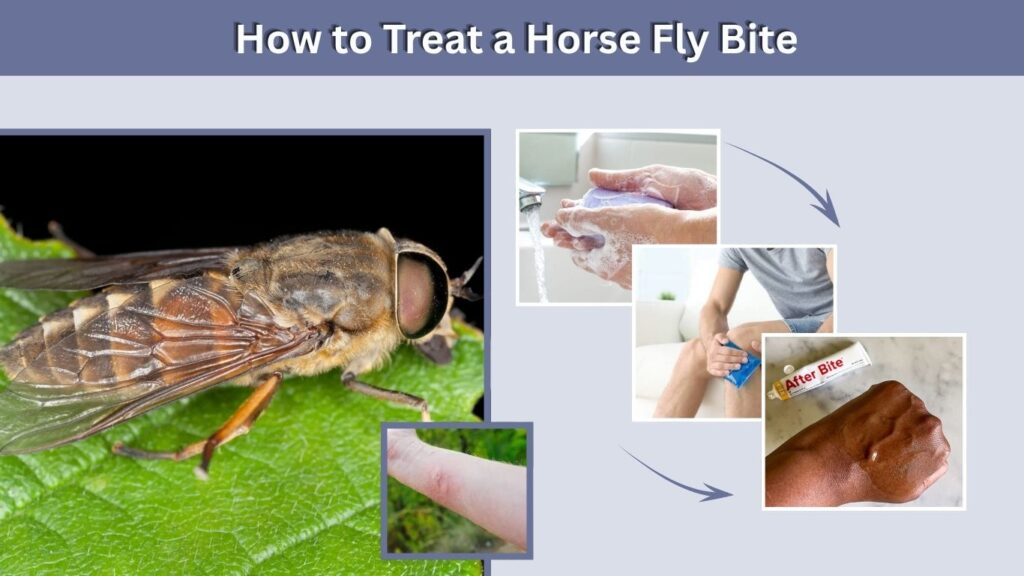
Most horse fly bites can be treated at home with basic first aid.
The goal is to clean the wound, reduce swelling, and avoid scratching.
Basic Treatment
Follow these steps:
- Wash the area with soap and clean water.
- Apply a cold compress for 10–15 minutes.
- Keep the bite clean and dry.
- Avoid scratching.
- Consider an appropriate over-the-counter anti-itch product if needed.
Scratching can damage the skin and increase the risk of secondary infection.
When to Seek Medical Help
Seek medical care if you develop:
- Severe or rapidly increasing swelling
- Difficulty breathing
- Dizziness
- Swelling of the lips, face, or throat
- Signs of infection
- Severe pain that continues worsening
- Widespread hives
Serious allergic reactions are uncommon but require prompt attention.
How to Prevent Horse Fly Bites
Avoiding bites is easier than treating them afterward. Horse flies are strongest during warm daylight hours, particularly in areas where livestock and wetlands are nearby.
Ways to Reduce Bites
You can lower your risk by:
- Wearing long sleeves and pants
- Choosing light-colored clothing
- Using an appropriate insect repellent
- Using outdoor fans
- Avoiding heavily infested areas when possible
- Using fly sheets on horses
- Installing horse fly traps
- Keeping animal areas clean
Outdoor fans can be particularly helpful around patios because strong airflow makes landing more difficult.
FAQs
1. Do horse flies bite or sting?
Horse flies bite rather than sting. Female horse flies use sharp mouthparts to cut the skin and drink blood.
2. Why do horse flies bite people?
Female horse flies need blood nutrients to help develop their eggs. Humans are one of several warm-blooded hosts they may bite.
3. Do horse fly bites itch?
Yes. A bite may become itchy, red, swollen, and tender as the body’s immune system reacts to the injury and the fly’s saliva.
4. Can horse flies bite through jeans?
Thick denim provides strong protection and is difficult for most horse flies to penetrate. Thin or loosely woven clothing provides less protection.
5. Do horse flies die after biting you?
No. Horse flies can survive after feeding and may bite multiple times throughout their lives. They do not leave a stinger behind like honey bees.