
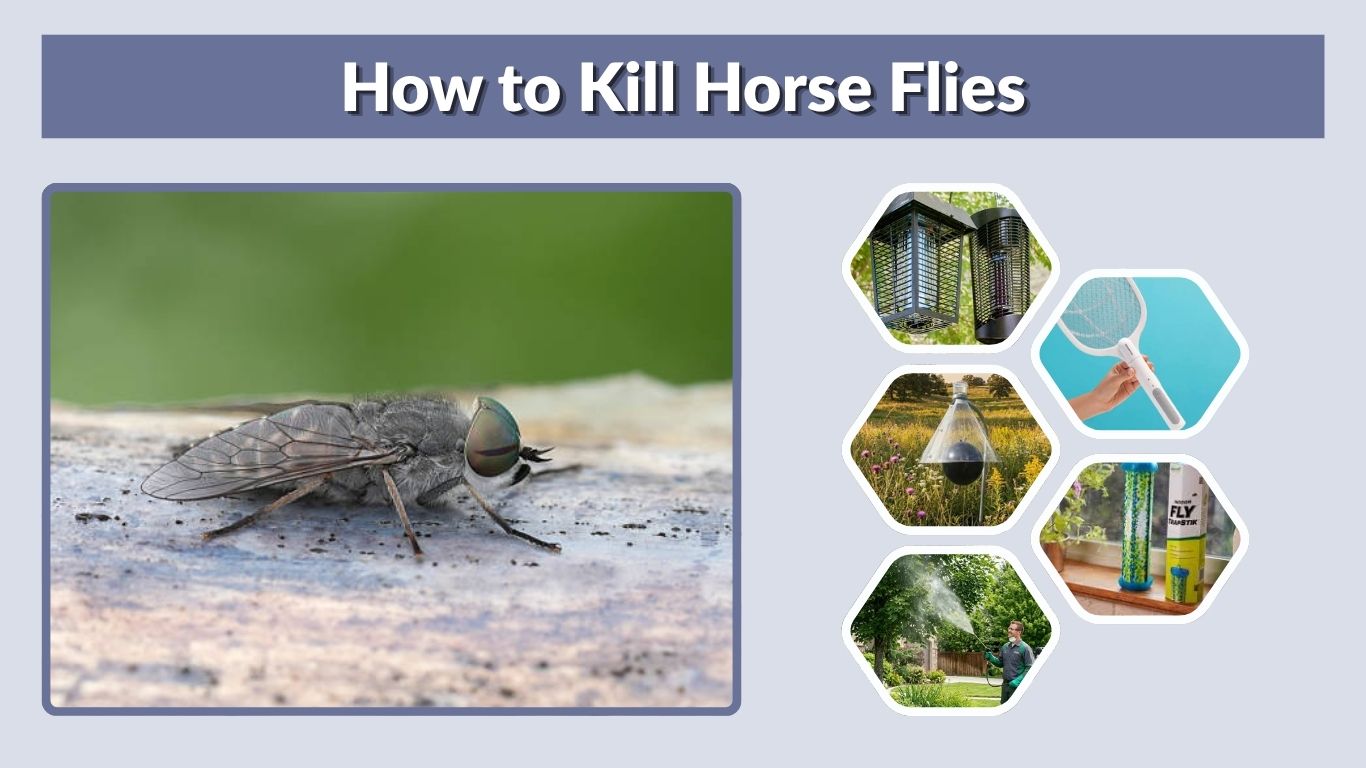
Horse flies are large, persistent biting insects that can make yards, barns, pools, and outdoor gatherings uncomfortable. Female horse flies feed on blood and can deliver painful bites to people, horses, cattle, and other animals. Because they are strong, fast fliers, eliminating them can be harder than controlling ordinary house flies. The best approach combines traps, physical removal, sanitation, barriers, and properly labeled insect-control products. Knowing what kills horse flies and what attracts them can help you reduce their numbers more effectively.
What Kills Horse Flies?
Horse flies can be killed using physical methods, traps, and insecticides labeled for biting flies. However, treating individual adults is only part of the solution. Horse flies often develop in wetlands, muddy soil, pond edges, and other moist outdoor habitats, so preventing bites and reducing adult activity around your property is usually more practical than trying to eliminate every fly.
Effective Ways to Kill Horse Flies
Common control options include:
- Swatting individual flies
- Vacuuming flies indoors
- Horse fly traps
- Sticky traps in suitable locations
- Outdoor biting-fly traps
- Electric bug zappers
- Insecticides specifically labeled for horse flies
- Permethrin-based products when labeled for the intended use
- Residual treatments applied according to label directions
- Professional pest-control treatments for severe problems
Always follow the product label, especially when applying pesticides around people, pets, livestock, food areas, or water.
What Kills Horse Flies Instantly?
For an individual horse fly, direct physical removal is usually the fastest option. A fly swatter or vacuum can eliminate one indoors almost immediately.
Certain aerosol insecticides labeled for flying insects may also kill horse flies after direct contact. Their effectiveness depends on the active ingredient, application, and whether horse flies are included on the product label.
Avoid spraying random household chemicals such as bleach or strong cleaners at flies. These products are not designed for airborne pest control and may create unnecessary exposure risks.
How to Kill Horse Flies Around Your House
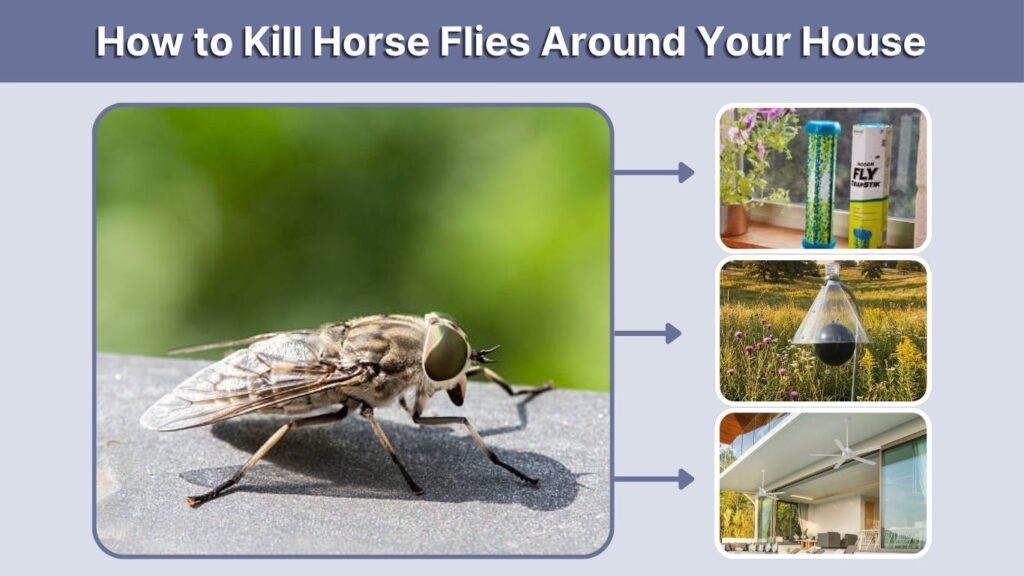
Horse flies generally originate outdoors, so controlling them around a home requires reducing places where adults gather and preventing them from reaching people. They may be especially noticeable near animals, swimming pools, wooded property, ponds, and damp areas. Unlike house flies, horse flies usually do not reproduce in household garbage or kitchen waste.
Best Methods Around the Home
Try a combination of these approaches:
- Install horse fly traps away from seating areas
- Use outdoor fans around patios
- Keep doors and windows screened
- Repair damaged screen mesh
- Remove standing water where practical
- Improve drainage around wet areas
- Keep animal waste cleaned up
- Use tightly covered garbage containers
- Mow excessively tall vegetation near activity areas
- Place traps between suspected fly habitat and your home
Fans are particularly helpful around decks and patios because horse flies have difficulty landing in strong, continuous airflow.
Where to Put Horse Fly Traps
Trap placement can greatly affect results.
Place traps in sunny, open areas where horse flies are active, preferably some distance away from doors, patios, swimming areas, and places where people sit. The goal is to draw flies away rather than toward you.
Properties with horses or cattle may benefit from placing traps between animal areas and nearby moist habitats where horse flies are likely originating.
How to Kill Horse Flies in the House
Finding a horse fly indoors usually means it entered accidentally through a door, window, vent, or damaged screen. Because horse flies rarely establish normal breeding populations indoors, removing individual adults and sealing entry points is generally enough.
Indoor Horse Fly Control
For horse flies inside the house:
- Use a fly swatter
- Vacuum flies from windows
- Use sticky traps near problem windows
- Open an exterior window to allow isolated flies to escape
- Repair damaged screens
- Seal gaps around windows and doors
- Keep exterior doors closed
- Check vents and attic openings
If dozens of large flies suddenly appear indoors, make sure they are actually horse flies. Blow flies and flesh flies can emerge around dead rodents or other decaying material and are frequently mistaken for horse flies.
Can Fly Spray Kill Horse Flies?
Some household flying-insect sprays can kill horse flies when the label includes flies or biting flies. A direct spray is generally more effective than simply spraying the room.
Never use more pesticide than the label recommends. More product does not necessarily produce better control and can unnecessarily increase exposure for people and pets.
How to Kill Horse Flies Outside
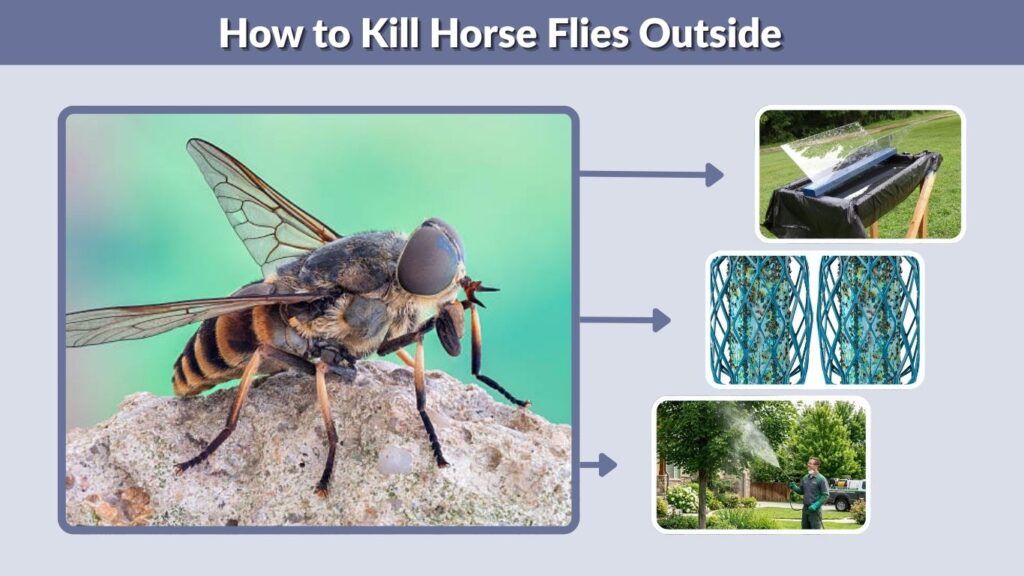
Outdoor horse fly control is more difficult because adults are powerful fliers and may travel considerable distances. Treating an entire property with insecticide may provide only temporary relief if new horse flies continue arriving from surrounding habitat. Physical barriers, traps, repellents, and environmental management often provide more sustainable protection.
Outdoor Control Methods
Useful approaches include:
- Horse fly traps
- Moving-object traps designed for biting flies
- Outdoor fans
- Protective clothing
- Animal fly sheets
- Approved repellents
- Targeted insecticide treatments
- Vegetation management
- Improved drainage
- Professional pest management
Horse fly traps frequently use dark moving objects because horse flies are attracted to large, warm-looking shapes associated with potential hosts.
Horse Flies Around a Pool
Horse flies often become frustrating around swimming pools because water, movement, and people can create an attractive environment.
To reduce them:
- Run large outdoor fans near seating areas
- Place traps away from the pool
- Keep surrounding grass trimmed
- Remove unnecessary standing water nearby
- Cover drinks and food
- Use personal repellents labeled for biting flies
- Avoid positioning traps directly beside swimmers
Remember that eliminating the swimming pool itself is not necessary. Horse fly larvae typically develop in natural or muddy wet habitats rather than properly maintained pool water.
Do Bug Zappers Kill Horse Flies?
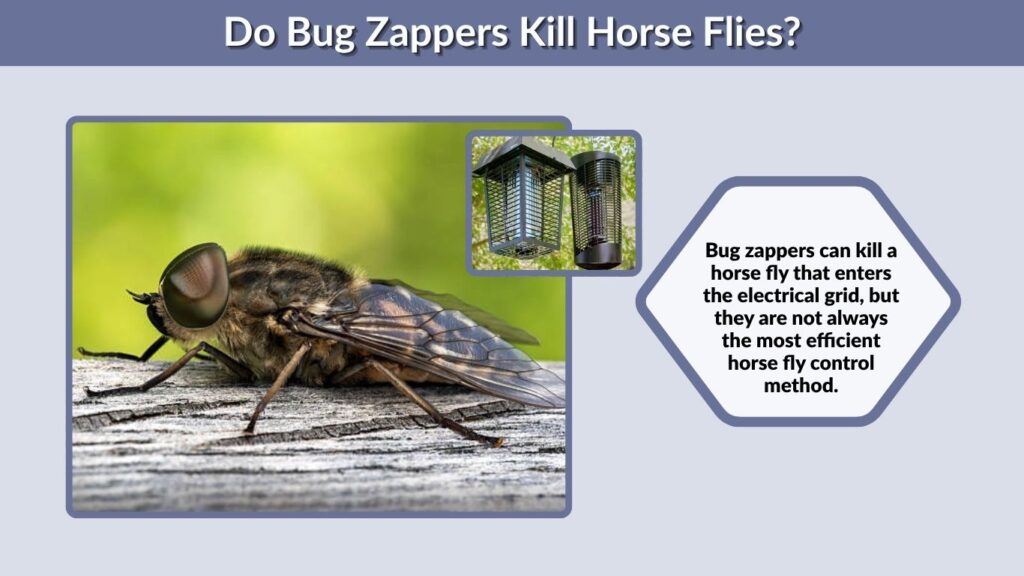
Bug zappers can kill a horse fly that enters the electrical grid, but they are not always the most efficient horse fly control method. Horse flies rely strongly on movement, contrast, heat, and carbon dioxide when locating hosts, so ultraviolet light alone may not attract them as effectively as it attracts some other insects.
Are Horse Fly Traps Better?
Specialized horse fly traps can often be more targeted because they imitate the appearance or movement of a large animal.
Some trap designs use:
- Large dark balls
- Moving objects
- Funnel entrances
- Reflective surfaces
- Visual contrasts
A horse fly investigates what appears to be a potential host and then becomes trapped.
For larger properties, using multiple strategically positioned traps may provide better results than relying on one device.
Do Permethrin and Other Insecticides Kill Horse Flies?
Permethrin and some other pyrethroid insecticides can control horse flies when formulated and labeled for the specific application. Such products are commonly found in certain livestock sprays, premise treatments, and biting-fly products. However, formulations differ significantly, so a product appropriate for a barn wall may not be appropriate for direct animal application.
Using Insecticides Safely
Before using any chemical treatment:
- Confirm horse flies are listed on the label
- Follow dilution instructions exactly
- Use only on approved surfaces
- Check whether application to animals is permitted
- Keep products away from food
- Protect ponds and aquatic environments
- Observe re-entry or drying instructions
- Store pesticides securely
- Never combine products unless the label permits it
Do not substitute wasp spray for horse fly control. Wasp sprays are formulated and labeled for specific uses, and using pesticides in ways not directed by the label can be unsafe.
Homemade Horse Fly Control
Homemade approaches may help trap or discourage a few flies, but claims that vinegar, bleach, dish soap, or other household ingredients instantly solve major horse fly problems are often exaggerated. Horse flies are strong outdoor insects, so specialized traps and environmental management usually provide more reliable results.
Simple Non-Chemical Methods
Safer options include:
- Swatting individual flies
- Using outdoor fans
- Installing screens
- Using commercial reusable traps
- Wearing long sleeves and pants
- Keeping livestock areas clean
- Maintaining drainage
- Separating traps from human activity areas
These methods reduce dependence on pesticide sprays and can be combined with other treatments when horse fly pressure is high.
Why Are Horse Flies So Hard to Kill?
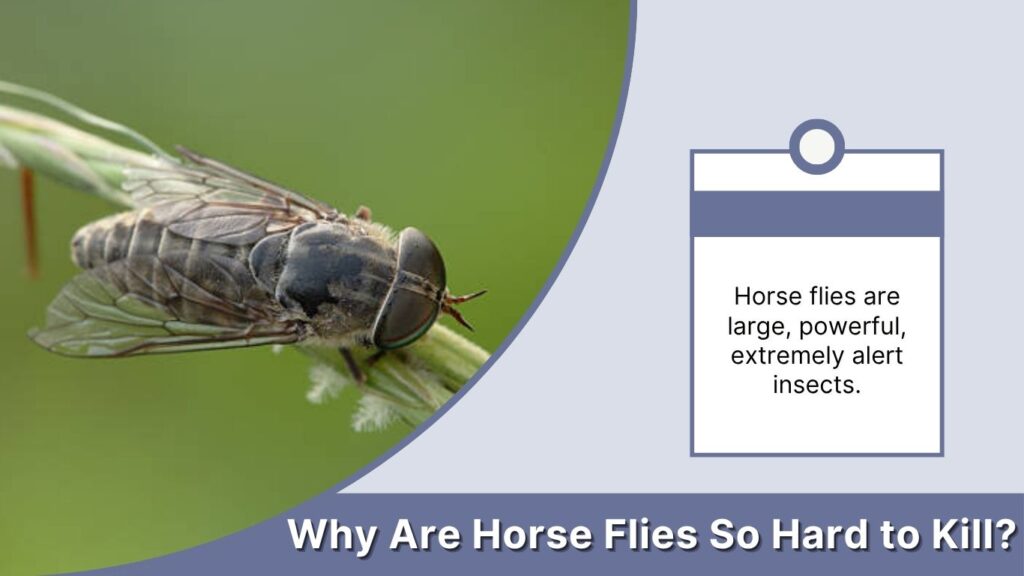
Horse flies are large, powerful, extremely alert insects. Their large compound eyes detect movement quickly, allowing them to escape approaching hands or swatters. They can also arrive from habitats beyond your property, meaning killing several adults does not necessarily stop new ones from appearing.
The Better Long-Term Strategy
Long-term control focuses on reducing contact rather than trying to exterminate an entire local population.
Use traps to intercept adults, protect people and livestock with barriers or approved repellents, improve drainage where possible, and reduce easy access to buildings.
If horse fly numbers are extreme around livestock or commercial properties, a pest-control or agricultural professional can help develop a broader management program.
Can Horse Flies Kill You or a Horse?
A typical horse fly bite is painful but is not normally life-threatening to a healthy person. The main immediate concerns are pain, swelling, irritation, and secondary infection from scratching.
Horse flies can also mechanically transmit certain pathogens between animals. Heavy biting pressure can stress livestock and interfere with feeding and normal behavior.
Individual horse flies do not normally kill horses, but large populations can cause significant irritation and blood loss and may contribute to disease transmission.
FAQs
What is the best way to kill horse flies?
For individual flies, swatting or vacuuming is fastest. For persistent outdoor populations, specialized horse fly traps combined with barriers, fans, and property management usually provide better long-term control.
Does permethrin kill horse flies?
Yes, some permethrin products can kill or repel horse flies. Use only products specifically labeled for the animal, structure, or location you intend to treat.
Will a bug zapper kill horse flies?
A bug zapper can kill horse flies that enter it, but it may not attract them as effectively as specialized visual horse fly traps.
Does vinegar kill horse flies?
Vinegar is not a reliable solution for controlling significant horse fly populations. Specialized traps, physical removal, barriers, and appropriately labeled pest-control products generally work better.
Should you kill horse flies?
Controlling horse flies is reasonable when they are repeatedly biting people or livestock or entering buildings. Because they also have ecological roles, targeted control around problem areas is generally preferable to unnecessary broad insecticide treatment.