
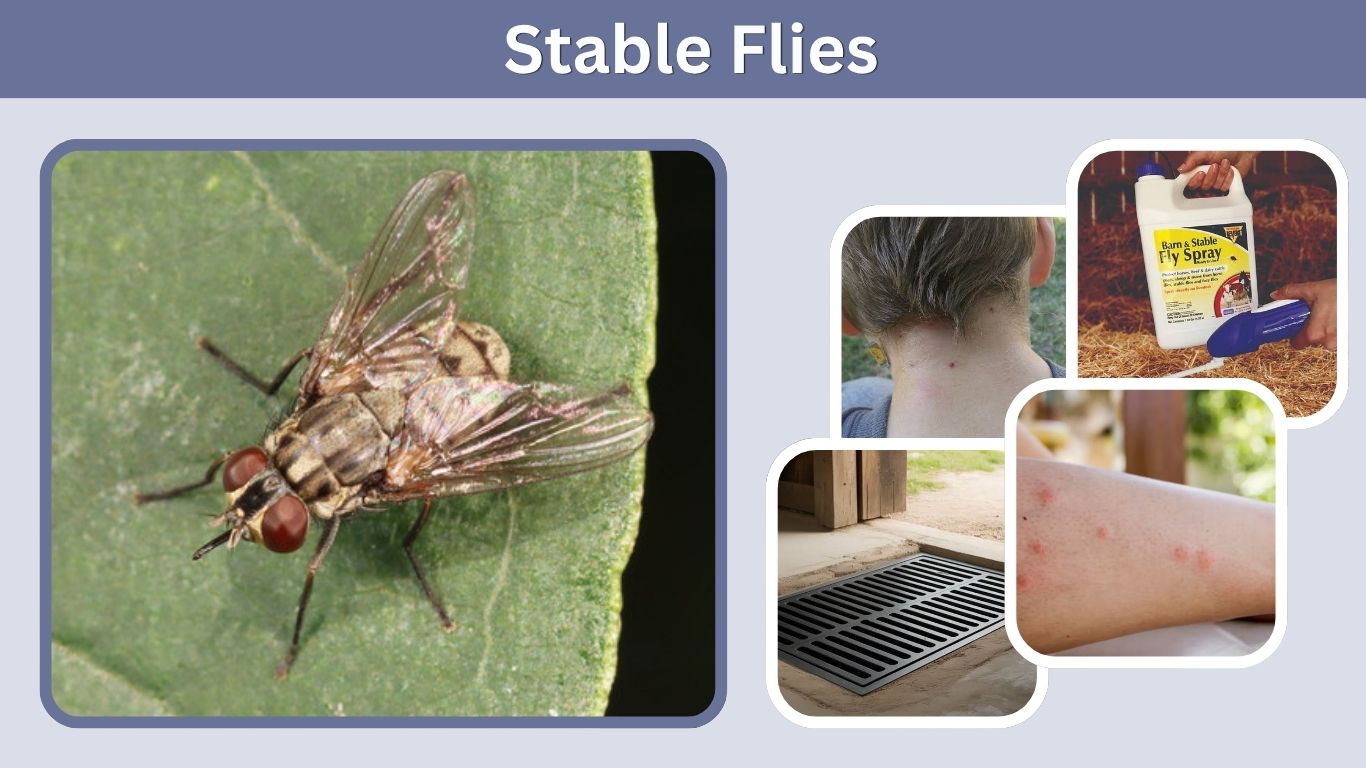
Stable flies are blood-feeding insects commonly found around farms, horse stables, livestock areas, beaches, and places where damp organic material accumulates. Although they resemble ordinary house flies, stable flies have piercing mouthparts and can deliver painful bites to humans, horses, cattle, dogs, and other animals. Both males and females feed on blood. Understanding how to identify stable flies, where they breed, how their bites differ from other flies, and which control methods work best can make infestations much easier to manage.
What Are Stable Flies?
The stable fly, Stomoxys calcitrans, is a widespread biting fly in the family Muscidae. It resembles a house fly but behaves very differently because adults require blood meals. Stable flies are especially troublesome around livestock facilities, although they can also become abundant in residential, recreational, and coastal areas when suitable breeding material is available.
Stable Fly Identification
- Scientific name: Stomoxys calcitrans
- Size: Usually about 5–8 mm long
- Color: Gray body with darker markings
- Abdomen: Often shows a checkered or spotted pattern
- Mouthpart: Long, rigid proboscis projecting forward from the head
- Wings: Clear and held partly open when resting
- Legs: Dark and relatively slender
- Behavior: Frequently targets the lower legs and ankles of people and animals
The forward-pointing proboscis is one of the easiest ways to distinguish a stable fly from a house fly.
Stable Fly Bite and Symptoms
Stable flies are persistent blood feeders, and both sexes bite. Their mouthparts pierce the skin rather than simply sponging up liquids like those of house flies. A bite can feel immediately sharp or burning, which is why stable flies are particularly irritating around barns, beaches, and outdoor work areas.
What Does a Stable Fly Bite Feel Like?
A stable fly bite often produces:
- Sudden sharp pain
- A small red bump
- Mild swelling
- Itching or burning
- Localized tenderness
- A small puncture mark in the center
The flies commonly bite ankles, lower legs, and areas not protected by clothing. Animals may react by stomping their feet, flicking their tails, twitching their skin, or constantly moving to escape the flies.
Do Stable Fly Bites Itch?
Yes. Stable fly bites can become itchy after the initial painful sensation subsides. Reactions vary between individuals, but most uncomplicated bites improve without special treatment.
Cleaning the area with soap and water and using a cold compress can help reduce discomfort. Seek medical care if severe swelling, signs of infection, or a serious allergic reaction develops.
Do Stable Flies Bite Humans?
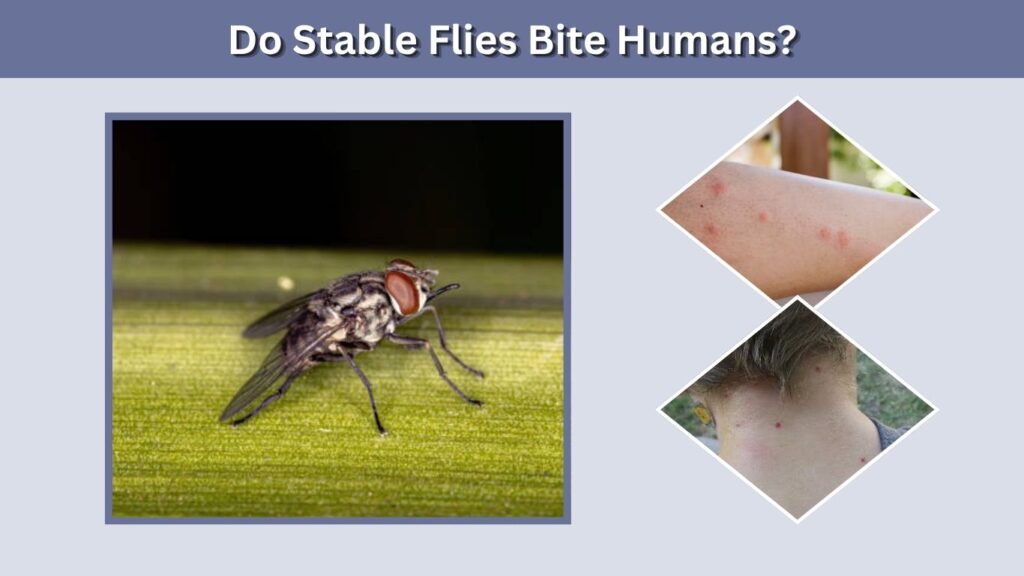
Stable flies readily bite humans when they are present in sufficient numbers. They do not need horses or cattle to survive and may attack people along beaches, campgrounds, farms, yards, and other outdoor environments.
Their preference for lower legs is distinctive, although they can bite other exposed areas.
Are Stable Fly Bites Dangerous?
For most people, a stable fly bite is painful rather than dangerous. The greater impact is often caused by repeated biting.
Large populations can also seriously stress livestock. Animals may spend more time trying to avoid flies and less time feeding or resting, potentially affecting growth, milk production, and general condition.
Stable flies are capable of mechanically carrying some disease-causing organisms between animals, although their role varies by pathogen and region.
Stable Fly vs House Fly
Stable flies and house flies are similar enough to be confused at first glance. The most important difference is their feeding behavior. Stable flies bite and drink blood, while ordinary house flies cannot pierce human skin.
House Fly vs Stable Fly
- Stable fly: Has a rigid forward-pointing proboscis
- House fly: Has soft sponging mouthparts
- Stable fly: Both males and females take blood meals
- House fly: Feeds on liquid and decomposing organic material
- Stable fly: Often bites legs and ankles
- House fly: Does not bite
- Stable fly: Common around wet plant waste and livestock bedding
- House fly: Common around garbage, manure, and food waste
If a fly that looks like a house fly is repeatedly biting your ankles, a stable fly is a strong possibility.
Stable Fly vs Horse Fly
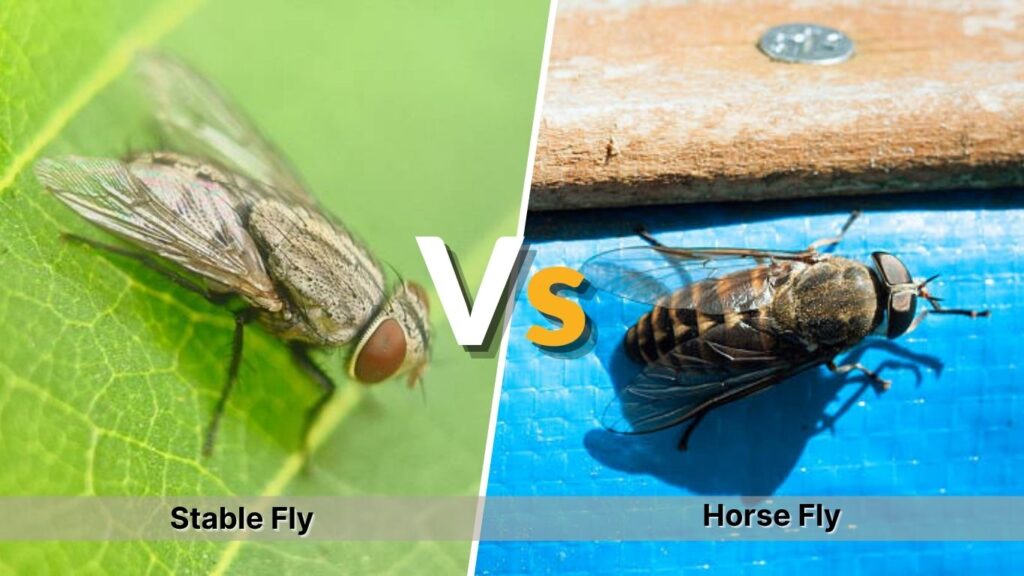
Stable flies and horse flies both take blood meals, but they differ considerably in size, appearance, and biting behavior. Horse flies are generally much larger and belong to a different fly family.
Horse Fly vs Stable Fly
Stable flies are relatively small and house-fly-like, while horse flies are usually larger, heavier-bodied, and have conspicuous eyes. Stable flies use a narrow piercing proboscis, whereas female horse flies cut the skin with blade-like mouthparts and then consume the blood.
Stable flies often attack repeatedly around the legs. Horse flies may bite many parts of the body and generally produce a larger, more noticeable wound.
Stable Fly vs Deer Fly and Black Fly
Several biting flies may occur in the same outdoor environments, which can make identification confusing. Size, body shape, and where they bite can help separate them.
Key Differences
- Stable fly: Small, gray, house-fly-like insect that frequently attacks ankles
- Deer fly: Larger, often patterned wings and brightly colored eyes
- Black fly: Much smaller, hump-backed fly frequently associated with flowing water
- Horse fly: Large, powerful fly with large prominent eyes
Stable flies breed mainly in moist decaying organic matter rather than in flowing water, making their breeding sites very different from those of black flies.
Stable Fly Lifecycle and Breeding Areas
Stable flies develop through egg, larval, pupal, and adult stages. Warm conditions can allow the entire lifecycle to progress rapidly, causing populations to increase dramatically when wet organic waste is left undisturbed.
Where Stable Flies Breed
Common breeding materials include:
- Wet straw
- Soiled animal bedding
- Hay mixed with manure and urine
- Decaying grass clippings
- Silage residues
- Moist livestock feed
- Rotting vegetation
- Wet compost
- Plant debris washed up on shorelines
Fresh manure alone is generally less attractive than manure mixed with damp plant material.
How Long Do Stable Flies Live?
Adult stable flies may survive for several weeks under favorable conditions. Females lay batches of eggs in moist decomposing organic matter, and multiple generations can develop during warm seasons.
Because new adults can appear quickly, removing breeding material is often more effective than simply killing the flies already present.
How to Get Rid of Stable Flies
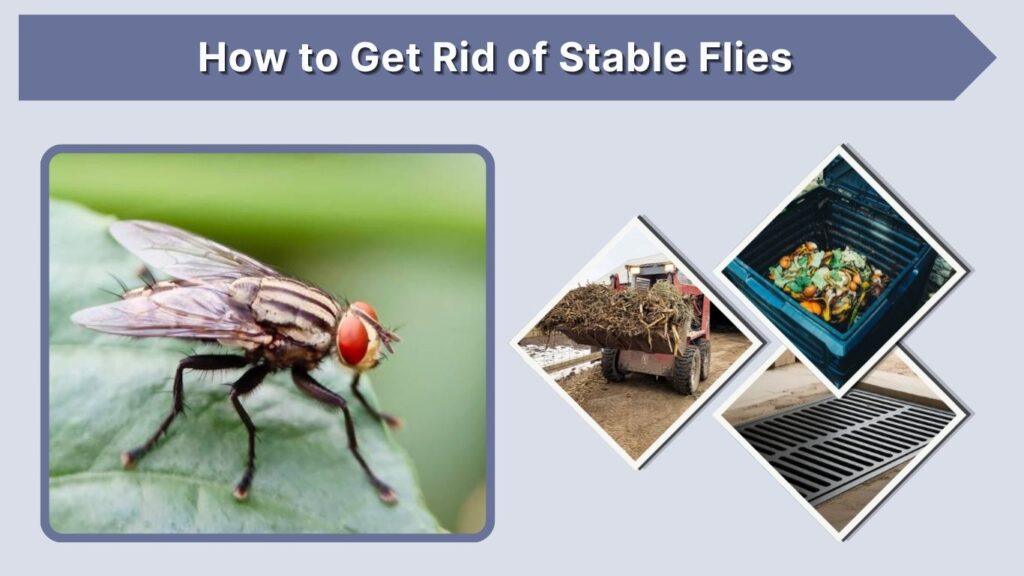
Successful stable fly control requires more than spraying adult flies. The most important step is eliminating the wet organic matter where larvae develop. Without breeding-site management, new flies can continuously replace those killed by traps or insecticides.
Best Stable Fly Control Methods
- Remove wet bedding and manure frequently
- Clean spilled feed and silage
- Prevent water from collecting around barns
- Dispose of rotting hay and grass clippings
- Keep compost properly managed
- Improve drainage around animal areas
- Use appropriate stable fly traps
- Install screens where practical
- Use fans in livestock resting areas
- Apply approved repellents or insecticides according to their labels
Sanitation should be the foundation of any long-term control program.
Stable Fly Traps
Stable flies are attracted to certain visual targets, making specialized traps useful around barns, pastures, homes, and other outdoor areas. Traps can reduce adult numbers but cannot compensate for uncontrolled breeding sites.
Using Stable Fly Traps Effectively
Place traps in sunny locations where flies are active but away from areas where animals or people may accidentally contact sticky surfaces. Multiple traps may be necessary around large properties.
Monitor them regularly and replace them when their catching surfaces become covered with insects, dirt, or dust.
Homemade traps may capture some stable flies, but purpose-designed traps generally make it easier to target their visual attraction behavior.
Stable Fly Repellent and Fly Spray
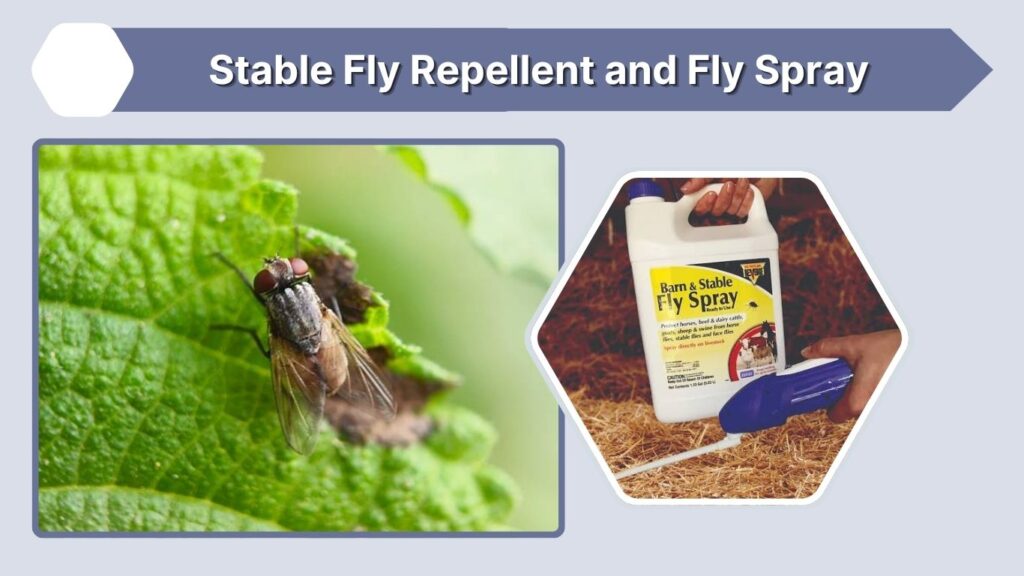
Repellents can provide temporary protection for people and animals, but their effectiveness varies with the product, sweating, weather, and fly pressure. Always choose a product specifically labeled for its intended species and use.
Reducing Stable Fly Bites
For people, long pants, socks, and closed footwear provide a useful physical barrier because stable flies commonly attack lower legs.
For horses and livestock, management may include approved fly repellents, protective coverings, screens, fans, traps, and environmental sanitation. Fly spray alone rarely solves a large stable fly problem if breeding material remains nearby.
Stable Flies Around Horse Stables
Horse facilities can provide ideal breeding conditions when urine-soaked bedding, wet straw, manure, and spilled feed accumulate. Stable flies may become especially troublesome during warm weather.
Removing dirty bedding frequently, keeping storage areas dry, maintaining drainage, and cleaning around feeding areas can substantially reduce fly production.
Animals showing constant leg stomping, tail swishing, or attempts to avoid certain areas may be experiencing heavy stable fly pressure.
FAQs
Do Stable Flies Bite?
Yes. Both male and female stable flies bite humans and animals to obtain blood. Their bites are usually immediately painful.
What Is the Best Way to Control Stable Flies?
Removing wet, decaying organic material is the most effective long-term approach. Traps, repellents, fans, and approved insecticides can provide additional control.
Are Stable Flies and Horse Flies the Same?
No. Stable flies are smaller and resemble house flies, whereas horse flies are considerably larger and belong to a different family.
Where Do Stable Flies Come From?
They usually develop in damp mixtures of decaying vegetation, manure, bedding, spilled feed, grass clippings, or similar organic materials.
Can Stable Flies Carry Disease?
Stable flies can mechanically transmit some pathogens among animals, but their importance varies by disease and location. Their most common problems are painful bites, irritation, and stress to livestock.