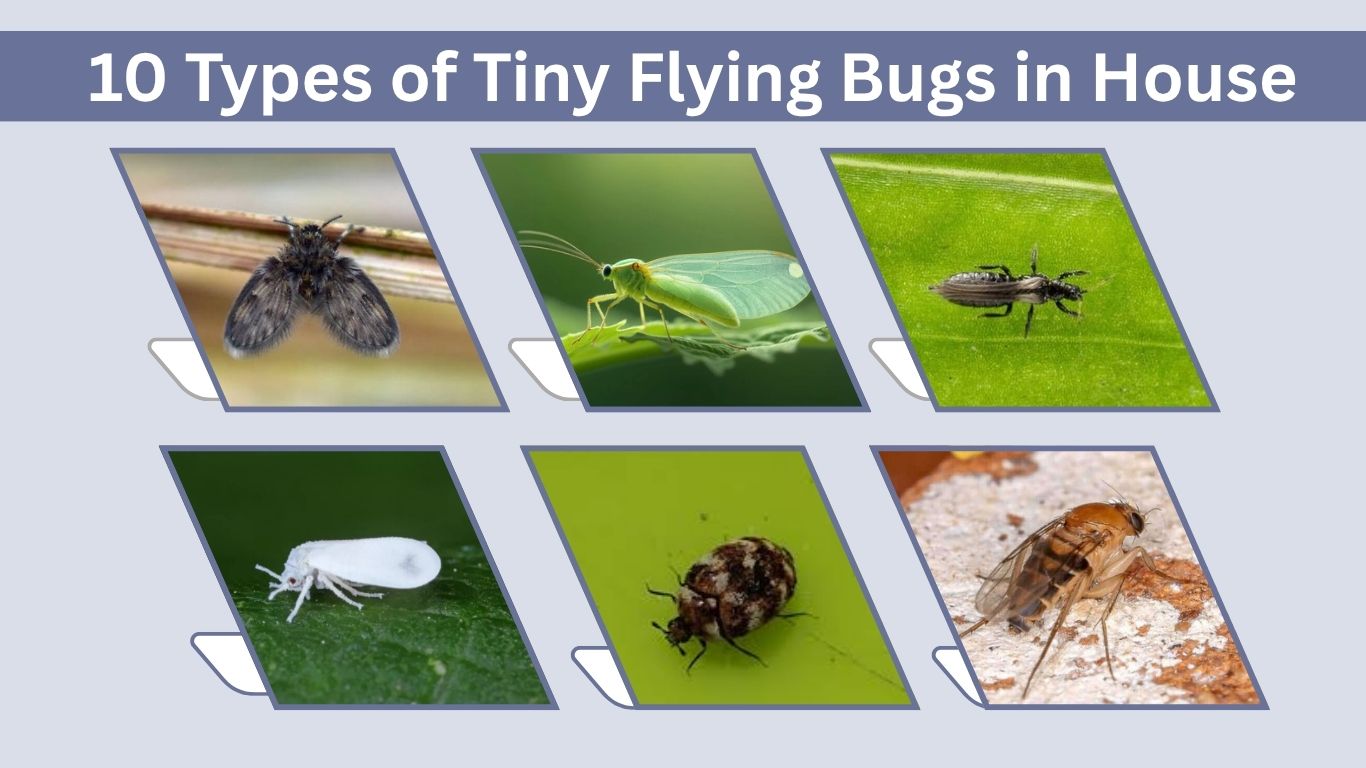
Finding tiny flying bugs in the house can be confusing because many indoor pests look similar at first glance. These small insects may be fungus gnats, fruit flies, drain flies, phorid flies, carpet beetles, whiteflies, or other common household bugs. Some gather around plants, while others prefer drains, food, moisture, or light. This guide covers 10 common small flying bugs in the house, how to identify each one, what attracts them indoors, whether they are harmful, and the best ways to get rid of them.
1. Fungus Gnats
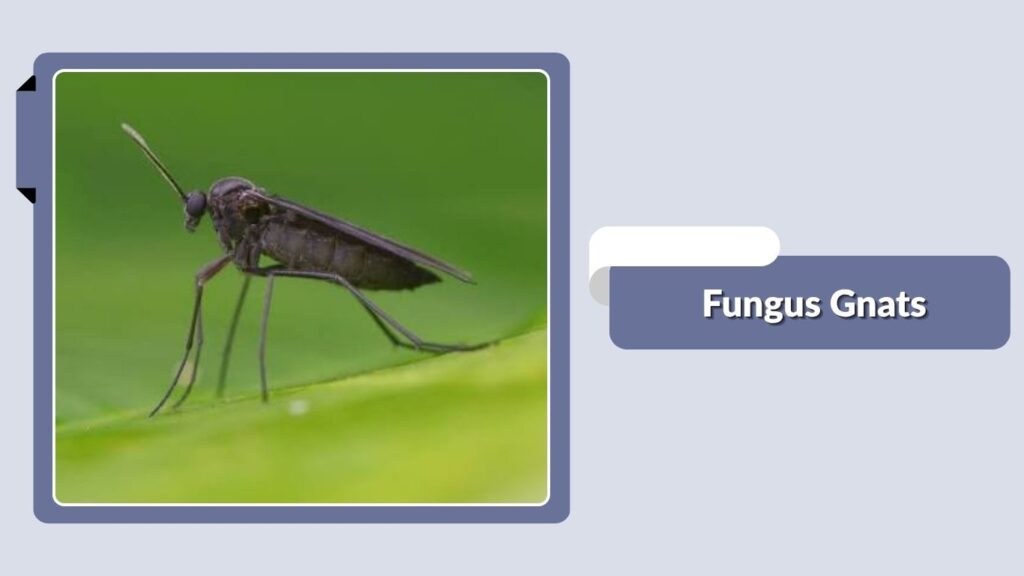
Fungus gnats are among the most common tiny flying bugs in the house, especially around indoor plants, windows, and damp areas. These very small insects are often mistaken for fruit flies because of their size, but they are usually darker, slimmer, and strongly associated with moist potting soil. If you notice small black flying bugs in the house that are not fruit flies, fungus gnats are one of the most likely causes.
Identification
You can identify fungus gnats by these features:
- Very small body, usually about 1/8 inch long
- Dark gray to black coloration
- Long, thin legs
- Slender antennae
- Clear or slightly smoky wings
- Mosquito-like body shape
- Weak, short flights
- Often seen around houseplants
- Frequently walks across soil before flying
Why Are These Tiny Flying Bugs in the House?
Fungus gnats usually appear indoors when houseplant soil remains consistently moist. Adult females lay their eggs in damp potting mix, where the larvae feed on fungi, decaying plant material, and other organic matter.
Overwatering is one of the most common reasons their numbers increase. Poor drainage, standing water in plant saucers, and organic-rich potting soil can also create favorable breeding conditions. This is why small flying bugs in the house may suddenly become noticeable after several days of frequent plant watering.
Are Fungus Gnats Harmful?
Adult fungus gnats are mainly annoying and do not normally bite people. They may fly around your face, windows, lamps, or bedroom if infested plants are nearby.
The larvae can be more troublesome for plants. Large populations may feed around delicate roots, particularly on seedlings, cuttings, and young plants. Established houseplants usually tolerate small numbers, but a heavy infestation can contribute to poor growth and increased plant stress.
How to Get Rid of Fungus Gnats
Reducing soil moisture is one of the best ways to control these little flying bugs in the house. Allow the upper layer of potting soil to dry before watering again whenever the plant can tolerate it. This makes the soil less suitable for eggs and larvae.
Yellow sticky traps placed near plants can capture flying adults and help monitor activity. Remove dead leaves, improve drainage, and avoid leaving water in saucers. If the infestation continues, treating the soil-dwelling larvae is important because removing adults alone will not stop new gnats from emerging.
2. Drain Flies
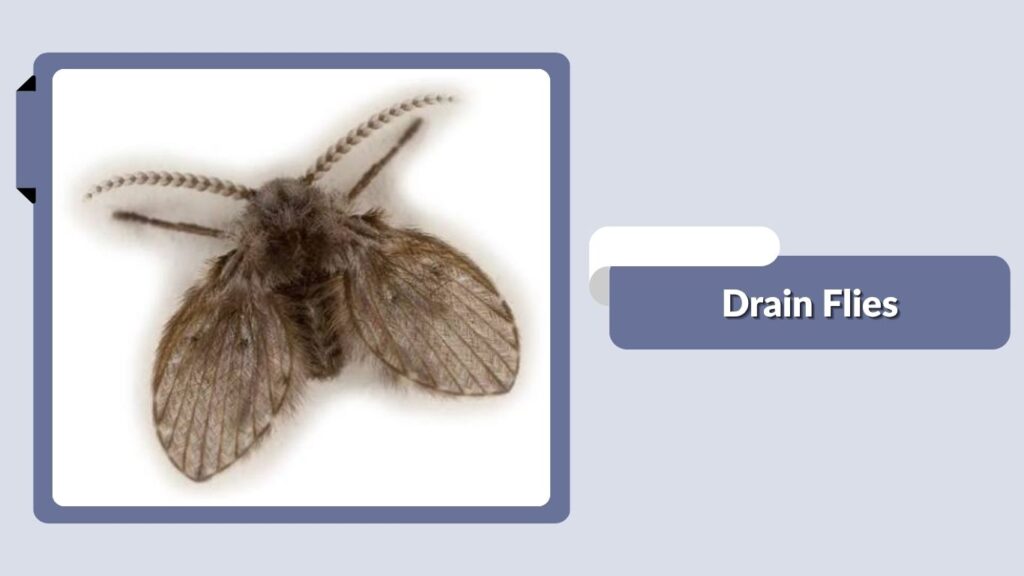
Drain flies are common small flying bugs in the house, especially around bathrooms, kitchens, basements, and laundry areas. These insects are sometimes called moth flies because their fuzzy wings make them look like tiny moths. If you notice very small flying bugs in the house resting near sinks, showers, or drains, drain flies are one of the most likely insects responsible.
Identification
You can identify drain flies by these features:
- Very small body, usually around 1/8 inch long
- Gray, brown, or dark coloration
- Broad, fuzzy wings
- Hairy, moth-like appearance
- Wings held roof-like over the body
- Short, weak flight
- Often rests on walls near drains
- Common around sinks, showers, and floor drains
Why Are Drain Flies in the House?
Drain flies develop in moist organic material. A layer of slime can accumulate inside drains, garbage disposals, overflow openings, and other damp plumbing areas, providing food for their larvae.
Adults usually remain close to the breeding source. This is why tiny flying bugs in the house may repeatedly appear in one bathroom or around one particular sink.
A leaking pipe or rarely used floor drain can also create conditions that allow them to reproduce.
Are Drain Flies Harmful?
Drain flies generally do not bite or sting people. Most infestations are mainly a nuisance.
However, large numbers can indicate that organic buildup or excessive moisture is present somewhere in the plumbing. Their presence may also signal a drain that needs better cleaning or maintenance.
Simply killing adults does not solve the problem because larvae can continue developing inside the moist film coating the drain.
How to Get Rid of Drain Flies
Scrub accessible drains with a stiff drain brush to physically remove the organic film where larvae develop. Clean sink strainers, overflow openings, disposal guards, and nearby wet surfaces as well.
Fix leaking pipes and eliminate standing water whenever possible. Adult flies can be vacuumed or trapped, but long-term control depends on removing the breeding material. Once the drain is properly cleaned, the number of little flying bugs in the house should gradually decline.
3. Fruit Flies
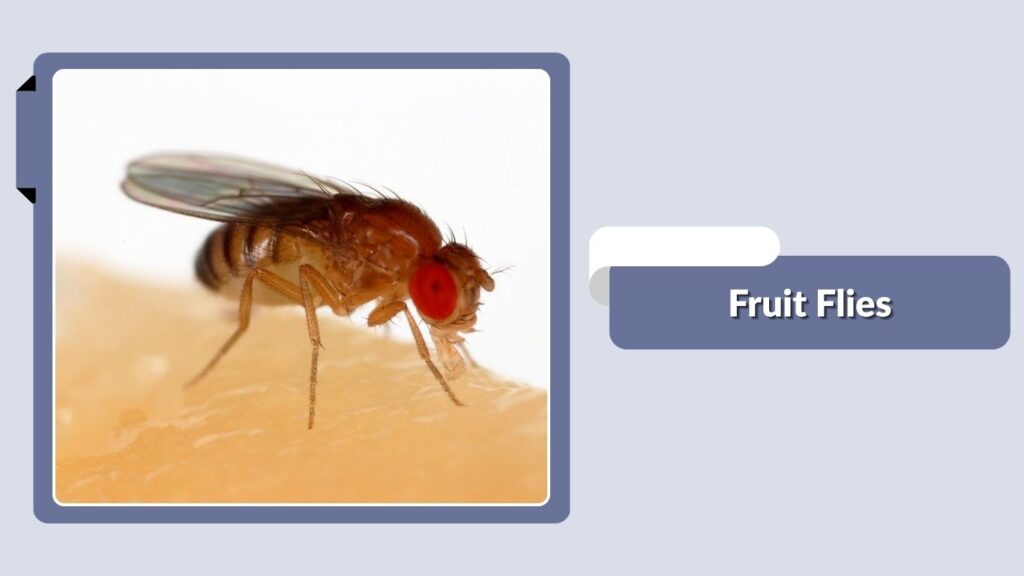
Fruit flies are among the most familiar tiny house bugs that fly, especially in kitchens. They are strongly attracted to fermenting fruit, sugary liquids, garbage, and food residue. Because they reproduce quickly, a few adults can become a noticeable problem in a short period. If small flies are hovering around bananas, recycling, or a trash can, fruit flies are a likely cause.
Identification
Fruit flies commonly have:
- Tiny body, usually around 1/8 inch long
- Tan, yellowish, or light brown coloration
- Rounded body shape
- Clear wings
- Red or dark eyes, depending on the species
- Short antennae
- Quick hovering flight
- Strong attraction to ripe or fermenting food
Why Are Fruit Flies in Your House?
Fruit flies are attracted to fermenting organic material. Overripe bananas, damaged fruit, onions, potatoes, spilled juice, wine, beer, and dirty recycling containers can all provide food and breeding sites.
They can enter through windows and doors or arrive on produce brought into the house.
Because their life cycle is fast, small flying bugs in the house may continue appearing even after visible adults are removed if eggs and larvae remain in hidden food residue.
Are Fruit Flies Harmful?
Fruit flies do not normally bite people. Their main problem is contamination and nuisance.
Adults frequently move between garbage, spoiled produce, drains, and kitchen surfaces. A persistent infestation also indicates that fermenting food or organic material is available somewhere nearby.
While they are not usually dangerous, allowing large numbers to develop around food preparation areas is undesirable.
How to Get Rid of Fruit Flies
Remove overripe produce, empty garbage, rinse recycling, and clean sugary spills immediately. Refrigerating ripe fruit can also reduce available breeding sites.
A simple apple cider vinegar trap with a few drops of dish soap can capture many adults. However, traps work best when combined with sanitation. If tiny flying bugs in the house continue appearing, check under appliances, inside garbage bins, and around drains for hidden organic material.
4. Phorid Flies
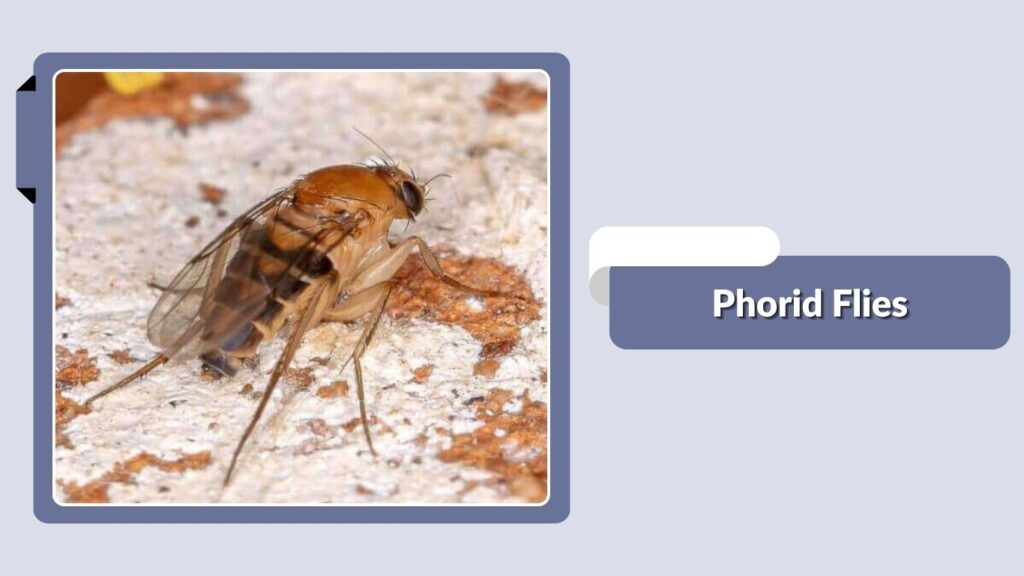
Phorid flies are tiny insects that may appear as small black flying bugs in the house that are not fruit flies. They are also called scuttle flies because they often run quickly across counters, walls, and floors before taking flight. Phorid flies are associated with decaying organic matter and may develop in drains, garbage, food residue, plumbing leaks, or hidden animal remains.
Identification
Typical phorid fly features include:
- Very small body, usually 1/16 to 1/8 inch long
- Dark brown to blackish coloration
- Hump-shaped thorax
- Small head
- Clear wings
- Rapid running behavior
- Short, erratic flight
- Common near damp organic material
Why Are Phorid Flies in the House?
Phorid fly larvae require decomposing organic material. A breeding source may exist inside a dirty drain, beneath an appliance, around leaking plumbing, or within hidden waste.
These insects can be especially confusing because the breeding source may not be visible.
If little black flying bugs in the house repeatedly appear from the same room or near the floor, inspecting drains and moisture problems can help locate the source.
Phorid Flies vs Fruit Flies
Phorid flies are usually darker and more slender than fruit flies. Their most distinctive behavior is their tendency to run rapidly across surfaces.
Fruit flies are more strongly associated with fermenting fruit and sugary liquids, while phorid flies may develop in a wider range of decomposing materials.
If vinegar traps catch very few insects and the flies continue emerging near plumbing, they may be phorid flies rather than fruit flies.
How to Get Rid of Phorid Flies
Remove the breeding material first. Clean drains thoroughly, dispose of spoiled food, inspect garbage areas, and check beneath appliances for moisture or organic residue.
Persistent infestations may require checking for plumbing leaks or damaged drain lines. Trapping adults can reduce visible numbers, but new flies will continue emerging until the hidden source is eliminated.
5. Whiteflies
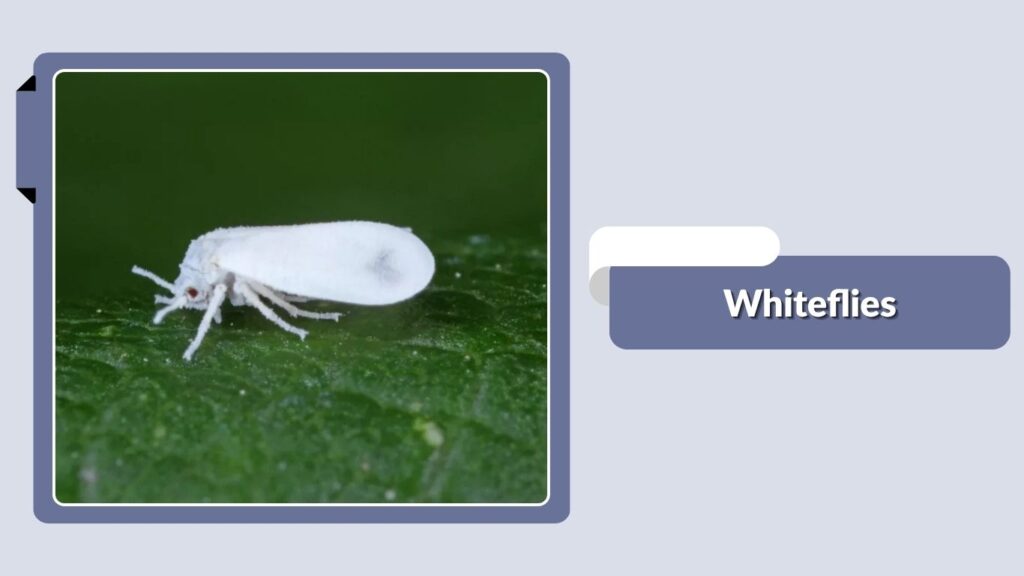
Whiteflies are tiny white flying bugs in the house that are most commonly associated with indoor plants. Despite their name, they are not true flies. They are small sap-feeding insects related to aphids and scale insects. When an infested plant is disturbed, numerous tiny white insects may suddenly fly up from the leaves, making the infestation easy to notice.
Identification
Whiteflies can be identified by:
- Very small body, usually around 1/16 inch long
- White or pale yellow coloration
- Powdery white wings
- Moth-like appearance
- Wings held over the body while resting
- Usually found underneath leaves
- Adults fly when the plant is disturbed
- Immature stages remain attached to leaf surfaces
Why Are Tiny White Flying Bugs in the House?
Whiteflies usually enter homes on infested houseplants or newly purchased plants. Warm indoor conditions can allow them to reproduce continuously.
Females lay eggs on the undersides of leaves, where immature whiteflies feed by sucking plant sap.
If you notice small white flying bugs in the house only when watering or touching plants, inspect the undersides of leaves carefully for eggs and immature insects.
Are Whiteflies Harmful to Plants?
Yes. Whiteflies can weaken plants by removing sap from leaves.
Heavy infestations may cause yellowing, wilting, reduced growth, and premature leaf drop. They also produce a sugary substance called honeydew, which can make leaves sticky and encourage dark sooty mold to grow.
Young plants and heavily infested houseplants may experience significant stress if whitefly populations are not controlled.
How to Get Rid of Whiteflies
Isolate infested plants from healthy ones to reduce spreading. Wash leaves gently to remove some adults and immature stages, paying particular attention to the undersides.
Yellow sticky traps can capture flying adults. Removing heavily infested leaves may also help reduce the population. Continue inspecting plants regularly because eggs and immature whiteflies may remain after adult numbers decrease.
6. Carpet Beetles
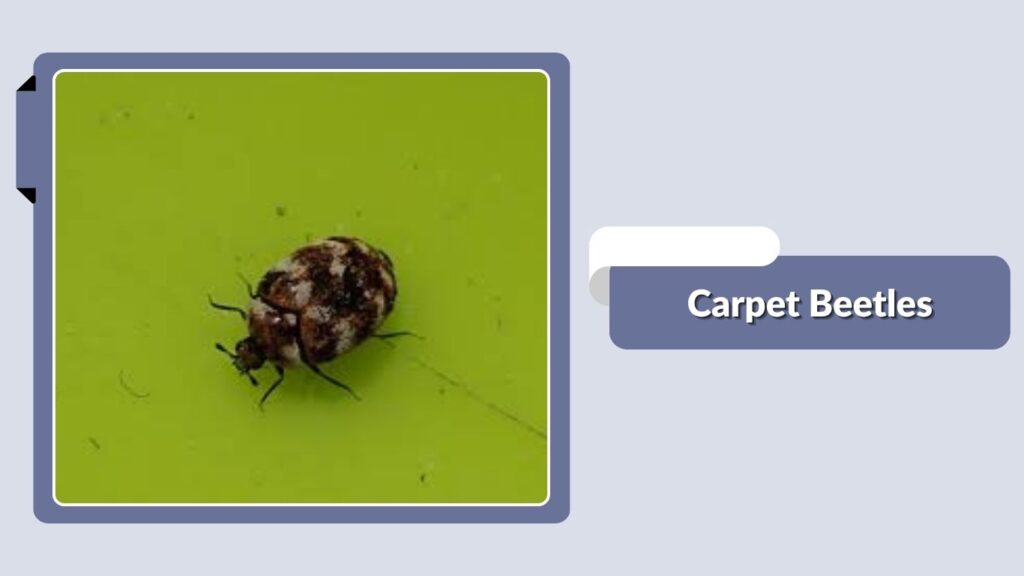
Carpet beetles are small flying bugs in the house that are often noticed near windows, curtains, or light sources. Adult beetles may be black, brown, or patterned, depending on the species. While the adults are mostly harmless, their larvae can damage carpets, clothing, wool, feathers, and other natural materials. Finding several flying adults indoors may indicate that larvae are developing somewhere inside the home.
Identification
Carpet beetles can be identified by:
- Small oval or rounded body
- Usually about 1/8 to 1/4 inch long
- Black, brown, or mottled coloration
- Hard wing covers
- Short antennae
- Ability to fly
- Often found around windows
- Larvae are hairy and worm-like
Why Are Carpet Beetles Flying in the House?
Adult carpet beetles can enter through open windows, doors, vents, or damaged screens. They may also emerge from larvae that have already been developing indoors.
The larvae feed on materials containing animal proteins, including wool, fur, feathers, hair, lint, and dead insects. Dark, undisturbed spaces such as closets, carpet edges, storage boxes, and furniture provide suitable hiding places.
Adults are attracted to light, which is why they are commonly noticed around windows.
Are Carpet Beetles Harmful?
Adult carpet beetles do not normally bite people or damage household fabrics. The larvae cause most of the problems.
A heavy larval infestation can create holes in wool clothing, carpets, blankets, upholstery, and stored textiles. Some people may also develop skin irritation after contacting the tiny hairs shed by carpet beetle larvae.
Finding adult beetles repeatedly should therefore prompt an inspection for larvae and damaged materials.
How to Get Rid of Carpet Beetles
Vacuum carpets, baseboards, closets, furniture edges, and other areas where hair, lint, or dead insects accumulate. Wash or properly clean infested clothing and fabrics.
Store vulnerable wool and natural-fiber items in sealed containers. Removing dead insects from window tracks and attic spaces can also reduce larval food sources. Continued cleaning is important because hidden larvae may remain after the flying adults disappear.
7. Flying Ants
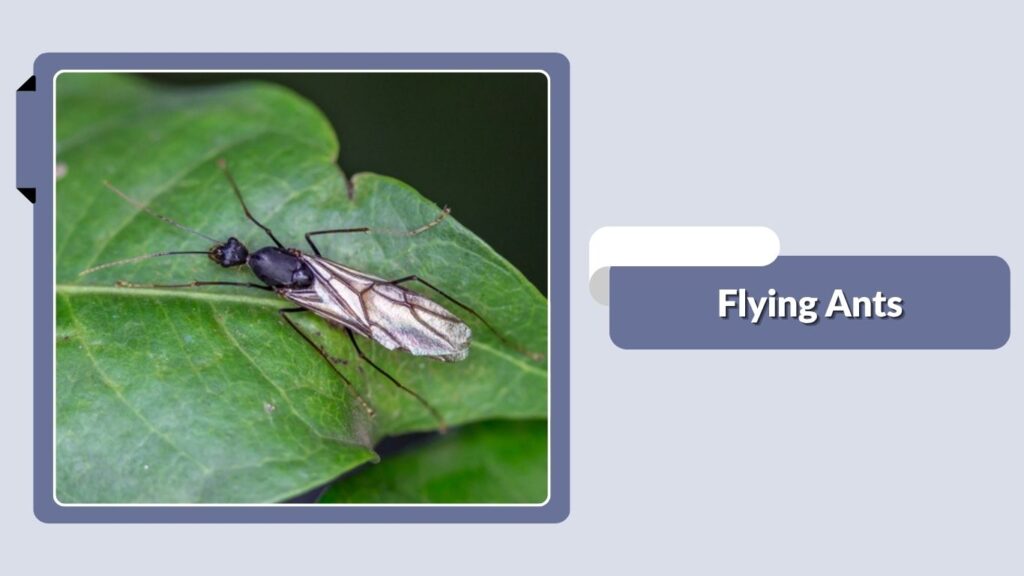
Flying ants can suddenly become noticeable flying bugs in the house, especially during warm and humid weather. These insects are reproductive members of an established ant colony rather than a separate species. When conditions are suitable, winged males and females leave the nest to mate. A few may enter from outdoors, while large numbers indoors can indicate a colony located somewhere within the building.
Identification
Flying ants generally have:
- Clearly divided head, thorax, and abdomen
- Narrow waist
- Bent or elbowed antennae
- Two pairs of wings
- Front wings longer than rear wings
- Brown, reddish, or black coloration
- Larger body than ordinary worker ants
- Often gathers near windows or lights
Why Are Flying Ants in the House?
Winged ants appear when a mature colony begins producing reproductive individuals. They may enter through doors or windows during a mating flight.
However, if dozens of small flying bugs inside the house suddenly emerge from one wall, ceiling, or floor area, the colony may be nesting inside the structure.
Moist wood, wall cavities, gaps around foundations, and other protected locations can support certain ant species.
Flying Ants vs Termites
Flying ants are often confused with termite swarmers.
Ants have a narrow waist and bent antennae, whereas termites usually have a broad waist and straight antennae. Ants also have front wings that are longer than their back wings.
Termite swarmers generally have four wings of roughly equal length. Correct identification is important because termite activity may indicate a more serious structural problem.
How to Get Rid of Flying Ants
Vacuum visible flying ants and seal openings if they are entering from outdoors. A small temporary swarm may disappear after the mating flight ends.
Repeated indoor swarms require more attention because an established colony may be present inside the building. Ant bait can sometimes eliminate the colony, but treatment should be selected according to the species. Persistent activity inside walls may require professional pest inspection.
8. Thrips
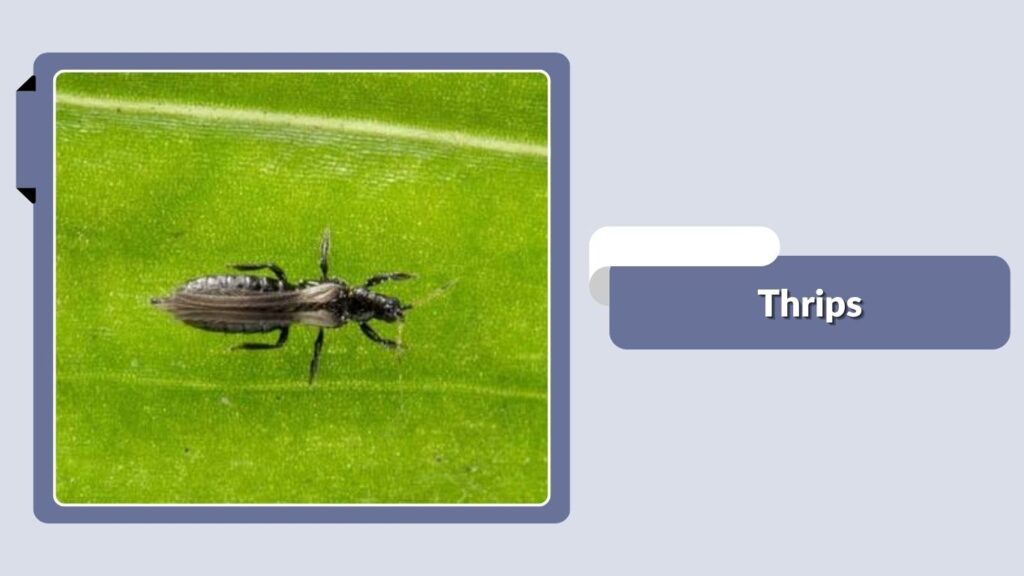
Thrips are very small flying bugs in the house that are commonly associated with plants. Their slender bodies make them look like tiny moving lines rather than typical flies. Indoor infestations often begin when thrips arrive on newly purchased houseplants or cut flowers. Because they feed by damaging plant tissue, large populations can cause visible discoloration, distorted leaves, and reduced plant growth.
Identification
Thrips usually have:
- Extremely small, narrow body
- Length of roughly 1/25 to 1/8 inch
- Yellow, brown, or black coloration
- Long, slender shape
- Narrow wings with fringed edges
- Short, weak flights
- Fast crawling movement
- Often found on flowers and leaves
Why Are Thrips in the House?
Thrips generally enter homes on plants, flowers, or through open windows. They may also be attracted indoors during warm weather.
Once established on houseplants, females lay eggs within or around plant tissue. The developing insects feed on leaves, buds, and flowers.
If tiny flying bugs in your house seem concentrated around plants rather than food or drains, inspect the foliage closely for silvery patches, dark specks, or distorted growth.
Are Thrips Harmful?
Thrips can cause significant plant damage when their numbers become high. They scrape and feed on plant cells, producing pale, silvery, or brown areas on leaves.
Flowers may become distorted, and heavily infested plants can lose vigor. Some thrips can also transmit plant viruses.
Most species are primarily plant pests rather than household pests, although a few may occasionally land on or lightly irritate people.
How to Get Rid of Thrips
Isolate infested houseplants immediately to prevent thrips from spreading. Remove heavily damaged leaves and flowers, and rinse plants thoroughly.
Sticky traps can help monitor flying adults. Repeated treatment may be necessary because eggs can remain protected within plant tissue. Always inspect new plants before placing them beside established indoor plants, as prevention is much easier than controlling a large infestation.
9. Lacewings
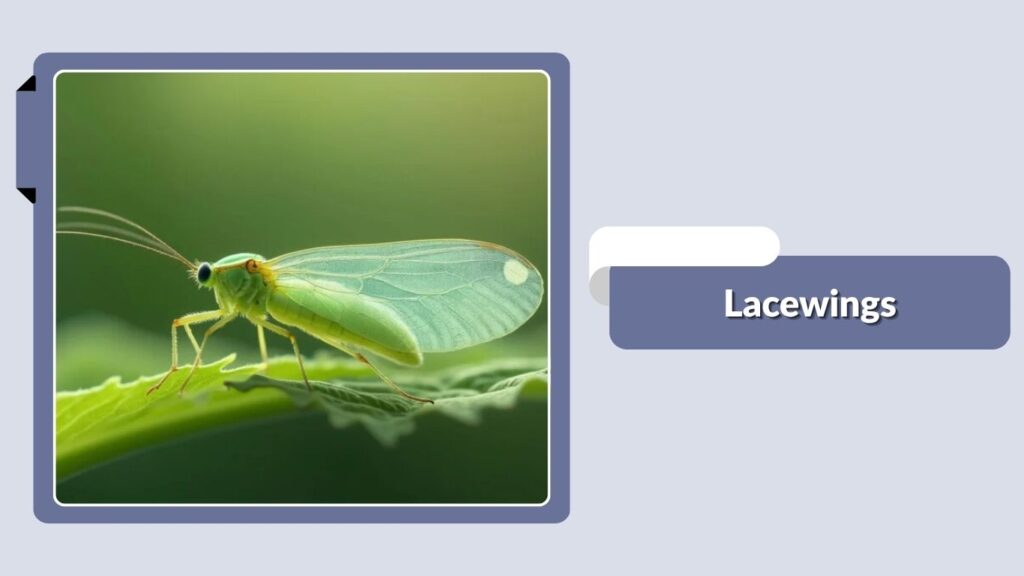
Lacewings are delicate insects that may occasionally become green flying bugs in the house, particularly when they are attracted to indoor lights. Green lacewings are usually pale green with transparent, net-like wings and long antennae. They are beneficial outdoor insects because their larvae feed on aphids and other small pests, so finding one indoors usually does not indicate an infestation.
Identification
Green lacewings typically have:
- Pale or bright green body
- Long, slender shape
- Large transparent wings
- Fine, net-like wing veins
- Long antennae
- Golden or copper-colored eyes in some species
- Wings held roof-like over the body
- Usually around 1/2 to 3/4 inch long
Why Are Lacewings Flying in the House?
Adult lacewings may accidentally enter through open windows or doors. Many are attracted to artificial lighting, especially during warm evenings.
If windows are open near porch lights or bright indoor lamps, these insects may fly inside.
Unlike fungus gnats or drain flies, lacewings generally do not establish breeding populations in ordinary homes. One or two individuals indoors are usually accidental visitors from the garden.
Are Lacewings Harmful?
Lacewings are generally considered beneficial insects. Their larvae are predators that consume aphids, mites, and other small plant pests.
Adults do not damage household materials and are not interested in stored food. They are also not aggressive toward people.
If you find a lacewing indoors, there is usually no need for pesticide treatment. It can simply be captured and released outside.
How to Keep Lacewings Out of the House
Repair damaged window screens and keep doors closed when outdoor lights are attracting insects. Reducing unnecessary bright lighting near open windows can also help.
If a lacewing enters, use a cup and piece of paper to move it outdoors. Because these insects help control garden pests, killing them is usually unnecessary. Repeated appearances generally indicate an entry point rather than an indoor infestation.
10. Moth Flies
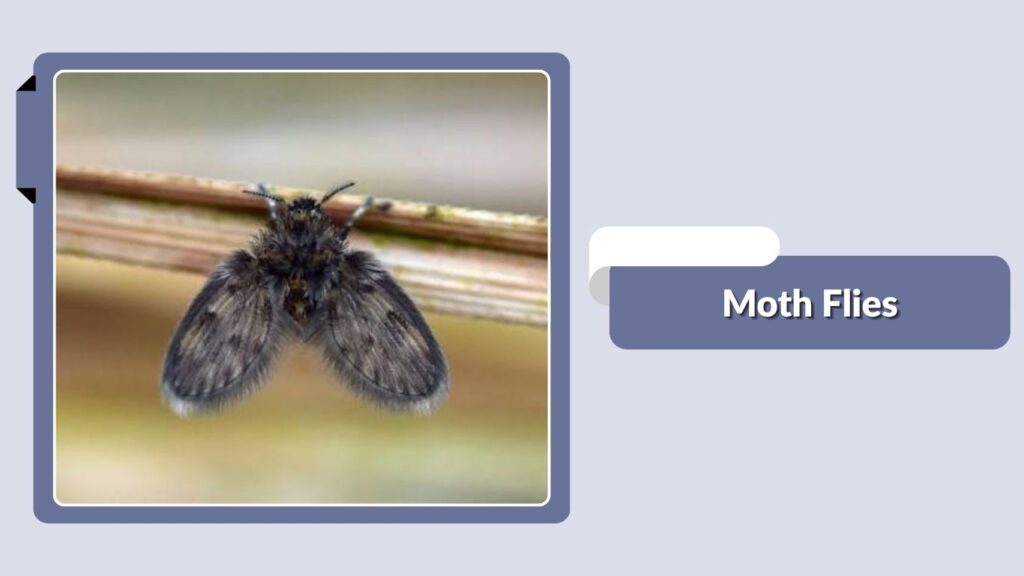
Moth flies are another name commonly used for drain flies. They are little flying bugs in the house with fuzzy bodies and broad wings that make them look like miniature moths. They are frequently found in bathrooms, kitchens, basements, and other damp locations. Large numbers usually indicate that larvae are developing in organic buildup somewhere around a drain or another consistently wet area.
Identification
Moth flies can be recognized by:
- Very small size
- Gray, brown, or dark body
- Dense hairs covering the body and wings
- Broad, rounded wings
- Moth-like appearance
- Wings held over the body while resting
- Weak, hopping flight
- Commonly rests on walls near plumbing
Why Are Moth Flies in the House?
Moth fly larvae live in wet organic material containing bacteria, fungi, and decomposing debris.
Common breeding sites include sink drains, shower drains, floor drains, sewage areas, and other places where a slimy film remains continuously damp.
This explains why these tiny flying house bugs may repeatedly appear in bathrooms even when food and garbage are kept clean.
Do Moth Flies Bite?
Typical household moth flies do not normally bite people. Their main effect is nuisance.
A small number around one drain is usually easy to control, but large populations can indicate significant organic buildup or a plumbing problem.
If they continue appearing after normal cleaning, check less obvious sources such as floor drains, drain overflows, leaking pipes, and areas with standing water.
How to Get Rid of Moth Flies
Cleaning the breeding source is more effective than simply spraying the flying adults. Scrub drains and other accessible plumbing surfaces to remove organic slime.
Fix leaks, clean drain covers, and eliminate stagnant water. Adult moth flies can be vacuumed or trapped while the breeding site is being treated. Once larvae no longer have suitable organic material in which to develop, the indoor population should gradually disappear.
FAQs
What are the tiny flying bugs in my house?
Tiny flying bugs indoors are often fungus gnats, fruit flies, drain flies, phorid flies, whiteflies, or small beetles. Their location helps with identification. Bugs around plants are often fungus gnats, while those near drains may be drain flies.
Why do I suddenly have small flying bugs in the house?
A sudden increase usually means there is a nearby breeding source. Moist potting soil, drains, overripe fruit, garbage, decaying organic matter, or infested houseplants can all support small flying insects and allow their numbers to increase quickly.
How do I get rid of tiny flying bugs in the house?
First identify the insect and its breeding source. Clean drains, remove spoiled food, empty garbage, reduce moisture in houseplant soil, and vacuum visible adults. Sticky traps can help, but removing the breeding source is the most important step.
What are small black flying bugs in the house that are not fruit flies?
They may be fungus gnats, phorid flies, drain flies, flying ants, or small carpet beetles. Fungus gnats commonly stay near houseplants, while phorid flies often run across surfaces and drain flies usually remain close to sinks and plumbing.
Why are tiny flying bugs in the house attracted to light?
Many insects naturally move toward light, including carpet beetles, flying ants, lacewings, and some small flies. This is why they are often found around windows, lamps, and bright rooms. Their attraction to light does not necessarily mean they are breeding there.