
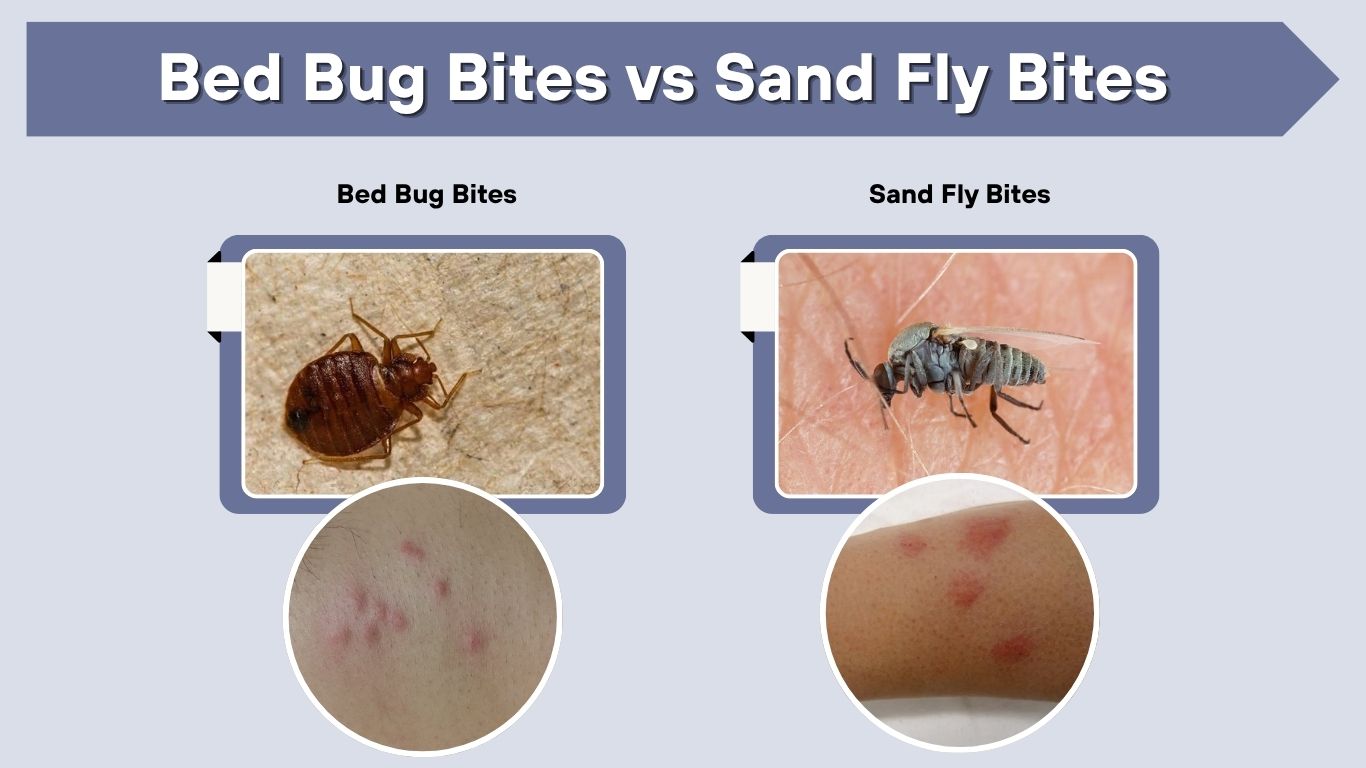
Bed bug bites and sand fly bites can both cause red, itchy bumps, making them difficult to identify from skin symptoms alone. However, the insects differ significantly in where they live, when they bite, how their bites are distributed, and the health risks they may carry. Bed bugs usually bite people indoors while they sleep, whereas sand flies generally bite outdoors in warm environments, particularly between dusk and dawn. This guide compares bed bug bites vs. sand fly bites, including their appearance, symptoms, patterns, treatment, prevention, and important clues that can help identify the source.
Bed Bug Bites vs. Sand Fly Bites at a Glance
| Feature | Bed Bug Bites | Sand Fly Bites |
| Typical location | Beds, furniture, and indoor rooms | Outdoor areas in warm climates |
| Most active | Usually at night | Often dusk through dawn |
| Bite pattern | Lines, clusters, or random groups | Scattered bumps or grouped exposed-area bites |
| Common body areas | Arms, shoulders, neck, face, and legs | Ankles, legs, arms, face, and other exposed skin |
| Immediate feeling | Often unnoticed during feeding | May cause a sharp or irritating sensation |
| Main concern | Indoor infestation and skin irritation | Irritation and possible disease transmission |
| Remains on body | No | No |
| Disease risk | Not known to transmit disease to people | Some species can transmit leishmaniasis |
What Do Bed Bug Bites Look Like?
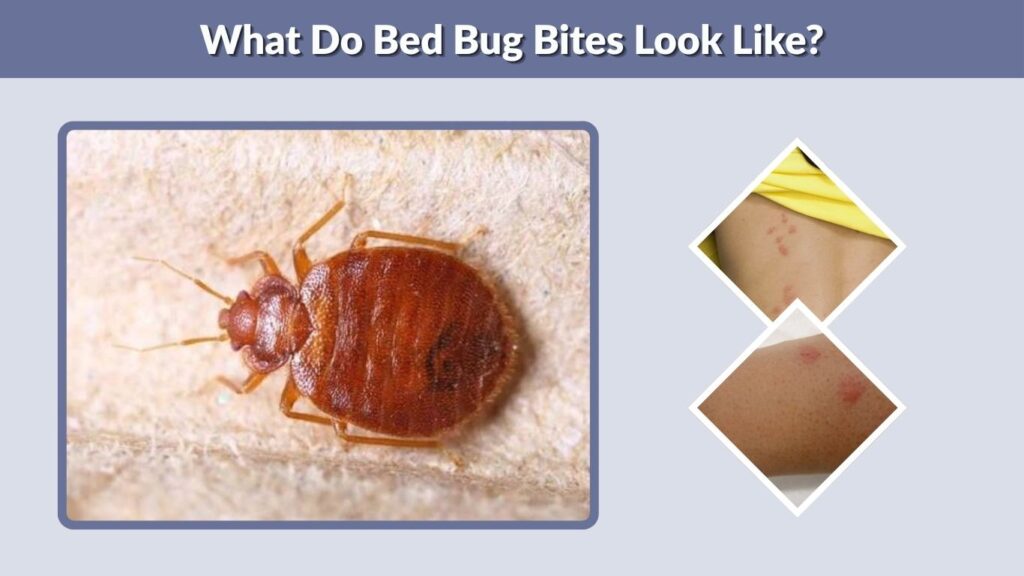
Bed bug bites often appear as small, raised, red, and itchy bumps. They may resemble mosquito bites, flea bites, hives, or other skin reactions.
The bites may appear in:
- Straight or slightly curved lines
- Small clusters
- Zigzag arrangements
- Random groups on exposed skin
The familiar idea that bed bugs always leave three bites in a perfect row is unreliable. Some people develop multiple visible marks, while others have little or no skin reaction.
Bed bug bites commonly affect skin exposed during sleep, including the arms, shoulders, neck, face, hands, and legs. According to the CDC, marks may be random or form a straight line, and reactions differ considerably from person to person.
What Do Sand Fly Bites Look Like?
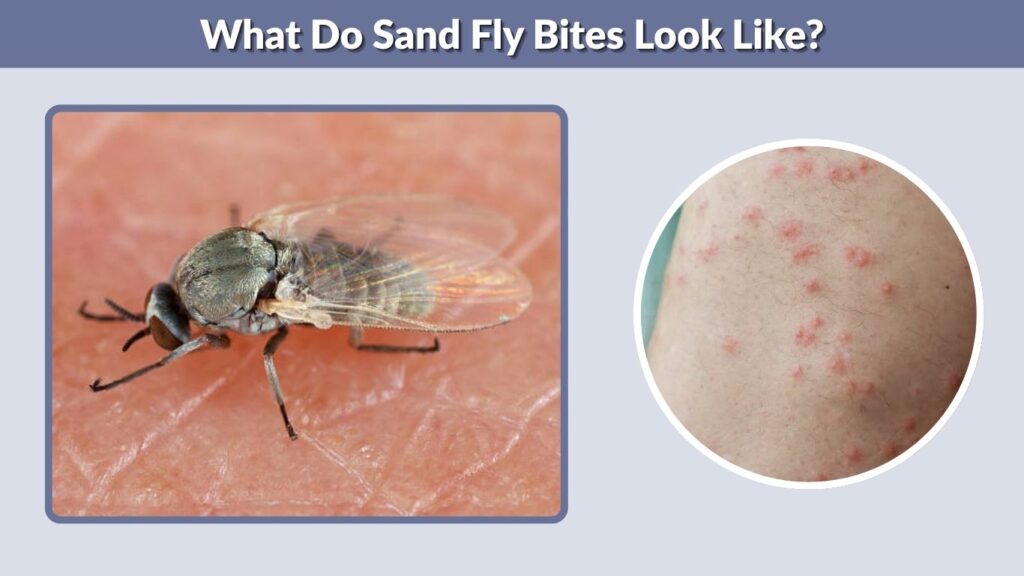
Sand fly bites usually produce small red bumps with itching, inflammation, or localized swelling. Some people experience a sharp sensation when bitten, while others notice the irritation later.
Common features may include:
- Tiny red or pink bumps
- A small central puncture mark
- Intense itching
- Mild swelling
- Scattered bites on exposed skin
- Scabs caused by scratching
Sand fly bites commonly occur around the ankles, lower legs, arms, neck, and face because these areas are often uncovered outdoors.
The appearance alone cannot reliably confirm a sand fly bite. Mosquitoes, biting midges, fleas, and other insects can produce very similar reactions.
Bite Pattern Differences
Bite distribution provides useful clues, although it does not offer a definite diagnosis.
Bed Bug Bite Pattern
Bed bugs may bite several times while moving across the skin. As a result, their bites can appear in rows, clusters, or irregular groups.
Multiple household members may be affected, but reactions may differ. One person might develop itchy welts while another sleeping in the same room shows no visible marks.
Sand Fly Bite Pattern
Sand fly bites are more often scattered over skin that was exposed outdoors. Multiple bites may be concentrated around the ankles or lower legs when the insects are active close to the ground.
A clustered pattern can still occur if many sand flies are present. Therefore, neither rows nor clusters conclusively identify the biting insect.
When and Where the Bites Occur
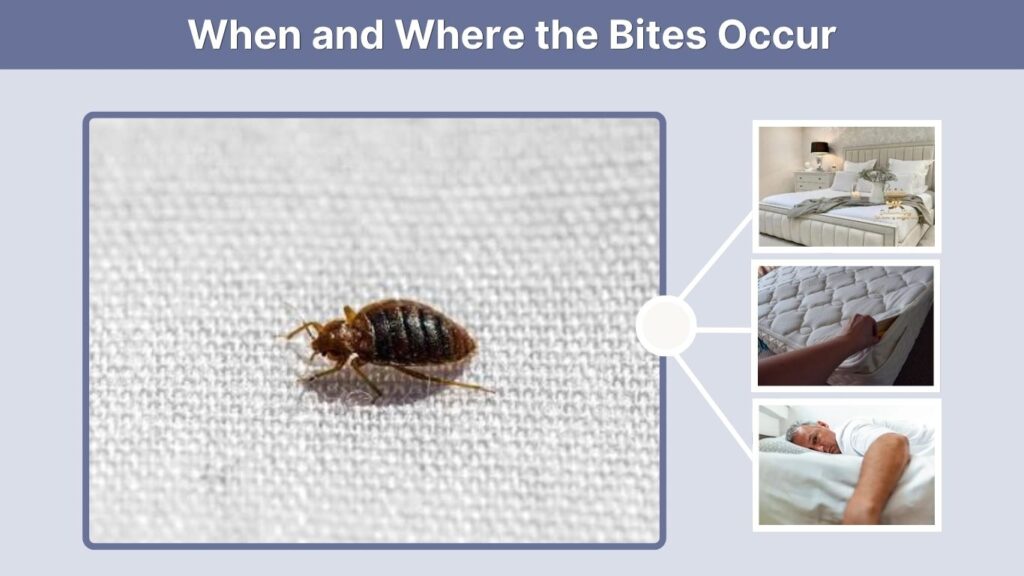
The circumstances surrounding the bites are often more useful than their appearance.
Bed Bug Exposure
Bed bugs typically hide in:
- Mattress seams
- Bed frames
- Headboards
- Box springs
- Upholstered furniture
- Baseboards
- Wall cracks
- Luggage and clothing
They usually emerge while a person is resting or sleeping. New marks that repeatedly appear after sleeping in the same room may suggest bed bugs.
However, the EPA warns that bites alone are a poor indicator of an infestation because they resemble many other insect bites and skin conditions. Physical evidence of bed bugs should be found before reaching a conclusion.
Sand Fly Exposure
True sand flies are associated with warm, humid, tropical, subtropical, and Mediterranean environments. They may occur around forests, villages, animal shelters, cracks, caves, and areas containing moist organic matter.
They are frequently most active from dusk through dawn. Bites appearing after an evening outdoors, camping, visiting a warm coastal region, or traveling in an endemic country may be consistent with sand fly exposure.
How to Find Evidence of Bed Bugs
Because skin reactions are unreliable, inspect the sleeping area for physical signs.
Look for:
- Live reddish-brown insects
- Pale shed skins
- Tiny white eggs
- Dark fecal spots
- Rust-colored bloodstains
- Bugs inside mattress seams or furniture joints
Adult bed bugs have flattened, oval bodies and average approximately 5 millimeters long.
Confirmation is best achieved by identifying an adult or immature bed bug collected near the location where the bites occurred.
Can You Find Sand Flies in the Home?
Sand flies are much smaller than bed bugs and may be difficult to see. They do not normally establish infestations in mattresses or feed repeatedly from a permanent hiding place beside the bed.
They may enter through ordinary window screens because of their tiny size. In areas where they occur, they can sometimes bite indoors, particularly in poorly screened rooms.
Unlike bed bugs, sand flies do not remain attached to the skin after feeding. Finding no insect on the body does not rule out a bite.
Which Bite Itches More?
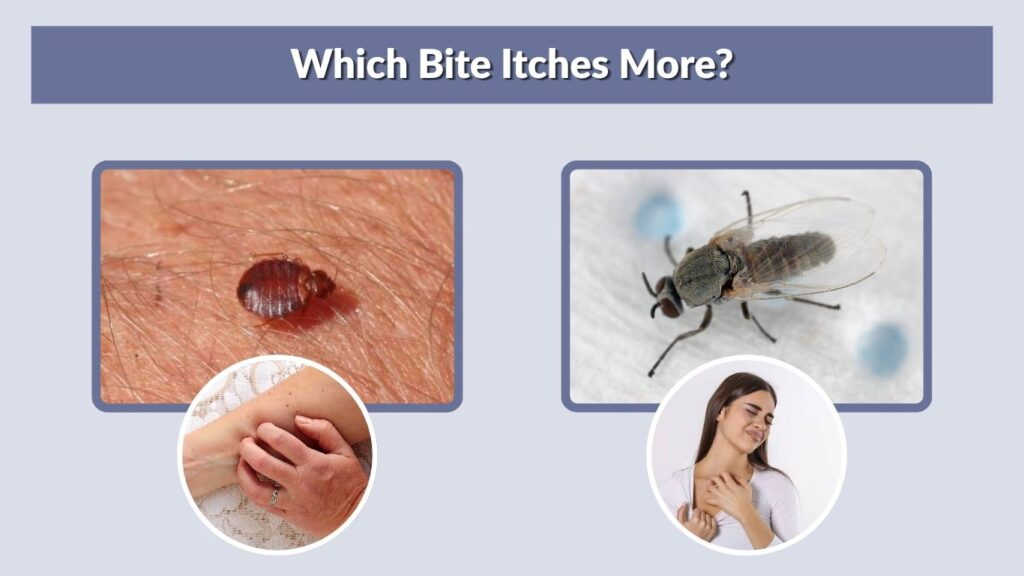
Both bites may cause mild or intense itching. The severity depends on the person’s immune response, the number of bites, previous exposure, and scratching.
Bed bug reactions can range from no visible marks to large itchy welts. Sand fly bites may also become intensely itchy and inflamed.
Itch intensity alone cannot distinguish them. Scratching either type may break the skin and cause a secondary bacterial infection.
Disease Risks
Do Bed Bugs Transmit Disease?
Bed bugs are irritating blood-feeding pests, but they are not known to transmit diseases to humans. Their main health effects include itching, allergic reactions, sleep disruption, anxiety, and skin infections resulting from scratching.
Can Sand Flies Transmit Disease?
Some phlebotomine sand flies can transmit Leishmania parasites, which cause leishmaniasis. Risk depends on geographic location and whether infected sand flies occur there.
Cutaneous leishmaniasis may initially produce bumps or nodules that later become persistent skin sores or ulcers. These lesions generally develop weeks or months after exposure rather than immediately after the bite.
An ordinary itchy bump after outdoor exposure does not automatically indicate leishmaniasis.
Sand Flies vs. Sand Fleas
Sand flies and sand fleas are not the same.
Sand flies are tiny winged insects. Female sand flies may bite and, in some regions, transmit leishmaniasis.
“Sand flea” is an imprecise common name that may refer to different organisms, including beach-dwelling crustaceans, biting fleas, or burrowing fleas in certain tropical regions.
Because the term varies by location, identifying the actual organism is more useful than relying solely on the name.
Sand Fly Bites vs. Mosquito Bites
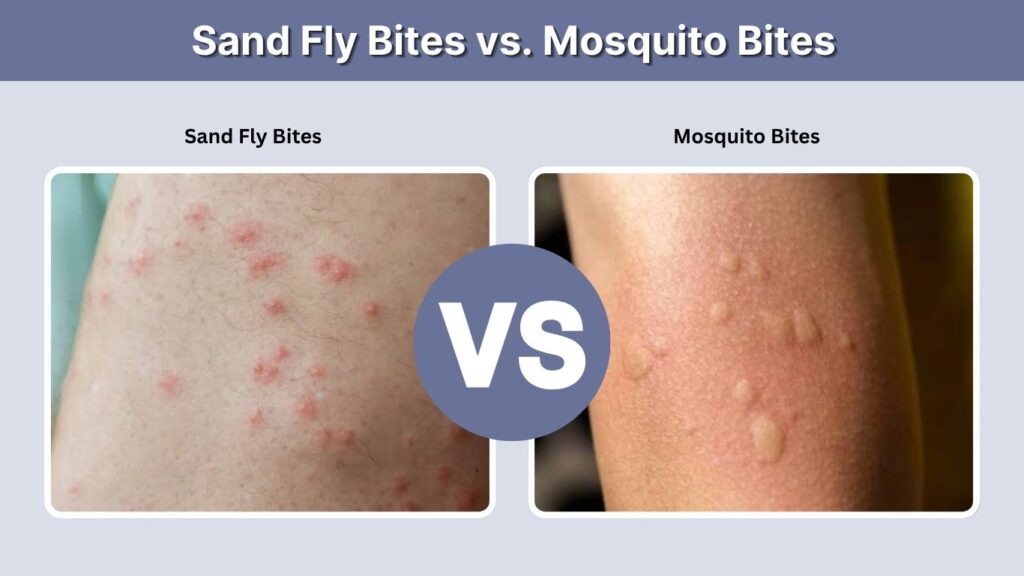
Mosquito bites usually form rounded, raised welts and may occur anywhere exposed mosquitoes are active. Sand fly bites are often smaller and may be especially concentrated on the ankles, legs, or other uncovered skin.
Both can itch, swell, and appear after evening exposure. Without seeing or collecting the insect, distinguishing the two based only on the skin can be difficult.
Sand Flies vs. Biting Midges
Biting midges, commonly called no-see-ums, are frequently confused with sand flies. Both are tiny, active around dusk, and capable of producing itchy bites.
However, they belong to different insect families. In some countries, the name “sand fly” is informally used for biting midges, which creates additional confusion.
Geographic location, habitat, and expert insect identification may be necessary to determine which pest caused the bites.
Treatment for Bed Bug and Sand Fly Bites
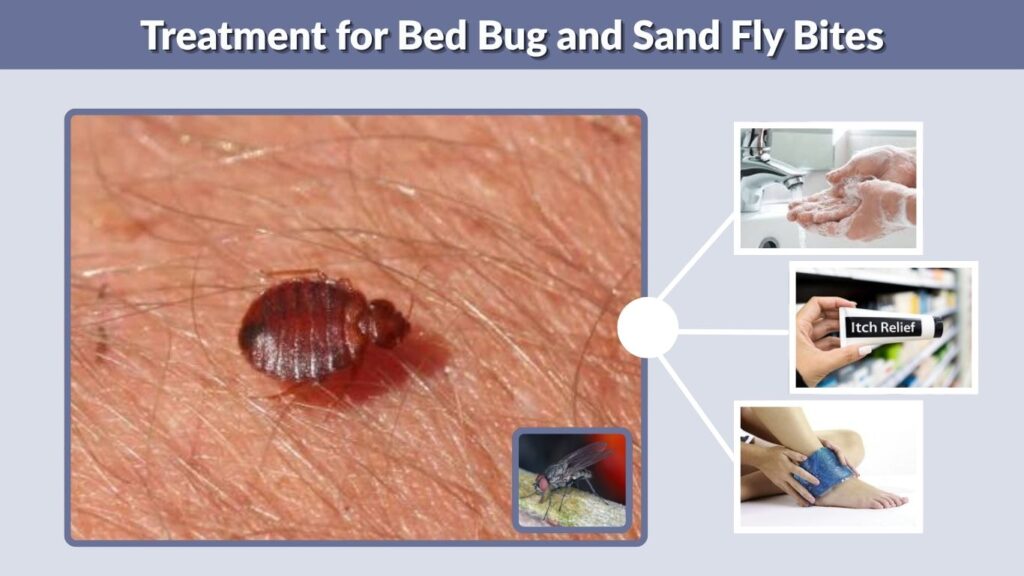
Most uncomplicated bites can be managed with basic skin care.
Basic Care
- Wash the skin gently with soap and water.
- Apply a cool compress to reduce swelling.
- Avoid scratching the affected area.
- Keep fingernails short and clean.
- Ask a pharmacist or doctor about appropriate anti-itch treatment.
- Watch for signs of infection.
Most bed bug bites require only symptom relief, good hygiene, and protection from scratching.
Do not repeatedly apply strong home remedies, undiluted essential oils, bleach, or household pesticides to the skin.
When to See a Doctor
Seek medical advice when:
- Redness or swelling continues to spread
- Bites become increasingly painful
- Pus, warmth, or fever develops
- Itching interferes with sleep
- A severe allergic reaction occurs
- A sore does not heal
- An ulcer develops after travel
- You visited a region where leishmaniasis occurs
Breathing difficulty, facial swelling, faintness, or widespread hives require urgent medical attention.
How to Prevent Bed Bug Bites
Preventing additional bites requires addressing the infestation rather than simply treating the skin.
Inspect mattresses, frames, luggage, and nearby furniture. Reduce clutter, vacuum carefully, launder suitable fabrics at effective temperatures, and use bed-bug-proof mattress and box-spring encasements.
Professional pest control may be required. Avoid using outdoor pesticides, foggers, or unapproved chemicals on beds or skin.
How to Prevent Sand Fly Bites
In regions where sand flies occur:
- Limit outdoor exposure from dusk to dawn.
- Wear long sleeves, long trousers, and socks.
- Apply an appropriate insect repellent.
- Sleep in air-conditioned or well-screened rooms.
- Use fine-mesh bed nets where necessary.
- Treat nets or clothing when professionally recommended.
- Use fans because sand flies are weak fliers.
Avoiding bites is the main way to prevent sand-fly-transmitted leishmaniasis.
FAQs
Can bed bug bites and sand fly bites look identical?
Yes. Both may produce small red, itchy bumps, and individual skin reactions vary considerably. Bite appearance alone is not enough for reliable identification. Consider where and when exposure occurred and look for physical evidence of bed bugs.
Do sand fly bites appear in a straight line?
They can occasionally appear grouped, but straight or clustered marks are more commonly associated with insects feeding repeatedly on nearby skin, including bed bugs. A line pattern still does not prove that bed bugs caused the bites.
How quickly do bed bug bites appear?
Reactions may appear relatively soon or may be delayed for several days. Some people never develop visible marks. This variation makes it difficult to determine the exact time of exposure from the rash alone.
Can sand fly bites occur indoors?
Yes. Sand flies may enter buildings through small openings or unsuitable screens. Indoor bites are possible in regions where the insects naturally occur, especially in rooms without air conditioning or fine-mesh screening.
What is the clearest difference between the two?
The strongest clue is the exposure setting. Repeated bites after sleeping, combined with insects, dark spots, eggs, or shed skins near a bed, suggest bed bugs. Bites following outdoor evening exposure in a warm sand-fly region are more consistent with sand flies.