
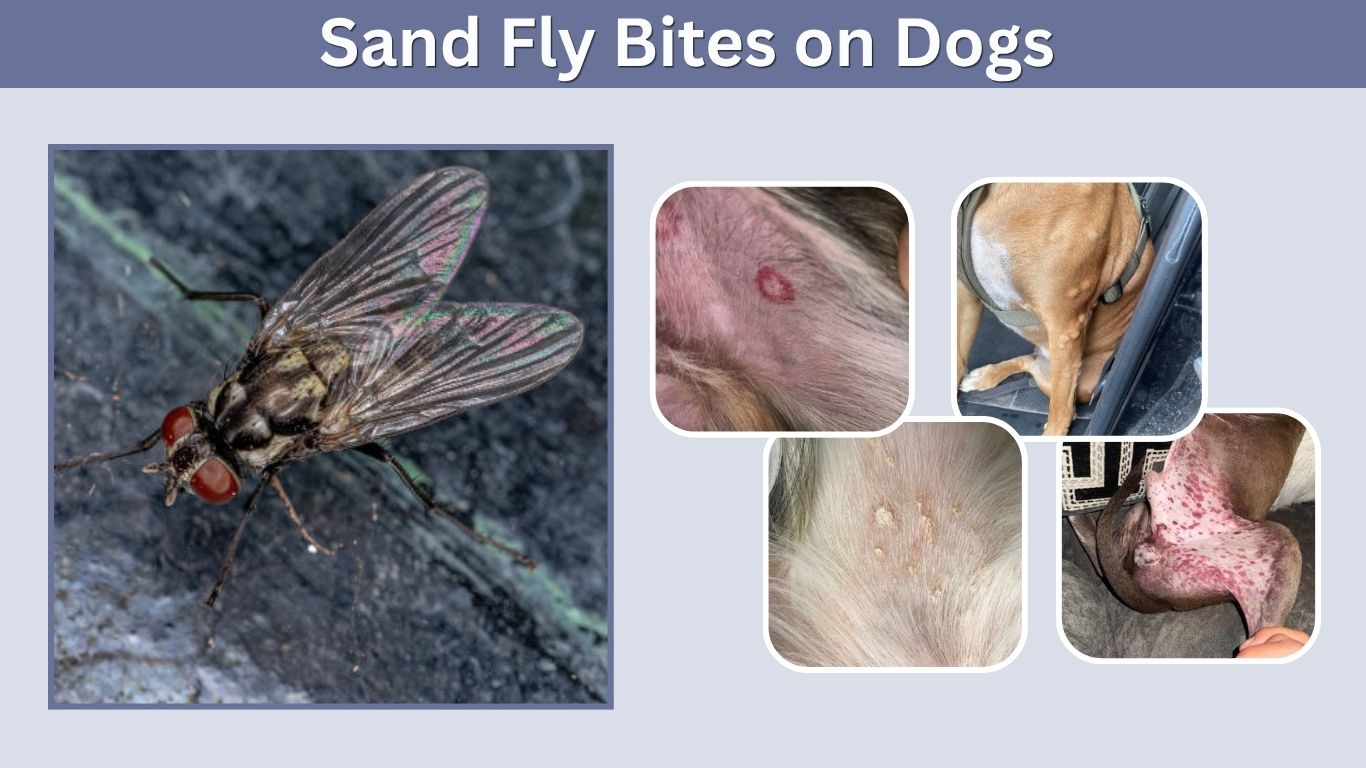
Sand flies can bite dogs, causing small irritated spots, itching, redness, and scratching. The greater concern in certain regions is that infected phlebotomine sand flies can transmit Leishmania parasites, which cause canine leishmaniasis. This long-term disease may affect the skin, eyes, lymph nodes, kidneys, and other organs. However, most ordinary insect bites do not mean that a dog has leishmaniasis. Recognizing the difference between a mild local reaction and signs of systemic illness helps owners know when home care may be sufficient and when veterinary testing is necessary.
Do Sand Flies Bite Dogs?
Yes. Female sand flies feed on blood and may bite dogs, humans, and other animals. They are tiny and quiet, and their bites may go unnoticed when they occur. Sand flies are often most active from dusk through dawn, although activity varies according to species, weather, and location.
The term “sand fly” can also be confusing. In some countries, including parts of Australia, people use the name for biting midges. True phlebotomine sand flies are the insects associated with leishmaniasis transmission. Therefore, the health risk depends partly on which insect is present and where the dog lives or has traveled.
What Do Sand Fly Bites Look Like on Dogs?
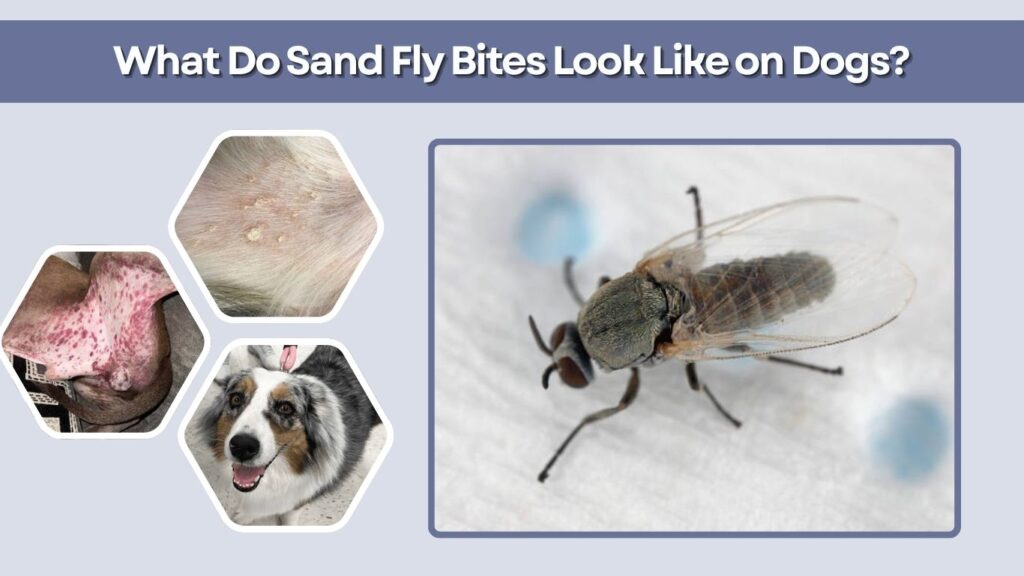
A simple sand fly bite may appear as a tiny red bump or small puncture wound. Several bites can produce patches of irritation, especially on areas where the coat is thin.
Common Bite Symptoms
- Small red bumps or bite marks
- Mild swelling around the bite
- Itching and frequent scratching
- Licking or chewing the affected area
- Local tenderness
- Small scabs caused by scratching
- Restlessness after outdoor exposure
Bites may be easier to notice around the ears, muzzle, nose, belly, inner legs, and other lightly furred areas. The insects themselves are rarely found remaining on the dog after feeding.
Can Sand Fly Bites Make a Dog Sick?
Most uncomplicated bites cause only temporary skin irritation. Problems may develop when a dog scratches intensely, damages the skin, or develops a secondary bacterial infection.
A dog may also experience a more serious allergic reaction. Seek urgent veterinary help if the dog develops facial swelling, widespread hives, breathing difficulty, collapse, severe weakness, or repeated vomiting after an insect bite.
In regions where leishmaniasis occurs, sickness may develop after a bite from an infected sand fly. Signs of leishmaniasis can take months or even years to become noticeable, so illness does not necessarily appear immediately after exposure.
Sand Fly Disease in Dogs
Canine leishmaniasis, also called leishmaniosis, is caused by Leishmania parasites. Transmission occurs primarily when an infected sand fly feeds on a dog. Infection does not always lead to obvious disease, and some infected dogs may initially appear healthy.
Dogs are particularly important hosts for Leishmania infantum in many endemic regions. The disease is strongly associated with areas around the Mediterranean, including Spain, Portugal, Italy, Greece, and southern France, as well as parts of Latin America, Africa, Asia, and the Middle East.
Symptoms of Canine Leishmaniasis
Possible signs include:
- Gradual weight loss
- Low energy or weakness
- Poor appetite
- Enlarged lymph nodes
- Hair loss, especially near the eyes or muzzle
- Flaky, crusty, or ulcerated skin
- Wounds that heal slowly
- Excessive nail growth
- Nosebleeds
- Eye inflammation
- Increased thirst or urination
- Vomiting or diarrhea
- Lameness or painful joints
Kidney damage is among the most serious complications. Because many of these symptoms occur with other diseases, appearance alone cannot confirm leishmaniasis.
Do Sand Flies Lay Larvae Under a Dog’s Skin?
True sand flies do not normally place larvae beneath a dog’s skin. Their immature stages develop in protected places containing moist organic material, not inside the dog.
A lump with a visible breathing hole or moving larva may instead involve a botfly infestation, known as cuterebriasis, or another form of myiasis. Such larvae should not be squeezed or pulled out at home because improper removal may cause injury or inflammation. A veterinarian should examine the lump and remove the larva safely.
How to Treat Sand Fly Bites on Dogs
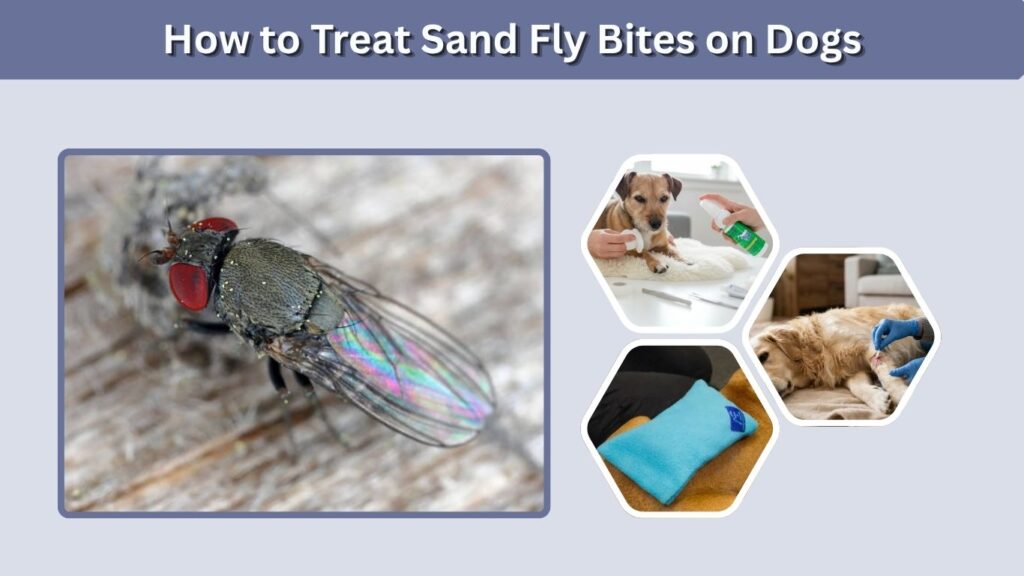
For a mild bite, gently clean the area with cool water and a pet-safe cleanser. A cool compress held against the skin for several minutes may reduce itching and swelling.
Prevent the dog from repeatedly scratching or licking the area. An Elizabethan collar may be needed when self-trauma is causing sores.
Do not apply human insect-bite creams, essential oils, antihistamines, painkillers, or steroid products without veterinary advice. Some products that are tolerated by people can be unsafe for dogs, particularly when swallowed.
Contact a veterinarian when:
- Itching is intense or persistent
- The skin becomes wet, painful, or infected
- Swelling continues to increase
- The dog appears unwell
- Multiple bites cover the body
- The dog has visited a leishmaniasis-risk region
- Weight loss, skin disease, or enlarged lymph nodes develop
How Is Leishmaniasis Diagnosed?
Veterinarians may use a combination of physical examination, travel history, blood tests, urine tests, antibody testing, molecular testing, and examination of samples from lymph nodes, skin, bone marrow, or other tissues.
No single symptom establishes the diagnosis. Testing is especially important for dogs that live in or have traveled through endemic regions.
Treatment depends on the dog’s clinical stage and organ function. Medication may control the disease and reduce the parasite burden, but infected dogs often require long-term monitoring because relapse can occur.
How to Keep Sand Flies Off Dogs
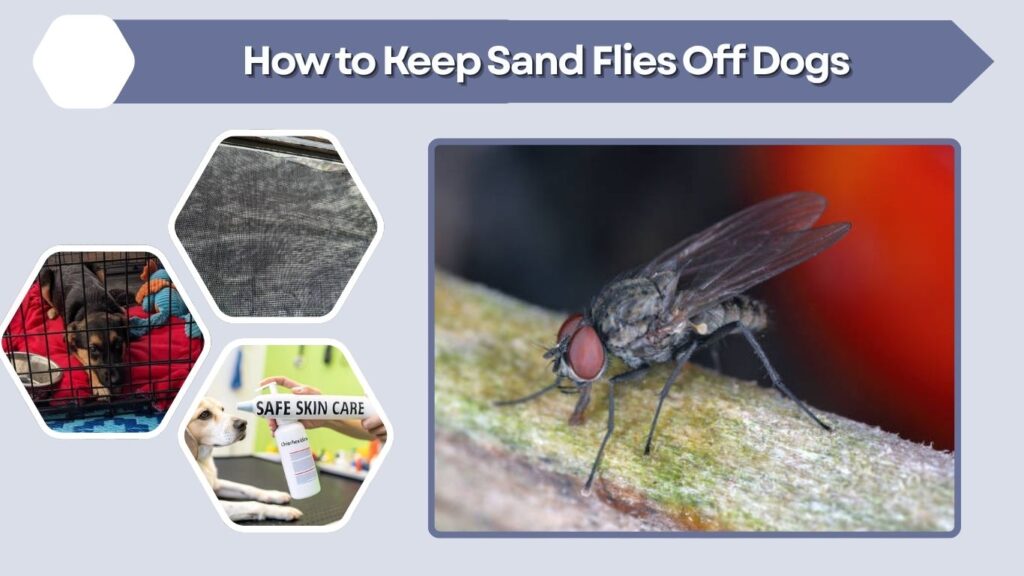
Preventing bites is particularly important for dogs living in or traveling to leishmaniasis-endemic areas.
Effective Protective Measures
- Keep dogs indoors from dusk until dawn when possible.
- Use fine-mesh screens on windows, kennels, and sleeping areas.
- Avoid letting dogs sleep outdoors overnight.
- Use a veterinarian-recommended repellent collar or spot-on product.
- Begin protection before entering a risk area.
- Maintain continuous protection for the entire exposure period.
- Remove damp leaves and organic debris near kennels.
- Use fans where practical because these tiny flies are weak fliers.
Veterinary parasite-control guidelines recommend minimizing nighttime exposure and using licensed pyrethroid-based collars or topical formulations that repel sand flies. The correct product and application schedule depend on the dog’s age, health, weight, location, and travel plans.
Choosing a Sand Fly Repellent or Collar
Only use products specifically labeled for dogs and approved for sand-fly protection in your location. Repellent collars and spot-on treatments may differ in how quickly they begin working and how long protection lasts.
Never assume that every flea-and-tick product also repels sand flies. Check the label and ask a veterinarian which product is appropriate.
Some canine pyrethroid products are extremely toxic to cats. In homes with cats, follow all warnings about contact between pets after treatment and never apply a dog-only product to a cat.
Are Dogs at Risk in Spain?
Yes. Dogs living in or traveling to Spain may encounter phlebotomine sand flies capable of transmitting Leishmania infantum. The risk varies by region, season, altitude, climate, and local sand-fly activity.
Owners traveling with dogs should arrange preventive treatment before departure rather than waiting until arrival. Keeping dogs indoors during evening and nighttime periods adds another layer of protection.
A veterinarian may also discuss leishmaniasis testing and vaccination where suitable, but vaccination does not replace bite prevention.
FAQs
Can sand flies bite dogs through their fur?
Dense fur provides some protection, but sand flies may reach thinly covered areas such as the ears, nose, belly, and inner legs. Dogs with short or sparse coats may have more exposed skin.
Are all sand fly bites dangerous to dogs?
No. Most bites result only in mild local irritation. Serious concern arises when a dog has an allergic reaction, develops an infected wound, or is exposed to sand flies carrying Leishmania parasites.
Can I use human sand fly repellent on my dog?
No. Human repellents may contain ingredients or concentrations that are unsafe when applied to a dog or swallowed during grooming. Use only veterinarian-approved canine products.
How long do sand fly bites last on dogs?
Minor redness and itching may improve within several days. Persistent sores, spreading redness, discharge, worsening swelling, or continued scratching should be examined by a veterinarian.
Can leishmaniasis spread directly from a dog to its owner?
People generally acquire leishmaniasis through the bite of an infected sand fly, not through ordinary touching, feeding, or living with a dog. Infected dogs can serve as parasite reservoirs that infect feeding sand flies.