
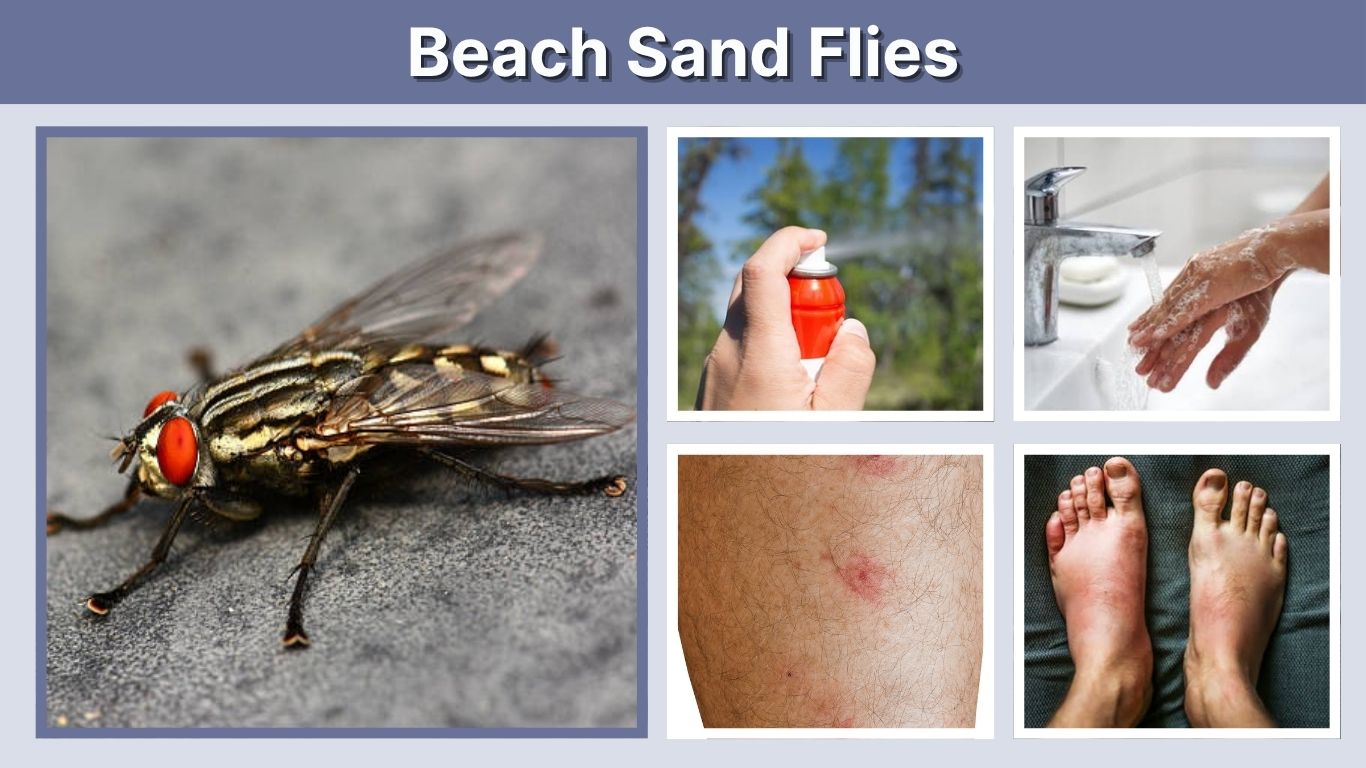
Beach sand flies are tiny biting insects that can turn a relaxing coastal trip into an itchy experience. They are often active around damp sand, salt marshes, mangroves, estuaries, tidal flats, and vegetation near the shoreline. Their bites commonly leave small red bumps that may itch for several days.
The term “sand fly” can be confusing because it describes different insects in different places. On many beaches, particularly in the United States and Australia, people use the name for biting midges or “no-see-ums.” True sand flies belong to a different insect group and may transmit leishmaniasis in certain regions.
What Are Beach Sand Flies?
Beach sand flies are extremely small flies associated with coastal or moist environments. In many popular beach destinations, the insects causing painful, itchy bites are biting midges from the family Ceratopogonidae.
These insects are also called:
- No-see-ums
- Biting midges
- Punkies
- Biting gnats
- Sand gnats
- Sandflies
Biting midges may measure only 1–3 mm long, making them difficult to see while they are flying. Their tiny size also allows them to pass through many ordinary window and door screens.
True Sand Flies vs Biting Midges
True phlebotomine sand flies are small, hairy insects with long legs and wings held upright in a V shape when resting. They are usually active from dusk through dawn.
Biting midges have a more compact appearance and may be active during the day, evening, or night, depending on the species. Both groups contain females that bite because they need blood to produce eggs.
| Feature | True sand fly | Biting midge |
| Typical size | About 2–3 mm | About 1–3 mm |
| Common activity | Dusk to dawn | Daytime or evening |
| Wings | Hairy and held upright | Usually flat over the body |
| Common beach name | Sand fly | No-see-um or sand fly |
| Disease concern | Leishmaniasis in some regions | Oropouche in parts of the Americas |
Why Are Sand Flies Found at Beaches?
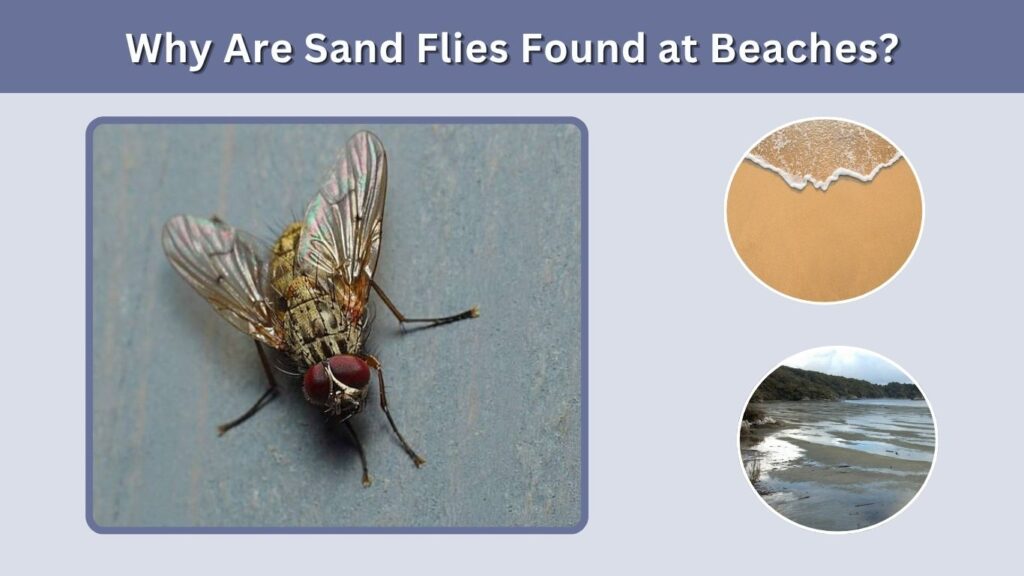
Sand flies and biting midges need moist habitats containing organic material for their immature stages. Coastal environments often provide ideal breeding and resting areas.
They are commonly associated with:
- Salt marshes
- Mangrove edges
- Damp sand
- Muddy tidal areas
- Estuaries
- Wet soil
- Decaying vegetation
- Ponds and drainage channels
- Seaweed piles near the shore
They do not necessarily breed in clean, dry beach sand. Many emerge from nearby marshes, muddy areas, rotting vegetation, or wet soil and then travel toward people on the beach.
Why Do Some Beaches Have More Sand Flies?
Beaches near wetlands, sheltered bays, mangroves, marshes, and estuaries generally offer more suitable habitat than exposed beaches with dry sand and strong winds.
Numbers may increase after rain, flooding, warm weather, or high humidity. Calm conditions can also make bites more noticeable because these tiny insects are weak fliers and have difficulty landing when winds are strong.
Not every beach has a serious sand fly problem. Conditions can vary between nearby beaches and even from one hour to the next.
What Do Beach Sand Fly Bites Look Like?
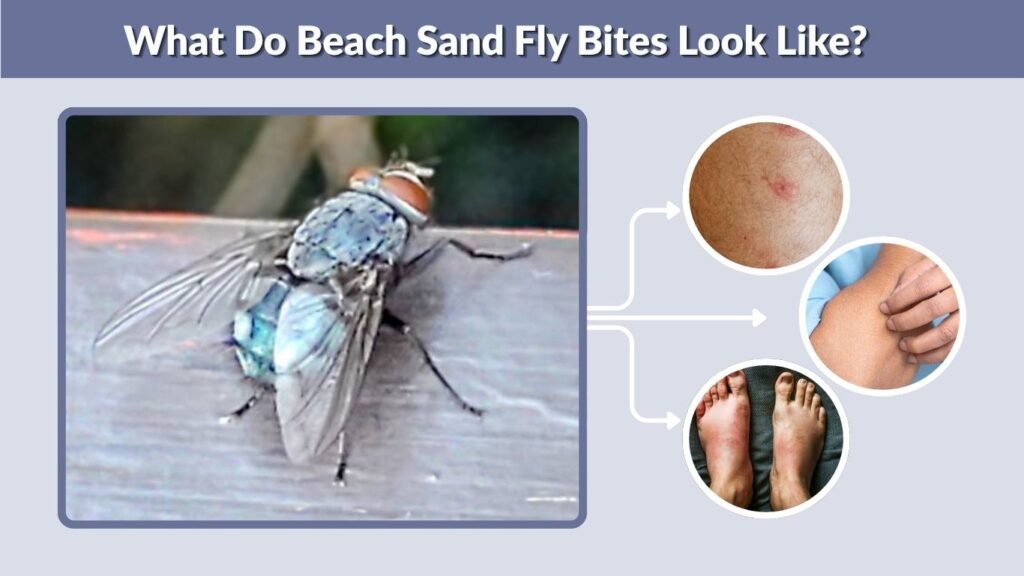
A beach sand fly bite usually appears as a small pink or red bump. Multiple bites may occur close together, especially around the ankles, lower legs, arms, neck, and other exposed areas.
Common Bite Symptoms
- Small red bumps
- Intense itching
- Mild burning or stinging
- Local swelling
- Tenderness
- Groups or clusters of bites
- A tiny central puncture mark
The bite may not be noticed immediately. Itching and swelling can develop several hours later and may persist for several days.
Biting midge mouthparts create a small wound, and the skin reacts to substances in the insect’s saliva. Scratching can damage the skin and increase the risk of a secondary bacterial infection.
How to Treat Beach Sand Fly Bites
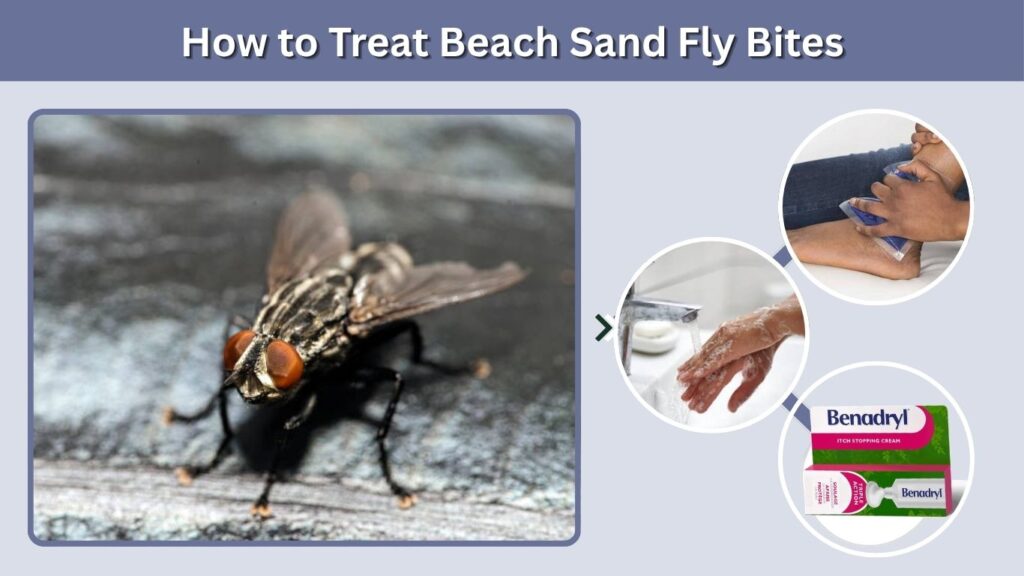
Most sand fly bites can be managed at home. Treatment focuses on reducing itching, swelling, and irritation while preventing infection.
Immediate Bite Care
- Wash the affected skin with soap and clean water.
- Apply a cold compress for 10–15 minutes.
- Avoid scratching the bumps.
- Keep the area clean and dry.
- Ask a pharmacist about an appropriate antihistamine or anti-itch cream.
Do not break blisters or squeeze the bite. Keep fingernails short if itching is severe, especially for children.
Seek medical advice if the area becomes increasingly painful, hot, swollen, or red, or if pus develops. Emergency care is required for breathing difficulty, facial swelling, fainting, or other signs of a serious allergic reaction.
Can Beach Sand Flies Spread Disease?
Most beach bites cause only temporary itching and swelling. However, disease risk depends on the insect species and geographic location.
True sand flies can spread Leishmania parasites in parts of Africa, Asia, the Middle East, southern Europe, Mexico, Central America, South America, and limited areas of the southwestern United States. The most common form causes skin sores that may appear weeks or months after exposure.
Some biting midges can transmit Oropouche virus in parts of South America, Central America, and the Caribbean. This does not mean that every sand fly or no-see-um carries disease. The risk depends heavily on the destination and current local conditions.
Consult a healthcare professional if you develop fever, severe headache, body aches, an unusual spreading rash, or a persistent skin sore after travel.
How to Keep Sand Flies Away at the Beach
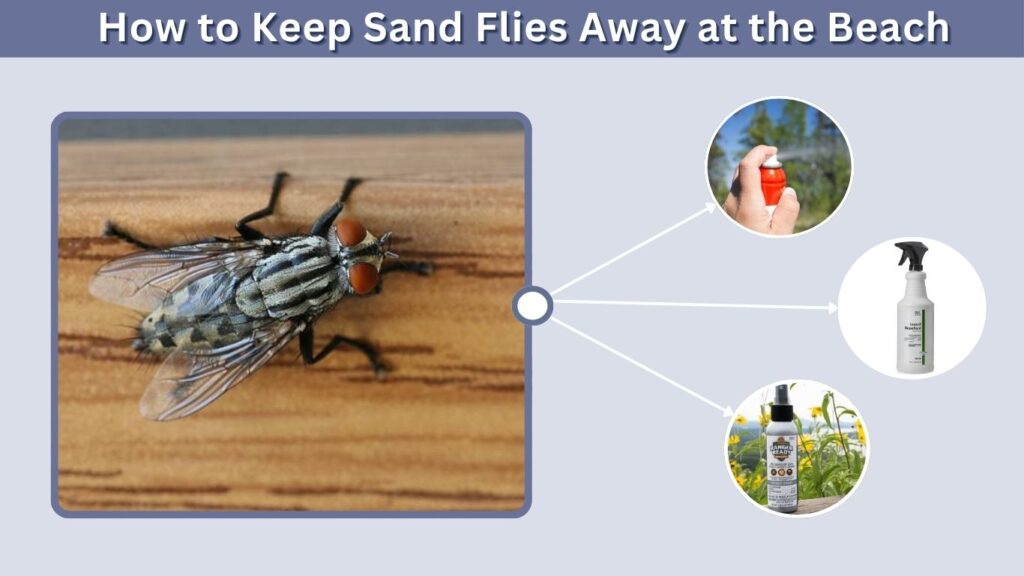
Complete control is difficult because the insects may emerge from large marshes or wetlands. Personal protection is usually more effective than trying to eliminate them from an entire beach.
Use a Suitable Insect Repellent
Apply an EPA-registered repellent to exposed skin according to its label. Available active ingredients include:
- DEET
- Picaridin
- IR3535
- Oil of lemon eucalyptus
- PMD
- 2-undecanone
Check that the product is labeled for biting flies, no-see-ums, midges, or similar insects. Do not assume every mosquito repellent provides equal protection against biting flies.
Cover Exposed Skin
Wear loose, lightweight clothing that covers the arms and legs. Closed shoes and socks help protect the ankles, which are common bite locations.
Tuck trouser legs into socks when walking near marshes or mangroves. Sand flies are tiny enough to reach skin through loose openings in clothing.
Avoid Peak Activity
True sand flies usually feed between dusk and dawn. Biting midges may be active during daylight and evening, but activity often becomes worse around sunrise and sunset.
Leave marshy or sheltered beach areas before dusk when sand flies are abundant. Choose open, breezy sections of the beach rather than areas beside dense vegetation.
Use Wind and Fans
Sand flies and biting midges are weak fliers. A strong natural breeze can greatly reduce their ability to land.
When staying at a beach house, campsite, or covered patio, position fans so that air moves across sitting and sleeping areas.
Choose Accommodation Carefully
Stay in air-conditioned or well-screened rooms when visiting destinations known for biting flies. Because these insects are smaller than mosquitoes, ordinary screens may not stop them.
Fine mesh screens measuring approximately 20 by 20 openings per inch can provide better protection against biting midges. True sand flies may also require small-mesh screens or treated bed nets.
How to Get Rid of Sand Flies Around Beach Property
You cannot realistically treat a public beach or large wetland yourself. Around private coastal property, reducing damp organic material may help limit local breeding sites.
Remove rotting leaves, wet grass clippings, seaweed piles, and other decaying material where allowed. Improve drainage around buildings and repair leaking outdoor taps.
Keep screens in good condition and use fans on patios. Professional pest control may be necessary when biting insects consistently enter a coastal home, but treatments provide limited results when major breeding habitats are nearby.
Avoid spraying insecticides directly onto beach sand, water, dunes, or vegetation without legal authorization. Coastal environments are sensitive and may contain protected wildlife.
Sand Flies vs Sand Fleas
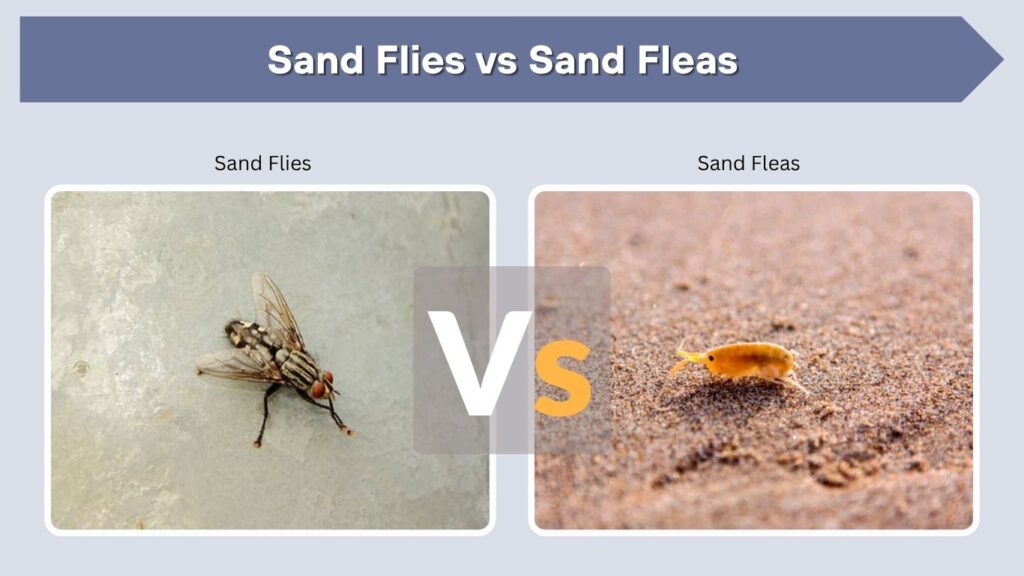
Sand flies are winged insects. Sand fleas may refer to several unrelated animals, including tiny crustaceans living in beach debris or fleas associated with animals.
| Feature | Sand fly | Sand flea |
| Wings | Present | Absent |
| Movement | Flies | Jumps or crawls |
| Body | Tiny fly-like insect | Flea-like or crustacean-like |
| Bite source | Adult female fly | Depends on the animal |
| Habitat | Wet soil and coastal vegetation | Sand, debris, or animal hosts |
The name alone is unreliable, so location, appearance, and bite pattern should be considered.
FAQs
Are sand flies found only at beaches?
No. Depending on the species, they may live in forests, deserts, marshes, farms, caves, rodent burrows, and urban areas. Beaches are only one of several environments where people encounter insects called sand flies.
Do all beaches have sand flies?
No. They are more common near marshes, mangroves, wetlands, estuaries, and damp organic material. Dry, exposed, windy beaches may have very few, even when a nearby sheltered beach has many.
How do you stop sand flies from biting?
Use a repellent labeled for biting flies, cover exposed skin, choose windy areas, avoid marshy vegetation, and limit outdoor exposure around dawn and dusk. Several protective methods used together provide the best results.
Can sand flies bite through clothing?
They may reach skin through thin fabric, mesh, or openings around sleeves and trouser legs. Loose, tightly woven clothing provides better protection than thin or tightly stretched material.
Why do sand fly bites so much?
The immune system reacts to saliva introduced during feeding. This reaction causes itching, redness, and swelling. Scratching worsens inflammation and may allow bacteria to enter the damaged skin.