
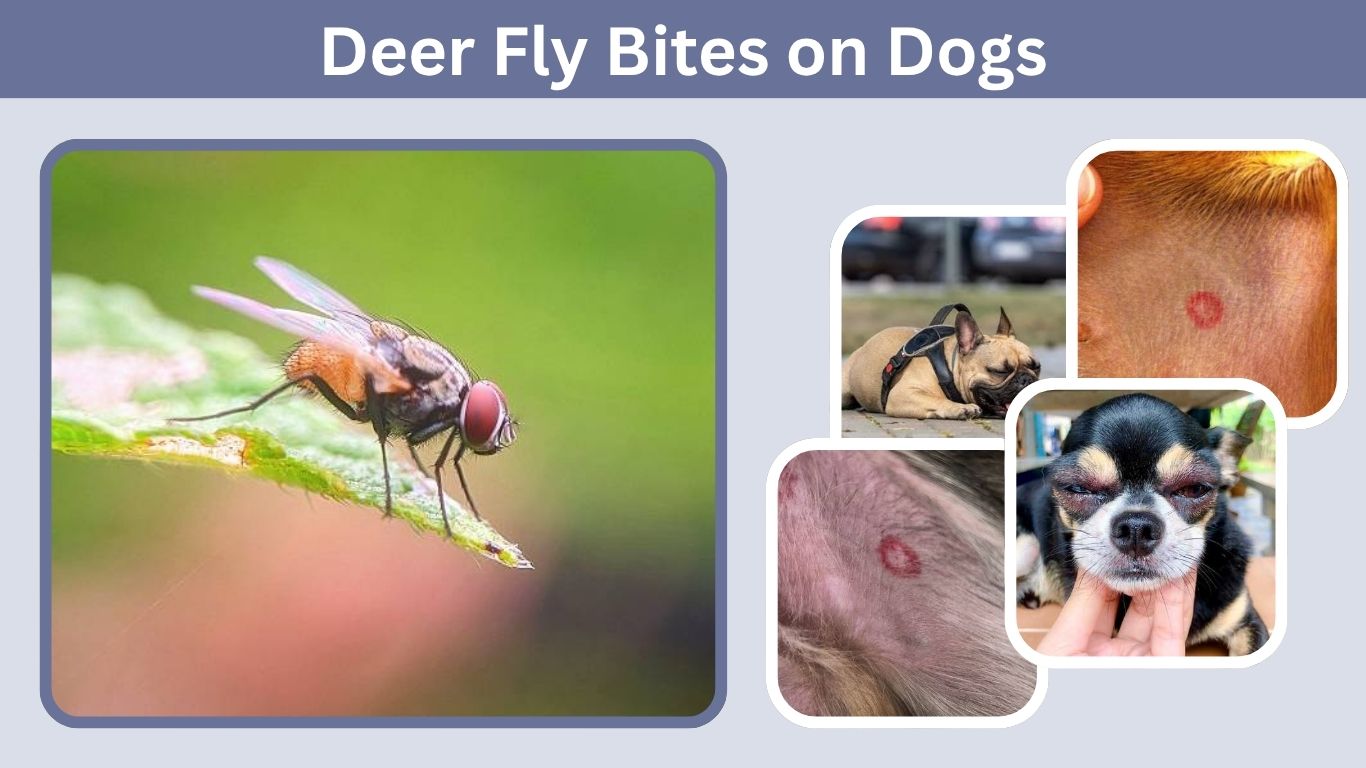
Deer fly bites on dogs can cause sudden pain, redness, swelling, itching, and small bleeding wounds. Most bites are uncomfortable rather than dangerous, but repeated bites, allergic reactions, excessive scratching, and secondary infection can require veterinary care. Dogs spending time around woods, wetlands, ponds, farms, and other damp outdoor areas may face greater exposure. Learning how to recognize and treat a suspected deer fly bite can help your dog recover comfortably and avoid complications.
What Do Deer Fly Bites on Dogs Look Like?
A deer fly bite may appear as a small red bump, raised welt, shallow cut, bloody spot, or swollen area. Deer flies have cutting mouthparts that damage the skin and allow them to feed on the blood that collects around the wound, so their bites can be more painful than mosquito bites.
Common Bite Locations
Deer flies generally target areas that are exposed or have relatively thin hair. Check your dog’s:
- Ear tips and ear flaps
- Nose and muzzle
- Belly and groin
- Inner thighs
- Legs and paws
- Areas around the eyes
Dogs may also be bitten through thin areas of their coat. Long-haired dogs are not completely protected, especially around their faces and ears.
Signs of a Deer Fly Bite
A dog that has been bitten may suddenly yelp, turn toward the affected area, shake its head, scratch, lick, or attempt to bite the skin. Local reactions can include redness, pain, mild swelling, itching, a raised welt, or a small amount of bleeding.
| Reaction | Possible appearance |
| Mild local reaction | Small red bump, tenderness or minor swelling |
| Irritated bite | Persistent licking, scratching or head shaking |
| Allergic reaction | Hives, facial swelling or widespread redness |
| Infection | Increasing swelling, warmth, discharge, odor or pain |
| Multiple bites | Numerous welts, bleeding spots and marked discomfort |
Are Deer Fly Bites Dangerous to Dogs?
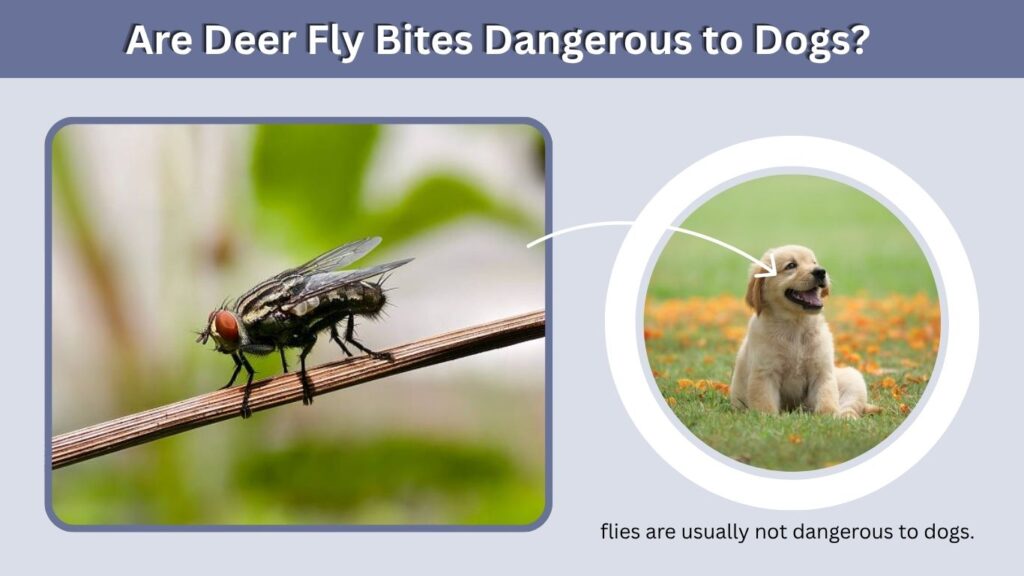
Most individual deer fly bites do not cause lasting harm. The Merck Veterinary Manual notes that biting flies are usually not dangerous to dogs unless the flies are extremely numerous, provoke an allergic reaction, or transmit disease.
Allergic Reactions
Some dogs develop hypersensitivity to insect bites. Warning signs include widespread hives, severe itching, swelling around the muzzle or eyes, vomiting, diarrhea, weakness, or difficulty breathing. Facial or throat swelling can interfere with breathing and should be treated as an emergency.
Infection and Skin Damage
Repeated licking and scratching can reopen a bite and introduce bacteria. Watch for swelling that continues to increase, heat, pus, an unpleasant smell, worsening pain, or a wound that does not begin improving.
Open or moist wounds can also attract other flies. Certain flies may lay eggs in contaminated wounds, leading to fly strike or myiasis. Open wounds should therefore be evaluated and managed promptly, particularly when flies continue gathering around them.
Disease Transmission
Deer flies can transmit certain diseases in some regions. Tularemia, caused by Francisella tularensis, can affect many wild and domestic animals. However, a routine bite does not mean a dog has contracted tularemia, and illness associated with deer fly transmission is uncommon. Contact a veterinarian when a bite is followed by fever, unusual tiredness, loss of appetite, enlarged lymph nodes, or a persistent ulcer.
How to Treat Deer Fly Bites on Dogs
Minor bites can often be managed with basic first aid while the dog is monitored closely. More serious reactions, infected wounds, and multiple painful bites should be evaluated by a veterinarian.
Move Your Dog Indoors
Take your dog away from the infested area to prevent further bites. Place the dog in a cool, quiet room and examine the coat, ears, face, belly, and legs for additional wounds.
Clean the Bite
Gently clean the area with lukewarm water and a mild pet-safe cleanser. Avoid rubbing aggressively because deer fly bites may already have damaged the skin.
Pat the area dry with clean gauze or a soft towel. Contact your veterinarian before applying antiseptics to sensitive areas such as the eyes, nose, mouth, ear canal, or genitals.
Apply a Cold Compress
Place a cold, damp towel or a wrapped ice pack over the affected area for approximately five to ten minutes. Cold therapy can help reduce local pain and swelling. Never place ice directly on the skin, and stop if your dog becomes distressed.
Prevent Licking and Scratching
An Elizabethan collar, inflatable collar, recovery suit, or other veterinary-approved barrier may be necessary if your dog repeatedly disturbs the bite. Persistent chewing can delay healing and turn a minor lesion into an infected wound.
Speak to a Veterinarian Before Giving Medicine
Do not give your dog antihistamines, pain relievers, antibiotics, or steroid creams without veterinary guidance. Even medications sometimes used in dogs must be selected and dosed according to the dog’s weight, health, existing medications, and the specific product formulation.
Human creams may contain ingredients that are unsafe when swallowed. Products combining antihistamines with decongestants or other active ingredients can also be dangerous. A veterinarian can determine whether medication is appropriate.
When Should a Dog See a Veterinarian?

Contact your regular veterinarian when the bite remains painful, swollen, or itchy; your dog cannot stop scratching; the wound is near an eye; or multiple bites are present.
Seek urgent or emergency care for:
- Trouble breathing or noisy breathing
- Rapid facial, muzzle, tongue, or throat swelling
- Widespread hives
- Repeated vomiting or diarrhea
- Weakness, collapse, or disorientation
- Pale or bluish gums
- Uncontrolled bleeding
- A wound containing larvae or maggots
Anaphylaxis is a veterinary emergency that may require epinephrine, oxygen, intravenous fluids, and other professional treatment.
How Long Do Deer Fly Bites Last on Dogs?
A mild bite should gradually become less painful and swollen over the following few days. Comparable uncomplicated biting-fly reactions may settle within approximately 24 to 48 hours, although a deer fly’s cutting bite can leave a small scab that lasts longer.
The area should be examined daily. Veterinary attention is appropriate when swelling increases, the skin becomes hot or wet, discharge develops, your dog appears ill, or the wound shows no clear improvement.
Deer Fly Bite on a Dog vs. Other Skin Problems
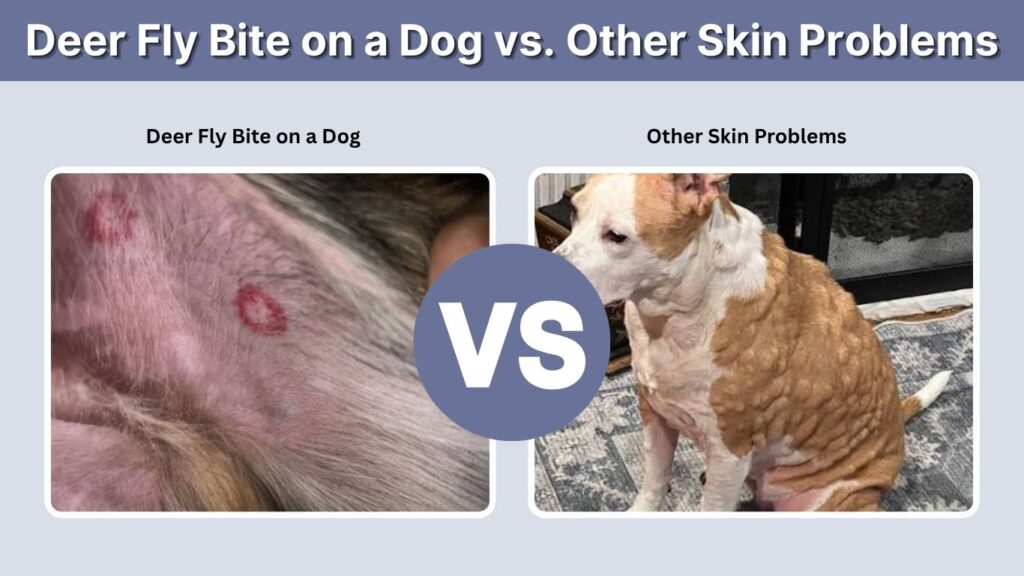
Images of deer fly bites on dogs can be helpful, but a photograph alone cannot confirm which insect caused a lesion. Black fly bites, stable fly bites, flea allergy, ticks, mites, bacterial infections, ringworm, and contact allergies may produce similar redness or irritation.
Deer fly bites are more likely when the dog was outdoors during daylight near wooded or wet environments and suddenly developed a painful, bleeding welt. Flea allergies more commonly cause persistent itching and numerous small lesions, while mites can produce continuing hair loss, scaling, and inflammation.
A veterinarian may need to examine the skin when the cause is uncertain or the problem keeps returning.
How to Prevent Deer Fly Bites on Dogs
Preventing contact is usually more effective than treating repeated bites. Deer and horse flies can be difficult to control because they may travel into a yard from nearby wetlands, woods, or pastures.
Adjust Outdoor Activities
Keep your dog indoors when deer flies are especially active. These flies are commonly encountered during warm weather and are especially active in sunny outdoor conditions near water.
Shorten walks through wet, wooded areas during heavy fly activity. Open, breezy routes may provide more relief than still, shaded paths.
Use Physical Protection
Lightweight dog shirts, cooling vests, snoods, or protective ear coverings may reduce access to vulnerable skin. Ensure that clothing fits properly, does not cause overheating, and does not restrict movement or breathing.
Use Only Dog-Safe Repellents
Choose a veterinary-approved repellent specifically labeled for dogs and the insect you are trying to control. Never assume that a human insect repellent, horse spray, essential oil mixture, or household pesticide is safe for pets.
Permethrin-containing products are available for dogs, but they can be fatal to cats. Follow the complete label, and ask a veterinarian about appropriate use when cats live in the household.
Maintain the Dog’s Environment
Keep kennels, bedding, food areas, and outdoor resting spaces clean. Remove feces promptly, clean urine-soiled surfaces, and have open wounds treated. Routine grooming also makes it easier to identify fresh bites before they become severely irritated.
FAQs
Can a deer fly bite make a dog sick?
Most deer fly bites cause only localized pain, redness, or swelling. A dog can become seriously ill from a severe allergic reaction, extensive biting, an infected wound, or, rarely, a disease associated with biting flies. Monitor the dog’s behavior and general health after a bite.
Can I put hydrocortisone on my dog’s deer fly bite?
Do not apply human hydrocortisone products without veterinary approval. The location of the bite, your dog’s health, the product’s strength, and the possibility of licking all affect safety. Your veterinarian may recommend a dog-safe topical treatment when needed.
Can I give my dog Benadryl for a deer fly bite?
Only give diphenhydramine after your veterinarian confirms that it is suitable and provides the correct product and dose. Some formulations contain additional ingredients that can harm dogs, and an antihistamine is not a substitute for emergency care during breathing difficulty or severe swelling.
Why do deer flies bite my dog’s ears?
Ear tips have thin skin and limited protective hair, making them accessible to biting flies. Dogs with upright ears or dogs spending long periods outdoors may be especially vulnerable. Bites can reopen when the dog shakes or scratches its ears.
Can deer fly bites become infected?
Yes. The original wound can become infected when a dog scratches, chews, or repeatedly licks it. Seek veterinary care if redness spreads, swelling worsens, pus or odor develops, or the area becomes increasingly painful.