
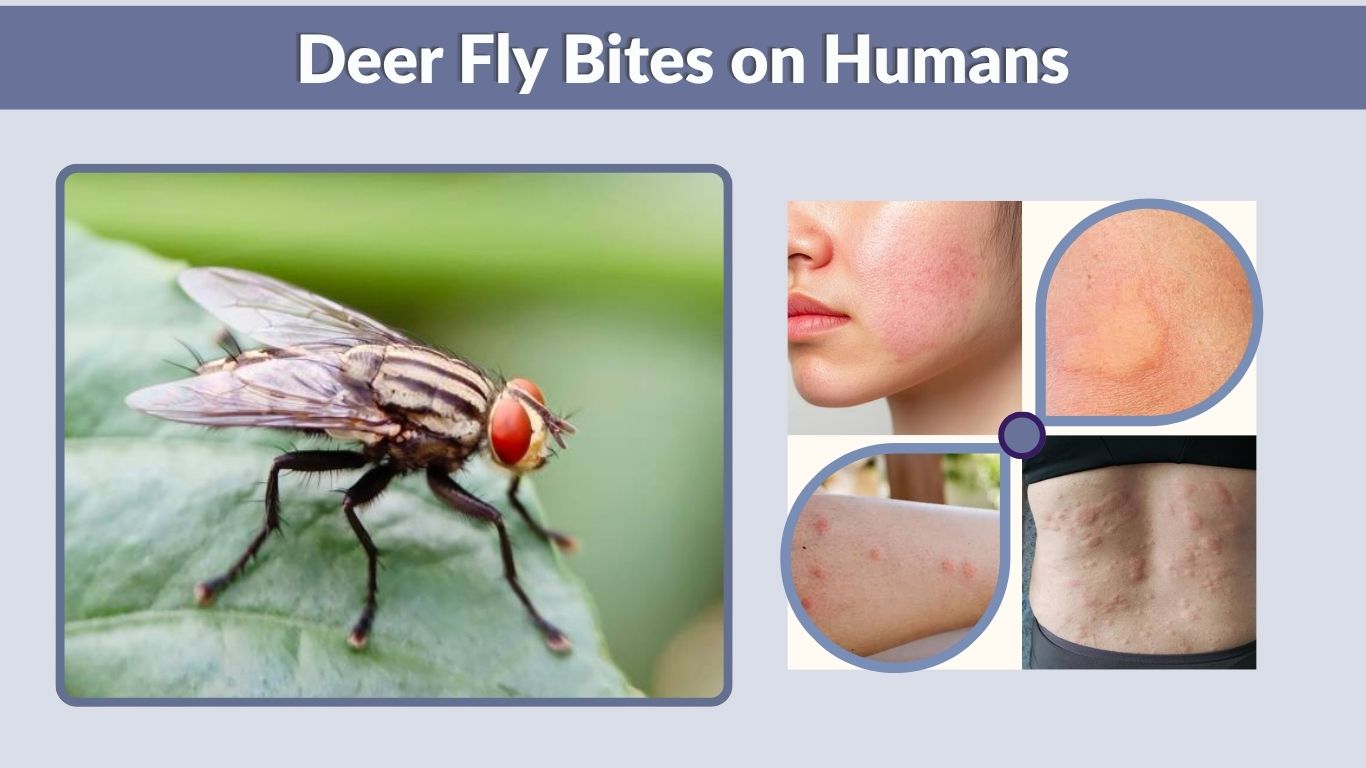
Deer fly bites on humans can be suddenly painful and may leave a red, swollen, or itchy wound. Unlike insects that gently pierce the skin, deer flies use cutting mouthparts to obtain blood, which can produce a small open sore that occasionally bleeds. Most bites can be treated at home with cleaning, cold compresses, and protection from scratching. However, worsening swelling, infection, severe allergic symptoms, or illness after a bite requires medical attention. This guide explains what a deer fly bite looks like, how to treat it, and when to contact a doctor.
What Does a Deer Fly Bite Look Like?
A deer fly bite usually causes immediate sharp or burning pain. The bitten area may develop a raised red bump, localized swelling, itching, tenderness, or a small amount of bleeding. Because the skin is physically cut, the center may resemble a tiny scrape rather than a simple puncture.
Common Symptoms
Typical symptoms include:
- Immediate sharp or burning pain
- A red bump or welt
- Mild to moderate swelling
- Itching around the wound
- Tenderness when touched
- A small cut or spot of blood
- Warmth around the affected area
Most uncomplicated insect bites improve with home treatment. Mild itching and swelling commonly settle within a few days, although a stronger local reaction may last longer.
Deer Fly Bite vs. Mosquito Bite
| Feature | Deer fly bite | Mosquito bite |
| Initial feeling | Usually immediately painful | Often unnoticed at first |
| Skin damage | May leave a small cut | Usually creates a puncture |
| Bleeding | Sometimes present | Uncommon |
| Swelling | Can be noticeable | Usually mild |
| Main complaint | Pain, swelling, and itching | Mainly itching |
| Stinger left behind | No | No |
What Should You Do After a Deer Fly Bite?
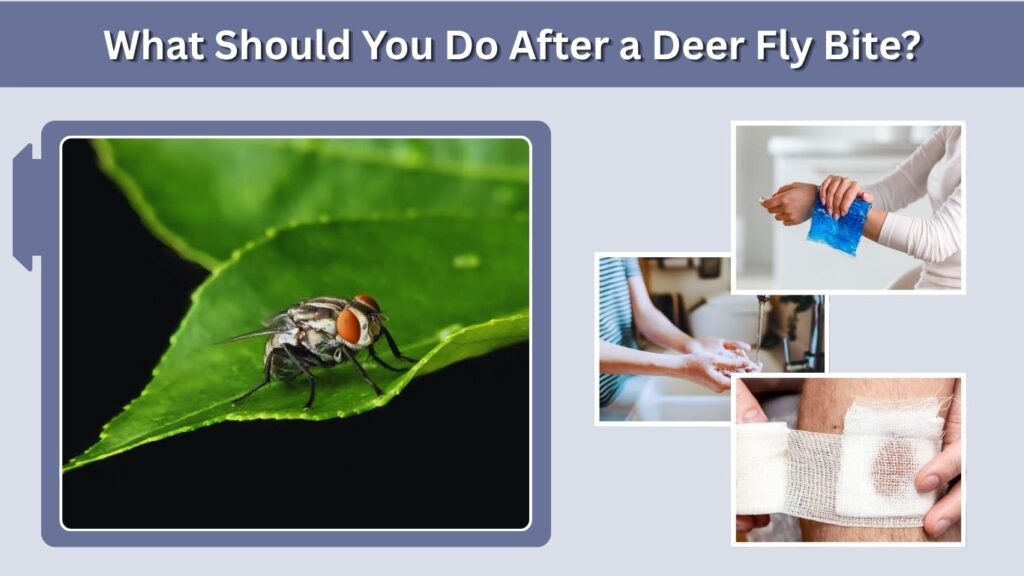
Prompt first aid can reduce irritation and lower the chance of infection. Move away from the area first because deer flies may continue circling and attempt to bite again.
1. Wash the Bite
Clean the wound gently with mild soap and running water. Remove any visible dirt without scrubbing aggressively. Pat it dry with clean gauze or a towel.
Cleaning is particularly important because a deer fly bite can break the surface of the skin. General insect-bite guidance recommends keeping the site clean and monitoring it for increasing pain, redness, or swelling.
2. Stop Minor Bleeding
Place clean gauze or a clean cloth over the wound and apply gentle, steady pressure. Minor bleeding should normally stop quickly. Do not repeatedly lift the gauze to check, because this can disturb the forming clot.
Seek medical help when bleeding is heavy, will not stop, or occurs in someone taking blood-thinning medication.
3. Apply a Cold Compress
Wrap ice or a cold pack in a thin cloth and place it on the bite for about 10 to 20 minutes. Never apply ice directly to bare skin.
Cold treatment can reduce pain, itching, and swelling. The compress can be repeated as needed, allowing the skin to return to its normal temperature between applications.
4. Elevate the Affected Area
When the bite is on an arm, hand, leg, or foot, raise the area above heart level when practical. Elevation can help limit swelling, especially during the first day.
Remove rings, tight bracelets, anklets, or restrictive clothing early if the bite is near them. Increasing swelling could make these items difficult to remove later.
5. Reduce Itching and Discomfort
A pharmacist or healthcare professional may recommend an oral antihistamine, calamine lotion, or nonprescription hydrocortisone cream for itching and mild swelling. An appropriate over-the-counter pain reliever may help with soreness.
Follow package directions, age restrictions, health warnings, and medication-interaction advice. Parents should consult a healthcare professional before giving medicines to young children.
6. Protect the Wound
A small clean adhesive bandage can protect an open or weeping bite from dirt and friction. Change the bandage daily or whenever it becomes wet or dirty.
Once the surface has closed and there is no drainage, leaving it uncovered may be more comfortable. Keep watching the area for several days.
What Should You Avoid Doing?
Some actions can make irritation worse or introduce bacteria into the wound.
Do Not Scratch the Bite
Scratching can reopen the skin, increase inflammation, and transfer bacteria from under the fingernails. Keep nails short and use a cool compress when itching becomes difficult to ignore.
Do Not Squeeze or Cut It
There is no venom sac or stinger that needs to be removed from a deer fly bite. Squeezing, cutting, or repeatedly picking at the wound can increase tissue damage and infection risk.
Avoid Harsh Home Remedies
Do not apply gasoline, bleach, strong disinfectants, undiluted essential oils, or other irritating substances. These materials can burn or inflame the skin without improving healing.
How Long Does a Deer Fly Bite Last?
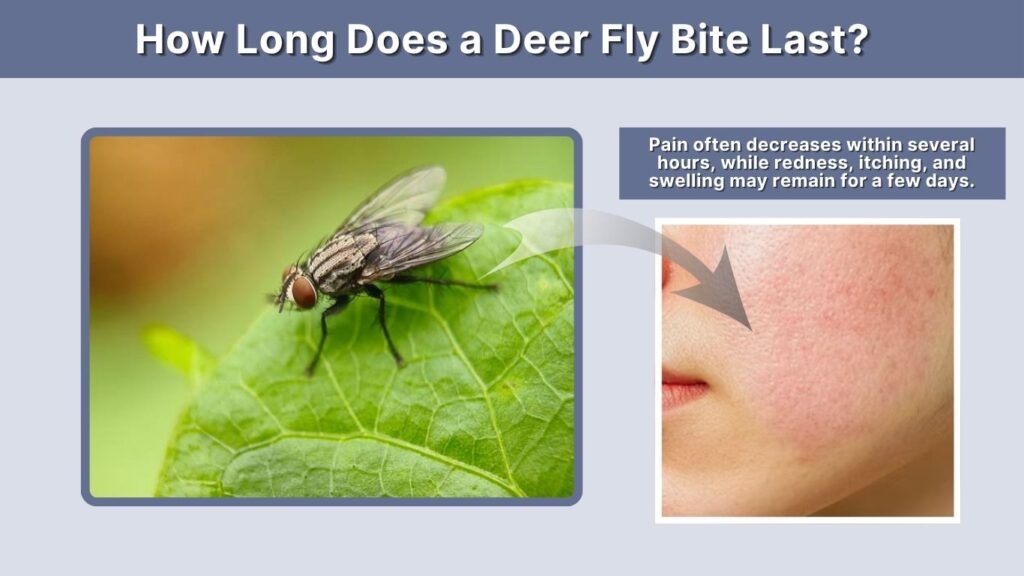
Pain often decreases within several hours, while redness, itching, and swelling may remain for a few days. A larger local reaction may worsen temporarily during the first day or two before gradually improving.
The wound should become less painful and less red over time. Marking the edge of redness with a pen can help determine whether it is spreading. Take a dated photograph when monitoring a noticeable reaction.
Signs of an Infected Deer Fly Bite
Any break in the skin can become infected, especially when scratched repeatedly. Contact a healthcare professional when symptoms are getting worse instead of gradually improving.
Infection Warning Signs
Watch for:
- Redness that continues to spread
- Increasing warmth or swelling
- Worsening pain after the first day
- Pus or cloudy drainage
- Red streaks extending from the bite
- Fever or chills
- Swollen or tender lymph nodes
- A wound that does not begin healing
Increasing redness, swelling, or pain over several days can indicate infection and should be medically assessed.
People with diabetes, poor circulation, weakened immunity, or a history of serious skin infections should seek advice sooner.
Can Deer Fly Bites Cause an Allergic Reaction?
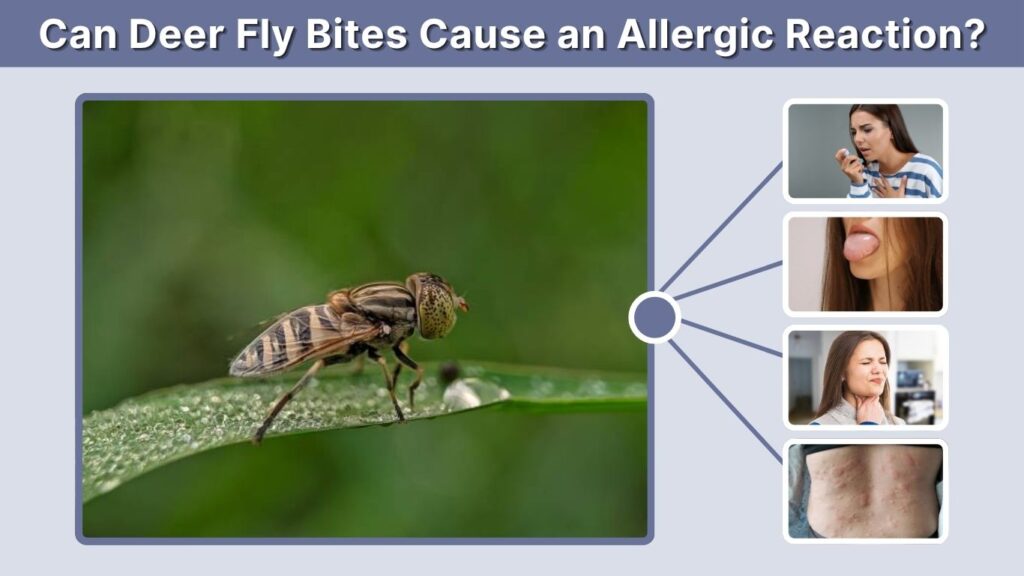
Most reactions remain limited to the bite area. Occasionally, a person may develop extensive swelling, widespread hives, or another significant allergic response.
When to Get Emergency Help
Call your local emergency number immediately for:
- Trouble breathing or wheezing
- Swelling of the lips, tongue, face, or throat
- Difficulty swallowing
- Widespread hives
- Dizziness, confusion, or fainting
- A weak or unusually rapid pulse
- Repeated vomiting
- A feeling that something is seriously wrong
These symptoms may indicate anaphylaxis, a rapidly developing and potentially life-threatening allergic reaction. Someone prescribed an epinephrine auto-injector should use it as directed and still obtain emergency care.
Can a Deer Fly Bite Transmit Disease?
Deer flies can transmit tularemia, a potentially serious bacterial disease, although most deer fly bites do not cause it. In the United States, deer fly transmission has particularly been documented in western areas.
Symptoms That May Suggest Tularemia
Contact a healthcare professional promptly when an illness develops after a deer fly bite, especially if it includes:
- Fever or chills
- Headache and unusual fatigue
- Muscle aches
- A persistent ulcer at the bite site
- Painful, enlarged lymph nodes
- A wound that becomes unusually deep or slow to heal
Ulceroglandular tularemia may cause a skin ulcer where the bacteria entered and swollen lymph nodes near the affected area. Symptoms generally begin within several days, although the possible incubation range is broader. Tell the clinician when and where the bite occurred.
Do not attempt to treat suspected tularemia with leftover antibiotics. A clinician must evaluate the symptoms and prescribe an appropriate treatment.
How to Prevent Deer Fly Bites
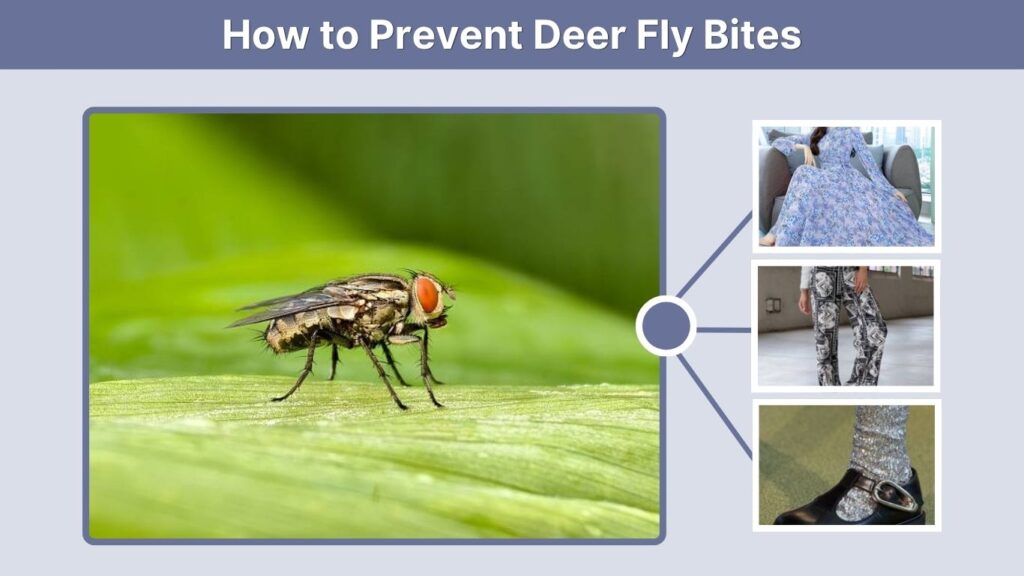
Deer flies are strong daytime fliers and may be persistent around people and animals. Bite prevention is especially useful near wetlands, wooded areas, streams, and other habitats where biting flies are active.
Wear Protective Clothing
Wear long sleeves, long trousers, socks, and closed shoes. Light-colored clothing can make flies easier to notice. A hat may help because deer flies often circle around the head.
Use an Appropriate Repellent
Apply an insect repellent labeled for biting flies, following all product directions. Use only enough to cover exposed skin or clothing, and never put repellent on cuts, inflamed skin, eyes, or the mouth.
Move Indoors When Activity Is Heavy
When several flies repeatedly circle or land, moving inside a screened vehicle or building may be more effective than continuously swatting them. Check children and pets after outdoor activities and clean any visible bites promptly.
FAQs
Why do deer fly bites hurt so much?
Female deer flies obtain blood by cutting the skin, creating a small surface wound. This produces immediate pain and may cause slight bleeding, swelling, and inflammation.
Should I put antibiotic ointment on a deer fly bite?
Many clean, minor bites do not require antibiotic ointment. Wash the wound and protect it from contamination. Ask a pharmacist or clinician before applying medication, particularly if the skin is sensitive or infection is suspected.
Can swelling from a deer fly bite be normal?
Mild localized swelling is common. A cold compress and elevation may help. Seek care when swelling rapidly expands, affects the face or throat, or is accompanied by breathing trouble, fever, spreading redness, or severe pain.
Do deer flies leave a stinger in humans?
No. Deer flies bite using specialized mouthparts and do not leave a stinger behind. There is normally nothing to scrape or pull from the wound.
When should I see a doctor after a deer fly bite?
Seek medical advice for infection signs, persistent or severe swelling, worsening pain, a skin ulcer, fever, swollen lymph nodes, or symptoms that do not improve. Breathing difficulty, facial or throat swelling, dizziness, or fainting requires emergency help.