
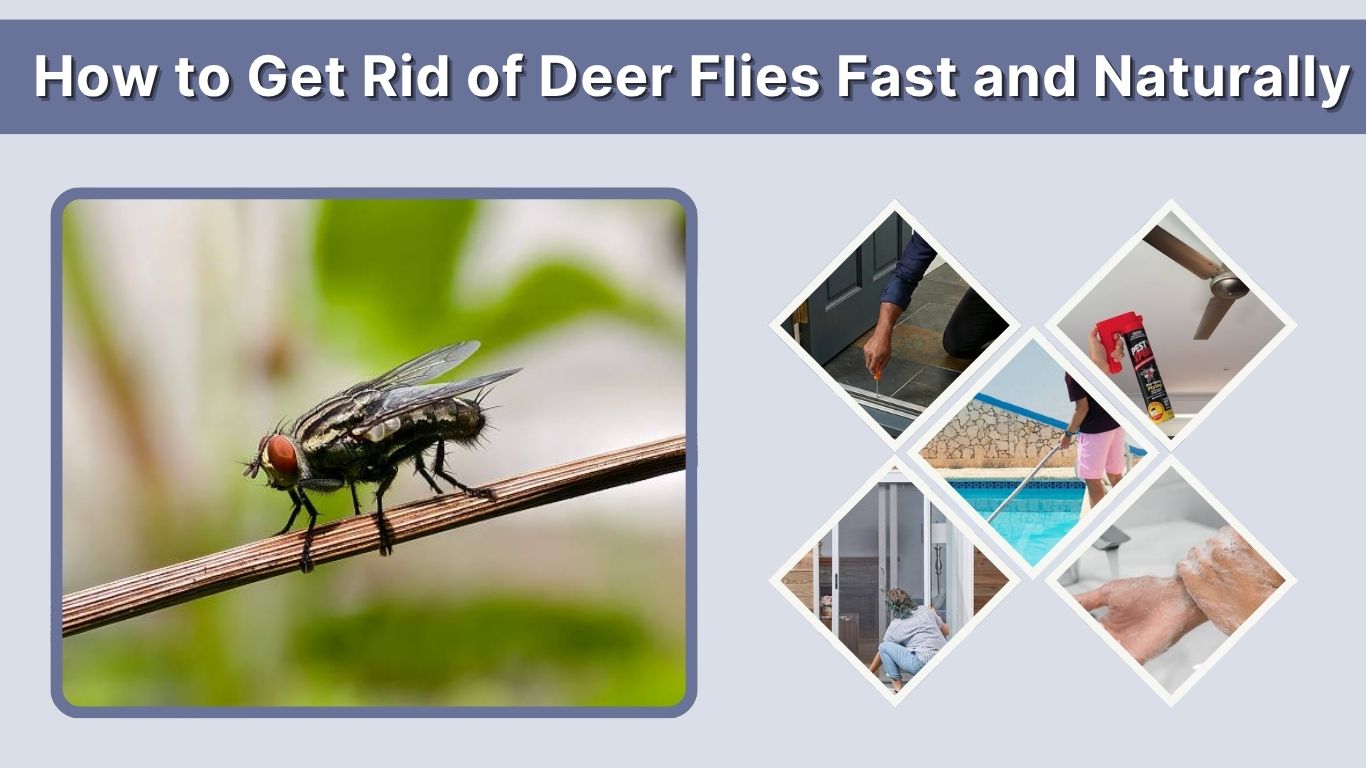
Deer flies are aggressive, fast-moving insects that can make gardening, swimming, hiking, or caring for animals uncomfortable. Female deer flies feed on blood and deliver painful bites, while males mainly consume nectar and plant fluids. Because these flies often breed near wetlands, ponds, muddy soil, and wooded areas, completely eliminating them can be difficult. However, using traps, repellents, protective clothing, outdoor fans, and property maintenance can significantly reduce deer fly activity around your yard, swimming pool, home, and animals.
How to Identify Deer Flies
Correct identification is important because deer flies, horse flies, yellow flies, and ordinary houseflies require different control methods. Deer flies belong to the Tabanidae family and are commonly found around forests, wetlands, ponds, streams, and shaded yards.
Appearance
Most deer flies are approximately ¼ to ½ inch long. They generally have:
- Dark bands or patterns across their wings
- Large, brightly colored eyes
- Yellow, brown, gray, or black bodies
- Short antennae
- A compact, triangular appearance
Yellow deer flies may have more noticeable yellow or golden coloring, but their control methods are generally the same.
Deer Flies vs. Horse Flies
Deer flies are usually smaller than horse flies and often have patterned wings. Horse flies are larger, heavier-bodied, and may deliver an even more painful bite.
| Feature | Deer Fly | Horse Fly |
| Typical size | ¼–½ inch | ½–1¼ inches |
| Wings | Usually patterned or banded | Often clear or smoky |
| Flight behavior | Circles the head and shoulders | Flies directly toward people or animals |
| Common habitat | Wetlands, forests, ponds | Fields, farms, marshes |
| Bite | Painful, cutting bite | Strong, painful bite |
How to Get Rid of Deer Flies Outside
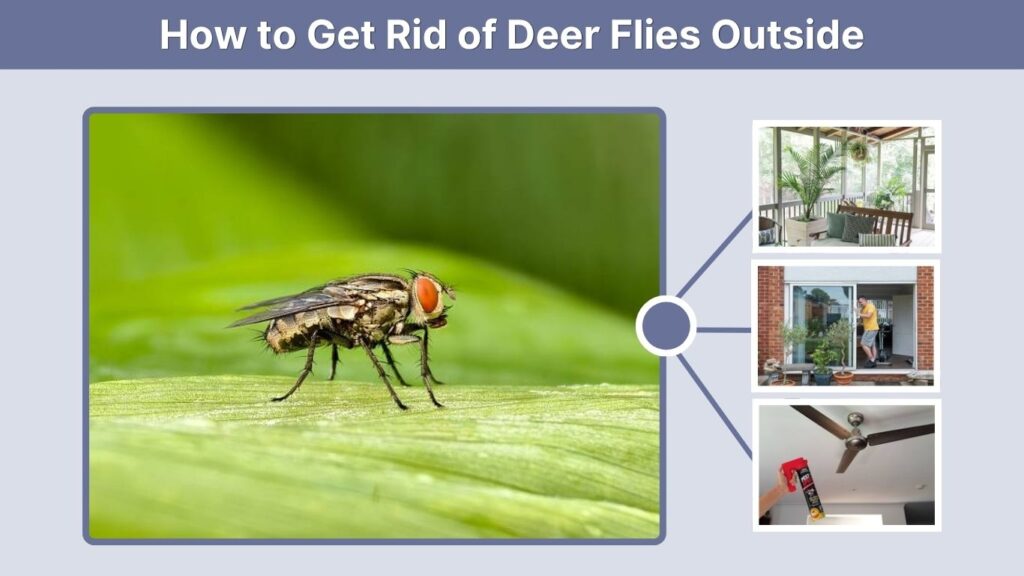
Outdoor deer fly control works best when several methods are used together. Spraying a single product may kill a few flies, but it rarely provides lasting control because adults can fly into your property from nearby breeding areas.
Use Deer Fly Traps
Deer flies are attracted to moving, dark-colored objects. Commercial deer fly traps commonly use blue or black surfaces coated with sticky material.
Place traps:
- Along woodland edges
- Near trails or property borders
- Away from patios and doors
- Several yards from swimming or seating areas
- Where flies are most active
Do not position traps directly beside people because the movement and color may attract flies toward the area before they become trapped.
A homemade deer fly trap can be made with a blue plastic cup or container covered in a suitable insect-trapping adhesive. Mount it on a pole, hat, or moving object only when the adhesive can be used safely and kept away from children, pets, birds, and beneficial insects.
Use Outdoor Fans
Deer flies are strong fliers, but steady airflow can make it harder for them to land and bite. Place high-powered fans around:
- Patios
- Porches
- Outdoor dining areas
- Pool seating areas
- Animal grooming stations
Point the airflow across the area where people will be sitting rather than straight upward.
Reduce Attractive Resting Areas
Trim overgrown shrubs, tall weeds, and vegetation around frequently used parts of the yard. This increases sunlight and airflow while reducing shaded resting places.
Removing vegetation alone will not eliminate deer flies because their breeding grounds may be beyond your property. However, it can make patios, paths, and play areas less comfortable for them.
How to Get Rid of Deer Flies in Your Yard
A yard beside woods, wetlands, drainage ditches, or standing water may experience greater deer fly activity. Focus on protecting the areas you use most instead of attempting to treat the entire property.
Manage Excess Moisture
Deer fly larvae usually develop in wet soil, marshes, pond edges, and muddy areas. Correct moisture problems that can be managed safely, such as:
- Leaking outdoor faucets
- Poorly draining planters
- Clogged gutters
- Water-filled containers
- Constantly muddy areas near sprinklers
- Blocked drainage channels
Do not drain natural wetlands or alter protected waterways. These habitats may be regulated and support valuable wildlife.
Create a Protected Outdoor Zone
Choose one part of the yard for regular outdoor activity. Keep the grass trimmed, improve airflow, install fans, and position traps around the outer boundary.
Light-colored furniture, umbrellas, and clothing may also help because deer flies frequently investigate dark or moving objects.
Avoid Peak Activity
Deer flies are usually most active during warm daylight hours. Activity often increases on hot, sunny, humid days with little wind.
When possible, schedule yard work for:
- Cooler mornings
- Windier periods
- Overcast conditions
- Times when local fly activity is lower
How to Get Rid of Deer Flies Around a Swimming Pool
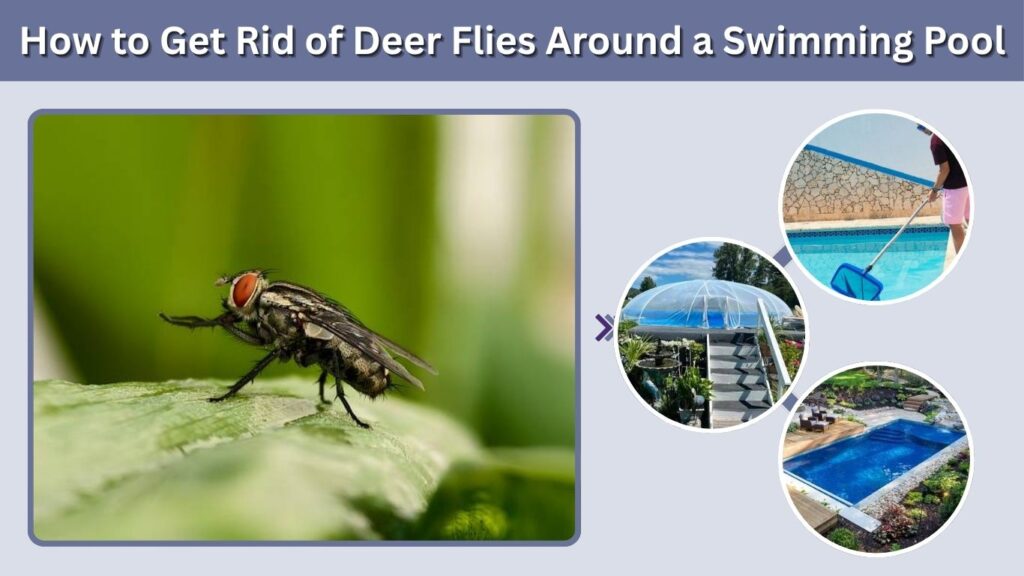
Pools attract people rather than necessarily attracting deer flies directly. Movement, body heat, carbon dioxide, and dark swimwear can help the flies locate swimmers.
Position Traps Away From the Pool
Install traps along the route flies use to enter the property, such as woodland borders or fence lines. Keep them away from the pool deck so they do not draw additional flies toward swimmers.
Improve Air Circulation
Use outdoor fans around lounge chairs, tables, and shaded seating areas. Poolside umbrellas create shade, which can become a resting location for biting flies, so airflow underneath them is especially helpful.
Keep the Pool Area Clean
Remove wet towels, decaying leaves, grass clippings, and other damp organic material. Keep nearby drains clear and repair areas where irrigation or pool equipment creates continuously wet soil.
Avoid applying insecticides directly over pool water. Any pesticide used near a pool must be specifically labeled for that location and applied according to its instructions.
How to Get Rid of Deer Flies Naturally
Natural methods are most effective for preventing bites and reducing local activity. They may not eliminate flies arriving from nearby wetlands or forests.
Wear Protective Clothing
Wear loose-fitting, light-colored clothing when deer flies are active. Helpful options include:
- Long-sleeved shirts
- Long pants
- Closed shoes
- A hat with a neck flap
- Lightweight mesh head protection
Deer flies may bite through thin, tight clothing, so thicker and looser fabrics provide better protection.
Use Personal Repellents
Plant-based repellents may offer brief protection, but their effects often fade quickly. Products containing proven active ingredients such as DEET or picaridin generally provide more dependable protection when used as directed.
Apply repellents only to approved areas of skin or clothing. Avoid the eyes, mouth, cuts, and irritated skin, and follow all age restrictions on the label.
Combine Fans and Traps
For a pesticide-free setup, place fans within the occupied area and traps around its perimeter. The fans discourage landing, while the traps intercept some flies before they reach people.
Home remedies involving strong-smelling herbs, vinegar, or essential oils may repel a few flies temporarily, but they are unlikely to control a serious outdoor population.
How to Get Rid of Deer Flies in the House
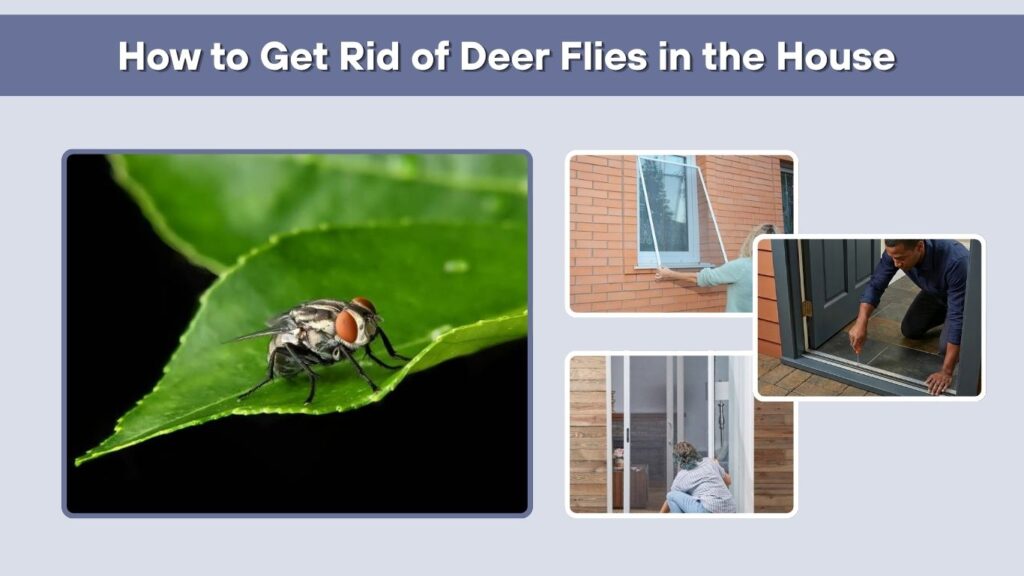
Deer flies do not normally establish indoor infestations. They usually enter accidentally through open doors, damaged screens, or gaps around windows.
Block Entry Points
Inspect and repair:
- Window screens
- Screen doors
- Door sweeps
- Gaps around utility lines
- Damaged weather stripping
- Openings around window air conditioners
Keep doors closed during peak fly activity and avoid leaving unscreened windows open.
Remove Flies Indoors
Use a fly swatter, vacuum, or indoor trap to remove individual flies. Empty the vacuum outdoors after capturing live insects.
Heavy indoor pesticide treatment is rarely necessary because deer flies generally cannot reproduce inside a normal home.
How to Get Rid of Deer and Horse Flies
The same basic approach can reduce both deer flies and horse flies:
- Protect people with repellents and appropriate clothing.
- Use traps around property boundaries.
- Install fans in outdoor gathering areas.
- Remove manageable moisture and dense vegetation.
- Screen doors and windows.
- Limit outdoor activity during peak fly periods.
Large horse fly traps may use dark moving targets or funnel-shaped designs. Smaller blue sticky traps can be particularly useful for deer flies.
How to Get Rid of Deer Flies on Horses
Deer flies can cause pain, stress, blood loss, and skin irritation in horses. Animals may constantly shake their heads, swish their tails, kick, or run to escape them.
Use Physical Protection
Protective equipment may include:
- Fly masks
- Ear covers
- Fly sheets
- Neck covers
- Leg wraps designed for fly protection
Check the equipment regularly to prevent rubbing, overheating, or poor fit.
Apply an Equine Fly Repellent
Choose a repellent specifically labeled for horses and biting flies. Follow the application schedule carefully because sweat, rain, bathing, and grooming can reduce effectiveness.
Avoid applying products near the eyes, mouth, or irritated skin unless the label specifically permits it.
Improve Stable and Pasture Management
Use fans in barns, remove manure regularly, maintain clean water sources, and repair muddy areas near troughs. Manure management may not eliminate deer fly breeding, but it helps control other flies and creates a healthier environment.
How to Treat Deer Fly Bites
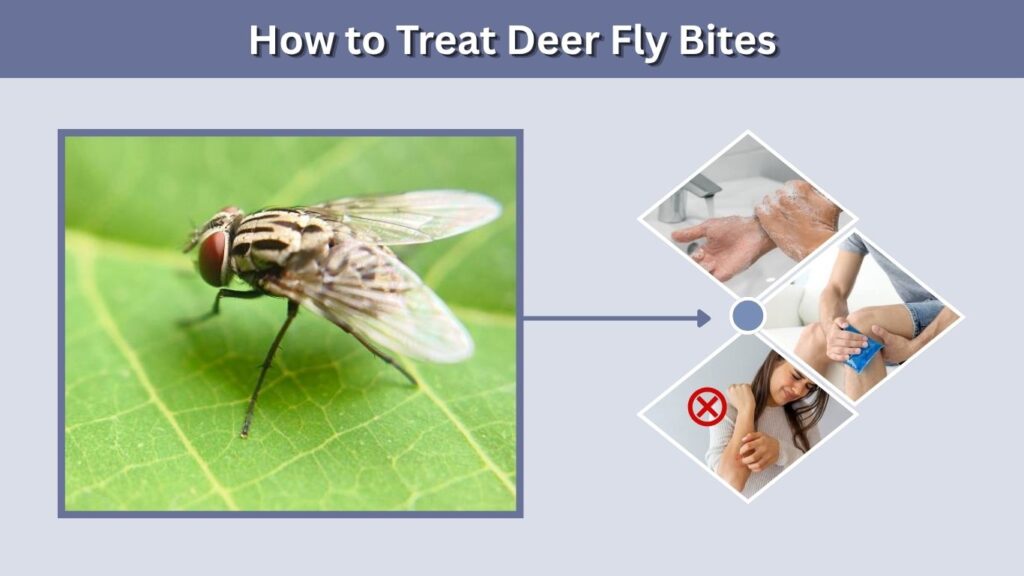
Deer flies cut the skin rather than piercing it like mosquitoes. Their bites can cause immediate pain, bleeding, swelling, redness, and itching.
Wash the bite with soap and water, apply a cold compress for 10–15 minutes, and avoid scratching. An over-the-counter anti-itch product or antihistamine may help when used appropriately.
Seek medical attention for difficulty breathing, facial swelling, dizziness, widespread hives, severe swelling, increasing pain, warmth, pus, fever, or other signs of an allergic reaction or infection.
FAQs
What is the fastest way to get rid of deer flies?
The fastest practical approach is to combine blue or dark-colored traps, outdoor fans, personal repellent, and protective clothing. Traps reduce some nearby adults, while fans and repellents immediately make it harder for deer flies to land and bite.
Why are there so many deer flies in my yard?
Your yard may be close to wetlands, woods, muddy soil, ponds, streams, or drainage areas where deer fly larvae develop. Warm weather, low wind, dense vegetation, and nearby wildlife can also increase adult fly activity.
Do deer fly traps really work?
Properly placed traps can capture large numbers of deer flies, especially when they use blue, black, or moving targets. However, traps rarely eliminate every fly because new adults may continually enter from surrounding habitats.
What smell keeps deer flies away?
Some strong plant-based scents may discourage deer flies briefly, but results are inconsistent. Personal repellents containing proven active ingredients generally offer more reliable protection than vinegar, herbs, or homemade essential-oil mixtures.
Will spraying my yard eliminate deer flies?
Yard sprays may temporarily reduce adult flies resting on treated vegetation, but they usually do not provide permanent control. Deer flies can travel from nearby breeding areas, and widespread spraying may also harm pollinators and other beneficial insects.