
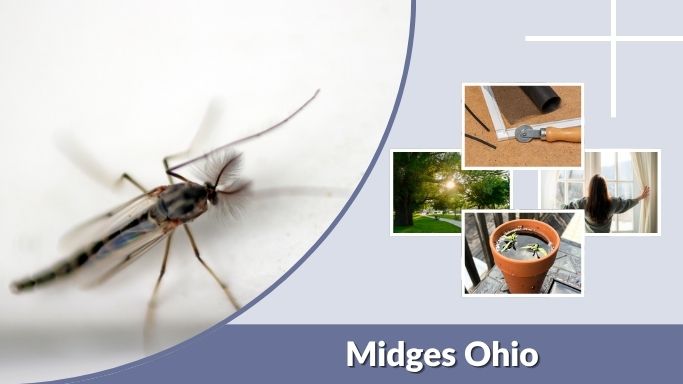
Midges in Ohio are tiny fly-like insects that become highly noticeable in spring, summer, and sometimes fall. They are especially common around Lake Erie, Cleveland, Sandusky, Toledo, wetlands, ponds, and rivers. Most Ohio midges do not bite, but some tiny biting midges can irritate people and pets. Understanding the difference helps homeowners deal with swarms without overreacting.
What Are Midges in Ohio?
Midges are small flies that often look like mosquitoes at first glance. In Ohio, the most visible swarms are usually non-biting aquatic midges. These insects develop in water as larvae, emerge as adults, gather in large numbers, mate, and die within a short time.
They are often called lake flies, muffleheads, blind mosquitoes, or simply midge bugs. Around Lake Erie, they can cover windows, cars, doors, porch lights, boat docks, and outdoor walls. Their numbers may look alarming, but most of these insects are harmless to humans.
Ohio Midges Identification
- Small, mosquito-like body
- Long legs and narrow wings
- Often seen in large swarms
- Attracted to lights, walls, windows, and pale surfaces
- Common near lakes, ponds, rivers, and wetlands
- Most Lake Erie midges do not bite
- Usually weak fliers that gather around buildings
- Often appear suddenly when water and weather conditions are right
Non-biting midges belong to a group of flies that spend their immature stage in freshwater. Their larvae live in mud, sediment, or organic-rich water. Adult midges do not live long, but they emerge in huge numbers, which is why Ohio residents may feel like they appeared overnight.
Why Ohio Has So Many Midges
Ohio has many perfect midge habitats. Lake Erie is the biggest reason Northeast Ohio sees heavy seasonal swarms. Midges also breed in ponds, drainage areas, marshes, slow-moving streams, and nutrient-rich water.
Warm weather speeds up development. When water temperatures rise in spring and early summer, adult midges emerge from aquatic habitats. Shoreline cities such as Cleveland, Lakewood, Euclid, Mentor, Sandusky, and Toledo may notice them more because wind can push swarms inland from the lake.
Are Midges Good or Bad?
Midges are annoying, but they are not all bad. Their larvae help recycle organic matter in freshwater systems. Adult midges also become food for fish, birds, spiders, bats, frogs, and other wildlife.
Large swarms can still create problems. They may stain walls, clog screens, collect around doorways, and make patios uncomfortable. When crushed, they can leave smears on cars, siding, and outdoor furniture. So, they are ecologically useful but frustrating around homes.
Midge Season in Ohio
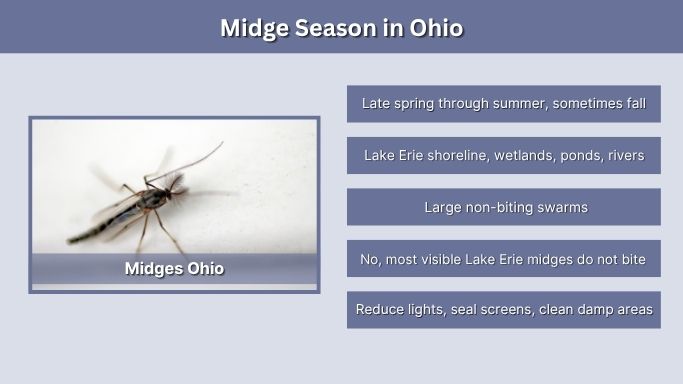
Midge season in Ohio is most noticeable during warm months, especially near Lake Erie. In many areas, the first major wave appears in late spring or early summer. A second round may happen later if weather and water conditions stay favorable.
The exact timing changes each year. Temperature, lake conditions, wind direction, rainfall, and local water quality all affect when swarms appear.
When Do Midges Come Out in Ohio?
Midges often become active when lake and pond temperatures warm enough for larvae to complete development. Around Lake Erie, this commonly happens in spring and early summer. Some years, residents notice heavy swarms in May or June. In warmer seasons, another wave may show up in late summer or fall.
They are most active near dusk, at night, and around bright lights. Porch lights, streetlights, stadium lights, marina lighting, and store signs can pull them into concentrated groups.
How Long Do Midges Last in Ohio?
A single midge swarm may last only a few days to a couple of weeks in one area. However, the broader season can feel longer because different groups emerge at different times.
In Northeast Ohio, residents may see waves of midges rather than one continuous invasion. A neighborhood near the lake may be covered one week and much clearer the next. Another shoreline town may get hit when wind patterns shift.
| Ohio Midge Question | Simple Answer |
| Main season | Late spring through summer, sometimes fall |
| Common areas | Lake Erie shoreline, wetlands, ponds, rivers |
| Biggest issue | Large non-biting swarms |
| Do most Ohio midges bite? | No, most visible Lake Erie midges do not bite |
| Best prevention | Reduce lights, seal screens, clean damp areas |
When Do Midges Go Away in Cleveland?
In Cleveland and nearby Lake Erie communities, midges usually decline after their short adult life cycle ends and weather patterns change. Cooler temperatures, lower emergence activity, wind shifts, and natural die-offs all reduce swarms.
However, there is no exact citywide date. One year, the main nuisance may fade quickly in June. Another year, warm water and mild weather may support another round later. If someone asks when midges will go away in Cleveland, the best answer is: they usually pass in waves, and each wave is temporary.
Do Ohio Midges Bite?
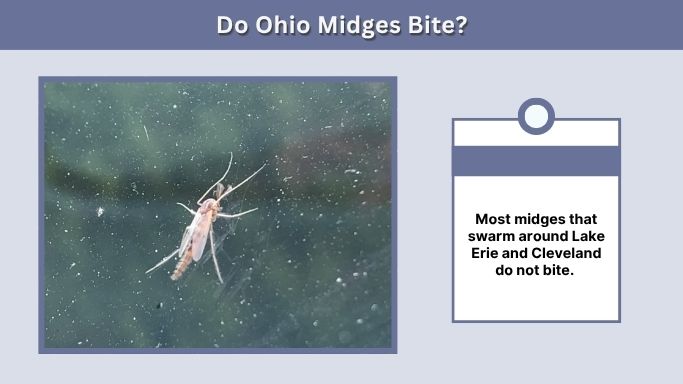
Most midges that swarm around Lake Erie and Cleveland do not bite. These non-biting aquatic midges are a nuisance because of their numbers, not because they feed on blood. They may land on skin, clothes, windows, and cars, but they are not trying to bite people.
However, Ohio can also have biting midges, often called no-see-ums. These are much smaller than the lake midges people see in large swarms. Biting midges are more likely to be noticed because of itchy red marks rather than visible clouds of insects.
Biting Midges vs Non-Biting Midges
- Non-biting midges: Usually larger, mosquito-like, common near Lake Erie, form visible swarms, do not bite people.
- Biting midges: Extremely tiny, often hard to see, may bite exposed skin, common in humid or damp areas.
- Non-biting midges: Attracted strongly to lights and buildings.
- Biting midges: More active around people, pets, moist soil, vegetation, and calm humid spots.
- Non-biting midges: Mainly an outdoor nuisance.
- Biting midges: Can leave itchy, red, irritated bite marks.
This difference matters because treatment and prevention are not exactly the same. If insects are covering windows and porch lights but not biting, they are probably non-biting midges. If you are getting itchy bites from insects you barely see, biting midges or another biting pest may be involved.
What Do Biting Midge Bites Look Like?
Biting midge bites may appear as small red dots, itchy bumps, or clusters of irritation on exposed skin. They are often noticed on arms, legs, ankles, neck, or face after spending time outside. Some people react mildly, while others develop stronger itching or swelling.
Avoid scratching because broken skin can become irritated or infected. Wash the area with soap and water. A cold compress may reduce discomfort. Over-the-counter anti-itch products may help, but people with strong allergic reactions, spreading redness, fever, or severe swelling should contact a medical professional.
Are Ohio Midges Dangerous?
Non-biting midges are not dangerous to people. They do not sting, do not damage wood, do not eat clothing, and do not infest food like pantry pests. Their biggest problem is the mess they make in large numbers.
Biting midges are more irritating, but in the United States they are mainly considered biting pests rather than a common human disease threat. They can be more important for livestock and wildlife health in some regions. For homeowners, the main concern is avoiding bites and reducing breeding conditions.
Why Midges Swarm Cleveland and Northeast Ohio
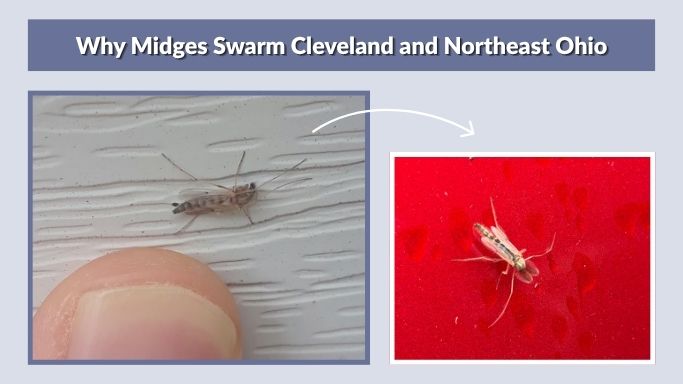
Cleveland and Northeast Ohio sit beside one of the largest freshwater systems in North America. Lake Erie provides a huge breeding environment for aquatic insects. When conditions are right, adult midges emerge in massive numbers from the lake and shoreline wetlands.
This is why people in lakefront communities may suddenly see porch railings, cars, boats, and apartment buildings covered with insects.
Lake Erie and Midge Swarms
Lake Erie midges develop underwater as larvae. When they mature, they rise and emerge as flying adults. The adults do not live long, but they gather in dense groups to mate. That mating behavior creates the familiar swarms around buildings, trees, bridges, and lights.
The swarms may look unpleasant, but they can indicate an active aquatic food web. Fish and other animals feed on midge larvae and adults. This makes them part of the lake ecosystem, even when they are a headache for residents.
Why Lights Make the Problem Worse
Midges are strongly attracted to artificial light. Bright white lights, porch bulbs, shop signs, marina lights, and streetlights can pull midges toward homes and businesses.
To reduce activity around doors and windows, use fewer outdoor lights during peak swarms. Switch to warmer, lower-attraction bulbs where possible. Keep curtains closed at night so indoor light does not pull insects toward windows.
Why Midges Cover Cars and Buildings
Midges often rest on vertical surfaces after emerging or swarming. Cars, siding, fences, garage doors, and windows provide easy landing areas. Light-colored surfaces may show them more clearly, making the swarm look worse.
Avoid crushing them on painted surfaces. Rinse them away gently with water instead. If they dry on a car, soften them first before wiping to reduce smears and scratches.
How to Get Rid of Midges in Ohio
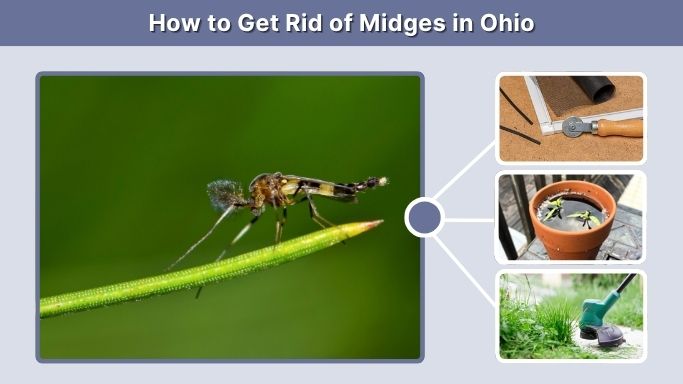
You cannot eliminate every midge near Lake Erie or a large pond. They come from natural aquatic habitats, and new adults can keep emerging during the season. The practical goal is to reduce how many collect around your home.
Outdoor Midge Control Tips
- Turn off unnecessary porch and yard lights at night.
- Use warm-toned outdoor bulbs instead of bright white bulbs.
- Keep doors and windows closed during heavy swarms.
- Repair torn screens and weather stripping.
- Rinse insects off siding, windows, and cars with water.
- Remove standing water from buckets, pots, tarps, and clogged gutters.
- Keep grass trimmed and reduce damp, shaded resting areas.
- Use outdoor fans on patios because weak fliers dislike moving air.
- Avoid leaving bright garage lights on with doors open.
- Clean dead insects from entryways before they build up.
For lakefront homes, complete prevention is unrealistic. A home can be perfectly clean and still get covered if wind pushes a swarm from the water. Focus on light management, sealing entry points, and cleaning surfaces quickly.
Indoor Prevention
Midges usually enter homes by accident. They may slip through gaps, damaged screens, open doors, or window frames. Once inside, they gather near lamps, TVs, and bright windows.
Seal gaps around doors and windows. Keep screens in good condition. Turn off indoor lights near open windows at night. Vacuum any insects that collect indoors rather than spraying heavily inside.
Should You Spray for Midges?
Sprays may kill insects that are already resting on surfaces, but they rarely solve the wider problem. If midges are emerging from a lake, river, or wetland, more insects can arrive soon after treatment.
For biting midges around a yard, reducing damp breeding spots is more useful. Remove standing water, improve drainage, clear wet leaves, and trim dense vegetation. For severe biting problems, a licensed pest control professional can inspect the property and recommend targeted treatment.
Midges in Ohio Homes, Yards, and Parks
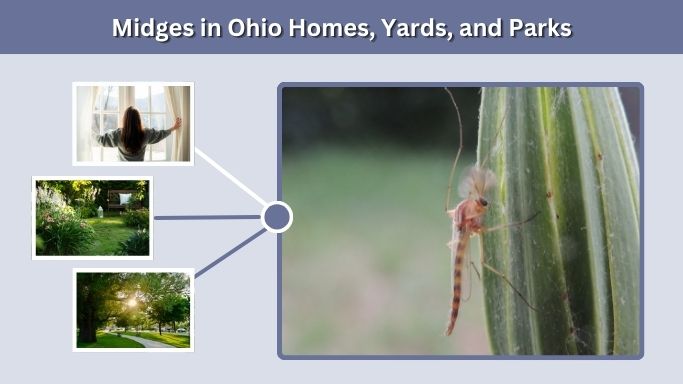
Midges are common in many outdoor areas, but they feel worse when they gather where people relax. Patios, decks, porches, lakefront parks, marinas, campgrounds, and waterfront restaurants can all see heavy activity.
Around Homes
Homeowners usually notice midges on doors, windows, porch ceilings, garage doors, and siding. They may also collect around outdoor lights and security cameras. Reduce light attraction first, then focus on sealing gaps.
If the insects are not biting, avoid panic spraying. Non-biting midges are temporary. Cleaning and prevention are usually enough.
Around Pets
Non-biting midges may land on pets, but they do not feed on them. Biting midges can irritate pets in some areas, especially around ears, belly, and thin-haired spots. If a dog or cat has unusual itching, sores, or swelling, ask a veterinarian.
Keep pets indoors during peak dusk activity if biting insects are active. Fans and screened areas can also help.
Around Lakes and Parks
Midges are part of life near Ohio waters. If you plan to visit Lake Erie, a marina, or a lakeside park during active season, expect some insect activity. Wearing light long sleeves, avoiding bright lights at night, and choosing breezy spots can make the experience more comfortable.
FAQs
What are midges in Ohio?
Midges in Ohio are small fly-like insects often found near lakes, ponds, rivers, and wetlands. The most visible ones near Lake Erie are usually non-biting aquatic midges. They can swarm around lights, cars, porches, and buildings, but most do not bite people or cause property damage.
Do Ohio midges bite?
Most midges seen in large swarms around Lake Erie do not bite. They are mainly a nuisance because they gather in huge numbers. However, Ohio can also have tiny biting midges, or no-see-ums, which may leave itchy red marks after outdoor exposure in damp, humid areas.
How long is midge season in Ohio?
Midge season in Ohio usually begins in late spring or early summer and may continue in waves through warm months. Around Lake Erie, activity often rises when water temperatures become favorable. Each swarm may last a short time, but new waves can appear later in the season.
Why are there so many midges in Cleveland?
Cleveland is close to Lake Erie, which provides a major breeding habitat for aquatic midges. When larvae mature and emerge as adults, wind and lights can bring large numbers toward buildings, cars, and shore communities. The swarms are unpleasant but usually temporary and mostly harmless.
How can I keep midges away from my house?
Turn off unnecessary outdoor lights, use warmer bulbs, repair screens, seal gaps, and keep doors closed during heavy swarms. Remove standing water and damp debris around the yard. For patios, outdoor fans can help because midges are weak fliers and avoid strong air movement.