
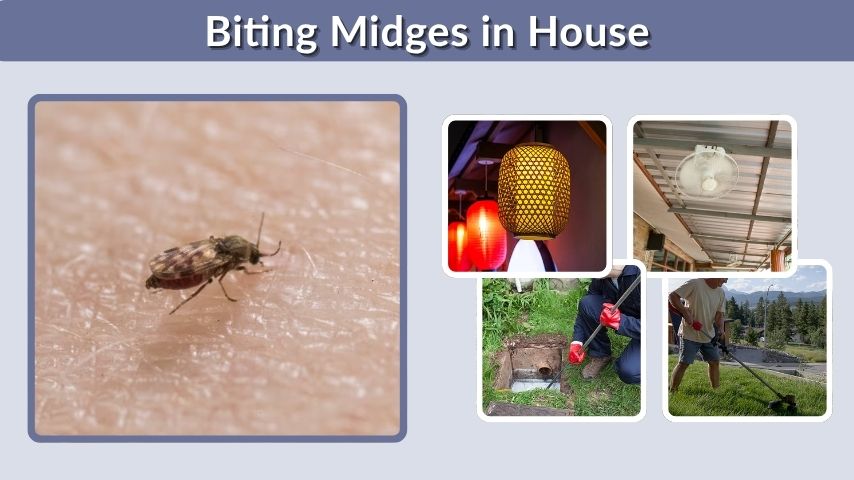
Biting midges in the house can be frustrating because they are tiny, hard to see, and often most active when people are resting. These small flies are also called no-see-ums in many places. Some bite, while others only look like biting midges. The best way to solve the problem is to identify the source, reduce moisture, block entry points, and use safe indoor control methods.
What Are Biting Midges in the House?
Biting midges are tiny flies that can enter homes from outdoors, especially in warm, humid, or damp conditions. They are much smaller than mosquitoes, so people often notice the bites before they clearly see the insect. In many regions, biting midges are called no-see-ums because they are difficult to spot.
True biting midges belong to a group of small blood-feeding flies. Females bite because they need blood for egg production. Their bites can cause itching, redness, swelling, and irritation. The reaction depends on the person, the number of bites, and how sensitive the skin is.
However, not every small flying insect indoors is a biting midge. Fungus gnats, non-biting midges, fruit flies, drain flies, and mosquitoes can all be confused with them. Correct identification matters because the control method changes depending on the insect.
Why Are There Midges in My House?
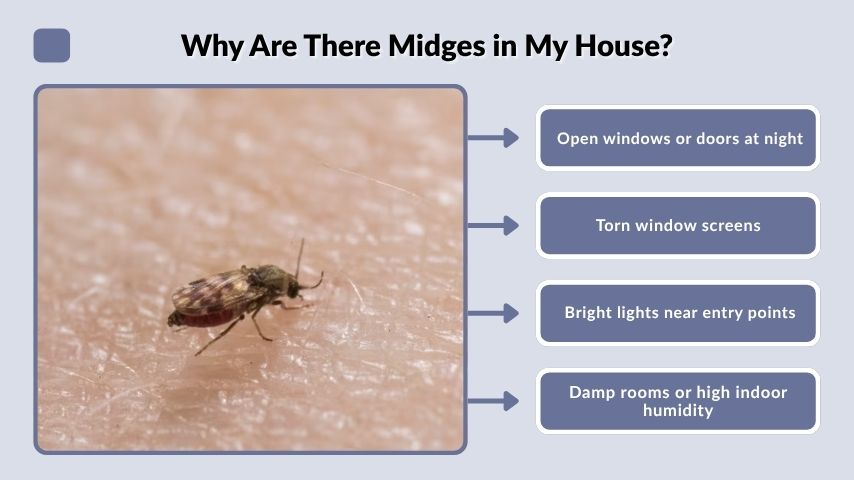
Midges usually enter houses because they are attracted to moisture, light, warmth, and shelter. They may come through open windows, damaged screens, gaps around doors, vents, or cracks near outdoor lights. If the home is near water, wet soil, marshy areas, ponds, drains, or heavy vegetation, indoor problems can become more common.
Common causes include:
- Open windows or doors at night
- Torn window screens
- Bright lights near entry points
- Damp rooms or high indoor humidity
- Wet plant soil
- Standing water near the house
- Organic debris in drains or bins
- Outdoor breeding sites close to doors
- Gaps around vents, doors, or windows
If the problem happens mostly at night, lights may be pulling insects toward the house. If the insects hover near houseplants, they may be fungus gnats instead of true biting midges. If bites appear after sitting near windows, patios, or bedrooms, biting midges may be entering from outside.
Biting Midges vs Non-Biting Midges
The word “midge” can describe different tiny flies. Some bite, while others do not. This is why many homeowners are confused when they see small flies indoors.
| Type | Do They Bite? | Common Indoor Sign | Main Control Focus |
| Biting midges / no-see-ums | Yes | Itchy bites, tiny flies near screens or lights | Seal entry points and reduce outdoor attraction |
| Non-biting midges | No | Swarms near lights, windows, or walls | Reduce light attraction and block entry |
| Fungus gnats | No | Small flies around houseplants | Dry soil and treat plant pots |
| Drain flies | No | Flies near sinks, drains, or bathrooms | Clean drains and remove organic buildup |
Biting midges are more likely when there are itchy bites and insects are entering from outdoors. Fungus gnats are more likely when the problem stays around houseplants. Non-biting midges often appear in groups around lights and windows but do not bite people.
What Attracts Midges Indoors?
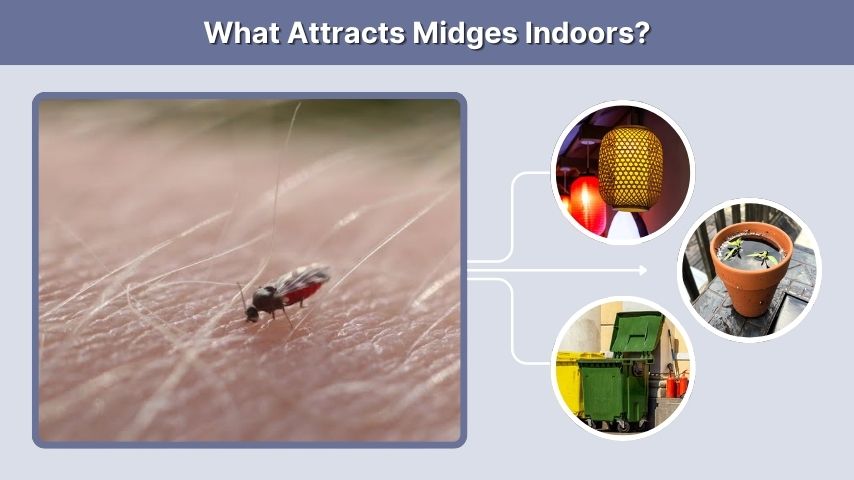
Midges are attracted by several indoor and outdoor conditions. Light is one of the biggest reasons they gather around windows, doors, and lamps. Moisture is another major factor because many small flies develop in damp places.
Things that attract midges include:
- Bright indoor or outdoor lights
- Humid rooms
- Wet houseplant soil
- Standing water
- Damp bathrooms or kitchens
- Open trash bins
- Rotting fruit or organic waste
- Dirty drains
- Outdoor vegetation near doors
- Ponds, marshes, or wet soil near the home
Biting midges usually breed outdoors in moist soil, mud, marshy areas, or wet organic material. They may not be breeding inside the house, but they can enter repeatedly if the home is not sealed well. Non-biting midges and fungus gnats may be more closely linked to indoor moisture.
How to Get Rid of Biting Midges in the House
The fastest way to reduce biting midges indoors is to stop more from entering and remove conditions that help small flies stay active. Because biting midges are tiny, regular screens may not always stop them. Fine mesh screens are more effective in areas where no-see-ums are common.
Start with entry control. Repair torn screens, seal gaps around windows, and use door sweeps under exterior doors. Keep windows closed during peak activity times, especially in the evening and at night. If you need ventilation, use fine mesh screens or run fans.
Next, reduce attraction. Turn off unnecessary lights near windows and doors. Use curtains or blinds at night so indoor light does not pull insects toward the glass. Move outdoor lights away from doors when possible.
Indoor traps may catch some small flies, but they should not be the only solution. If midges are entering from outside every night, traps will not solve the source problem. Blocking entry and reducing attraction are more important.
How to Get Rid of Midges in the House Naturally
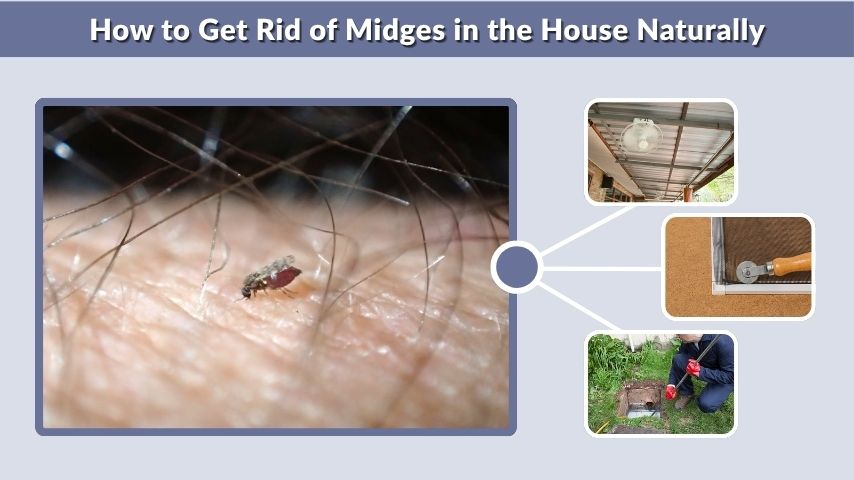
Natural control works best when it targets moisture, light, and entry points. It may not kill every insect immediately, but it can reduce the problem over time without heavy chemical use inside the home.
Natural methods include:
- Use fans near beds, patios, and sitting areas.
- Keep windows closed during evening activity.
- Repair screens and seal small gaps.
- Reduce indoor humidity with ventilation or a dehumidifier.
- Remove standing water from trays, buckets, and sinks.
- Empty trash regularly.
- Clean drains and remove organic buildup.
- Let houseplant soil dry between watering.
- Use yellow sticky traps near plants.
- Turn off unnecessary lights at night.
Fans are especially useful because tiny midges are weak fliers. Air movement can make it harder for them to land and bite. In bedrooms, a fan near the bed may reduce bites while you work on the source problem.
Midges in Houseplants
Many people call small flies around houseplants “midges,” but they are often fungus gnats. Fungus gnats do not bite people, but they can become annoying indoors. They breed in moist potting soil, especially when plants are overwatered or soil contains decaying organic matter.
Signs of houseplant gnats include small dark flies rising from pots when you water, insects hovering near plant leaves, and larvae in damp soil. These flies usually stay close to plants rather than biting people across the room.
To control them, let the top layer of soil dry before watering again. Remove dead leaves from pots and avoid leaving water in saucers. Yellow sticky traps can catch adult gnats. For heavy infestations, repotting with fresh soil may help.
If you have bites, the insects around houseplants may not be the cause. Check windows, beds, doors, and outdoor entry points for true biting midges or mosquitoes.
Biting Midges in the House at Night
Nighttime midge problems are common because lights attract many small flying insects. People may notice them near lamps, windows, bathrooms, or bedrooms. Biting midges can also be worse around dusk and evening, depending on the species and climate.
To reduce midges at night, close windows before sunset. Keep porch lights off when not needed, or use lighting placed away from doors. Close curtains so indoor light does not shine through windows. Use fans in rooms where bites happen most often.
Check bedroom screens carefully. Even a small tear or loose edge can allow tiny flies to enter. If bites happen only while sleeping, inspect window frames, vents, and gaps around air conditioners. Also check whether mosquitoes, fleas, or bed bugs could be responsible, because not every night bite comes from midges.
How to Keep Midges Away from the House
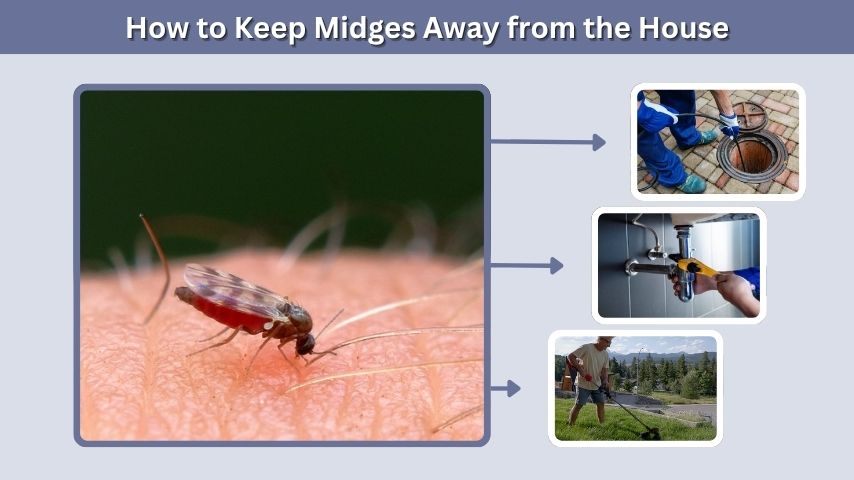
Long-term prevention starts outside the home. If your yard has damp soil, heavy vegetation, blocked gutters, or standing water, small flies can become more common around doors and windows.
Prevention tips include:
- Clear clogged gutters.
- Remove standing water near the house.
- Trim dense vegetation around doors and windows.
- Keep compost and bins covered.
- Move bright lights away from entry points.
- Use fine mesh screens in problem areas.
- Keep grass and weeds trimmed.
- Fix leaks around outdoor taps.
- Improve drainage in wet areas.
- Clean patios, drains, and damp corners.
If you live near marshes, ponds, rivers, or wetlands, complete removal may not be realistic. In that case, focus on barriers, lighting changes, fans, and protective clothing during peak activity times.
What Kills Midges in the House?
There are several ways to kill or reduce midges indoors, but the best choice depends on the type of insect. Sticky traps can catch fungus gnats and some small flies. Light traps may catch non-biting midges. Vacuuming can remove insects resting on windows, walls, and ceilings.
For true biting midges, killing the ones indoors is only part of the solution. More may enter if windows, screens, and doors are not sealed. Indoor sprays may provide temporary relief, but they should be used carefully and only according to the label.
For houseplant-related flies, treat the soil condition rather than spraying the air. Dry soil, clean pots, sticky traps, and biological soil treatments are often more effective than random indoor sprays.
When to Call Pest Control
Most midge problems can be improved with moisture control, screen repair, light reduction, and plant care. However, professional help may be useful when bites continue, the source is unclear, or the infestation is heavy.
Call a pest control professional if you have repeated biting indoors and cannot identify the insect. A professional can inspect screens, drains, plants, attic vents, crawl spaces, and outdoor breeding areas. They can also help separate biting midges from mosquitoes, fleas, bed bugs, and other biting pests.
If someone has a strong allergic reaction, severe swelling, infection signs, or intense discomfort after bites, seek medical advice. Avoid scratching bites because broken skin can lead to infection.
FAQs
Why do I have biting midges in my house?
You may have biting midges in your house because they are entering from outdoors through screens, doors, windows, vents, or small gaps. They are often attracted to light, moisture, and warmth. Homes near wetlands, ponds, damp soil, or heavy vegetation may experience more indoor problems.
How do I get rid of midges in my house fast?
Close entry points, repair screens, turn off unnecessary lights, use fans, and remove indoor moisture sources. Vacuum visible insects from windows and walls. If they are coming from houseplants, let soil dry and use sticky traps. The fastest results come from combining several methods.
What attracts midges in the house at night?
Light is one of the biggest nighttime attractions. Midges may gather around lamps, windows, doors, and porch lights. Moisture, warmth, open windows, and damaged screens can make the problem worse. Closing curtains and reducing lights near entry points can help.
Are midges in houseplants biting midges?
Most small flies around houseplants are fungus gnats, not biting midges. Fungus gnats do not bite people. They breed in moist potting soil and organic matter. If you are getting bites, check windows, doors, bedrooms, and outdoor entry points for biting midges or other pests.
Can midges live inside your house?
Some small flies can live and breed indoors if they have moisture and organic material. Fungus gnats can breed in wet plant soil, while drain flies can breed in dirty drains. True biting midges usually come from outdoor breeding sites and enter homes through openings.