
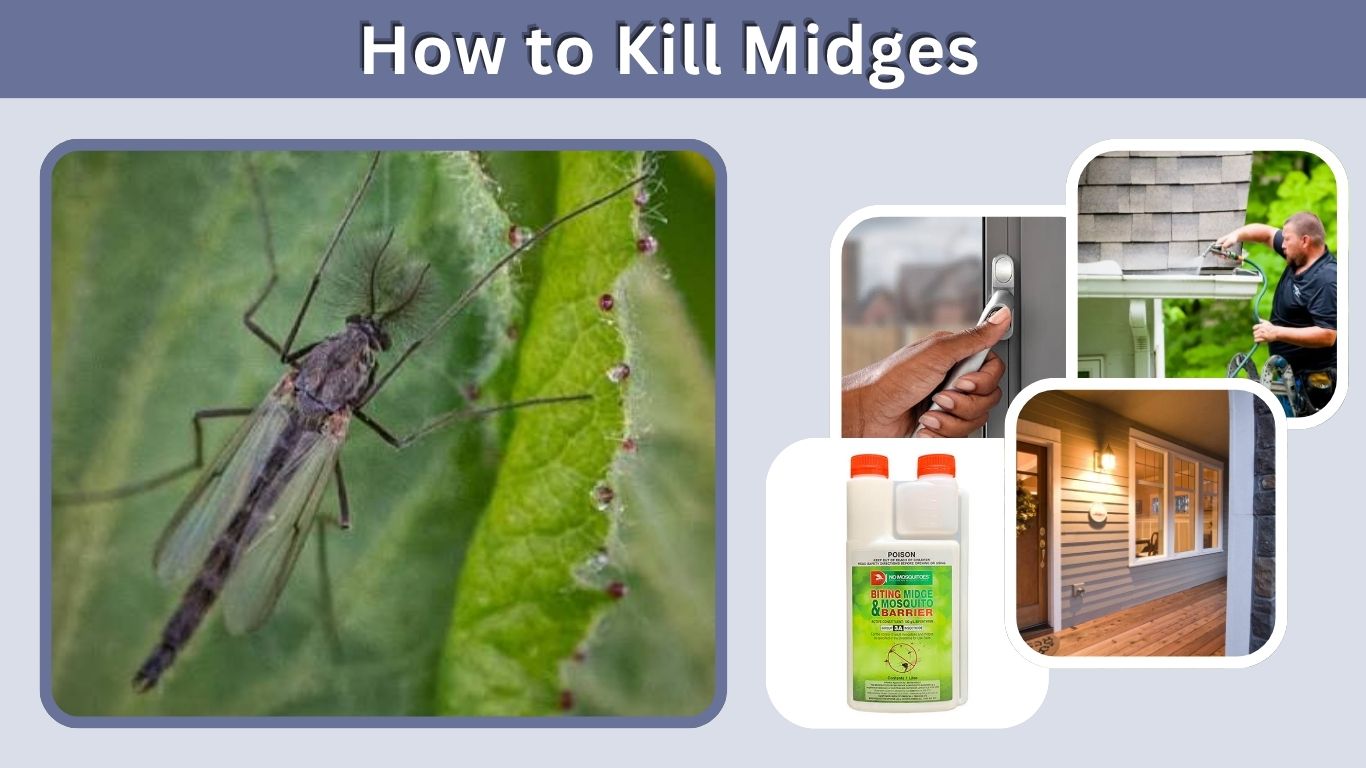
Midges are tiny flying insects that can gather around lights, plants, windows, gardens, and wet areas. Some species bite, while others are only annoying swarming flies. The best way to kill midges is to identify the type, remove breeding sites, use traps or sprays carefully, and stop new adults from entering the house or yard.
What Are Midges?
Midges are small flies that look similar to gnats or mosquitoes. The word “midge” can describe several different insects, including biting midges, non-biting midges, and small midge-like flies around houseplants. Because they are tiny, many people use the same name for different pests.
Biting midges are often called no-see-ums. These flies can bite people and animals, leaving itchy red marks. Non-biting midges usually do not harm people, but they can appear in large numbers around windows, lights, walls, patios, and water. Fungus gnats are often mistaken for midges indoors, especially when they come from wet potting soil.
Before choosing a killer method, check where the insects are appearing. Midges near plants may need soil treatment. Midges near lights may need light control and entry prevention. Biting midges around doors, patios, and bedrooms need barriers, fans, and targeted outdoor reduction.
What Kills Midges Fast?
The fastest way to kill adult midges is direct contact spray, vacuuming, sticky traps, or light traps. However, killing adults alone rarely solves the full problem. If larvae are still developing in water, wet soil, drains, or outdoor damp areas, new adults will keep appearing.
Fast control options include:
- Vacuum adult midges from windows, walls, and ceilings.
- Use sticky traps near houseplants and windows.
- Use light traps for non-biting midges in dark areas.
- Use fans to stop biting midges from landing.
- Apply labeled indoor fly spray only where permitted.
- Treat plant soil if the insects are fungus gnats.
- Remove standing water and wet organic material.
- Seal screens, doors, and window gaps.
For long-term control, combine adult killing with source removal. This is more effective than spraying again and again without finding where the midges are coming from.
How to Kill Midges in the House
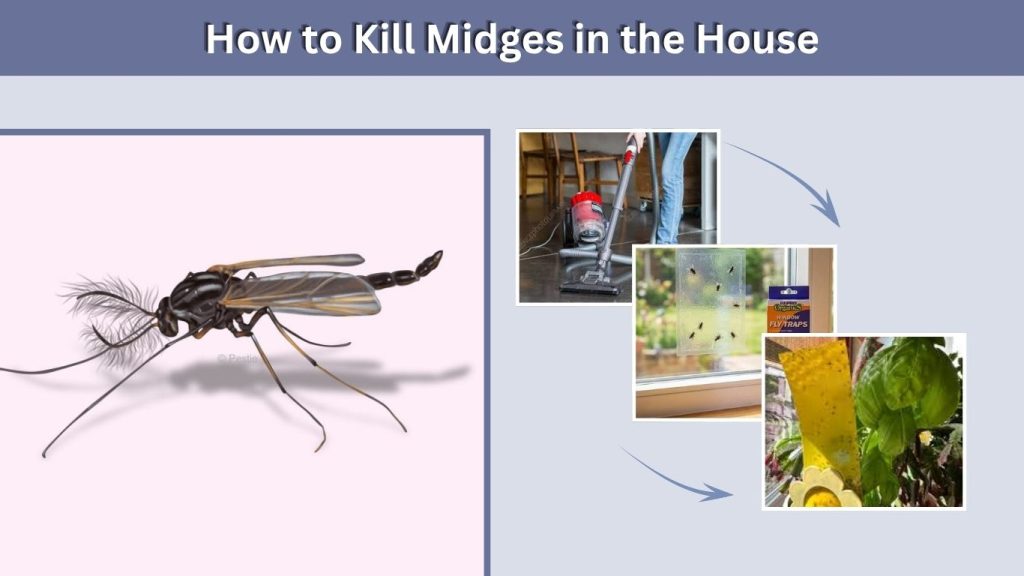
Indoor midge control depends on whether the flies are entering from outside or breeding inside. If they appear near windows, doors, and lights, they may be coming indoors at night. If they appear near sinks, drains, or plants, there may be an indoor source.
Start by vacuuming visible adults. This gives quick relief and reduces the number of flying insects. Empty the vacuum outside or seal the contents in a bag. Next, place sticky traps where midges gather. Yellow sticky traps work well near plants, while light traps can help in dark rooms.
Check screens and window frames. Midges are small enough to pass through tiny gaps. Repair damaged screens, close windows at dusk, and use door sweeps. If the problem happens at night, turn off unnecessary lights or close curtains so indoor light does not attract them.
Avoid spraying the entire room unless the product label says it is safe for indoor flying insects. Sprays may kill visible adults, but they do not remove breeding sources.
Best Midge Killer Options
Different midge problems need different tools. A single product may not work for every situation. For example, a spray may kill adults in the air, but it will not fix wet plant soil or outdoor breeding areas.
| Midge Problem | Best Killer Method | Why It Works |
| Adults flying indoors | Vacuum, sticky traps, light traps | Removes active flying insects |
| Midges around houseplants | Sticky traps and soil treatment | Targets adults and larvae |
| Biting midges near people | Fans, barriers, labeled repellents | Stops landing and biting |
| Outdoor swarms near lights | Reduce lighting and use traps | Lowers attraction |
| Larvae in standing water | Remove water or use approved larvicide | Stops new adults |
| Heavy yard problem | Professional inspection | Finds breeding areas and safe treatment options |
The best midge killer is usually a combination. Use traps for adults, remove breeding sites, and prevent entry. This gives better results than relying only on spray.
How to Kill Biting Midges
Biting midges are harder to control than many indoor flies because they often breed outdoors and enter houses from outside. They are very small, so ordinary window screens may not block them completely. Fine mesh screens are better in areas where no-see-ums are common.
To reduce biting midges, focus on protection and prevention. Use fans on patios, balconies, and bedrooms because biting midges are weak fliers. Strong air movement makes it harder for them to land and bite. Keep windows and doors closed during evening activity. Repair screens and seal gaps around frames, vents, and doors.
For personal protection, use a labeled insect repellent when outdoors. Wear long sleeves and long pants during peak activity times. For heavy outdoor biting problems, professional pest control may be needed, especially if breeding sites are nearby.
Do not use random chemicals on skin, bedding, pets, or furniture. Only use products that are labeled for the exact use.
How to Kill Midges Outside
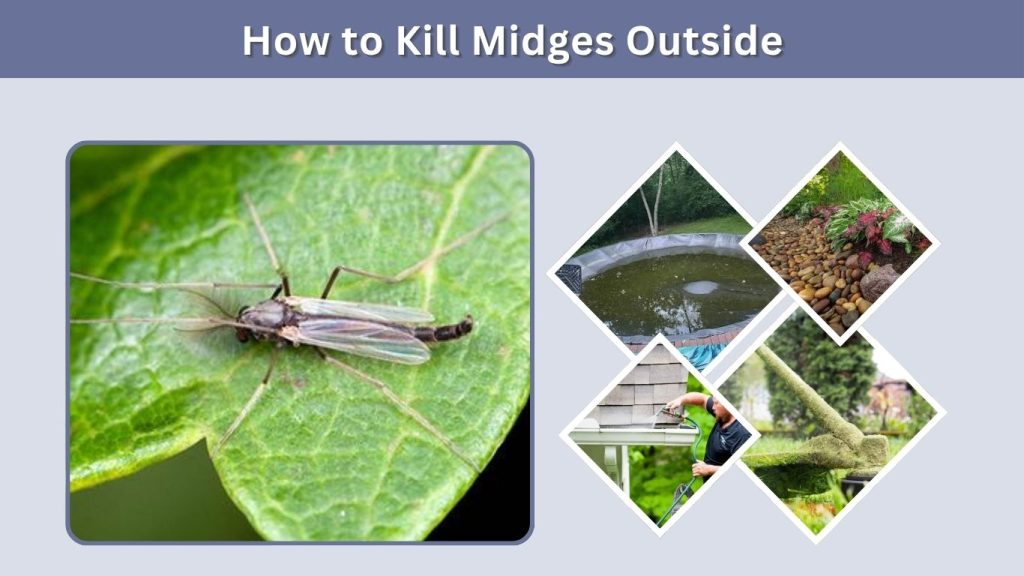
Outdoor midges often come from wet areas, standing water, organic debris, or nearby natural water sources. They may also swarm around lights after sunset. Outdoor control works best when you reduce the places where larvae develop and make the area less attractive to adults.
Useful outdoor steps include:
- Remove standing water from buckets, pots, tarps, and trays.
- Clean clogged gutters.
- Improve drainage in wet garden areas.
- Keep grass and weeds trimmed near the house.
- Move outdoor lights away from doors and windows.
- Use warm-colored or less attractive outdoor lighting.
- Keep bins covered and clean.
- Avoid overwatering lawns and gardens.
- Use fans in patio seating areas.
- Ask a professional about safe larval control for ponds or large wet areas.
If the midges are coming from a lake, marsh, pond, or river nearby, complete removal may not be possible. In that case, focus on barriers, lights, fans, screens, and bite prevention.
Natural Ways to Kill Midges
Natural control methods can reduce midges without heavy indoor pesticide use. These methods are especially useful around houseplants, kitchens, bedrooms, and patios.
Natural methods include:
- Apple cider vinegar traps for some small flies.
- Yellow sticky traps near plants.
- Fans near sitting or sleeping areas.
- Drying wet soil between watering.
- Removing rotting fruit and organic waste.
- Cleaning drains and garbage bins.
- Closing curtains at night.
- Fixing moisture problems indoors.
- Removing standing water outdoors.
- Using fine mesh screens.
Vinegar traps may help with some small flies, but they are not always effective for true biting midges. Sticky traps are better for monitoring and catching plant-related flies. Fans are one of the best natural tools for biting midges because they prevent landing rather than relying on poison.
What Spray Kills Midges?
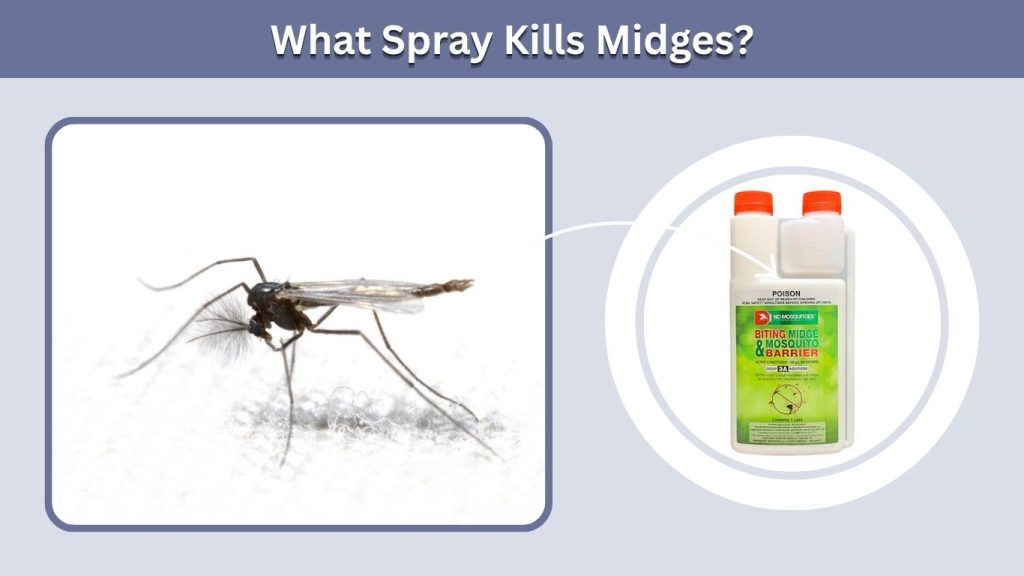
Many general flying insect sprays can kill adult midges on contact, but the product must be labeled for indoor or outdoor use against small flies. Always read the label before spraying. The label tells you where to use it, how much to apply, and whether it is safe around people, pets, food, or plants.
Indoor sprays may provide quick relief, but they should not replace cleaning, trapping, and source removal. Outdoor sprays may reduce adults temporarily, but they can also affect beneficial insects if used carelessly.
For biting midges, sprays around outdoor resting areas may help for a short time, but they often need professional application to be effective. For plant-related midges, spraying the air is usually less useful than treating the soil and reducing moisture.
Never mix chemicals, spray near open food, or use outdoor-only products inside the house.
Do Bug Zappers Kill Midges?
Bug zappers may kill some midges, especially non-biting midges attracted to light. However, they are not always the best solution for biting midges. Many biting insects are more attracted to body heat, carbon dioxide, moisture, and scent than to light alone.
Bug zappers can also attract more insects toward the house if placed near doors or windows. If you use a light trap, place it away from entry points so insects are drawn away from the living space, not toward it.
For indoor use, enclosed light traps with sticky boards are safer and cleaner than open electric zappers. For outdoor use, traps work best as part of a larger plan that includes moisture control, screens, fans, and light management.
What Does Not Work Well?
Some methods sound popular but do not solve a midge problem. They may kill a few insects, but they will not stop breeding or entry.
Avoid relying only on:
- One-time room spray
- Open windows with bright lights on
- Strong smells without source removal
- Bug zappers placed beside doors
- Vinegar traps for biting midges
- Killing adults without treating larvae
- Ignoring wet plant soil
- Ignoring damaged screens
- Spraying without reading the label
The biggest mistake is treating all midges the same. Biting midges, non-biting midges, and fungus gnats need different control methods. Correct identification saves time and prevents wasted effort.
Can Midges Kill You?
Midges are usually not life-threatening to healthy people. Biting midges can cause itchy, painful, or swollen bite reactions, but they are mostly considered nuisance pests in many areas. Scratching bites can lead to skin irritation or infection, so keep bites clean and avoid scratching.
Some midges can affect animals. In certain regions, biting midges are associated with diseases in livestock or wildlife. This is one reason animal owners may need local pest advice during midge season.
For people, seek medical help if bites cause severe swelling, breathing difficulty, dizziness, fever, spreading redness, or signs of infection. These reactions are not typical but should be taken seriously.
How to Prevent Midges After Killing Them
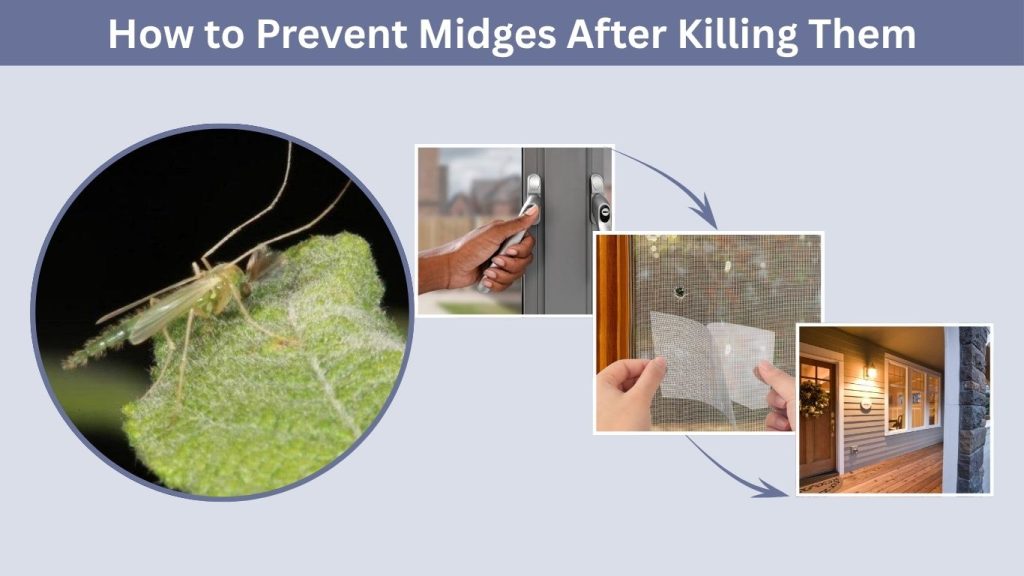
After you kill visible midges, prevention keeps them from returning. This step is important because many midge problems repeat when the source remains.
Prevention checklist:
- Keep doors and windows closed at peak times.
- Repair torn screens.
- Use fine mesh screens where biting midges are common.
- Reduce porch and window lighting at night.
- Clean drains and damp corners.
- Avoid overwatering houseplants.
- Remove standing water outdoors.
- Keep gutters clear.
- Use fans in problem rooms or patios.
- Check new houseplants before bringing them indoors.
If you see midges again after a few days, look for a hidden source. Check plant pots, drains, window gaps, damp basements, outdoor lights, and nearby wet areas.
FAQs
What kills midges instantly?
Contact insect sprays, vacuuming, and some light traps can kill adult midges quickly. However, instant killing only removes the insects you can see. For lasting control, remove breeding sources, reduce moisture, repair screens, and use traps or larval treatments where needed.
How do you kill midges in the house naturally?
Use a vacuum, yellow sticky traps, vinegar traps for small non-biting flies, fans, and moisture control. Let houseplant soil dry between watering and clean drains or bins. Natural control works best when you remove the source instead of only catching adult flies.
What kills biting midges?
Fans, fine mesh screens, labeled repellents, and targeted pest control treatments help reduce biting midges. Adult sprays may kill some, but biting midges often come from outdoor breeding sites. Blocking entry and reducing exposure are usually more important than spraying indoors.
Do mosquito dunks kill midges?
Mosquito dunks contain Bti, which targets larvae of some flies in water. They may help with certain aquatic larvae when used according to the label, but they are not a fix for every midge problem. They will not kill adult midges already flying indoors.
Does vinegar kill midges?
Vinegar traps can catch and drown some small flies, especially fruit flies or fungus gnat adults. They are not the best method for true biting midges. Vinegar does not remove outdoor breeding sites, so it should be used only as a supporting method.