
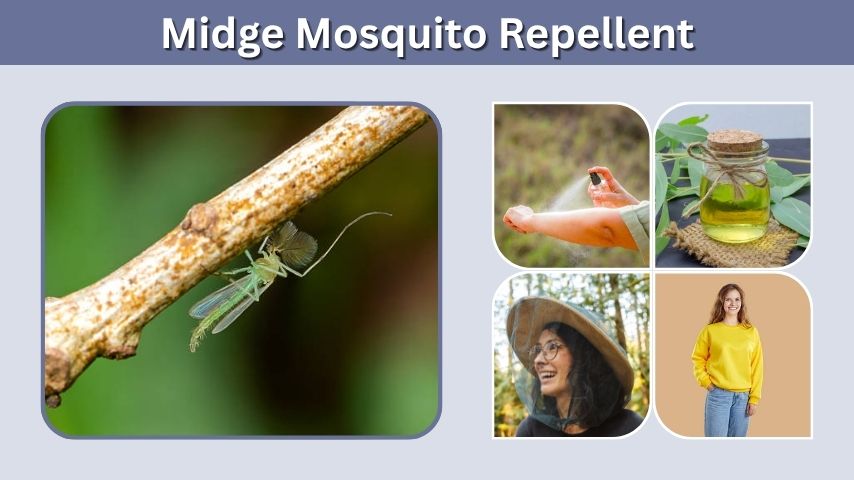
Midges and mosquitoes can quickly ruin a walk, camping trip, garden evening, or holiday in damp countryside. The best midge mosquito repellent is usually one with a proven active ingredient such as DEET, picaridin, IR3535, or oil of lemon eucalyptus. Natural options may help in mild situations, but biting midges often need stronger protection, especially in Scotland, wetlands, forests, and humid outdoor areas.
Understanding Midges and Mosquitoes
Midges and mosquitoes are not the same insect, but both can be annoying biting pests. Mosquitoes are usually larger, easier to see, and often breed around standing water. Biting midges are tiny flies, sometimes called no-see-ums, punkies, or sand flies in different regions. Their small size makes them especially frustrating because they can get through loose clothing and gather in large numbers.
A good midge and mosquito repellent should protect exposed skin and help reduce bites during peak activity times. However, repellent is only one part of prevention. Clothing, timing, wind, and location also matter.
Midges are often worse in calm, damp conditions. They are common near lochs, marshes, rivers, woodland edges, and shaded areas. Mosquitoes also like moisture, but many species are most active around dusk and dawn. If you are outdoors in warm, humid weather, you may need protection from both.
What Makes a Good Midge Mosquito Repellent?
A good repellent does not kill midges or mosquitoes on your skin. Instead, it makes it harder for them to find, land on, or bite you. The most reliable products use tested active ingredients and clearly state the concentration on the label.
When choosing a repellent, look for these features:
- A proven active ingredient
- Protection against both mosquitoes and biting insects
- Clear instructions for skin application
- Suitable strength for your activity
- Sweat resistance for hiking or camping
- Safe use guidance for children, if needed
For casual garden use, a lighter repellent may be enough. For Scotland, camping, fishing, hiking, or wetland travel, a stronger product is usually better. Biting midges can be persistent, so weak fragrances or homemade sprays may not provide enough protection.
Best Repellent Ingredients for Midges and Mosquitoes
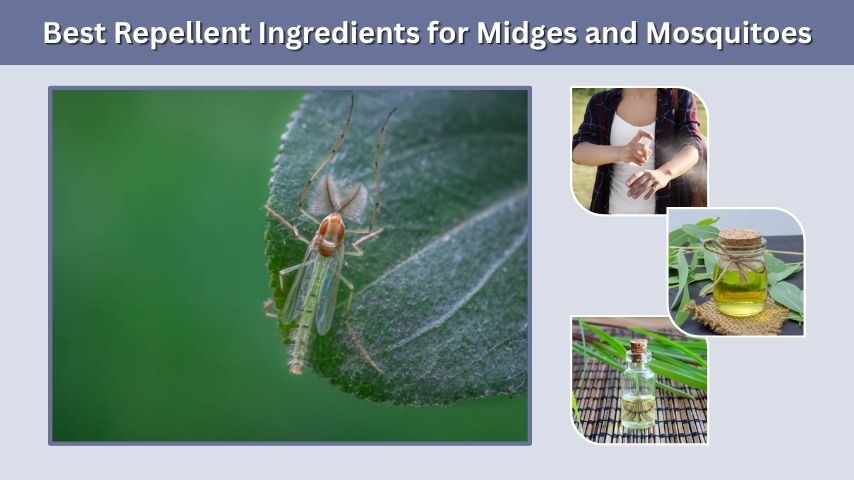
Different active ingredients offer different levels of protection. Some are better for heavy biting pressure, while others are better for people who dislike the smell or feel of traditional insect repellent.
| Active Ingredient | Best For | Notes |
| DEET | Strong protection in high-bite areas | Long-used, effective, but can feel greasy and may affect some plastics |
| Picaridin/Icaridin | Midges, mosquitoes, ticks, everyday outdoor use | Low odor, less greasy, popular for midge repellents |
| IR3535 | General insect protection | Often used in family-friendly formulas |
| Oil of lemon eucalyptus/PMD | Plant-based repellent option | Effective for some users, not the same as simple essential oil |
| Citronella oil | Mild outdoor use | Usually shorter-lasting and less reliable in heavy midge areas |
For most people, DEET or picaridin will be the strongest choice. Picaridin is often preferred by hikers and travelers because it feels lighter on the skin and has less odor. DEET remains a trusted option when bite pressure is intense.
Does Mosquito Repellent Work on Midges?
Some mosquito repellents work on midges, but not all products perform equally. If the repellent contains DEET, picaridin, IR3535, or another proven active ingredient, it may help reduce midge bites too. If it is only a weak scented spray, body mist, or homemade oil blend, it may not work well against biting midges.
The label matters. Look for wording such as “biting flies,” “midges,” “no-see-ums,” or “gnats” if midges are your main problem. A general mosquito repellent can be useful, but a product tested or marketed for biting insects is a safer choice for midge-heavy areas.
Application also matters. Midges often bite around cuffs, ankles, wrists, necklines, and hairlines. If those areas are missed, you may still get bitten even with a good product.
DEET Midge Repellent
DEET is one of the best-known insect repellent ingredients. It has been used for decades and is often chosen for strong protection against mosquitoes, biting flies, and other pests. For midges, DEET can help, especially when used correctly on exposed skin and clothing edges.
DEET products come in different concentrations. Higher concentration does not always mean stronger repelling power, but it can mean longer protection time. For short garden use, a lower concentration may be enough. For hiking, camping, fishing, or highland travel, many people prefer a stronger formula.
DEET has a few downsides. It can have a noticeable smell, feel oily, and damage some plastics, synthetic fabrics, watch straps, and sunglasses. Wash hands after applying it, and avoid touching gear until the product has dried.
Picaridin Midge Repellent
Picaridin, also called icaridin or Saltidin in some countries, is a popular choice for midge and mosquito protection. It is often less greasy than DEET and usually has little or no strong odor. Many modern midge repellent sprays use picaridin because it works well while feeling comfortable for daily outdoor use.
Picaridin is a strong option for people who want reliable protection without the classic DEET smell. It is suitable for walking, camping, gardening, travel, and outdoor events. Many highland midge repellent products use this ingredient because it works against small biting insects as well as mosquitoes.
For the best results, apply picaridin evenly to exposed skin. Reapply according to the product label, especially after heavy sweating, rain, swimming, or wiping your skin.
Highland Midge Repellent for Scotland
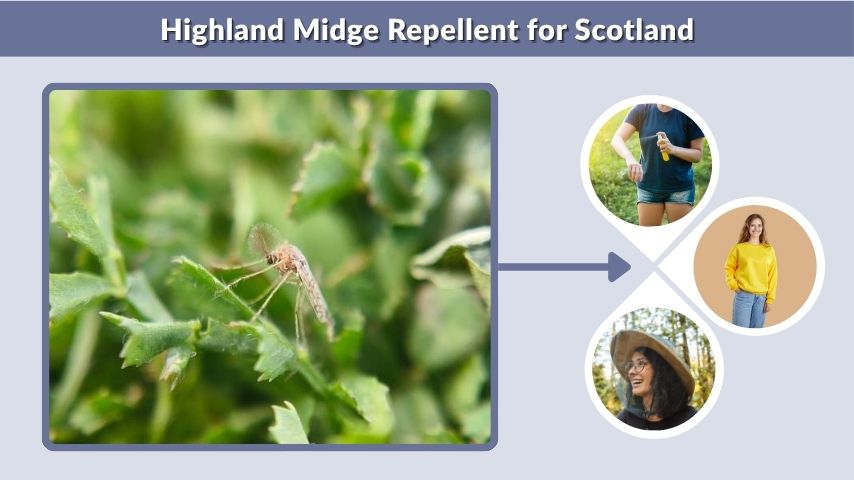
Highland midges are famous for being intense, especially in calm and damp conditions. If you are visiting Scotland, especially the Highlands, islands, lochs, glens, or woodland campsites, you should prepare before you go.
The best midge repellent for Scotland is usually a proven spray or lotion containing picaridin or DEET. A head net is also useful in severe midge areas, especially for camping, fishing, photography, or long walks near water.
To reduce bites in Scotland:
- Use a strong midge repellent before going outside
- Wear long sleeves and long trousers
- Choose tightly woven clothing
- Use a head net in heavy swarms
- Avoid still, damp areas at dawn and dusk
- Camp in breezy spots when possible
Wind is one of the best natural defenses. Midges are weak fliers, so breezy ridges, open coastal areas, and exposed campsites are often more comfortable than sheltered woodland or still water edges.
Natural Midge Repellent Options
Natural midge repellents are popular, but their performance varies. Some people use citronella, lavender, peppermint, tea tree oil, or homemade essential oil blends. These may help a little in mild conditions, but they are usually less reliable than DEET or picaridin when midges are heavy.
Oil of lemon eucalyptus is different from simple lemon eucalyptus essential oil. Products that list oil of lemon eucalyptus or PMD as an active ingredient are generally more reliable than homemade essential oil mixtures.
Natural options may be useful for short garden sessions, patios, or low-risk evenings. However, for camping, Scotland, wetlands, or areas with many biting midges, choose a tested repellent rather than relying only on fragrance-based sprays.
Be careful with essential oils. They can irritate skin, especially when used undiluted. They may also be unsafe for some pets, young children, or sensitive users.
Do Citronella Candles Repel Midges?
Citronella candles may help slightly in a small, still patio area, but they are not a strong defense against biting midges. Their effect is limited because the scent disperses quickly outdoors. If there is a breeze, the protection may not reach the people sitting nearby.
Candles are best seen as a support tool, not a main repellent. They may make a seating area more pleasant, but they should not replace skin repellent in midge-heavy places.
For better outdoor protection, combine several methods. Use personal repellent, wear long clothing, run a fan on patios, and avoid peak midge times. A fan can be helpful because midges struggle in moving air.
Midge Repellent Clothing and Nets
Clothing is one of the best ways to reduce bites. Midges can bite exposed skin quickly, so covering up makes a big difference. Lightweight long sleeves, trousers, socks, and closed shoes are helpful in summer when you still need protection without overheating.
For severe midge areas, a head net can be more useful than another layer of spray. It protects the face, ears, neck, and hairline, which are common bite zones. Choose a fine mesh net designed for midges, not just mosquitoes, because midges are much smaller.
Permethrin-treated clothing can add another layer of insect protection, but it should be used according to the label and not applied directly to skin. It is especially useful for hiking, camping, and travel where insects are a repeated problem.
How to Apply Midge Repellent Correctly
Even the best midge repellent will not work well if applied poorly. Midges are tiny and will find untreated areas. Apply repellent evenly to exposed skin, including the backs of hands, ankles, wrists, neck, ears, and around the hairline.
Do not spray repellent directly into your face. Spray it onto your hands first, then apply carefully, avoiding eyes, lips, and irritated skin. Do not apply repellent under clothing, and wash it off when you come indoors for the day.
If you are using sunscreen too, apply sunscreen first, let it absorb, and then apply insect repellent. Reapply after swimming, heavy sweating, or towel drying. Always follow the product label for age limits and reapplication timing.
Best Ways to Repel Midges Outside
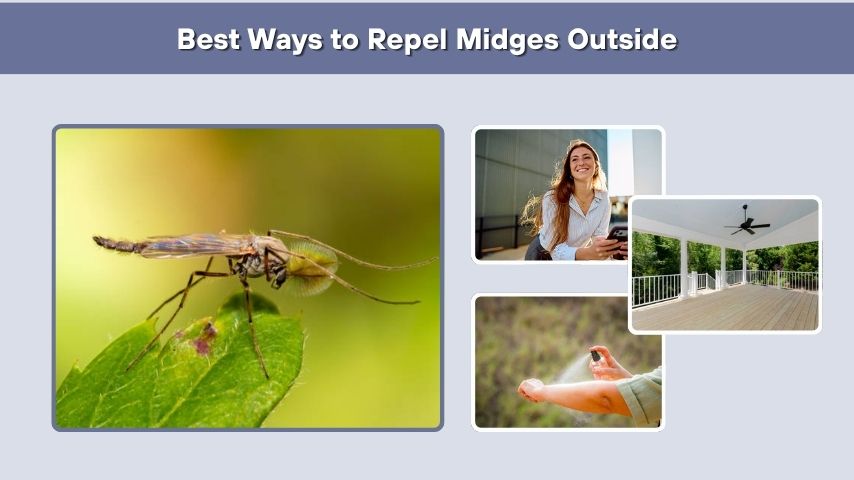
Repellent works best when combined with smart outdoor habits. Midges are strongly affected by weather, time of day, and habitat. You can often avoid the worst bites by changing where and when you spend time outside.
Helpful outdoor strategies include:
- Choose breezy areas instead of still, sheltered spots
- Avoid damp woodland edges when midges are active
- Keep grass and vegetation trimmed near seating areas
- Use fine mesh screens on tents and windows
- Wear long, light clothing
- Use a fan on patios or decks
- Apply repellent before midges start biting
For gardens, there is no single plant that will reliably repel all midges. Scented plants may help a little near seating areas, but they will not replace repellent, screens, fans, or habitat management.
Midge Repellent for Dogs and Horses
Dogs and horses can also suffer from biting midges, but human insect repellents are not always safe for animals. Do not apply DEET, essential oils, or human sprays to pets unless a veterinarian says it is safe.
For dogs, ask your vet about suitable fly or midge protection. Some products that are safe for humans may irritate pets or be toxic if licked. For horses, use equine fly repellents, fly rugs, masks, and stable management methods designed for animals.
Midges can be especially troublesome for horses with sweet itch or skin sensitivity. In those cases, prevention is more than comfort. Good management may include turnout timing, protective rugs, fans, and veterinary-approved repellents.
FAQs
What is the best midge mosquito repellent?
The best midge mosquito repellent usually contains DEET or picaridin. These ingredients are widely used for biting insects and mosquitoes. Picaridin is often preferred because it has less odor and feels lighter, while DEET is a strong traditional option for heavy biting pressure.
Does DEET repel midges?
Yes, DEET can repel biting midges when applied correctly. It is often used for mosquitoes, biting flies, no-see-ums, and similar pests. Choose the concentration based on how long you need protection, and follow the product label carefully to avoid skin irritation or damage to plastics.
Does picaridin repel midges?
Yes, picaridin can repel midges and mosquitoes. It is also called icaridin or Saltidin in some countries. Many people like it because it is less greasy and has less smell than DEET. It is a strong choice for hiking, camping, travel, and Scotland midge season.
What repels midges naturally?
Oil of lemon eucalyptus or PMD is one of the better plant-based repellent options. Citronella, lavender, peppermint, and other essential oils may offer mild short-term help, but they are less reliable in heavy midge areas. For strong biting pressure, use a tested repellent.
How do you repel midges in Scotland?
Use a strong midge repellent with picaridin or DEET, wear long sleeves and trousers, and carry a fine mesh head net. Avoid still, damp places at dawn and dusk when possible. Breezy areas are better because midges are weak fliers and struggle in moving air.