
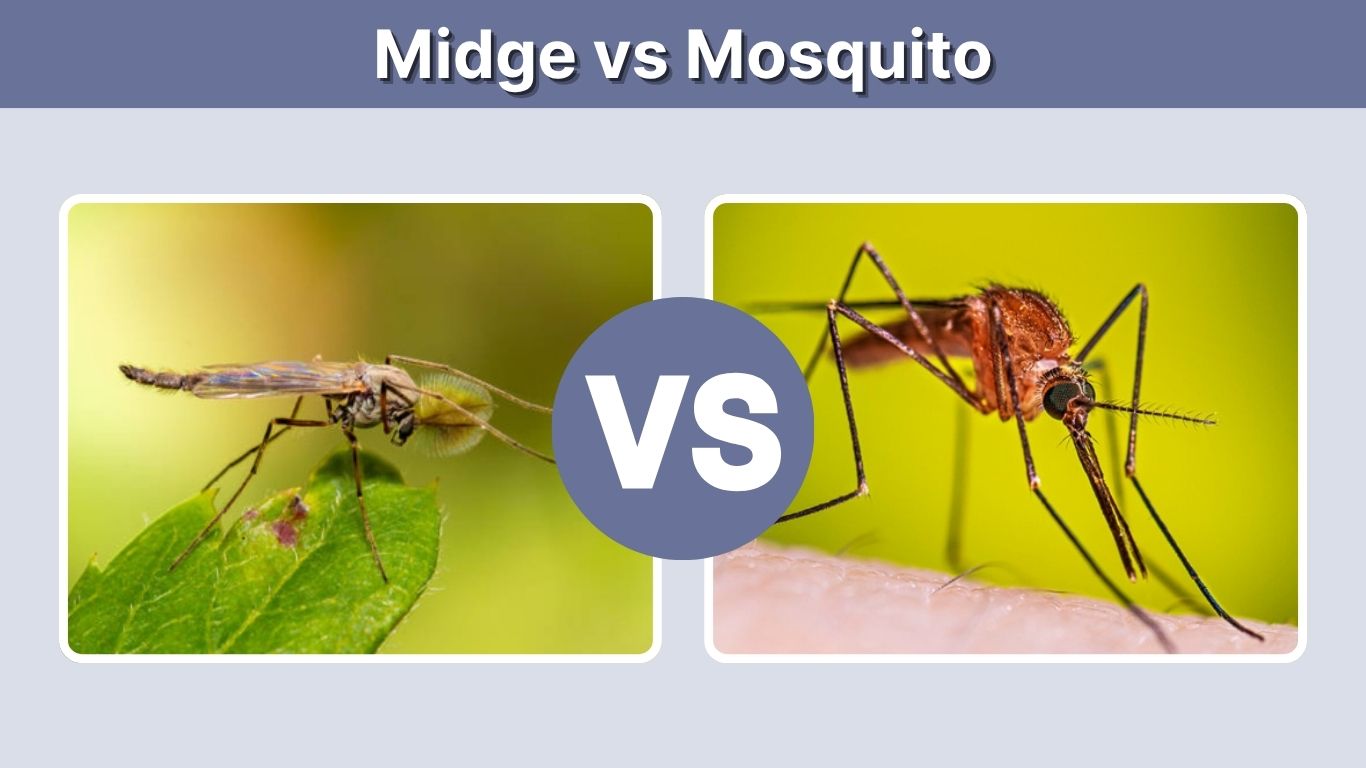
Midges and mosquitoes are both small flying insects that gather near water and can become a major outdoor nuisance. The main difference is that mosquitoes are usually larger, easier to see, and some species can spread diseases, while midges are often much smaller and may be biting or non-biting. Biting midges, also called no-see-ums, can leave itchy, irritating bites that are easy to confuse with mosquito bites.
What Is a Midge?
A midge is a small fly-like insect. The word “midge” can describe different tiny flies, including biting midges and non-biting midges. This is why people often confuse midges with mosquitoes, gnats, mayflies, and no-see-ums.
Non-biting midges are common around lakes, ponds, rivers, and outdoor lights. They may swarm in large numbers, but they do not bite people. They can still be annoying because they gather on walls, windows, patios, boats, and porch lights.
Biting midges are different. They are tiny blood-feeding flies from the Ceratopogonidae family. They are often called no-see-ums because they are so small that many people feel the bite before they see the insect. Purdue Extension notes that biting midges have many local names, including no-see-ums, punkies, and moose flies.
What Is a Mosquito?
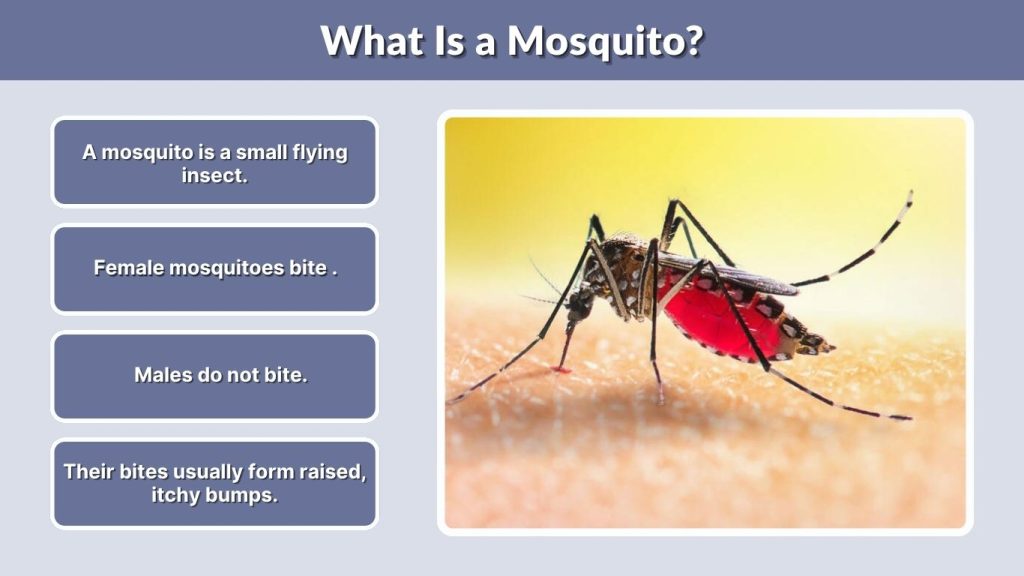
A mosquito is a small flying insect known for its long legs, narrow body, and needle-like mouthpart. Female mosquitoes bite because they need blood to produce eggs. Males do not bite and usually feed on nectar.
Mosquitoes are usually easier to recognize than midges. They are larger, make a high-pitched buzzing sound, and often land visibly on the skin before biting. Their bites usually form raised, itchy bumps.
Mosquitoes are also more medically important than most midges. The CDC explains that mosquitoes can spread germs through bites, depending on the species and region. This does not mean every mosquito bite is dangerous, but it does make mosquito prevention important, especially in areas where mosquito-borne illness is common.
Midge vs Mosquito: Quick Comparison
Midges and mosquitoes can look similar at first, especially when they are flying around lights or hovering near water. However, their size, bite style, and behavior are different.
| Feature | Midge | Mosquito |
| Size | Usually very small; biting midges may be hard to see | Usually larger and easier to notice |
| Bite | Some midges bite; many do not | Female mosquitoes bite |
| Common names | No-see-ums, punkies, gnats, non-biting midges | Mosquitoes |
| Habitat | Damp soil, marshes, lakes, rivers, beaches, wetlands | Standing water, ponds, containers, marshes |
| Visibility | Often hard to see individually | Usually visible when landing |
| Disease concern | Mostly nuisance for humans in many areas | Can transmit diseases in some regions |
| Swarming | Non-biting midges often swarm heavily | Mosquitoes usually do not form the same large light swarms |
The easiest way to tell them apart is size and visibility. If the insect is tiny and you cannot easily see it, but you feel sharp bites, it may be a biting midge. If it is larger, lands visibly, and leaves a classic raised itchy bump, it is more likely a mosquito.
Midge Bites vs Mosquito Bites
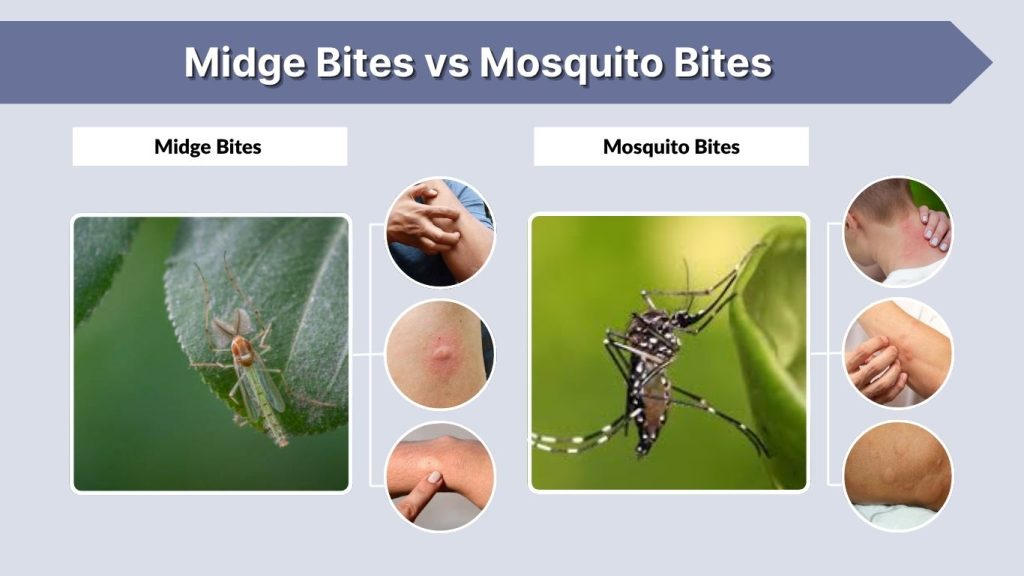
Midge bites and mosquito bites can both itch, swell, and become red or irritated. The difference is not always obvious from the bite alone, but patterns can help.
Biting midges often attack in groups. Their bites may appear as clusters of small red spots, especially around ankles, wrists, necklines, arms, and exposed skin. Because midges are tiny, people often do not notice them until the bites start itching.
Mosquito bites are often larger individual bumps. A mosquito usually lands, pierces the skin, and feeds before flying away. The bite may become swollen, itchy, and warm. According to the NHS, insect bites commonly cause pain, a swollen lump, redness, and sometimes several bites grouped in one area.
| Bite Feature | Midge Bite | Mosquito Bite |
| Bite pattern | Often clustered | Often single or scattered |
| Bite feeling | Can feel sharp or burning | Often noticed after itching starts |
| Insect visibility | Insect may be barely visible | Mosquito is usually visible |
| Common areas | Ankles, wrists, neck, hairline, arms | Any exposed skin |
| Swelling | Small bumps or irritated clusters | Raised itchy bump, sometimes larger |
| Timing | Common in calm, damp areas | Common near standing water, dawn, dusk |
Bite reactions vary from person to person. Some people barely react, while others develop large itchy welts. Scratching either type of bite can increase irritation and raise the risk of infection.
Are Midges More Dangerous Than Mosquitoes?
For most people, mosquitoes are more medically concerning than midges because mosquitoes are known disease vectors in many parts of the world. The CDC highlights prevention because mosquitoes can spread germs through bites. Diseases vary by region, so local public health guidance matters.
Biting midges are usually more of a nuisance to humans, but they can still cause painful, itchy bites. University of Florida IFAS describes biting midges, also known as no-see-ums, sand flies, or sand gnats, as tiny bloodsucking flies, with many species extremely small. Their bites can make outdoor activities unpleasant, especially in coastal, marshy, or humid areas.
So, the practical answer is this: mosquitoes usually carry the bigger disease concern, while biting midges can be more irritating because they are tiny, hard to avoid, and may attack in large numbers.
Midge vs Gnat
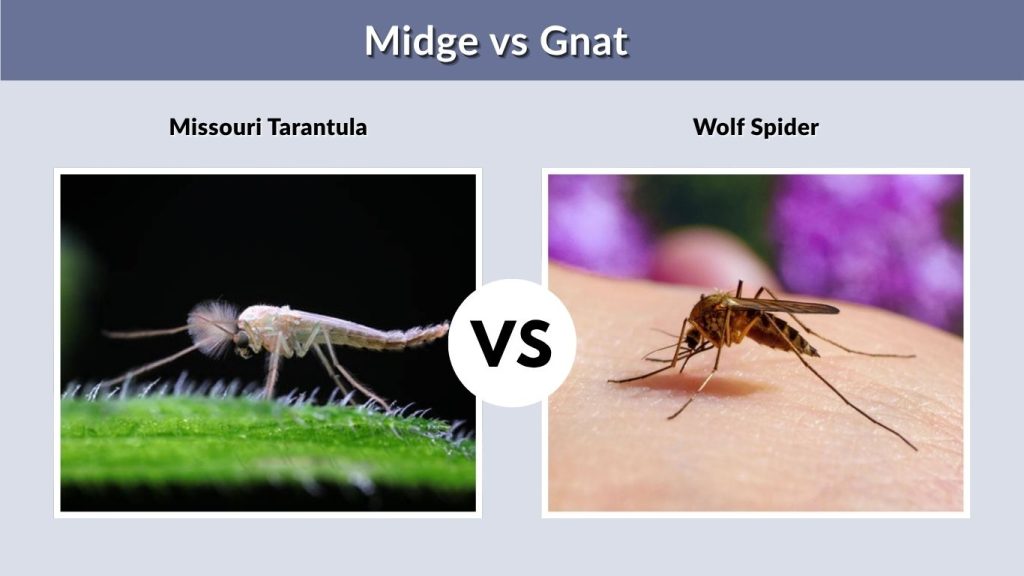
“Midge” and “gnat” are often used loosely, which makes the comparison confusing. A gnat is not always one exact insect. People may call many tiny flying insects gnats, including fungus gnats, fruit flies, black flies, and small midges.
Non-biting midges and gnats are common around damp areas and lights. University of Kentucky Extension explains that gnats and midges are small flies that can be mistaken for mosquitoes, and most midges and gnats in Kentucky are non-biting.
The main difference is that “midge” is more specific in some contexts, while “gnat” is often a general nickname for tiny flies.
| Insect | Usually Bites? | Common Clue |
| Biting midge | Yes | Tiny, painful bites, often near damp areas |
| Non-biting midge | No | Swarms near lights and water |
| Fungus gnat | No, usually | Found around overwatered houseplants |
| Fruit fly | No | Found near ripe fruit or drains |
| Black fly | Yes | Small humpbacked fly, painful bites |
| Mosquito | Yes, females | Long legs, visible landing, itchy bump |
If tiny insects are flying around indoor plants, they are more likely fungus gnats than biting midges. If they are swarming near a lake light, they may be non-biting midges. If they are biting outdoors and are hard to see, they may be biting midges.
Midges vs Mayflies
Midges and mayflies both live near water and can swarm in large numbers, but they are very different insects. Mayflies are not flies at all; they belong to a different insect group. They are known for their delicate bodies, upright wings, and short adult lives.
Non-biting midges are true flies. They often look more mosquito-like, especially when resting. They may gather around lights and buildings near water. Mayflies usually have longer tails and wings that stand upright when resting.
Midges can be a nuisance because of swarms or bites, depending on the type. Mayflies do not bite people. They are mainly a nuisance when large hatches cover walls, boats, roads, and lights.
If the insect has long tail-like filaments and upright wings, it is likely a mayfly. If it looks like a tiny mosquito and swarms around lights, it may be a non-biting midge.
No-See-Ums vs Midges
No-see-ums are biting midges. The two names often refer to the same type of tiny biting insect. The name “no-see-um” comes from how difficult they are to see.
University of Arizona Extension describes no-see-ums as tiny biting flies that are barely visible to the naked eye, and says they are also known as biting midges or punkies.
If someone says they were bitten by no-see-ums at the beach, near a marsh, or around a damp campsite, they are probably talking about biting midges. These insects can pass through some loose screens and clothing gaps because they are so small.
The best protection is fine mesh, long clothing, and a repellent labeled for biting flies or midges.
Biting Midge vs Non-Biting Midge
Not all midges bite. This is one of the most important things to understand.
Non-biting midges often look like mosquitoes but do not feed on blood. They may appear in huge numbers around water and lights. They can be annoying, but they are not biting you.
Biting midges are much smaller and feed on blood. They are the ones responsible for itchy, painful bites. They are often active in damp, calm conditions and can be hard to spot.
If insects are swarming around a porch light but nobody is getting bitten, they are probably non-biting midges. If you feel sharp bites and see tiny dots flying around your skin, biting midges are more likely.
Midge Larvae vs Mosquito Larvae
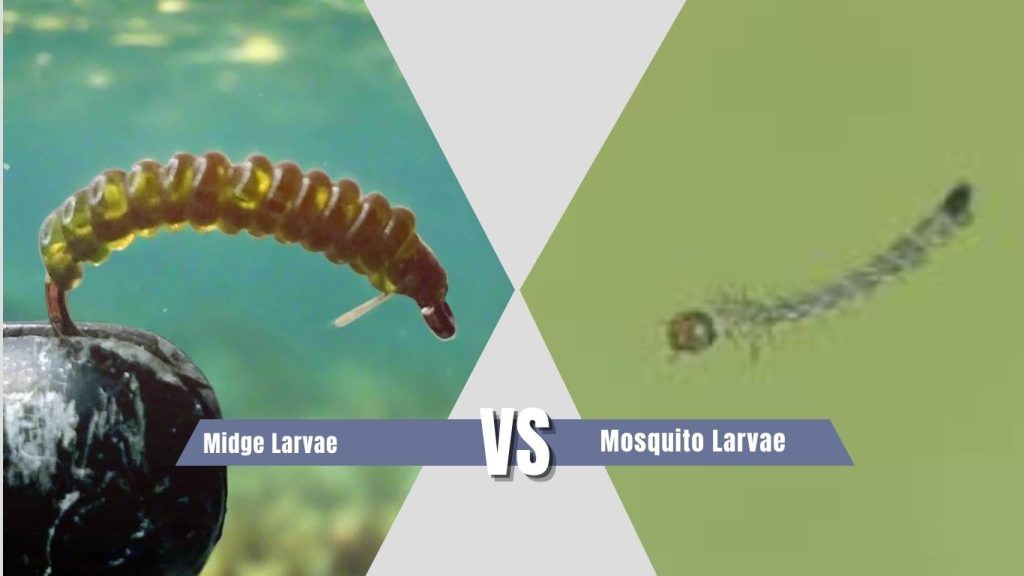
Both midge larvae and mosquito larvae often develop in water, but they look and behave differently. Mosquito larvae are commonly called wrigglers because they move in a jerky, wriggling motion near the water surface. They often come to the surface to breathe.
Midge larvae are often found in mud, sediment, or aquatic habitats. Some non-biting midge larvae are red and commonly called bloodworms because of hemoglobin-like pigments that help them live in low-oxygen water.
For homeowners, the prevention strategy overlaps. Reduce stagnant water, clean gutters, empty containers, and keep ponds balanced. This helps reduce mosquitoes and may limit some midge breeding areas, although midges can also develop in moist soil and natural wetlands.
How to Prevent Midge and Mosquito Bites
Prevention works best when you combine repellent, clothing, and habitat control. Mosquitoes and biting midges both like moisture, but their behavior is not identical.
Use these steps outdoors:
- Wear long sleeves, trousers, socks, and closed shoes
- Use insect repellent on exposed skin
- Choose fine mesh screens in midge-heavy areas
- Avoid still, damp spots when insects are active
- Use fans on patios because small flies struggle in moving air
- Remove standing water near the home
- Camp in breezy areas when possible
For mosquitoes, standing water control is especially important. Buckets, plant saucers, clogged gutters, old tires, and birdbaths can become breeding sites. For biting midges, damp soil, marshy ground, and coastal habitats can also be involved, so complete control is harder in natural areas.
Which Repellent Works Better?
A repellent that works for mosquitoes may also help with biting midges, but you should check the label. Look for products with active ingredients such as DEET, picaridin, IR3535, or oil of lemon eucalyptus/PMD. For midge-heavy areas, choose a product that mentions biting flies, midges, gnats, or no-see-ums.
Apply repellent carefully around ankles, wrists, neck, ears, and hairline. These are common bite zones. Do not spray directly into your face. Spray into your hands first, then apply carefully while avoiding eyes and lips.
If you are using sunscreen, apply sunscreen first and repellent after. Reapply according to the product label, especially after sweating, swimming, or towel drying.
FAQs
Is a midge the same as a mosquito?
No, a midge is not the same as a mosquito. Midges are usually smaller, and many types do not bite. Mosquitoes are larger, easier to see, and female mosquitoes feed on blood. Biting midges can also bite, but they are often much harder to notice.
Are no-see-ums midges or mosquitoes?
No-see-ums are biting midges, not mosquitoes. They are tiny blood-feeding flies that can be difficult to see with the naked eye. People often notice the sharp or itchy bites before spotting the insect. They are common in damp, coastal, marshy, and humid outdoor areas.
How can you tell midge bites from mosquito bites?
Midge bites are often smaller, clustered, and may feel sharp or burning. Mosquito bites are usually larger raised bumps and may appear as single bites on exposed skin. However, reactions vary, so bite appearance alone is not always enough to identify the insect.
Do midges spread disease like mosquitoes?
Mosquitoes are generally a bigger disease concern for humans because some species can transmit viruses or parasites. Biting midges are mostly a nuisance to people in many regions, although they can cause painful irritation. Local risks vary, so follow regional public health guidance when traveling.
Are mayflies the same as midges?
No, mayflies and midges are different insects. Mayflies do not bite and often have upright wings and long tail-like filaments. Midges are small fly-like insects; some bite and some do not. Both may gather near water and lights, which is why people often confuse them.