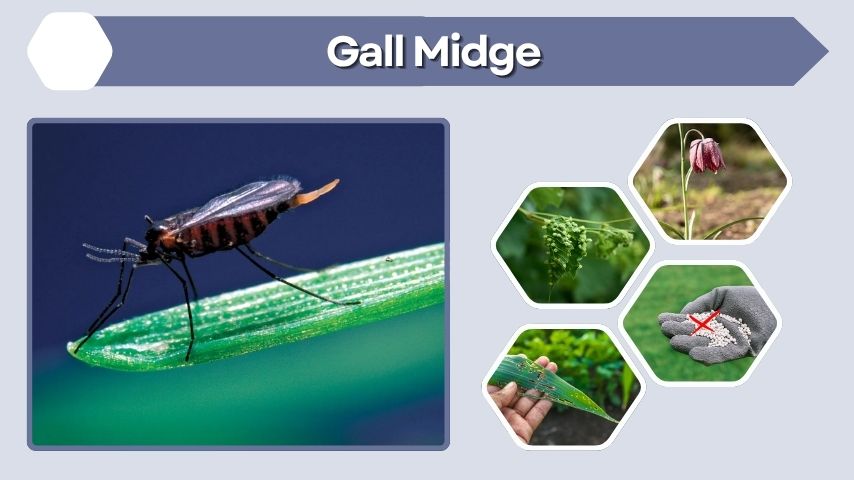
Gall midge is a tiny fly-like insect that can cause big problems in crops, gardens, and ornamental plants. Its larvae feed inside plant tissues, often creating galls, swollen growths, distorted leaves, damaged buds, or weak stems. Some gall midges are minor pests, while others attack soybean, rice, mango, hibiscus, daylily, blueberry, and many trees. Knowing the signs early helps reduce plant damage before populations spread.
What Is a Gall Midge?
Gall midges are small insects in the family Cecidomyiidae. Adults usually look like delicate gnats or tiny flies, while the damaging stage is normally the larva. These larvae are often called maggots because they are soft-bodied, legless, and very small.
Not every gall midge causes the same type of damage. Some create leaf galls, some attack flower buds, some damage stems, and others feed inside developing shoots. A few gall midges are even beneficial because their larvae feed on pests such as aphids. However, the species that concern growers are plant-feeding gall midges that reduce crop quality, yield, or ornamental value.
Common Features of Gall Midges
Most gall midges are hard to notice until plant symptoms appear. Adults are short-lived and often active during humid, cloudy, or low-light conditions. Larvae are usually hidden inside plant tissue, flower buds, stems, or galls, which makes treatment more difficult than controlling exposed insects.
Key features include:
- Tiny fly-like adults with delicate bodies
- Larvae that look like small maggots
- Damage that appears as galls, swelling, bud drop, or distorted growth
- Host-specific behavior in many species
- Fast life cycles under favorable weather conditions
Gall Midge Identification Guide
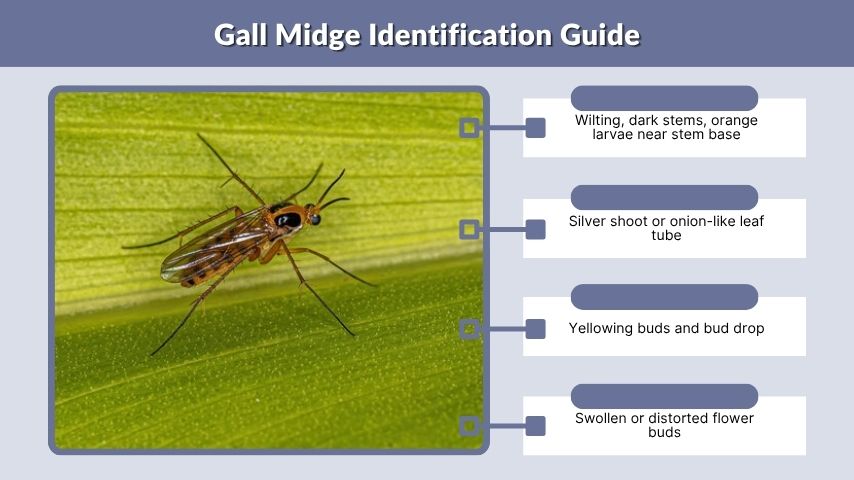
Identifying gall midge damage starts with the host plant. A gall midge found on hibiscus may not be the same species found in rice, soybean, mango, oak, willow, or daylily. Many gall midges are closely tied to a specific plant or plant group.
| Gall midge type | Common host | Main symptom | Best first action |
| Soybean gall midge | Soybean | Wilting, dark stems, orange larvae near stem base | Scout field edges |
| Rice gall midge | Rice or paddy | Silver shoot or onion-like leaf tube | Use resistant varieties where available |
| Hibiscus gall midge | Hibiscus | Yellowing buds and bud drop | Remove fallen buds |
| Daylily gall midge | Daylily | Swollen or distorted flower buds | Destroy affected buds |
| Mango leaf gall midge | Mango | Leaf galls, spotting, or distorted young leaves | Monitor flush growth |
Adult Gall Midge
Adult gall midges are very small and often go unnoticed. They may look like weak-flying gnats, with long legs and fragile bodies. Because adults are difficult to identify without magnification, home gardeners and farmers usually recognize the pest by plant symptoms rather than by seeing the insect itself.
Gall Midge Larvae
Gall midge larvae are the most damaging stage. They are usually white, cream, yellow, orange, or reddish, depending on species and age. In soybean gall midge, mature larvae may appear bright orange. In hibiscus, larvae develop inside buds, causing them to yellow and fall before opening.
Gall Midge Eggs
Eggs are tiny and usually placed in protected plant parts such as buds, shoots, cracks, stems, or young tissues. Because eggs are almost impossible to see without close inspection, prevention depends on monitoring symptoms and interrupting the life cycle before larvae mature.
Gall Midge Life Cycle
The gall midge life cycle usually includes egg, larva, pupa, and adult stages. The exact timing depends on the species, host plant, temperature, humidity, and season. In many cases, the larva feeds inside plant tissue, then drops to the soil or remains in a protected site to pupate.
The cycle often follows this pattern:
- Adult females lay eggs on or inside suitable plant tissue.
- Eggs hatch into larvae.
- Larvae feed inside buds, leaves, stems, or shoots.
- Damaged plant tissue swells, distorts, drops, or weakens.
- Larvae pupate in soil, plant debris, or galls.
- New adults emerge and repeat the cycle.
Multiple generations can occur in a season. This is one reason gall midge control can be difficult. When eggs, larvae, pupae, and adults are present at different times, one treatment rarely solves the full problem.
Gall Midge Damage and Symptoms
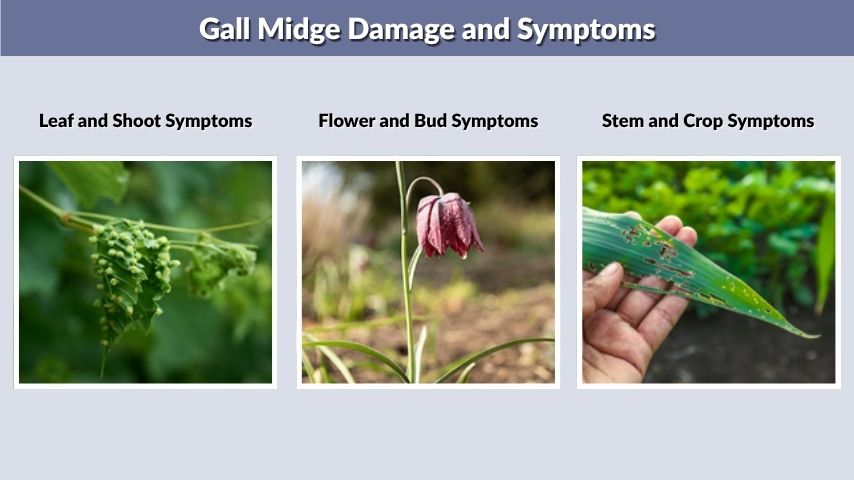
Gall midge symptoms vary widely because different species attack different crops and plant parts. The most important clue is abnormal growth that appears shortly after feeding begins.
Leaf and Shoot Symptoms
Leaf gall midges may cause bumps, swelling, curling, spotting, or distorted young leaves. In mango, oak, maple, willow, and other plants, galls often form around feeding sites. Some galls are mainly cosmetic, but heavy infestations can reduce plant vigor or affect new growth.
Common leaf symptoms include:
- Raised bumps or blister-like galls
- Curled or twisted leaves
- Yellowing around damaged tissue
- Stunted shoots
- Premature leaf drop in severe cases
Flower and Bud Symptoms
Hibiscus gall midge and daylily gall midge are known for damaging flower buds. Affected buds may swell, turn yellow, distort, or drop before opening. This type of injury is frustrating because the plant may look healthy but still fail to bloom properly.
Gardeners should inspect fallen buds instead of assuming the issue is only watering, heat, or fertilizer. If tiny larvae are inside the bud, gall midge is likely involved.
Stem and Crop Symptoms
Soybean gall midge attacks stems, often near the base of plants. Infestations may begin near field edges and cause wilting, dark discoloration, lodging, or plant death. In rice, gall midge feeding can create the classic silver shoot symptom, where the central shoot becomes tube-like and fails to produce a normal panicle.
Important Gall Midge Types
Gall midges occur in many crops and landscapes. Some are local pests, while others are major agricultural concerns.
Soybean Gall Midge
Soybean gall midge is an important pest in parts of the Midwest United States. Larvae feed near the base of soybean stems, where they can disrupt plant movement of water and nutrients. Infested plants may wilt, snap, lodge, or die.
Scouting should focus on field edges, especially near previous infestations. Because the larvae are protected inside the stem, insecticides and seed treatments may not provide complete control. Farmers should follow local extension updates because management recommendations continue to develop.
Rice Gall Midge
Rice gall midge is a serious pest in rice-growing areas. The Asian rice gall midge attacks growing points and can produce silver shoots instead of normal tillers. Affected tillers do not form healthy panicles, which can reduce yield when infestation levels are high.
Rice gall midge pressure is often favored by cloudy, rainy weather, high tillering varieties, and intensive cultivation. Management usually depends on resistant varieties, field monitoring, balanced fertilization, and integrated pest management rather than relying only on chemical control.
Hibiscus Gall Midge
Hibiscus gall midge lays eggs in flower buds. When larvae hatch, they feed inside the bud, causing yellowing, deformation, and bud drop. The larvae may then leave the fallen bud and continue development in the soil.
The most practical control step is sanitation. Pick off yellowing buds, collect fallen buds, seal them in a bag, and dispose of them. This helps break the life cycle before larvae reach the soil.
Mango Leaf Gall Midge
Mango gall midge problems often appear on young leaves or flush growth. Symptoms may include small galls, leaf spots, curling, and distorted new growth. Heavy attack can affect nursery plants or young trees more severely than established trees.
Good orchard hygiene, monitoring during new flushes, and avoiding unnecessary insecticide use can help protect natural enemies.
Daylily and Hemerocallis Gall Midge
Daylily gall midge, also called Hemerocallis gall midge, causes swollen and distorted flower buds. The buds may fail to open or produce poor-quality blooms. Removing affected buds early is important because larvae develop inside the bud.
How to Get Rid of Gall Midges
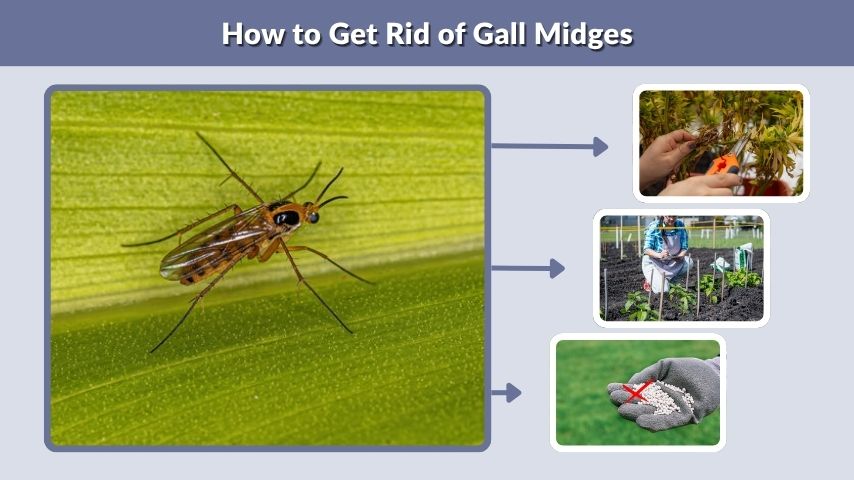
Gall midge treatment works best when it targets the right stage of the pest. Since larvae are often hidden, spraying after severe symptoms appear may be less effective. A better approach combines monitoring, sanitation, resistant varieties, cultural control, and careful insecticide use when needed.
Cultural Control
Cultural control reduces conditions that help gall midges survive and multiply. This is especially useful in gardens, orchards, and fields with recurring infestations.
Helpful steps include:
- Remove and destroy infested buds, leaves, or plant debris.
- Avoid moving infested plant material to clean areas.
- Rotate crops where practical.
- Keep fields and gardens monitored during vulnerable growth stages.
- Use resistant crop varieties when available.
- Avoid excessive nitrogen, which may encourage soft new growth.
Biological and Natural Control
Natural enemies can help reduce some gall midge populations. Predators and parasitoids may attack eggs, larvae, or pupae, depending on the pest species and environment. Preserving beneficial insects is important, especially in orchards and gardens.
Avoid broad-spectrum insecticide use unless necessary. These products can reduce natural enemies and sometimes allow pest populations to rebound.
Chemical Treatment
Insecticides may be useful in some situations, but timing is critical. Once larvae are protected inside stems, buds, or galls, contact sprays may have limited effect. Chemical options also vary by crop, country, and label restrictions.
Before applying any insecticide:
- Confirm the pest and host plant.
- Check the product label for the specific crop.
- Target adult emergence or early egg-laying periods when possible.
- Avoid spraying during bloom if pollinators are active.
- Follow local agricultural or extension recommendations.
Gall Midge Prevention Tips
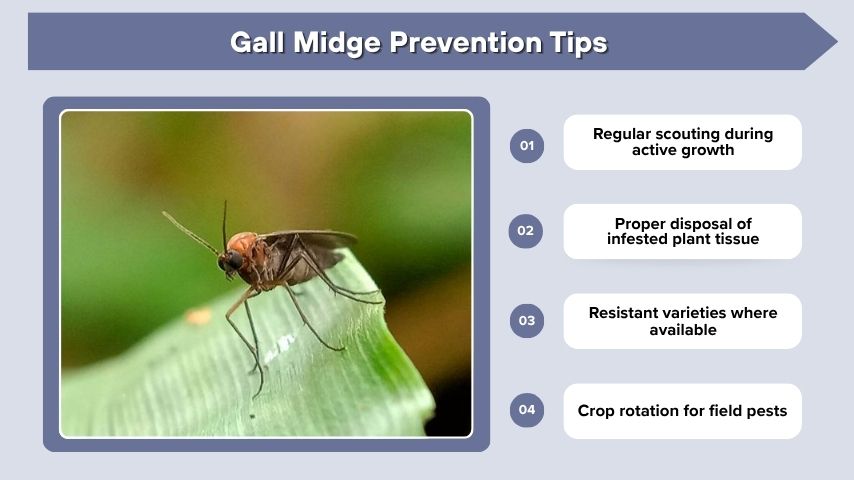
Prevention is easier than rescue treatment. Gall midges are small, fast, and often hidden, so early detection is the best defense.
For home gardens, inspect flower buds, young leaves, and fallen plant parts weekly. For farms, scout field edges and known hot spots first. For orchards, monitor new flush growth and avoid letting infested debris remain under trees.
A strong prevention plan includes:
- Regular scouting during active growth
- Proper disposal of infested plant tissue
- Resistant varieties where available
- Crop rotation for field pests
- Balanced fertilizer and irrigation
- Protection of beneficial insects
- Local pest alerts for soybean, rice, and other crops
When Gall Midge Damage Is Serious
Not every gall midge infestation needs aggressive treatment. Some leaf galls on trees are mostly cosmetic and do not threaten plant survival. However, gall midges that attack crops, buds, stems, or growing points can cause real economic or ornamental damage.
Take action quickly when:
- Soybean plants wilt or die near field edges.
- Rice tillers show silver shoot symptoms.
- Hibiscus or daylily buds repeatedly drop before opening.
- Mango seedlings or young flushes show heavy galling.
- Infestations return every season.
- Larvae are visible inside buds, stems, or damaged tissue.
FAQs
What is a gall midge insect?
A gall midge insect is a tiny fly from the family Cecidomyiidae. The adult is usually not the main problem. The larval stage causes most plant damage by feeding inside tissues, buds, stems, or leaves. This feeding can create galls, swelling, bud drop, distorted growth, or crop loss.
Are gall midge larvae harmful to plants?
Yes, gall midge larvae can be harmful when they feed on important plant parts. Some species only cause cosmetic leaf galls, but others damage soybean stems, rice growing points, hibiscus buds, mango leaves, or daylily flowers. The seriousness depends on the host plant, pest species, and infestation level.
How do I control gall midge on hibiscus?
To control gall midge on hibiscus, remove yellowing and fallen buds quickly. Seal them in a plastic bag and dispose of them so larvae cannot move into the soil and pupate. Continue monitoring new buds. If the problem is severe, use a labeled insecticide only after confirming local recommendations.
What are rice gall midge symptoms?
Rice gall midge symptoms include silver shoot formation, where the central shoot becomes hollow, pale, and tube-like instead of developing normally. Affected tillers usually fail to produce healthy panicles. Infestation is often worse in cloudy or rainy conditions and in fields with susceptible varieties.
Can insecticide completely remove gall midges?
Insecticide may help in some cases, but it rarely works well alone. Gall midge larvae are often hidden inside buds, stems, shoots, or galls, where sprays may not reach them. Better results usually come from integrated control, including sanitation, scouting, resistant varieties, cultural practices, and well-timed treatments.