
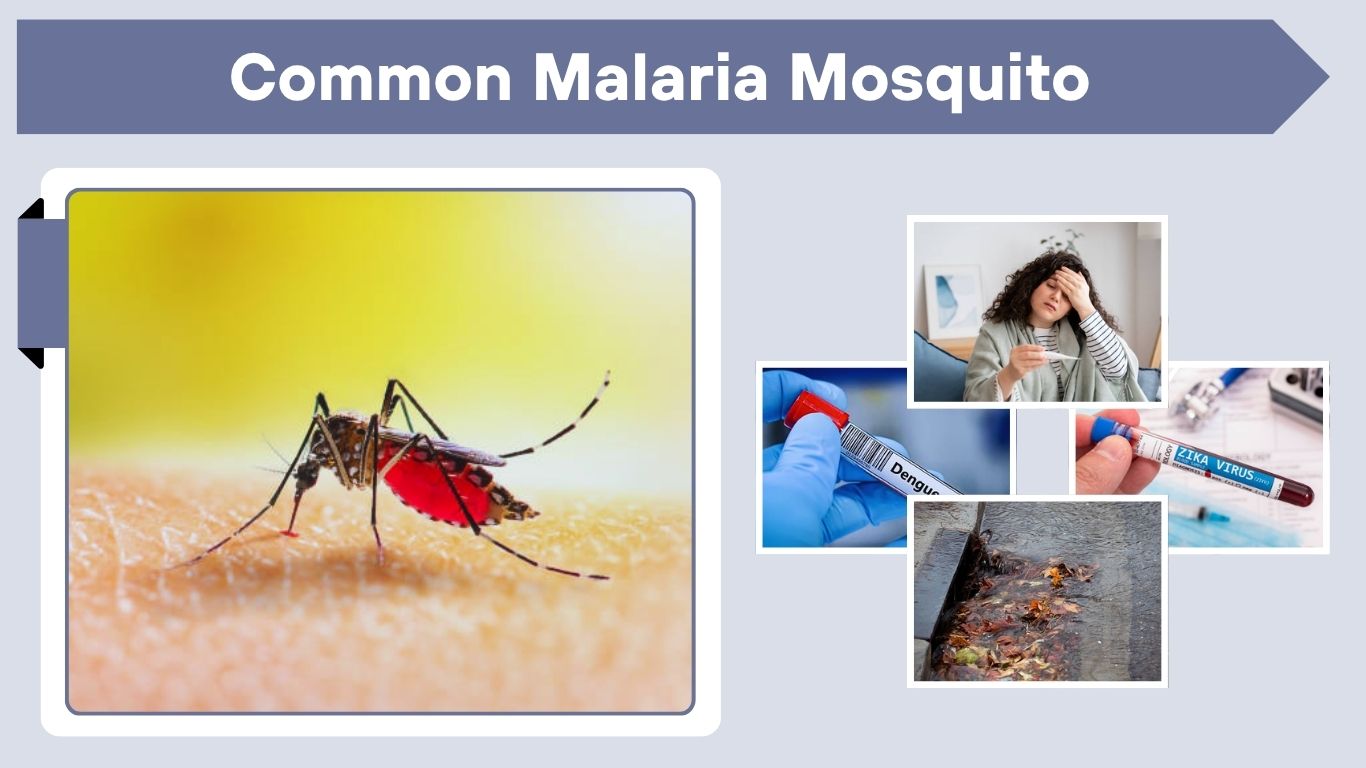
Malaria remains one of the most serious mosquito-borne diseases worldwide, affecting millions each year. Understanding the mosquito responsible for transmitting malaria is essential for prevention and awareness. This article explores the most common malaria mosquito, its scientific classification, habitat, and behavior. It also explains how malaria spreads and clarifies common misconceptions about different mosquito species. By learning these key facts, readers can better understand risks and take effective protective measures.
What Is the Common Malaria Mosquito?
Malaria is transmitted by a specific group of mosquitoes known for their ability to carry parasites that infect humans. Not all mosquitoes are dangerous, but certain species play a crucial role in spreading the disease. Understanding what makes these mosquitoes unique helps in identifying risk and improving prevention strategies.
Definition of Malaria Vector
A malaria vector is any organism that transmits the malaria parasite from one host to another. In this case, the vector is a mosquito that carries the parasite in its body and passes it into the human bloodstream through a bite.
Why Anopheles Mosquitoes Are Important
- They are the only mosquitoes capable of transmitting malaria
- Female mosquitoes are responsible for spreading the parasite
- They are widely distributed in tropical and subtropical regions
Scientific Name and Classification
The malaria mosquito belongs to a well-defined scientific group that helps researchers identify and study its behavior. Classification is important because different species have different levels of risk and geographic distribution. Knowing the scientific name also helps distinguish malaria mosquitoes from other types.
Scientific Name of Malaria Mosquito
The scientific name of malaria mosquitoes falls under the genus Anopheles, which is part of the Culicidae family. This genus contains many species, but only some are efficient malaria transmitters.
Key Classification Features
- Kingdom: Animalia
- Phylum: Arthropoda
- Class: Insecta
- Family: Culicidae
- Genus: Anopheles
Most Common Malaria Mosquito Species
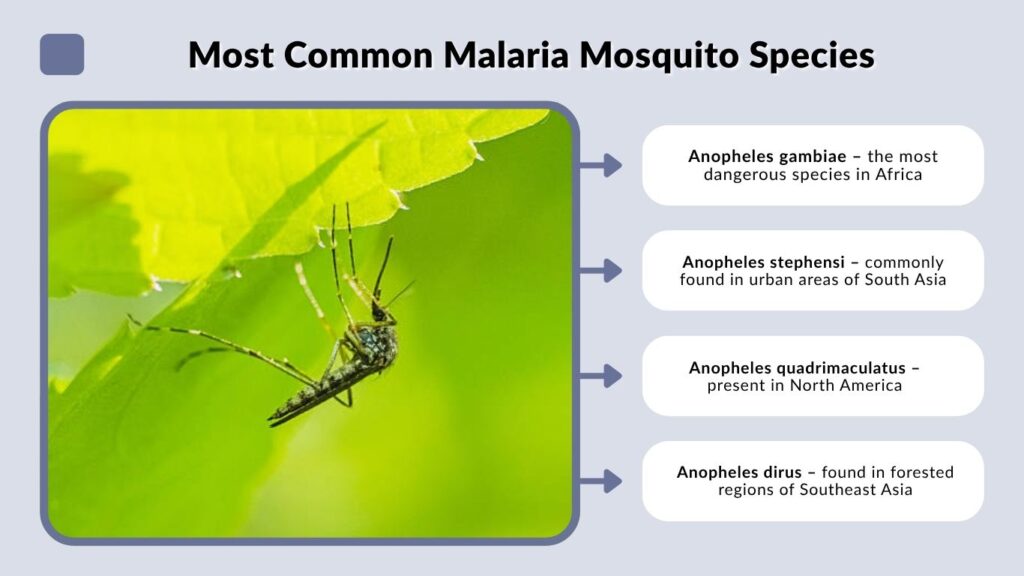
Different regions of the world have different dominant malaria mosquito species. Some are more efficient at transmitting malaria than others due to their feeding habits and close contact with humans.
Major Species Worldwide
- Anopheles gambiae – the most dangerous species in Africa
- Anopheles stephensi – commonly found in urban areas of South Asia
- Anopheles quadrimaculatus – present in North America
- Anopheles dirus – found in forested regions of Southeast Asia
Why These Species Matter
- They adapt well to local environments
- They often live close to human populations
- They have high transmission efficiency
Where Are Malaria Mosquitoes Most Common?
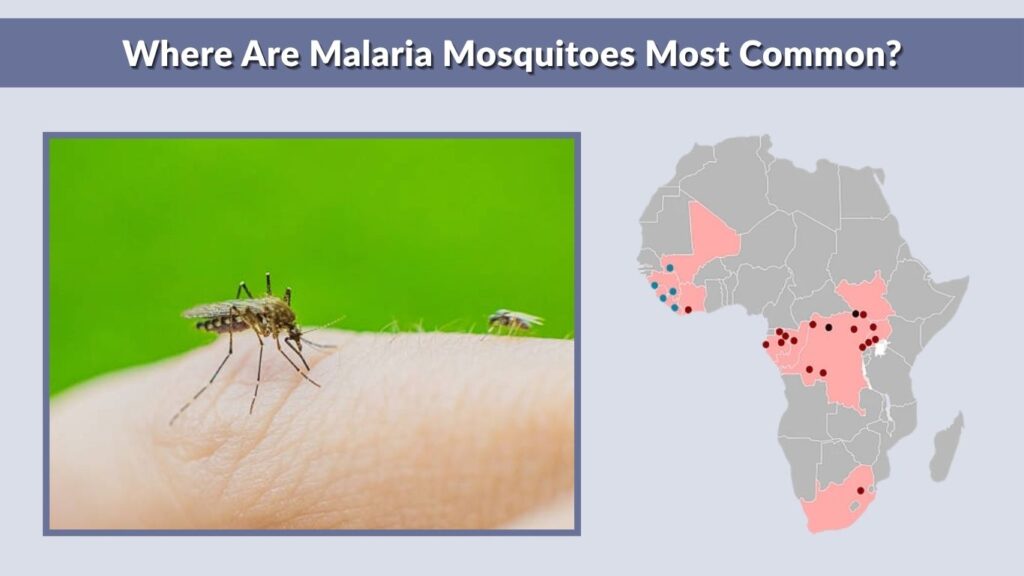
Malaria mosquitoes are not evenly distributed across the globe. Their presence depends largely on environmental conditions that support their survival and reproduction. Understanding where they are most common can help identify high-risk areas.
Global Distribution
Malaria mosquitoes are most common in regions where warm temperatures and moisture are consistent throughout the year. These conditions allow them to breed and survive easily, increasing the risk of disease transmission.
High-Risk Regions
- Sub-Saharan Africa has the highest malaria burden
- South and Southeast Asia experience significant transmission
- Parts of South America also report malaria cases
Where Do Malaria Mosquitoes Live?
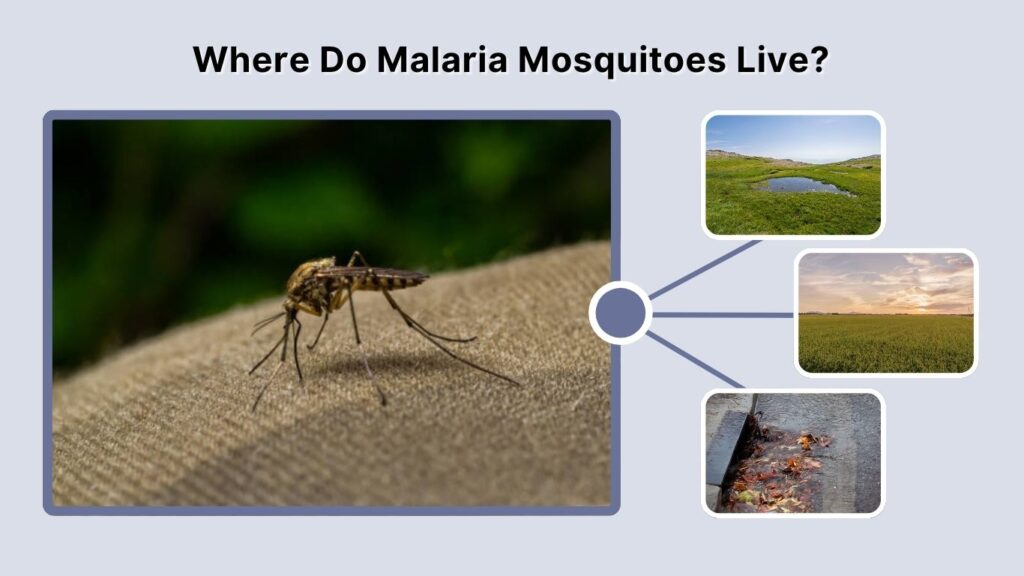
Malaria mosquitoes prefer environments that support their breeding cycle and provide easy access to human hosts. Their habitats are closely linked to water sources and climate conditions, making certain areas more vulnerable than others.
Typical Habitat Conditions
Malaria mosquitoes thrive in warm and humid environments. They are commonly found near stagnant water, which serves as a breeding ground for their eggs and larvae. These environments allow rapid population growth, especially during rainy seasons.
Common Breeding Sites
- Ponds and small pools of water
- Rice fields and agricultural land
- Blocked drains and puddles
Lifecycle of the Malaria Mosquito
The lifecycle of the malaria mosquito plays a key role in how quickly populations grow and spread. Each stage of development occurs in specific environmental conditions, mainly involving water and temperature.
Four Stages of Development
- Egg
- Larva
- Pupa
- Adult
Growth and Development
The entire lifecycle can be completed within a short time in warm climates. Eggs are laid on water surfaces, and larvae develop in aquatic environments before emerging as adult mosquitoes capable of flight and feeding.
Male vs Female Malaria Mosquito
Male and female malaria mosquitoes differ significantly in behavior and role in disease transmission. Understanding these differences is essential because only one gender is responsible for spreading malaria. Their feeding habits, lifespan, and biological needs all contribute to how malaria is transmitted in human populations.
Key Differences Between Male and Female
- Female mosquitoes bite humans to obtain blood
- Males feed only on plant nectar
- Females require blood for egg development
- Males do not transmit malaria
Why Females Transmit Malaria
Female Anopheles mosquitoes act as vectors because they feed on human blood. During this process, they can transfer malaria parasites from an infected person to a healthy one. This makes them the primary focus of malaria prevention strategies.
How Malaria Is Transmitted
Malaria transmission is a complex biological process involving both the mosquito and the human body. It begins when a mosquito carrying the parasite bites a person. The parasite then undergoes development inside the human host, leading to infection and symptoms.
Transmission Process
- An infected mosquito bites a human
- Parasites enter the bloodstream
- Parasites travel to the liver
- They multiply and infect red blood cells
Role of Female Anopheles
Female Anopheles mosquitoes are highly efficient at spreading malaria because they typically bite during nighttime hours. Their feeding behavior increases the chances of unnoticed bites, which contributes to higher transmission rates in affected regions.
How Common Is It to Get Malaria from Mosquitoes?
The likelihood of getting malaria from a mosquito bite depends on several environmental and behavioral factors. While malaria is common in certain regions, not every mosquito bite leads to infection. Understanding these risks helps people take appropriate precautions.
Factors That Influence Risk
- Geographic location and climate
- Density of infected mosquitoes
- Access to prevention methods
Infection Probability
In high-risk areas, repeated exposure to infected mosquitoes increases the chances of contracting malaria. However, in regions with strong control measures, the risk is significantly lower even if mosquitoes are present.
Are Aedes Mosquitoes Responsible for Malaria?
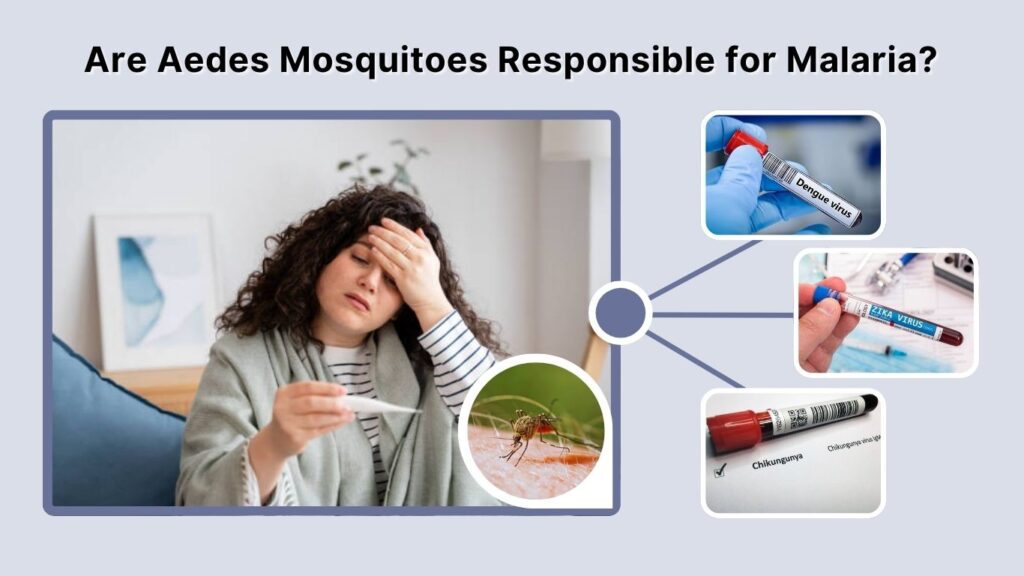
Many people confuse different mosquito species and the diseases they transmit. A common misconception is that Aedes mosquitoes spread malaria. In reality, malaria transmission is limited to a specific group of mosquitoes.
Common Misconception Explained
Aedes mosquitoes are often associated with disease outbreaks, but they are not responsible for malaria transmission. This confusion arises because both mosquito types are common in similar regions.
Diseases Spread by Aedes Mosquitoes
- Dengue fever
- Zika virus
- Chikungunya
Key Difference Between Species
The main difference lies in the type of pathogens they carry. Anopheles mosquitoes transmit malaria parasites, while Aedes mosquitoes spread viral diseases. Identifying the correct species is important for targeted prevention.
Prevention Tips Against Malaria Mosquitoes
Preventing malaria involves reducing exposure to mosquito bites and controlling mosquito populations. Simple protective measures can significantly lower the risk of infection, especially in high-risk areas.
Effective Prevention Methods
- Use insecticide-treated bed nets while sleeping
- Apply mosquito repellents on exposed skin
- Remove standing water around homes
- Wear long-sleeved clothing in the evening
Community-Level Protection
Public health efforts such as indoor spraying and environmental management play a major role in reducing mosquito populations. Combined with personal protection, these strategies are effective in controlling malaria spread.
Importance of Controlling Malaria Mosquitoes
Controlling malaria mosquitoes is a global health priority due to the widespread impact of the disease. Effective control measures not only reduce infection rates but also improve overall public health outcomes in affected regions.
Global Health Impact
Malaria continues to affect millions of people each year, particularly in developing regions. Children and pregnant women are among the most vulnerable groups, making prevention efforts even more critical.
Role of Public Health Programs
Government and international programs focus on mosquito control, awareness campaigns, and access to treatment. These combined efforts have helped reduce malaria cases in many parts of the world, though challenges still remain.
FAQs
What is the most common malaria mosquito?
The most common malaria mosquitoes belong to the Anopheles genus, with species like Anopheles gambiae being the most effective transmitters. These mosquitoes are widely found in tropical regions and are responsible for the majority of malaria cases worldwide.
What is the scientific name of the malaria mosquito?
The scientific name of malaria mosquitoes is Anopheles. This genus includes many species capable of transmitting malaria, although only certain ones are highly efficient vectors depending on the region and environment.
Do all mosquitoes carry malaria?
No, not all mosquitoes carry malaria. Only female Anopheles mosquitoes can transmit the malaria parasite. Many mosquito species do not carry any disease, and even within Anopheles, not all individuals are infected.
Where do malaria mosquitoes live?
Malaria mosquitoes typically live in warm, humid environments and breed in stagnant water sources. They are commonly found in tropical and subtropical regions where conditions support their lifecycle and reproduction.
Can Aedes mosquitoes transmit malaria?
No, Aedes mosquitoes cannot transmit malaria. They are responsible for spreading viral diseases such as dengue and Zika, while malaria transmission is exclusively linked to Anopheles mosquitoes.