
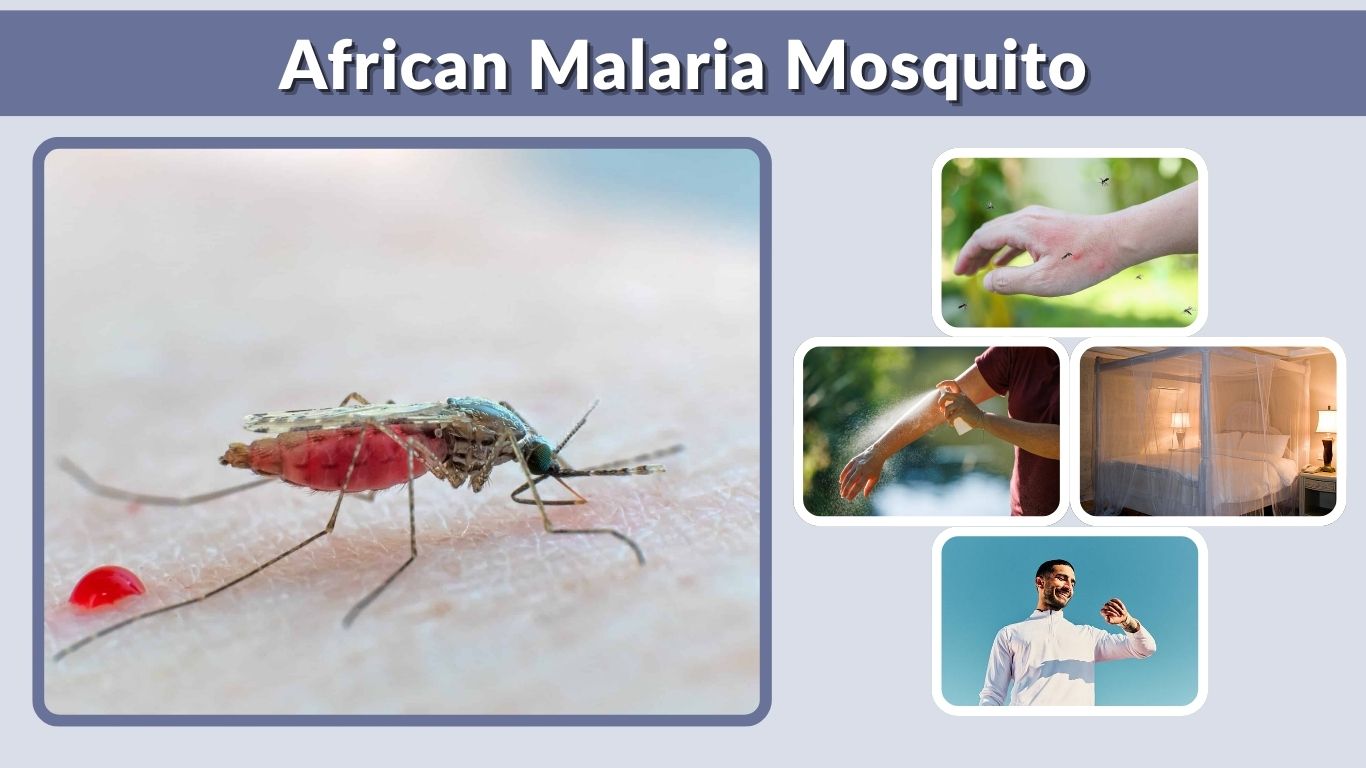
The African malaria mosquito is one of the most dangerous insects in the world due to its role in spreading malaria. Found mainly in tropical regions, especially across Africa, these mosquitoes are responsible for millions of infections each year. However, not all mosquitoes carry malaria, and understanding the difference is important. In this guide, you’ll learn about the African malaria mosquito, its scientific classification, key features, and how it spreads disease.
What Is the African Malaria Mosquito?
The term “African malaria mosquito” usually refers to species in the Anopheles genus, especially Anopheles gambiae. These mosquitoes are highly efficient at transmitting malaria and are closely linked to human populations in affected regions.
Scientific Name and Classification
The most important species is Anopheles gambiae, which belongs to the family Culicidae and the order Diptera. This order includes all true flies. These mosquitoes are specifically adapted to carry malaria parasites, making them different from many other mosquito species found worldwide.
What Makes It Different from Other Mosquitoes
- Only certain species transmit malaria
- Known for feeding primarily on humans
- Rest at an angle instead of flat
- More active during nighttime
- Highly efficient disease carriers
African Malaria Mosquito Order and Taxonomy
Classification helps explain how malaria mosquitoes are related to other insects. It also highlights the unique traits that make them effective disease vectors.
Taxonomic Classification
The African malaria mosquito belongs to the order Diptera, which includes insects with a single pair of wings. Within this order, it falls under the Culicidae family. The Anopheles genus includes several species that can transmit malaria, each adapted to specific environments.
Key Species in Africa
Several species in Africa are responsible for malaria transmission. The most notable is Anopheles gambiae, but others like Anopheles funestus also play a role. These species differ slightly in habitat and behavior but share the ability to transmit the malaria parasite.
Features of the African Malaria Mosquito
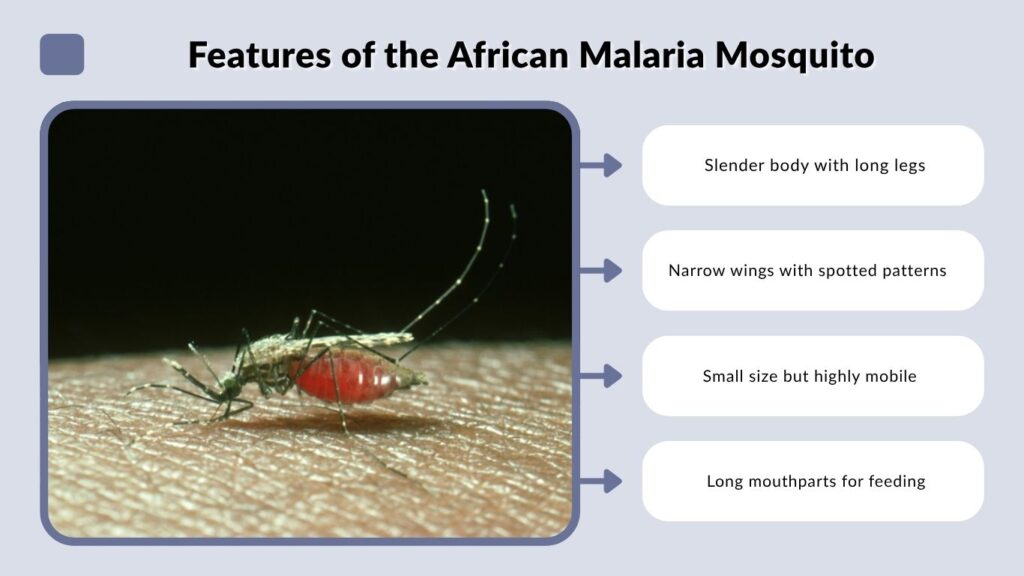
The African malaria mosquito has distinct physical and behavioral features that set it apart from other mosquitoes. These traits help it survive and spread disease effectively.
Physical Features
- Slender body with long legs
- Narrow wings with spotted patterns
- Small size but highly mobile
- Long mouthparts for feeding
- Distinct angled resting posture
Behavioral Features
- Active mainly during nighttime
- Prefers human blood over animals
- Breeds in stagnant water
- Rest indoors after feeding
- Rapid reproduction cycle
Anopheles Gambiae: The Main Malaria Mosquito
Anopheles gambiae is considered the primary malaria vector in Africa. Its strong preference for human hosts and its ability to survive in various environments make it especially dangerous.
Why It Is So Dangerous
This species is highly attracted to humans and feeds frequently on human blood. It is also very efficient at carrying and transmitting the malaria parasite. Its widespread presence across Africa increases the risk of infection in many regions.
Habitat and Adaptation
- Thrives in warm, humid climates
- Lives close to human settlements
- Breeds in small water collections
- Adapts quickly to environmental changes
- Survives in both rural and urban areas
What Mosquito Gives Malaria?
Not all mosquitoes transmit malaria. Only specific species within the Anopheles genus are capable of carrying and spreading the parasite.
Malaria-Carrying Mosquitoes
Malaria is transmitted by female Anopheles mosquitoes that are infected with the parasite. When these mosquitoes bite humans, they transfer the parasite into the bloodstream. Without the parasite, even these mosquitoes cannot spread malaria.
Why Only Females Transmit Malaria
- Females feed on blood for egg production
- Males feed only on nectar
- Blood provides necessary nutrients
- Females bite more frequently
- Only females can transfer parasites
Why Do Mosquitoes in Africa Have Malaria?
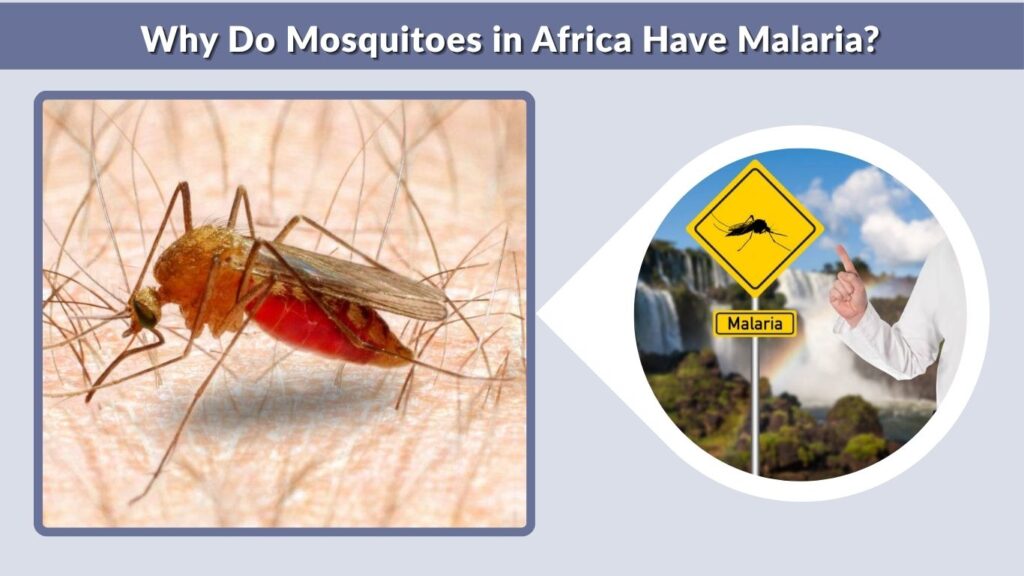
Malaria is more common in Africa due to environmental conditions that favor both mosquitoes and the malaria parasite. These factors create an ideal environment for transmission.
Environmental Factors
Warm temperatures and the presence of standing water allow mosquitoes to breed rapidly. Rainy seasons increase water availability, which leads to higher mosquito populations. These conditions help maintain the lifecycle of both mosquitoes and malaria parasites.
Human and Ecological Factors
High population density in certain areas increases contact between humans and mosquitoes. Limited access to healthcare and mosquito control measures can also contribute to the spread. These factors combine to make malaria more common in certain regions.
Do All Mosquitoes in Africa Carry Malaria?
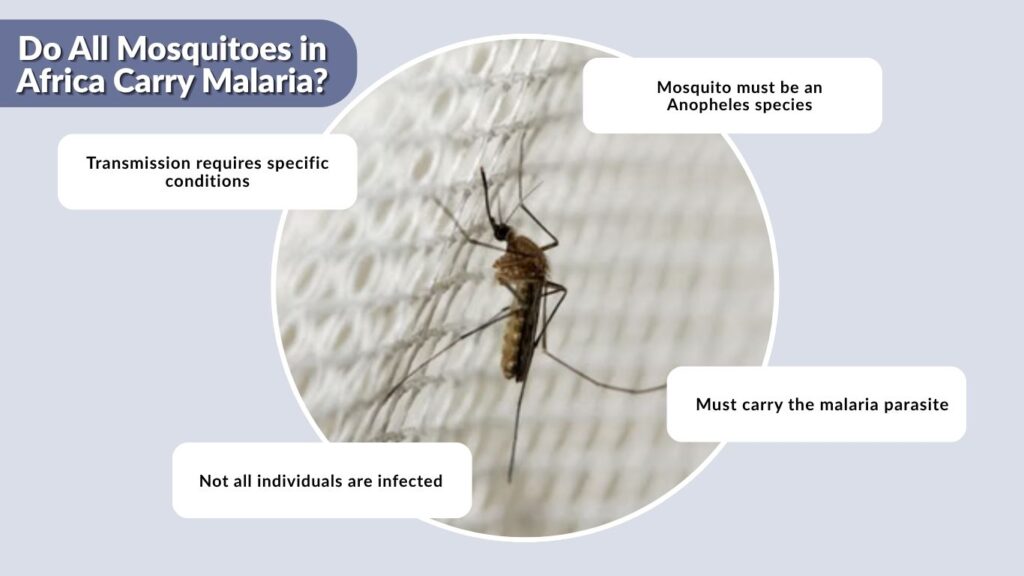
A common misconception is that every mosquito in Africa carries malaria. In reality, only a small number of species are responsible for transmission.
Species Differences
Most mosquito species do not carry malaria at all. Only certain Anopheles species have the ability to transmit the parasite. Other types of mosquitoes may still bite but do not spread malaria.
Infection Requirement
- Mosquito must be an Anopheles species
- Must carry the malaria parasite
- Not all individuals are infected
- Transmission requires specific conditions
- Many mosquitoes are harmless
Are There Malaria Mosquitoes in South Africa?
Malaria risk in South Africa varies depending on the region. While some areas are affected, many parts of the country have very low or no risk at all.
Regional Distribution
Malaria mosquitoes are mainly found in the northeastern parts of South Africa, particularly near borders with neighboring countries. These regions have warmer climates and suitable breeding conditions, making them more favorable for mosquito populations and malaria transmission.
Prevention Efforts
- Government mosquito control programs
- Public health awareness campaigns
- Use of insecticide-treated nets
- Indoor spraying initiatives
- Monitoring high-risk
Does Malaria Affect Mosquitoes?
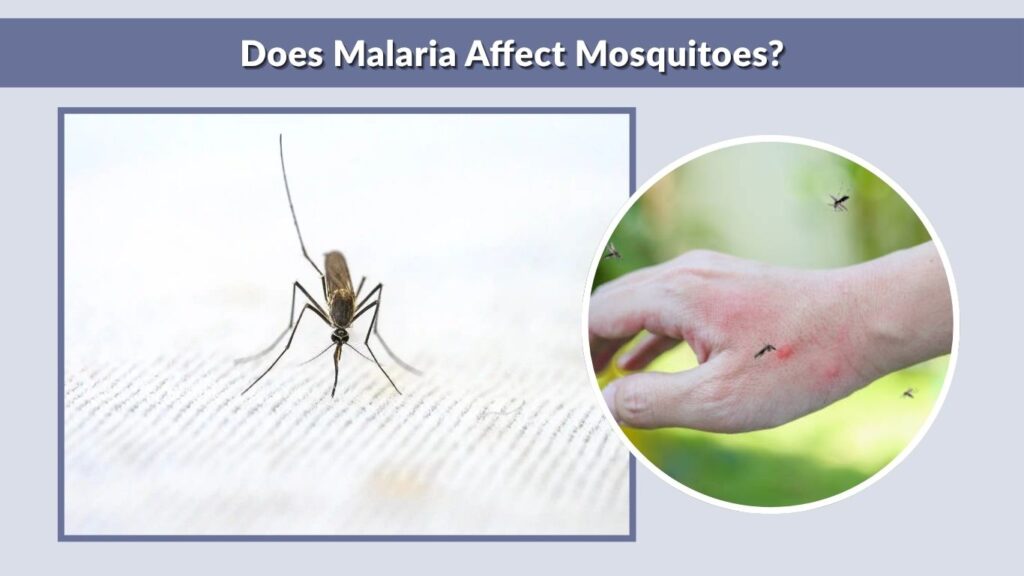
Malaria parasites rely on mosquitoes to complete part of their life cycle. However, the relationship does not significantly harm the mosquito itself.
Parasite Relationship
The malaria parasite develops inside the mosquito after it feeds on an infected human. It passes through several stages within the mosquito’s body before becoming capable of infecting another person through a bite.
Impact on Mosquito
- Parasite does not kill the mosquito
- Minimal effect on mosquito health
- Allows continued transmission
- Mosquito remains active
- Supports parasite lifecycle
How Malaria Spreads
Understanding how malaria spreads helps explain why controlling mosquitoes is so important. The disease requires both humans and mosquitoes to complete its cycle.
Transmission Process
- Mosquito bites infected person
- Parasite enters mosquito
- Parasite develops inside mosquito
- Mosquito bites another person
- Parasite enters new host
Why Transmission Is Efficient
Malaria spreads efficiently because mosquitoes feed multiple times during their lifespan. Each bite creates a new opportunity for transmission. In areas with large mosquito populations, this process can repeat rapidly, increasing infection rates.
How to Prevent Malaria Mosquito Bites
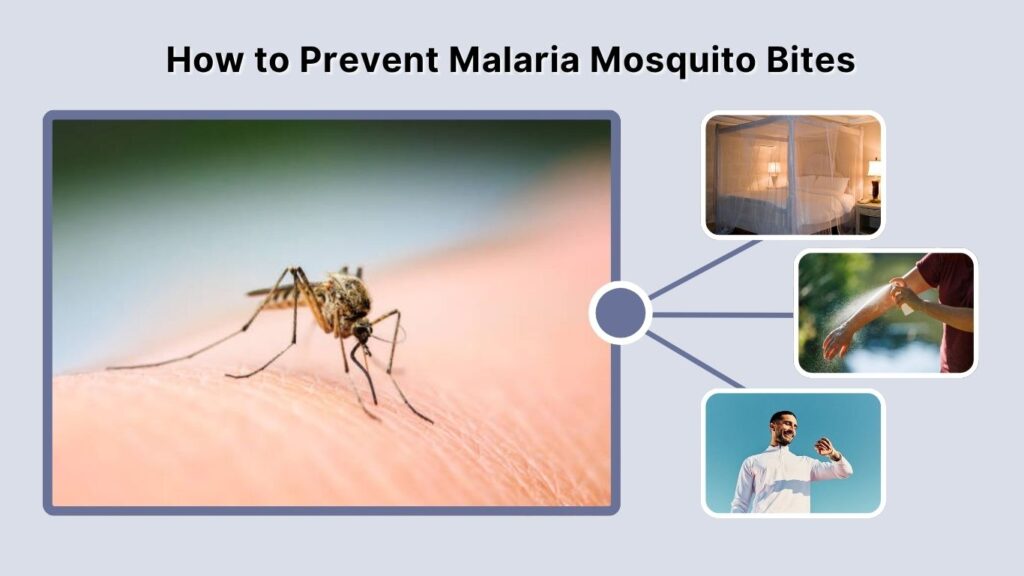
Preventing mosquito bites is the most effective way to reduce the risk of malaria. Simple protective measures can significantly lower exposure.
Personal Protection Methods
- Use mosquito nets while sleeping
- Apply insect repellent on skin
- Wear long-sleeved clothing
- Avoid outdoor exposure at night
- Use window screens
Environmental Control Methods
- Remove standing water around homes
- Keep surroundings clean
- Use insecticides when necessary
- Improve drainage systems
- Support community control programs
African Malaria Mosquito Facts
The African malaria mosquito has several unique traits that make it one of the most effective disease carriers in the world.
Interesting Facts
- Considered one of the deadliest animals globally
- Active mainly during nighttime
- Strong preference for human blood
- Can detect humans through scent
- Plays a major role in malaria transmission
Behavioral Traits
- Rests indoors after feeding
- Breeds in small water sources
- Flies short distances
- Feeds multiple times
- Highly adaptable to environment
FAQs
What is the African malaria mosquito?
The African malaria mosquito refers to Anopheles species, especially Anopheles gambiae, which are responsible for spreading malaria in many parts of Africa.
Do all mosquitoes carry malaria?
No, only certain Anopheles species can transmit malaria, and only when they are infected with the parasite.
Why is malaria more common in Africa?
Warm climate, abundant breeding sites, and high mosquito populations create ideal conditions for malaria transmission.
Can male mosquitoes spread malaria?
No, male mosquitoes do not bite humans. Only females feed on blood and can transmit the malaria parasite.
How can you prevent malaria mosquito bites?
You can prevent bites by using mosquito nets, applying repellents, wearing protective clothing, and removing standing water.