
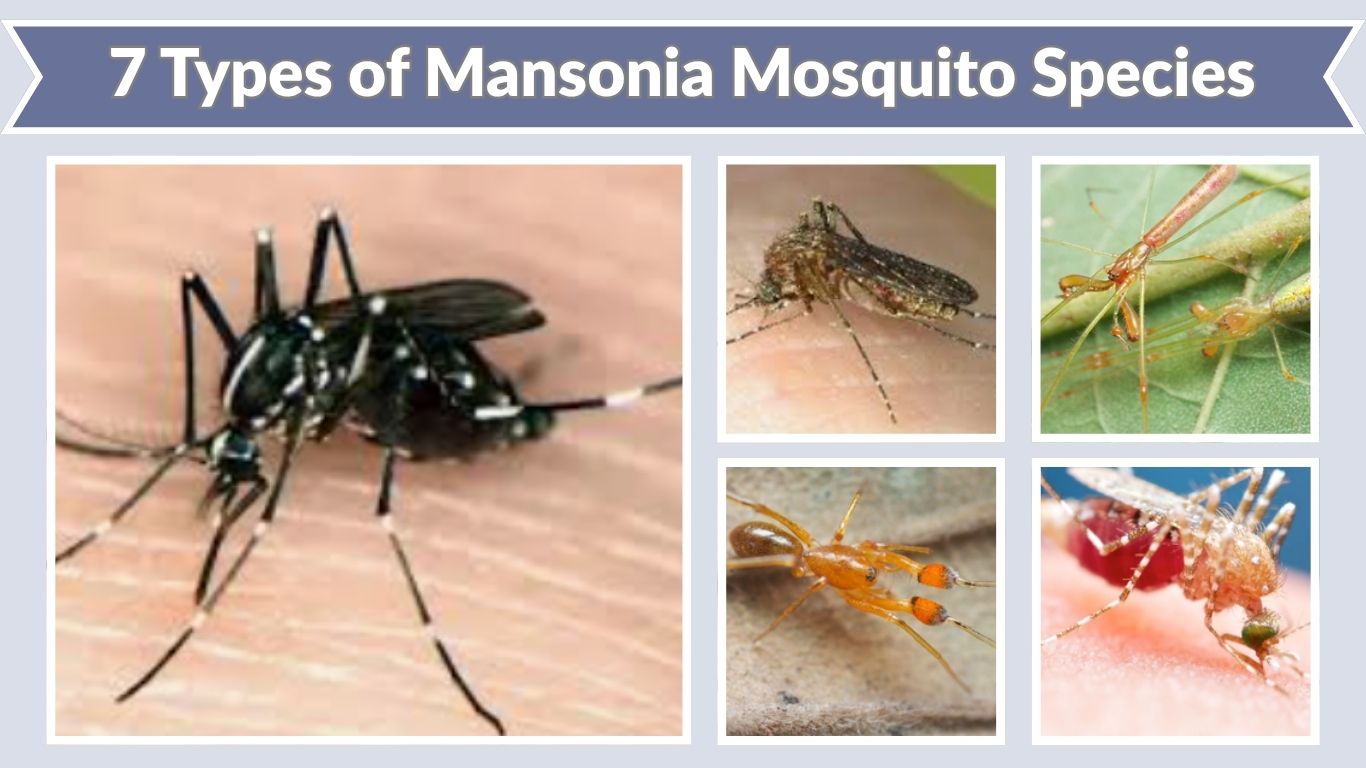
Mansonia mosquitoes are a unique group of insects known for their unusual life cycle and close association with aquatic plants. Unlike most mosquitoes, their larvae attach to plant roots underwater to obtain oxygen, allowing them to thrive in stagnant, low-oxygen environments. These mosquitoes are commonly found in tropical and subtropical regions and can be important from a public health perspective due to their role in disease transmission. In this guide, you will explore seven types of Mansonia mosquitoes and their key characteristics.
1. Mansonia uniformis
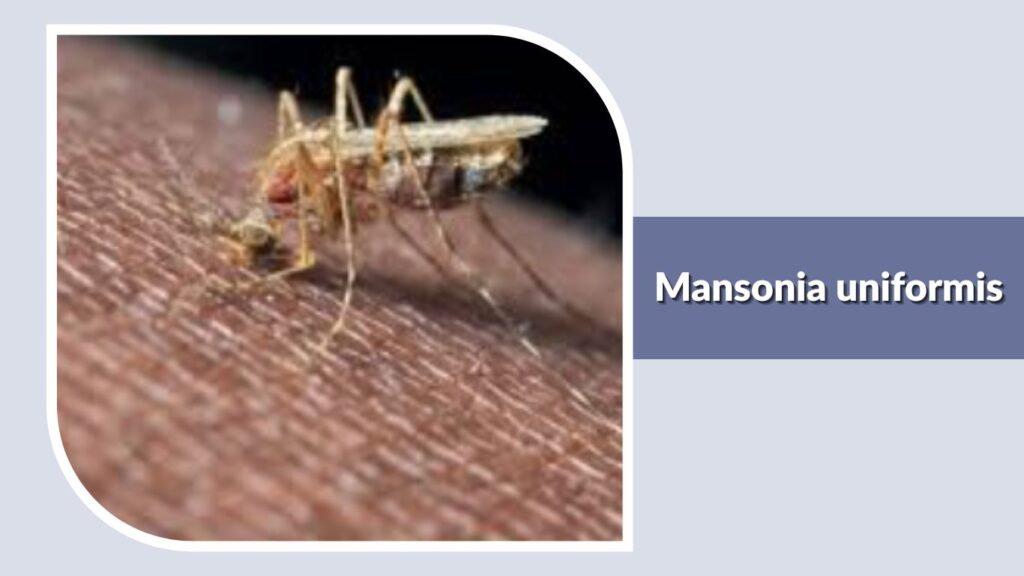
Mansonia uniformis is a widely distributed mosquito species known for its association with aquatic vegetation. Unlike many other mosquitoes, its larvae attach to plant roots underwater to obtain oxygen. This species is important medically because it can act as a vector for certain diseases in tropical and subtropical regions.
Identification
- Medium-sized mosquito with a robust body
- Brown to dark-colored body with pale markings
- Legs often show light bands or spots
- Wings covered with narrow scales
- Proboscis adapted for piercing and feeding
Habitat
Mansonia uniformis is commonly found in areas with stagnant or slow-moving water, especially where aquatic plants are abundant. It thrives in swamps, marshes, ponds, and rice fields. The presence of floating vegetation is essential for its larval development.
Behavior
This mosquito is mostly active during the evening and night. It is known for its persistent biting behavior and often feeds on both humans and animals. Adults typically rest in vegetation during the day and become active when conditions are cooler.
Life Cycle
The life cycle of Mansonia uniformis is unique because the larvae and pupae attach to submerged plant roots to breathe. This adaptation allows them to survive in oxygen-poor water. The development stages depend on environmental conditions such as temperature and water quality.
Medical Importance
This species is considered medically significant because it can transmit parasites such as filarial worms. Its presence in populated areas increases the risk of disease transmission, making it an important species for public health monitoring.
2. Mansonia annulifera
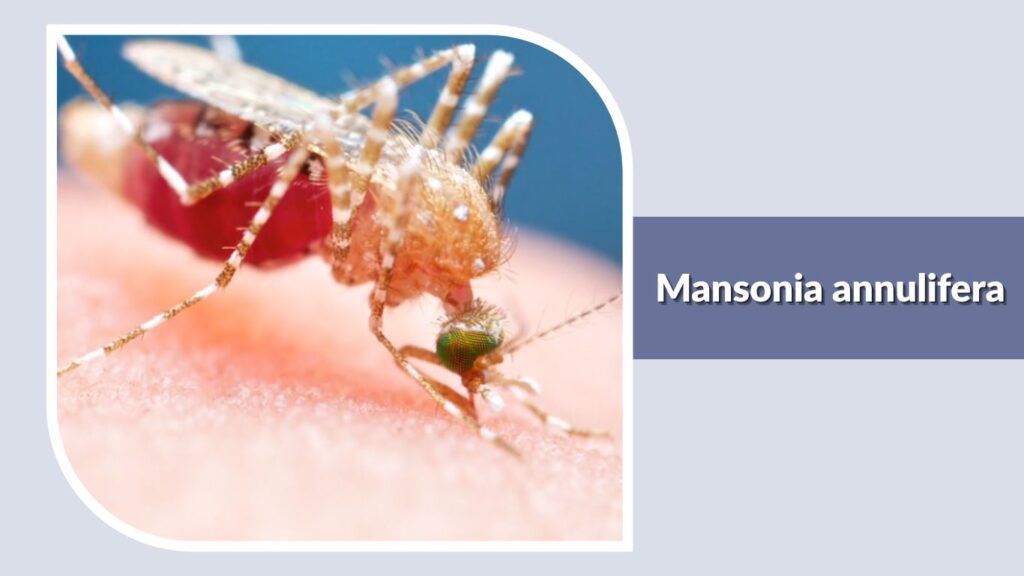
Mansonia annulifera is a tropical mosquito species known for its strong association with aquatic vegetation. Like other Mansonia mosquitoes, its larvae attach to submerged plant roots to obtain oxygen. This species is important in certain regions due to its role as a disease vector and its persistent biting behavior.
Identification
- Medium-sized mosquito with a dark brown body
- Distinct pale bands on legs and body segments
- Wings covered with dense, narrow scales
- Proboscis long and adapted for blood feeding
- Slightly stout body compared to other mosquitoes
Habitat
Mansonia annulifera is typically found in swamps, marshes, ponds, and areas with dense aquatic vegetation. It prefers stagnant or slow-moving water where floating plants are present. These environments provide ideal conditions for its larval development.
Behavior
This species is mainly active during dusk and nighttime. It is an aggressive feeder and commonly bites humans and livestock. During the day, adults rest in shaded vegetation and become active when temperatures drop.
Life Cycle
The life cycle is closely tied to aquatic plants. Larvae and pupae attach to plant roots to obtain oxygen, allowing them to survive in low-oxygen water. This adaptation makes control more difficult compared to other mosquito species.
Medical Importance
Mansonia annulifera is known to transmit certain parasitic diseases, including filarial worms. Its presence in rural and wetland areas can contribute to disease spread, making it a concern for public health in affected regions.
3. Mansonia africana
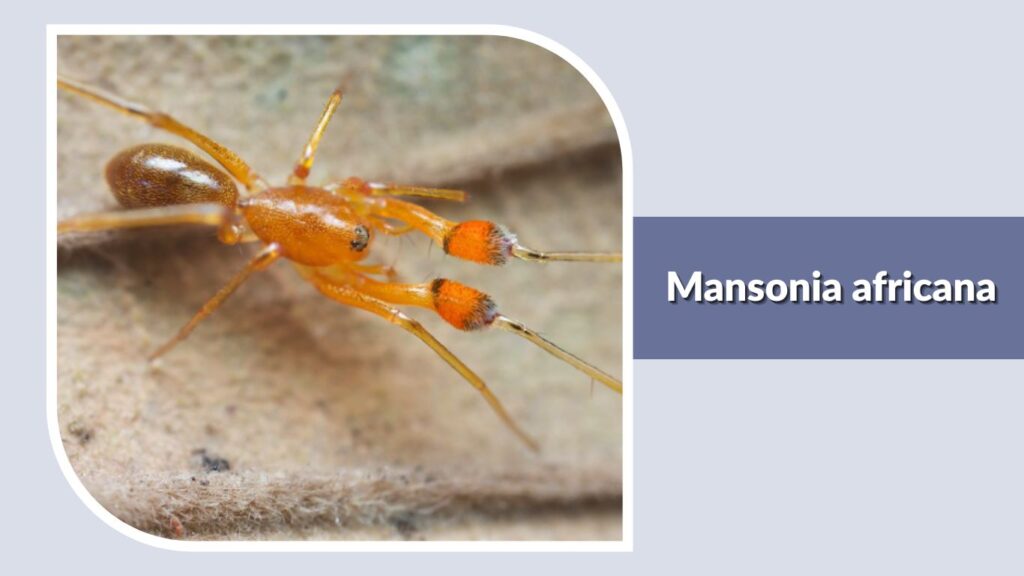
Mansonia africana is a mosquito species commonly found in tropical regions, particularly in Africa. It is closely associated with aquatic vegetation and shares the unique breathing behavior of other Mansonia species. This mosquito is important due to its role in transmitting certain diseases and its adaptability to wet environments.
Identification
- Medium-sized mosquito with a dark brown to black body
- Legs marked with pale bands or spots
- Wings covered with fine scales
- Stout body structure
- Long proboscis adapted for blood feeding
Habitat
Mansonia africana thrives in swamps, marshes, and areas with dense aquatic plants. It prefers stagnant or slow-moving water bodies where vegetation is abundant. These habitats provide ideal conditions for both larval and adult stages.
Behavior
This species is mainly active during the evening and night. It is known for its persistent biting behavior and feeds on both humans and animals. During the day, it rests in shaded vegetation near its breeding sites.
Life Cycle
The life cycle is closely linked to aquatic plants. Larvae and pupae attach to submerged roots to obtain oxygen, allowing them to survive in environments with low oxygen levels. This adaptation makes them more resilient in certain habitats.
Medical Importance
Mansonia africana is considered medically significant as it can act as a vector for parasitic infections such as filariasis. Its presence in populated areas increases the risk of disease transmission, especially in tropical regions.
4. Mansonia titillans
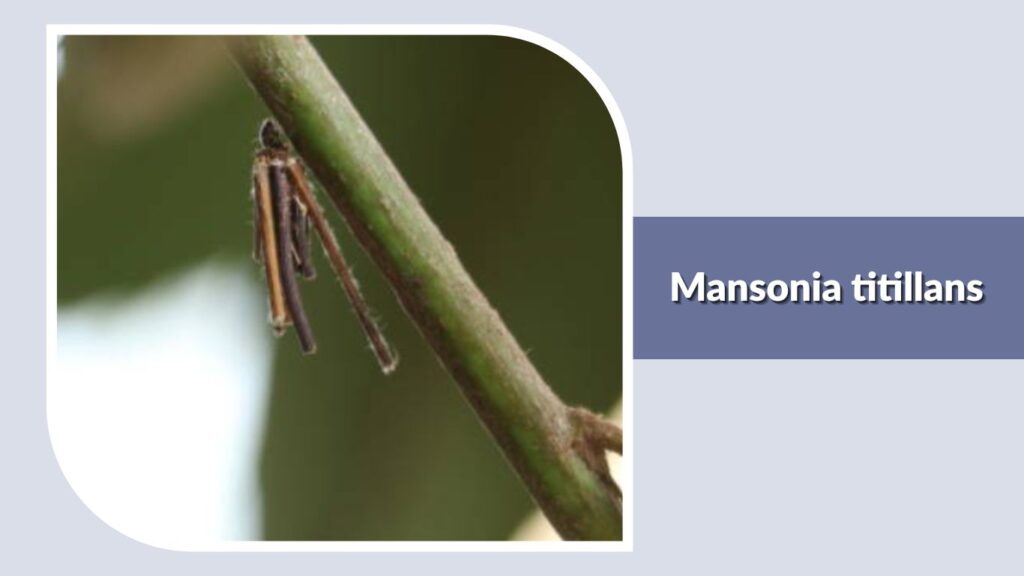
Mansonia titillans is a well-known mosquito species found in the Americas, particularly in tropical and subtropical regions. It is recognized for its strong association with aquatic plants and its role as a potential disease vector. Like other Mansonia species, it has a unique life cycle linked to submerged vegetation.
Identification
- Medium to large mosquito with a dark brown body
- Legs with pale bands or markings
- Wings covered with dense scales
- Robust body structure
- Long, prominent proboscis for feeding
Habitat
Mansonia titillans is commonly found in swamps, marshes, ponds, and wetlands with abundant aquatic vegetation. It prefers stagnant or slow-moving water where floating plants provide suitable breeding conditions.
Behavior
This mosquito is primarily active at night and is known for its aggressive biting behavior. It feeds on humans, birds, and other animals. During the day, it rests in dense vegetation near water sources.
Life Cycle
The larvae and pupae attach to submerged plant roots to obtain oxygen, which allows them to survive in low-oxygen water environments. This makes their development closely dependent on aquatic vegetation.
Medical Importance
Mansonia titillans is considered a potential vector for certain viruses and parasites. Its biting habits and presence in populated wetland areas make it important for monitoring in public health programs.
5. Mansonia indiana
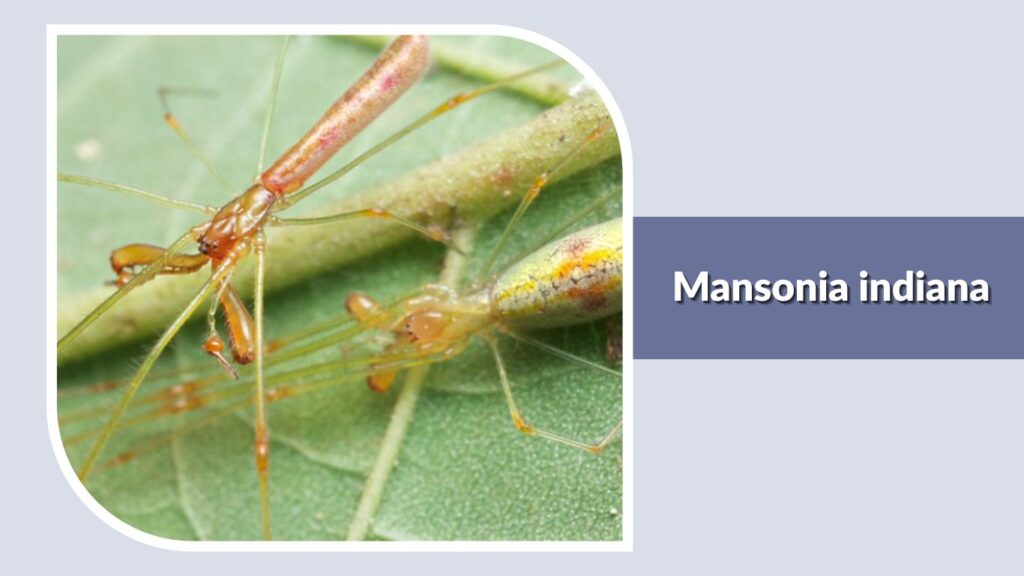
Mansonia indiana is a mosquito species found mainly in South and Southeast Asia. It shares the typical Mansonia trait of depending on aquatic plants for its development. This species is important in tropical regions due to its biting behavior and potential role in disease transmission.
Identification
- Medium-sized mosquito with a dark brown body
- Pale bands or markings on legs
- Wings covered with fine scales
- Stout body with a slightly rounded appearance
- Long proboscis adapted for blood feeding
Habitat
Mansonia indiana is commonly found in swamps, rice fields, ponds, and marshy areas with dense aquatic vegetation. It prefers stagnant or slow-moving water bodies where floating plants are present, providing ideal breeding conditions.
Behavior
This mosquito is mostly active during the evening and night. It is known for its persistent biting and feeds on both humans and animals. During the day, it rests in shaded vegetation near water sources.
Life Cycle
The larvae and pupae attach to submerged plant roots to obtain oxygen. This unique adaptation allows them to survive in low-oxygen water and makes their development closely tied to aquatic vegetation.
Medical Importance
Mansonia indiana is considered medically important in some regions because it can act as a vector for parasitic diseases such as filariasis. Its presence in populated wetland areas increases the risk of disease transmission.
6. Mansonia bonneae
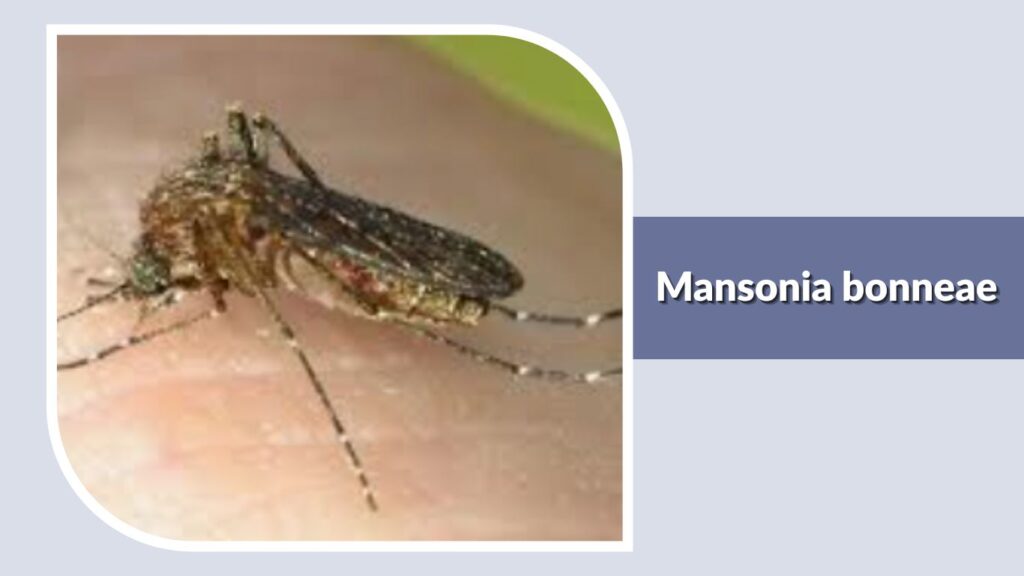
Mansonia bonneae is a mosquito species primarily found in parts of Southeast Asia. Like other members of the Mansonia genus, it is closely associated with aquatic vegetation and has a unique larval development process. This species is less widely known but still important in local ecosystems and public health contexts.
Identification
- Medium-sized mosquito with a dark brown to black body
- Legs with faint pale bands
- Wings covered with narrow scales
- Stout body structure
- Long proboscis used for blood feeding
Habitat
Mansonia bonneae is typically found in wetlands, swamps, ponds, and rice fields where aquatic plants are abundant. It prefers stagnant or slow-moving water bodies that support dense vegetation, which is essential for its life cycle.
Behavior
This species is mainly active during dusk and nighttime. It is known to bite both humans and animals and can be persistent in its feeding behavior. During the day, it rests in shaded vegetation near breeding sites.
Life Cycle
Like other Mansonia mosquitoes, the larvae and pupae attach to submerged plant roots to obtain oxygen. This adaptation allows them to survive in low-oxygen water and makes their development dependent on aquatic plants.
Medical Importance
Mansonia bonneae may play a role in transmitting parasitic diseases in certain regions. While less studied than some other species, it is still considered important in areas where it is present due to its biting habits and potential health impact.
7. Mansonia humeralis
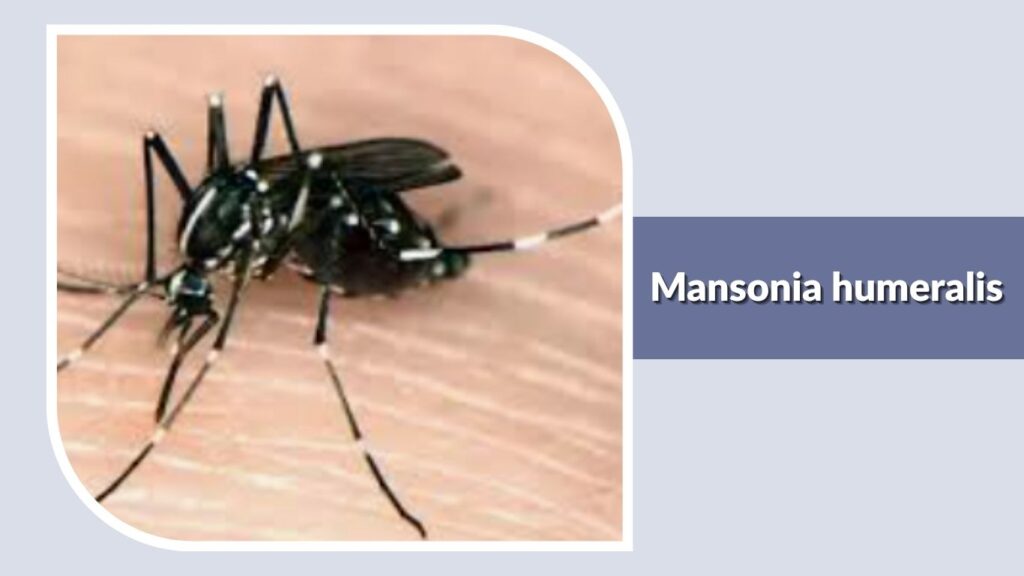
Mansonia humeralis is a mosquito species found mainly in tropical regions of Central and South America. Like other members of the Mansonia genus, it depends heavily on aquatic vegetation for its development. This species is known for its biting behavior and its role in wetland ecosystems.
Identification
- Medium-sized mosquito with a dark brown body
- Pale markings on legs and thorax
- Wings covered with fine scales
- Stout and slightly rounded body shape
- Long proboscis adapted for blood feeding
Habitat
Mansonia humeralis is commonly found in swamps, marshes, and ponds with dense aquatic vegetation. It prefers stagnant or slow-moving water where floating plants are present, providing ideal conditions for breeding and development.
Behavior
This mosquito is primarily active during the evening and nighttime. It is known to feed on both humans and animals and can be persistent in its biting. During the day, it rests in vegetation near water bodies.
Life Cycle
The larvae and pupae attach to submerged plant roots to obtain oxygen. This unique adaptation allows them to survive in low-oxygen water environments and makes their development closely linked to aquatic plants.
Medical Importance
Mansonia humeralis is considered a potential vector for certain parasitic diseases. While not as widely studied as other species, it may contribute to disease transmission in regions where it is abundant.
FAQs
What are Mansonia mosquitoes?
Mansonia mosquitoes are a group of mosquitoes known for their unique life cycle. Unlike most mosquitoes, their larvae attach to aquatic plants to obtain oxygen. They are commonly found in tropical and subtropical regions, especially in wetlands and areas with dense vegetation.
Where do Mansonia mosquitoes live?
Mansonia mosquitoes typically live in swamps, marshes, ponds, and rice fields. They prefer stagnant or slow-moving water with plenty of aquatic plants, which are essential for their development. These environments provide ideal conditions for breeding and survival.
Are Mansonia mosquitoes dangerous?
Some Mansonia mosquito species are considered medically important because they can transmit diseases such as filariasis. While not all species are harmful, their biting behavior and potential to spread parasites make them a concern in certain regions.
What makes Mansonia mosquitoes different from others?
The main difference is their larvae and pupae attach to submerged plant roots to breathe, instead of coming to the water surface. This adaptation allows them to survive in low-oxygen environments and makes them harder to control compared to other mosquitoes.
How can Mansonia mosquitoes be controlled?
Control methods focus on removing or managing aquatic vegetation where larvae develop. Reducing stagnant water and using appropriate insect control measures can help limit their population. Environmental management is often the most effective approach.