
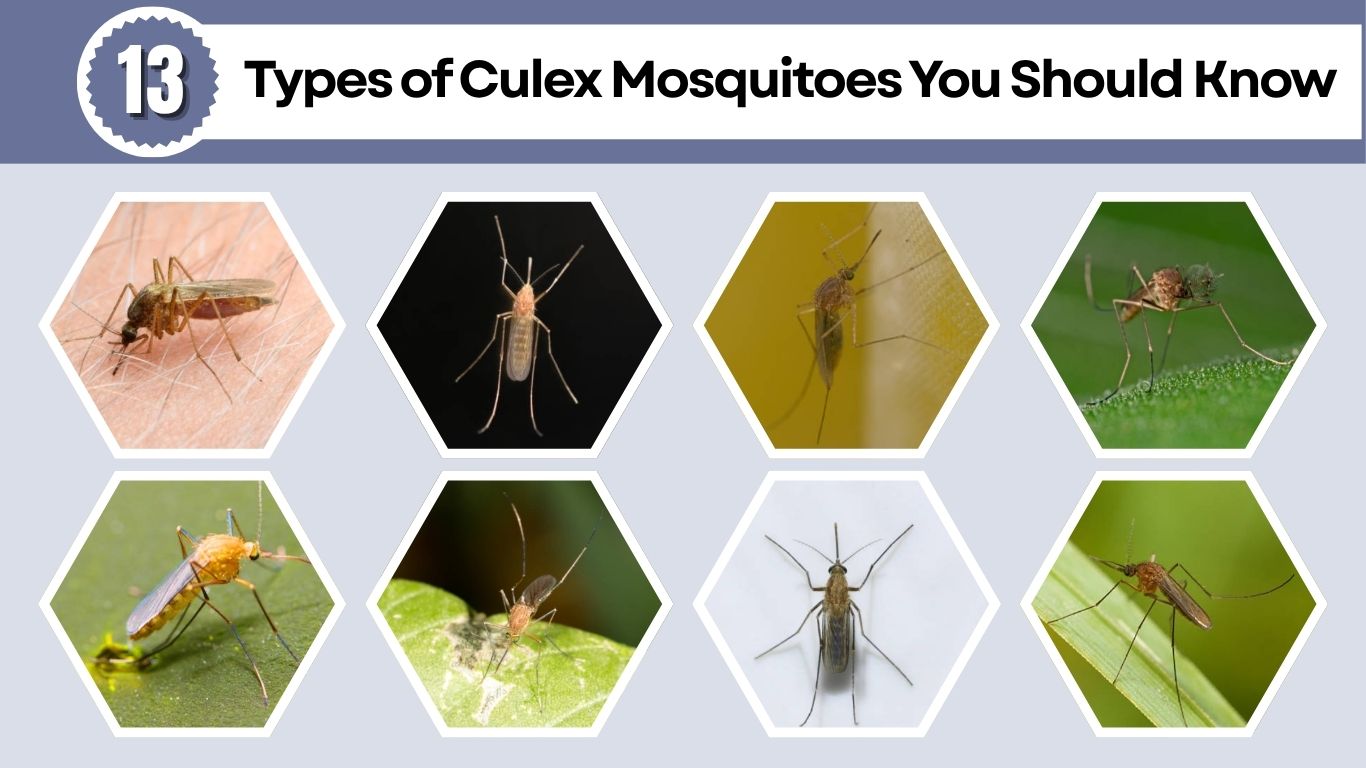
Culex mosquitoes are one of the most common and widespread groups of mosquitoes found around the world. They are well known for breeding in stagnant water and being active mainly during the evening and night. While many species are simply a nuisance, some play a significant role in transmitting diseases to humans and animals. These mosquitoes thrive in a variety of environments, from urban areas to wetlands. In this guide, you will explore 13 types of Culex mosquitoes, along with their identification, habitat, behavior, and lifecycle.
1. Culex pipiens
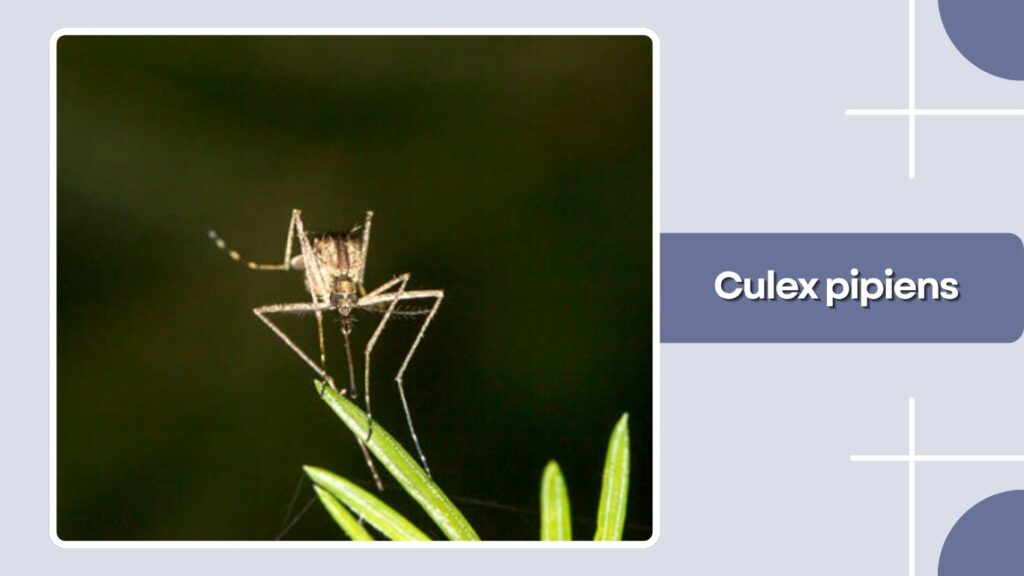
Culex pipiens, commonly known as the common house mosquito, is one of the most widespread mosquito species in the world. It is well known for its role in transmitting diseases and its close association with human habitats. This mosquito thrives in urban and suburban environments and is often active during the evening and night.
Identification
- Small, slender body
- Light brown to gray coloration
- Narrow wings with fine scales
- Long legs
- Straight proboscis used for feeding
- Typically 4–7 mm in length
Habitat and Distribution
Culex pipiens is found across Europe, North America, Asia, and parts of Africa. It prefers stagnant or slow-moving water for breeding, such as ponds, ditches, containers, and urban drainage systems. This species is highly adaptable and commonly lives close to human settlements, where water sources are readily available.
Behavior and Diet
Adult females feed on blood, which is necessary for egg development, while males feed on nectar and plant juices. This species is most active during dusk and nighttime. It often bites humans and birds, making it an important vector for certain diseases. It tends to rest indoors or in sheltered outdoor areas during the day.
Lifecycle
The lifecycle includes egg, larva, pupa, and adult stages. Eggs are laid in clusters on the surface of water. The larvae develop in water, feeding on organic material, before transforming into pupae. Adult mosquitoes emerge from the water and begin their lifecycle, with females seeking blood meals to reproduce.
2. Culex quinquefasciatus
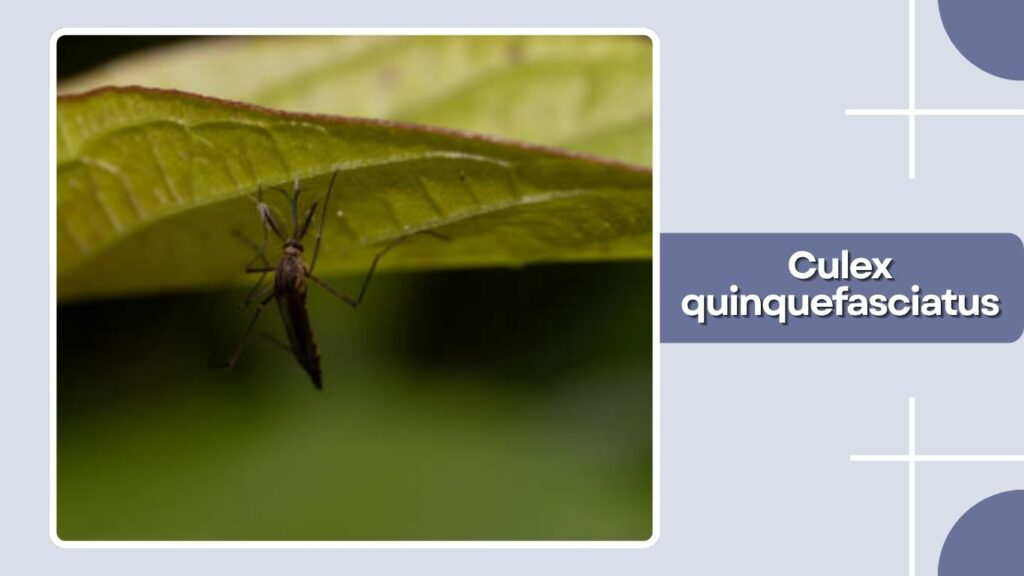
Culex quinquefasciatus, often called the southern house mosquito, is a common species found in warm and tropical regions. It is closely associated with human environments and is known for breeding in polluted water sources. This mosquito is an important vector for several diseases and is most active during the night.
Identification
- Medium-sized, slender body
- Brown to dark brown coloration
- Pale bands on the abdomen
- Long legs and narrow wings
- Straight proboscis for feeding
- Typically 4–7 mm in length
Habitat and Distribution
Culex quinquefasciatus is widely distributed in tropical and subtropical regions around the world. It is commonly found in urban and semi-urban areas, where it breeds in stagnant, often polluted water such as drains, sewage, and containers. This species thrives in warm climates and is closely linked to human habitation.
Behavior and Diet
Females feed on blood, primarily from humans and birds, while males feed on nectar. This mosquito is most active at night and tends to rest indoors during the day. It is known for being a nuisance due to its frequent biting and is also a vector for diseases such as filariasis and certain viral infections.
Lifecycle
The lifecycle includes egg, larva, pupa, and adult stages. Eggs are laid in floating clusters on water surfaces. Larvae develop in water, feeding on organic matter, then transform into pupae. Adult mosquitoes emerge and begin feeding and reproducing, continuing the cycle.
3. Culex tarsalis
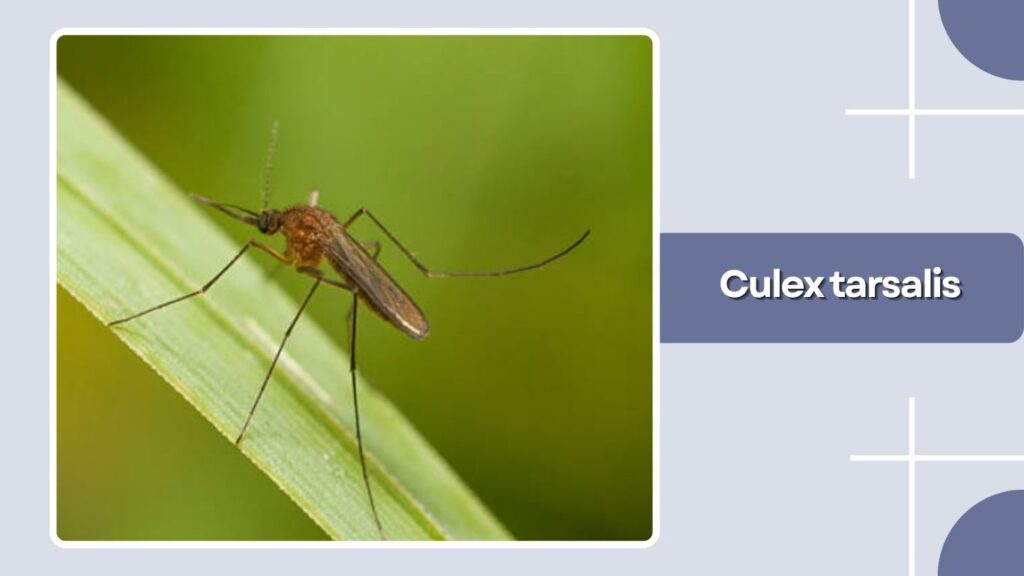
Culex tarsalis is a widely recognized mosquito species known for its role in transmitting diseases, especially in rural and agricultural regions. It is commonly found near water sources and is highly adaptable to different environments. This mosquito is most active during evening and nighttime hours.
Identification
- Medium-sized, slender body
- Brown to gray coloration
- Distinct white bands on legs
- Pale markings on the abdomen
- Narrow wings with scales
- Typically 4–8 mm in length
Habitat and Distribution
Culex tarsalis is primarily found in North America, especially in the western regions. It prefers habitats near freshwater sources such as ponds, irrigation ditches, marshes, and agricultural fields. These environments provide ideal breeding conditions with stagnant or slow-moving water.
Behavior and Diet
Females feed on blood from birds, livestock, and humans, while males feed on nectar. This species is most active during dusk and night. It is known to travel relatively long distances in search of hosts. Culex tarsalis plays a significant role in transmitting diseases such as West Nile virus.
Lifecycle
The lifecycle consists of egg, larva, pupa, and adult stages. Eggs are laid in clusters on water surfaces. Larvae develop in water by feeding on organic material, then transform into pupae. Adults emerge and begin feeding and reproducing, continuing the cycle.
4. Culex restuans
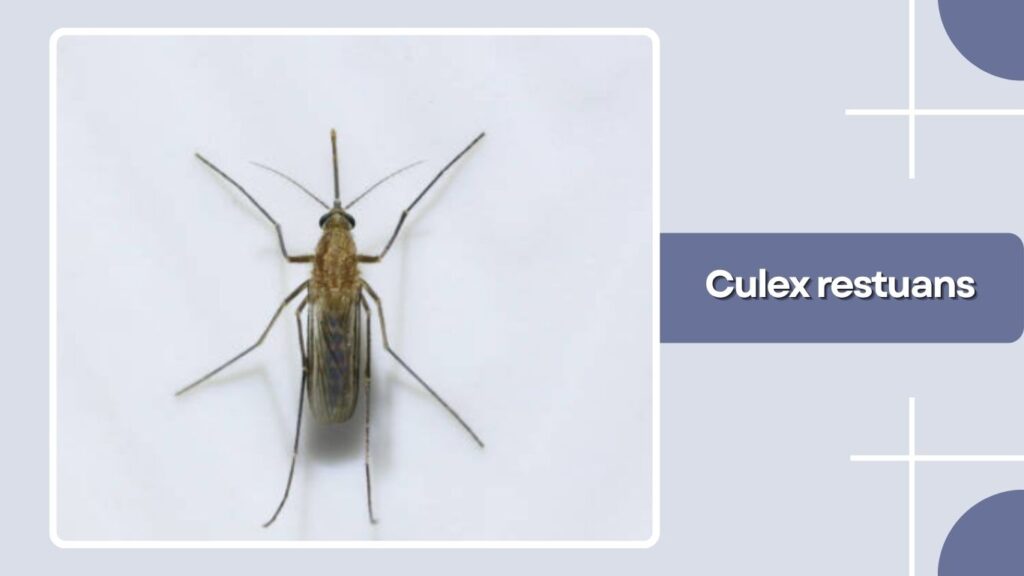
Culex restuans is a common mosquito species often found in temperate regions. It is closely related to Culex pipiens and is known for its role in transmitting diseases among bird populations. This species is typically active during warmer months and prefers environments with standing water.
Identification
- Small to medium-sized body
- Brown to gray coloration
- Subtle pale bands on abdomen
- Slender legs and narrow wings
- Straight proboscis
- Typically 4–7 mm in length
Habitat and Distribution
Culex restuans is found mainly in North America. It prefers habitats with stagnant water such as ponds, wetlands, ditches, and artificial containers. This species is commonly found in both rural and urban areas, especially where water collects and remains undisturbed.
Behavior and Diet
Females feed on blood, mainly from birds but sometimes from humans, while males feed on nectar. This mosquito is most active during dusk and nighttime. It plays a role in maintaining disease cycles among bird populations and occasionally transmitting pathogens to humans.
Lifecycle
The lifecycle includes egg, larva, pupa, and adult stages. Eggs are laid in clusters on water surfaces. Larvae develop in water by feeding on organic matter, then transform into pupae. Adults emerge and begin feeding and reproduction, continuing the cycle.
5. Culex nigripalpus
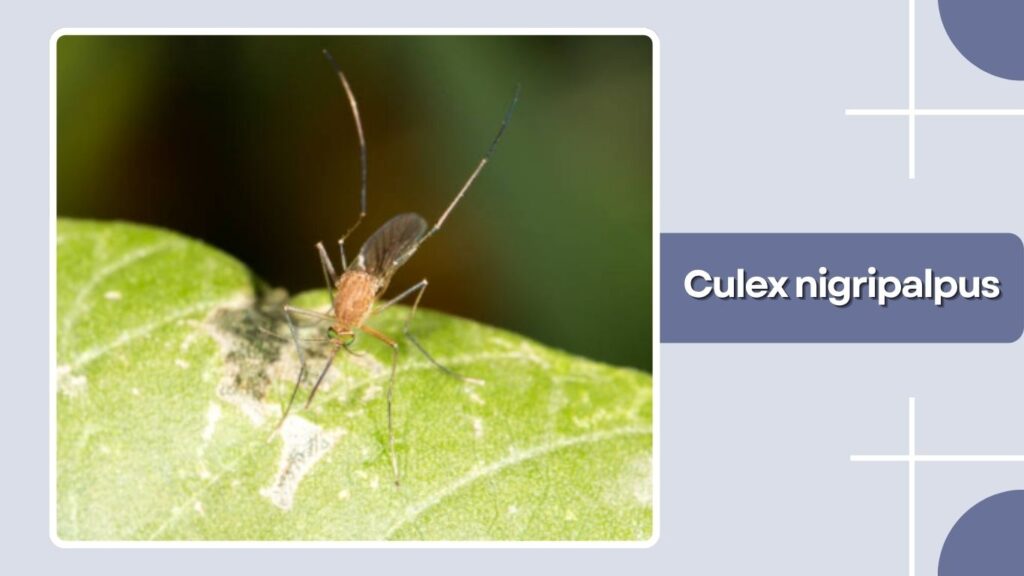
Culex nigripalpus is a tropical and subtropical mosquito species known for its adaptability and role in transmitting diseases. It is commonly found in warm climates and can breed in a variety of water sources. This mosquito is most active during evening and nighttime hours and is often associated with both urban and rural environments.
Identification
- Medium-sized, slender body
- Dark brown to black coloration
- Slight pale markings on legs
- Narrow wings with fine scales
- Long legs and straight proboscis
- Typically 4–8 mm in length
Habitat and Distribution
Culex nigripalpus is widely distributed in tropical and subtropical regions, especially in the southeastern United States, the Caribbean, Central America, and South America. It prefers habitats with standing water such as ponds, marshes, ditches, and containers. It can thrive in both natural and artificial water sources.
Behavior and Diet
Females feed on blood from birds, mammals, and humans, while males feed on nectar. This species is active during dusk and nighttime and may bite both indoors and outdoors. It is known for its role in transmitting diseases such as West Nile virus and other arboviruses.
Lifecycle
The lifecycle includes egg, larva, pupa, and adult stages. Eggs are laid in clusters on the surface of water. Larvae develop in water by feeding on organic matter, then transform into pupae. Adult mosquitoes emerge and begin feeding and reproduction, continuing the cycle.
6. Culex erraticus
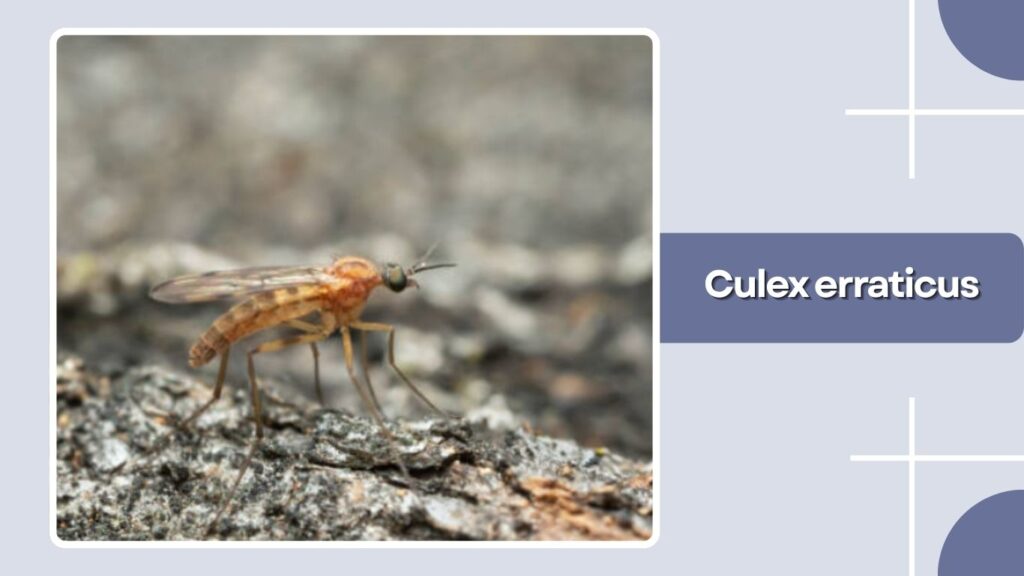
Culex erraticus is a mosquito species commonly found in warm and humid regions, especially near natural water bodies. It is known for its adaptability and ability to thrive in various environments. This species plays a role in disease transmission among wildlife and occasionally affects humans. It is mostly active during evening and nighttime hours.
Identification
- Medium-sized, slender body
- Brown to dark brown coloration
- Light bands on legs
- Narrow wings with scales
- Long legs and straight proboscis
- Typically 4–8 mm in length
Habitat and Distribution
Culex erraticus is primarily found in the southeastern United States and parts of Central and South America. It prefers habitats such as swamps, marshes, ponds, and wetlands. These environments provide stagnant or slow-moving water suitable for breeding. It is commonly associated with natural ecosystems rather than heavily urban areas.
Behavior and Diet
Females feed on blood from birds, reptiles, and mammals, while males feed on nectar. This species is active during dusk and nighttime. It tends to bite a variety of hosts, which contributes to its role in disease transmission. It is less commonly found indoors compared to some other Culex species.
Lifecycle
The lifecycle includes egg, larva, pupa, and adult stages. Eggs are laid in clusters on the surface of water. Larvae develop in aquatic environments by feeding on organic material, then transform into pupae. Adult mosquitoes emerge and continue the cycle by feeding and reproducing.
7. Culex salinarius
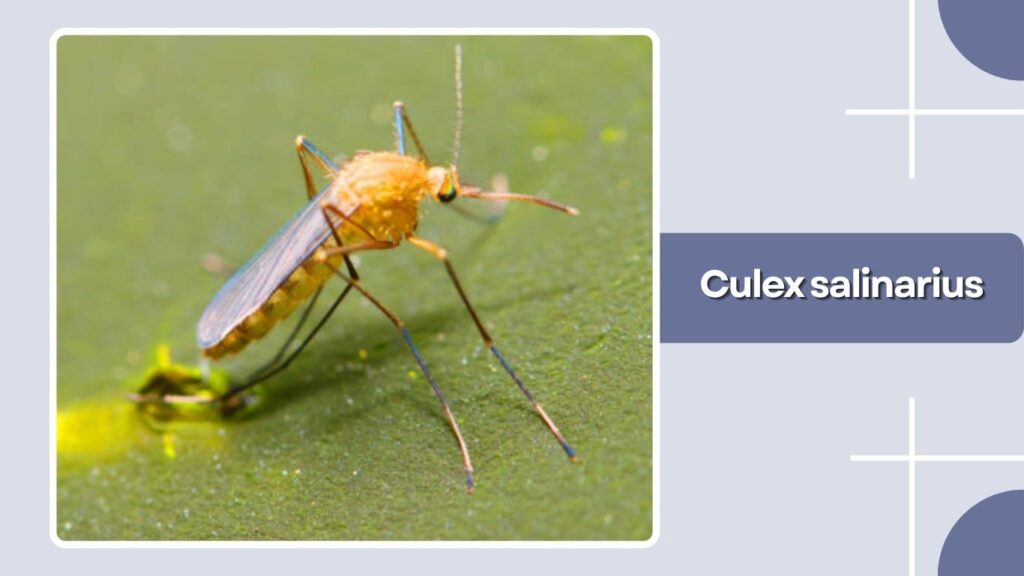
Culex salinarius is a versatile mosquito species known for its ability to tolerate both fresh and slightly salty water. It is commonly found in coastal and inland areas and is considered an important vector for certain diseases. This mosquito is active during evening and nighttime hours and can thrive in a variety of environments.
Identification
- Medium-sized, slender body
- Brown to dark brown coloration
- Light banding on legs and abdomen
- Narrow wings with fine scales
- Long legs and straight proboscis
- Typically 4–8 mm in length
Habitat and Distribution
Culex salinarius is found across North America and parts of Central America. It inhabits a wide range of environments, including coastal marshes, wetlands, ponds, and artificial containers. Its ability to breed in both freshwater and brackish water makes it highly adaptable to different habitats.
Behavior and Diet
Females feed on blood from birds, mammals, and humans, while males feed on nectar. This species is most active during dusk and nighttime. It is known to bite both indoors and outdoors and can act as a bridge vector, transmitting diseases between birds and humans.
Lifecycle
The lifecycle includes egg, larva, pupa, and adult stages. Eggs are laid in clusters on the surface of water. Larvae develop in aquatic environments by feeding on organic matter, then transform into pupae. Adult mosquitoes emerge and begin feeding and reproducing, continuing the cycle.
8. Culex territans
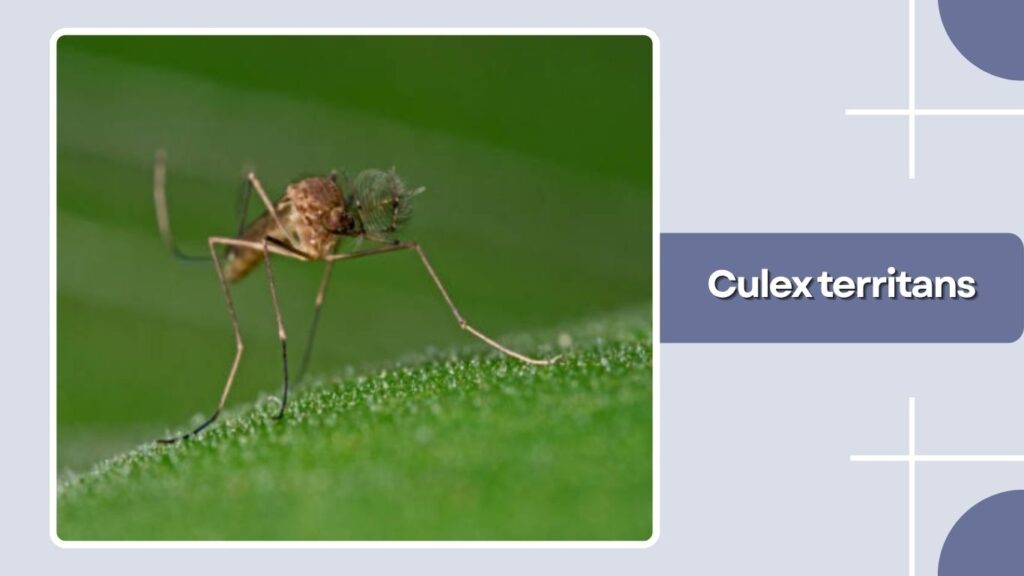
Culex territans is a mosquito species known for its preference for feeding on amphibians rather than humans. It is commonly found in natural environments near water bodies and is less of a nuisance to people compared to other Culex species. This mosquito plays a role in ecosystems by interacting with wildlife populations.
Identification
- Small to medium-sized body
- Brown to gray coloration
- Subtle markings on the abdomen
- Slender legs and narrow wings
- Straight proboscis
- Typically 4–7 mm in length
Habitat and Distribution
Culex territans is found in North America and parts of Europe. It prefers habitats such as ponds, marshes, wetlands, and forested areas with standing water. These environments provide ideal breeding sites and access to amphibian hosts. It is usually associated with natural, undisturbed ecosystems.
Behavior and Diet
Females primarily feed on amphibians like frogs and toads, while males feed on nectar. This species is active during evening and nighttime hours. It rarely bites humans, making it less significant as a nuisance species. Its feeding habits contribute to ecological interactions within wetland environments.
Lifecycle
The lifecycle includes egg, larva, pupa, and adult stages. Eggs are laid in clusters on water surfaces. Larvae develop in water by feeding on organic material, then transform into pupae. Adult mosquitoes emerge and continue the cycle by feeding and reproducing.
9. Culex modestus
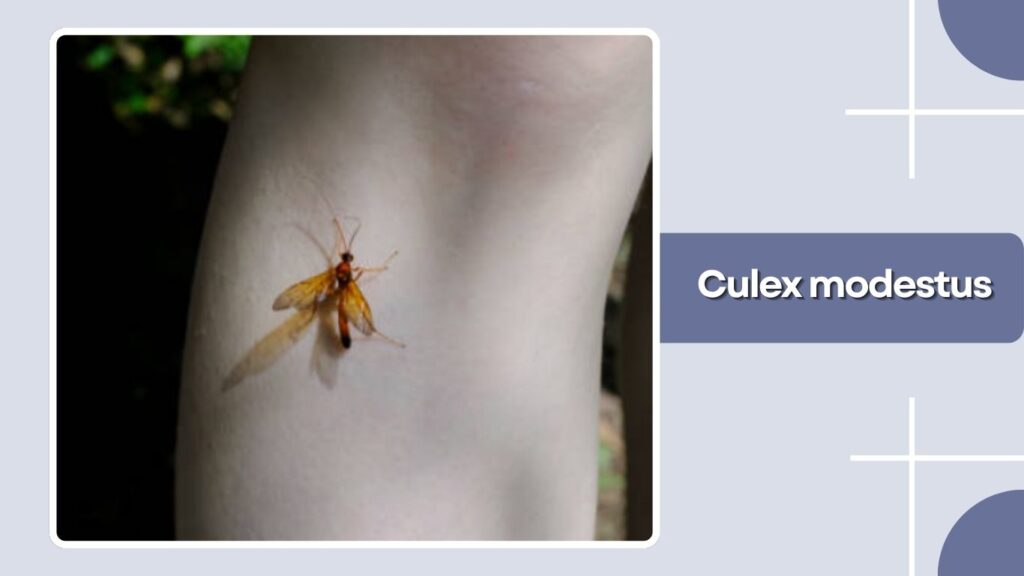
Culex modestus is a mosquito species known for its role in transmitting certain viral diseases, particularly in wetland regions. It is commonly associated with marshy environments and is active during warmer months. This species feeds on both birds and mammals, making it important in disease transmission cycles.
Identification
- Medium-sized, slender body
- Brown to yellowish-brown coloration
- Distinct pale bands on legs
- Narrow wings with fine scales
- Long legs and straight proboscis
- Typically 4–8 mm in length
Habitat and Distribution
Culex modestus is found in parts of Europe, Asia, and North Africa. It prefers wetland habitats such as marshes, rice fields, and floodplains. These environments provide abundant stagnant water for breeding. It is commonly found in rural and agricultural areas rather than dense urban settings.
Behavior and Diet
Females feed on blood from birds and mammals, including humans, while males feed on nectar. This mosquito is most active during dusk and nighttime. It is known to play a role in transmitting viruses such as West Nile virus due to its feeding behavior across different host species.
Lifecycle
The lifecycle includes egg, larva, pupa, and adult stages. Eggs are laid in clusters on water surfaces. Larvae develop in aquatic environments by feeding on organic matter, then transform into pupae. Adult mosquitoes emerge and continue the cycle by feeding and reproducing.
10. Culex tritaeniorhynchus
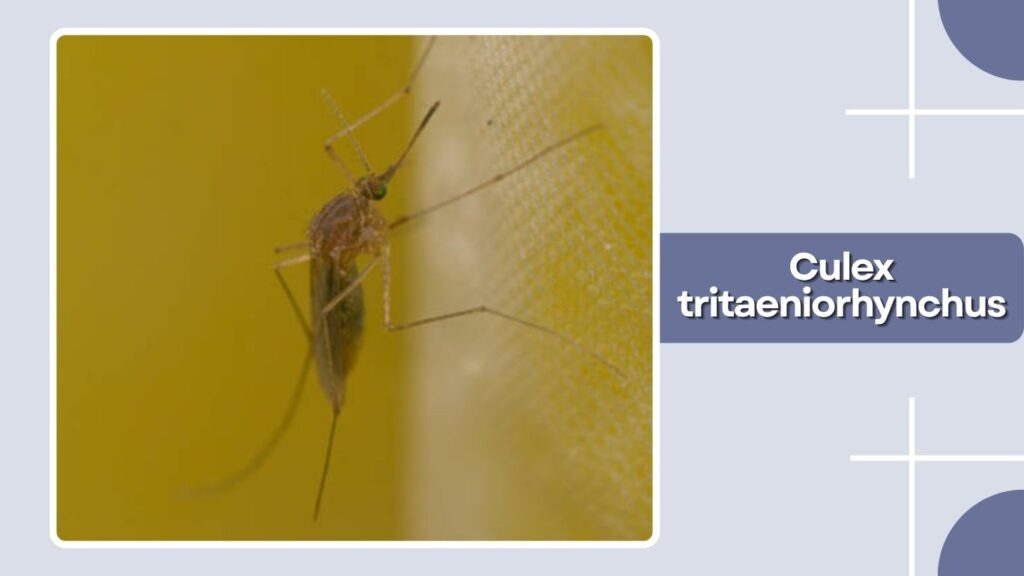
Culex tritaeniorhynchus is a well-known mosquito species commonly found in Asia and is an important vector of diseases in rural areas. It is closely associated with agricultural environments, especially rice fields. This mosquito is highly active during the night and thrives in warm, humid climates.
Identification
- Medium-sized, slender body
- Brown coloration with pale bands
- Distinct banding on legs
- Narrow wings with fine scales
- Long legs and straight proboscis
- Typically 4–8 mm in length
Habitat and Distribution
Culex tritaeniorhynchus is widely distributed across Asia, including countries like India, China, Japan, and Southeast Asia. It prefers rural and agricultural habitats such as rice paddies, irrigated fields, and wetlands. These areas provide ideal breeding conditions with abundant stagnant water.
Behavior and Diet
Females feed on blood from animals such as cattle and pigs, as well as humans, while males feed on nectar. This species is most active at night and often bites outdoors. It is known for transmitting diseases such as Japanese encephalitis due to its feeding habits across multiple hosts.
Lifecycle
The lifecycle includes egg, larva, pupa, and adult stages. Eggs are laid in clusters on water surfaces. Larvae develop in water by feeding on organic material, then transform into pupae. Adult mosquitoes emerge and begin feeding and reproducing, continuing the cycle.
11. Culex annulirostris
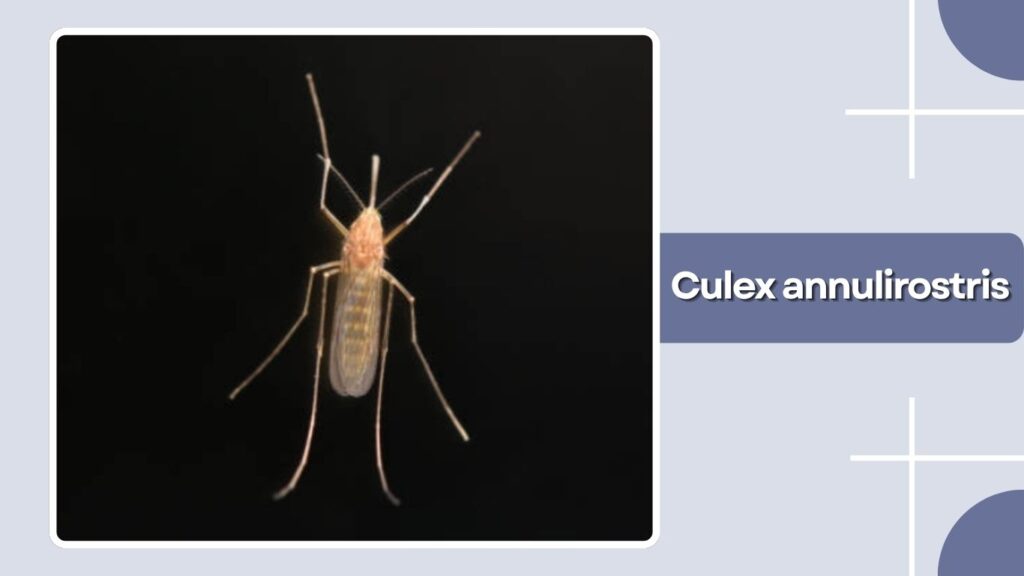
Culex annulirostris is a mosquito species commonly found in tropical and subtropical regions, especially in Australia and nearby areas. It is known for its role in transmitting diseases and its adaptability to various environments. This mosquito thrives in both natural and artificial water sources and is most active during evening and nighttime.
Identification
- Medium-sized, slender body
- Brown to dark brown coloration
- Distinct pale bands on legs and proboscis
- Narrow wings with fine scales
- Long legs
- Typically 4–8 mm in length
Habitat and Distribution
Culex annulirostris is widely distributed in Australia, Papua New Guinea, and parts of Southeast Asia. It prefers habitats such as wetlands, marshes, floodplains, and temporary water bodies. It can also breed in artificial containers and irrigation systems, making it adaptable to both rural and urban environments.
Behavior and Diet
Females feed on blood from birds, mammals, and humans, while males feed on nectar. This mosquito is most active during dusk and nighttime. It is known for being a strong flier and can travel long distances in search of hosts. It plays a role in transmitting diseases such as Murray Valley encephalitis.
Lifecycle
The lifecycle includes egg, larva, pupa, and adult stages. Eggs are laid in clusters on water surfaces. Larvae develop in aquatic environments by feeding on organic matter, then transform into pupae. Adult mosquitoes emerge and continue the cycle by feeding and reproducing.
12. Culex sitiens
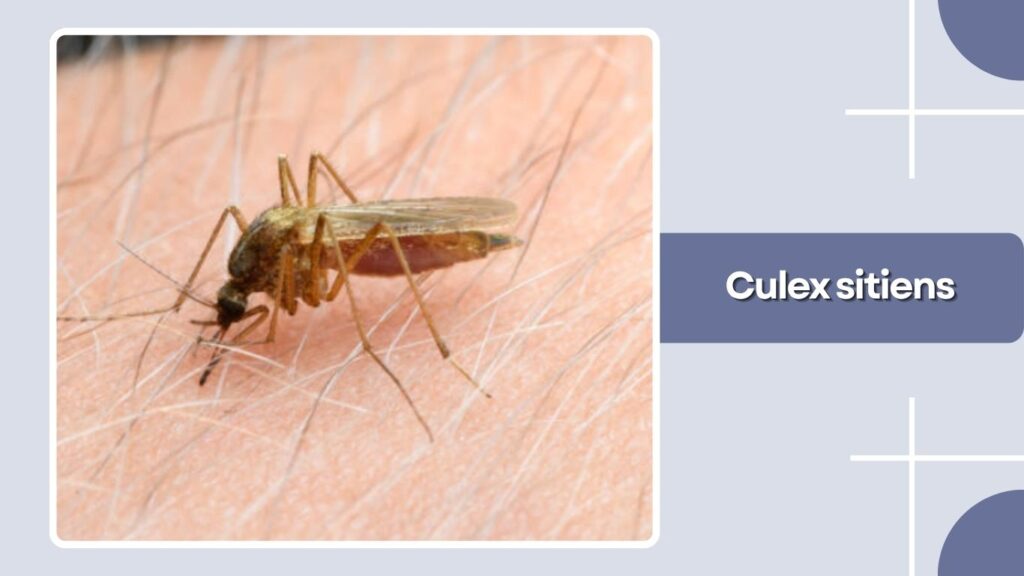
Culex sitiens is a coastal mosquito species known for its ability to breed in brackish and saline water. It is commonly found in tropical and subtropical regions and is associated with coastal habitats. This species is active during evening and nighttime and can be a nuisance in areas near the sea.
Identification
- Medium-sized, slender body
- Brown to dark brown coloration
- Pale bands on legs and abdomen
- Narrow wings with fine scales
- Long legs and straight proboscis
- Typically 4–8 mm in length
Habitat and Distribution
Culex sitiens is widely distributed in coastal regions of Asia, Australia, and parts of the Pacific. It prefers habitats such as mangroves, coastal marshes, and brackish water pools. Its ability to tolerate saltwater makes it well suited to shoreline environments where other species may not thrive.
Behavior and Diet
Females feed on blood from birds, mammals, and humans, while males feed on nectar. This mosquito is most active at night and often bites outdoors in coastal areas. It is known to play a role in transmitting certain diseases, particularly in tropical regions.
Lifecycle
The lifecycle includes egg, larva, pupa, and adult stages. Eggs are laid in clusters on water surfaces. Larvae develop in brackish water by feeding on organic material, then transform into pupae. Adult mosquitoes emerge and continue the cycle through feeding and reproduction.
13. Culex gelidus
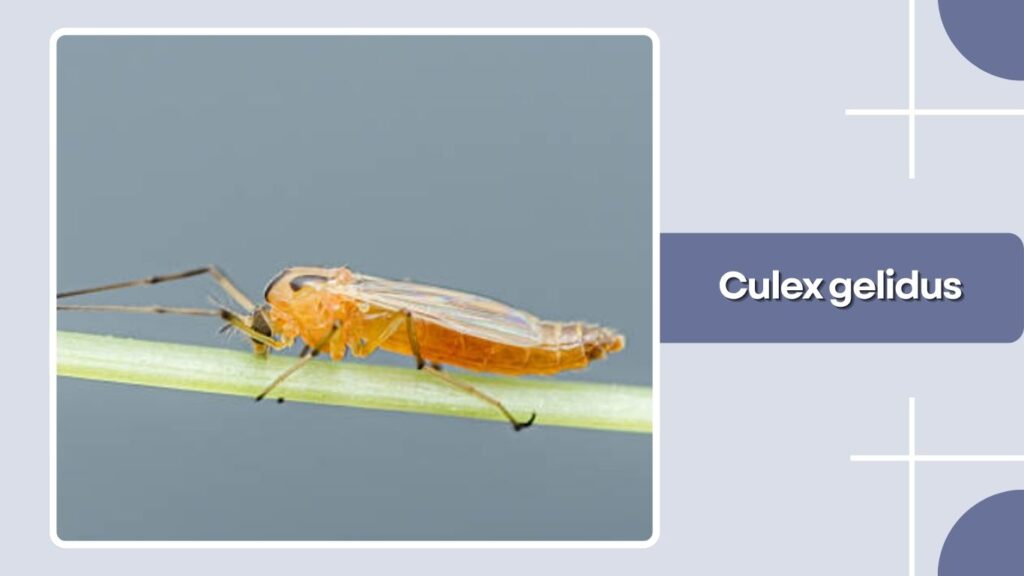
Culex gelidus is a mosquito species commonly found in tropical and subtropical regions. It is known for its adaptability and role in transmitting certain diseases. This species is often associated with rural and semi-urban environments and is most active during evening and nighttime hours.
Identification
- Medium-sized, slender body
- Brown to dark brown coloration
- Pale bands on legs and abdomen
- Narrow wings with fine scales
- Long legs and straight proboscis
- Typically 4–8 mm in length
Habitat and Distribution
Culex gelidus is widely distributed across South and Southeast Asia, including countries like India, Sri Lanka, Thailand, and Vietnam. It prefers habitats such as rice fields, ponds, marshes, and stagnant water bodies. These environments provide ideal breeding conditions with warm temperatures and abundant organic matter.
Behavior and Diet
Females feed on blood from birds, livestock, and humans, while males feed on nectar. This mosquito is most active during dusk and nighttime. It is known to bite both indoors and outdoors and can act as a vector for certain viral diseases in its range.
Lifecycle
The lifecycle includes egg, larva, pupa, and adult stages. Eggs are laid in clusters on the surface of water. Larvae develop in water by feeding on organic material, then transform into pupae. Adult mosquitoes emerge and begin feeding and reproducing, continuing the cycle.
FAQs
What are Culex mosquitoes?
Culex mosquitoes are a large group of mosquito species commonly found worldwide. They are known for breeding in stagnant water and are active mostly during evening and nighttime. Some species are important because they can transmit diseases to humans and animals.
Where do Culex mosquitoes breed?
Culex mosquitoes typically breed in stagnant or slow-moving water. Common breeding sites include ponds, ditches, drains, containers, and wetlands. Some species can even develop in polluted or brackish water, making them highly adaptable to different environments.
Do Culex mosquitoes bite humans?
Yes, female Culex mosquitoes bite humans because they need blood to develop their eggs. However, their feeding preferences vary by species, with some preferring birds or animals instead of humans.
What diseases are associated with Culex mosquitoes?
Culex mosquitoes are known to transmit diseases such as West Nile virus, Japanese encephalitis, and filariasis. Their role as disease vectors depends on the species and the region where they are found.
How can Culex mosquitoes be controlled?
Control methods include removing standing water where they breed, using insect repellents, installing window screens, and applying larvicides in water bodies. Reducing breeding sites is the most effective way to limit their population.