
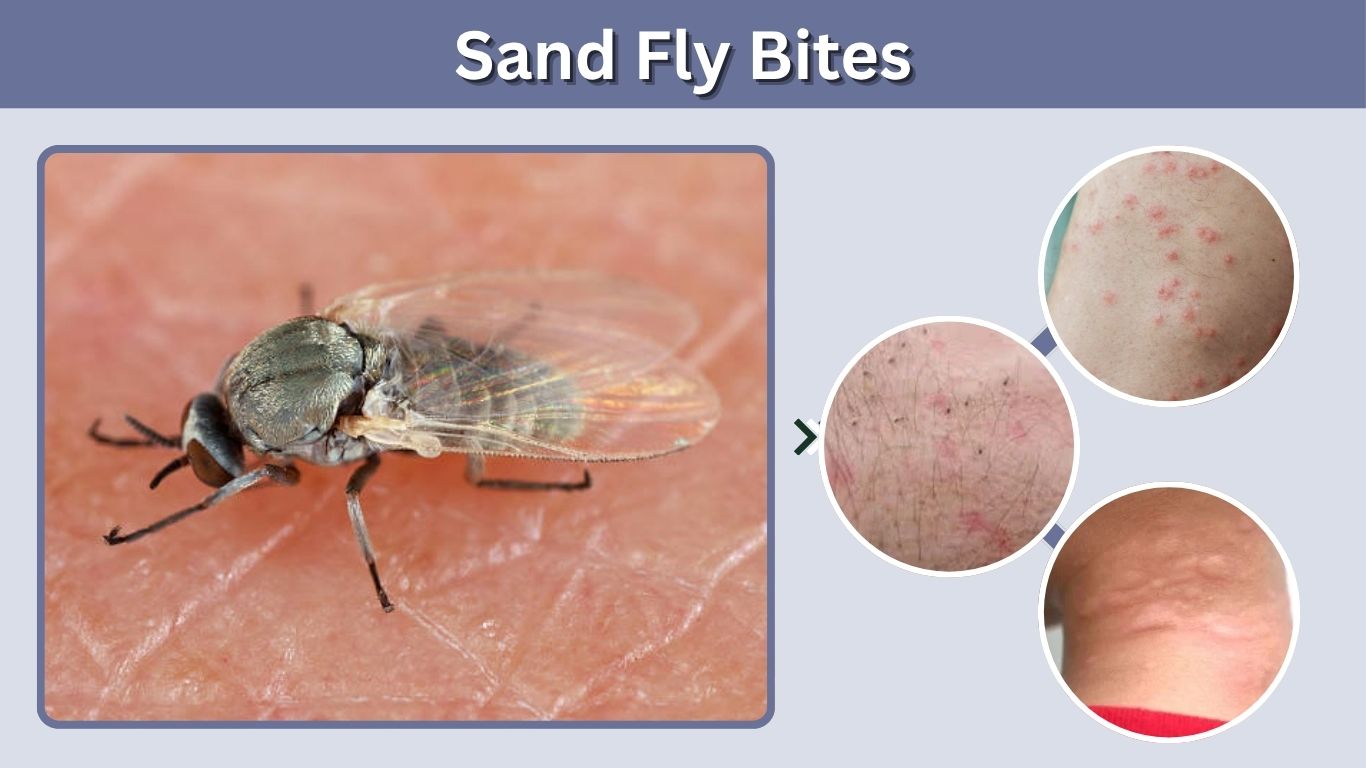
Sand fly bites usually cause small, red, intensely itchy bumps on exposed skin. Some people notice the bites immediately, while others develop redness or swelling several hours later. Most reactions improve with simple home care, but scratching can lead to infection. In regions where leishmaniasis occurs, infected phlebotomine sand flies may also transmit disease. Because many insect bites look alike, the appearance of a skin mark alone cannot confirm that a sand fly caused it.
Do Sand Flies Bite Humans?
Female sand flies bite humans and other animals because they need blood to produce eggs. Their mouthparts break the skin, allowing them to feed from the small amount of blood that collects around the bite.
Sand flies are tiny and may bite without being noticed. People are commonly exposed outdoors in warm, sheltered environments, particularly around dusk and during the night. True phlebotomine sand flies are weak fliers and tend to stay relatively close to their resting and breeding areas.
Why Do Sand Flies Bite?
Only females require blood meals. Males generally feed on natural plant sugars. Female sand flies use nutrients from blood to develop their eggs.
A person may receive several bites during a single outdoor exposure. The bite reaction results largely from the body’s immune response to substances introduced while the insect feeds.
What Do Sand Fly Bites Look Like?
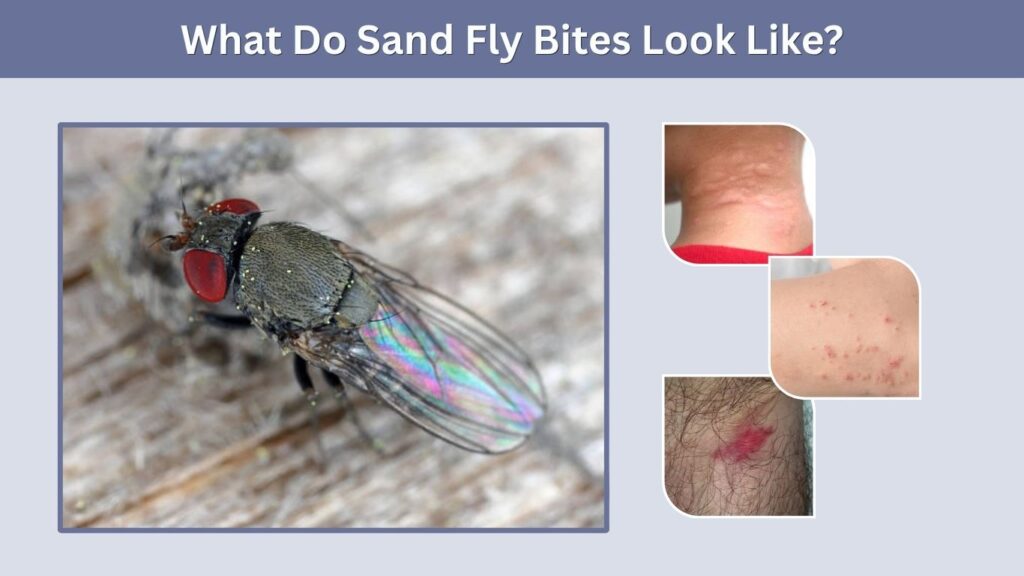
Sand fly bites commonly look like small red or pink bumps surrounded by mild swelling. The center may have a tiny puncture mark, although this is not always visible.
Typical signs include:
- Small, raised red bumps
- Intense itching
- Redness around the bite
- Localized swelling
- Mild burning or tenderness
- Several bites grouped together
- Marks on ankles, legs, arms, neck or face
Health New Zealand notes that itching, redness and swelling are typical symptoms, but reactions vary between individuals.
Sand Fly Bite Pictures and Identification
Photographs may help you compare general skin reactions, but they cannot provide a reliable diagnosis. Mosquitoes, fleas, bed bugs, biting midges and other insects can all produce similar red, itchy bumps.
Consider where and when the bites appeared. Bites noticed after spending time near a beach, forest, riverbank or humid outdoor location may suggest an outdoor biting fly. Marks that repeatedly appear after sleeping indoors may point toward bed bugs or another household pest.
Can Sand Fly Bites Show Up Days Later?
A reaction may become more noticeable several hours after exposure. In sensitive people, swelling and itching may continue to increase during the following day.
However, a skin sore that begins several weeks or months after exposure is different from a normal delayed bite reaction. Cutaneous leishmaniasis can initially appear as a bump or lump and later develop into an ulcer, particularly after exposure in a region where the disease occurs.
Do Sand Fly Bites Spread?
Ordinary sand fly bites do not spread from one part of the body to another and are not contagious. Several marks may seem to appear gradually because individual bites become visible at different times.
Increasing redness around one bite may instead indicate irritation, a strong local reaction or infection caused by scratching. Skin infection can develop when broken skin allows bacteria to enter.
Sand Fly Bites vs. Other Insect Bites
It is difficult to identify the responsible insect from the marks alone. The location, timing and surrounding evidence are often more useful.
| Feature | Sand fly bites | Bed bug bites | Mosquito bites |
| Typical exposure | Outdoors in warm, sheltered areas | Indoors while sleeping | Indoors or outdoors |
| Appearance | Small, red, itchy bumps | Red, itchy bumps that may form lines or clusters | Raised, itchy, swollen bumps |
| Common areas | Ankles, legs, arms and face | Skin exposed during sleep | Any uncovered skin |
| Timing | Often after evening outdoor activity | May appear one to several days after sleeping | Often noticed soon after exposure |
| Other clues | Tiny biting flies nearby | Bugs, dark spots or shed skins near beds | Mosquito activity nearby |
Bed bug reactions vary widely and can appear one to several days after the bite. The CDC states that bite reactions alone are not diagnostic; finding the insects or other infestation evidence is more reliable.
Are Sand Fly Bites Worse Than Mosquito Bites?
Either bite can produce mild or severe itching depending on the person. Sand fly bites are often described as particularly itchy, but mosquito bites can also cause significant swelling.
The more important difference is disease risk. Certain mosquitoes transmit mosquito-borne infections, while infected phlebotomine sand flies can transmit leishmaniasis. Most bites from either insect do not automatically result in disease.
How to Treat Sand Fly Bites
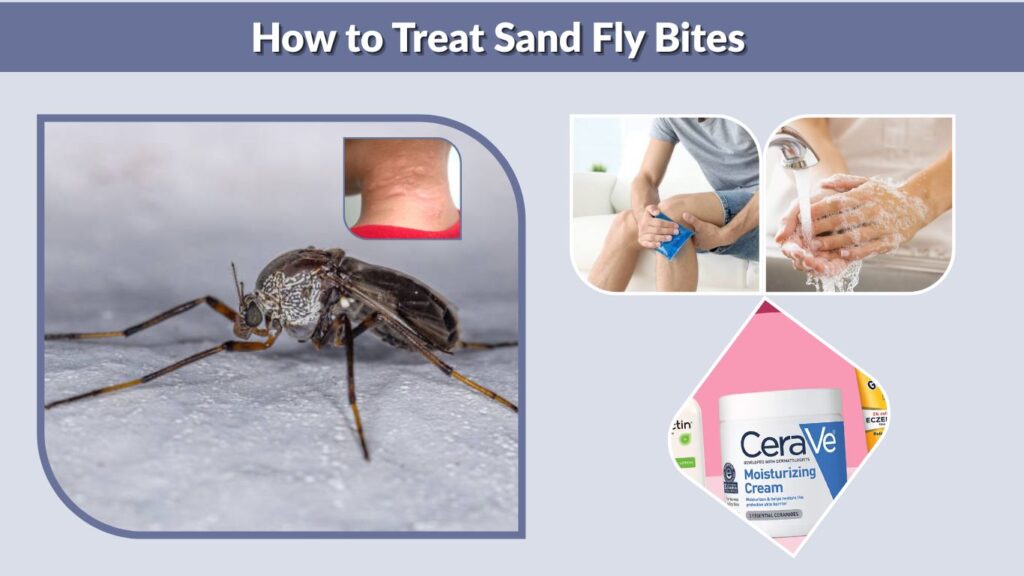
Most uncomplicated bites can be treated at home. Treatment focuses on controlling itching and protecting the skin from infection.
Immediate Treatment Steps
- Wash the area gently with soap and clean water.
- Apply a cold compress for 10–15 minutes.
- Avoid scratching or squeezing the bumps.
- Keep the affected skin clean and dry.
- Ask a pharmacist about an appropriate antihistamine or anti-itch cream.
- Follow all medicine labels and age restrictions.
Cold compresses, antihistamines and suitable topical treatments can help manage ordinary insect-bite symptoms.
How to Stop Sand Fly Bites Itching
Apply a cool, damp cloth or wrapped ice pack for short periods. Avoid placing ice directly against the skin.
A pharmacist may recommend an antihistamine or mild topical treatment based on the person’s age, medical history and symptoms. Some antihistamines can cause drowsiness, so read the label carefully and seek professional advice when necessary.
Aloe vera may feel soothing for some people, but it should not replace medical evaluation when the area is infected, severely swollen or failing to heal.
What Should You Avoid?
Do not:
- Scratch until the skin breaks
- Cut or squeeze the bite
- Apply bleach or household chemicals
- Use antibiotics without medical advice
- Apply several medicated creams together
- Assume every persistent sore is a simple insect bite
Repeated scratching increases the risk of secondary bacterial infection.
How Long Do Sand Fly Bites Last?
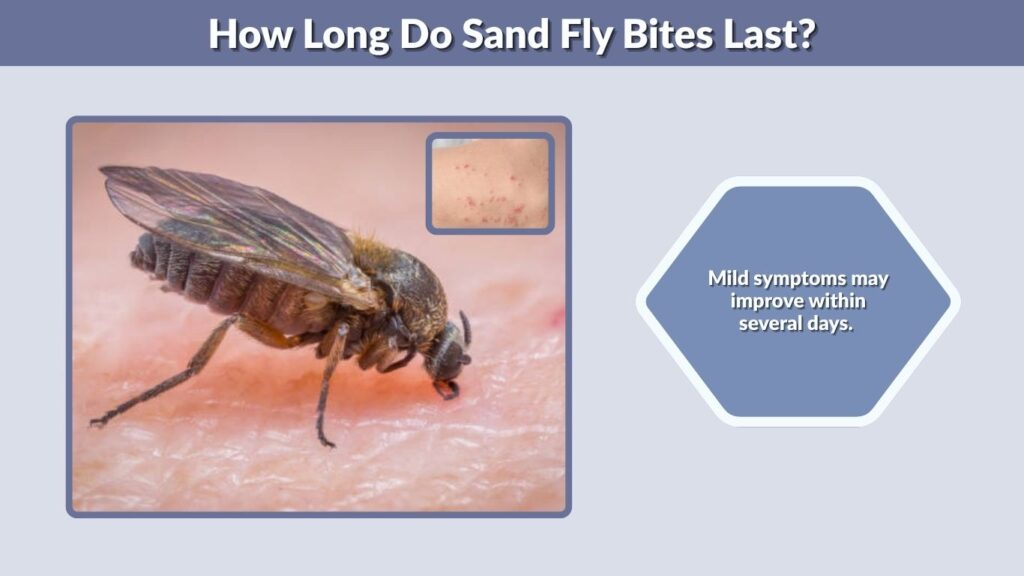
Mild symptoms may improve within several days. In more sensitive individuals, itching, redness or swelling can continue for a few weeks.
Healing may take longer when bites are repeatedly scratched. Darker marks can remain temporarily after inflammation settles, especially in people prone to post-inflammatory skin discoloration.
Avoid picking at scabs, protect healing skin from excessive sunlight and seek medical advice when marks remain inflamed or painful.
Infected Sand Fly Bites
A bite may become infected when bacteria enter scratched or broken skin.
Warning signs include:
- Redness that continues expanding
- Increasing warmth or tenderness
- Worsening pain
- Pus or cloudy fluid
- Red streaks extending from the area
- Fever or feeling unwell
- Swelling that worsens after several days
Medical treatment may be required when an infection develops.
Are Sand Fly Bites Dangerous?
Most bites cause only temporary itching and swelling. However, bites can occasionally produce a serious allergic reaction, become infected or transmit disease in regions where infected sand flies occur.
Allergic Reactions
Seek emergency medical help for:
- Difficulty breathing
- Swelling of the lips, mouth, tongue or throat
- Faintness or severe dizziness
- Widespread hives
- Rapidly worsening facial swelling
These may indicate a severe allergic reaction requiring urgent care.
Leishmaniasis Risk
Leishmaniasis is caused by Leishmania parasites transmitted through the bite of infected sand flies. The most common form causes skin sores that may appear weeks or months after the bite. These sores can enlarge, change appearance or develop into ulcers.
Contact a healthcare professional when an unexplained sore develops after living in or travelling to an affected region. Tell the clinician where and when you travelled because treatment depends partly on the parasite and geographic area of exposure.
How to Prevent Sand Fly Bites
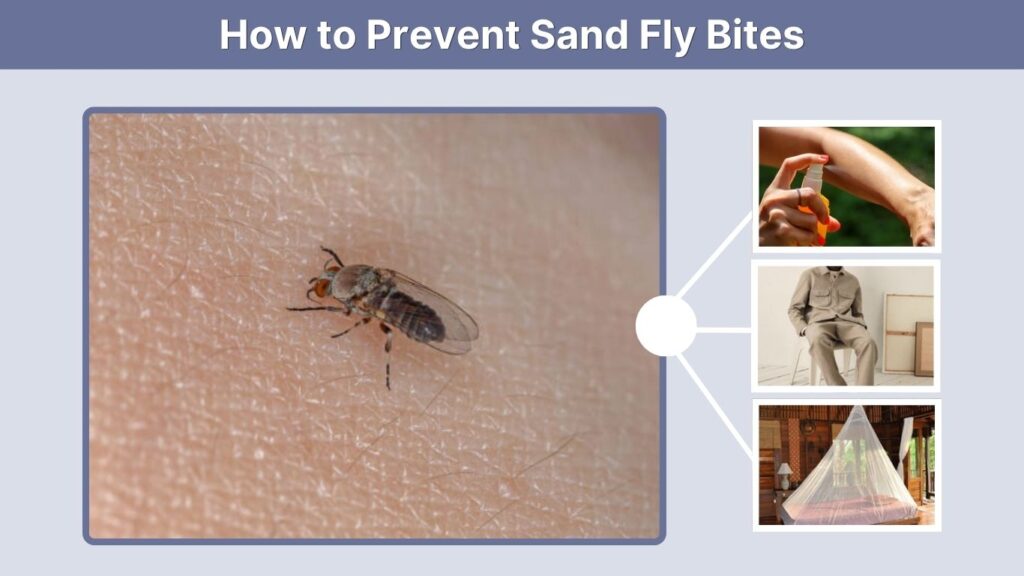
The most effective approach combines repellent, protective clothing and reduced exposure.
- Apply a registered insect repellent to exposed skin.
- Wear long sleeves, trousers, socks and closed shoes.
- Limit outdoor exposure from dusk through dawn in risk areas.
- Stay in screened or air-conditioned rooms.
- Use fine-mesh bed nets where necessary.
- Keep doors and windows properly screened.
- Use fans around outdoor seating areas.
- Treat clothing or nets only with products approved for fabrics.
The CDC recommends protective clothing, registered repellents and properly tucked bed nets to reduce sand fly exposure. Permethrin products are intended for clothing and equipment rather than direct application to skin.
FAQs
Can sand flies bite through clothing?
Thin, loose or open-weave clothing may provide incomplete protection. Tightly woven long sleeves, trousers, socks and closed footwear offer better coverage. Apply repellent according to the product label to any remaining exposed skin.
Are sand fly bites contagious?
No. An ordinary bite reaction cannot pass between people. Scratching may spread irritation around the same area, but it does not make the bites contagious.
Do sand fly bites hurt?
Some people feel a small pinch or burning sensation, while others notice nothing until itching begins. The intensity depends on the individual reaction and the type of insect involved.
Can sand fly bites make you sick?
Most do not cause illness beyond localized itching and swelling. Seek medical advice for fever, worsening infection, severe allergy symptoms or a persistent sore after travel to an area where leishmaniasis occurs.
What is the best treatment for sand fly bites?
Wash the skin, use a cold compress, avoid scratching and ask a pharmacist about an appropriate antihistamine or anti-itch treatment. Severe swelling, infection signs, breathing problems or a non-healing sore require medical attention.