
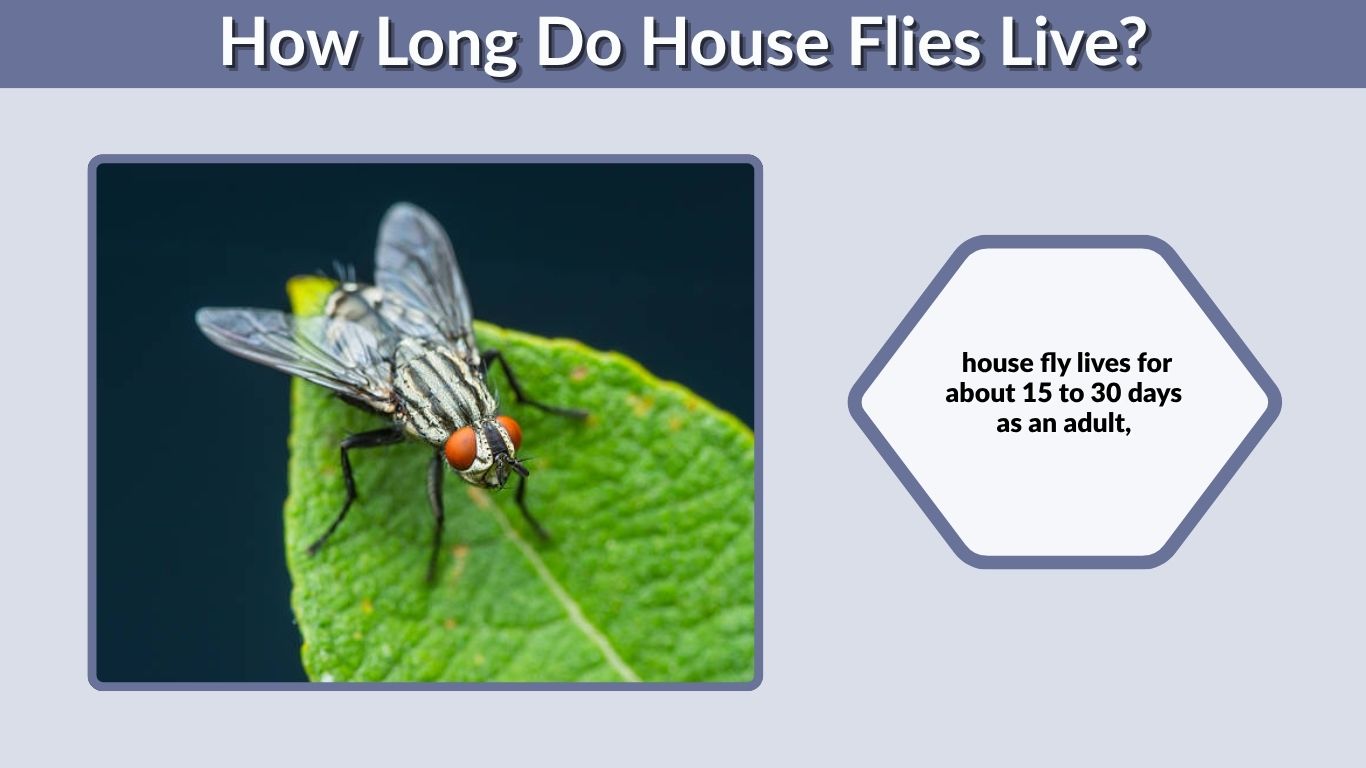
The average house fly lives for about 15 to 30 days as an adult, although some may survive longer when conditions are favorable. Temperature, food, moisture, shelter, and access to breeding material all affect how long house flies live inside a home. Their short adult lifespan can be misleading because house flies reproduce quickly, allowing several generations to appear within a relatively short period. Understanding the complete life cycle helps explain why flies may seem to remain in a house much longer than any single adult actually lives.
How Long Do House Flies Live?
A common house fly, Musca domestica, usually lives for several weeks after reaching adulthood. Under favorable indoor conditions, some individuals may survive for around a month or slightly longer.
Warm temperatures, available food, and access to water can extend survival, while cold, dryness, and lack of food shorten it.
Average House Fly Lifespan
A typical house fly spends roughly:
- Several days as an egg and larva
- Several days in the pupal stage
- Around 15–30 days as an adult
- Potentially longer in ideal conditions
This means the entire life cycle from egg to adult death may last several weeks.
The exact timing changes significantly with temperature. Warm conditions speed development, while cooler temperatures slow it down.
How Long Do House Flies Live Indoors?
House flies can survive quite well indoors because homes often provide everything they need: warmth, moisture, food residue, and shelter from weather.
An individual fly does not necessarily live longer indoors than outdoors, but indoor conditions can remove some hazards such as rain, predators, and sudden temperature changes.
Why Flies Can Survive in a House
Inside a home, house flies may find food in:
- Garbage cans
- Pet food
- Food crumbs
- Dirty dishes
- Overripe produce
- Spilled drinks
- Organic waste
- Animal feces
They can also drink moisture from sinks, drains, wet cloths, and other damp surfaces.
If food and water remain available, an adult may survive for several weeks.
How Long Do Flies Live Inside a House?
People sometimes notice flies appearing for weeks and assume one fly has been living inside the house the entire time.
In reality, several generations may be involved.
A female house fly can lay hundreds of eggs during her life. If eggs are deposited in garbage or decomposing organic material inside or near the home, new adults can continue emerging even after older flies die.
Why Flies Keep Appearing
A continuing indoor fly problem may result from:
- Hidden garbage
- Dirty drains
- Pet waste
- Rotting food
- Compost
- Dead animals
- Garbage bins near doors
- Repeated entry from outdoors
Removing adult flies without removing the breeding source usually provides only temporary relief.
House Fly Life Cycle
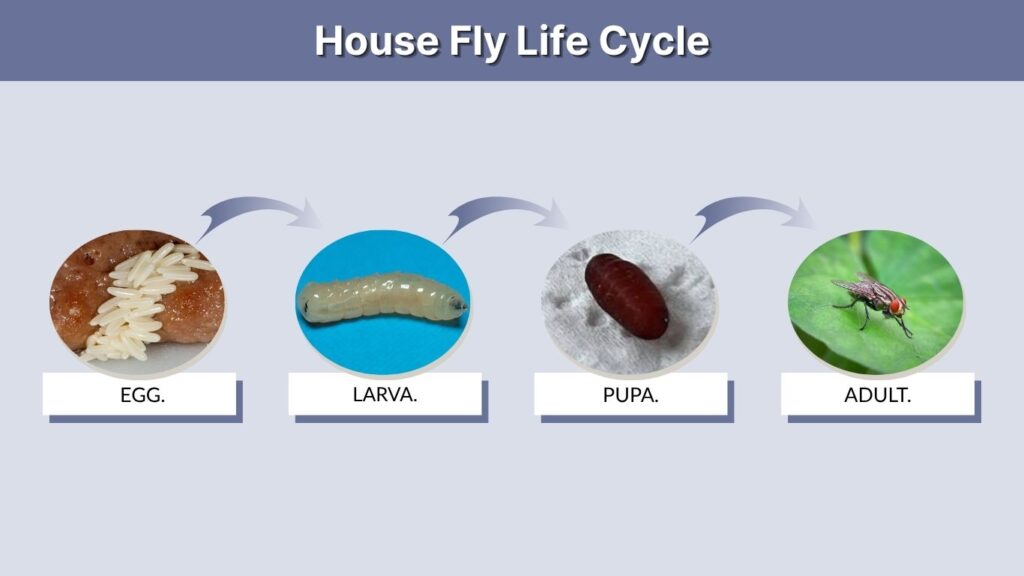
The house fly develops through four main stages: egg, larva, pupa, and adult.
The entire process can happen surprisingly quickly under warm conditions.
Egg Stage
Female house flies usually lay eggs in moist, decaying organic material.
Common breeding materials include manure, garbage, spoiled food, and other decomposing waste.
The eggs are tiny, pale, and difficult to notice without close inspection.
Larval Stage
House fly larvae are commonly called maggots.
They feed on decaying organic matter and grow rapidly. The larval period may last only several days when temperatures are warm and food is abundant.
After reaching full size, larvae move toward a drier place to pupate.
Pupal Stage
Inside the pupal case, the insect transforms from a maggot into an adult fly.
The pupal stage usually lasts several days, although cooler temperatures can extend development.
Adult Stage
Once the adult emerges, it begins feeding and searching for mates.
Females can become reproductively active relatively soon after emergence, helping house fly populations increase quickly.
How Long Do Adult House Flies Live?
The adult stage usually lasts around two to four weeks, but individual flies can survive longer.
Female house flies may sometimes live longer than males, especially under favorable conditions.
What Affects Adult Lifespan?
Major factors include:
- Temperature
- Food availability
- Water availability
- Humidity
- Predators
- Disease
- Physical injury
- Exposure to pesticides
A comfortable indoor environment may allow some flies to survive longer than they would under harsh outdoor conditions.
How Long Do House Flies Live Without Food?
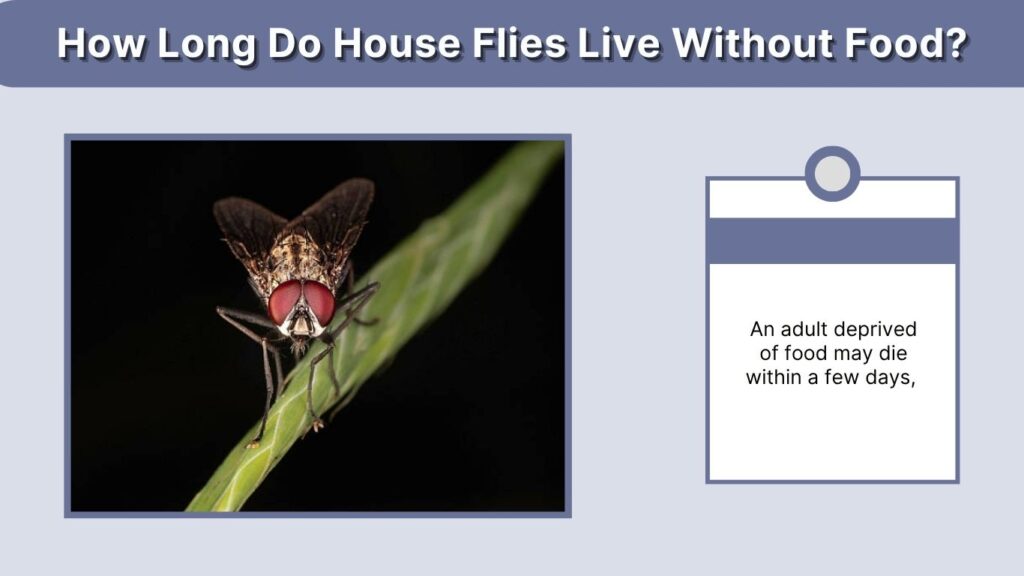
House flies cannot survive very long without access to food.
An adult deprived of food may die within a few days, although exact survival time depends on temperature, moisture, and whether the fly still has access to water or sugary liquids.
Water Is Also Important
House flies require moisture as well as food.
A trapped fly may survive longer if it can drink condensation or another liquid source. In a completely dry environment without food or water, survival is much shorter.
This is why keeping kitchens clean and eliminating accessible food and moisture can make indoor environments less suitable for flies.
How Long Can a House Fly Live Trapped in a Box?
A fly trapped inside a closed box may survive anywhere from a short period to several days, depending on the conditions.
If there is no food or water, it will generally die much sooner than a fly with access to moisture and nutrients.
Temperature also matters. Extreme heat can kill a trapped fly quickly, while moderate temperatures may allow it to survive longer.
How Long Do House Fly Eggs Live?
House fly eggs do not remain in the egg stage for very long under suitable conditions.
They can hatch within about a day when temperatures are warm.
Cooler temperatures slow development, while unsuitable conditions may prevent eggs from successfully developing.
Why Eggs Matter Indoors
Finding adult flies is often only part of the problem.
If eggs or larvae are present in hidden breeding material, new flies may emerge after the adults you currently see are removed.
Cleaning breeding areas is therefore essential for long-term control.
How Long Do House Flies Live in Winter?
Winter usually reduces house fly activity because low temperatures slow their metabolism and development.
In cold climates, adult house flies may die outdoors, while immature stages can survive in protected environments.
Inside heated buildings, however, house flies may continue living and reproducing throughout winter.
House Flies Indoors During Winter
Homes, barns, restaurants, and other heated buildings can provide enough warmth for continued activity.
If food and breeding material are available, house fly populations may remain active even when outdoor temperatures are too cold.
A fly seen indoors during winter is therefore not necessarily unusual.
House Fly vs Fruit Fly Lifespan
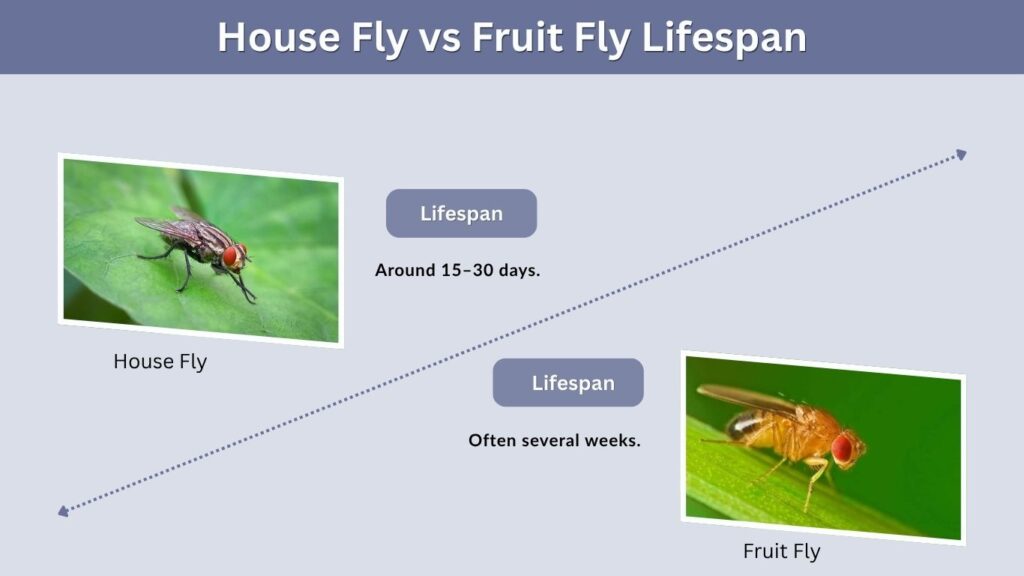
House flies and fruit flies are both common indoors, but they are different insects.
Fruit flies are much smaller and usually gather around fermenting produce, drains, and sugary liquids.
| Feature | House Fly | Fruit Fly |
| Adult size | Larger | Very small |
| Typical adult lifespan | Around 15–30 days | Often several weeks |
| Main attraction | Garbage and waste | Fermenting fruit and liquids |
| Common location | Kitchens, garbage areas | Fruit bowls, drains |
| Reproduction | Very fast | Very fast |
Both can continue appearing for weeks if their breeding source remains inside the home.
House Fly vs Cluster Fly Lifespan
Cluster flies are sometimes mistaken for large house flies, especially when they gather around windows.
Their behavior is quite different.
Cluster Flies Indoors
Cluster flies commonly enter buildings in large numbers during cooler months and hide in walls, attics, and other protected spaces.
They can survive indoors for months while overwintering.
House flies, by comparison, generally have much shorter adult lives and are more closely associated with food, garbage, and decaying organic material.
Do Black House Flies Live Longer?
The phrase “black house fly” may refer to a house fly that simply appears dark or to a different fly species.
Color alone does not determine lifespan.
If the insect is a true common house fly, its expected adult lifespan remains roughly several weeks under favorable conditions.
Some other dark-colored flies, such as cluster flies or blow flies, can have different life cycles and seasonal behavior.
Why House Flies Multiply So Quickly
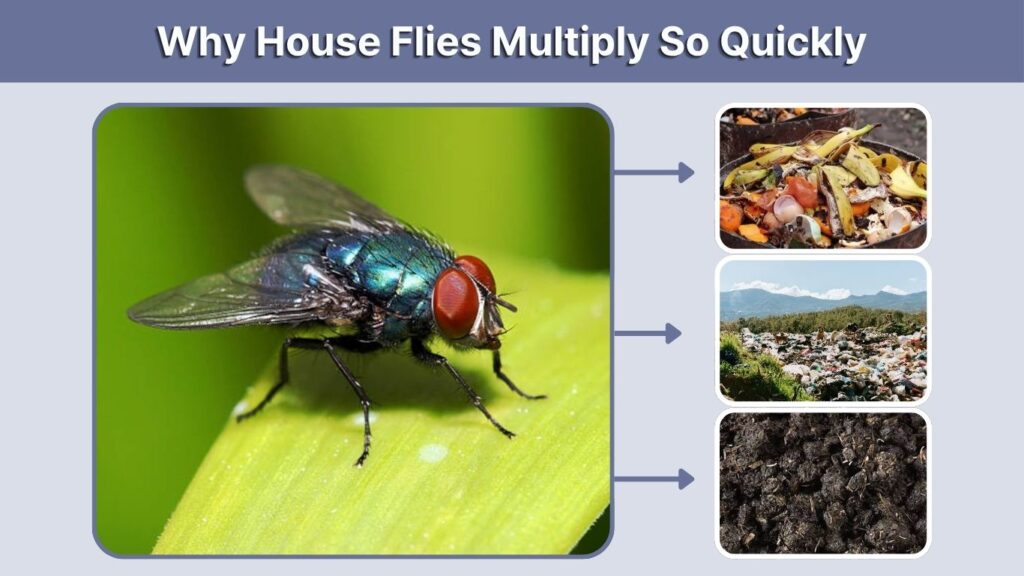
The biggest reason house flies become difficult to control is not their individual lifespan—it is their rapid reproduction.
One female can produce multiple batches of eggs during her life.
When temperatures are warm, development from egg to adult can happen quickly enough for several generations to develop within one season.
Factors That Encourage Fly Populations
House flies reproduce especially well when they have:
- Warm temperatures
- Moist organic waste
- Garbage
- Animal manure
- Food scraps
- Poorly maintained trash containers
Removing these conditions breaks the life cycle much more effectively than simply killing adult flies.
How to Reduce House Flies Indoors
The most effective approach combines sanitation with preventing new flies from entering.
Simple Control Methods
Try to:
- Empty garbage frequently
- Keep trash cans covered
- Clean food spills quickly
- Store food in sealed containers
- Remove pet waste
- Clean beneath appliances
- Repair window screens
- Keep doors closed when possible
- Remove rotting produce
- Clean outdoor garbage areas
Fly traps can reduce adults, but sanitation is usually the most important long-term step.
FAQs
How long do common house flies live?
Adult common house flies usually live around 15 to 30 days, although some may survive longer under favorable conditions. Temperature, food, water, shelter, and environmental stress all influence how long an individual fly survives.
How long do house flies live inside your house?
A house fly may live indoors for several weeks if it has access to food, moisture, and suitable temperatures. If flies continue appearing for months, new generations or repeated entry from outdoors are more likely than one individual surviving that entire period.
How long can house flies live without food?
Without food, adult house flies generally survive only a few days. Access to moisture can extend survival somewhat, while a complete lack of both food and water causes them to die much sooner.
How long do house flies live in winter?
Outdoor house fly activity declines significantly during cold weather. However, flies can remain active in heated buildings during winter if food and breeding materials are available. Immature stages may also survive in protected environments.
Why do house flies keep appearing after I kill them?
New flies may be emerging from eggs, larvae, or pupae hidden in garbage or other decaying organic material. Flies may also continue entering through doors or damaged screens. Removing breeding sources is usually necessary to stop a recurring infestation.