
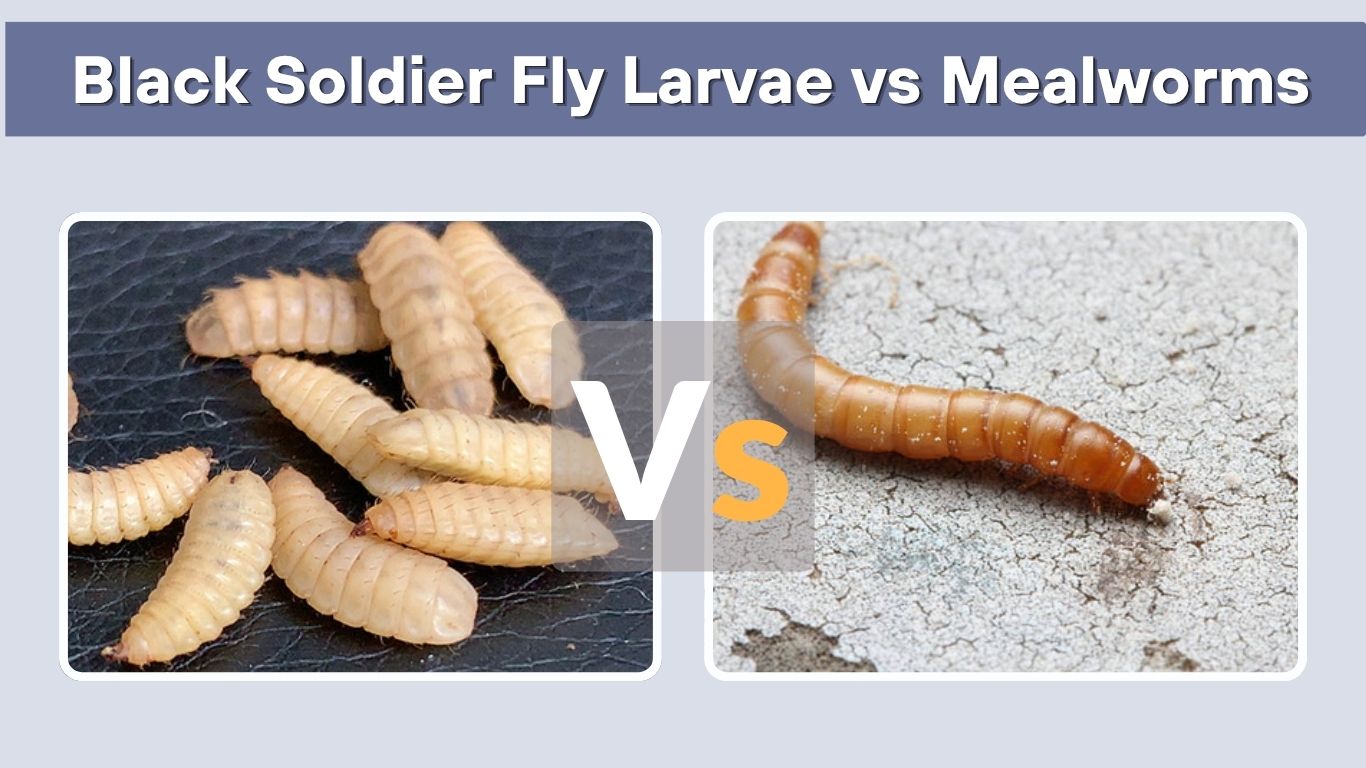
Black soldier fly larvae and mealworms are nutritious feeder insects used for chickens, wild birds, reptiles, fish, and other insect-eating animals. Black soldier fly larvae generally provide substantially more calcium and efficiently convert moist organic waste into usable biomass. Mealworms often contain more protein or fat, depending on how they are raised and processed, and many animals readily accept them. The better choice depends on whether your priority is calcium, energy, live feeding, composting, or dietary variety.
Black Soldier Fly Larvae vs Mealworms at a Glance
Black soldier fly larvae are the immature stage of Hermetia illucens, a true fly. Mealworms are the larvae of the yellow mealworm beetle, Tenebrio molitor. Therefore, mealworms are not true worms, and they are not fly maggots.
| Feature | Black Soldier Fly Larvae | Mealworms |
| Insect type | Fly larva | Beetle larva |
| Typical shape | Short, broad, and ridged | Long, narrow, and smooth |
| Color | Cream, gray, tan, or dark brown | Golden yellow to brown |
| Protein | High | Often high to very high |
| Calcium | Generally much higher | Naturally low |
| Fat | Moderate to high | Often relatively high |
| Composting ability | Excellent for moist food waste | Poor for ordinary compost |
| Best uses | Poultry, reptiles, composting, feed production | Birds, reptiles, poultry treats |
| Adult insect | Wasp-like fly | Darkling beetle |
Nutrient values vary considerably according to the insects’ diet, age, moisture level, drying process, and whether the fat has been removed. Reviews report wide protein and fat ranges for both insects, so package labels provide a better comparison than universal claims about exact percentages.
What Do They Look Like?
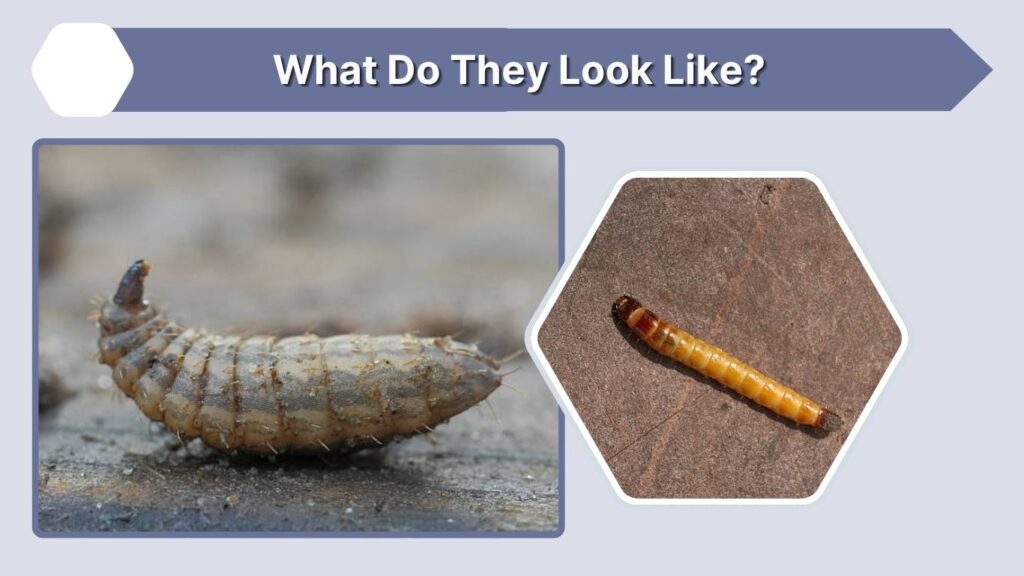
The two larvae are relatively easy to distinguish when placed side by side.
Black Soldier Fly Larvae
Black soldier fly larvae have thick, flattened bodies covered with deep ridges. Young larvae may be pale cream, while mature larvae turn gray, brown, or nearly black before leaving their food to pupate.
Fully grown larvae can reach approximately one inch long. Their tough, leathery appearance distinguishes them from the smoother larvae of many other flies.
Mealworms
Mealworms are thinner, longer, and more cylindrical. Their golden-brown bodies have a hard outer covering, clearly visible segments, and three pairs of small legs near the head.
They generally remain lighter and smoother than mature black soldier fly larvae. Eventually, a mealworm becomes a pupa and then develops into a darkling beetle.
Nutritional Differences
Both insects contain useful protein, fat, amino acids, and minerals. Neither has one fixed nutritional profile because its growing substrate affects its final composition.
Protein and Fat
Mealworms frequently contain more protein than full-fat black soldier fly larvae, although their reported ranges overlap considerably. A scientific review reported dry-matter protein ranges of approximately 38.9–76.2% for yellow mealworms and 29.9–48.9% for black soldier fly larvae. Fat levels can be high in either insect.
This does not automatically make mealworms the better feed. An animal’s total diet must also provide appropriate calcium, phosphorus, vitamins, amino acids, and energy.
Calcium
Calcium is the main nutritional advantage of black soldier fly larvae. Their mineralized outer covering allows them to contain substantially more calcium than mealworms.
However, actual calcium levels vary according to production methods, and not all of that calcium is necessarily absorbed equally by every animal. Black soldier fly larvae should therefore be incorporated into a properly balanced feeding program rather than treated as a complete diet.
Mealworms vs Black Soldier Fly Larvae for Chickens
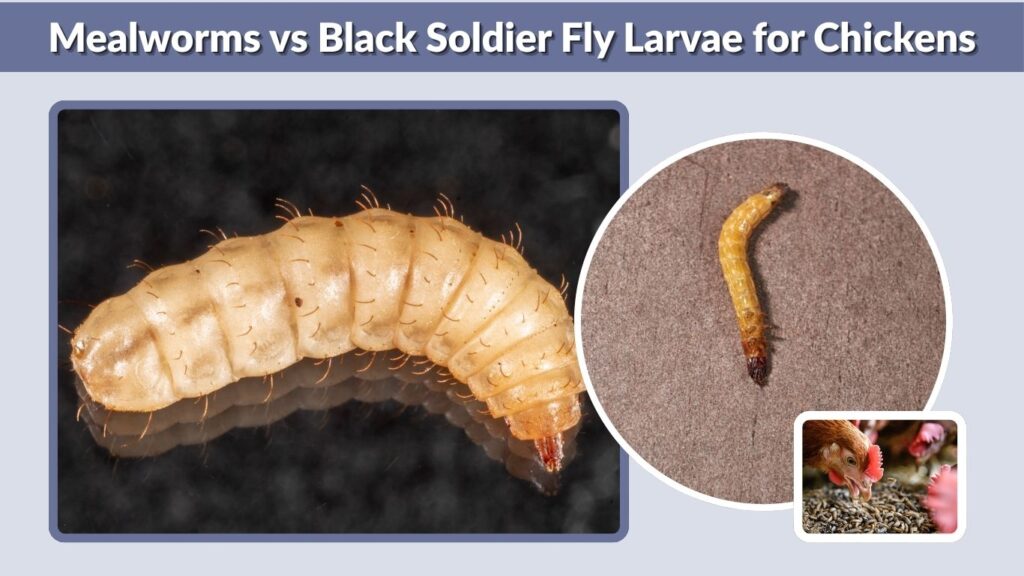
Chickens usually enjoy both live and dried forms. They provide enrichment by encouraging natural scratching, chasing, and pecking behavior.
Why Choose Black Soldier Fly Larvae?
Black soldier fly larvae may be particularly useful for laying hens because they provide protein together with relatively high calcium. Calcium supports bone health and eggshell formation, although hens must still receive a complete layer ration and an appropriate calcium source.
University of Georgia poultry research found that properly processed black soldier fly larval meal could replace part of the corn and soybean meal in professionally formulated broiler diets without reducing growth or feed efficiency.
Why Choose Mealworms?
Mealworms provide concentrated protein and energy. They can be useful during training, cold weather, feather growth, or molting, but their low calcium-to-phosphorus balance means they should not dominate a laying hen’s diet.
For backyard flocks, either insect should normally be treated as a supplement. Excessive treats can reduce consumption of the balanced feed formulated to provide all essential nutrients.
Which Is Better for Chickens?
Choose black soldier fly larvae when calcium and waste-recycling potential are priorities. Choose mealworms when you want a familiar, high-energy treat that chickens readily recognize.
Using both in moderation provides variety. Neither should replace a balanced commercial poultry ration.
Black Soldier Fly Larvae vs Mealworms for Birds
Mealworms have long been offered to bluebirds, robins, wrens, and other insect-eating wild birds. Their narrow shape and active movement make live mealworms especially attractive.
Black soldier fly larvae can also be eaten by chickens and wild birds. Oregon State University notes that soldier fly larvae removed from compost may be offered to chickens or left where wild birds can find them.
Acceptance varies among individual birds. Birds accustomed to mealworms may initially ignore dried black soldier fly larvae, while others consume them immediately. Offering a small mixed portion can help determine which feeder insect local birds prefer.
Do not allow either insect to become the birds’ only food. Wild birds require varied natural diets, while captive birds need nutrition tailored to their species.
Live vs Dried Larvae
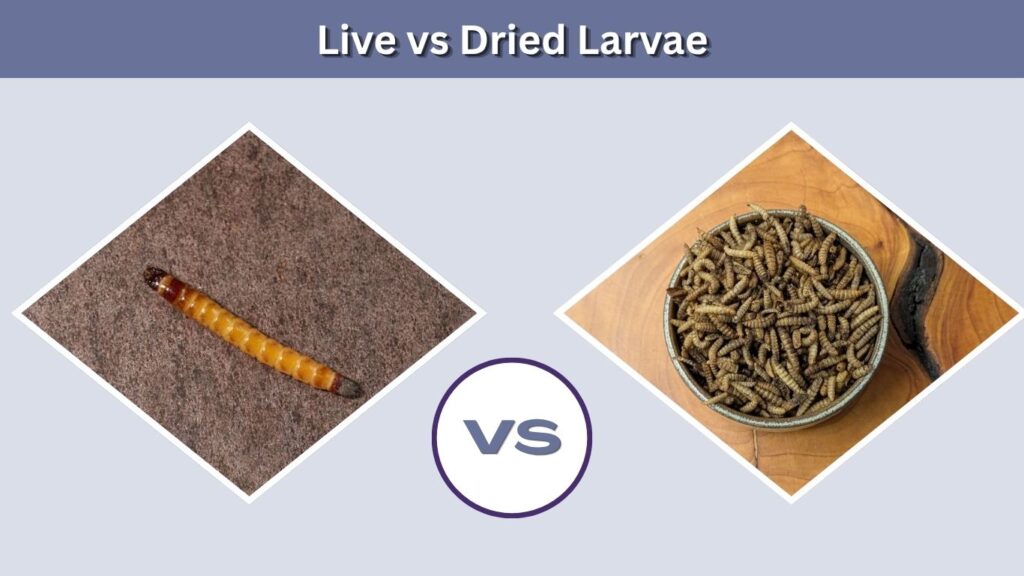
Live and dried insects differ mainly in moisture, storage, and feeding behavior.
| Form | Advantages | Limitations |
| Live BSFL | High moisture, movement, suitable for reptiles and poultry | Shorter storage life |
| Dried BSFL | Convenient, concentrated, calcium-rich supplement | Provides little moisture |
| Live mealworms | Highly attractive movement, easy portioning | Require care and may become beetles |
| Dried mealworms | Long shelf life and easy storage | Higher calorie concentration and no hydration |
Dried insects contain more nutrients per gram because most of their water has been removed. This also makes overfeeding easier. Store dried products in sealed containers away from moisture, heat, and pests.
Phoenix Worms vs Black Soldier Fly Larvae
Phoenix Worms are black soldier fly larvae. The term is a commercial name used for feeder-grade larvae, particularly those sold for reptiles and amphibians.
Other trade names include CalciWorms, NutriGrubs, and soldier fly grubs. Differences between products may involve larval size, growing substrate, packaging, or nutritional analysis, but they all refer to Hermetia illucens larvae.
Black Soldier Fly Larvae vs Housefly Larvae
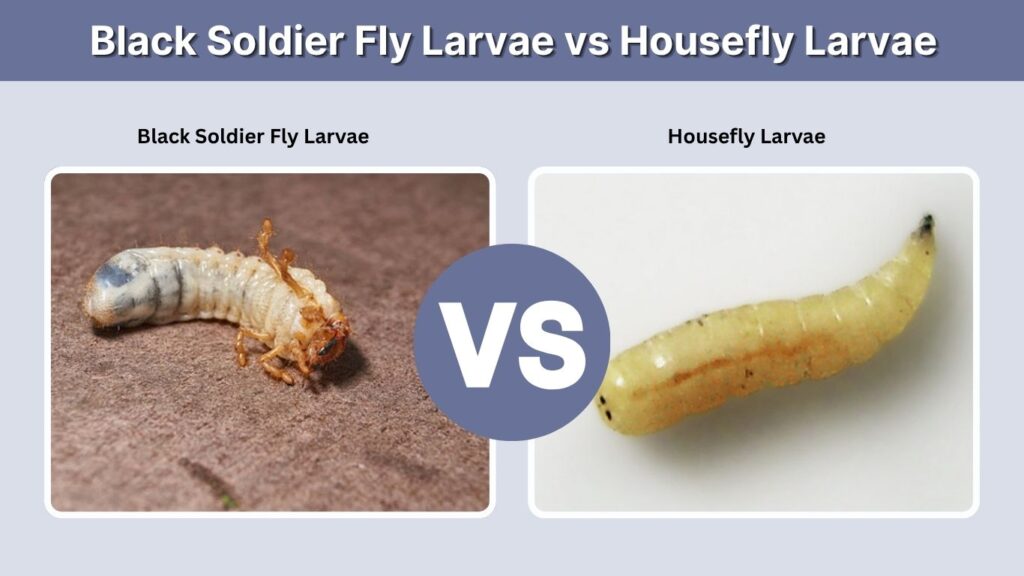
Both are technically maggots because “maggot” is a general name for a fly larva. However, they belong to different fly families and have noticeably different appearances.
| Feature | Black Soldier Fly Larva | Housefly Larva |
| Body | Broad, flattened, and deeply ridged | Narrow, soft, and smooth |
| Mature color | Gray, brown, or nearly black | Usually cream or white |
| Maximum size | Around one inch | Considerably smaller |
| Common substrate | Compost, manure, and food waste | Garbage, manure, and decaying waste |
| Adult | Large, black, wasp-like fly | Familiar gray housefly |
| Household status | Usually an occasional decomposer | Major sanitation pest |
Housefly larvae are smooth, pale maggots associated with garbage and animal or human waste. Mature black soldier fly larvae are darker, more leathery, and often crawl away from the food when preparing to pupate.
Black soldier fly adults also differ from houseflies. They have long, dark, wasp-like bodies but possess no stinger and pose little direct danger to people.
Black Soldier Fly Larvae vs Mealworms for Composting
Black soldier fly larvae are the clear winner for processing moist food scraps. They consume decomposing fruit, vegetables, grain waste, manure, and other nitrogen-rich organic materials.
They can rapidly reduce the volume of waste and eventually self-harvest by crawling away from the feeding material when ready to pupate. Their remaining residue can be further composted before being used as a soil amendment.
Mealworms are normally raised in a dry substrate such as bran or grain. They can consume selected food materials, but they are not suitable replacements for black soldier fly larvae in a wet composting bin.
Black Soldier Fly Larvae vs Red Composting Worms
Black soldier fly larvae process wet, nutrient-rich scraps quickly, while red worms work more slowly and produce fine vermicompost. Both can occur in a worm bin, although large soldier fly populations may compete for surface food.
Soldier fly larvae do not normally attack worms or their eggs. Burying scraps beneath bedding helps preserve more food for the worms and discourages adult soldier flies from laying eggs.
FAQs
Are black soldier fly larvae healthier than mealworms?
They generally contain more calcium and can offer a better mineral balance for certain animals. Mealworms may provide more protein or fat. The healthier option depends on the animal, serving size, complete diet, and product analysis.
Can chickens eat black soldier fly larvae and mealworms together?
Yes. Chickens can eat both in moderate quantities. A mixed serving provides dietary variety, but it should remain a supplement rather than replacing nutritionally complete poultry feed.
Are black soldier fly larvae regular maggots?
They are maggots in the biological sense because they are fly larvae. However, they are not housefly maggots. They are larger, more ridged, darker when mature, and belong to a different fly family.
Which is better for bluebirds: mealworms or black soldier fly larvae?
Bluebirds often accept mealworms readily, especially when they are alive. They may also eat black soldier fly larvae, but preference varies. Offer a small amount first and avoid making either feeder the birds’ complete diet.
Can black soldier fly larvae replace mealworms?
They can replace mealworms as an occasional feeder for many chickens, birds, reptiles, and fish. However, the two insects have different nutritional profiles, so replacement amounts should follow the needs of the animal being fed.