
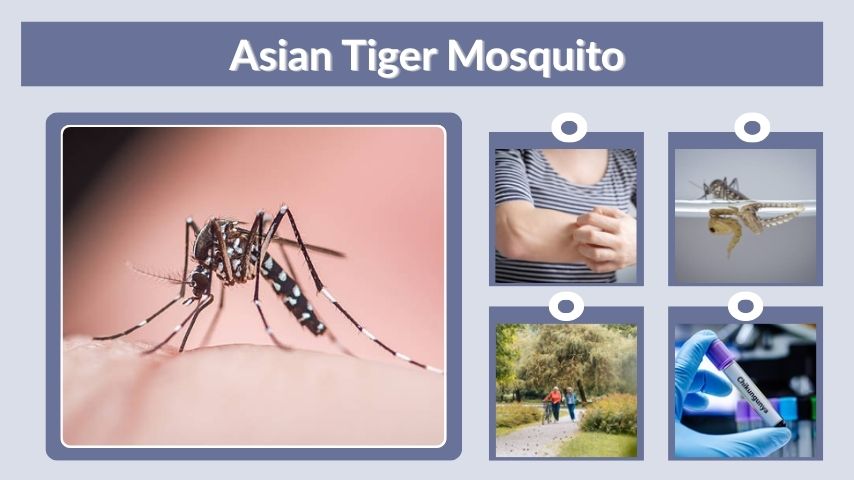
The Asian Tiger Mosquito is one of the most recognizable and invasive mosquito species in the world. Known for its distinctive black-and-white striped appearance and aggressive daytime biting behavior, this mosquito has spread far beyond its native Asian range. It is a significant public health concern because it can transmit several diseases that affect humans. Understanding its habitat, life cycle, feeding habits, and control methods is essential for reducing mosquito populations and protecting yourself from bites.
What Is an Asian Tiger Mosquito?
The Asian Tiger Mosquito (Aedes albopictus) is a small mosquito species originally native to Southeast Asia. It is named for the white stripes that run across its black body and legs, giving it a tiger-like appearance. Over the past several decades, this mosquito has become one of the most successful invasive insect species in the world.
Scientific Classification
The Asian Tiger Mosquito belongs to the mosquito family Culicidae and the genus Aedes. Its scientific name, Aedes albopictus, is widely used in scientific and public health research because of its importance as a disease vector.
Why It Is Called the Asian Tiger Mosquito
Several characteristics contribute to its name.
- Black body coloration.
- White striped legs.
- White stripe on the thorax.
- Origin in Asia.
- Tiger-like markings.
- Aggressive behavior.
Asian Tiger Mosquito Appearance
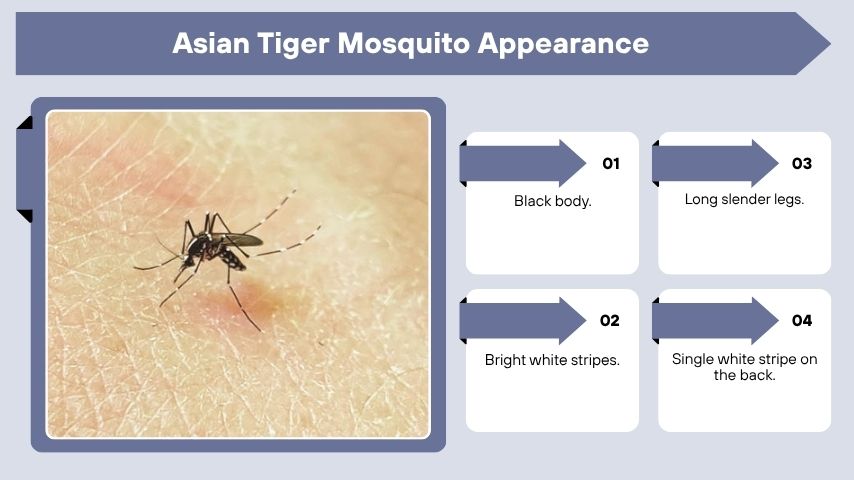
The Asian Tiger Mosquito is easy to identify because of its striking appearance. Unlike many common mosquitoes that have dull brown or gray coloring, this species displays highly visible white markings. These patterns make it one of the easiest mosquito species for homeowners and researchers to recognize.
Size and Shape
Adult Asian Tiger Mosquitoes are relatively small, usually measuring between 2 and 10 millimeters in length. Despite their small size, their contrasting markings make them highly noticeable.
Distinguishing Characteristics
Several features help identify this mosquito.
- Black body.
- Bright white stripes.
- Long slender legs.
- Single white stripe on the back.
- Compact body size.
- Fast flight behavior.
Asian Tiger Mosquito vs Regular Mosquito
Although similar in size to many other mosquitoes, the Asian Tiger Mosquito is generally more aggressive and active during daylight hours. Most common mosquito species prefer feeding at dawn or dusk, while Asian Tiger Mosquitoes often bite throughout the day.
Where Do Asian Tiger Mosquitoes Live?
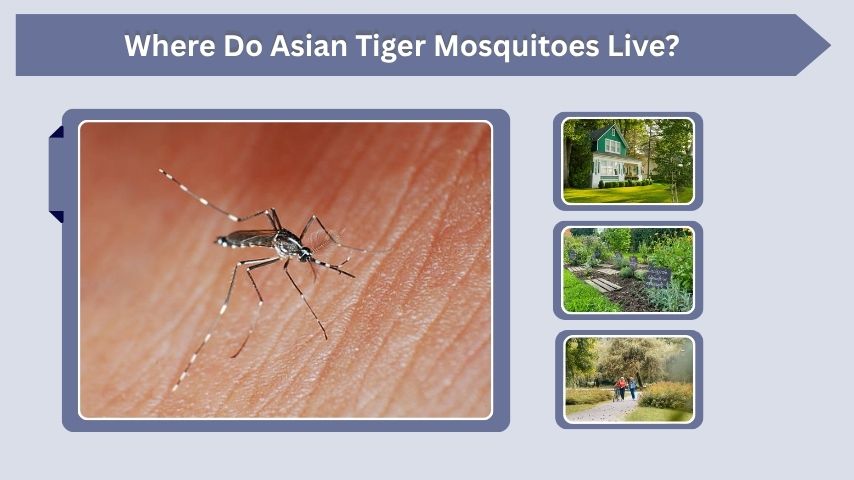
The Asian Tiger Mosquito has expanded far beyond its native range. Through global transportation and international trade, it has established populations across multiple continents. Today, it is found in urban, suburban, and rural environments where suitable breeding sites are available.
The species thrives in warm climates but can also survive in temperate regions due to its ability to adapt to seasonal conditions. Its remarkable adaptability has contributed to its worldwide success as an invasive species.
Native Range
The Asian Tiger Mosquito originally evolved in Southeast Asia. Countries within this region provided the warm temperatures and abundant water sources needed for reproduction and survival.
Distribution in the United States
The species is now established throughout many parts of the United States and continues to expand its range.
- Florida.
- Texas.
- California.
- New Jersey.
- Pennsylvania.
- Illinois.
Preferred Habitat
Asian Tiger Mosquitoes frequently breed in small containers that collect water. They are commonly found near homes, gardens, parks, and urban environments where standing water is available.
Asian Tiger Mosquito Life Cycle
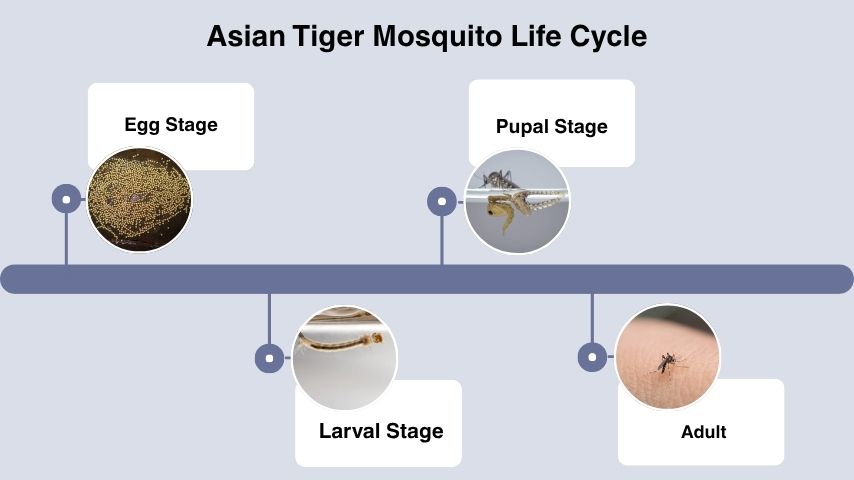
Like all mosquitoes, the Asian Tiger Mosquito undergoes complete metamorphosis. Its development includes four distinct stages, each playing an important role in the insect’s survival and reproduction. Environmental conditions such as temperature and water availability strongly influence how quickly the life cycle progresses.
Egg Stage
Female mosquitoes lay eggs near water sources or on surfaces likely to become flooded. The eggs are remarkably resistant to drying and can survive for extended periods until suitable conditions return.
Larval Stage
After hatching, larvae live entirely in water. They feed on microorganisms and organic material while growing rapidly. During this stage, they regularly surface to obtain oxygen.
Pupal Stage
The pupal stage is a transitional period between larva and adult. Although pupae do not feed, significant physical changes occur as the mosquito develops into its adult form.
Adult Stage
Once the adult mosquito emerges from the pupal stage, it rests briefly on the water’s surface while its wings dry and harden. Adult males primarily feed on nectar and plant juices, while females seek blood meals needed for egg production. Under favorable conditions, adults can survive for several weeks and reproduce multiple times throughout their lifespan.
What Do Asian Tiger Mosquitoes Eat?
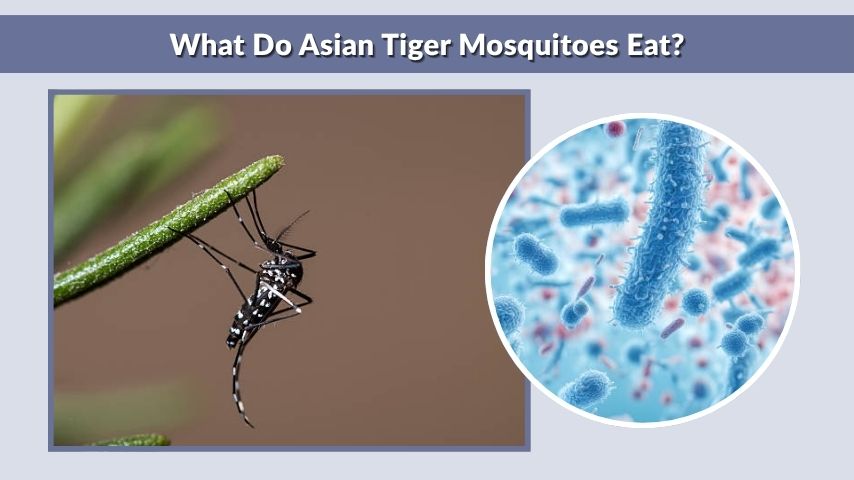
Diet varies depending on life stage and sex. While adult mosquitoes are often associated with blood feeding, both males and females obtain much of their energy from plant-based food sources. Blood meals are primarily required by females to support egg production.
What Larvae Eat
Mosquito larvae feed on tiny particles suspended in water.
- Algae.
- Bacteria.
- Organic debris.
- Microscopic organisms.
- Decaying plant material.
What Adult Mosquitoes Eat
Adult mosquitoes commonly consume nectar and plant sugars. Female mosquitoes also feed on blood from humans and animals because the nutrients are necessary for producing eggs.
Why Females Bite Humans
Female Asian Tiger Mosquitoes require protein from blood meals to develop eggs. This feeding behavior is the primary reason mosquitoes are capable of transmitting diseases between hosts.
Asian Tiger Mosquito Bites
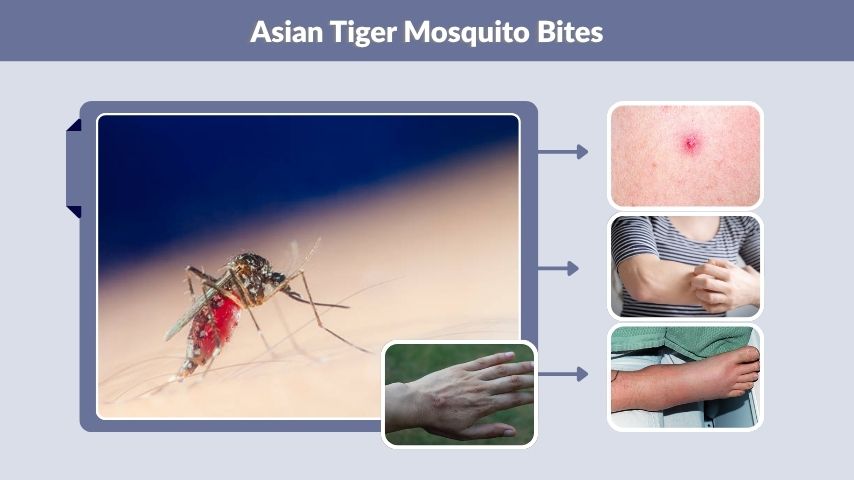
Asian Tiger Mosquitoes are known for their aggressive biting behavior and willingness to feed during daylight hours. Unlike many mosquito species that are most active at dawn and dusk, Asian Tiger Mosquitoes frequently bite throughout the day, making them particularly troublesome in residential and recreational areas.
What Does an Asian Tiger Mosquito Bite Look Like?
Most bites appear as small, raised red bumps that develop shortly after feeding. The bite area may become itchy, swollen, and irritated depending on a person’s sensitivity to mosquito saliva.
Common Bite Symptoms
People may experience several reactions after being bitten.
- Redness.
- Itching.
- Mild swelling.
- Small raised bumps.
- Skin irritation.
- Temporary discomfort.
Are Asian Tiger Mosquito Bites Worse?
Many individuals report that Asian Tiger Mosquito bites feel more irritating than bites from common mosquitoes. However, the severity of symptoms varies greatly depending on individual allergic responses and skin sensitivity.
Are Asian Tiger Mosquitoes Dangerous?
Asian Tiger Mosquitoes are considered medically important because they can transmit disease-causing pathogens. Although most bites result only in mild irritation, the mosquito’s ability to spread viruses has made it a major concern for public health officials worldwide.
The actual risk of disease transmission varies depending on location, mosquito populations, and the presence of infected hosts. Nevertheless, preventing bites remains an important health precaution.
Are They Harmful to Humans?
Most bites are harmless and cause only temporary discomfort. However, the possibility of disease transmission is what makes this species particularly significant from a public health perspective.
Can Asian Tiger Mosquitoes Kill You?
Directly, no. The mosquito itself does not kill people. However, diseases transmitted through infected mosquito bites can occasionally cause severe illness or complications if left untreated.
Why They Are Considered Dangerous
Several factors contribute to their reputation.
- Aggressive daytime biting.
- Ability to transmit viruses.
- Rapid geographic spread.
- Adaptability to urban environments.
- High reproduction rates.
Diseases Carried by Asian Tiger Mosquitoes
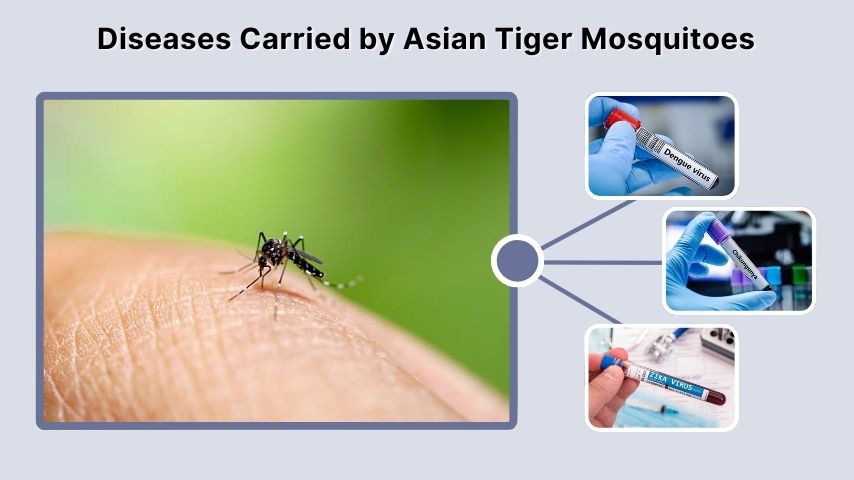
The Asian Tiger Mosquito is capable of transmitting several viruses that affect humans. While not every mosquito carries disease, public health agencies closely monitor populations because of their potential role in disease outbreaks.
Dengue Fever
Dengue is a viral illness that can cause high fever, severe headaches, muscle pain, and fatigue. In severe cases, complications may require hospitalization.
Chikungunya Virus
Chikungunya commonly causes fever and joint pain. Symptoms may persist for weeks or even months in some individuals.
Zika Virus
Zika gained international attention because of its association with birth defects when infections occur during pregnancy. The virus can also cause fever, rash, and joint discomfort.
Other Potential Diseases
Additional pathogens may also be transmitted under certain conditions.
- West Nile virus.
- Yellow fever virus.
- Various arboviruses.
- Emerging mosquito-borne diseases.
Asian Tiger Mosquito as an Invasive Species
The Asian Tiger Mosquito is considered one of the world’s most successful invasive insects. Originally restricted to Asia, it has expanded across multiple continents and established populations in diverse environments.
Its spread has been closely linked to human activities, particularly global transportation and trade. The mosquito’s eggs can survive harsh conditions, allowing them to travel long distances unnoticed.
Where Did the Asian Tiger Mosquito Come From?
The species originated in Southeast Asia, where warm temperatures and abundant rainfall supported large natural populations.
How Did It Reach America?
The mosquito is believed to have entered the United States through international shipments, particularly used tires and other containers capable of holding water. These environments provided ideal conditions for eggs and larvae to survive transportation.
Effects on Ecosystems
Asian Tiger Mosquitoes can influence local ecosystems in several ways.
- Competing with native mosquitoes.
- Altering food web relationships.
- Increasing disease transmission risks.
- Expanding into new habitats.
- Affecting biodiversity patterns.
Asian Tiger Mosquito Predators
Despite their success as an invasive species, Asian Tiger Mosquitoes face numerous natural predators throughout their life cycle. Predation helps limit mosquito populations and contributes to ecological balance.
Common Predators
Many animals feed on mosquitoes or their larvae.
- Dragonflies.
- Fish.
- Frogs.
- Birds.
- Bats.
- Aquatic insects.
Importance of Natural Predators
Predators help reduce mosquito numbers naturally and may decrease the need for chemical control measures. Healthy ecosystems often support a diverse range of species that contribute to mosquito management.
How to Get Rid of Asian Tiger Mosquitoes
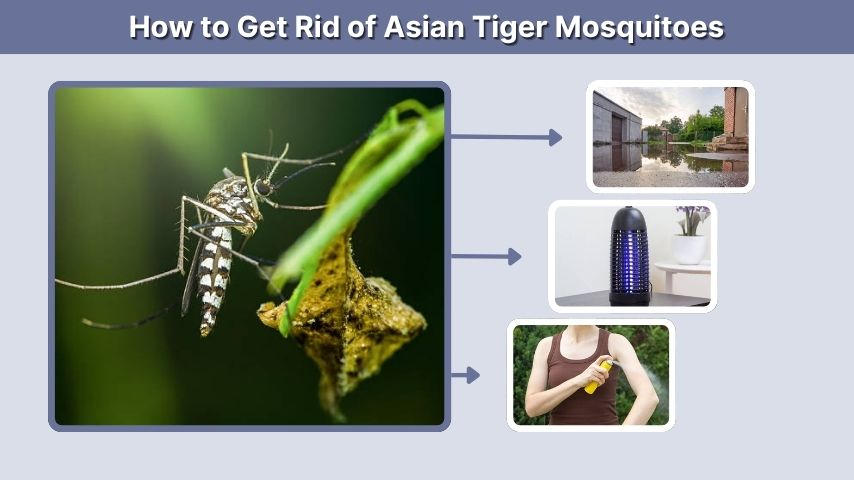
Effective mosquito control focuses on eliminating breeding sites and reducing opportunities for reproduction. Because these mosquitoes often breed in small containers, simple prevention measures can dramatically lower local populations.
Mosquito Control Methods
Several strategies are commonly recommended.
- Remove standing water.
- Clean gutters regularly.
- Empty outdoor containers.
- Use mosquito traps.
- Apply approved repellents.
- Maintain yard vegetation.
Prevention Tips
Preventing mosquito bites is often easier than controlling established populations. Wearing protective clothing, using insect repellents, and reducing breeding habitats can significantly lower exposure.
FAQs
What Is the Lifespan of an Asian Tiger Mosquito?
Adult Asian Tiger Mosquitoes typically live between 2 and 4 weeks, depending on environmental conditions such as temperature, humidity, food availability, and predator pressure. Females often live longer than males.
Are Asian Tiger Mosquitoes Found in the United States?
Yes, Asian Tiger Mosquitoes are widely established throughout the United States. They are commonly found in states such as Florida, Texas, California, New Jersey, Pennsylvania, Illinois, and many other regions with suitable climates.
What Attracts Asian Tiger Mosquitoes?
Asian Tiger Mosquitoes are attracted to carbon dioxide, body heat, sweat, and certain body odors produced by humans and animals. They are also drawn to areas with standing water where they can lay eggs.
What Is the Difference Between an Asian Tiger Mosquito and Aedes aegypti?
Both species can transmit diseases, but the Asian Tiger Mosquito (Aedes albopictus) has distinctive black-and-white stripes and can survive in a wider range of climates. Aedes aegypti is more closely associated with urban environments and tropical regions.
Are Asian Tiger Mosquitoes an Invasive Species?
Yes, the Asian Tiger Mosquito is considered one of the world’s most invasive mosquito species. Originally native to Southeast Asia, it has spread globally through international trade and transportation, often outcompeting native mosquito species in new environments.