
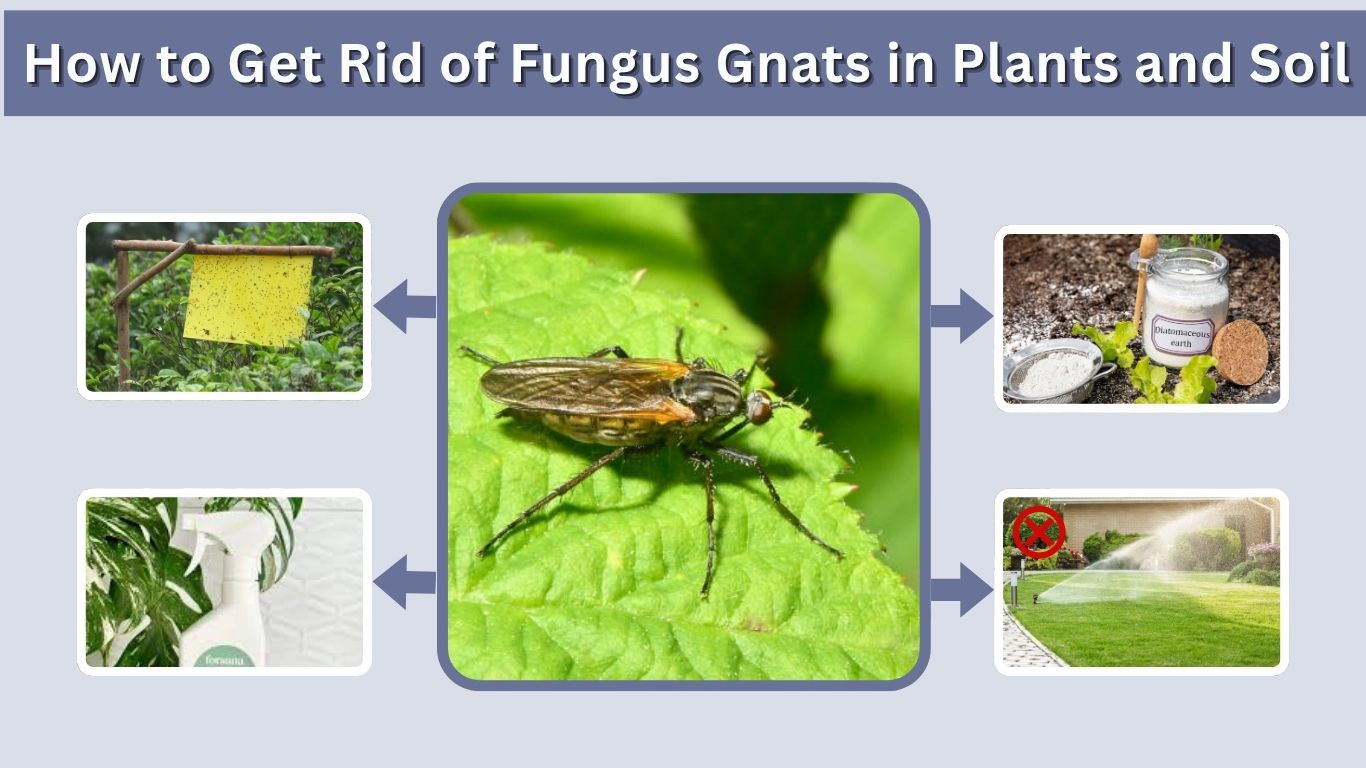
To get rid of fungus gnats, let the soil surface dry as your plant allows, use yellow sticky traps for adults, and treat persistent larvae with a labeled Bti product or beneficial nematodes. These methods work together because the flies you see are only one stage of the infestation. Eggs, larvae, and pupae may remain inside the pot. Whether gnats are hovering around one houseplant or spreading through your apartment, the goal is to interrupt breeding without damaging the plants you want to protect.
How to Get Rid of Fungus Gnats: Step by Step
Start by confirming the insect and locating every affected pot. Then correct the conditions supporting reproduction. A trap may catch adults immediately, but lasting control requires attention to the growing medium. Follow the steps below, using larval treatments when needed rather than repeatedly spraying the room or adding more water whenever you see a fly.
1. Confirm That You Have Fungus Gnats
Look for:
- Tiny, dark flies with long legs and antennae.
- Adults walking over soil or fluttering near pots.
- Whitish, translucent larvae with shiny black heads.
To check for larvae, place a small raw potato slice cut-side down on the soil. Inspect its underside after a few days, then discard it. This is a monitoring aid, not a complete treatment.
Fruit flies commonly gather around fermenting food, while drain flies look fuzzy and mothlike. Treating plant soil will not solve an infestation originating in spoiled produce or drain buildup.
2. Let the Soil Surface Dry Between Waterings
For plants that tolerate it, allow roughly the top inch of potting mix to dry before watering again. This makes the surface less favorable for egg laying and developing gnats.
Check moisture before watering instead of following a rigid calendar. Empty saucers and decorative outer pots. Bottom watering can help keep the surface drier, but avoid leaving the entire root ball continuously saturated.
3. Catch Adult Fungus Gnats With Yellow Sticky Traps
Position small yellow sticky cards close to the affected pots, preferably just above the growing medium. Keep adhesive away from leaves, pets, and children.
Check catches regularly and replace cards when needed. Traps help identify active pots and reduce adult numbers, but they cannot reach larvae or pupae underground. Keep addressing the soil even when the first card fills with flies.
4. Treat Fungus Gnat Larvae With Bti
Bti, short for Bacillus thuringiensis subspecies israelensis, is a biological larvicide. Choose a product labeled for fungus gnats and the plants or growing situation you are treating.
For Mosquito Bits, the manufacturer’s specimen label describes soaking four tablespoons in one US gallon of water for 30 minutes. Remove the granules, stir the liquid, and apply it to the growing medium. Applications are repeated weekly over three weeks.
Follow your actual package label if it differs. Do not use the same recipe for a different Bti formulation, and follow all handling precautions.
5. Consider Beneficial Nematodes
Steinernema feltiae nematodes provide another option for controlling larvae in potting media. Apply them according to the supplier’s directions.
Because these organisms are alive, storage conditions, temperature, and moisture affect performance. Keep the growing medium within the recommended moisture range after application; aggressive drying can undermine treatment. Do not combine biological controls with other products unless compatibility is established.
6. Remove Debris and Correct Drainage
Clean up conditions that allow the infestation to continue:
- Remove fallen leaves and decaying plant material.
- Wash dirty saucers and empty standing water.
- Check that drainage holes are unobstructed.
- Replace deteriorated, poorly draining potting mix when necessary.
Repotting can help when the growing medium remains excessively wet, but every infested plant does not need complete root disturbance. Match the fresh mix and pot size to the plant’s requirements.
7. Monitor All Nearby Plants
Inspect neighboring pots, propagation containers, and recently purchased plants. Leaving one breeding source untreated can allow adults to spread again.
Continue monitoring after catches decline. Before adding another treatment, check whether you completed the recommended application schedule and whether pots still remain too wet. Keep unused potting mix closed and protected from infestation.
How to Get Rid of Fungus Gnats Naturally
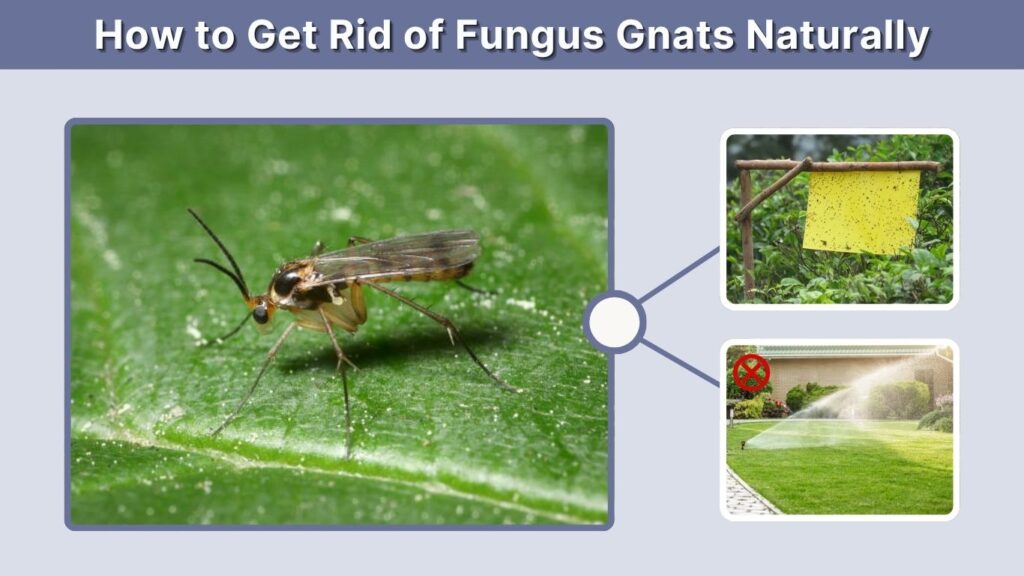
If you want to minimize pesticide use, begin with watering adjustments, sanitation, and sticky cards. These measures may be sufficient for a small infestation. Beneficial nematodes are another option where conditions suit them. “Natural” does not mean every household ingredient is effective, harmless to plants, or appropriate around pets.
Which Home Remedies Deserve Caution?
Dish soap: Household detergents are not interchangeable with formulated insecticidal soaps. Homemade mixtures can injure plants, so avoid improvised soil drenches.
Hydrogen peroxide: Some extension advice describes diluted applications, but do not assume undiluted 3% peroxide or stronger mixtures are suitable for every plant. A labeled larval treatment provides clearer directions.
Diatomaceous earth: It depends on remaining dry and undisturbed, limiting its usefulness on frequently watered soil. Do not rely on it to eliminate an infestation by itself.
What About Vinegar and Cinnamon?
Vinegar traps are associated with fruit-fly control and are not a dependable substitute for yellow sticky cards when dealing with fungus gnats.
Do not rely on cinnamon alone to interrupt the infestation. Continue removing breeding conditions and addressing larvae instead of repeatedly adding household remedies.
What If Gnats Are Somewhere Other Than Houseplants?
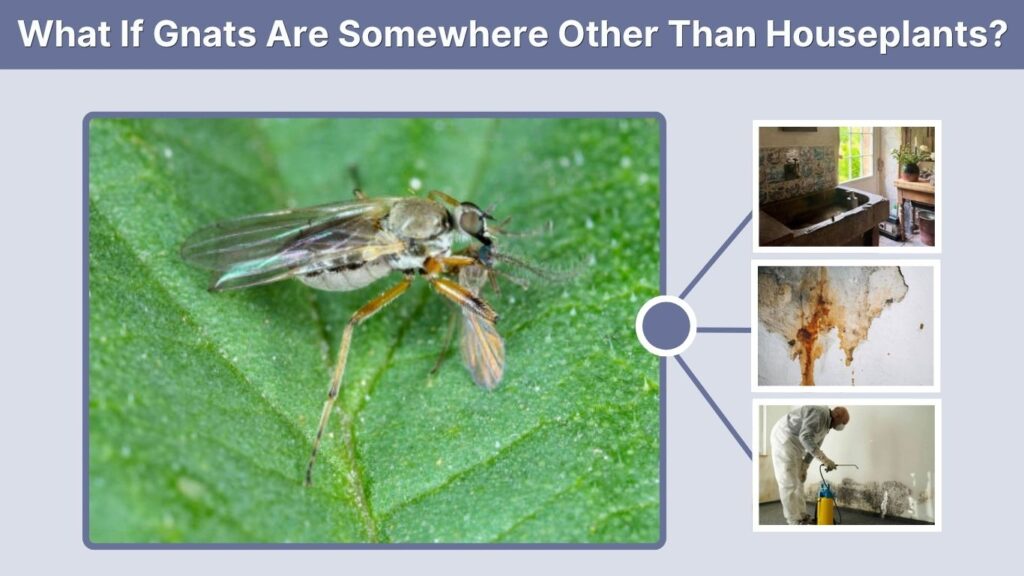
Finding gnats in another room does not necessarily mean they are breeding there. Adults may disperse from a nearby source, and other small flies are easily mistaken for them. Identify the insect before treating sinks, garden beds, or animal enclosures. The safest approach depends on what else lives in the affected environment.
Bathrooms, Kitchens, and Homes Without Plants
Inspect leaks, damp organic debris, and concealed moisture. If insects concentrate around a drain, check whether they are drain flies or phorid flies instead.
Remove confirmed breeding material and repair moisture problems. Do not pour plant-treatment mixtures into household plumbing merely because flies are nearby.
Gardens, Seedlings, and Terrariums
Outdoors, fungus gnats usually do not justify trying to eliminate every adult. Concentrate on excessive moisture and vulnerable seedlings or cuttings. Protect young plants without drying them to the point of injury.
For occupied terrariums or reptile enclosures, do not automatically apply houseplant treatments. Obtain advice appropriate to the resident animals and beneficial invertebrates, and keep exposed sticky traps inaccessible to them.
How Long Does It Take to Get Rid of Fungus Gnats?
Expect meaningful control to take several weeks, commonly around three to four weeks under suitable management. Timing varies with temperature, infestation size, and treatment coverage. Adults may continue emerging from existing pupae even after larval treatment begins, so seeing a few flies does not automatically mean the approach has failed.
Signs Your Treatment Is Working
Look for a downward trend in trap catches, fewer adults emerging when pots are disturbed, and fewer larvae during monitoring.
If activity remains unchanged, reassess identification, moisture, untreated containers, and application instructions. An extension service or pest professional can help locate a source you have missed.
FAQs
What Is the Fastest Way to Get Rid of Fungus Gnats?
Combine adult trapping with moisture correction and, when needed, a labeled larval treatment. Catching adults alone gives temporary relief without removing the developing population.
Can I Get Rid of Fungus Gnats Without Repotting?
Yes. Many infestations respond to better watering, sticky traps, and targeted larval control. Repot when drainage or deteriorated mix makes it necessary.
Does Bti Kill Fungus Gnat Eggs?
No. Bti targets susceptible feeding larvae, not eggs, pupae, or adults. Repeat applications according to the label help address larvae that hatch later.
How Do I Treat Plants That Need Moist Soil?
Avoid harmful drought. Improve drainage and use an appropriate larval control while maintaining the plant’s required moisture.
Can I Get Rid of Fungus Gnats Forever?
You can control the current infestation, but new plants or infested materials can introduce them again. Regular inspection and suitable watering reduce recurrence.