
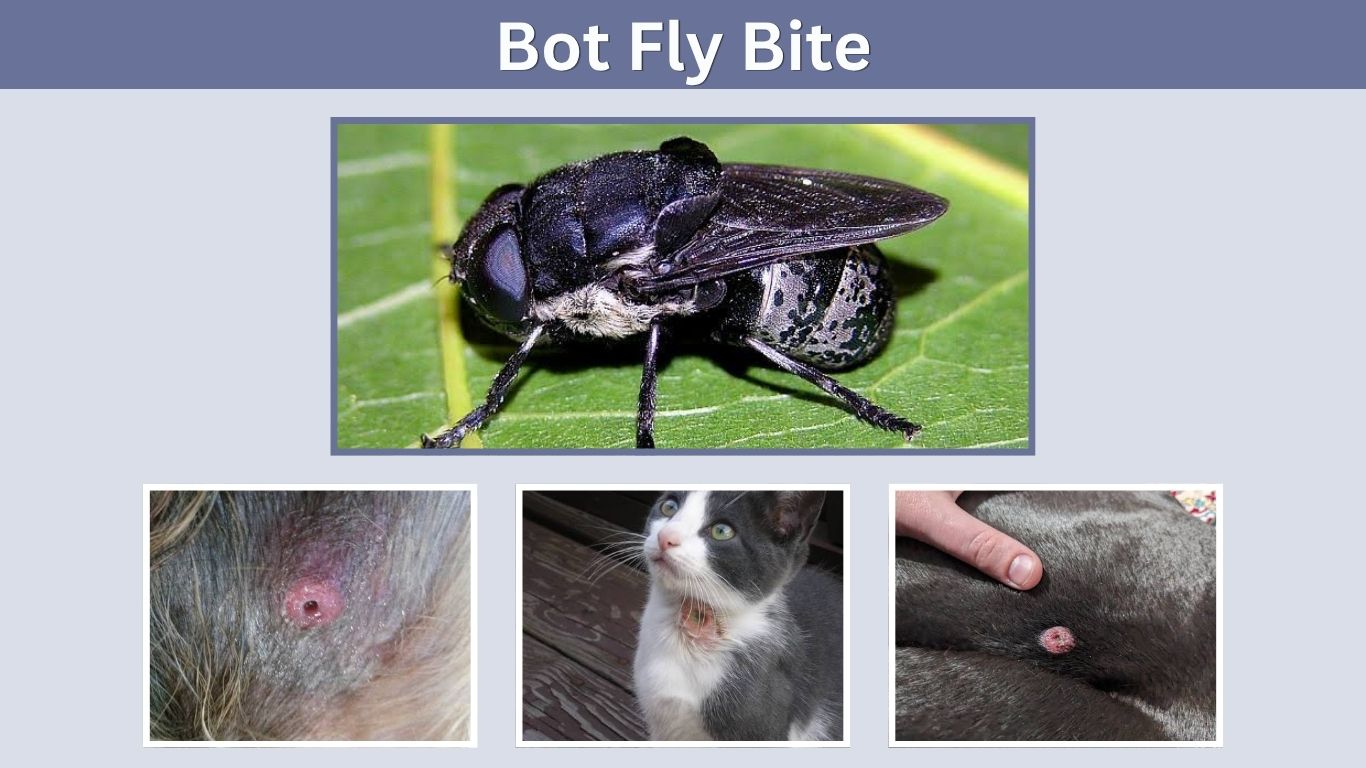
A bot fly bite is not a typical insect bite. In most cases, the adult fly does not bite. Instead, bot fly larvae enter a person or animal and develop beneath the skin, causing a condition called myiasis. The resulting lump may resemble a boil, infected bite, or abscess with a small central opening. Although most cases are treatable, attempting to squeeze or remove the larva at home can worsen the wound. Proper medical or veterinary care ensures safe removal and prevents complications.
What Is a Bot Fly Bite?
The phrase “bot fly bite” usually describes the skin lesion produced by a developing bot fly larva. Different bot fly species affect humans, pets, livestock, and wild animals. Their methods of reaching a host also vary.
Do Bot Flies Actually Bite?
Adult human bot flies do not normally bite people. A female Dermatobia hominis attaches her eggs to a mosquito or another blood-feeding arthropod. When that carrier lands on a person, warmth causes the larvae to hatch and enter through the bite site or nearby skin.
In dogs and cats, Cuterebra flies deposit eggs near rabbit and rodent burrows. Pets encounter the eggs while exploring, and larvae generally enter through the nose, mouth, or an open wound. Adult Cuterebra flies do not feed or bite.
Where Are Human Bot Flies Found?
The human bot fly occurs primarily from Mexico through Central and South America. Cases reported in the United States, United Kingdom, and other regions often involve travelers returning from affected tropical areas.
Animal bot flies have wider ranges. Cuterebra species occur in the Americas and primarily parasitize rabbits and rodents, although dogs and cats can become accidental hosts.
What Does a Bot Fly Bite Look Like?
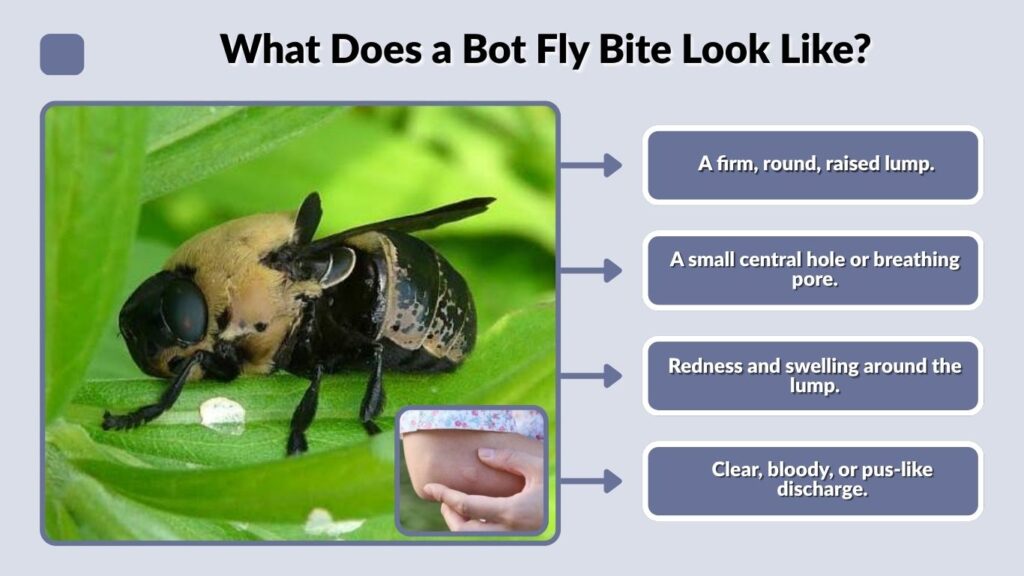
A developing bot fly lesion often resembles a boil or large pimple. Its most distinctive feature is a tiny opening that allows the larva beneath the skin to breathe. However, appearance alone cannot confirm an infestation.
Common Identification Features
A possible bot fly wound may have:
- A firm, round, raised lump
- A small central hole or breathing pore
- Redness and swelling around the lump
- Clear, bloody, or pus-like discharge
- Intermittent pain, itching, or tenderness
- A sensation of movement beneath the skin
- A dark shape occasionally visible inside the opening
- A wound that fails to heal with ordinary care
Human lesions can occur on the scalp, arms, legs, back, face, or other exposed areas. In pets, warbles commonly develop around the head, neck, shoulders, or trunk.
Conditions That Look Similar
A picture cannot reliably distinguish a bot fly lesion from:
- A bacterial boil
- An abscess
- An infected tick or insect bite
- A ruptured cyst
- A foreign object under the skin
- An inflamed hair follicle
Travel history, outdoor exposure, the central pore, and examination of the wound help a healthcare professional or veterinarian make the diagnosis.
Bot Fly Bite Stages and Progression
Progression depends on the fly species and host. Human bot fly larvae may remain beneath the skin for approximately five to ten weeks. Cuterebra larvae in their normal animal hosts may exit several weeks after infection. These are general stages rather than an exact daily timeline.
Stage 1: Entry and Early Skin Reaction
The person may remember a mosquito bite but usually does not feel the bot fly larva entering. A small red bump can appear within the following days. It may initially look like an ordinary insect bite.
Dogs and cats generally acquire Cuterebra while investigating areas inhabited by rabbits or rodents. Early signs are often absent because the immature larva migrates through the body before reaching the skin.
Stage 2: Growing Lump
As the larva grows, the bump becomes firmer and more noticeable. A small central pore develops. The area may itch, ache, or release a watery or blood-tinged fluid.
In pets, owners may first notice matted fur, frequent licking, or a swelling beneath the coat. The lesion may be mistaken for an abscess.
Stage 3: Mature Warble
The opening enlarges as the larva develops. Movement may become visible or noticeable, and discharge can increase. A mature Cuterebra larva can be several centimeters long, even though much of it remains hidden beneath the skin.
Secondary bacterial infection may cause worsening pain, heat, pus, odor, or spreading redness.
Stage 4: Larva Exits or Is Removed
If untreated, some mature larvae eventually leave the host and fall to the ground to pupate. This leaves an open wound that can become infected.
Waiting for natural emergence is not recommended when a person or pet is affected. Professional removal allows the wound to be inspected, cleaned, and monitored.
Bot Fly Bites in Dogs and Cats
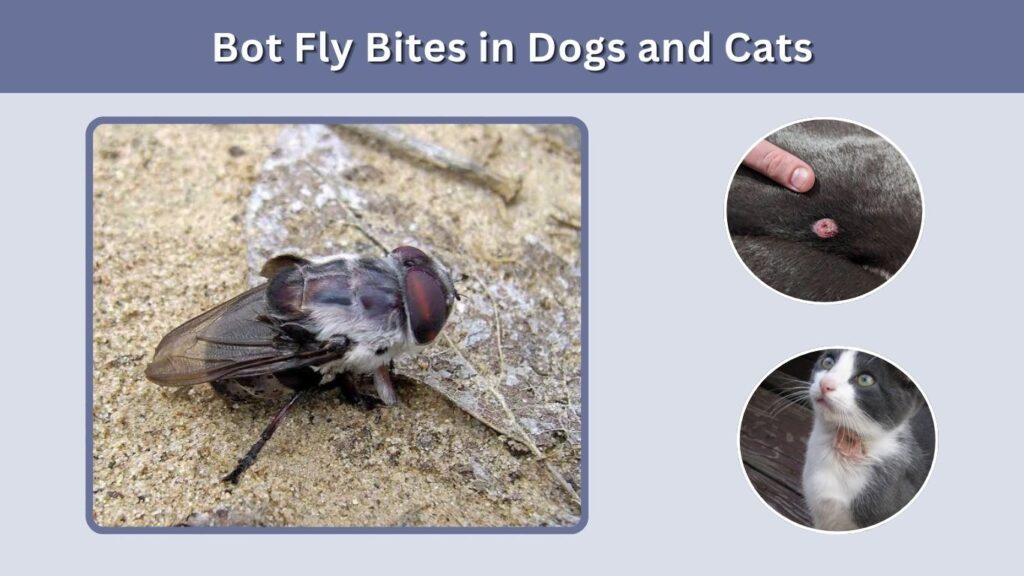
A bot fly infestation beneath a pet’s skin is commonly called a warble or cuterebriasis. Outdoor dogs and cats that hunt or explore around rabbit and rodent habitats have the greatest exposure risk.
Symptoms in Dogs
A bot fly lesion on a dog may produce:
- A lump containing a central hole
- Matted or wet fur over the wound
- Persistent licking or scratching
- Swelling and skin tenderness
- Clear fluid, blood, or pus
- Reduced appetite or tiredness if infection develops
Rarely, migrating larvae affect the nose, throat, eye, or nervous system. Breathing difficulty, coughing, loss of balance, seizures, unusual behavior, or sudden blindness require emergency veterinary attention.
Symptoms in Cats
Cats generally develop similar skin lumps, especially around the head, neck, and trunk. Free-roaming cats are more likely to be exposed. Some cats groom the area aggressively or react painfully when the swelling is touched.
Cats can also experience abnormal larval migration. Neurological symptoms, repeated sneezing, breathing problems, or eye inflammation should be treated as urgent warning signs.
Why You Should Not Squeeze a Warble
Never squeeze, crush, or pull forcefully on a suspected bot fly larva. Rupturing it beneath the skin can produce severe inflammation, infection, or a chronic foreign-body reaction. Veterinary treatment involves carefully removing the larva intact and cleaning the cavity.
Bot Fly Bite Treatment
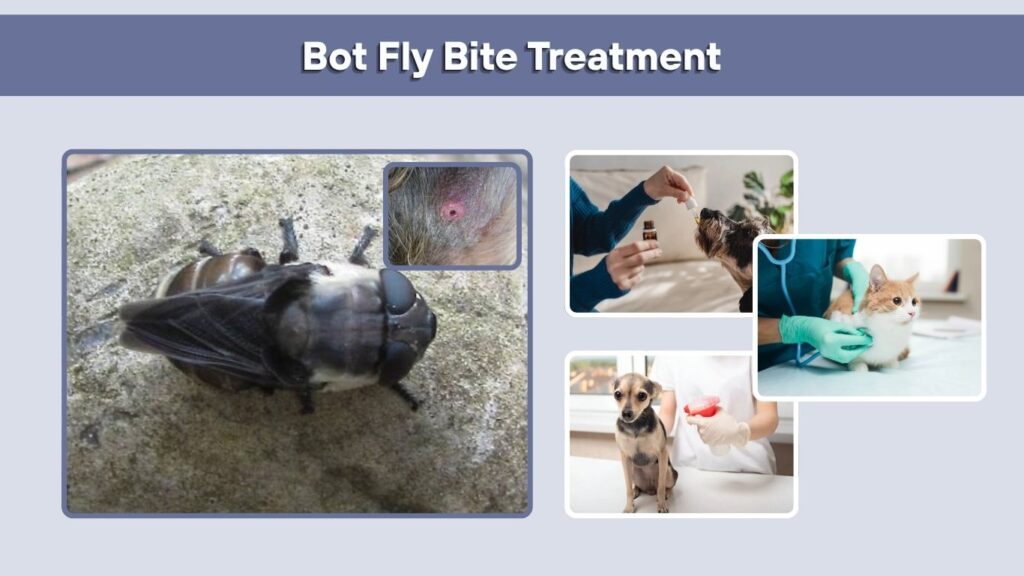
Treatment focuses on complete larval removal and proper wound care. Home remedies can damage the larva or push it deeper, so suspected human and animal cases should receive professional attention.
Human Treatment
A healthcare professional may enlarge the opening and remove the larva using appropriate instruments or perform a minor surgical procedure. The wound is then cleaned and checked for larval fragments or bacterial infection.
The CDC recommends professional diagnosis and removal followed by daily wound cleaning during recovery. Antibiotics are generally considered only when a secondary bacterial infection is present.
Do not cut the skin, insert tweezers deeply, or apply harsh chemicals. Seek prompt care if the lesion is near the eye, nose, mouth, genitals, or an existing surgical wound.
Treatment for Dogs and Cats
A veterinarian normally enlarges the breathing pore carefully and extracts the larva without crushing it. The cavity may be flushed with sterile saline and cleared of damaged tissue. Medication may be prescribed for pain, inflammation, or secondary infection.
Do not give ivermectin or another antiparasitic medicine without veterinary instructions. Product choice and dosage depend on the animal, larval location, and overall health.
When Immediate Care Is Necessary
Obtain urgent medical or veterinary help for:
- Rapidly spreading redness or swelling
- Fever, weakness, or severe pain
- Foul-smelling or heavy discharge
- Multiple larvae or extensive tissue damage
- An affected eye, nose, mouth, or airway
- Breathing difficulty
- Confusion, seizures, poor coordination, or paralysis
Preventing Bot Fly Infestations
Protection is especially important during tropical travel and when pets spend time around wildlife habitats.
- Use an appropriate insect repellent when traveling.
- Wear long sleeves and long pants outdoors.
- Keep open wounds clean and covered.
- Use screens and mosquito nets when necessary.
- Prevent pets from entering rabbit or rodent burrows.
- Inspect outdoor pets regularly for lumps and matted fur.
- Ask a veterinarian about suitable parasite prevention.
- Seek care for suspicious wounds before they enlarge.
FAQs
Can a bot fly bite kill you?
A localized human bot fly infestation is rarely fatal. However, larvae affecting the eye, brain, airway, or deep tissues can be serious. Wound-invading fly species may also cause extensive tissue damage.
What does a bot fly bite feel like?
It may feel itchy, tender, or intermittently painful. Some people describe brief stabbing sensations or movement beneath the skin, although symptoms vary.
How long does a bot fly larva stay in human skin?
A human bot fly larva can develop beneath the skin for approximately five to ten weeks before emerging. Medical removal is safer than waiting for it to leave naturally.
Can humans catch a bot fly from an infected dog or cat?
A larva already living inside a pet does not transfer directly to a person. Humans and pets become infested independently through exposure to eggs or newly hatched larvae.
Will a bot fly wound heal after removal?
Most uncomplicated wounds heal after the entire larva is removed and the cavity is properly cleaned. Healing may take longer when larval fragments, tissue damage, or bacterial infection remain.